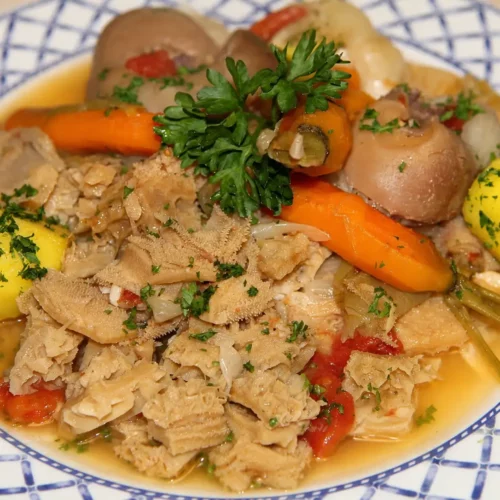
Beef Tripe Stew with White Wine, Tomatoes and Potatoes
Beef tripe stew is a slow-simmered dish made with cleaned beef tripe, aromatics, stock, a little tomato and white wine. This version is lighter than a heavy tomato stew, with a clear, savory broth that gets body from beef feet and a long gentle simmer. I make it when I want a traditional, old-school comfort dish that feels rustic without being greasy.
This recipe is based on my YouTube video, with a few adjustments since publication to make it easier to reproduce at home in Canada and the USA. The main adjustment is clarity: the tripe must be cleaned and preferably blanched by the butcher, and the cooking time depends on tenderness, not only the clock. The mistake to avoid is stopping the cooking too early. Good tripe should not fight the knife. You know it is ready when it feels soft, almost buttery, and the broth smells round and savory instead of sharp.
I make it this way because the tripe starts cold with the vegetables, wine and stock, similar to a pot-au-feu. Starting cold gives the broth time to take the flavor from the onion, carrot, garlic and bouquet garni. It also makes the first skimming easier. What I look for at the beginning is a gentle simmer, not a rolling boil. The surface should tremble, foam should rise, and the liquid should stay fairly clear once skimmed.
This is not the same kind of beef recipe as a rich red wine dish like oven-braised beef bourguignon or a dark, deep braised beef cheek stew. Those are heavier, wine-forward braises. This one is more about clean tripe, gelatin from the beef feet, a little tomato, and a broth you can spoon over potatoes.

Why this beef tripe stew works
The broth is the whole recipe. The white wine gives brightness, the chicken stock keeps it lighter than a beef-only base, and the tomatoes add just enough acidity to round out the natural richness of the tripe and beef feet. It is not supposed to taste like tomato sauce.
I prefer to use chicken stock here because it gives a cleaner finish. A heavy beef stock can make the dish too dark and too strong, especially if the tripe has a powerful flavor. If you already make your own stock, something like homemade chicken bouillon cubes or chicken stock concentrate works well as the base, as long as you control the salt.
The beef feet are optional, but they are not decorative. They bring collagen, which gives the broth a light sticky texture without flour or cream. When the stew cools, the broth may even set slightly. That is a good sign. If you skip them, the recipe still works, but the liquid will be thinner.
This dish also belongs in the same old-school family as classic veal tongue, veal kidneys with Dijon mustard and classic veal sweetbreads with mushroom cream sauce, but the result is very different. The tongue is sliceable and delicate, kidneys are quick and assertive, sweetbreads are creamy and refined. Tripe is slow, tender, brothy and rustic.
Ingredients notes
Use cleaned beef tripe from a reliable butcher. In many North American grocery stores, tripe is sold cleaned, but the quality varies. If it has a strong smell, blanch it first. Place it in a pot of cold water, bring it to a boil, simmer for 10 minutes, then drain and rinse before starting the recipe.
For the aromatics, keep it simple: onion, carrot, garlic and bouquet garni. The onion can be cut in quarters. The carrot can stay in large pieces because it cooks for a long time and becomes part of the rustic garnish. If you want a cleaner dice or more consistent cuts, the basic technique in how to cut an onion is useful, and the garlic method from how to mince garlic without burning it also applies, even though here I prefer the garlic crushed and left in larger pieces.

The spices are very small: paprika and crushed chili, just a pinch. This should not become spicy. It should have a little warmth in the background.
The potatoes are cooked separately in cold water with salt, pepper and a touch of turmeric. I like doing them separately because they stay cleaner and do not cloud the tripe broth. At the end, I roll them in a little broth so they pick up the flavor.
How to make beef tripe stew
Start by placing the aromatics at the bottom of a large pot. Add the onion, carrots, garlic, bouquet garni and beef feet. Putting the aromatics underneath the tripe helps keep the pot organized and makes the skimming easier once the liquid starts to move.
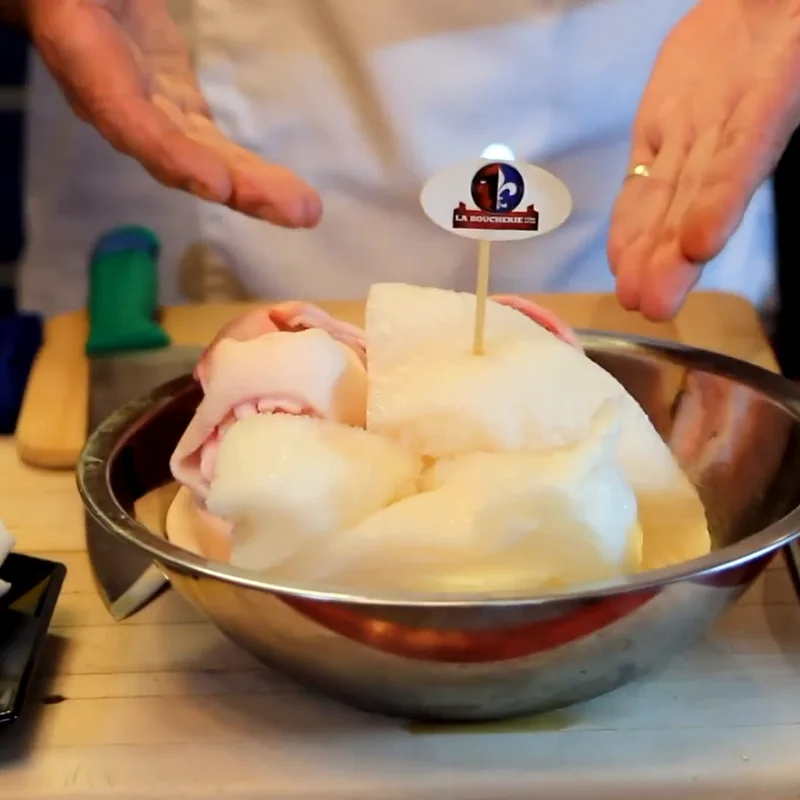


Cut the cleaned tripe into medium pieces. Do not cut it too small. It shrinks a little during cooking, and small pieces can disappear into the broth. Add the tripe over the aromatics.
Pour in the dry white wine, then the chicken stock. Add the diced tomatoes, salt, black pepper, a pinch of paprika and a pinch of crushed chili. Add enough water only if needed so the tripe is mostly covered. The pot should look generous and brothy, but not like soup with a few pieces floating around.

Bring everything up slowly from cold. Once the liquid starts to tremble and foam rises to the surface, skim carefully. I like to gently rotate the contents of the pot with a spoon, then skim the foam that gathers at the top. At this point, it should smell like warm stock, wine and garlic. If it boils hard, lower the heat.
Simmer gently, partially covered, for about 2 to 3 hours. The time is a guide. Some butcher-prepared tripe will be ready near 2 hours. Some will need longer. Add a splash of water or stock if the liquid drops too low.
While the tripe cooks, make the potatoes. Start them in cold salted water with pepper and a small pinch of turmeric. Simmer until tender, usually 25 to 30 minutes depending on size. Drain them, then spoon over a little broth from the tripe pot and roll them gently so they shine.


When the tripe is tender, remove the bouquet garni. Test the tripe and the beef feet with a knife. There should be almost no resistance. If the broth tastes thin, remove the solids with a slotted spoon and reduce the liquid for 5 to 10 minutes. If you ever need a general guide for fixing a thin sauce or broth, how to thicken a sauce explains the basic options, but for this recipe I prefer reduction over flour.


Taste for salt at the end. This matters because stock can vary a lot. The seasoning logic in how to season a recipe applies here: salt in stages, taste at the end, and do not forget that reducing the broth concentrates everything.

What makes this version different
This recipe is traditional in spirit, but it is not a thick tomato tripe stew. It is also not a quick skillet dinner like beef tips and gravy, and it is not a large roast-style braise like Dutch oven pot roast or oven-baked beef brisket.

The identity of this dish is the light broth. It should be spoonable, aromatic, slightly gelatinous and clear enough that the tripe remains the main event. The tomatoes are there to support, not dominate. The potatoes are not cooked in the stew because I do not want them breaking down and making the broth cloudy.
For more classic beef inspiration, the broader collection of French beef recipes is a better place for steaks, red wine dishes and bistro-style beef. This recipe sits in the offal and slow-simmered category.
Health and nutrition context
This is a hearty comfort food dish, but it is not especially greasy when made properly. Tripe is protein-rich, and the broth is lighter than cream-based sauces or butter-heavy braises. The beef feet add gelatin and body, but they do not make the dish oily if the simmer stays gentle and the surface is skimmed well.

Serve it with potatoes and a green salad if you want a full meal that still feels balanced. It is filling, warming and practical for winter, but I would still make it year-round when I find very clean tripe from a good butcher.
Substitutions
If you cannot find beef feet, leave them out. The stew will be lighter and the broth will not have the same natural body, but it will still taste good. You can reduce the broth a little more at the end to concentrate it.
Chicken stock can be replaced with light beef stock, but avoid anything too salty or too dark. A neutral stock works better than a strong roasted one. If using a richer base like neutral brown veal stock, use part stock and part water so the tripe does not get overpowered.
Dry white wine can be replaced with more stock and a small splash of vinegar or lemon juice at the end. Do not add too much acid early, because the dish needs softness, not sharpness.
The potatoes can be replaced with boiled carrots, steamed greens, crusty bread or a creamy potato side. For something richer, traditional gratin dauphinois works, but it makes the meal heavier. For something easier, air fryer baked potatoes are a good simple side.
What to serve with beef tripe stew
Serve it in shallow bowls with potatoes, carrots, pieces of tripe, a little beef foot if using, and enough broth to spoon over everything. Fresh parsley helps a lot. It wakes up the dish at the end.
Good side ideas:
Traditional gratin dauphinois for a richer bistro-style meal
Air fryer baked potatoes for an easier potato side
Classic macaroni salad if serving this as part of a larger casual meal
Crunchy red endive salad for a fresh, slightly bitter contrast
Marinated red cabbage salad for acidity and crunch beside the warm broth
FAQ
Do I need to blanch the tripe first?
If the tripe is already cleaned and blanched by the butcher, you can start the recipe directly. If it has a strong smell or you are not sure how it was prepared, blanch it for 10 minutes, drain it, rinse it, then continue.
How do I know when tripe is cooked?
Use a knife, not only a timer. The tripe should be very tender and offer almost no resistance. If it feels rubbery or chewy, keep simmering.
Can I make this recipe the day before?
Yes. It is often better the next day. Let it cool, refrigerate it, then reheat gently. If the broth sets in the fridge because of the beef feet, that is normal.
Is this supposed to be thick?
No. This version is brothy, light and slightly gelatinous. If you want a thicker sauce, reduce the liquid at the end instead of adding flour.
Can I freeze it?
Yes. Freeze the tripe with some broth in airtight containers. Thaw in the refrigerator and reheat slowly on the stove.
Why use chicken stock with beef tripe?
Chicken stock keeps the broth cleaner and less heavy. Beef stock works, but it can make the final dish darker and stronger.
Beef Tripe Stew with White Wine, Tomatoes and Potatoes
Ingredients
- 3 to 4 lb cleaned and blanched beef tripe cut into medium pieces
- 2 to 3 beef feet slices optional but recommended
- 1 large white onion quartered
- 3 carrots peeled or scrubbed
- 4 garlic cloves lightly crushed
- 1 bouquet garni
- 2 cups dry white wine
- 8 cups chicken stock preferably unsalted or lightly salted
- 1 cup diced tomatoes
- 1 small pinch paprika
- 1 small pinch crushed chili flakes
- Salt to taste
- Black pepper to taste
- Water or extra stock as needed
- 2 lb potatoes turned or cut into large pieces
- 1 small pinch turmeric for the potato cooking water
- Fresh parsley for serving
Instructions
- Place the onion, carrots, garlic, bouquet garni and beef feet in the bottom of a large pot.
- Add the cleaned tripe pieces over the aromatics.
- Pour in the white wine, chicken stock and diced tomatoes. Add paprika, crushed chili, salt and black pepper. Add a little water or extra stock only if needed so the tripe is mostly covered.
- Start from cold and bring slowly to a gentle simmer.
- Skim the foam from the surface as the liquid begins to simmer. Keep the heat low so the broth stays clear and does not boil aggressively.
- Simmer partially covered for 2 hours 30 minutes to 3 hours, or until the tripe is very tender. Add a little water or stock if the liquid reduces too much.
- Meanwhile, place the potatoes in cold water with salt, pepper and a small pinch of turmeric. Simmer for 25 to 30 minutes, or until tender.
- Drain the potatoes, then spoon over a little broth from the tripe pot and roll them gently to coat.
- Remove the bouquet garni from the tripe pot. Taste and adjust the seasoning.
- If the broth is too thin, remove the solids and reduce the broth for 5 to 10 minutes.
- Serve the tripe with carrots, beef feet if using, potatoes, broth and fresh parsley.
Notes
FAQ
Do I need to blanch the tripe first?
If the tripe is already cleaned and blanched by the butcher, you can start the recipe directly. If it has a strong smell or you are not sure how it was prepared, blanch it for 10 minutes, drain it, rinse it, then continue.How do I know when tripe is cooked?
Use a knife, not only a timer. The tripe should be very tender and offer almost no resistance. If it feels rubbery or chewy, keep simmering.Can I make this recipe the day before?
Yes. It is often better the next day. Let it cool, refrigerate it, then reheat gently. If the broth sets in the fridge because of the beef feet, that is normal.Is this supposed to be thick?
No. This version is brothy, light and slightly gelatinous. If you want a thicker sauce, reduce the liquid at the end instead of adding flour.Can I freeze it?
Yes. Freeze the tripe with some broth in airtight containers. Thaw in the refrigerator and reheat slowly on the stove.Why use chicken stock with beef tripe?
Chicken stock keeps the broth cleaner and less heavy. Beef stock works, but it can make the final dish darker and stronger.🔗 Useful Links
🛒 Michel Dumas Shop : Explore our kitchen essentials, including aprons and knives.
🌐 Linktree : Access all our important links in one place.
📱 YouTube | Instagram | Facebook | TikTok : Follow us for the latest recipes and culinary tips.