Homemade Chicken Bouillon Cubes to Freeze, Natural, Unsalted, and Full of Flavor
Homemade chicken bouillon cubes are concentrated portions of chicken stock made with carcasses, vegetables, herbs, and water. Unlike dry store-bought cubes, these are natural freezer cubes with no added salt, no powder, and no artificial flavoring. I make them when I want a clean chicken base ready for sauces, soups, risotto, braised vegetables, rice dishes, and slow-cooked meals.
This recipe is based on my YouTube video, with a few adjustments since publication to make the proportions easier to reproduce at home. In the video, I used 12 chicken carcasses and reduced the stock until it became very concentrated and gelatinous. I prefer to do it this way because the flavor comes from real bones, vegetables, herbs, and time, not from salt or additives.
What Makes These Homemade Bouillon Cubes Different
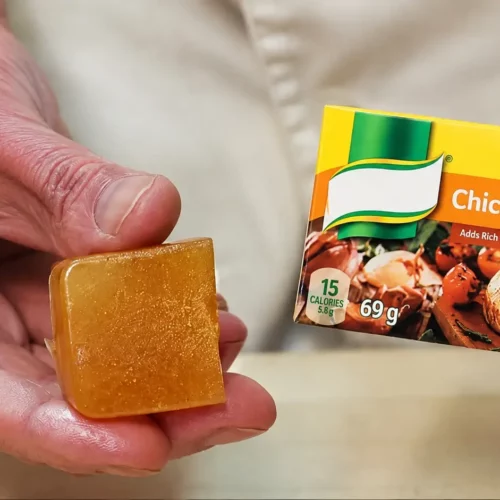
These cubes are not the same as industrial chicken bouillon cubes. Store-bought cubes are usually dry, very salty, and designed to stay in the pantry. This version is a reduced chicken stock that must be kept in the refrigerator for short-term use or frozen for longer storage.
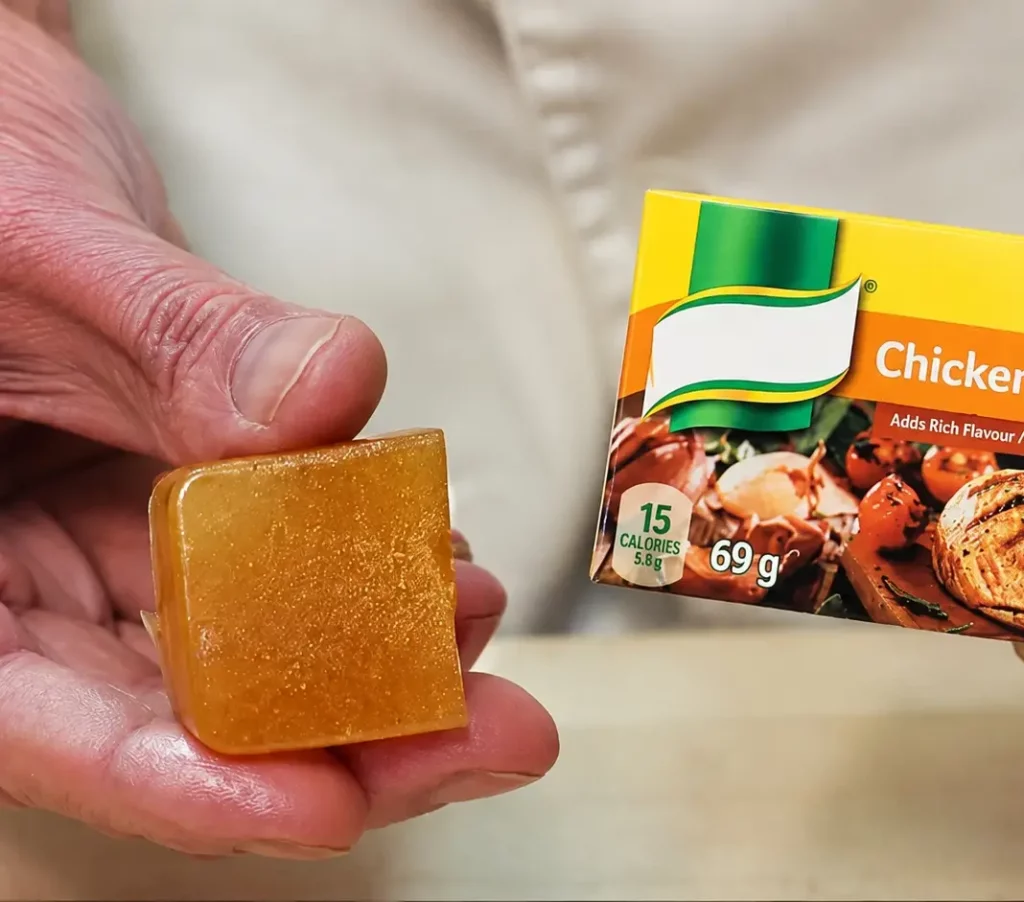
That difference is important. These homemade chicken stock cubes are softer, richer, and more natural, but they are not shelf-stable. Think of them as concentrated frozen chicken broth cubes, not dry pantry cubes.
I also keep them unsalted. I make it this way because a cube without salt gives more control later. If I use it in a sauce, a soup, or a dish that already has bacon, cheese, soy sauce, mustard, or reduced cooking juices, I can season the final recipe properly instead of fighting against a cube that is already too salty.
This recipe is especially useful if you cook often. A cube can boost the flavor of a quick chicken dinner, a pan sauce, a potato dish, or even a pot of rice. It works in the same spirit as a good homemade base, just portioned into small blocks for everyday cooking.
Ingredients You Need
For a large batch, use:
- 12 chicken carcasses, about 9 to 11 lb total
- 3 celery stalks, roughly chopped
- 2 large onions, roughly chopped
- 2 leeks, washed well and roughly chopped
- 3 large carrots, roughly chopped
- 4 to 6 sprigs fresh thyme
- 3 to 4 bay leaves
- 5 to 6 qt cold water, or just enough to barely cover
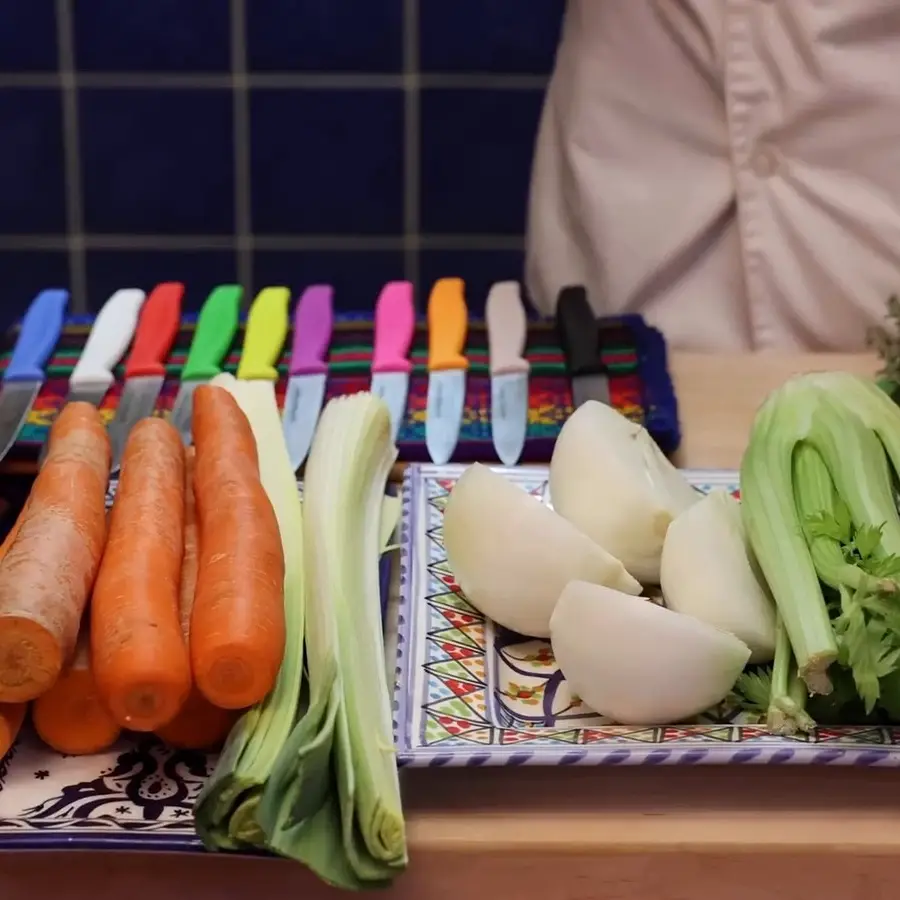
Do not add salt, pepper, or strong spices at this stage. The goal is to make a neutral, concentrated base that can work in many recipes.
For the best texture, use carcasses that still have some cartilage, joints, skin, wings, necks, or connective tissue. That natural collagen is what helps the bouillon set into a jelly after cooling.
Step-by-Step Instructions
1. Prepare the chicken carcasses
Check the carcasses before cooking. If there are small fatty glands near the tail area, remove them because they can taste bitter after a long simmer.
Place the carcasses aside while you prepare the aromatics.
2. Cut the vegetables
Wash the celery, leeks, carrots, and onions. Cut everything into large pieces. There is no need for fine knife work here because the vegetables are only there to perfume the stock.
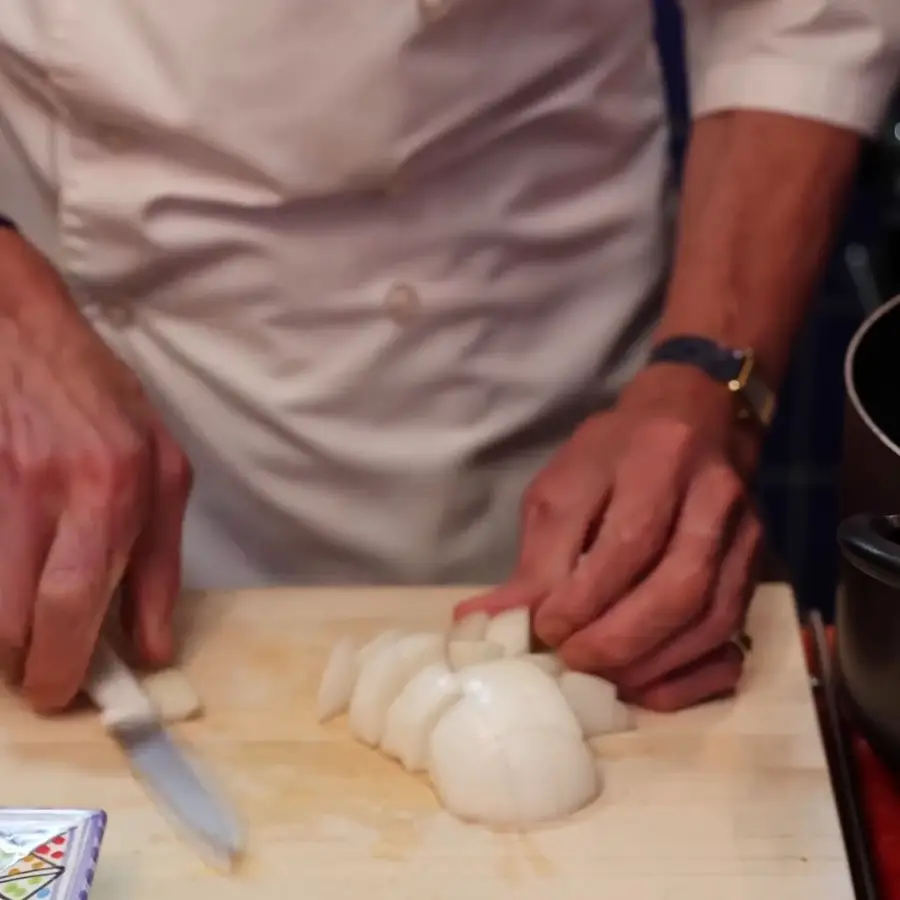
I prefer large pieces because they are easier to strain later and they hold up better during the long cooking time.
3. Build the pot correctly
Place the herbs and vegetables at the bottom of a large stockpot. Add the thyme, bay leaves, celery, onions, leeks, and carrots first. Then place the chicken carcasses on top.
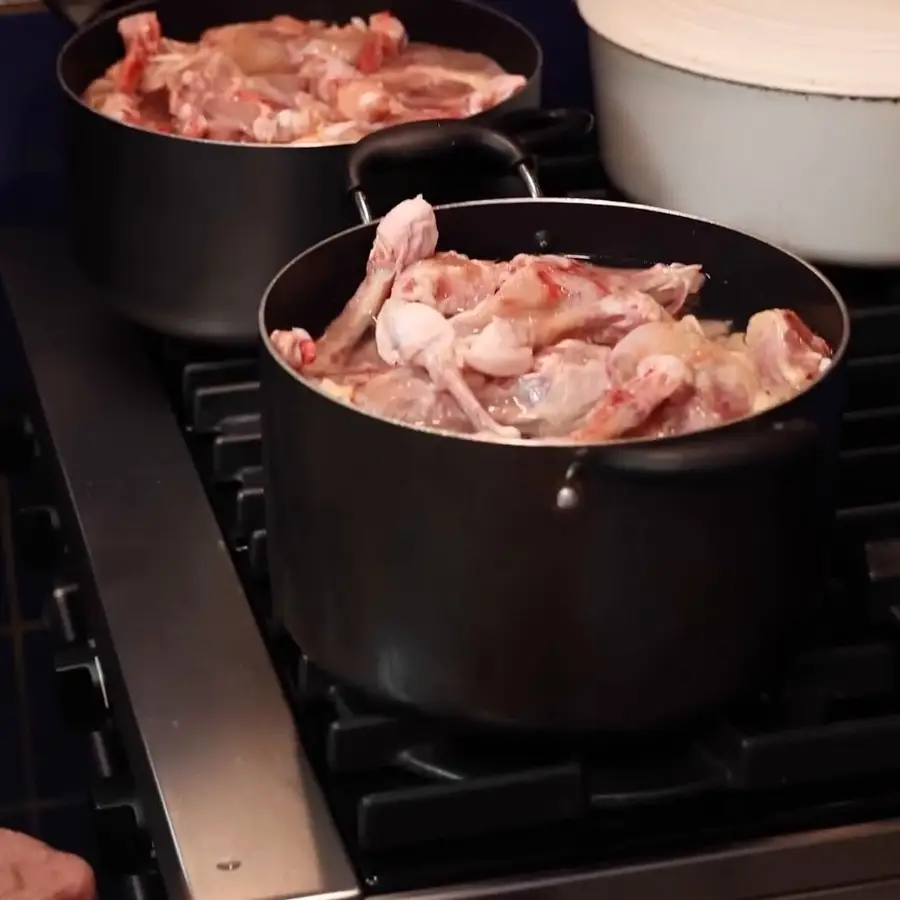
This is one of the small details that makes the method easier. I put the vegetables underneath because the impurities from the chicken rise to the surface during the first part of cooking. With the bones closer to the top, it is easier to skim the stock cleanly.

4. Add cold water
Pour in cold water until the carcasses are just covered. Do not drown everything in too much water. If you add too much water, the stock will be weaker and will need much longer to reduce.
For this quantity, start with about 5 to 6 qt of cold water, depending on the size of your pot and the size of the carcasses.
5. Bring to a simmer and skim
Place the pot over high heat until the liquid begins to simmer. As foam and impurities rise to the surface, skim them off with a ladle
Do this regularly at the beginning. This helps the final stock taste cleaner and look clearer.
Once the first skimming is done, lower the heat.
6. Simmer gently
Let the stock simmer gently for 5 to 6 hours. The surface should move slowly, with small bubbles, not a violent boil.
A hard boil can make the stock cloudy and can give the flavor a rougher edge. Gentle cooking gives a cleaner result.
This recipe is not the same as a quick chicken broth. It is more concentrated and more practical for storage. For other chicken dinner ideas where the cube can be used later, you can explore my easy chicken recipes or add one of these cubes to the sauce in mustard chicken for extra depth.
7. Strain the stock
After 5 to 6 hours, remove the carcasses and vegetables. Strain the liquid through a fine strainer into a clean pot.
At this stage, the liquid should smell rich and savory. It may already look slightly glossy because of the collagen from the bones.
8. Reduce the strained stock
Return the strained stock to the stove and boil it down until concentrated. In the video, the final reduction took about 20 minutes, but at home the time can vary.
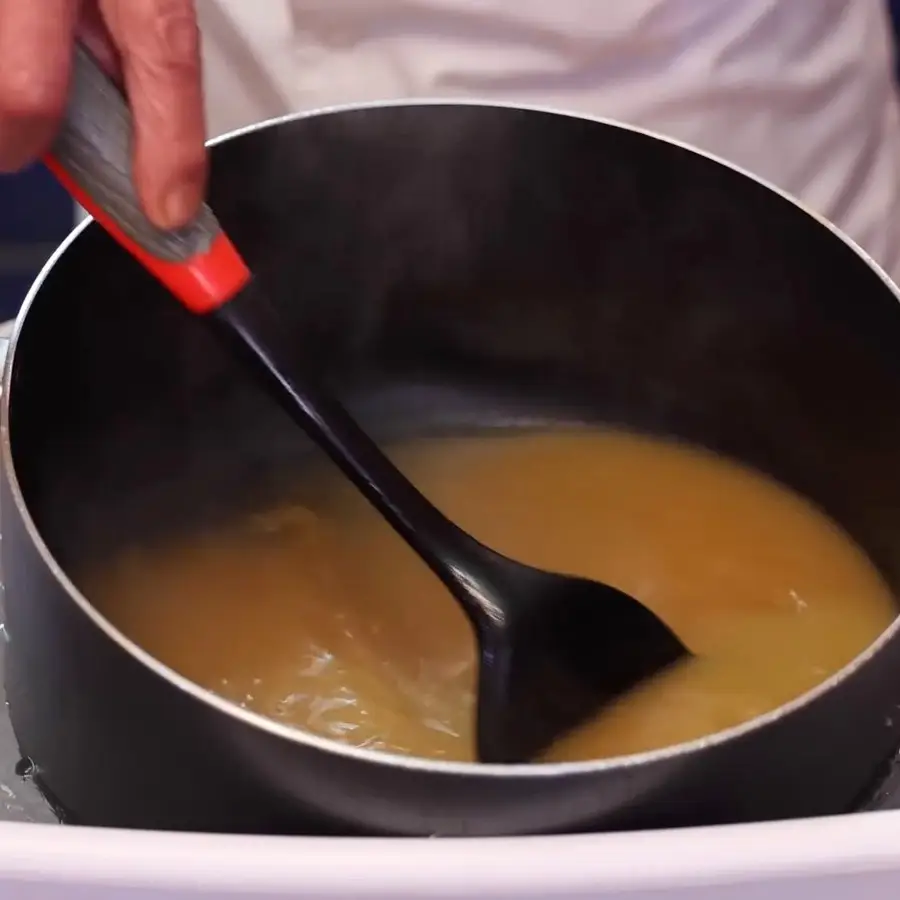
The better target is texture and volume. Reduce until the stock is glossy, rich, and slightly syrupy. For this batch, aim for about 1½ to 2½ qt of concentrated stock, depending on how strong you want the cubes.
This is where the recipe becomes very useful. A reduced cube can enrich a sauce like Sauce Diane or give more body to a classic base like brown stock, demi-glace, and meat glaze.
9. Cool quickly
Place the pot in a large ice bath and stir occasionally to cool the stock quickly. Do not leave a large pot of warm chicken stock sitting on the counter for a long time.
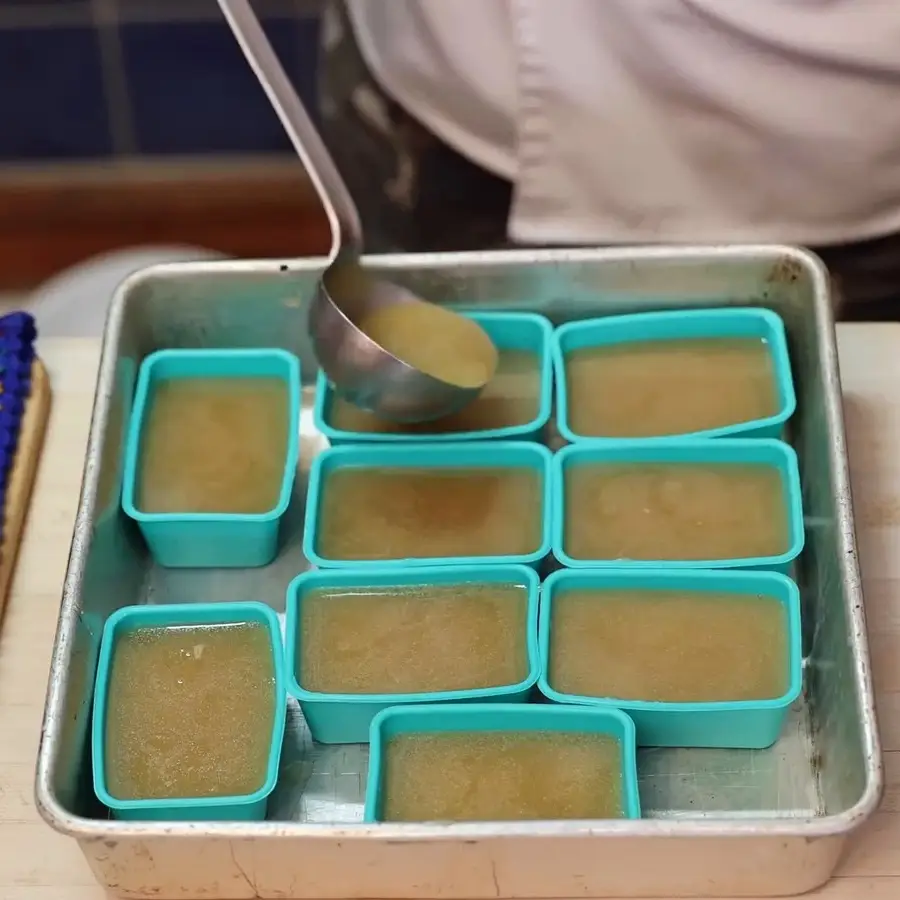
Once the stock is cooled, pour it into silicone cube molds, small containers, or freezer-safe trays.
10. Refrigerate, then freeze
Refrigerate the molds for several hours or overnight. The stock should set into a firm jelly if it has enough collagen and has been reduced properly.

Once set, unmold the cubes and transfer them to freezer bags or airtight containers. Label with the date and keep them frozen.

How to Use Homemade Chicken Bouillon Cubes
Use these cubes anywhere you would normally use chicken broth or bouillon, but remember that they are unsalted. Add salt to the final dish only after tasting.

They are excellent in soups, rice dishes, sauces, braised vegetables, stews, and creamy chicken recipes. One cube can add depth to chicken supreme with mushroom cream sauce, help build flavor in one-pan chicken and rice, or enrich the glaze in a quick skillet dish like honey garlic chicken.
They also work beautifully in vegetable and potato dishes. Try one in classic pommes boulangères because that dish is built around potatoes, onions, herbs, and stock. You can also use a small amount to add flavor to potage Parmentier or to loosen a pan sauce served with homemade mashed potatoes.
Important Notes for Best Results
The stock must reduce enough. If the liquid stays thin, the cubes will still taste good, but they may not set firmly.
The carcasses matter. Bones with cartilage, skin, joints, wings, and necks give a better gel. Very clean carcasses with little connective tissue may make a lighter stock.
The water amount matters too. Use just enough water to cover. Too much water gives a weaker result.
Do not salt the stock. These cubes are meant to be a flexible base, not a finished broth.
These cubes must stay cold. Keep them in the refrigerator for short-term use or in the freezer for longer storage. They are not pantry cubes.
Substitutions
Chicken carcasses
You can replace part of the carcasses with chicken wings, necks, backs, or feet. These pieces are excellent for a gelatinous stock.
Leeks
If you do not have leeks, use more onion and celery. The flavor will be slightly different, but the bouillon will still work.
Fresh thyme
Use dried thyme only if needed. Start with a small amount because dried herbs can become strong during a long simmer.
Bay leaves
If you do not have bay leaves, leave them out. Do not replace them with strong spices unless you want the cubes to have a specific flavor.
Storage molds
Silicone molds are easiest, but small containers or ice cube trays also work. If using ice cube trays, keep them covered once frozen so the cubes do not absorb freezer odors.
FAQ
Are these bouillon cubes shelf-stable?
No. These are frozen chicken stock cubes, not dry industrial cubes. Keep them refrigerated for a few days or freeze them for longer storage.
Why are there no salt and pepper?
I keep them unsalted so they can be used in many recipes. Salt is added later, depending on the final dish.
Why did my cubes not turn into jelly?
The stock may not have reduced enough, or the carcasses may not have had enough collagen. Next time, use less water, reduce longer, or add wings, necks, or chicken feet.
Can I roast the bones first?
Yes. Roasting gives a deeper flavor and darker color. For a lighter, cleaner chicken bouillon, keep the bones raw.
How much should I use?
Start with 1 cube for a small sauce or 2 to 4 cubes for soups, stews, rice, or braised dishes. Taste and adjust depending on how concentrated your cubes are.
Can I use these in sauces?
Yes. They are very useful in sauces because they add body and flavor without adding salt. They fit naturally into many recipes from the sauce collection.
What to Serve With / Suggested Posts
Use these homemade chicken bouillon cubes to add flavor to comforting, practical recipes like one-pan chicken and rice, mustard chicken in a creamy sauce, or chicken supreme with mushrooms.
For side dishes, they are excellent in pommes boulangères with onions and stock, homemade mashed potatoes, Parisian potatoes, and oven-roasted mixed vegetables.
For technique and sauce work, continue with brown stock, demi-glace, and meat glaze or browse more ideas in the homemade sauces collection.
Homemade Chicken Bouillon Cubes to Freeze
Ingredients
- 12 chicken carcasses about 9 to 11 lb total
- 3 celery stalks roughly chopped
- 2 large onions roughly chopped
- 2 leeks washed well and roughly chopped
- 3 large carrots roughly chopped
- 4 to 6 sprigs fresh thyme
- 3 to 4 bay leaves
- 5 to 6 qt cold water or enough to barely cover
Instructions
- Check the chicken carcasses and remove any bitter fatty glands near the tail area if needed.
- Place the thyme, bay leaves, celery, onions, leeks, and carrots in the bottom of a large stockpot.
- Add the chicken carcasses on top of the vegetables.
- Pour in cold water, using just enough to barely cover.
- Bring to a simmer over high heat, then skim off the foam and impurities from the surface.
- Lower the heat and simmer gently for 5 to 6 hours, skimming as needed.
- Remove the carcasses and vegetables, then strain the stock into a clean pot.
- Boil the strained stock until concentrated, glossy, and slightly syrupy, about 20 to 60 minutes depending on the pot and heat.
- Cool the stock quickly in an ice bath, stirring occasionally.
- Pour into silicone molds, small containers, or ice cube trays.
- Refrigerate several hours or overnight until set.
- Unmold the cubes and freeze in airtight bags or containers.
- Refrigerate several hours or overnight until set.
- Unmold the cubes and freeze in airtight bags or containers.
Video
Notes
FAQ
Are these bouillon cubes shelf-stable?
No. These are frozen chicken stock cubes, not dry industrial cubes. Keep them refrigerated for a few days or freeze them for longer storage.Why are there no salt and pepper?
I keep them unsalted so they can be used in many recipes. Salt is added later, depending on the final dish.Why did my cubes not turn into jelly?
The stock may not have reduced enough, or the carcasses may not have had enough collagen. Next time, use less water, reduce longer, or add wings, necks, or chicken feet.Can I roast the bones first?
Yes. Roasting gives a deeper flavor and darker color. For a lighter, cleaner chicken bouillon, keep the bones raw.How much should I use?
Start with 1 cube for a small sauce or 2 to 4 cubes for soups, stews, rice, or braised dishes. Taste and adjust depending on how concentrated your cubes are.Can I use these in sauces?
Yes. They are very useful in sauces because they add body an🔗 Useful Links
🛒 Michel Dumas Shop : Explore our kitchen essentials, including aprons and knives.
🌐 Linktree : Access all our important links in one place.
📱 YouTube | Instagram | Facebook | TikTok : Follow us for the latest recipes and culinary tips.