Lemon Poppy Seed Loaf
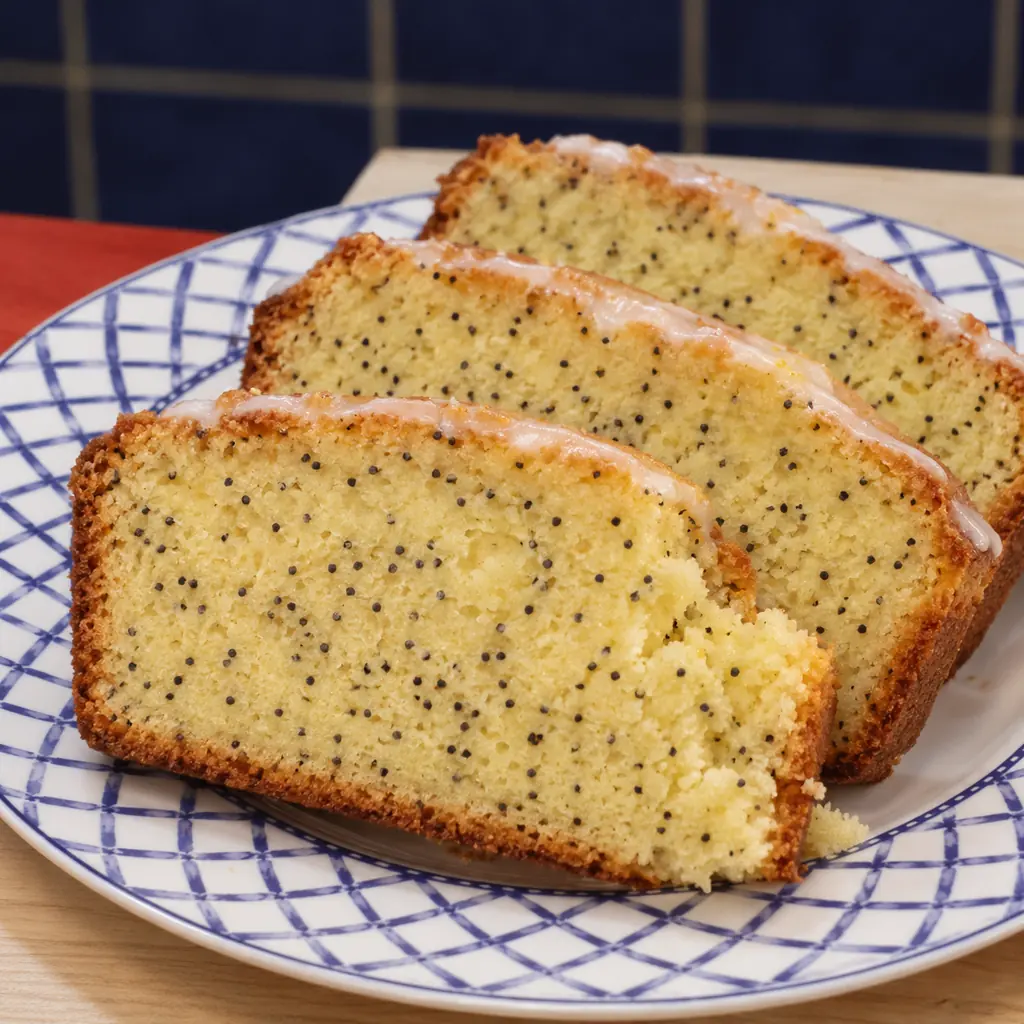
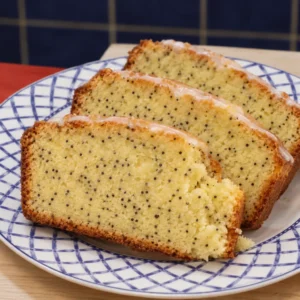
This lemon poppy seed loaf has a soft pale-yellow crumb, a golden crust, and small black seeds throughout. I use lemon zest for the main citrus aroma, with a measured amount of juice so the batter keeps its balance. Plain Greek yogurt adds moisture, while softened butter gives the loaf its structure and flavour. The recipe fits a standard 9 by 5 inch loaf pan and gives twelve slices. A thin lemon glaze is optional once the cake is completely cool.
Prepare the pan and oven first
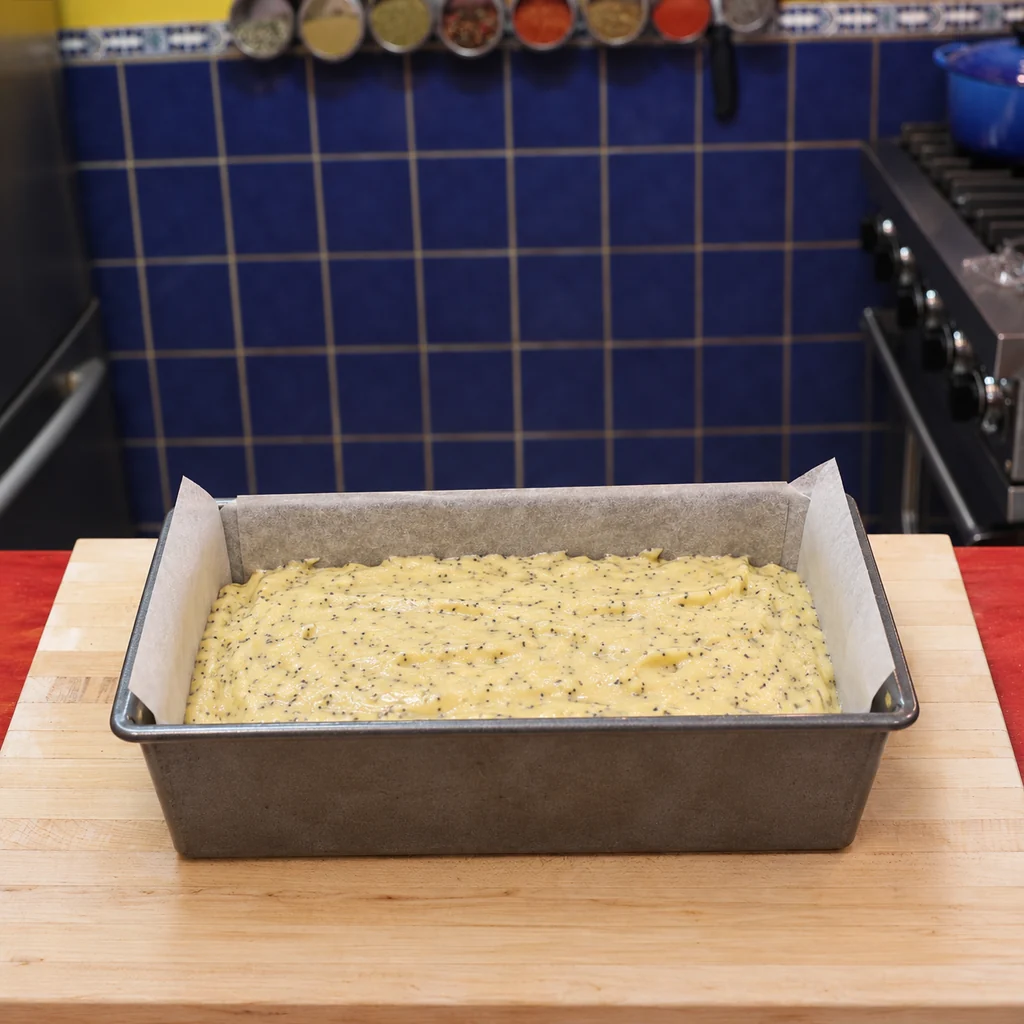
Heat the oven to 175°C, or 350°F. Grease a metal loaf pan about 23 by 13 cm and line it with a parchment sling that rises above the two long sides. Leave the ends reasonably clear rather than bunching several thick folds into the corners. I prefer lining before mixing so the finished batter can go straight into the pan without waiting while paper and butter are being arranged.
Pan size affects the depth and baking time. A smaller pan may overflow or leave a very deep centre, while a wider one makes a shallower loaf that bakes faster. For a different citrus cake prepared in another format, lemon yogurt cake is a separate option. Use the specified loaf pan here rather than borrowing another recipe’s timing because the ingredients share a lemon flavour.
Get lemon flavour from the zest
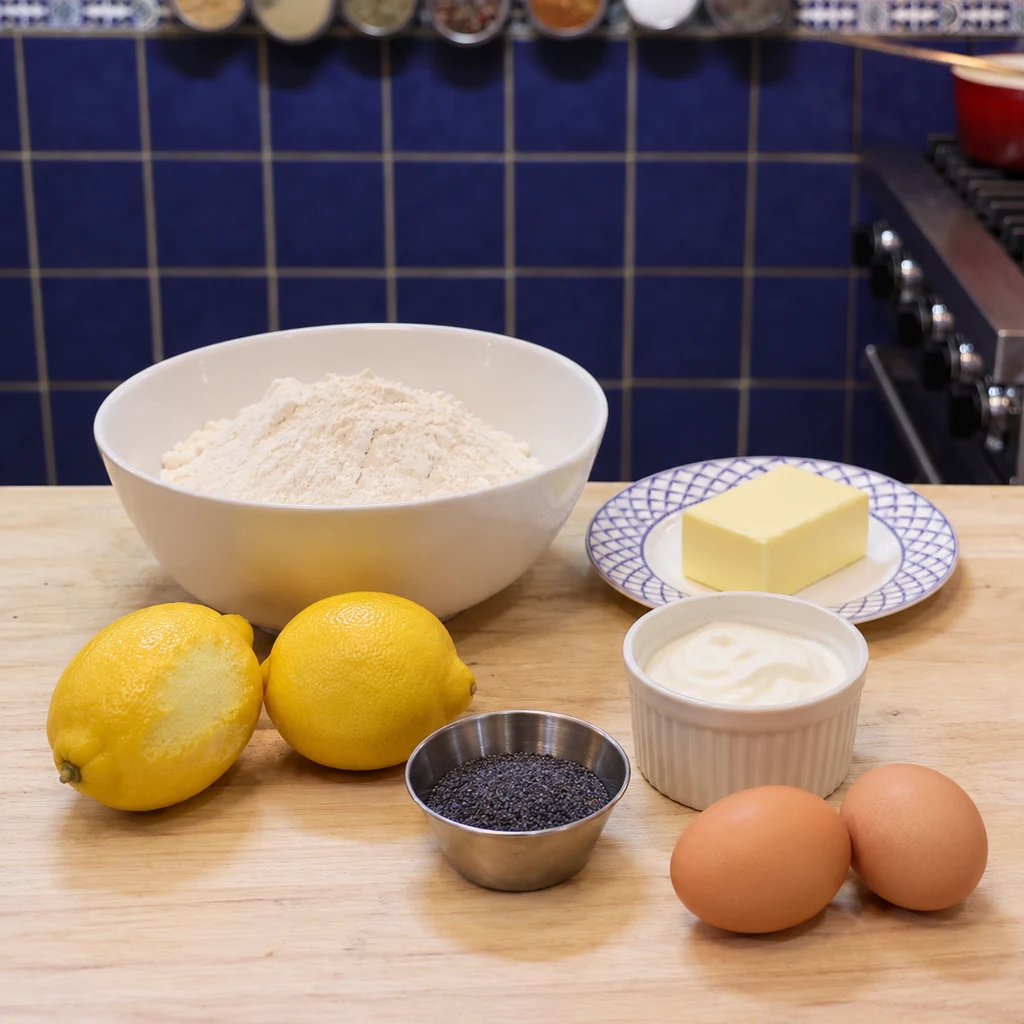
Wash and dry the lemons before grating two tablespoons of zest. Take only the coloured skin, avoiding as much white pith as possible. Measure the zest rather than relying entirely on a number of fruit, because lemon sizes vary. I like rubbing it into the sugar briefly before creaming with the butter. That spreads the aromatic oils more evenly than leaving a small clump of zest in one part of the batter.
Only two tablespoons of lemon juice go into the loaf batter. Extra juice is not a simple way to make the flavour stronger, since it also changes the liquid and acidity. The optional glaze offers another place for citrus at serving. If you prefer a different dairy base for another bake, lemon cottage cheese cake uses its own proportions and method; cottage cheese should not replace the Greek yogurt here without changing the result.
Mix the dry ingredients evenly
Whisk the flour, poppy seeds, baking powder, and salt in a separate bowl. Use 200 g of all-purpose flour, about one and two thirds US cups, spooned and levelled if measuring by volume. I prefer weighing it so the loaf does not become heavy from a packed cup. Distributing the seeds in the flour helps them spread through the batter rather than collecting in a dark patch near one side.
Use culinary poppy seeds that smell mild and fresh. Old seeds can taste bitter or stale, and adding extra sugar will not repair that flavour. There is no need to soak them for this recipe. Keep the quantity measured: a large unplanned handful changes both the texture and the liquid balance. For another citrus-and-fruit bake, lemon blueberry muffins offer individually portioned cakes with a different fruit addition and baking time.
Cream butter and sugar without melting the butter
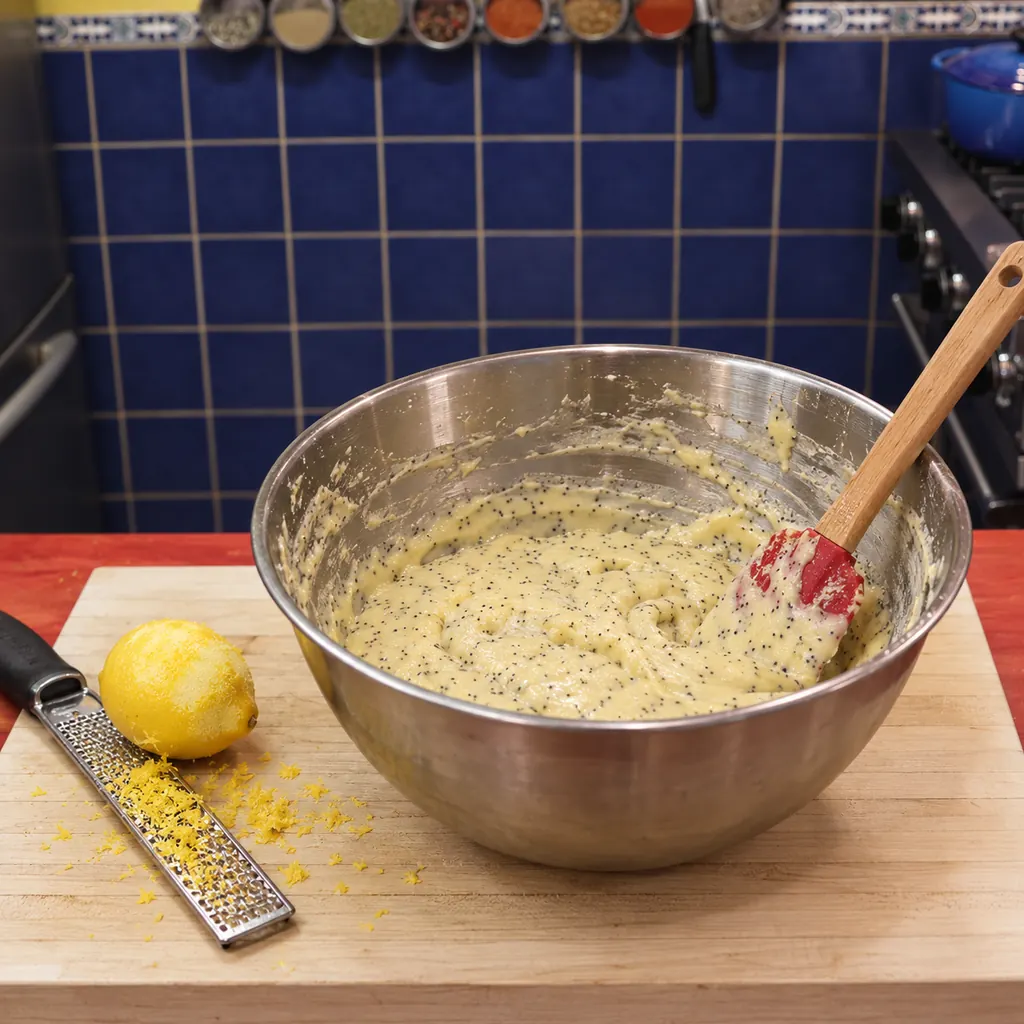
Use butter that is soft enough to take a light finger impression but still holds its shape. Beat it with the sugar and zest for about three minutes until lighter and fluffy, scraping the bowl as needed. I don’t like starting with greasy, partly melted butter because it cannot hold the same air during this stage. If the kitchen is very warm, cool the bowl briefly before continuing rather than adding flour to compensate.
Beat in the eggs one at a time, scraping after each addition. Whisk the yogurt, lemon juice, milk, and vanilla together separately. The yogurt and eggs should not be ice-cold, but they should also not sit out for an extended period. A slightly uneven appearance after adding acidic dairy is not a reason to beat aggressively for several extra minutes; the flour will help bring the final mixture together.
Fold the batter with a light hand
Add the dry mixture in two additions, alternating with the yogurt mixture. Fold just until no pockets of dry flour remain, scraping the sides and bottom. The batter should be thick and spoonable, with many small black seed flecks. I prefer stopping at this point rather than chasing a shiny, perfectly smooth surface. Prolonged mixing after flour is added can make a loaf feel tighter and less tender.
Spoon into the prepared pan and smooth the top lightly. Do not taste raw batter, which contains uncooked flour and egg. For a simpler flavour on another occasion, one-bowl vanilla cake has its own mixing approach. That method should not be used to decide whether this butter-creamed loaf needs a thinner batter or a longer beating stage after the flour arrives.
Bake through the centre
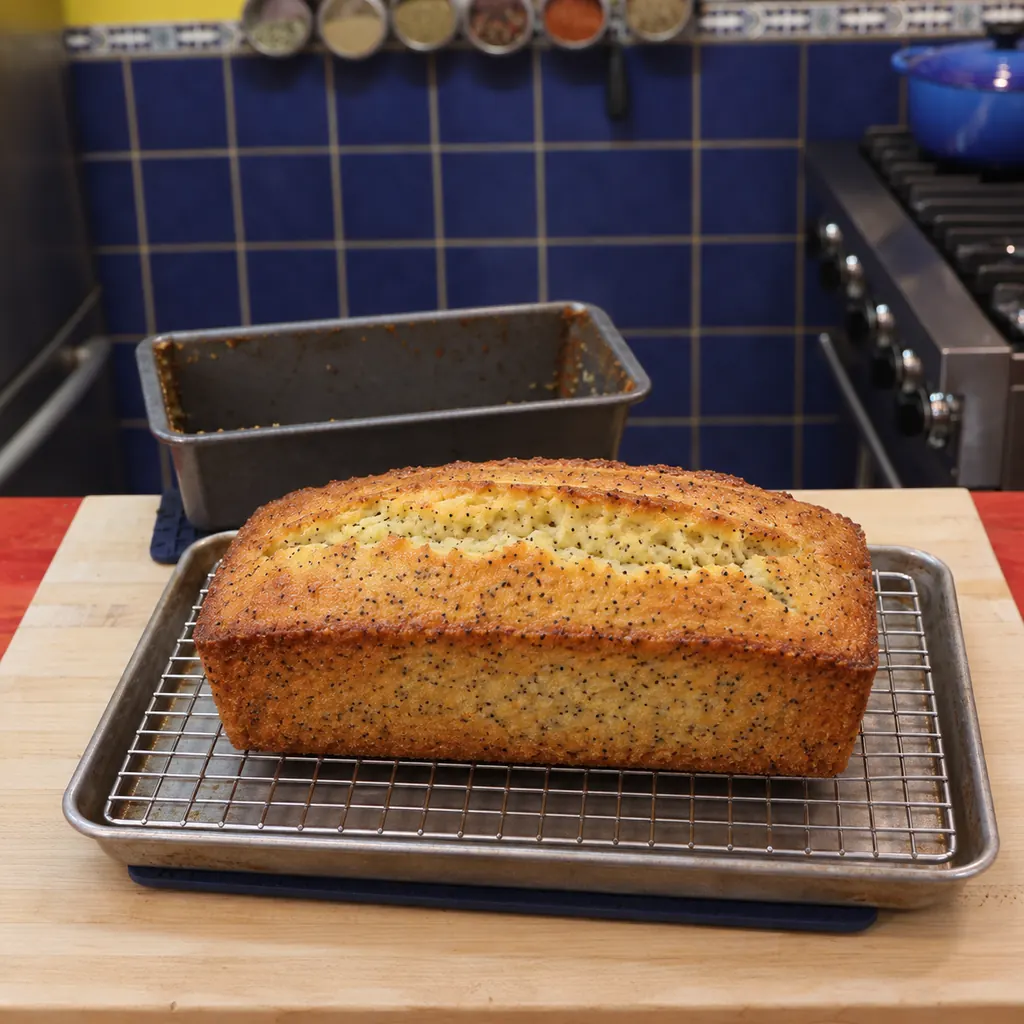
Bake on the middle rack for fifty to sixty minutes. Begin checking at fifty minutes: a skewer inserted into the central crumb should come out without wet batter, although a few moist crumbs are fine. The top should feel set rather than wobble when the pan is moved gently. A long natural split along the top can occur as the centre rises; it is not something to hide under a thick layer of glaze.
If the top browns before the centre is cooked, cover loosely with foil and continue checking at short intervals. Do not press foil tightly against the surface. I prefer using both the centre test and the loaf’s overall set appearance rather than colour alone. A known oven hot spot may require turning the pan once near the end, after the cake has developed enough structure to tolerate the movement.
Cool fully before glazing or cutting
Leave the loaf in its pan for ten minutes, then lift it out with the parchment and place on a rack. Allow at least another eighty minutes to cool completely, or longer if the centre is still warm. Cutting too early can compress the crumb and make a sound loaf appear gummy. I like using a serrated knife with gentle strokes once the loaf has settled and the crust is easier to cut cleanly.
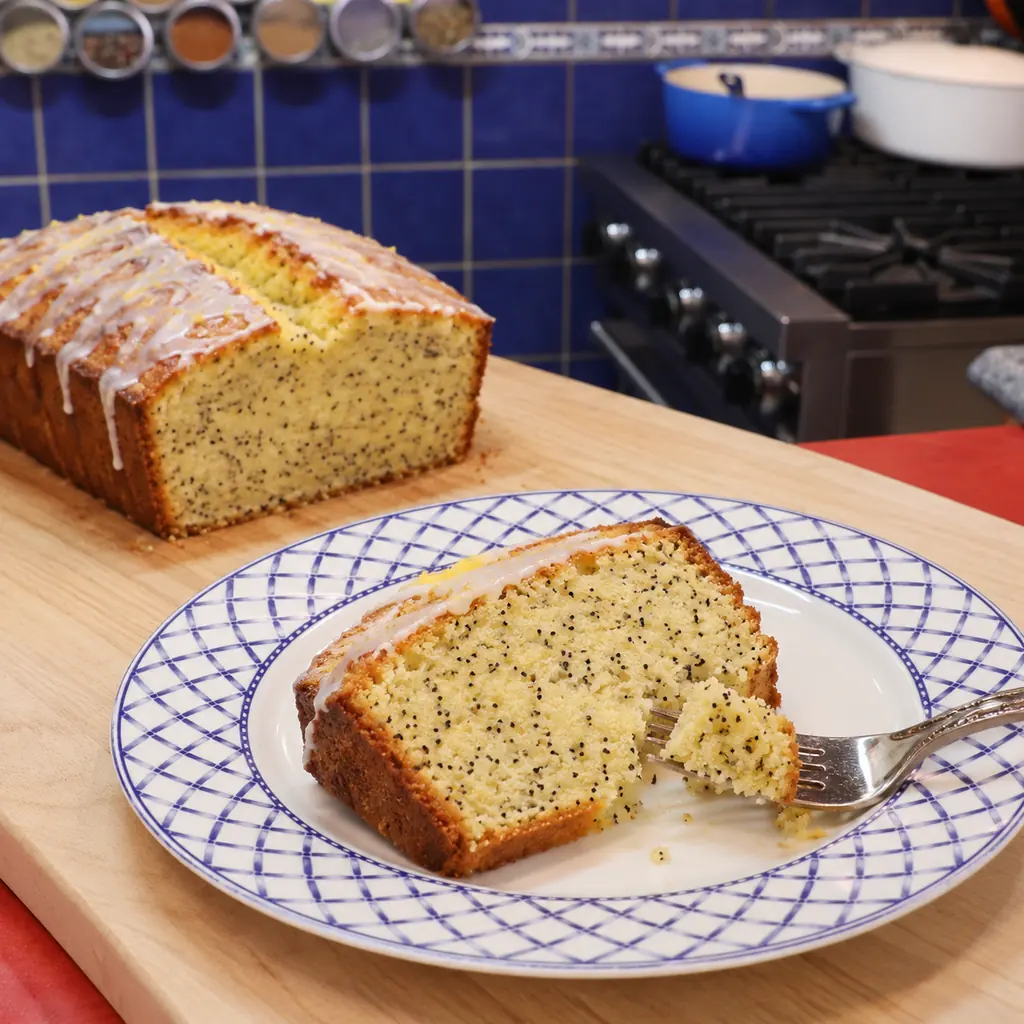
For the optional glaze, mix 90 g of icing sugar with one tablespoon of lemon juice, adding up to one extra teaspoon if needed. It should make a thin coating that can be spooned over the top. Let it set before slicing. The glaze is excluded from the basic calorie estimate. If serving other sweets at the same table, blueberry muffins provide a fruit option that can be baked on a separate schedule.
Serving and storage
Serve plain slices with tea or coffee. I prefer a modest glaze that leaves the poppy seeds and golden crust visible, but the loaf also works without it. A small spoonful of homemade strawberry jam can be offered separately for anyone who wants a fruit accompaniment. Do not spread jam over the whole loaf before storage; keep toppings optional so each slice can be served as needed.
Once fully cool, wrap the loaf or keep it airtight for up to two days at a cool room temperature. In a hot kitchen, refrigerate and let slices lose some chill before serving. Freeze unglazed slices individually for up to two months for best quality. Thaw wrapped so the surfaces do not dry out, then add glaze if desired. If the crumb is dense, check flour measurement, butter temperature, mixing after flour, and whether the centre was fully baked before changing the recipe’s liquids.
Lemon Poppy Seed Loaf
Ingredients
- 200 g 1 2/3 US cups all-purpose flour, spooned and levelled if using cups
- 20 g about 2 tbsp culinary poppy seeds
- 7 g about 1 1/2 tsp baking powder
- 1.25 ml 1/4 tsp fine salt
- 115 g 1/2 US cup unsalted butter, softened but not melted
- 150 g 3/4 US cup granulated sugar
- 30 ml 2 tbsp finely grated lemon zest, without white pith
- 2 large eggs
- 150 g about 2/3 US cup plain Greek yogurt
- 30 ml 2 tbsp lemon juice
- 30 ml 2 tbsp milk
- 5 ml 1 tsp vanilla extract
- A little butter for the pan
- Optional glaze: 90 g 3/4 US cup icing sugar and 15–20 ml (1 tbsp plus up to 1 tsp) lemon juice
Instructions
- Heat oven to 175°C (350°F). Grease a 23 x 13 cm (9 x 5 inch) metal loaf pan and line with a parchment sling. Whisk flour, poppy seeds, baking powder, and salt separately.
- Beat soft butter, sugar, and zest about 3 minutes until lighter and fluffy, scraping the bowl. Beat in eggs one at a time. Whisk yogurt, lemon juice, milk, and vanilla separately.
- Fold dry mixture into butter mixture in two additions, alternating with yogurt mixture. Stop once no dry flour pockets remain. Spoon thick batter into pan and smooth lightly.
- Bake on middle rack 50–60 minutes, until centre is set and a skewer in central crumb shows no wet batter. Loosely cover top with foil if browning early and continue until baked through.
- Cool in pan 10 minutes, lift to rack, then cool completely, at least another 80 minutes. For optional glaze, stir sugar with 15 ml lemon juice, adding up to 5 ml more if needed. Spoon thinly over cool loaf, let set, and cut 12 slices.