Baked Artichoke Parmesan Dip Without Spinach
This baked artichoke Parmesan dip combines chopped artichoke hearts with cream cheese, sour cream, a little mayonnaise, garlic, and lemon. I like keeping the artichoke pieces visible rather than blending everything into a smooth cheese sauce. A shallow dish gives the Parmesan topping room to turn golden while the centre heats through. There is no spinach in this version, so the flavour stays focused on the artichokes and cheese. Serve it warm with toasted bread or crackers, using the metric weights and US measures below for kitchens in Canada and the United States.
Start with the drained weight of artichokes
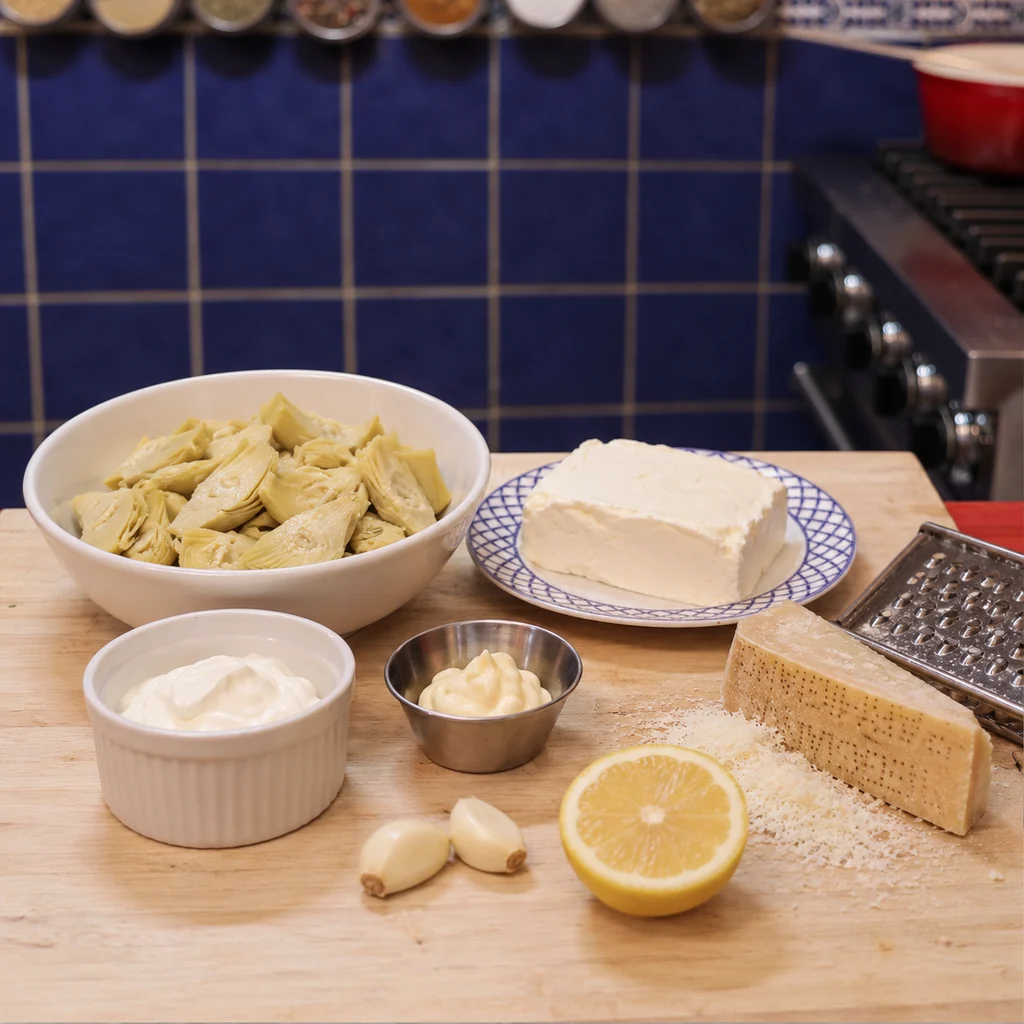
Use 300 g of artichoke hearts after draining, about one and three-quarter loosely filled US cups once chopped. The liquid inside the can or jar is not part of this amount. I prefer hearts packed in water or brine for a more predictable result. Marinated artichokes bring extra oil, vinegar, herbs, and salt, which change the flavour and consistency. Read the label before assuming two containers have the same drained yield.
Drain the hearts well, pat away excess surface moisture, and remove any tough or fibrous outer leaves. Chop into small irregular pieces rather than a fine paste. A large wedge can be awkward to scoop onto a cracker, while tiny shreds disappear into the dairy base. This attention to moisture also matters for a sharing plate: you want a dip that holds on bread rather than a puddle of liquid around a hot dish.
Use block cream cheese for the base
The base begins with 225 g of full-fat block cream cheese, roughly one eight-ounce block. Let it soften enough to mix easily, but do not leave it out for an extended afternoon. I like beating the cream cheese until smooth before adding the other ingredients. That small step prevents firm white lumps that remain visible after the dip is baked. A flexible spatula or wooden spoon is sufficient once the cheese has softened.
Whipped spreads and reduced-fat products may contain a different balance of water and stabilisers, so they are not exact replacements in this measured version. For a different style of creamy appetiser, cottage cheese garlic herb dip has its own lighter-textured base and preparation. I serve that as a separate option rather than using its mixture to replace the cream cheese here without adjusting the rest of the formula.
Balance sour cream and mayonnaise
Add 120 g of sour cream, about half a US cup, and 60 g of mayonnaise, about one quarter cup. The sour cream loosens the softened cheese and adds a mild tang; the smaller amount of mayonnaise helps the mixture feel rounded. I do not add a full extra cup of either ingredient, because that changes both the artichoke balance and the amount that fits in the baking dish.
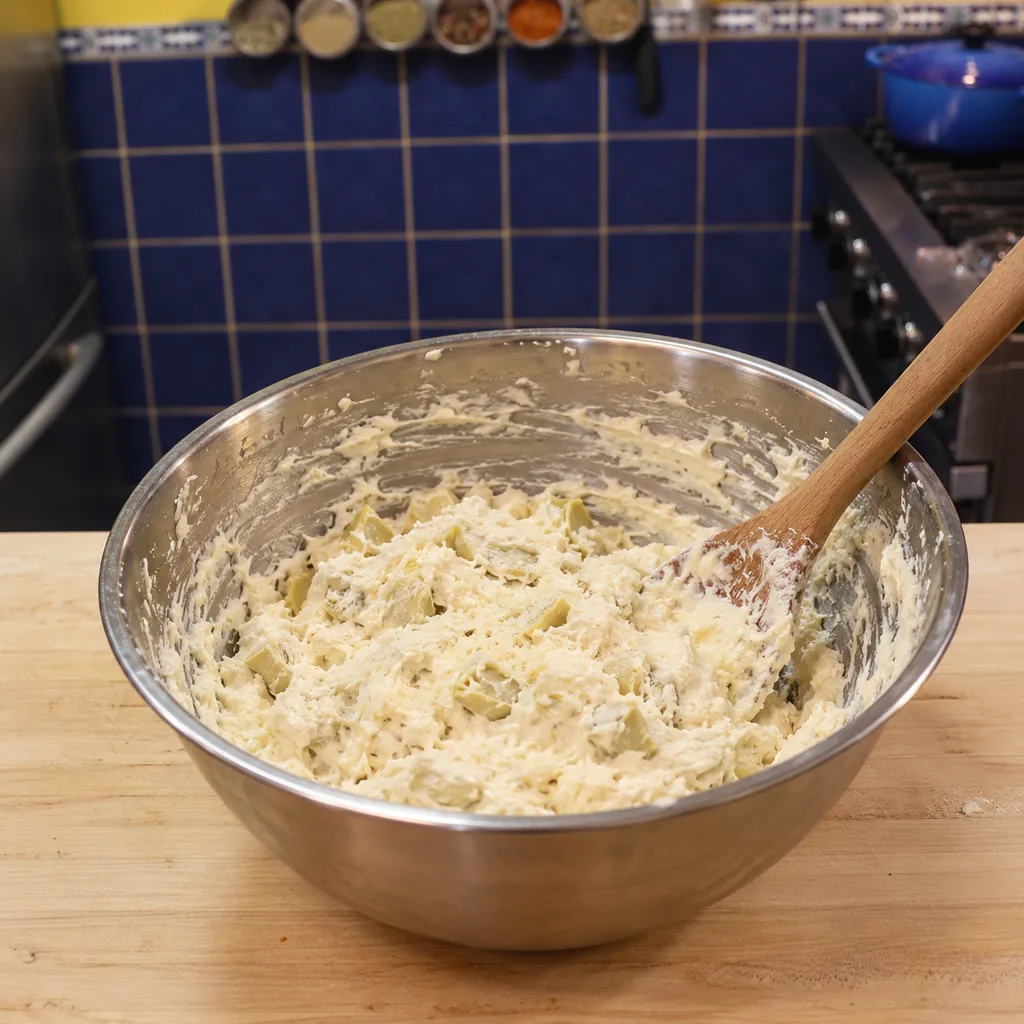
Stir these ingredients into the cream cheese until the base is evenly combined. It should be thick enough that a spoon leaves a track, while still being easy to spread. Do not thin it with the artichoke packing liquid. If you would rather offer a dip without this dairy base, creamy hummus is another dish for the same kind of bread-and-cracker table. Its chickpea preparation follows a separate method, not a substitution inside this recipe.
Divide the Parmesan between the middle and top
Measure 90 g of finely grated Parmesan, approximately one loosely filled US cup, and divide it into 60 g for the mixture and 30 g for the surface. I prefer grating a wedge so the cheese distributes in fine pieces. Volume varies with the grater, so the weight is the more reliable guide. Coarse shavings do not cover the surface in the same way and should not be packed tightly into a cup.
The cheese is already salty, and canned artichokes may be salted too. Add the two finely minced garlic cloves, one tablespoon of lemon juice, and a little black pepper before deciding whether extra salt is necessary. I like a clear garlic flavour without large raw chunks. Lemon gives a useful lift, but extra juice can make the dip loose. Keep additional lemon wedges for a different dish rather than squeezing them freely into the finished mixture.
Fold rather than puree
Fold the chopped artichokes and the 60 g portion of Parmesan into the creamy base. Scrape the bottom of the bowl so there are no pockets of unmixed cheese. The mixture should contain recognisable vegetable pieces throughout. I do not use a blender for this stage. A little unevenness is appropriate for a baked artichoke dip; a perfectly smooth puree would produce a different eating experience and a different appearance on the spoon.
This is also the point to taste a tiny amount with a clean utensil and adjust the optional salt. Do not repeatedly dip a used spoon into the bowl. For another vegetable-focused accompaniment, fresh tomato bruschetta brings a cool, juicy contrast to the warm creamy dip. Keep the tomato mixture separate so its liquid does not seep into this dish before baking or soften the toast ahead of service.
Choose a shallow dish and an even layer
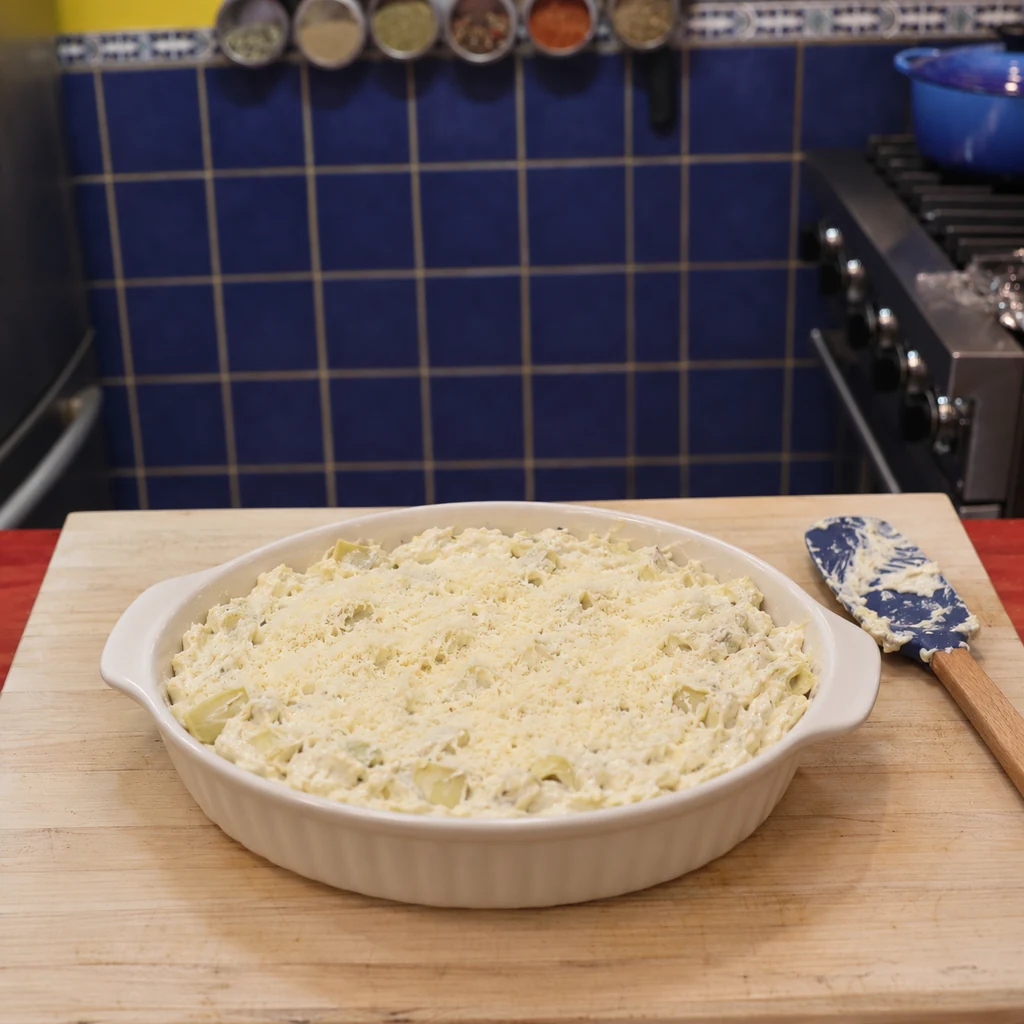
Spread the mixture in a lightly greased shallow oven-safe dish with a capacity of about one litre, or four US cups. An eight-inch, or 20 cm, round dish is suitable if it has enough capacity; an oval of similar volume also works. Leave some headroom rather than filling to the rim. I like a broad layer about three centimetres deep, which exposes enough surface for the topping without creating a cold centre under an overbrowned crust.
Scatter the remaining 30 g of Parmesan over the top in an even thin layer. There is no need for a thick blanket of mozzarella or dramatic cheese strings: Parmesan is the intended topping. Set the dish on a baking sheet if spills are a concern. Make sure the dish itself is rated for the oven temperature, and avoid a sudden temperature change from a very cold dish directly into a hot oven unless its manufacturer permits it.
Heat the centre and watch the surface
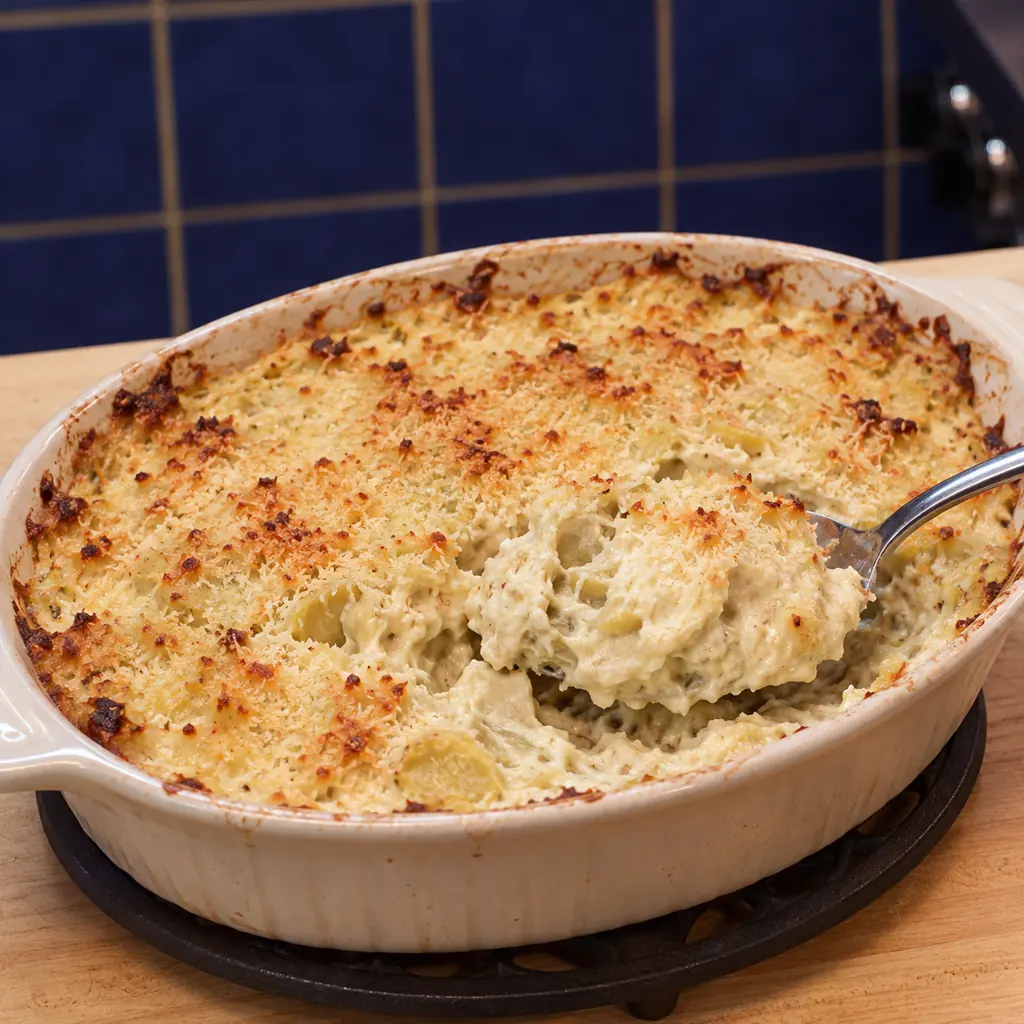
Bake in a preheated conventional oven at 190°C, or 375°F, for approximately twenty-five to thirty minutes. The edges should bubble gently and the topping should be lightly golden in patches. Check that the centre is hot throughout, reaching 74°C, or 165°F, with a food thermometer. A chilled prepared mixture can take longer, so use the centre temperature rather than the clock alone. Do not scorch the surface to compensate for a deep, cold middle.
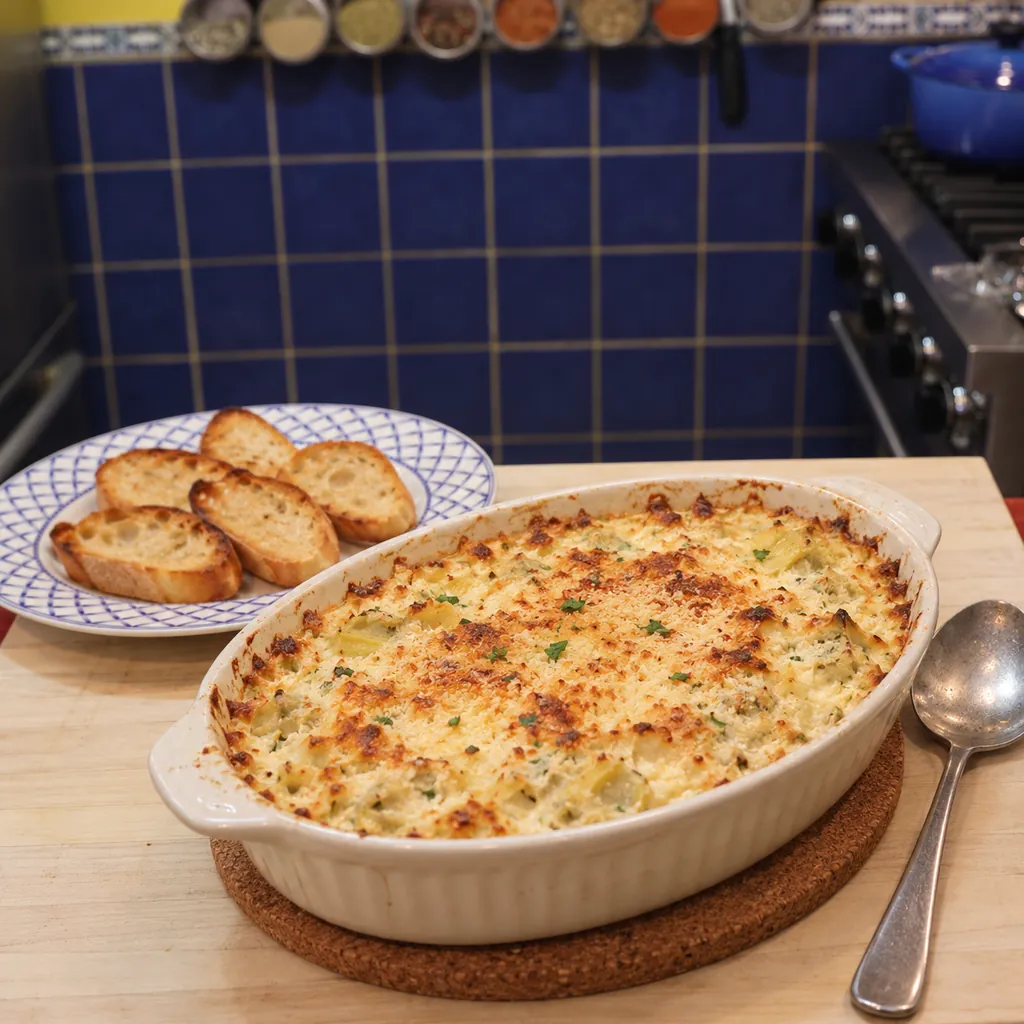
Let the dip stand five minutes before serving and place the hot dish on a heatproof trivet. It will still be very hot. I prefer to give guests a serving spoon so they can transfer a little dip to a plate. For a second warm option at another gathering, Buffalo chicken dip is a separate recipe with a different flavour and appliance method; it should not determine the timing of this oven-baked artichoke version.
Serve with crisp accompaniments
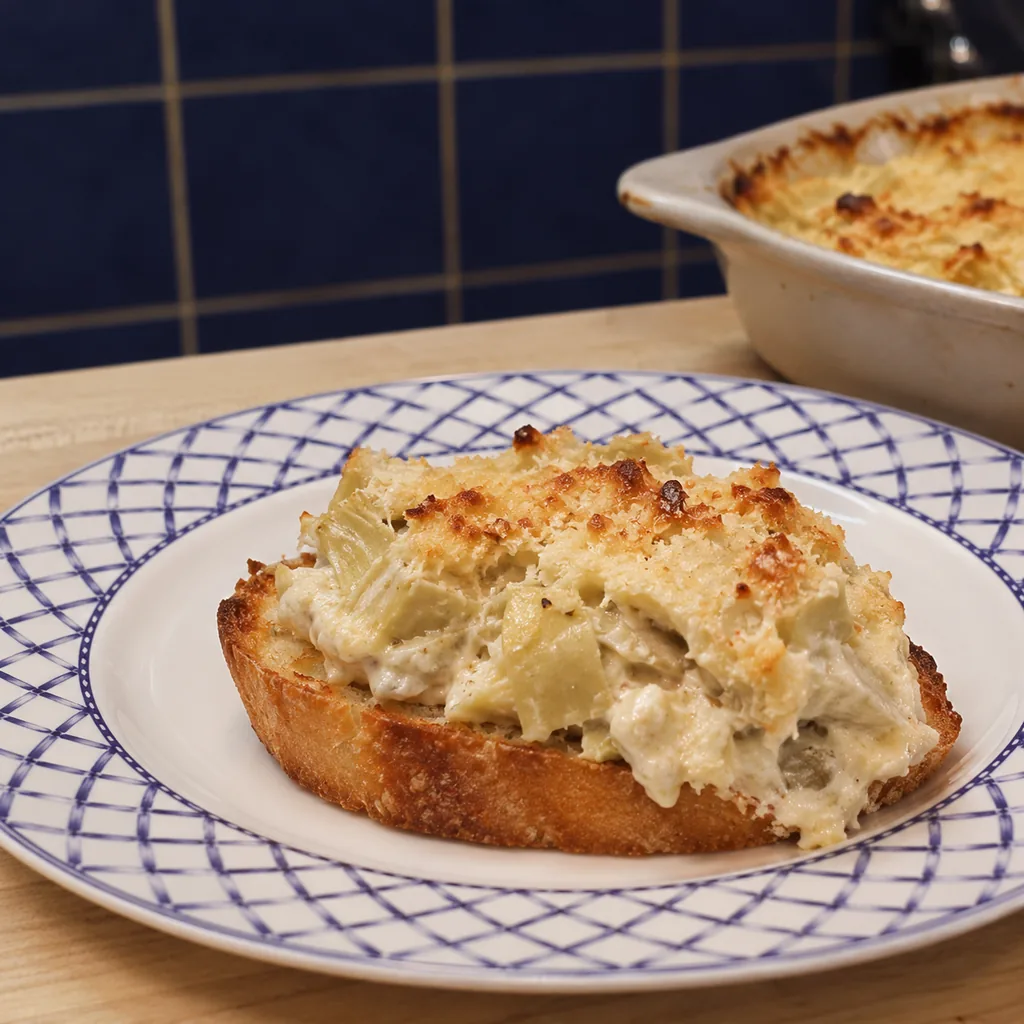
Toast baguette slices or put out sturdy crackers shortly before serving. Their quantity is optional and is not included in the dip’s nutrition estimate. I like a crisp accompaniment because it supports the thick mixture. Keep a spare bowl of crackers away from the hot dish so steam does not soften the whole supply. Air fryer garlic bread offers a more strongly seasoned bread option if that suits the rest of the meal.
For a contrasting cool bowl, easy guacamole adds a different texture without repeating the cheese base. This dip itself contains milk and usually egg from mayonnaise; read the labels, including the Parmesan, and check the bread or crackers for wheat and other allergens. An artichoke dip is not automatically suitable for every vegetarian diet, because the type of rennet in cheese can differ between products.
Prepare ahead and store the leftovers
You can mix the dip up to one day ahead, cover, and refrigerate at 4°C, or 40°F, or below. Keep the topping portion separate until preparing the dish for baking, and follow the baking dish manufacturer’s temperature-change guidance. Refrigerate leftovers within two hours, dividing into a shallow container rather than leaving the hot dish on the table all evening. Use within three days and reheat the portion you need until it reaches 74°C, or 165°F, throughout. I prefer reheating a small portion instead of repeatedly warming and cooling the entire batch.
Baked Artichoke Parmesan Dip Without Spinach
Ingredients
- 300 g drained artichoke hearts patted dry and chopped (about 1¾ US cups)
- 225 g full-fat block cream cheese softened (about 8 oz)
- 120 g sour cream ½ US cup
- 60 g mayonnaise ¼ US cup
- 90 g finely grated Parmesan divided into 60 g and 30 g (about 1 loosely filled US cup total)
- 2 garlic cloves finely minced
- 15 ml lemon juice 1 tablespoon
- ¼ teaspoon ground black pepper
- Fine salt only if needed to taste
- A little butter or oil for greasing the baking dish
- 1 tablespoon chopped parsley for finishing optional
- Toasted baguette slices or sturdy crackers for serving optional
Instructions
- Heat the conventional oven to 190°C / 375°F. Lightly grease a shallow oven-safe dish of about 1 litre / 4 US cups capacity, approximately 20 cm / 8 inches across if round.
- Drain and pat the artichokes dry, removing any tough leaves. Weigh 300 g after draining and chop into small pieces.
- Beat softened cream cheese smooth. Stir in sour cream, mayonnaise, garlic, lemon juice, and black pepper.
- Fold in the artichokes and 60 g Parmesan. Taste with a clean utensil and add salt only if necessary.
- Spread in the dish, leaving headroom and aiming for an even layer about 3 cm deep. Sprinkle with the remaining 30 g Parmesan.
- Bake 25–30 minutes until lightly golden and gently bubbling, with the centre hot throughout at 74°C / 165°F. A chilled mixture may take longer.
- Rest 5 minutes on a heatproof trivet. Add optional parsley and serve carefully with optional toasted bread or crackers.
- Refrigerate leftovers within 2 hours at 4°C / 40°F or below. Use within 3 days; reheat portions to 74°C / 165°F throughout.