Oven-Baked Beef Brisket Without a Smoker
Oven-baked beef brisket is a slow-cooked beef recipe made for anyone who wants tender, rich brisket without using a smoker. Instead of relying on outdoor smoke, this version uses a deep seasoning rub, a covered pan, and a low oven to create juicy slices of beef with a flavorful sauce.
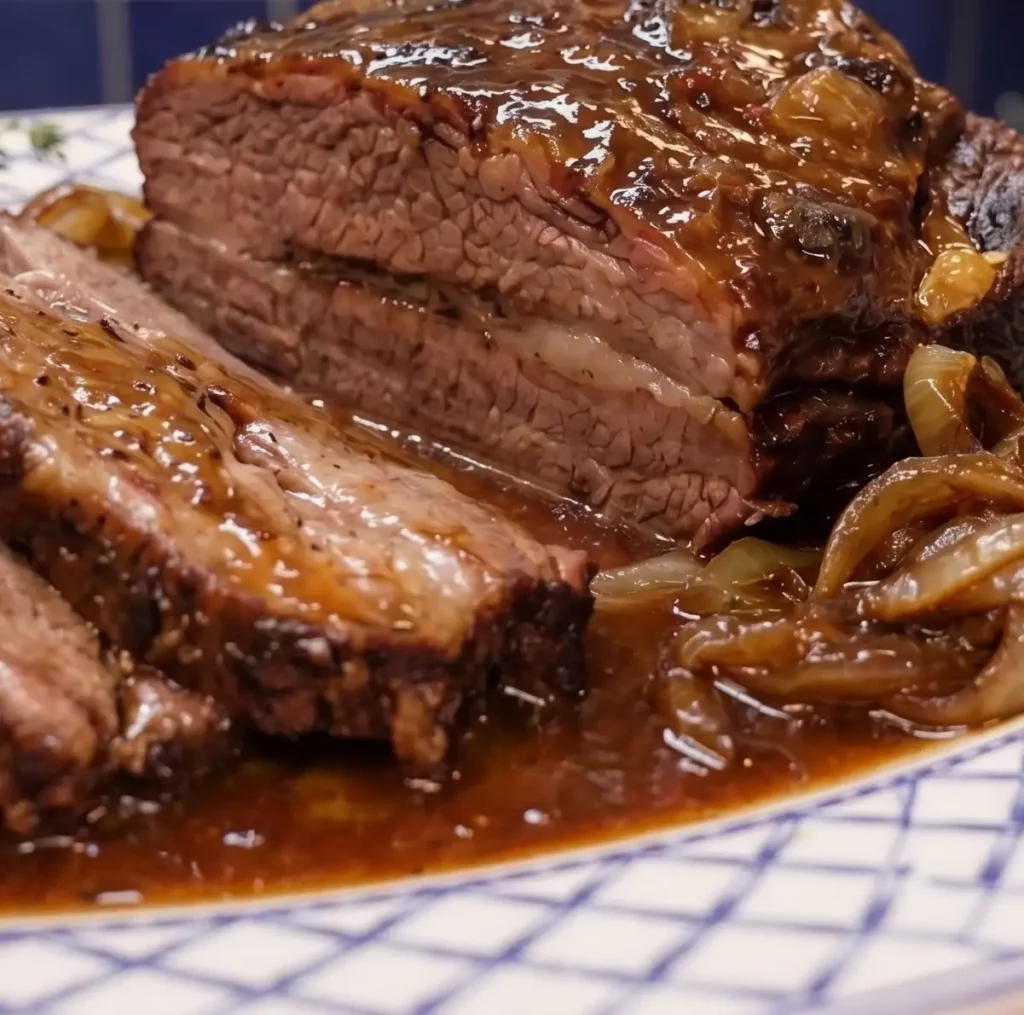
This is the kind of recipe I make when I want a hearty comfort-food dinner that works for Sunday supper, holidays, game day, or a cold-weather meal, but it is also practical year-round because the oven does all the work. It is protein-rich, generous, and satisfying without needing special barbecue equipment.
Why I Make Brisket This Way
This recipe is based on my YouTube video, with a few adjustments since publication to make it even easier for home ovens. I make it this way because not everyone has a smoker, and brisket can still become very tender when it is cooked slowly with moisture, seasoning, and patience.
I prefer to braise brisket in the oven rather than cook it dry like a smoked brisket, because the covered pan helps protect the meat from drying out. The smoked paprika, Worcestershire sauce, onions, garlic, and low oven temperature give the brisket depth without pretending it is true barbecue brisket. This is more of a tender oven-braised brisket, not a smoked brisket, not a pot roast, and not a quick roast beef.
For another slow-cooked beef recipe with a French-style sauce, the braised beef cheeks with red wine are richer and more restaurant-style. This brisket is more North American, easier to slice, and built for serving with potatoes, gravy, coleslaw, or sandwiches the next day.
What Makes This Oven Brisket Different
A smoked brisket is cooked uncovered for many hours with wood smoke. This oven version is cooked covered, with broth, onions, garlic, vinegar, Worcestershire sauce, and spices. That makes the texture more like a tender braised brisket with a flavorful pan sauce.
It is also different from classic roast beef. Roast beef is usually cooked to medium-rare or medium and sliced pink. Brisket is a tougher cut with more connective tissue, so it needs to cook much longer until it becomes tender. If you want a steakhouse-style beef dinner instead, something like spicy roast beef sandwiches or French peppercorn steak fits a different craving.
The goal here is simple: tender slices, deep flavor, and no smoker required.
Ingredients
For the brisket:
- 4 to 5 lb beef brisket, flat cut or point cut
- 2 tbsp olive oil
- 2 large onions, sliced
- 5 cloves garlic, smashed
- 2 cups beef broth
- 2 tbsp tomato paste
- 2 tbsp Worcestershire sauce
- 2 tbsp apple cider vinegar
- 1 tbsp Dijon mustard
- 1 tbsp brown sugar
- 2 bay leaves
- 3 sprigs thyme, or 1 tsp dried thyme
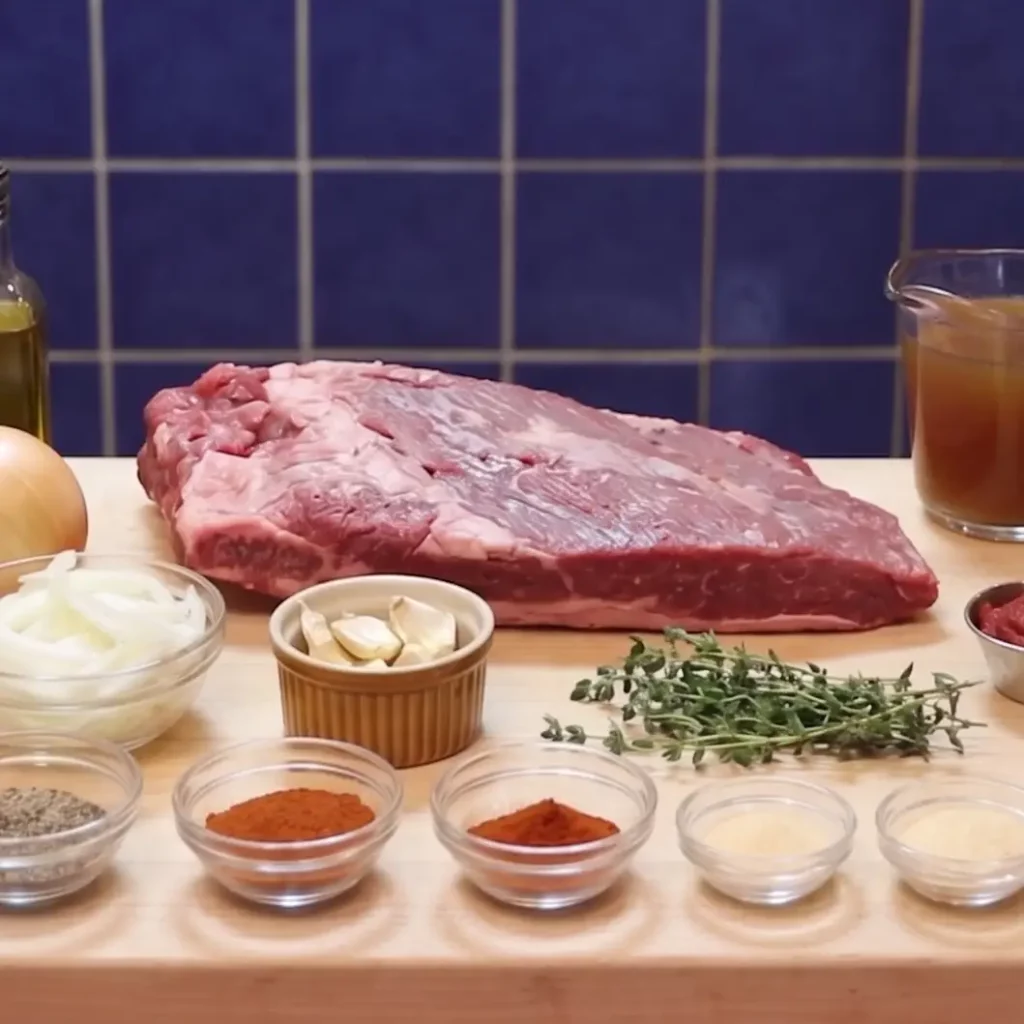
For the dry rub:
- 2 tsp kosher salt
- 1 1/2 tsp black pepper
- 2 tsp smoked paprika
- 1 tsp sweet paprika
- 1 tsp garlic powder
- 1 tsp onion powder
- 1/2 tsp ground cumin
- 1/2 tsp chili powder
Step-by-Step Instructions
1. Season the Brisket
Pat the brisket very dry with paper towels. This helps the seasoning stick and gives the meat a better surface.
Mix the salt, pepper, smoked paprika, sweet paprika, garlic powder, onion powder, cumin, and chili powder in a small bowl. Rub the seasoning all over the brisket, including the sides.
If you have time, let the seasoned brisket rest in the fridge for a few hours or overnight. If not, let it sit at room temperature for about 30 minutes while you prepare the other ingredients. Even a short rest helps the seasoning settle into the meat.
2. Sear the Brisket
Preheat the oven to 300°F.
Heat the olive oil in a large Dutch oven or heavy oven-safe roasting pan over medium-high heat. Sear the brisket for 3 to 4 minutes per side, until the outside is browned.
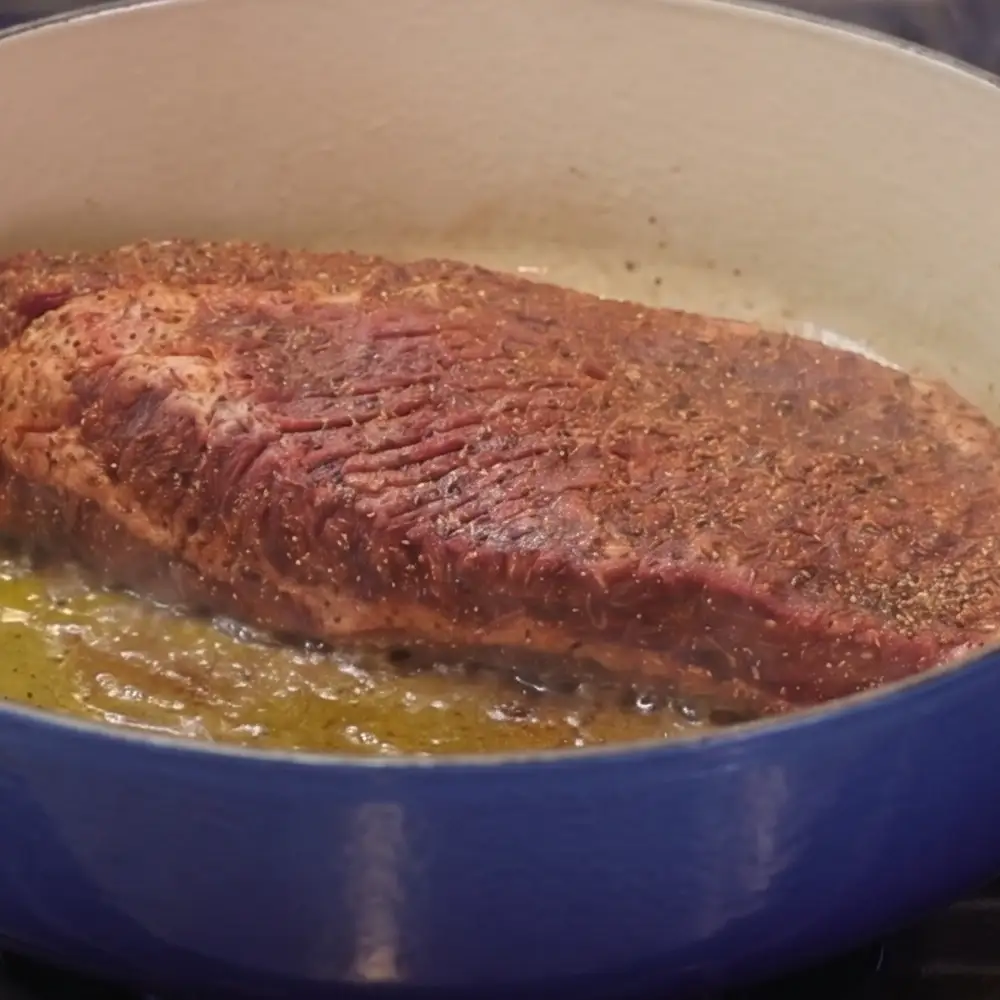
This step is not about cooking the brisket through. It is about building flavor. The browned bits in the bottom of the pan will help create a deeper sauce.
Remove the brisket and place it on a plate.
3. Build the Braising Base
Add the sliced onions to the same pan and cook for 5 to 7 minutes, stirring often. The onions should soften and pick up the beef flavor from the bottom of the pan.
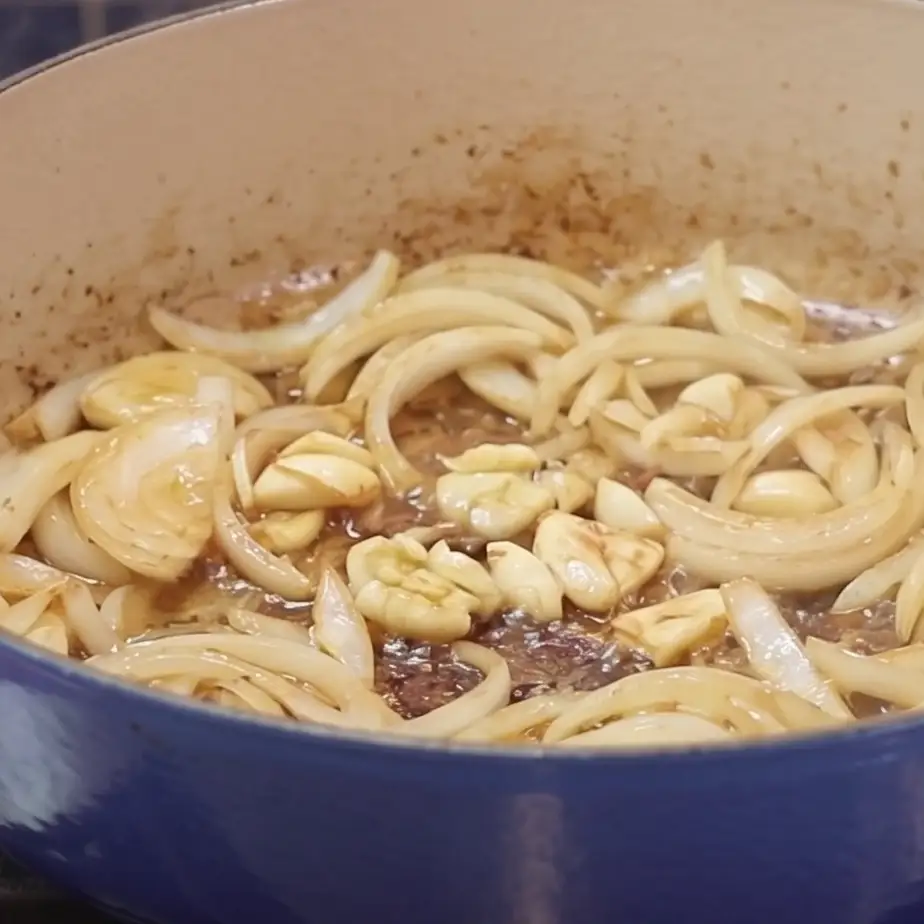
Add the garlic and cook for 1 minute. Stir in the tomato paste and cook for another minute to remove the raw tomato taste.
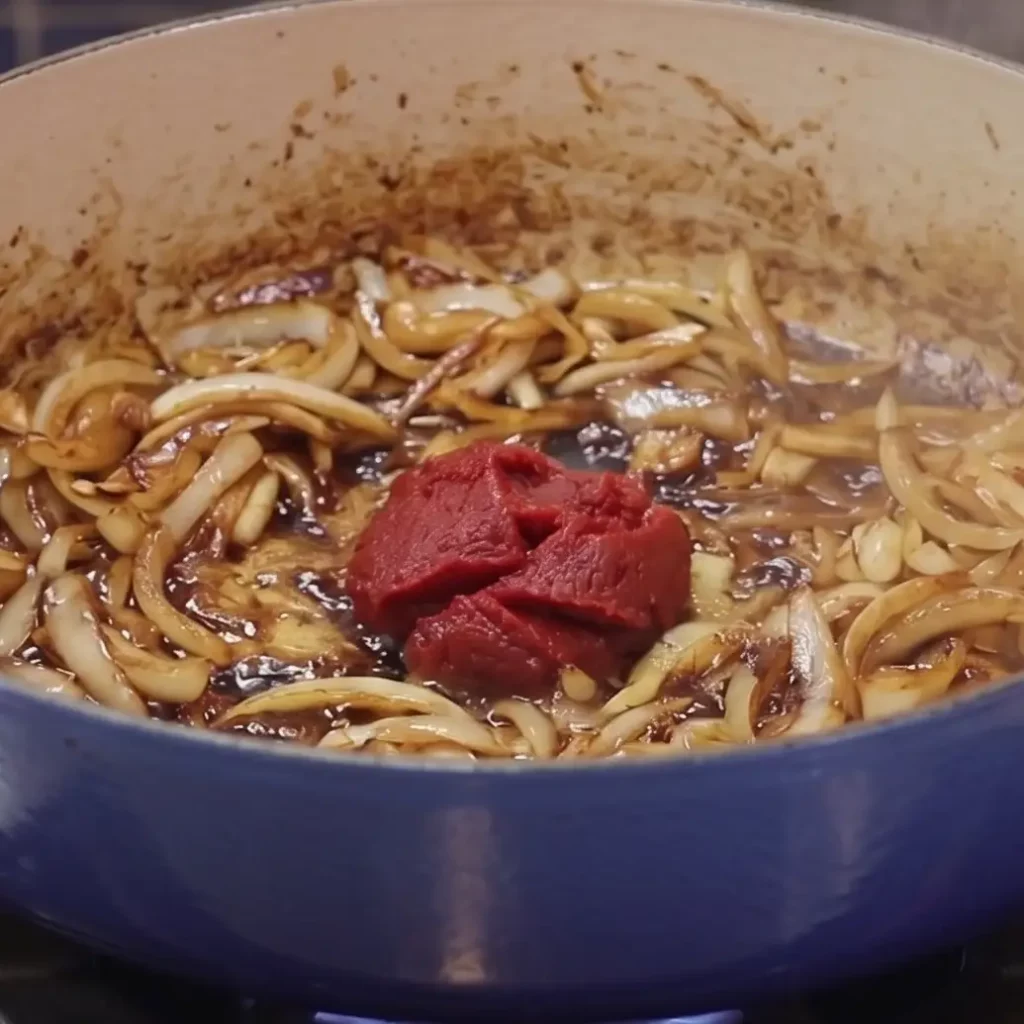
Pour in the beef broth, Worcestershire sauce, apple cider vinegar, Dijon mustard, and brown sugar. Scrape the bottom of the pan to lift all the browned bits. Add the bay leaves and thyme.
If you enjoy making sauces from pan juices, this method is close in spirit to a good homemade brown sauce. The classic brown sauce recipe is useful when you want a separate gravy-style sauce for potatoes, meat, or poutine.
4. Cook Low and Slow in the Oven
Return the brisket to the pan, fat side up. Spoon some of the liquid over the top. Cover tightly with a lid or foil.
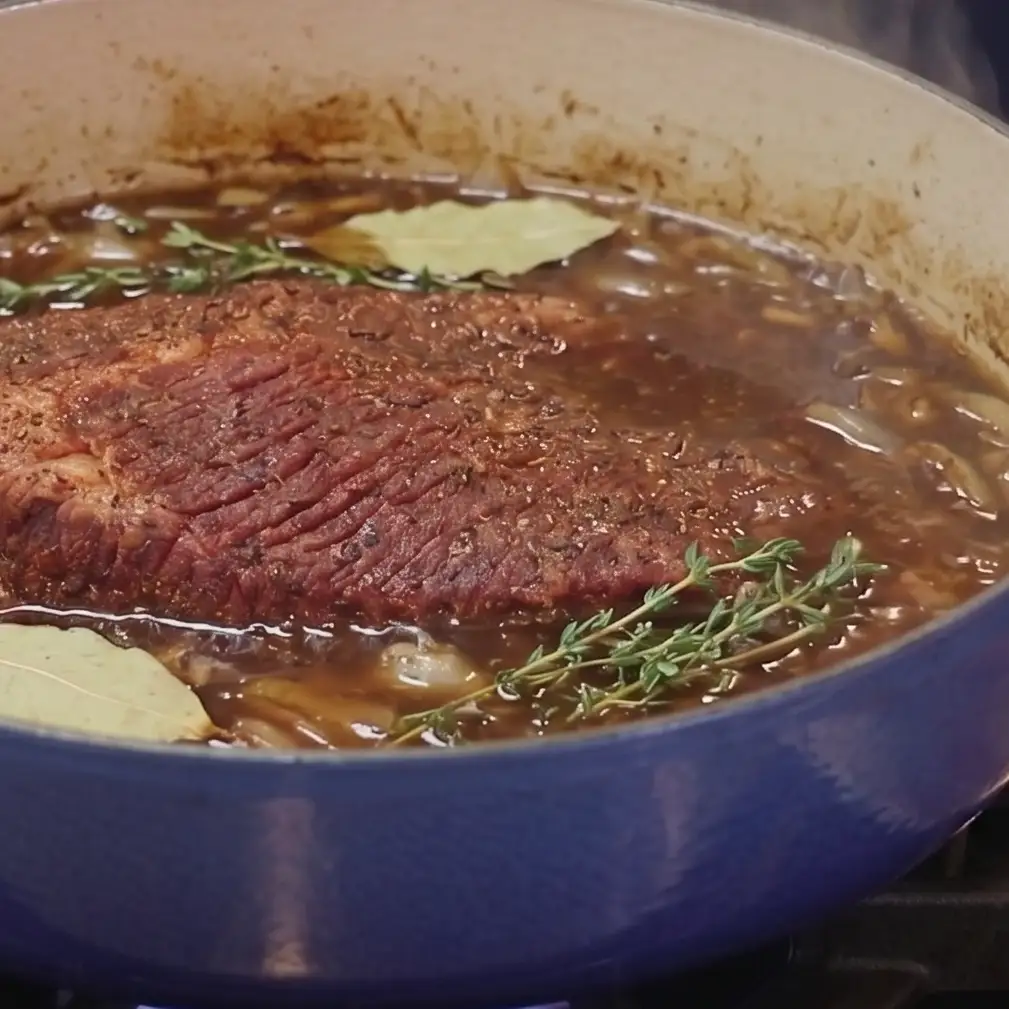
Place the pan in the oven and cook for 3 1/2 to 4 1/2 hours, depending on the size and thickness of the brisket. Start checking around the 3 1/2 hour mark.
The brisket is ready when a fork slides in with little resistance and the meat feels tender. If you use a thermometer, brisket usually becomes tender around 195°F to 205°F, but tenderness matters more than the exact number. For general meat doneness reference, the internal cooking temperature chart is a useful guide.
Do not rush this step. If the brisket still feels tight, cover it again and keep cooking.
5. Rest and Slice
Remove the brisket from the oven and let it rest, covered, for 20 to 30 minutes. Resting helps the juices settle back into the meat.
Transfer the brisket to a cutting board. Slice against the grain. This is important because brisket has long muscle fibers. Cutting against the grain makes each slice more tender.
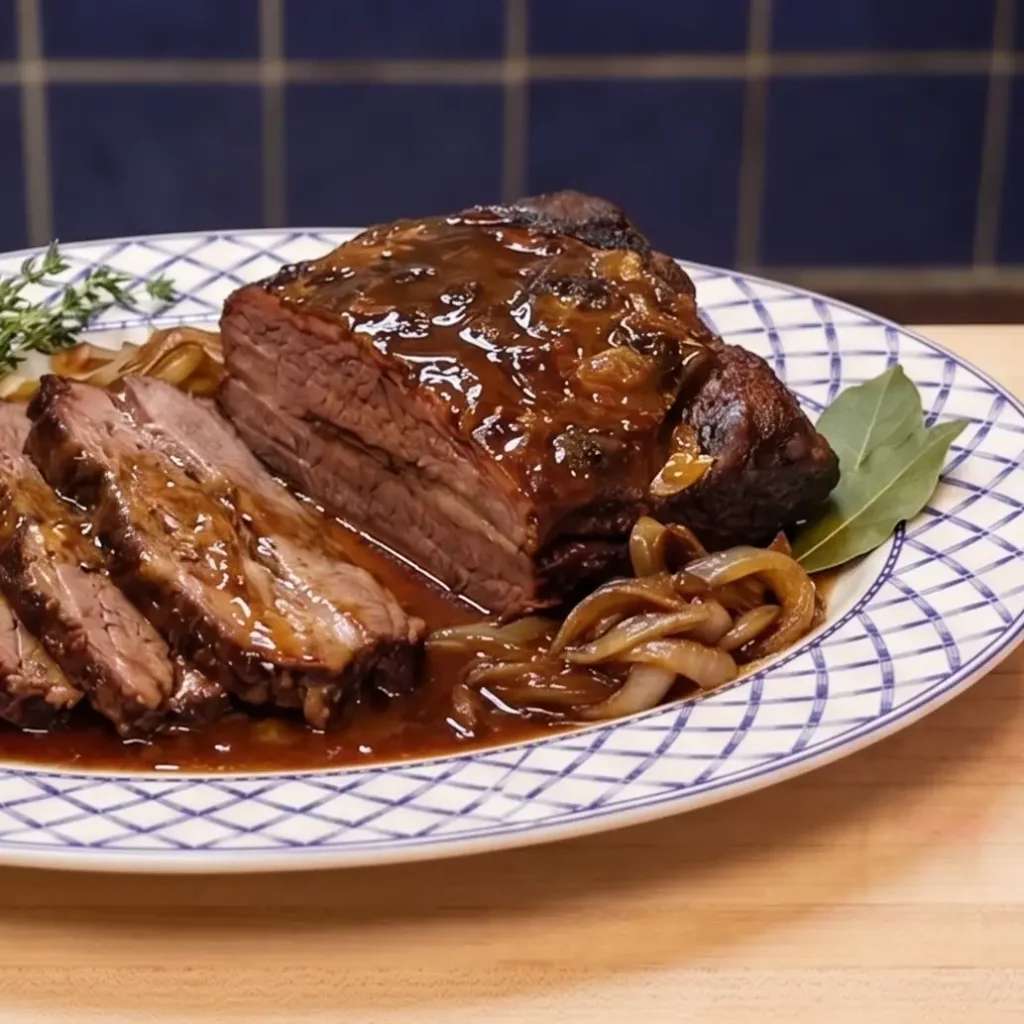
Skim excess fat from the sauce if needed, then spoon the onions and sauce over the sliced brisket.
What to Serve with Oven-Baked Brisket
Brisket loves potatoes. For a classic plate, serve it with homemade mashed potatoes and spoon the pan sauce over the top. If you want something with more texture, Lyonnaise-style potatoes are a beautiful side with onions and browned edges.
For an easier sheet-pan side, oven-roasted mixed vegetables work well because they balance the richness of the beef. A creamy, crunchy side like KFC-style coleslaw is especially good if you want to serve the brisket on buns or as a casual dinner.
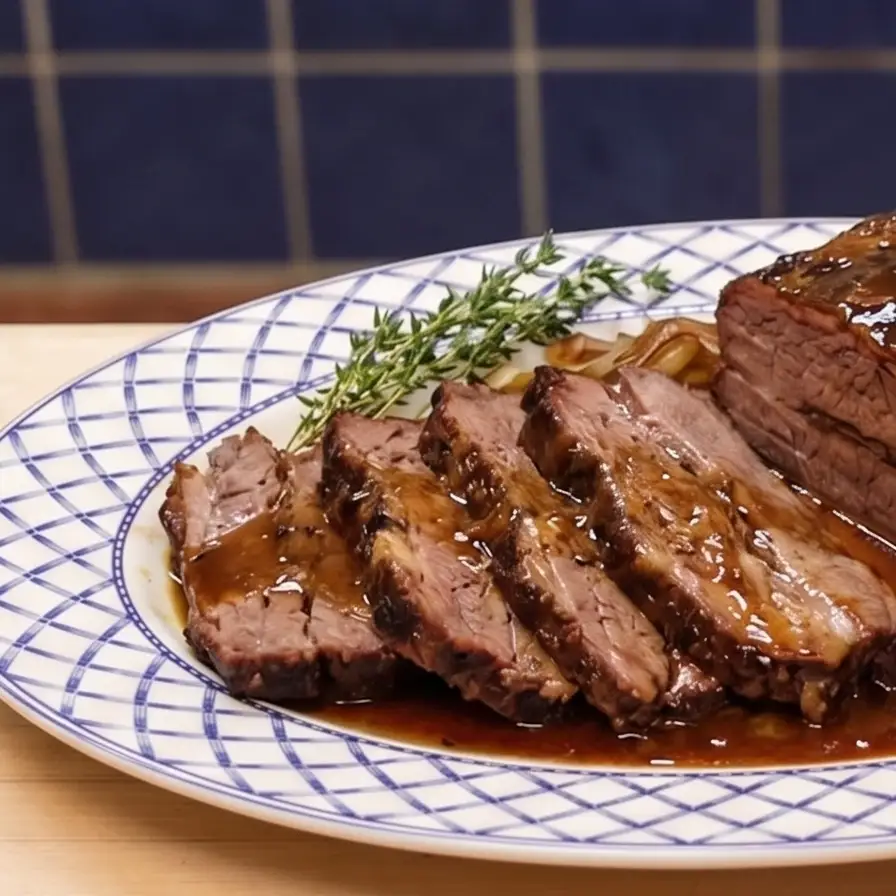
A little sauce on the side is always welcome. Try it with garlic butter for steak if you want a richer finish, or use the pan juices as they are for a more natural braised-beef flavor.
Substitutions
Brisket Cut
Flat cut brisket gives cleaner slices and is usually easier to serve. Point cut brisket has more fat and can be juicier, but it is less uniform. Either works in this recipe.
Beef Broth
Use beef broth for the deepest flavor. If you only have chicken broth, it will still work, but the sauce will be lighter.
Smoked Paprika
Smoked paprika helps replace some of the flavor you would normally get from a smoker. If you only have regular paprika, use it, but the final dish will taste less smoky.
Apple Cider Vinegar
You can replace apple cider vinegar with red wine vinegar. The acidity helps balance the richness of the brisket.
Dijon Mustard
Dijon adds depth without making the dish taste strongly of mustard. If you want a bolder flavor, you can add one extra teaspoon.
Brown Sugar
The sugar is not there to make the brisket sweet. It helps balance the vinegar, tomato paste, and spices. You can reduce it to 1 teaspoon if preferred.
FAQ
Can I make brisket tender without a smoker?
Yes. A smoker gives brisket a specific barbecue flavor, but tenderness comes from low, slow cooking. In this recipe, the covered oven method uses broth and aromatics to help the brisket become tender without drying out.
What temperature should I cook brisket in the oven?
I prefer 300°F for oven-braised brisket. It is low enough to cook the meat gently, but not so low that the recipe takes all day. If your brisket is very large, you can lower the oven to 275°F and cook it longer.
Should brisket be cooked covered or uncovered in the oven?
For this recipe, covered is best. Brisket needs time to soften, and the covered pan keeps moisture around the meat. If you cook it uncovered the whole time, it can dry out before it becomes tender.
How do I know when brisket is done?
The best test is tenderness. A fork or skewer should slide into the meat easily. The internal temperature often lands around 195°F to 205°F when brisket is tender, but every piece of meat is different.
Can I make this recipe ahead of time?
Yes. Brisket is excellent made ahead. Let it cool in the sauce, refrigerate it, then slice and reheat gently the next day. Chilled brisket is also easier to slice neatly.
How do I reheat brisket?
Place the sliced brisket in a baking dish with some of the sauce. Cover with foil and warm in a 300°F oven until hot. Avoid high heat because it can dry the slices.
Can I freeze cooked brisket?
Yes. Freeze sliced brisket with some sauce in an airtight container. The sauce helps protect the meat from drying out. Thaw in the fridge before reheating.
Suggested Posts
- Serve the brisket with creamy homemade mashed potatoes
- Add a vegetable side like oven-roasted mixed vegetables
- Make a richer plate with classic brown sauce
- Try another slow beef dinner with braised beef cheeks
- Use leftovers in sandwiches with inspiration from spicy roast beef sandwiches
- Pair it with Lyonnaise potatoes
- Add a cold side like creamy coleslaw
- For steakhouse flavor, try garlic butter sauce for steak
- For another beef classic, see classic boeuf bourguignon
- For cooking reference, use the internal cooking temperature chart
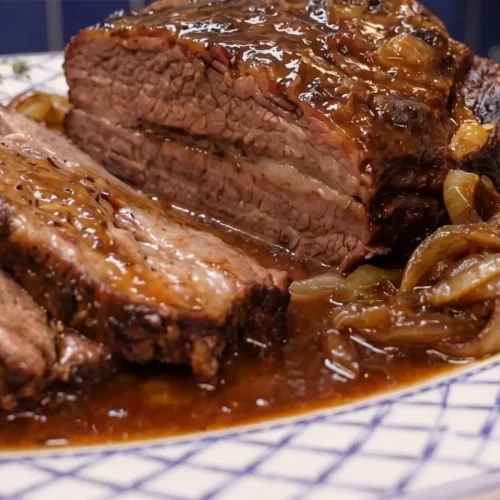
Oven-Baked Beef Brisket Without a Smoker
Ingredients
- 4 to 5 lb beef brisket flat cut or point cut
- 2 tbsp olive oil
- 2 large onions sliced
- 5 cloves garlic smashed
- 2 cups beef broth
- 2 tbsp tomato paste
- 2 tbsp Worcestershire sauce
- 2 tbsp apple cider vinegar
- 1 tbsp Dijon mustard
- 1 tbsp brown sugar
- 2 bay leaves
- 3 sprigs thyme or 1 tsp dried thyme
- For the dry rub:
- 2 tsp kosher salt
- 1 1/2 tsp black pepper
- 2 tsp smoked paprika
- 1 tsp sweet paprika
- 1 tsp garlic powder
- 1 tsp onion powder
- 1/2 tsp ground cumin
- 1/2 tsp chili powder
Instructions
- Pat the brisket dry with paper towels.
- Mix the salt, pepper, smoked paprika, sweet paprika, garlic powder, onion powder, cumin, and chili powder.
- Rub the seasoning all over the brisket. Let rest for 30 minutes, or refrigerate overnight for deeper flavor.
- Preheat the oven to 300°F.
- Heat olive oil in a large Dutch oven or heavy oven-safe pan over medium-high heat.
- Sear the brisket for 3 to 4 minutes per side, then remove it from the pan.
- Add the sliced onions and cook for 5 to 7 minutes.
- Add the garlic and cook for 1 minute.
- Stir in the tomato paste and cook for 1 minute.
- Add the beef broth, Worcestershire sauce, apple cider vinegar, Dijon mustard, brown sugar, bay leaves, and thyme. Scrape the bottom of the pan.
- Return the brisket to the pan, fat side up.
- Cover tightly with a lid or foil.
- Bake for 3 1/2 to 4 1/2 hours, until the brisket is fork-tender.
- Rest the brisket, covered, for 20 to 30 minutes.
- Slice against the grain and serve with the onions and pan sauce.
Notes
FAQ
Can I make brisket tender without a smoker?
Yes. A smoker gives brisket a specific barbecue flavor, but tenderness comes from low, slow cooking. In this recipe, the covered oven method uses broth and aromatics to help the brisket become tender without drying out.What temperature should I cook brisket in the oven?
I prefer 300°F for oven-braised brisket. It is low enough to cook the meat gently, but not so low that the recipe takes all day. If your brisket is very large, you can lower the oven to 275°F and cook it longer.Should brisket be cooked covered or uncovered in the oven?
For this recipe, covered is best. Brisket needs time to soften, and the covered pan keeps moisture around the meat. If you cook it uncovered the whole time, it can dry out before it becomes tender.How do I know when brisket is done?
The best test is tenderness. A fork or skewer should slide into the meat easily. The internal temperature often lands around 195°F to 205°F when brisket is tender, but every piece of meat is different.Can I make this recipe ahead of time?
Yes. Brisket is excellent made ahead. Let it cool in the sauce, refrigerate it, then slice and reheat gently the next day. Chilled brisket is also easier to slice neatly.How do I reheat brisket?
Place the sliced brisket in a baking dish with some of the sauce. Cover with foil and warm in a 300°F oven until hot. Avoid high heat because it can dry the slices.Can I freeze cooked brisket?
Yes. Freeze sliced brisket with some sauce in an airtight container. The sauce helps protect the meat from drying out. Thaw in the fridge before reheating.🔗 Useful Links
🛒 Michel Dumas Shop : Explore our kitchen essentials, including aprons and knives.
🌐 Linktree : Access all our important links in one place.
📱 YouTube | Instagram | Facebook | TikTok : Follow us for the latest recipes and culinary tips.