Neutral Brown Veal Stock (Fond de Veau Brun) — Classic French Base for Sauces, Jus, and Braises
A neutral brown veal stock (fond de veau brun) is a deeply flavored, gelatin-rich cooking liquid made by roasting veal bones, simmering them gently with aromatics, then straining. It’s “neutral” because it’s intentionally unsalted and kept simple, so it can become anything later—pan sauces, reductions, braises, and classic French dishes—any time of year.
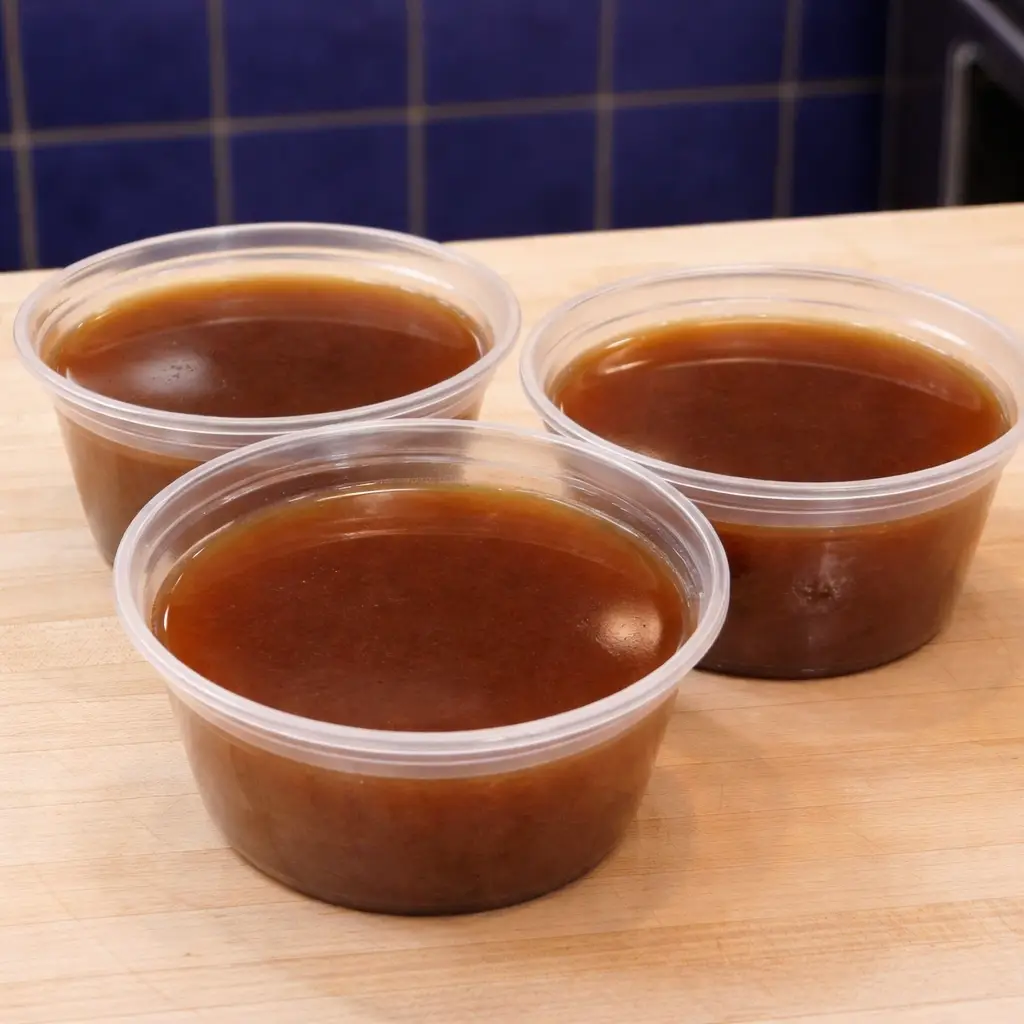
This version is based on my YouTube video, with a few adjustments since publication to make the results more consistent at home (especially water volume, aromatics balance, and a clearer roasting target).
Why make a neutral brown veal stock?
If you cook French or bistro-style food, this is the backbone. A great fond de veau brings two things that store-bought broth rarely delivers:
- Body from collagen → gelatin (that glossy, “restaurant” mouthfeel).
- Depth from roasted bones and browned vegetables (but without being salty).
Neutral is the key word. This isn’t a finished sauce. It’s a base you can transform with techniques like a quick thickener (see beurre manié recipe), a pan reduction, or a butter emulsion like the one used in steak sauce entrecôte with warm herb butter emulsion.

How this differs from other “stocks” and why it avoids cannibalization
This recipe is not competing with quick weeknight recipes. It’s a foundation technique—a batch-cook item you make once and use for weeks.
- Not a quick sauce: If you want fast dinner ideas, use ready-to-go recipes and methods like creamy Tuscan chicken or steak au poivre (easy recipe).
- Not a salty broth: This stays unsalted so it can reduce without becoming too salty.
- Not a demi-glace: A demi-glace is stock reduced much further (and often built differently). This is the starting point.
- Not a “bone broth” trend recipe: This is classic French technique with clear culinary intent: sauces, jus, braises, and refined dishes.
Ingredients you actually need (and what matters most)
Veal bones (the real secret)
For the best gel and structure, aim for a mix:
- Knuckle/joint bones (collagen-heavy) for body
- Meaty veal bones for flavor
- A little marrow is fine, but don’t rely on marrow bones alone
If the butcher can’t do “veal stock bones,” ask for a mix that includes joints.
Aromatics (keep them supportive)
A neutral stock should not taste like onion soup. Roasted onion is powerful. Balance matters more than quantity.
Herbs
A classic bouquet garni is usually parsley stems + bay + thyme. Basil can be used, but it’s optional and subtle—long simmering can flatten or muddy it, so keep it restrained.
Step-by-step: how to make fond de veau brun at home

1) Roast the bones and vegetables (build flavor without bitterness)
Preheat the oven to 400°F.
- Spread veal bones in a single layer on a large roasting pan.
- Add the halved onions and chunked carrots around the bones.
Roast until everything is deeply browned, not black. This typically takes 75–120 minutes, depending on the oven and how crowded the pan is. Turn the bones and vegetables once or twice for even browning.
What you’re looking for:
- Bones browned with dark golden edges
- Vegetables caramelized but not scorched
- Rendered fat in the pan, and brown fond stuck to the bottom (great—this is flavor)

2) Deglaze the roasting pan (don’t waste the fond)
Move the roasted bones and vegetables into a large stockpot.
Place the roasting pan over medium heat. Add a little hot water and scrape up the browned bits. Pour that liquid into the pot.
This step is a big reason homemade stock tastes “real.”

3) Add bouquet garni and cold water (precision matters here)
Add the bouquet garni to the stockpot.
Cover with cold water by about 1 inch / 2–3 cm—not “fill to the top.” A reliable home-kitchen range for 9 lb / 4 kg bones is about 6–8 quarts of water, depending on pot size.
Why cold water? It helps proteins rise slowly so you can skim cleaner.

4) Bring to a bare simmer and skim patiently
Bring the pot up slowly until you see a gentle simmer—tiny bubbles and light movement, not a rolling boil.
Skim foam and impurities from the surface during the first 30–60 minutes. This is where you earn a clean-tasting, clear stock.
5) Simmer gently for 3½ to 5 hours
Maintain a low simmer, uncovered or partially covered.
- If it boils hard, it can turn cloudy and taste “rough.”
- If it’s too low, extraction can be slow.
As it cooks, occasionally skim fat and keep the surface tidy.

6) Strain carefully (clarity = quality)
Remove large bones and vegetables first.
Strain through a fine mesh strainer. For extra clarity, strain again through an even finer strainer or cheesecloth.
7) Chill fast, then remove fat
Cool the stock quickly (ice bath in the sink is great), then refrigerate.
Once chilled, the fat will solidify on top. Lift it off. Underneath, a great veal stock often gels—proof you extracted collagen properly.

How to use it (practical, year-round)
Neutral brown veal stock is a “make once, use many times” base:
- Steak nights: Use it to build pan sauce depth alongside recipes like ribeye steak Bordelaise or finish a sauce inspired by steak with béarnaise sauce.
- Braises: It’s perfect for slow dishes like braised beef cheeks with red wine.
- Classic comfort food: It supports dishes like classic boeuf bourguignon.
- Velvety sauces: Thicken a reduction quickly and cleanly using beurre manié recipe.
- Weeknight upgrades: Even a simple mushroom sauce becomes restaurant-level with a splash—compare results with creamy mushroom sauce for steak.

Nutrition context (simple and practical)
Veal stock is typically high in protein-building blocks from collagen and gelatin, but it’s not meant to be consumed like a full meal on its own. Think of it as a flavor and texture tool—a small amount can transform a sauce or braise without relying on heavy cream or lots of butter.
Substitutions (what you can change safely)
- Veal bones → beef bones: Works, but the flavor is more beef-forward and sometimes less “refined.” Use knuckles/joints if possible.
- Onions: Yellow onions are classic. If you only have sweet onions, use less to avoid sweetness.
- Carrots: Standard carrots are fine. Don’t add too many—too much sweetness can push the stock away from neutral.
- Bouquet garni:
- Best classic: parsley stems + bay + thyme
- Basil: optional, minimal
- Avoid rosemary-heavy bouquets (too assertive for neutral stock)
- Tomato paste: Optional. If you want a darker color and slightly deeper umami, add a small amount to the roasting pan near the end of roasting. For strict “neutral,” skip it.
FAQ
Why is my stock not gelatinous?
Usually one of these:
- Not enough joint/knuckle bones (low collagen)
- Too much water (dilution)
- Simmer time too short or too aggressive (extraction issues)
Can I salt the stock?
Keep it unsalted. Stocks often get reduced, and salted stock can turn overly salty fast. Season later at the sauce or dish stage.
Why does mine taste bitter?
Most common causes:
- Bones or vegetables roasted too far (scorched spots)
- Deglazing included burnt fond
Aim for deep brown, not black.
Do I need to blanch the bones first?
Not necessary for brown veal stock if you roast properly and skim well. Blanching is more common for white stock.
How long does it keep?
- Fridge: 3–4 days
- Freezer: 4–6 months (portion it for convenience)
What’s the best way to freeze it?
Freeze in:
- 1-cup portions for sauces
- Ice cube trays for “small boosts”
- 2-quart containers for braises
What to serve with / Suggested posts
For a full bistro-style plate, pair your sauce-based dishes with classic sides and complementary recipes:
- Homemade mashed potatoes recipe for steak sauces and braises
- Oven roasted mixed vegetables for an easy year-round side
- Classic French onion soup recipe for a French bistro starter
- Steak sauce entrecôte with warm herb butter emulsion for a sauce-focused main
- Creamy mushroom sauce for steak when you want a quicker sauce built on a strong base
- Steak au poivre (easy recipe) for a classic that benefits from real stock
- Classic boeuf bourguignon for cold-weather comfort (still great any time)
- Braised beef cheeks with red wine for a slow-cooked weekend project
- Steak with béarnaise sauce for a classic restaurant-style plate
- Beurre manié recipe for quick thickening without flour lumps

Neutral Brown Veal Stock (Fond de Veau Brun) — Classic French Base for Sauces, Jus, and Braises
Ingredients
- 9 lb veal bones mix of knuckle/joint bones + meaty bones
- 4 large carrots cut into large chunks
- 4 large yellow onions halved
- 6 –8 quarts cold water enough to cover by about 1 inch
Bouquet garni:
- 8 –10 parsley stems
- 2 bay leaves
- 6 –8 thyme sprigs or 2 tsp dried thyme
- Optional: 2–3 basil sprigs minimal
Instructions
- Preheat oven to 400°F. Spread veal bones, carrots, and onions on a roasting pan. Roast 75–120 minutes until deeply browned, turning once or twice.
- Transfer bones and vegetables to a large stockpot. Place roasting pan over medium heat, add a splash of hot water, scrape up the browned fond, and pour into the pot.
- Add bouquet garni. Cover with cold water by about 1 inch (typically 6–8 quarts).
- Bring slowly to a bare simmer. Skim foam and impurities for the first 30–60 minutes.
- Simmer gently 3½–5 hours, skimming fat and impurities occasionally. Avoid hard boiling.
- Strain through a fine mesh strainer. For extra clarity, strain a second time through a finer strainer or cheesecloth.
- Cool quickly, refrigerate, and remove the solid fat cap. Portion and freeze if desired.
Video
Notes
FAQ
Why is my stock not gelatinous?
Usually one of these:- Not enough joint/knuckle bones (low collagen)
- Too much water (dilution)
- Simmer time too short or too aggressive (extraction issues)
Can I salt the stock?
Keep it unsalted. Stocks often get reduced, and salted stock can turn overly salty fast. Season later at the sauce or dish stage.Why does mine taste bitter?
Most common causes:- Bones or vegetables roasted too far (scorched spots)
- Deglazing included burnt fond
Aim for deep brown, not black.
Do I need to blanch the bones first?
Not necessary for brown veal stock if you roast properly and skim well. Blanching is more common for white stock.How long does it keep?
- Fridge: 3–4 days
- Freezer: 4–6 months (portion it for convenience)
What’s the best way to freeze it?
Freeze in:- 1-cup portions for sauces
- Ice cube trays for “small boosts”
- 2-quart containers for braises
Useful Links
🛒 Michel Dumas Shop : Explore our kitchen essentials, including aprons and knives.
🌐 Linktree : Access all our important links in one place.
📱 YouTube | Instagram | Facebook | TikTok : Follow us for the latest recipes and culinary tips.