Pan-Seared Duck Breast with Blueberry Sauce and Roasted Vegetables
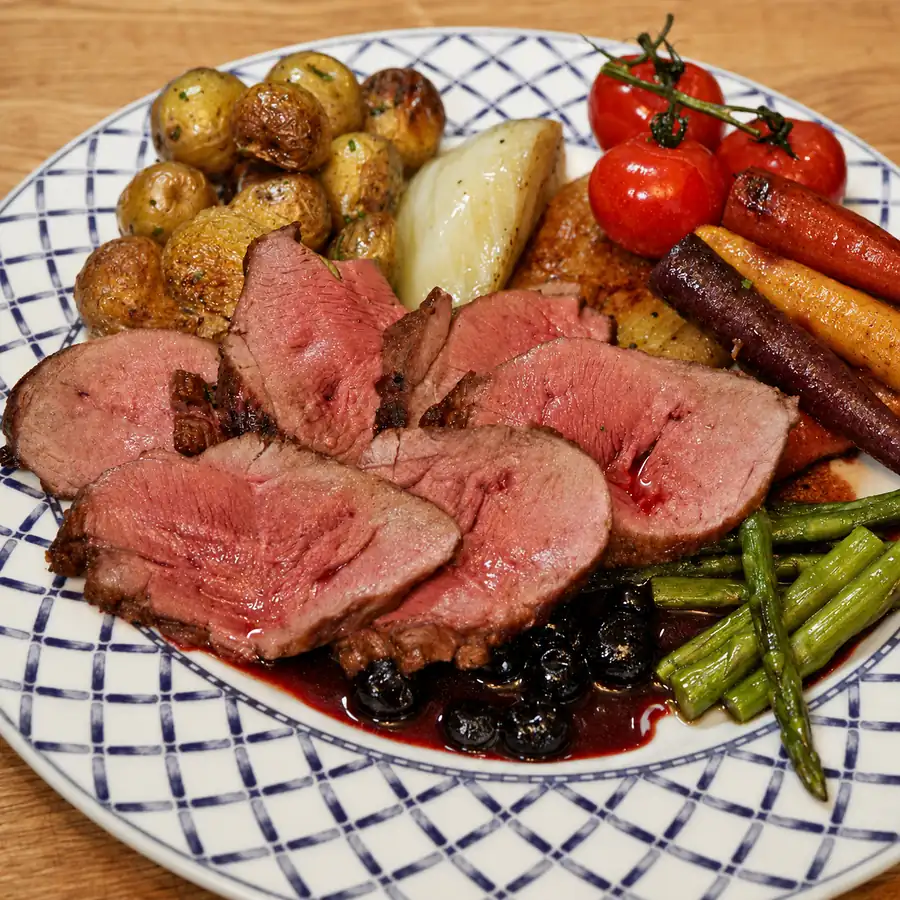
This Québécois-inspired dinner pairs sliced duck breast with a glossy blueberry pan sauce, duck-fat potatoes, fennel, carrots and cherry tomatoes. The berries cut through the richness, but the skin must be rendered slowly: when it is ready, the fat layer will look thin and the surface will be evenly mahogany rather than scorched in patches.
This recipe is based on my YouTube video, with a few adjustments since publication. I have added precise ingredient quantities, a short precooking step for the potatoes and fennel, clearer temperature guidance and a balanced, alcohol-free blueberry sauce made with juice and balsamic vinegar.
{VIDEO}
What Makes This Recipe Different
I created the original version shortly after arriving in Quebec in 1976. It brings together French bistro technique and ingredients associated with Quebec, including duck, blueberries and colourful local vegetables.
Unlike my duck breast with creamy Dijon sauce, this preparation is fruity, lighter on dairy and built around a reduced pan jus. It is also quicker and more focused than my whole roast duck with blueberry sauce. Here, only the breasts are cooked, so the skin can be rendered directly in the pan while the vegetables roast separately.
I make it this way because duck already contains plenty of fat. The sauce needs acidity and concentrated fruit rather than cream or a large amount of added butter. Blueberry juice loosens the browned cooking juices, balsamic adds a restrained tang, and a strong duck stock gives the sauce its body.
The vegetables are not just decoration. Potatoes absorb some of the rendered duck fat, fennel contributes a mild anise flavour, and carrots and tomatoes add sweetness and colour. It is a substantial dinner with protein and a generous serving of vegetables, suitable for summer blueberry season or for frozen berries during the colder months.
Ingredients You Need
Use two large duck breasts weighing approximately 1 pound each before trimming. The thick fat cap is useful, but any fat extending far beyond the meat should be removed. Save those trimmings because they can be rendered for the vegetables.
Baby potatoes need a head start. Parboiling them solves the timing problem that can happen when raw potatoes, duck and tender vegetables are all placed in a 350°F oven together. The fennel is also briefly blanched so that its centre becomes tender without the outside drying out.
For the sauce, use low-sodium duck stock whenever possible. A gelatin-rich homemade stock will reduce to a naturally silky consistency. Chicken stock can work, but it may require a longer reduction. For more background on building a pan sauce, see my guide to smooth homemade brown sauce.
The full ingredient list includes:
Two large skin-on duck breasts
Baby potatoes
Rainbow or regular carrots
Fresh fennel
Cherry tomatoes
Mini asparagus, if available
Blueberries, fresh or frozen
Unsweetened blueberry juice
Low-sodium duck stock
Balsamic vinegar
Fresh parsley
Fine salt and black pepper

Step-by-Step Instructions
1. Precook the potatoes and fennel
Heat the oven to 350°F. Put the baby potatoes in a saucepan, cover with cold salted water and bring to a gentle boil. Cook for 8 to 10 minutes. A knife should enter the outside easily but still meet resistance in the centre.
Lift out the potatoes and drain them well. Add the fennel wedges to the boiling water and blanch for 4 minutes, then drain. Moisture is the enemy of browning, so let both vegetables steam dry before they go into the duck fat.

2. Render the trimmings and start the vegetables
Trim the loose fat from around each duck breast and cut it into small pieces. Place the pieces in an oven-safe skillet over low heat. They will slowly release clear, golden fat.
Remove the browned pieces once they have rendered. Add the potatoes and fennel to the skillet, season lightly, and turn everything until coated. Transfer the skillet to the oven and roast for 25 to 30 minutes, turning the vegetables halfway through. For another traditional use of rendered duck fat, see my Sarladaise-style potatoes.

3. Score and season the duck
With a sharp knife, score the skin in closely spaced diagonal lines. Turn the breast and score in the opposite direction to form a diamond pattern.
Cut through the skin and most of the fat, but stop before slicing deeply into the meat. The scoring allows the fat to escape and gives the skin more surface area to brown. Season both sides with the salt and pepper.

4. Render the skin slowly
Place the breasts skin-side down in a cold or barely warm oven-safe skillet. Set the pan over medium-low heat. As the fat melts, carefully spoon or pour the excess into a heatproof container.
Cook for approximately 10 to 15 minutes. Do not rush this part by turning the burner to high. What I look for is a thin layer of fat under an evenly browned skin. If the edges become dark before the centre browns, lower the heat.
Turn the breasts and cook the flesh side for 2 to 3 minutes. Transfer the skillet to the oven and continue cooking until the thickest part reaches 165°F, following current Canadian guidance for pieces of poultry. Timing will vary with thickness, so use a thermometer rather than relying only on the clock.

5. Finish the remaining vegetables
While the duck cooks, place the carrots in another oven-safe skillet with a spoonful of the rendered fat. Cook over medium heat for about 4 minutes, tossing occasionally.
Add the cherry tomatoes and asparagus. Season lightly, then roast for 8 to 10 minutes. The tomatoes should soften and begin to wrinkle while still holding their shape. The carrots should be tender with a little resistance in the centre. If you enjoy this style of colourful side dish, my oven-roasted mixed vegetables use a similar practical approach.

6. Rest the duck and prepare the blueberry sauce
Transfer the cooked duck to a board and leave it uncovered for 8 to 10 minutes. Covering it tightly would trap steam and soften the skin.
Pour most of the fat from the duck skillet, leaving the browned cooking juices behind. Add the blueberry juice and balsamic vinegar. Bring to a simmer while scraping the bottom of the pan with a wooden spoon.
When the juice has reduced by roughly half, add the duck stock. Simmer until the sauce lightly coats the back of a spoon. Add the blueberries for the final 1 to 2 minutes. Some should remain whole while others begin to release their juice. If the sauce still runs like broth, continue reducing it instead of adding flour. My guide to thickening sauces properly explains why reduction works especially well with a gelatin-rich stock.
Taste before adding more salt. Reduced stock can become considerably saltier than it was at the beginning.

7. Slice and serve
Arrange the potatoes, fennel, carrots, tomatoes and asparagus on warm plates. Spoon a little blueberry sauce underneath the duck rather than covering the crisp skin.
Slice each breast across the grain and arrange the pieces over the sauce. Finish with the remaining blueberries and chopped parsley. Serve immediately while the vegetables are hot and the duck skin still has texture.

Substitutions
Low-sodium chicken stock can replace duck stock, although it will produce a lighter sauce. Let it reduce until it tastes concentrated and lightly coats a spoon. If blueberry juice is unavailable, unsweetened cranberry or pomegranate juice can provide a similar fruit-and-acid structure, although the flavour will be different.
Fresh and frozen blueberries both work. Add frozen berries directly to the simmering sauce without thawing them first. They may release more liquid, so give the sauce another minute to return to the correct consistency.
Regular carrots can replace rainbow carrots. Cut them into evenly sized batons so they finish together. Small broccoli florets, green beans or Brussels sprouts can replace the asparagus. The fennel can be omitted, but its mild anise character is especially good with duck and fruit sauces.
For a more traditional savoury direction without fruit, try a peppercorn sauce with duck breast. For a sweeter French citrus variation, duck à l’orange uses the same principle of balancing rich meat with acidity.

FAQ
Why should duck breast begin in a cold pan?
A cold or barely warm pan gives the fat time to melt before the skin becomes too dark. Starting over high heat can brown the outside quickly while leaving a thick, rubbery fat layer underneath. Increase the temperature gradually and remove excess fat as it collects.
Can I prepare the vegetables in advance?
The potatoes and fennel can be precooked several hours ahead. Drain, cool and refrigerate them, then bring them out while the oven heats. Roast them in the freshly rendered duck fat shortly before serving.
Can I make the sauce ahead?
Yes. Prepare the sauce through the stock-reduction stage, but leave out the whole blueberries. Refrigerate it, then reheat gently and add the berries during the final 1 to 2 minutes. If it has thickened too much, loosen it with a small amount of stock.
Why is my blueberry sauce too thin?
The stock may not contain much gelatin, or the sauce may simply need more reduction. Use a wide skillet so water can evaporate efficiently. It is ready when a spoon drawn across the bottom briefly leaves a visible trail.
What temperature should duck breast reach?
The original video shows the duck served quite pink. For a standardized home recipe, follow Health Canada’s guidance for safe internal cooking temperatures, which recommends 165°F for pieces of duck and other poultry. Insert the thermometer into the thickest part without pushing it into the hot pan.
How many people will two large duck breasts serve?
Two breasts weighing about 1 pound each will serve four people generously once sliced and accompanied by potatoes and vegetables. Particularly large portions could serve three, while five or six smaller portions are possible as part of a multi-course dinner.
What to Serve With This Duck
The recipe already includes a complete vegetable garnish, but an additional potato or vegetable dish works well when serving a larger group. Keep the sides relatively simple so the blueberry sauce remains the focus.
Browse these French bistro recipes for cooking at home for menu inspiration.
Try classic French Duchess potatoes for a more formal presentation.
Serve homemade mashed potatoes when you want something to absorb the sauce.
Make Lyonnaise potatoes with onions for a rustic bistro dinner.
Pair it with roast stuffed duck and maple pan sauce when planning a larger duck-themed meal.
Explore more ideas in my collection of traditional French recipes and sauces.
Find additional seasonal inspiration among these Québec family recipes.
Pan-Seared Duck Breast with Blueberry Sauce and Roasted Vegetables
Ingredients
- 2 large skin-on duck breasts about 1 lb each
- 1 tsp fine salt
- 1/2 tsp ground black pepper
- 1 lb baby potatoes
- 10 oz rainbow carrots trimmed
- 1 small fennel bulb cut into wedges
- 7 oz cherry tomatoes
- 5 oz mini asparagus optional
- 1 cup low-sodium duck stock
- 1/4 cup unsweetened blueberry juice
- 3/4 cup fresh or frozen blueberries
- 1 tsp balsamic vinegar
- 2 tbsp chopped fresh parsley
- Additional salt and black pepper to taste
Instructions
- Heat the oven to 350°F. Parboil the potatoes for 8 to 10 minutes, then drain. Blanch the fennel for 4 minutes and drain well.
- Trim excess duck fat and render the trimmings over low heat. Remove the browned pieces.
- Coat the potatoes and fennel in rendered fat, season, and roast for 25 to 30 minutes.
- Score the duck skin in a diamond pattern without cutting deeply into the meat. Season with salt and pepper.
- Place the breasts skin-side down in a cold skillet. Cook over medium-low heat for 10 to 15 minutes, regularly removing excess fat.
- Turn the breasts and cook for 2 to 3 minutes. Transfer the skillet to the oven and cook until the thickest part reaches 165°F.
- Sauté the carrots in rendered fat for 4 minutes. Add the tomatoes and asparagus, then roast for 8 to 10 minutes.
- Rest the duck uncovered for 8 to 10 minutes.
- Remove excess fat from the duck skillet. Add the blueberry juice and balsamic vinegar, scrape up the browned juices, and reduce by half.
- Add the duck stock and simmer until the sauce coats a spoon. Add the blueberries and cook for 1 to 2 minutes. Adjust the seasoning.
- Slice the duck across the grain and serve over the sauce with the roasted vegetables and parsley.