Roast Stuffed Duck with Maple Pan Sauce for a Special Dinner
A roast stuffed duck is a whole duck that has been deboned, filled with a seasoned meat stuffing, tied back into a roast shape, and cooked slowly until sliceable. It is different from a regular whole roasted duck because every slice gives you duck meat, stuffing, skin, and sauce together instead of separate legs and breasts. I make it for a colder Sunday dinner, Thanksgiving, Christmas, New Year’s, or any meal where I want the carving to feel clean at the table.
This recipe is based on my YouTube video for stuffed roast duck, with a few adjustments since publication. The main change is precision. In the video, I cook by experience and visual cues, but for the website I want the temperature, stuffing texture, sauce reduction, and resting time to be clearer so the result is easier to repeat.
I make it this way because a deboned duck is much easier to serve than a whole bird with bones. The slices are neat, the stuffing stays juicy, and the duck fat gives you everything you need for the potatoes, carrots, and maple pan sauce. The mistake to avoid is treating it like a simple roast duck breast. This is stuffed poultry, so the center of the filling has to be fully cooked before slicing.
What I look for here is a roast that feels firm but not dry, with browned skin, a moist pistachio duck stuffing, and a sauce that coats the spoon instead of running like broth. If the pan smells sweet and roasted when the maple syrup hits the hot juices, you are in the right place.
What Makes This Stuffed Duck Different
This is not a quick weeknight duck recipe. It is closer to a butcher-style roast, the kind of dish you prepare when you want the main course to look impressive but still slice cleanly. The duck is deboned, the legs are ground for the stuffing, and the carcass can be kept for stock.
It is also different from my duck hachis parmentier, which is more of a comfort-food baked dish with mashed potatoes. This roast is more formal, more carving-focused, and better when you want a centerpiece. It also shares a little spirit with duck pâté terrine with cognac, because the stuffing needs proper seasoning and texture, but here everything is roasted inside the bird.
I prefer to keep the stuffing simple: duck leg meat, breadcrumbs, pistachios, salt, and pepper. Too many extras can make the filling heavy or muddy. The pistachios bring a little crunch and color without taking over the duck.
Ingredients You Need
For the duck, start with a young whole duck around 5 to 6 pounds. A smaller duck is easier to shape and cooks more evenly once stuffed. Ask the butcher to debone it if you are not comfortable doing it yourself. The skin needs to stay intact because it holds the roast together.
The stuffing is made with the duck legs. Once the legs are removed and deboned, grind the meat or chop it finely. Breadcrumbs help bind the fat and juices, while pistachios give the filling texture. If your pistachios are salted, use a lighter hand with the salt.
For the sauce, the important ingredients are pan juices, maple syrup, and a strong duck or poultry stock. If you are already making the recipe from a whole duck, keep the carcass and simmer it into stock. A good stock makes the sauce taste roasted and deep instead of just sweet. For sauce technique, the pan work is similar to what I explain in how to deglaze a pan, where the browned bits at the bottom become the base of the sauce.
Deboning the Duck
Lay the duck on a large board and keep a small sharp knife close to the bones. Work slowly. The goal is not speed, it is keeping the skin whole.
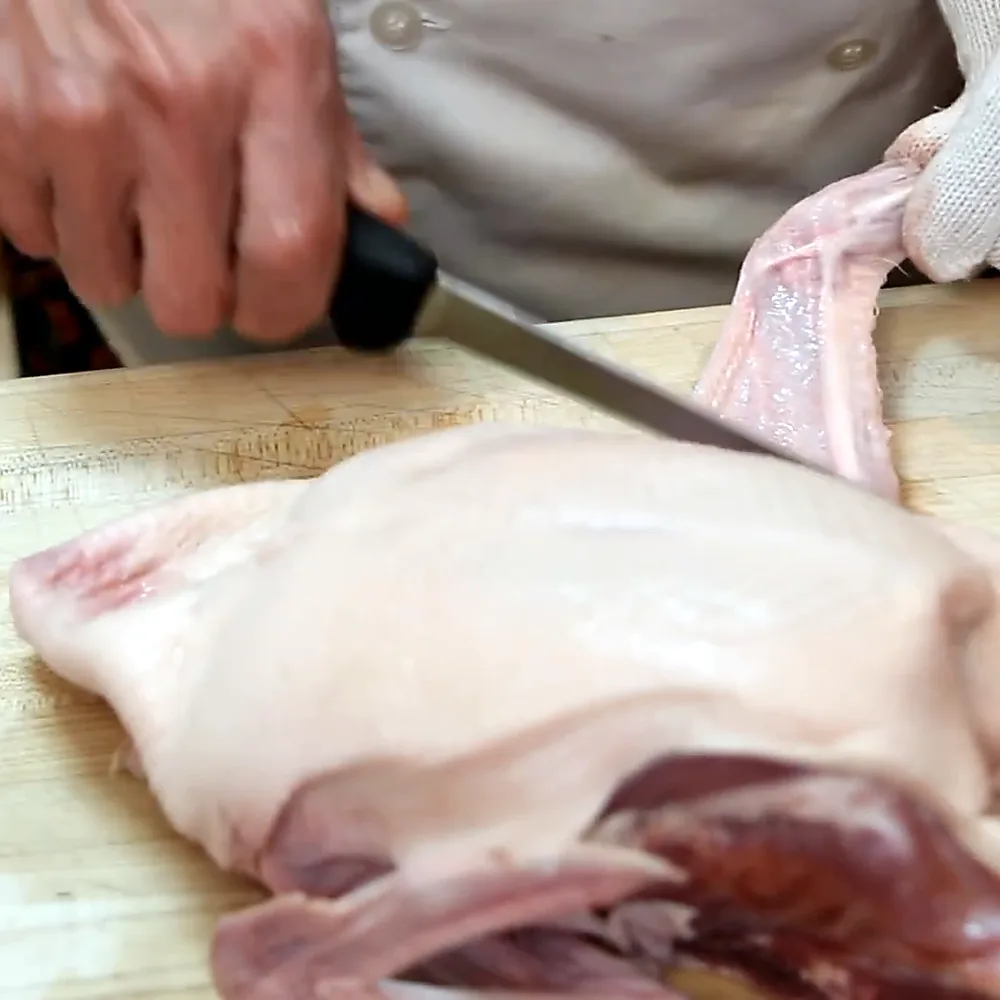

Start by removing the legs at the joints. Save them for the stuffing. Continue along the carcass, following the ribs and breastbone with the knife. Use short scraping cuts instead of long cuts. If the knife is too deep, you risk piercing the skin, and the stuffing may leak during roasting.
At this point, it should look like a flat piece of duck with the skin underneath and the breast meat still attached. If the shape is uneven, trim a little so it closes more neatly. Keep the carcass, neck, and trimmings for stock.


If you do not want to debone the duck yourself, ask the butcher for a boneless whole duck with the skin intact and the leg meat kept separately. That one request makes the recipe much easier.
Making the Pistachio Duck Stuffing
Chop or grind the duck leg meat. Put it in a cold bowl and add breadcrumbs, chopped pistachios, salt, and black pepper. Mix until the farce feels sticky and slightly moist. It should hold together when pressed with a spoon.
The mistake to avoid is making the stuffing dry. If it looks crumbly, add a spoonful or two of cold stock or cream. Do not make it wet. You want a filling that spreads easily but does not slide around when the duck is rolled.

I prefer not to add too many herbs here because duck has enough character. A little thyme can work, but the pistachio and maple sauce already give the roast a nice direction.
Stuffing and Tying the Duck
Place the boneless duck skin-side down. Spread the stuffing in the center, keeping it even from end to end. Do not overfill. If the roast is packed too tightly, it takes longer to cook and can split.

Fold the duck around the stuffing and shape it into a roast. Tie it with butcher’s twine every inch or so. The roast should feel secure but not strangled. If the twine cuts deep into the skin, loosen it slightly.
Season the outside with salt and pepper. Rub with a little duck fat. If you have time, let the tied duck rest uncovered in the fridge for a few hours. The skin dries a little, which helps the color later.
Roasting the Stuffed Duck
Roast the duck at 320°F. This moderate temperature gives the stuffing time to cook without burning the skin. Place it in a roasting pan or ovenproof skillet, seam-side down if possible.

Start checking after about 1 hour 15 minutes. The exact cooking time depends on the thickness of the roast, the temperature of the stuffing, and how tightly it was tied. A thermometer is not optional here. Insert it into the center of the stuffing, not just the outer meat.
The minimum safe temperature for the stuffing is 165°F. For the sliceable, fully cooked result I like in this recipe, I prefer to take the center closer to 175°F to 181°F, then rest it well. At that point the roast is cooked through but can still be juicy because duck has enough fat to protect it.
You know it is ready when the roast feels firm in the center, the juices are no longer pink, and the skin is deeply golden. If the skin needs more color, raise the oven to 425°F for the last 8 to 10 minutes, watching closely.
Rest the duck for 15 to 20 minutes before slicing. This is important. If you cut too soon, the stuffing and juices escape onto the board.
Potatoes, Carrots, and Tomatoes
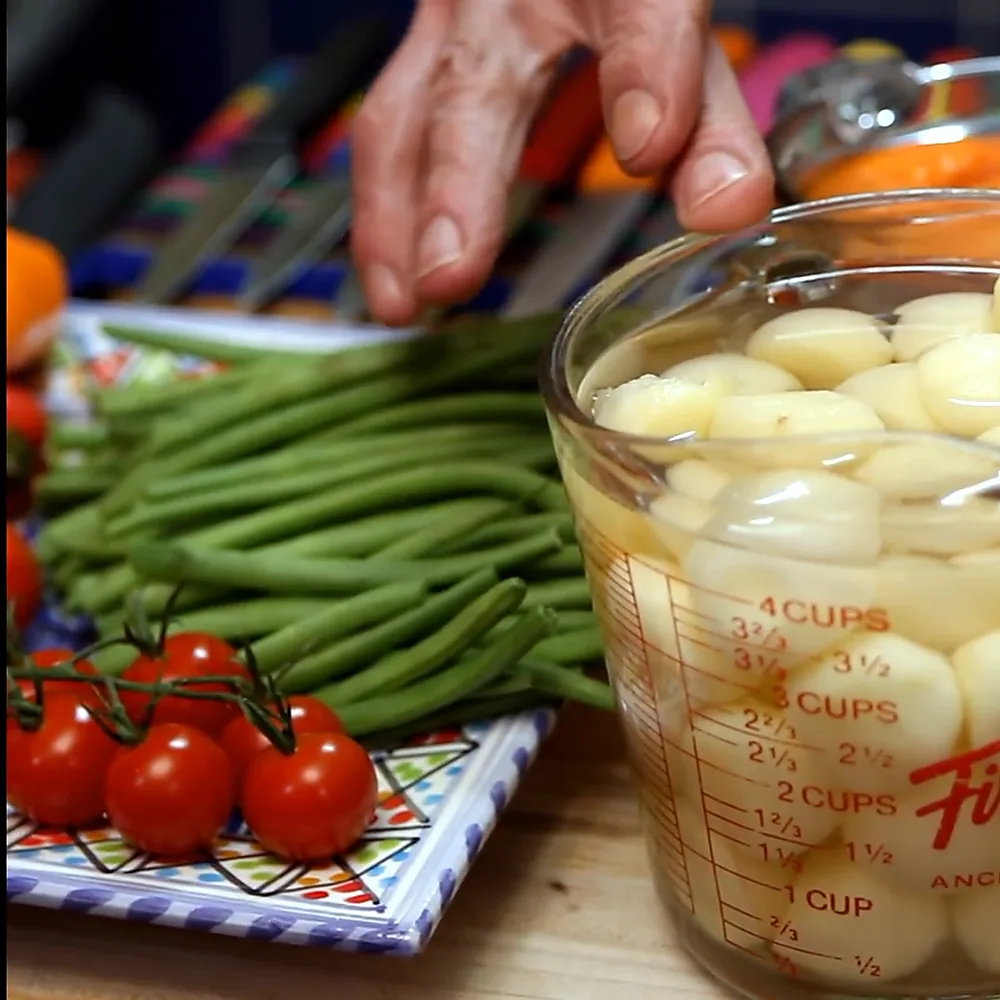
In the video, I serve this with pommes parisiennes, carrots, and tomatoes. It gives the plate color and keeps the meal from feeling too heavy.

Blanch small potato balls or small potato pieces until barely tender, then finish them in duck fat. They should sizzle when they hit the pan. Let them take color before stirring too much. If you like classic potato sides, this roast also works well with traditional gratin dauphinois or a richer French-style gratin dauphinois.
Cook the carrots until just tender, then glaze them in a little duck fat. The tomatoes only need a short time in the pan. They should soften slightly but not collapse into sauce.

This is a rich, protein-heavy meal, so the vegetables matter. They bring color, moisture, and a little freshness against the duck fat and maple sauce.
Maple Pan Sauce
Once the duck is roasted and resting, pour off most of the rendered fat from the pan. Keep the browned juices and about 1 to 2 tablespoons of fat. This step matters. If you leave all the duck fat in the pan, the sauce will taste greasy.
Place the pan over medium-high heat. Add the maple syrup and let it bubble for a few seconds. It should smell sweet and toasted, not burnt. Add duck stock or strong poultry stock and scrape the pan well.
Let the sauce reduce until it lightly coats a spoon. If it is too thin, keep simmering. If you need help judging the texture, the same logic applies as in how to thicken a sauce. A tiny splash of vinegar or lemon juice at the end is optional, but I like it because it balances the maple and duck fat.
For more sauce basics, French mother sauces explained is useful if you want to understand why stock, fat, reduction, and seasoning matter so much.
How to Slice and Serve
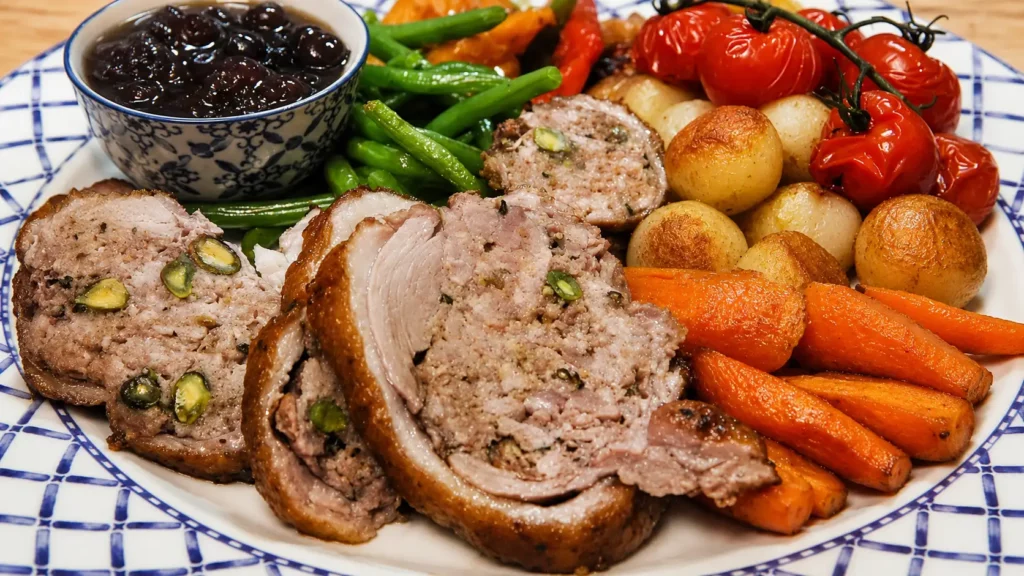
Cut away the twine first. Use a long sharp knife and slice across the roast into thick rounds. Each slice should show duck meat around the outside and stuffing in the center.
Spoon a little sauce on the plate, place the duck on top, then add potatoes, carrots, and tomatoes around it. I do not drown the duck in sauce. A few spoonfuls are enough because the stuffing is already rich.

This dish feels seasonal in winter because of the roast and maple sauce, but it works year-round if you keep the sides lighter. In summer, I would serve smaller slices with a sharp salad. In colder months, potatoes and glazed vegetables make more sense.

Substitutions
If you cannot find a whole duck, this exact recipe is harder to reproduce, but you can ask a butcher for a boneless duck roast. Keep the stuffing concept the same.
Pistachios can be replaced with hazelnuts, walnuts, or pecans. Chop them roughly so you still get texture in the slice.
Breadcrumbs can be regular, fresh, or panko. If using panko, crush it slightly so the stuffing slices more cleanly.
Duck stock gives the best sauce, but strong chicken stock works. Homemade stock is better than a weak boxed broth. If using boxed stock, reduce it first to concentrate the flavor. You can also use the method from homemade chicken bouillon cubes when you want a stronger base for pan sauces.
Maple syrup can be replaced with honey, but maple gives a more Canadian flavor and matches duck beautifully.
FAQ
Can I make stuffed duck ahead of time?
Yes. You can debone, stuff, and tie the duck the day before. Keep it covered in the fridge, then uncover it a few hours before cooking so the skin dries slightly. Roast it the day you plan to serve it.
Can I use store-bought ground duck?
Yes, if it is fresh and good quality. I still prefer using the legs from the same duck because the flavor matches and nothing is wasted.
What temperature should stuffed duck reach?
The center of the stuffing must reach at least 165°F. For this recipe, I prefer 175°F to 181°F in the center of the stuffing for a fully cooked, sliceable roast. For more general guidance, use an internal cooking temperature chart when checking meats and poultry.
Why is my sauce greasy?
Too much duck fat stayed in the pan. Pour off most of the fat before adding maple syrup and stock. Keep the browned juices because that is where the flavor is.
Can I make the skin crispier?
Yes. Dry the duck uncovered in the fridge before roasting, season the outside well, and finish at 425°F for 8 to 10 minutes if needed. Watch carefully because maple and browned pan juices can darken quickly.
Can I serve this without the maple sauce?
Yes, but the maple pan sauce is part of the identity of this version. A brown duck gravy or reduced poultry jus would also work. For a deeper gravy-style sauce, the method in homemade brown gravy is a good base.
What to Serve With Stuffed Duck
For a classic plate, serve it with browned potatoes, carrots, and tomatoes like in the video. If you want a more generous holiday-style meal, add a potato gratin. Both traditional gratin dauphinois and French gratin dauphinois fit the richness of duck.
For another poultry centerpiece, roasted quail with blueberry sauce has the same special-dinner feeling but in smaller portions.
If you want a simpler duck dinner without stuffing and tying, make whole roasted duck instead. It is easier to prepare and better for a first duck recipe.
For a comfort-food duck recipe another day, duck hachis parmentier is a good way to keep the same flavor family with a much more relaxed preparation.

Roast Stuffed Duck with Maple Pan Sauce for a Special Dinner
Ingredients
- For the Duck
- 1 whole young duck about 5 1/2 lb
- Duck leg meat from the same duck about 1 lb, ground or finely chopped
- 1/2 cup breadcrumbs
- 1/2 cup shelled pistachios roughly chopped
- 1 1/4 tsp fine salt for the stuffing or less if pistachios are salted
- 1/2 tsp black pepper
- 2 to 3 tbsp cold duck stock or cream only if needed
- 1 tsp fine salt for the outside of the duck
- 1 to 2 tbsp duck fat
- Butcher’s twine
- For the Vegetables
- 1 1/4 lb small potatoes or pommes parisiennes
- 1 lb carrots
- 1 1/2 cups cherry tomatoes
- 2 to 3 tbsp duck fat
- Salt and black pepper to taste
- For the Maple Pan Sauce
- Pan juices from the roasted duck
- 2 tbsp maple syrup
- 1 cup duck stock or strong poultry stock
- 1 tsp lemon juice or vinegar optional
- Salt and black pepper to taste
Instructions
- Debone the duck, keeping the skin intact. Remove the legs and reserve the leg meat for the stuffing. Keep the carcass for stock if desired.
- Grind or finely chop the duck leg meat. Mix with breadcrumbs, pistachios, salt, and pepper until sticky and slightly moist. Add a little cold stock or cream only if the stuffing feels dry.
- Lay the boneless duck skin-side down. Spread the stuffing evenly in the center. Fold the duck around the filling and tie into a roast with butcher’s twine.
- Season the outside with salt and pepper, then rub with duck fat.
- Roast at 320°F for about 1 hour 30 minutes to 1 hour 45 minutes, or until the center of the stuffing reaches at least 165°F. For a fully cooked, sliceable roast, aim for 175°F to 181°F.
- Rest the duck for 15 to 20 minutes before removing the twine and slicing.
- Blanch the potatoes until barely tender, then brown them in duck fat with salt and pepper.
- Cook the carrots until tender, then glaze them in duck fat. Warm the cherry tomatoes briefly until just softened.
- Pour off most of the duck fat from the roasting pan, keeping the browned juices and 1 to 2 tablespoons of fat. Add maple syrup and let it bubble lightly. Add stock, scrape the pan, and reduce until the sauce coats a spoon. Add lemon juice or vinegar if desired.
- Slice the stuffed duck and serve with the vegetables and maple pan sauce.
Video
Notes
FAQ
Can I make stuffed duck ahead of time?
Yes. You can debone, stuff, and tie the duck the day before. Keep it covered in the fridge, then uncover it a few hours before cooking so the skin dries slightly. Roast it the day you plan to serve it.Can I use store-bought ground duck?
Yes, if it is fresh and good quality. I still prefer using the legs from the same duck because the flavor matches and nothing is wasted.What temperature should stuffed duck reach?
The center of the stuffing must reach at least 165°F. For this recipe, I prefer 175°F to 181°F in the center of the stuffing for a fully cooked, sliceable roast. For more general guidance, use an internal cooking temperature chart when checking meats and poultry.Why is my sauce greasy?
Too much duck fat stayed in the pan. Pour off most of the fat before adding maple syrup and stock. Keep the browned juices because that is where the flavor is.Can I make the skin crispier?
Yes. Dry the duck uncovered in the fridge before roasting, season the outside well, and finish at 425°F for 8 to 10 minutes if needed. Watch carefully because maple and browned pan juices can darken quickly.Can I serve this without the maple sauce?
Yes, but the maple pan sauce is part of the identity of this version. A brown duck gravy or reduced poultry jus would also work. For a deeper gravy-style sauce, the method in homemade brown gravy is a good base.🔗 Useful Links
🛒 Michel Dumas Shop : Explore our kitchen essentials, including aprons and knives.
🌐 Linktree : Access all our important links in one place.
📱 YouTube | Instagram | Facebook | TikTok : Follow us for the latest recipes and culinary tips.