Duck à l’Orange (Pan-Seared Duck Breast with Classic Orange Sauce)
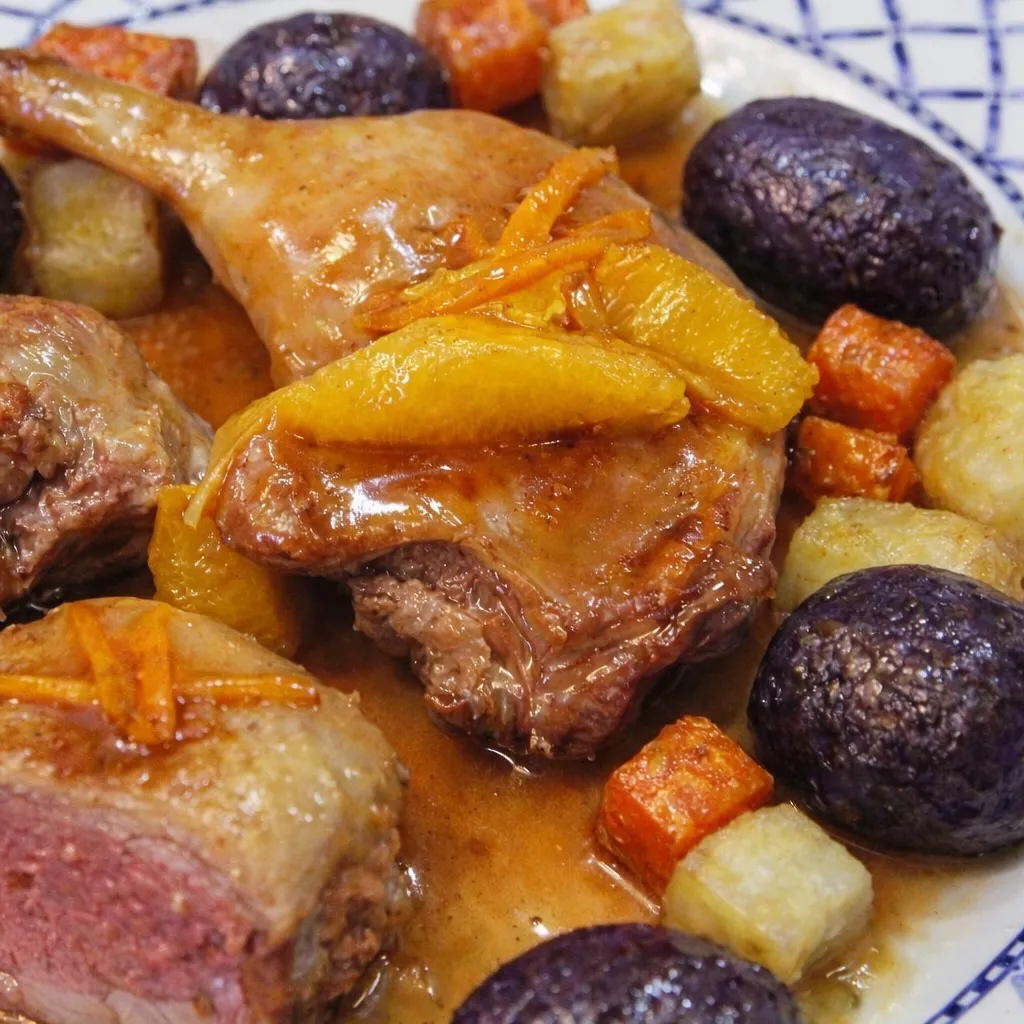
Duck à l’Orange is a classic French dish where crispy duck breast is served with a glossy orange sauce that’s both sweet and tangy. What makes it different is the contrast—rich duck fat and caramelized notes balanced by bright citrus and vinegar. It’s the kind of dinner you make when you want something bistro-level but still doable at home, any time of year.
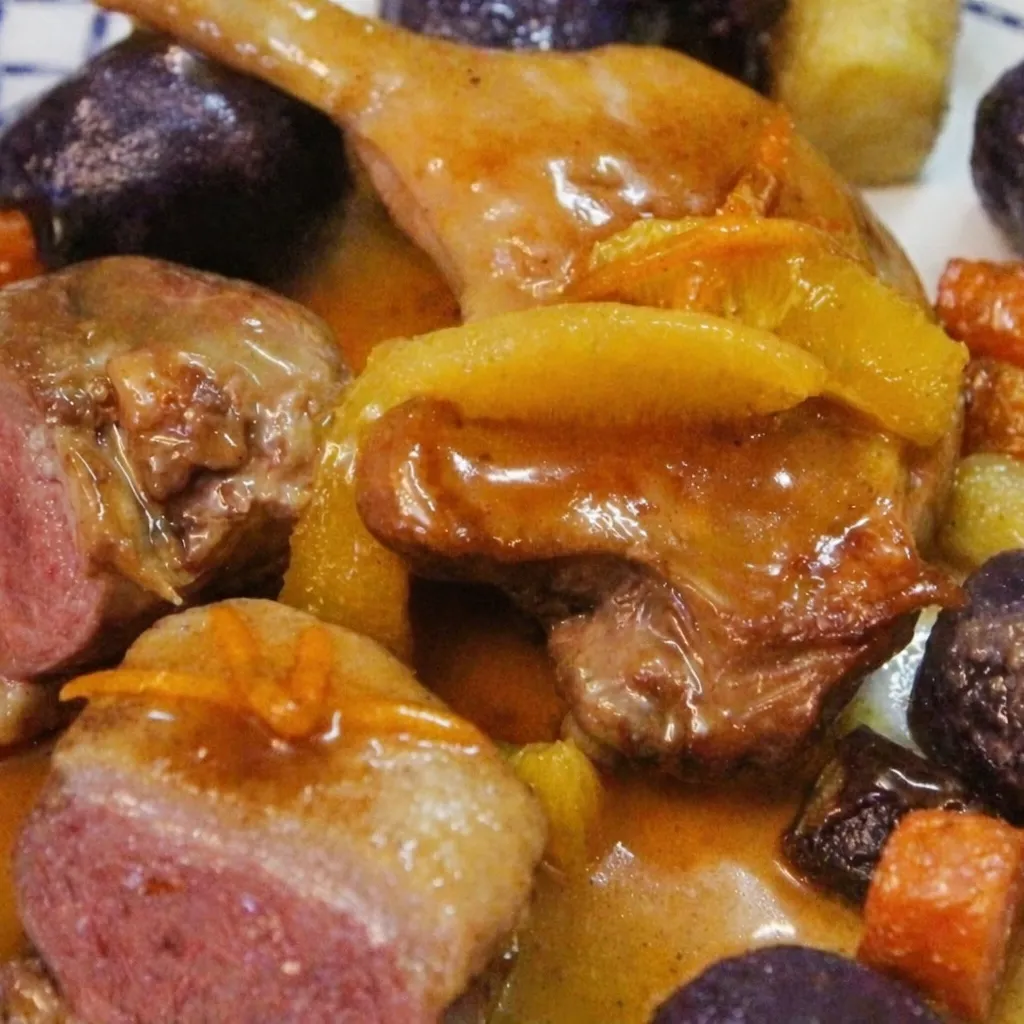
This version is based on my YouTube video, with a few adjustments since publication—mainly clearer sauce proportions, a more reliable reduction method, and optional shortcuts if you don’t have duck glaze ready.
Duck à l’Orange
There are many “orange duck” recipes online, but they don’t all aim for the same outcome. Some are quick skillet sauces with orange marmalade, some are ultra-traditional with a full roast duck and a long demi-glace, and some lean modern and light with a simple citrus pan sauce.
This recipe’s intent is classic bistro style:
- Crispy skin from proper fat rendering
- A real reduction (caramel + vinegar + orange juice) for depth
- A glossy finish using duck glaze/demi-glace (or a smart shortcut)
- Fresh orange supremes warmed gently so the citrus stays bright

Ingredients
Duck
- 2 duck breasts (about 12–14 oz each), skin on
- 1 tsp kosher salt (plus more to taste)
- 1/2 tsp black pepper
- 1 tsp neutral oil (only if your pan is very dry)
Orange prep
- 4 oranges (thin-skinned if possible)
- Zest from 1 orange (fine strips or microplaned)
- Juice from 2–3 oranges (about 3/4 Tasse to 1 Tasse)
- Orange supremes from 1–2 oranges (optional but classic)

Sauce (balanced classic reduction)
- 2 tbsp granulated sugar or 2 tbsp cane syrup
- 2 tbsp red wine vinegar (or sherry vinegar)
- 1/2 Tasse duck glaze or demi-glace (best)
- Shortcut option: 1/2 Tasse reduced stock (see notes)
- 1 tbsp unsalted butter (optional, for shine and roundness)
Optional quick thickening (only if needed)
- 1 tsp cornstarch + 1 tbsp cold water (slurry)
Simple garnish (optional but recommended)
- 1 lb small potatoes, halved
- 4 medium carrots, peeled and cut evenly
- 2–3 tbsp duck fat (or olive oil)
- Salt and pepper
Step-by-step instructions
1) Prep the oranges
- Zest one orange. If you’re doing long thin strips (julienne), you can blanch them in boiling water for 30 seconds and drain—this removes bitterness.
- Supreme 1–2 oranges: slice off the peel and pith, then cut segments between membranes.
- Juice 2–3 oranges until you have about 3/4 Tasse to 1 Tasse juice. Strain out seeds.
- Keep zest, supremes, and juice separate.
Tip: Supremes should only be warmed at the very end. If they boil, they lose freshness and can turn slightly bitter.

2) Render and cook the duck breasts
- Pat duck breasts dry. Score the skin in a crosshatch pattern (don’t cut into the meat).
- Season both sides with salt and pepper.
- Place duck breasts skin-side down in a cold skillet. Turn heat to medium-low.
- Let the fat render slowly for 10–14 minutes, spooning off excess fat as it collects (save it for potatoes).
- When skin is deep golden and crisp, increase heat slightly and cook 1–2 minutes more for extra crisping.
- Flip and cook flesh side 2–4 minutes depending on thickness.
- Transfer to a board and rest 8–10 minutes.
Goal: The center should stay rosy. If you like temperature targets, aim for about 130°F–135°F internal after resting.
3) Cook the garnish
This dish works year-round: in winter, go classic with carrots and potatoes; in summer, serve with a simple green salad and keep the sauce bright.
Carrots:
- Sauté carrots in duck fat over medium heat until tender and lightly caramelized, 10–12 minutes.
- Season with salt and pepper. Keep warm.
Potatoes:
- Sauté or roast potatoes in duck fat until golden and tender, 18–25 minutes depending on size.
- Season well.
For another potato side on your site, Lyonnaise Potatoes (French sautéed potatoes) are a perfect pairing when you want a bistro vibe.

4) Build the Duck à l’Orange sauce
This is the key: the sauce needs a sweet-sour base and enough savory depth so it tastes like classic Duck à l’Orange—not orange candy.
- Pour off duck fat from the skillet, leaving about 1 tbsp. Keep the browned bits.
- Add sugar (or cane syrup) and cook until it turns light amber caramel. Watch closely—caramel goes from perfect to bitter fast.
- Carefully add vinegar. It will bubble aggressively. Stir and reduce for 30–60 seconds to mellow the sharpness.
- Add orange juice and bring to a simmer. Reduce for 3–5 minutes until it starts to thicken slightly.
- Add duck glaze/demi-glace and simmer 2–3 minutes until glossy.
- Taste. Adjust with:
- a tiny pinch of salt (often needed)
- a few extra drops of vinegar if too sweet
- a small splash of orange juice if too sharp
- Turn off heat and whisk in butter (optional) for silkiness and shine.
- Add zest.
- Add supremes and warm them gently for 30–60 seconds—do not boil.
If the sauce is still too thin:
Use the cornstarch slurry in tiny amounts and simmer 30 seconds. This is optional; reduction is the better fix.

5) Slice and serve
- Slice duck breast on a bias.
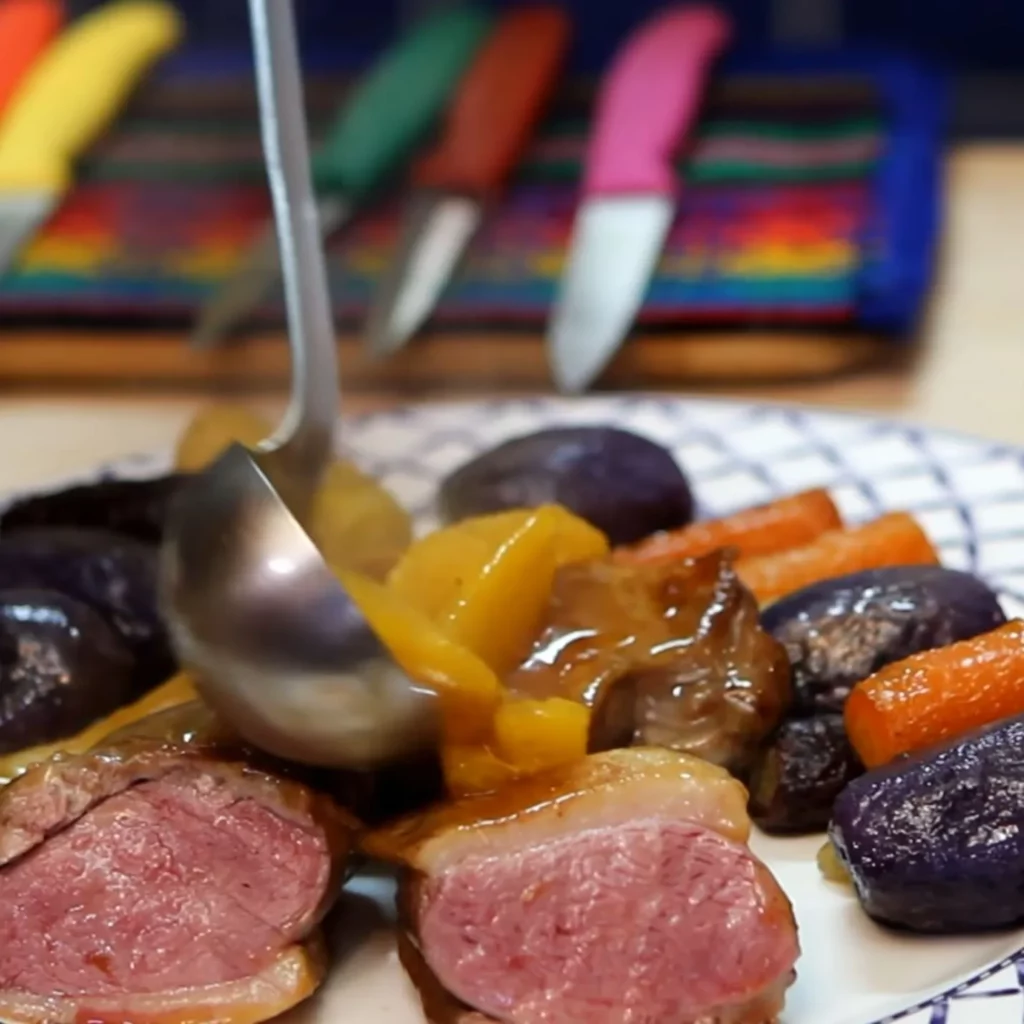
- Spoon sauce on the plate first, then duck, then a little more sauce over top.
- Add carrots, potatoes, and a few warm orange supremes.
Sauce notes: best results vs shortcuts
Best (classic)
A real duck glaze (or demi-glace) gives body and deep savory notes. If you want a base recipe for this kind of stock work, your site has a great reference point with Neutral Brown Veal Stock.
Shortcut (still good)
If you don’t have glaze: reduce a strong stock hard until it coats a spoon, then use it like “quick demi.” It won’t be identical, but it will still yield a good sauce if you reduce properly.
Nutrition context
Duck breast is protein-rich and satisfying, but it’s also naturally richer than chicken due to the skin and rendered fat. The nice thing about this dish is you can control the heaviness: keep portions moderate, lean into bright citrus, and pair it with vegetables or a lighter side when you want balance.
Substitutions
- Duck breasts: Use 4 smaller breasts if that’s what your butcher carries; just adjust cook time.
- Red wine vinegar: Sherry vinegar is excellent; apple cider vinegar works in a pinch (use slightly less).
- Sugar: Cane syrup or granulated sugar both work; granulated gives more precise caramel control.
- Orange juice: If oranges are very sweet, add a touch more vinegar; if they’re very acidic, add a touch more sugar.
- Duck glaze/demi-glace: Use reduced stock, or a small spoon of good-quality store demi-glace.
- Supremes: Optional—skip if you want a cleaner, more sauce-forward plate.
If you want a different duck direction entirely, your site also has Duck Breast with Dijon Mustard Cream, which is a creamy, peppery lane rather than sweet-sour citrus.
FAQ
Why start duck skin-side down in a cold pan?
Duck skin holds a lot of fat. Starting cold renders fat slowly, giving you crisp skin without burning and without overcooking the meat.
How do I avoid bitter sauce?
The risk is caramel. Keep it light amber, not dark brown. Also, don’t boil orange zest hard for long. If your zest is thick, blanch it briefly.
My sauce tastes too sweet—what do I do?
Add a few drops of vinegar, simmer 30 seconds, taste again. The sauce should be balanced, not candy-like.
My sauce tastes too sharp—what do I do?
Add a splash of orange juice and a tiny pinch of sugar, then reduce for a minute to smooth it out.
Can I make this ahead?
You can prep supremes, juice, and zest ahead. Cook duck fresh for best skin. Sauce can be made ahead and gently reheated, but add supremes at the end.
What should duck breast look like inside?
Rosy and juicy. If it’s grey all the way through, it’s overcooked (still edible, but you lose the magic).
What to serve with Duck à l’Orange (Suggested posts)
For a cozy French side:
- Easy Traditional Tartiflette Recipe (with Reblochon or budget cheese): https://www.micheldumas.com/en/easy-traditional-tartiflette-recipe-with-reblochon-or-budget-cheese-french-alpine-comfort-food/
For a bistro-style potato option:
- Lyonnaise Potatoes (French sautéed potatoes): https://www.micheldumas.com/en/lyonnaise-potatoes-french-sauteed-potatoes/
For another comfort classic:
- Classic Boeuf Bourguignon: https://www.micheldumas.com/en/classic-boeuf-bourguignon/
For a lighter salad pairing:
- Chicken Cobb Salad: https://www.micheldumas.com/en/chicken-cobb-salad/
For a quick sauce or condiment idea on the side:
- Spicy Mayo (ready in 1 minute): https://www.micheldumas.com/en/spicy-mayo-ready-in-1-minute/
For a dessert to finish the meal:
- Red Wine Poached Pears: https://www.micheldumas.com/en/red-wine-poached-pears/
- San Sebastian Basque Burnt Cheesecake: https://www.micheldumas.com/en/san-sebastian-basque-burnt-cheesecake/
For another poultry dinner (different intent from Duck à l’Orange):
- Marry Me Chicken (creamy recipe): https://www.micheldumas.com/en/marry-me-chicken-creamy-recipe/
- Mustard Chicken (easy quick budget recipe): https://www.micheldumas.com/en/mustard-chicken-easy-quick-budget-recipe/
- 5 Easy Chicken Marinades (how to cook): https://www.micheldumas.com/en/5-easy-chicken-marinades-how-to-cook/
For stock technique support:
- Neutral Brown Veal Stock: https://www.micheldumas.com/en/neutral-brown-veal-stock/

Duck à l’Orange (Pan-Seared Duck Breast with Classic Orange Sauce)
Ingredients
Duck
- 2 duck breasts 12–14 oz each, skin on
- 1 tsp kosher salt
- 1/2 tsp black pepper
Oranges
- 4 oranges
- Zest from 1 orange
- 3/4 Tasse to 1 Tasse fresh orange juice
- Orange supremes from 1–2 oranges optional
Sauce
- 2 tbsp granulated sugar or 2 tbsp cane syrup
- 2 tbsp red wine vinegar or sherry vinegar
- 1/2 Tasse duck glaze or demi-glace or reduced stock
- 1 tbsp unsalted butter optional
Optional thickening
- 1 tsp cornstarch + 1 tbsp cold water
Optional garnish
- 1 lb small potatoes
- 4 medium carrots
- 2 –3 tbsp duck fat or olive oil
- Salt and pepper
Instructions
- Zest 1 orange. Supreme 1–2 oranges and reserve segments. Juice 2–3 oranges to get 3/4 Tasse to 1 Tasse juice.
- Score duck skin, season with salt and pepper. Place skin-side down in a cold skillet and set to medium-low. Render 10–14 minutes, pouring off excess fat.
- Crisp skin 1–2 minutes on slightly higher heat. Flip duck and cook 2–4 minutes. Rest 8–10 minutes.
- (Optional) Cook carrots and potatoes in duck fat until tender and golden; season well.
- For the sauce: pour off fat leaving 1 tbsp. Add sugar and cook to light amber caramel. Add vinegar and reduce 30–60 seconds. Add orange juice and reduce 3–5 minutes. Add duck glaze/demi-glace and simmer 2–3 minutes until glossy.
- Taste and adjust with salt, vinegar, or orange juice. Off heat, whisk in butter (optional). Add zest and warm orange segments gently 30–60 seconds.
- Slice duck and serve with sauce and garnish.
Video
Notes
Substitutions
- Duck breasts: Use 4 smaller breasts if that’s what your butcher carries; just adjust cook time.
- Red wine vinegar: Sherry vinegar is excellent; apple cider vinegar works in a pinch (use slightly less).
- Sugar: Cane syrup or granulated sugar both work; granulated gives more precise caramel control.
- Orange juice: If oranges are very sweet, add a touch more vinegar; if they’re very acidic, add a touch more sugar.
- Duck glaze/demi-glace: Use reduced stock, or a small spoon of good-quality store demi-glace.
- Supremes: Optional—skip if you want a cleaner, more sauce-forward plate.
FAQ
Why start duck skin-side down in a cold pan?
Duck skin holds a lot of fat. Starting cold renders fat slowly, giving you crisp skin without burning and without overcooking the meat.How do I avoid bitter sauce?
The risk is caramel. Keep it light amber, not dark brown. Also, don’t boil orange zest hard for long. If your zest is thick, blanch it briefly.My sauce tastes too sweet—what do I do?
Add a few drops of vinegar, simmer 30 seconds, taste again. The sauce should be balanced, not candy-like.My sauce tastes too sharp—what do I do?
Add a splash of orange juice and a tiny pinch of sugar, then reduce for a minute to smooth it out.Can I make this ahead?
You can prep supremes, juice, and zest ahead. Cook duck fresh for best skin. Sauce can be made ahead and gently reheated, but add supremes at the end.What should duck breast look like inside?
Rosy and juicy. If it’s grey all the way through, it’s overcooked (still edible, but you lose the magic).🔗 Useful Links
🛒 Michel Dumas Shop : Explore our kitchen essentials, including aprons and knives.
🌐 Linktree : Access all our important links in one place.
📱 YouTube | Instagram | Facebook | TikTok : Follow us for the latest recipes and culinary tips.