Pommes Sarladaises (Duck Fat Potatoes) — Crispy, Garlicky French Potatoes
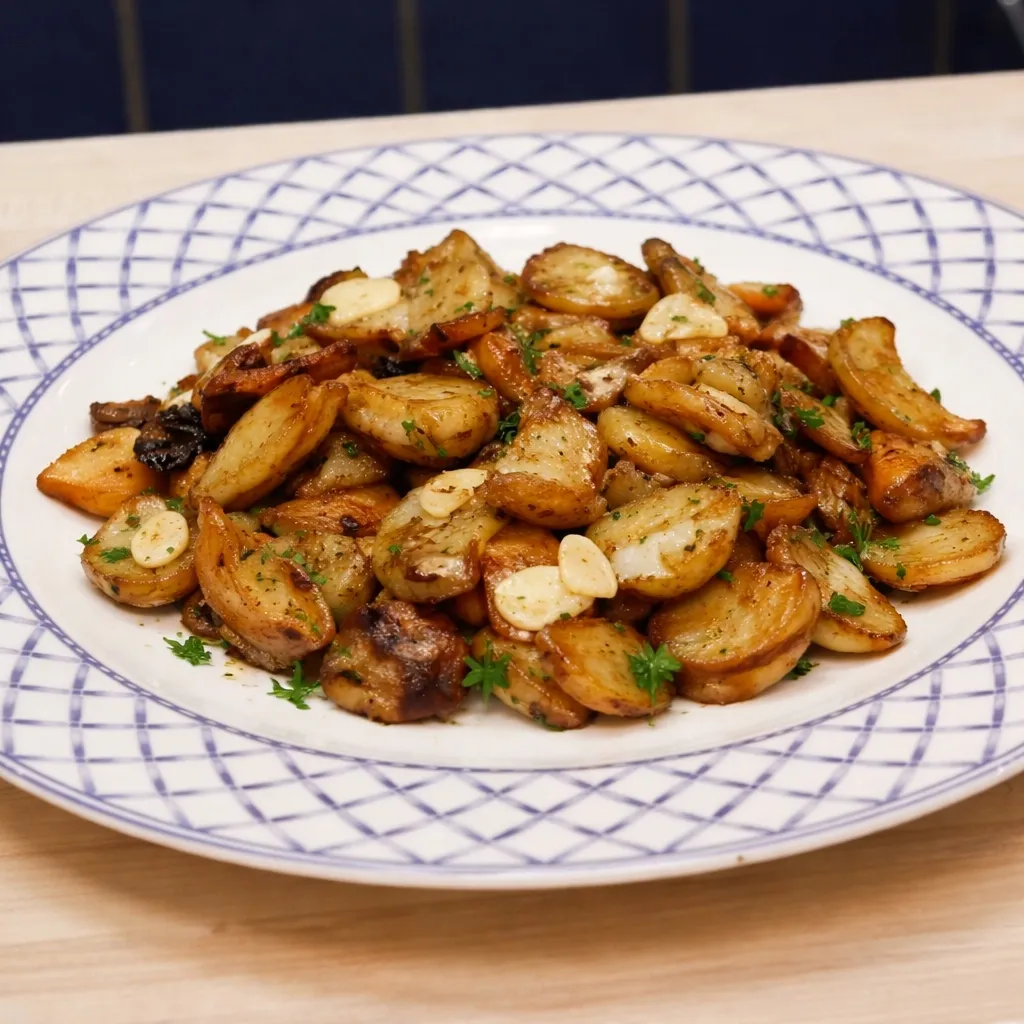
Pommes sarladaises are thin-sliced potatoes slowly cooked in duck fat, then finished with garlic and parsley. Unlike fries, they’re pan-roasted and basted so they turn golden and crisp on the edges while staying tender inside—perfect for a steak dinner, a cozy winter meal, or an easy upgrade to a summer BBQ plate.
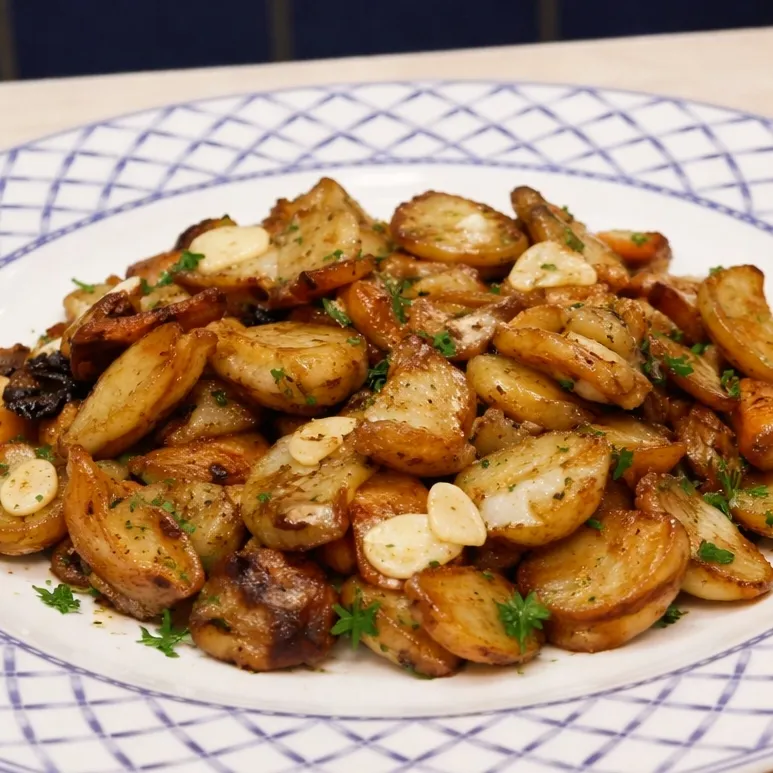
This version is based on my YouTube video “filet de bœuf sauce périgourdine avec pommes de terre sarladaises”, with a few practical adjustments since publication to make the timing and crispiness more reliable at home.
Why These Potatoes Are Different
A lot of “crispy potatoes” recipes chase maximum crunch by deep-frying or parboiling, but pommes sarladaises are a bistro-style side dish built around three things:
- Duck fat for flavor and even browning
- Controlled heat so the slices cook through before they crisp
- Garlic + parsley at the end so they stay fragrant (not bitter)
They’re hearty comfort food (starchy + rich fat), but they’re also a simple, protein-friendly side in the sense that they pair beautifully with straightforward mains—steak, roast chicken, or mussels—without needing a heavy sauce.

Ingredients That Matter
Potatoes: choose the right style
You want potatoes that hold their shape when sliced and flipped. Waxy or “boiling” potatoes are the easiest here. If you’re in Canada or the USA, look for:
- Yukon Gold (works well; slightly more tender)
- Yellow potatoes labeled “waxy” or “boiling”
- Red potatoes (a bit firmer, good shape retention)
Avoid very starchy baking potatoes unless you’re careful—those can break down and turn the pan into mashed-potato confetti.
Duck fat: the flavor engine
Duck fat is what makes this dish taste like a French bistro. You can make them with another fat (see substitutions), but the classic result comes from duck fat’s rich aroma and high-heat performance.
Garlic: timing is everything
Garlic burns fast in hot fat. If you add it too early, it can go bitter and dominate the whole pan. The best move is to add garlic near the end, when the potatoes are already golden.
Step-by-Step: How to Make Pommes Sarladaises That Actually Crisp
1) Slice the potatoes evenly
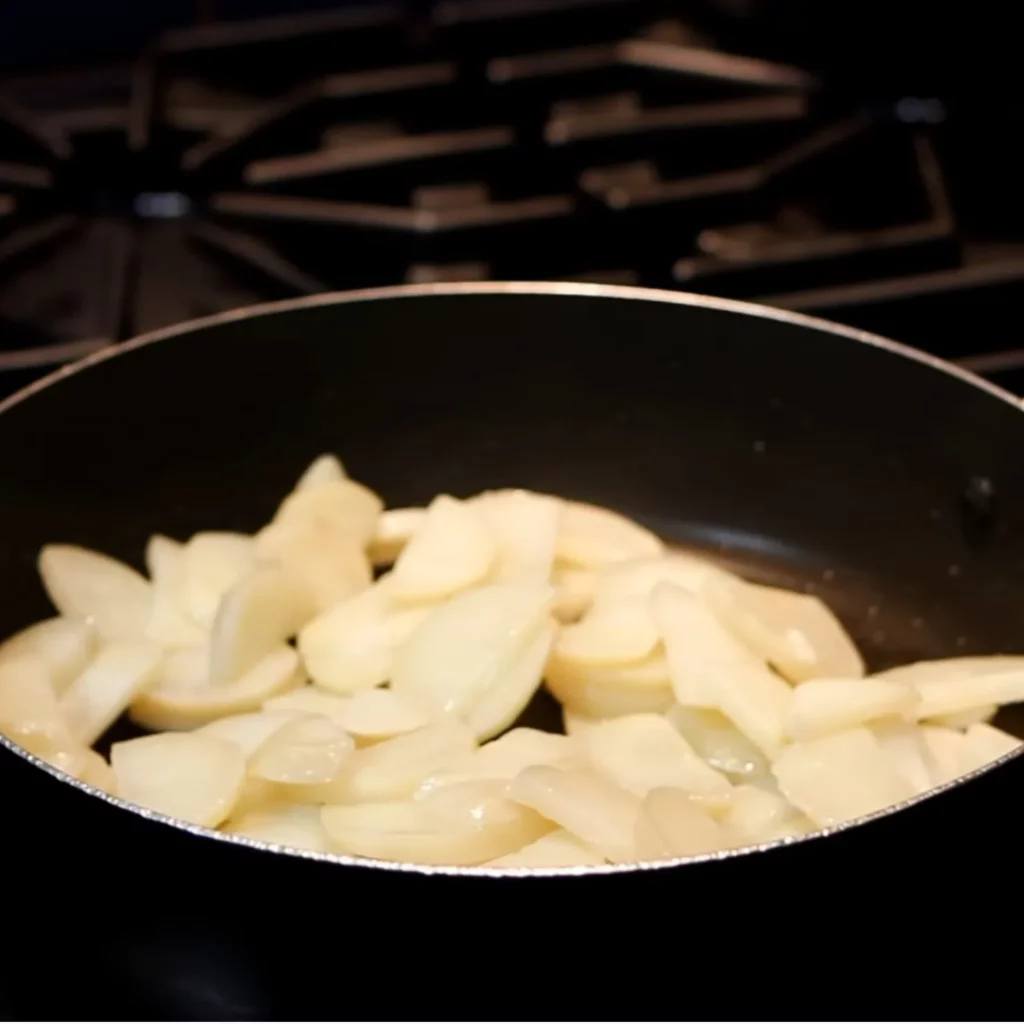
Peel the potatoes (optional, but classic is peeled), then slice into even rounds, about 3/16 inch thick (around 4–5 mm).
Uniform thickness is the difference between:
- some slices crisping
- others staying undercooked
If you have a mandoline, this is the moment to use it—just go carefully.
2) Rinse briefly, then dry thoroughly
This is one of the “adjustments since the video” that makes the biggest difference. After slicing:
- Rinse the slices quickly under cold water to remove surface starch
- Drain well
- Dry thoroughly with a clean towel
If you skip drying, you steam the potatoes instead of roasting them, and crispiness becomes a struggle.

3) Use a wide pan (or cook in two batches)
Overcrowding is the #1 reason pommes sarladaises go soft. Use the largest skillet you own—cast iron is great.
If the potatoes pile up too high, cook in two batches. You’ll get a much better result than trying to force 2+ pounds of potatoes into one pan.
4) Start with gentle heat so the centers cook
Heat the duck fat over medium until melted and shimmering (not smoking). Add the potato slices and toss to coat.
Now the key move:
- Spread them out as evenly as possible
- Cover the pan for the first 8–10 minutes
- Stir/flip every 2–3 minutes so they don’t stick
Covering early traps heat so the slices cook through. This prevents the classic problem: browned outsides with raw centers.
5) Uncover and let them roast until golden
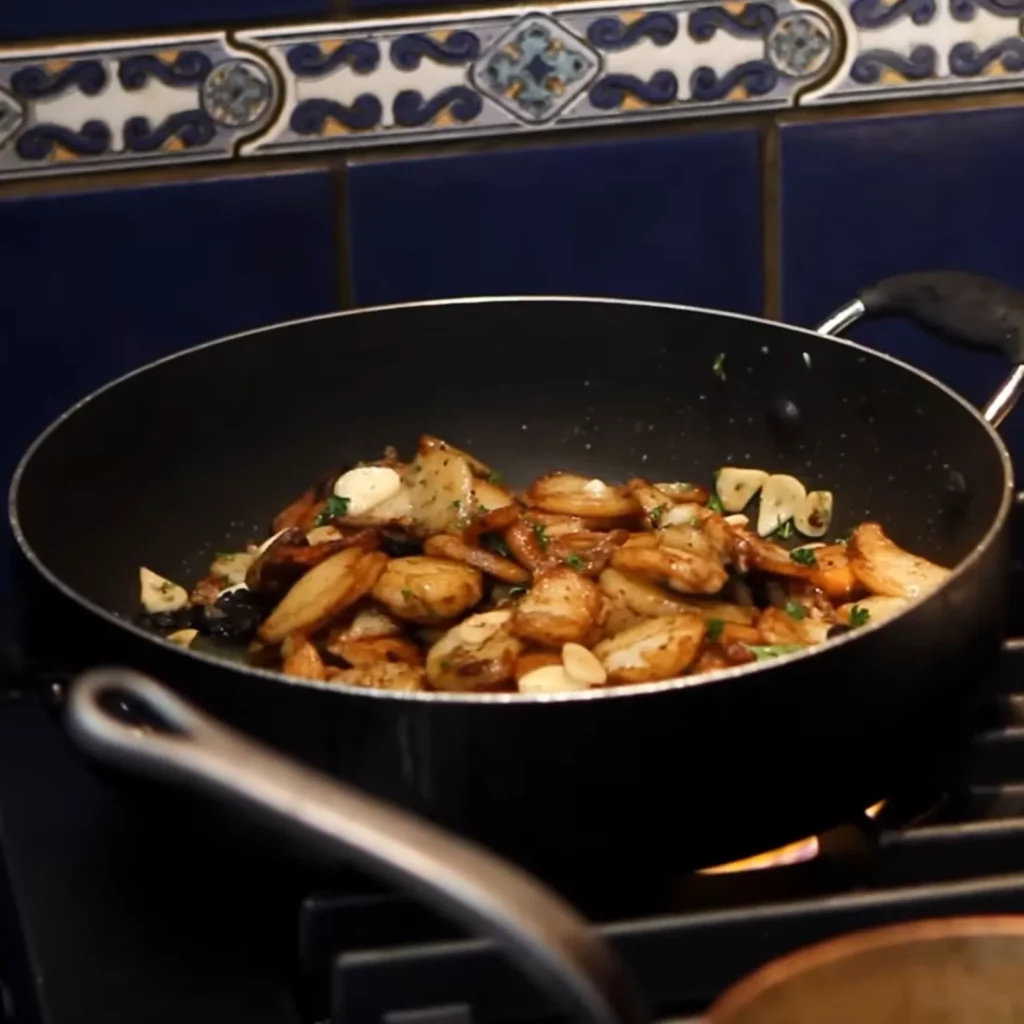
After the first phase, uncover and continue cooking 10–15 minutes, flipping regularly, until:
- edges are golden and slightly crisp
- slices are tender when pierced with a fork
- the pan smells nutty and savory (duck fat doing its job)
If the pan looks dry at any point, add a little more duck fat. If the heat is too high, you’ll brown too fast before the center is tender—turn the heat down slightly and keep moving the potatoes.
6) Add garlic at the end (low heat)
When the potatoes are almost done, lower the heat and add the sliced or minced garlic. Toss constantly for 30–90 seconds—just until fragrant.
Garlic should smell sweet and aromatic, not toasted and sharp.
7) Finish with parsley, season, and serve immediately
Turn off the heat, add parsley, toss, then season with salt and black pepper. Serve right away.
If they sit in a pile too long, steam softens them. If you need a short hold, spread them out on a sheet pan and keep warm in a low oven.
Pommes sarladaises are the traditional duck-fat, garlic-and-parsley pan-roasted potatoes lane. They’re not meant to replace other potato styles—each has a different intent:
- For a buttery onion-forward skillet side, make Lyonnaise potatoes (French sautéed potatoes).
- For a clean, elegant bistro garnish (especially with steaks), try Parisian potatoes recipe.
- For a bacon-forward version, go with Pommes parisiennes with bacon.
- For a lighter, quick-crisp method that uses less fat, make crispy air fryer fries.
Sarladaises are for when you want that unmistakable duck-fat depth—rich, savory, and classic.
Substitutions
Duck fat substitutes
- Beef tallow: closest flavor profile, very bistro-style
- Bacon fat: strong flavor; reduce added salt
- Olive oil + butter (half and half): good balance, less “duck” character
- Neutral oil: works, but less flavorful—add a little butter at the end if you want extra aroma
Herbs
Parsley is classic, but you can add:
- a pinch of thyme
- chives for a softer onion-herb note
Avoid dried parsley—fresh is what makes the finish taste “alive.”
Garlic options
- Thinly sliced garlic gives little pops of flavor
- Minced garlic distributes more evenly
If you’re sensitive to strong garlic, use fewer cloves and slice them instead of mincing.
FAQ
Why aren’t my pommes sarladaises crispy?
Usually one of these:
- Potatoes weren’t dried enough after rinsing
- Pan was overcrowded (steam is the enemy)
- Heat was too low the whole time
- Potatoes were stirred too rarely and stuck/steamed
Use a wider pan, dry more aggressively, and uncover for the final roast phase.
Should I parboil the potatoes first?
Not necessary for classic sarladaises. The covered-first method cooks the centers gently without making the slices waterlogged. Parboiling can work, but it often trades flavor intensity for speed.
Can I make them ahead?
They’re best fresh. If you need a head start:
- slice + rinse + dry earlier in the day
- store the slices wrapped in a towel in the fridge
Cook right before serving for the best texture.
What potatoes should I buy in Canada or the USA?
Yukon Gold is a reliable choice. If you see “waxy” or “boiling” on the label, that’s ideal. Avoid “baking” potatoes unless you’re very gentle with flipping.
How do I keep the garlic from burning?
Add it at the end on low heat, and keep the potatoes moving for 30–90 seconds. Garlic should perfume the pan, not brown.
What to Serve With Pommes Sarladaises (Suggested Posts)
These potatoes are built for steak nights and bistro plates:
- Rossini steak (beef tenderloin)
- Steak with béarnaise sauce
- Steak au poivre (easy recipe)
- Creamy mushroom sauce for steak
- Garlic butter sauce for steak
For a full brasserie-style meal:
And if you want more potato comfort food options:
Pommes Sarladaises (Duck Fat Potatoes) — Crispy, Garlicky French Potatoes
Ingredients
- 2.2 lb waxy potatoes Yukon Gold or similar, peeled (optional) and sliced 3/16 inch thick
- 4 –5 tbsp duck fat plus more as needed
- 3 –4 cloves garlic thinly sliced or minced
- 2 –3 tbsp fresh parsley roughly chopped
- Fine salt and black pepper to taste
Instructions
- Slice potatoes evenly (about 3/16 inch thick). Rinse briefly under cold water, drain, and dry very thoroughly with a towel.
- Heat duck fat in a large skillet over medium heat until shimmering. Add potatoes, toss to coat, and spread out.
- Cover and cook 8–10 minutes, stirring/flipping every 2–3 minutes so slices cook through without sticking.
- Uncover and continue cooking 10–15 minutes, flipping regularly, until golden on the edges and tender in the center. Add a little more duck fat if the pan looks dry.
- Lower heat. Add garlic and toss constantly 30–90 seconds until fragrant (do not let it brown).
- Turn off heat. Add parsley, toss, then season with salt and black pepper. Serve immediately.
Video
Notes
Substitutions
Duck fat substitutes
- Beef tallow: closest flavor profile, very bistro-style
- Bacon fat: strong flavor; reduce added salt
- Olive oil + butter (half and half): good balance, less “duck” character
- Neutral oil: works, but less flavorful—add a little butter at the end if you want extra aroma
Herbs
Parsley is classic, but you can add:- a pinch of thyme
- chives for a softer onion-herb note
Avoid dried parsley—fresh is what makes the finish taste “alive.”
Garlic options
- Thinly sliced garlic gives little pops of flavor
- Minced garlic distributes more evenly
If you’re sensitive to strong garlic, use fewer cloves and slice them instead of mincing.
FAQ
Why aren’t my pommes sarladaises crispy?
Usually one of these:- Potatoes weren’t dried enough after rinsing
- Pan was overcrowded (steam is the enemy)
- Heat was too low the whole time
- Potatoes were stirred too rarely and stuck/steamed
Should I parboil the potatoes first?
Not necessary for classic sarladaises. The covered-first method cooks the centers gently without making the slices waterlogged. Parboiling can work, but it often trades flavor intensity for speed.Can I make them ahead?
They’re best fresh. If you need a head start:- slice + rinse + dry earlier in the day
- store the slices wrapped in a towel in the fridge
Cook right before serving for the best texture.
What potatoes should I buy in Canada or the USA?
Yukon Gold is a reliable choice. If you see “waxy” or “boiling” on the label, that’s ideal. Avoid “baking” potatoes unless you’re very gentle with flipping.How do I keep the garlic from burning?
Add it at the end on low heat, and keep the potatoes moving for 30–90 seconds. Garlic should perfume the pan, not brown.🔗 Useful Links
🛒 Michel Dumas Shop : Explore our kitchen essentials, including aprons and knives.
🌐 Linktree : Access all our important links in one place.
📱 YouTube | Instagram | Facebook | TikTok : Follow us for the latest recipes and culinary tips.