Homemade Fresh Chorizo Sausages with Paprika and Garlic
These homemade fresh chorizo sausages combine coarsely ground pork, sweet paprika, garlic, black pepper, and crushed chili in juicy links that can be pan-cooked or grilled.
This recipe follows my Saucisses Chorizo video, with the batch reduced for a home kitchen and the handling and cooking instructions made more precise. The result is a fresh sausage that needs cooking before serving. Its paprika color and garlic flavor make it useful for a simple dinner, a barbecue, or a platter of warm sliced sausage.
{VIDEO}
What kind of chorizo is this
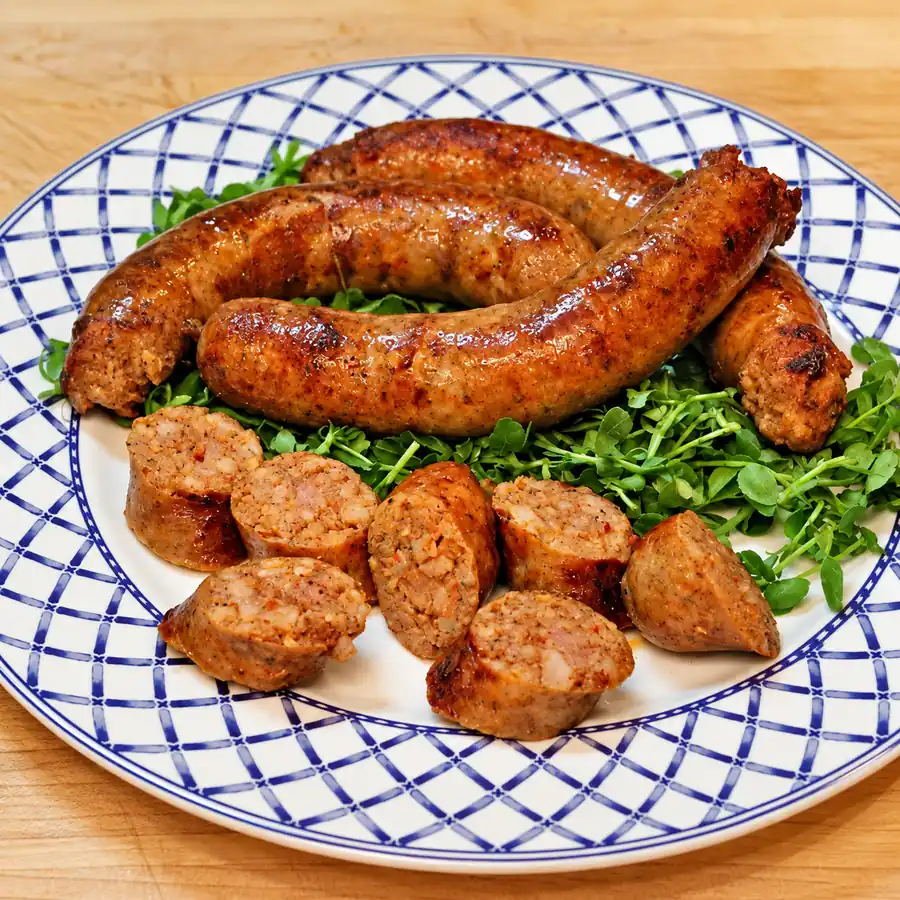
The sausages in the video are made from raw pork, stuffed into casings, and cooked in a skillet. There is no drying or fermentation stage. Keep them refrigerated just like other raw pork sausages; paprika and salt do not make them shelf stable. They also differ from a loose, vinegar-seasoned Mexican chorizo or a firm Spanish cured chorizo served in thin slices.
Here the seasoning is deliberately straightforward. Sweet paprika supplies the red color and rounded pepper flavor, while crushed chili adds heat. Smoked paprika can replace part of the sweet paprika if you prefer a smoky version, but smoking the finished sausages is not part of this recipe.
For another homemade sausage method, see my homemade pork sausage with six flavor options. The French pork sausage recipe gives a more restrained Toulouse-style seasoning, while homemade lamb merguez takes the flavor toward cumin and North African spices.
Ingredients and proportions
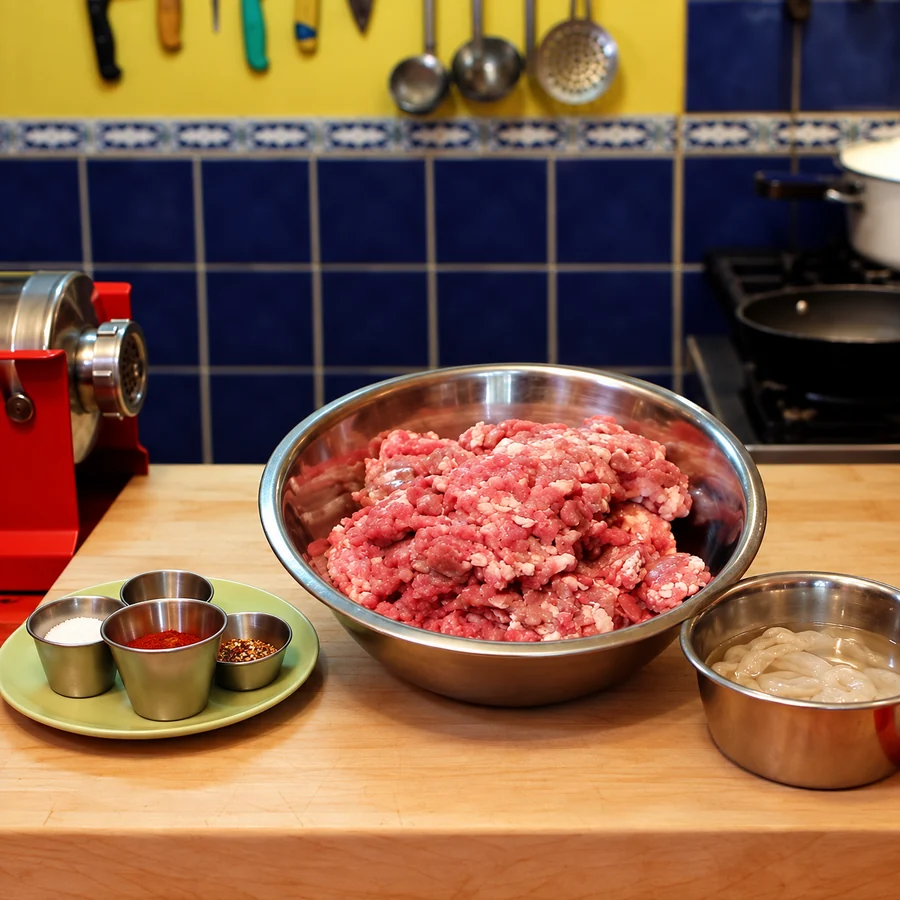
For approximately eight portions, use 2¼ lb coarsely ground pork shoulder with roughly 20–25% fat; 0.53 oz fine salt; 0.53 oz sweet paprika, about 2 tablespoons; 0.21 oz freshly ground black pepper, about 2½ teaspoons; 0.24 oz finely minced garlic, about 2 medium cloves; and 0.07 oz crushed red chili, about 1 teaspoon. The spice weights are more dependable than spoon measurements. Different grinds of pepper and brands of salt occupy different volumes.
You also need natural hog casings, prepared according to their package directions, cold water for rinsing, and up to 2 tablespoons ice-cold water for the meat mixture if necessary. For cooking, have 1 teaspoon neutral oil and ¼ cup water available per skillet batch. These small amounts of water support mixing and gentle skillet cooking; they are practical additions to the written method.
The video uses a larger pork batch with measured paprika, salt, pepper, garlic, and chili. The smaller batch keeps the same general seasoning balance. Black pepper is quite pronounced here. If you want a gentler sausage, start with 1½ teaspoons, cook a small test piece, and increase it before stuffing. Keep the salt weight consistent rather than reducing it at random, because salt helps the meat develop a cohesive texture as well as seasoning it.
Fat is just as important as the spices. Extra-lean ground pork can give a dry, crumbly sausage, even when the outside looks beautifully browned. Ask for pork shoulder suitable for sausage-making if you are buying pre-ground meat. For a poultry alternative, use the separate homemade chicken sausage recipe, which has its own seasoning and cooking requirements.
Equipment and organization
A grinder is useful if starting from cubed pork, but not essential when the butcher supplies a coarse grind. You do need a sausage stuffer or a suitable stuffing attachment for links. Chill the bowl, grinder components, and meat before beginning. A kitchen scale that can measure small amounts accurately is helpful for the seasoning, and an instant-read thermometer is the simplest way to judge doneness.
Work in manageable batches. Keep the meat you are not handling in the refrigerator. If the mixture becomes soft, greasy, or warm while stuffing, stop and chill it before continuing. Cold fat remains distinct within the sausage; warm fat can smear and weaken the texture.
Step by step preparation
Step 1 Prepare the pork and casings
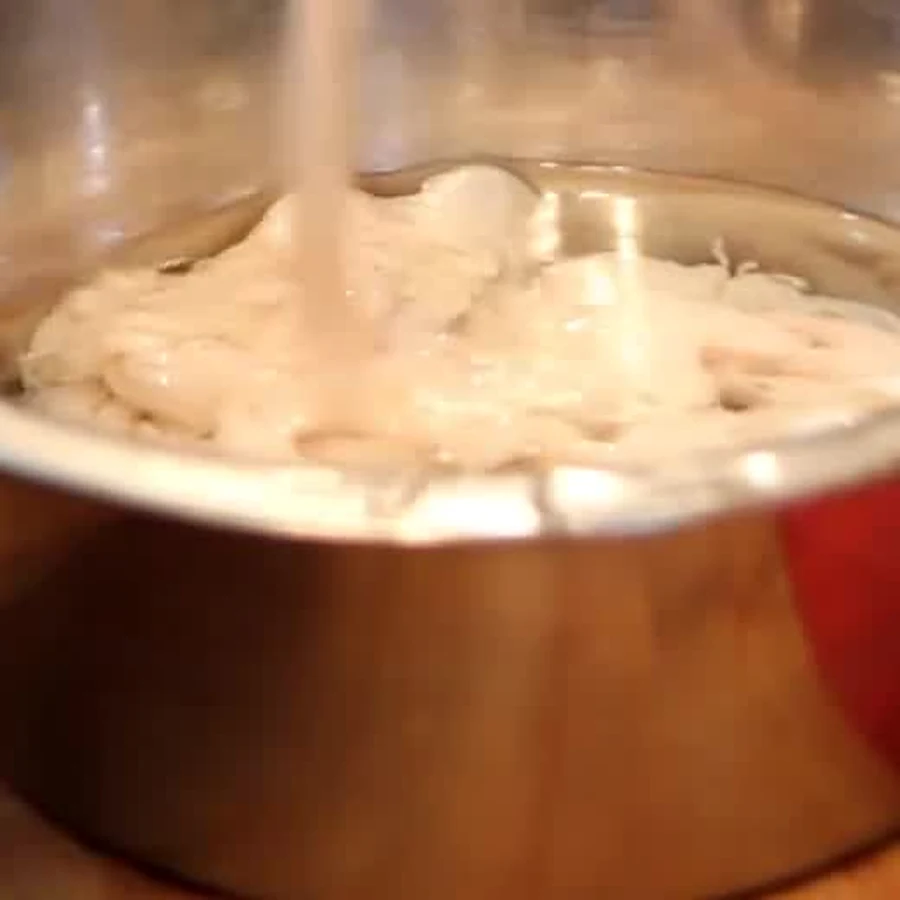
If grinding your own pork, cut it into pieces that fit the grinder and chill until very cold but not frozen solid. Grind through a coarse plate into a chilled bowl. If using pre-ground pork, keep it refrigerated until the spices and casings are ready.
Rinse salted hog casings thoroughly and soak as directed on their package, commonly about 30 minutes. Run clean water through the inside to remove salt and check for damaged sections. Keep the prepared casings moist. Do not put dry, stiff casing directly onto the stuffing tube; it is more likely to tear.
Step 2 Season and mix until cohesive
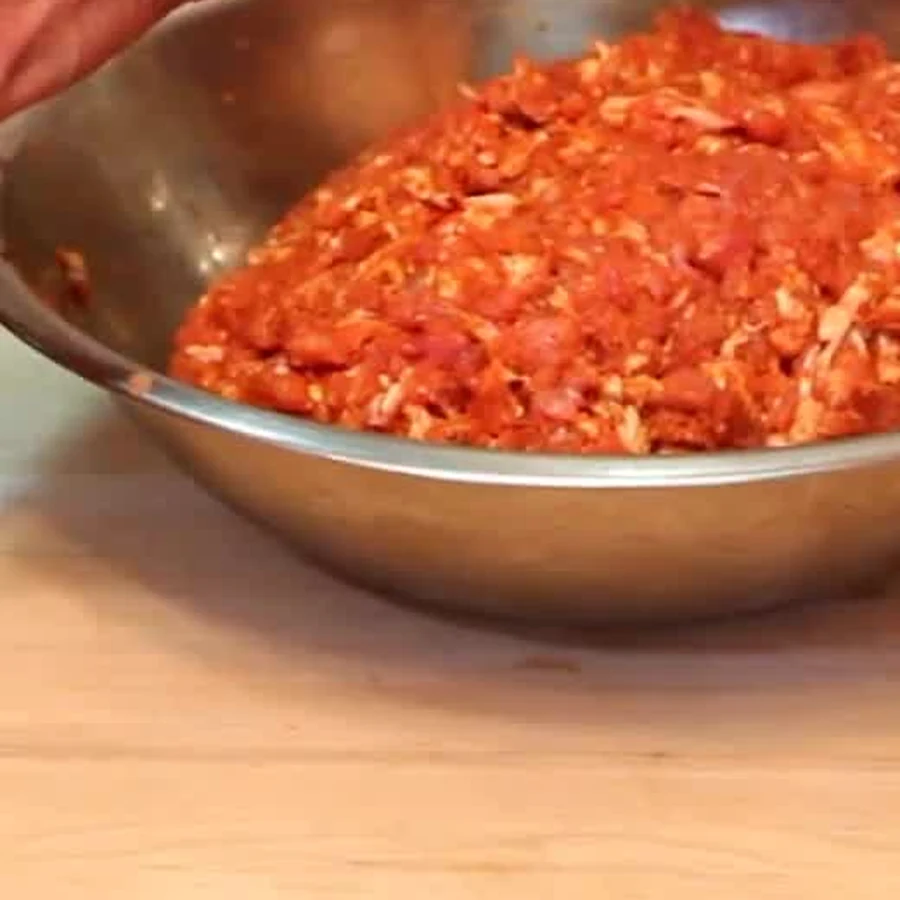
Combine the salt, paprika, pepper, garlic, and chili. Sprinkle evenly over the pork, then mix firmly with clean hands or a paddle until the meat becomes tacky and holds together, usually 2–4 minutes. Add the optional ice-cold water a little at a time only if the mixture is too stiff to mix comfortably.
The target is a cohesive mixture with visible pieces of fat, rather than a smooth paste. Cook a small flattened piece completely to 160°F, let it cool slightly, and taste. Adjust chili or pepper before filling the casings. Never taste the raw mixture. This test is especially useful when changing the paprika or using a different chili product.
Step 3 Fill the casings gently
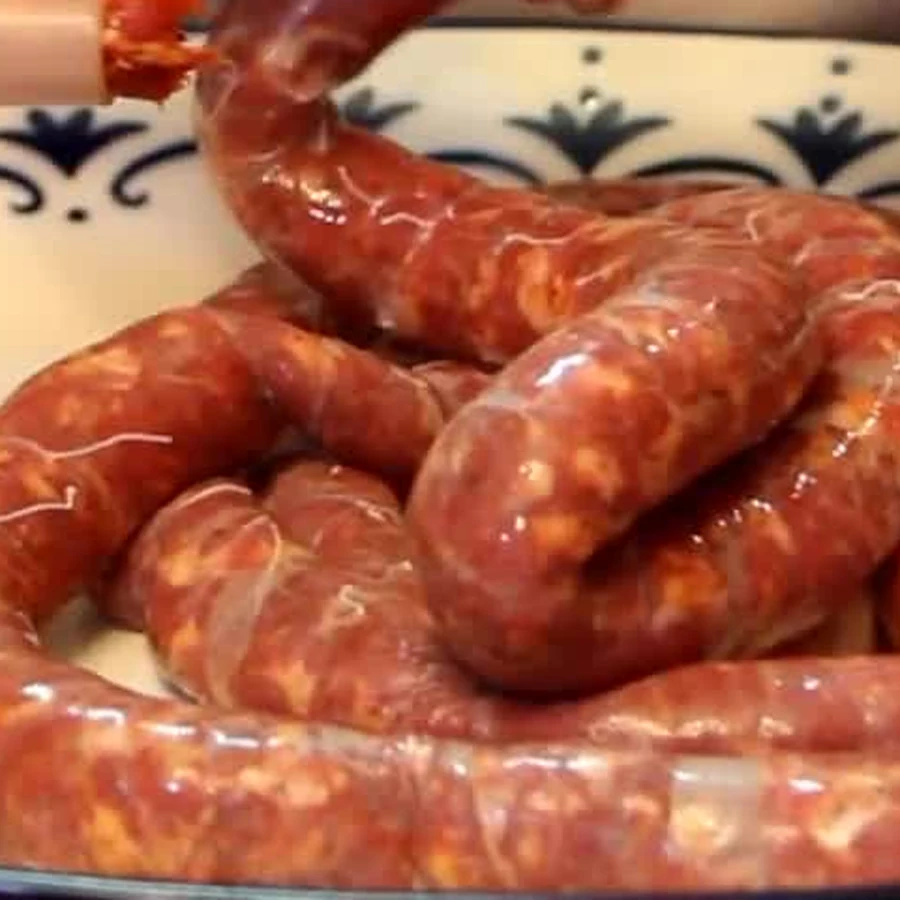
Load the cold mixture into the stuffer, pressing it down to remove large air pockets. Lightly moisten the stuffing tube and slide a length of casing onto it, leaving a short tail. Start feeding meat until it reaches the end of the tube, then tie the casing end.
Fill slowly into a clean tray, guiding the casing rather than pulling it. The sausage should feel filled but remain flexible enough to twist into links. Tight filling leaves no room for linking or expansion during cooking. If a large air pocket appears, release it carefully with a clean sausage pricker instead of puncturing the entire sausage repeatedly.
Step 4 Form links and chill
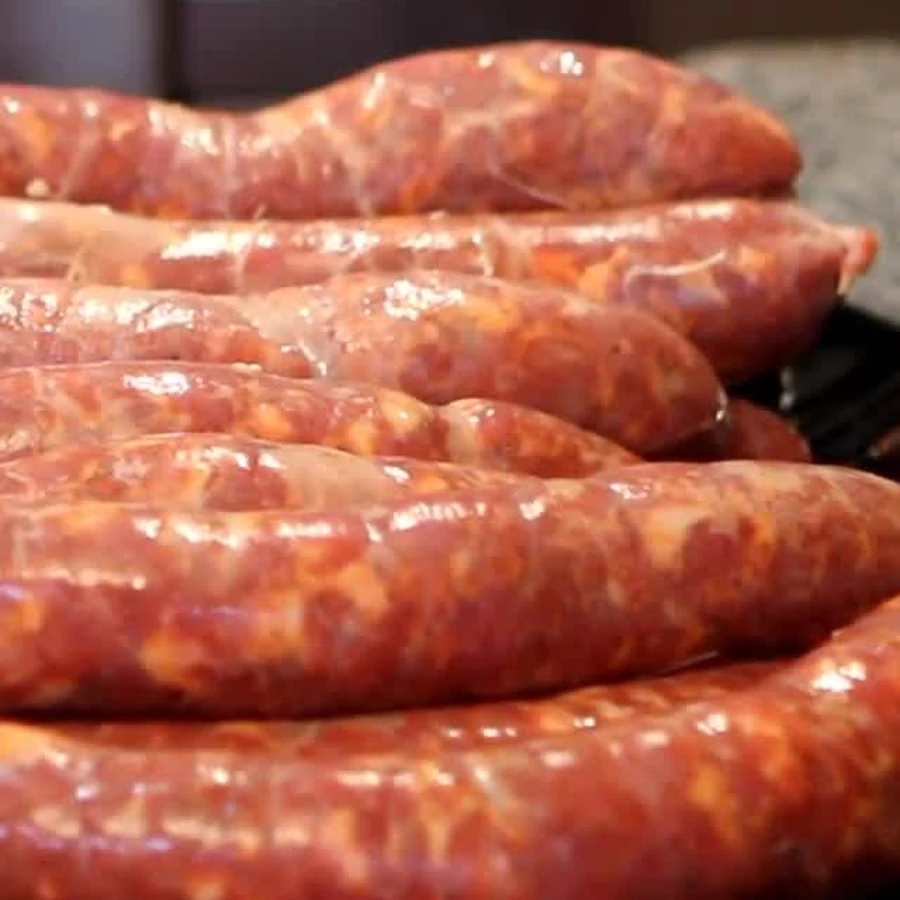
Pinch the filled casing into links about 5–6 inches long, alternating the direction of each twist so the previous link does not unwind. Aim for similar sizes so they cook evenly. Tie the final end and arrange the links in a single layer on a covered tray.
Refrigerate for about 30 minutes before cooking. This short rest helps the links hold their shape and gives the casing a chance to settle. It is a refrigerator rest, not a room-temperature drying stage. Keep uncooked links together until the twists have set, then separate carefully if needed.
Step 5 Cook gently and finish with color
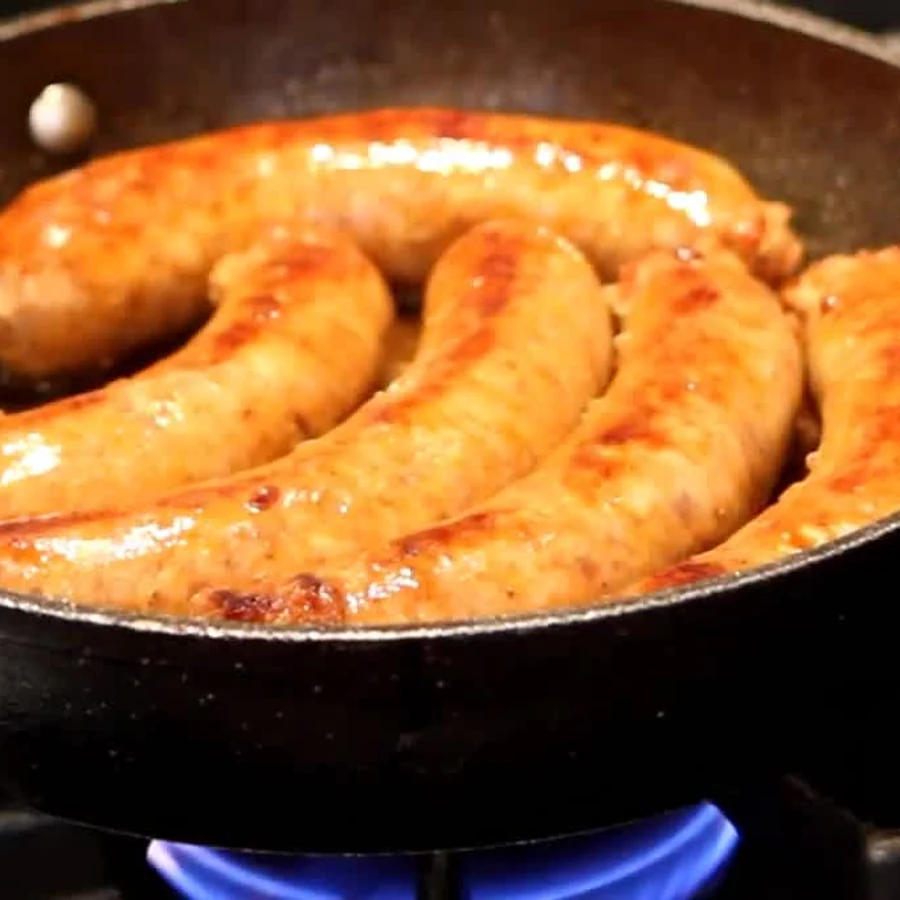
Place a skillet over medium heat with a thin film of oil. Add only enough links to fit comfortably in one layer. Pour in ¼ cup water, cover, and cook gently for about 6–8 minutes, turning once. Uncover, let the water evaporate, then turn regularly until the casings are evenly browned.
Allow roughly 15–20 minutes in total, depending on link thickness and the pan. Check the center of the thickest sausage with a thermometer and continue until it reaches 160°F. A browned casing is not proof that the middle is cooked. Reduce the heat if the outside darkens before the inside reaches temperature; add a little more water if needed.
For grilling, begin over moderate indirect heat, turn regularly, and finish briefly over direct heat for color. Use the same internal temperature target. Avoid pressing the sausages or repeatedly piercing them, which lets juices escape.
Step 6 Rest and serve
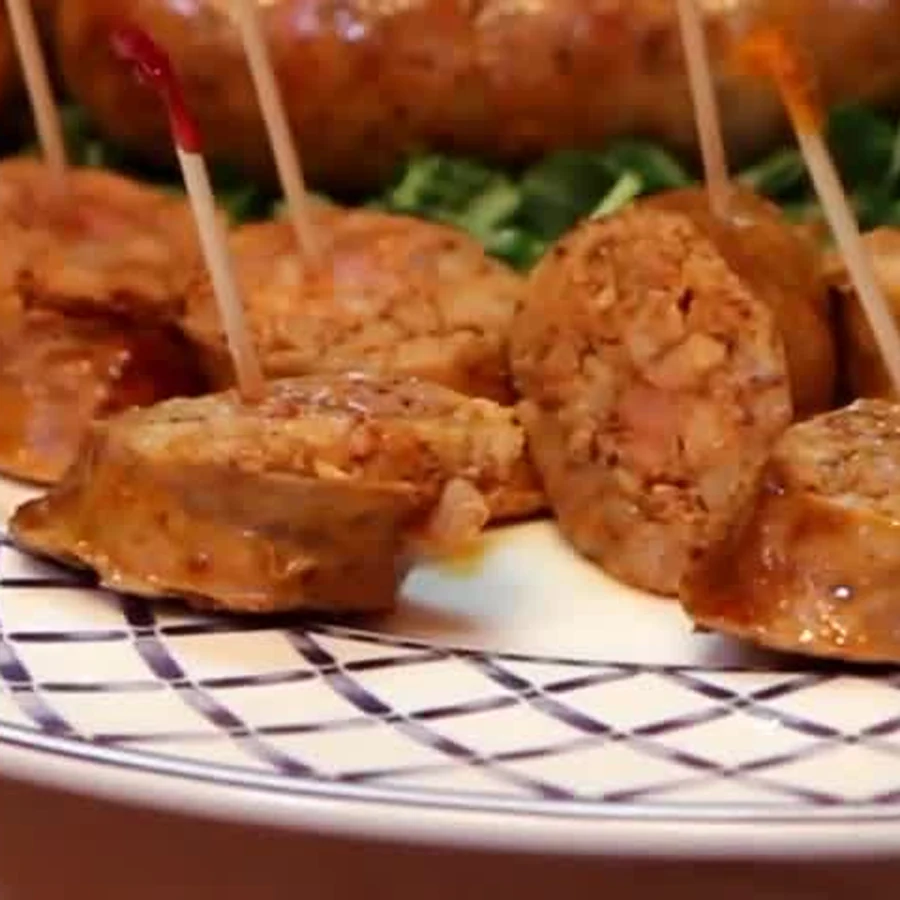
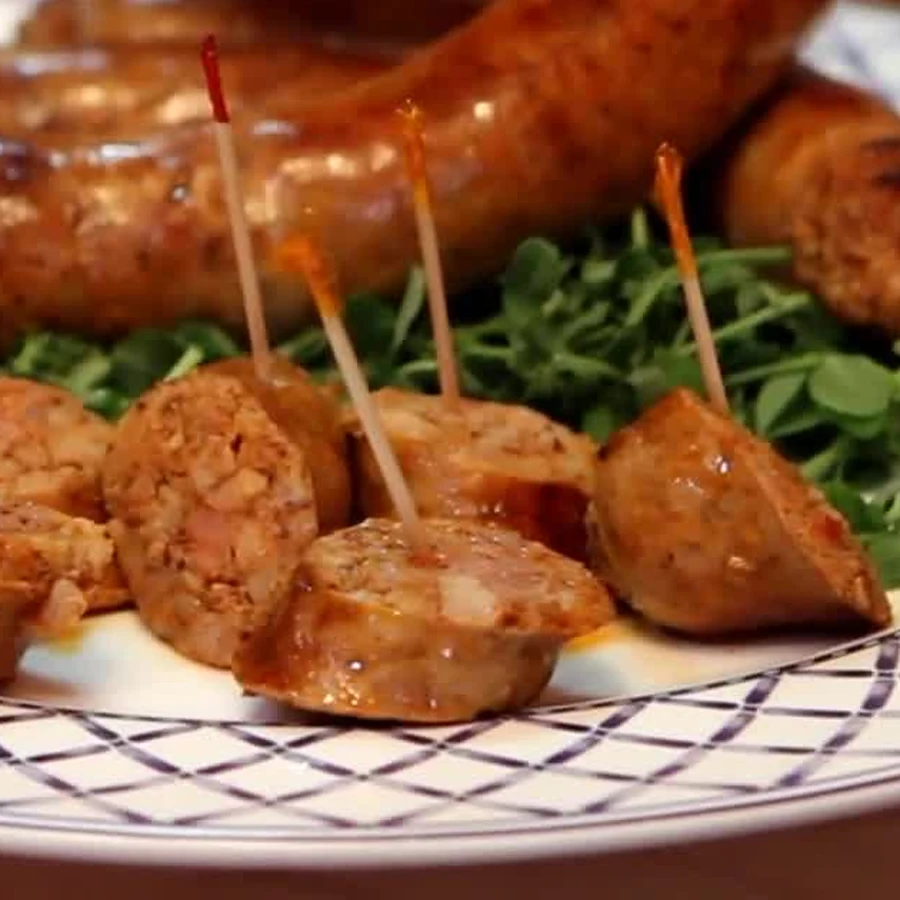
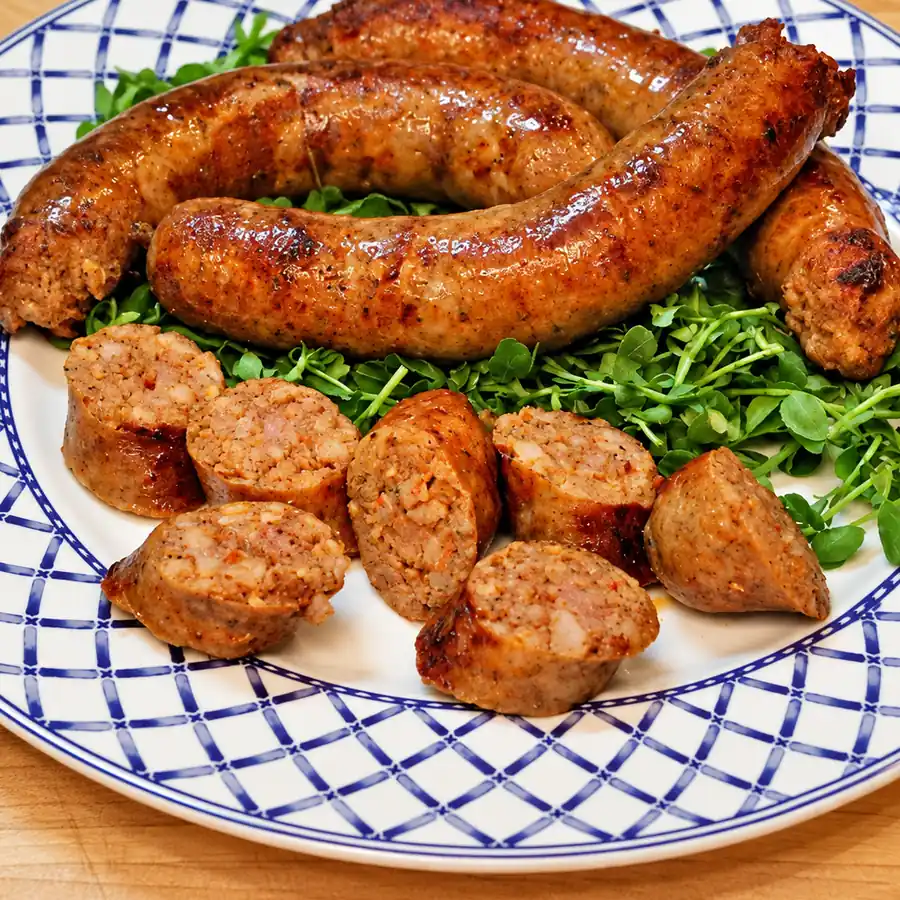
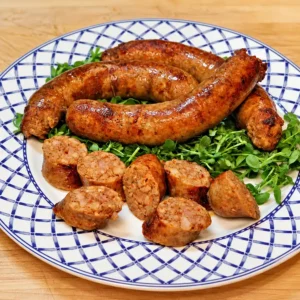
Let the cooked sausages stand for about 3 minutes before slicing. Serve whole for dinner or cut into thick rounds for a warm sharing platter. A few fresh greens give the plate contrast, but the sausage does not need elaborate garnish or a heavy sauce.
Cook only the amount you need if you plan to save part of the batch. Separate raw and cooked plates and utensils throughout preparation. The fresh links are also useful for a later meal, provided they are cooked safely and stored promptly.
Serving ideas and substitutions
For a complete dinner, pair the sausages with homemade mashed potatoes or use them in an easy sausage and potato sheet pan dinner. A sheet pan sausage and vegetable meal is another practical way to use a batch of links.
A salad dressed with classic vinaigrette balances the richness, while a Greek pasta salad with oregano vinaigrette suits a barbecue table. For a saucier dinner, try sausage rougail with beans. If you prefer a tomato pasta format, see merguez pasta with olives and Parmesan.
Without casings, shape the seasoned meat into small patties and cook to 160°F. You can also crumble it into a skillet. Reduce or omit the chili for a milder batch. Garlic powder is a possible replacement for fresh garlic, but use much less because it is concentrated; start with ½ teaspoon and rely on the cooked taste test. Neither substitution changes the need to keep the raw meat cold.
Frequently asked questions
Why are my sausages crumbly or dry
The pork may be too lean, the mixture may not have developed a tacky bind, or the cooking heat may be too high. Start with suitable pork shoulder, mix while cold, and cook gently. Adding more paprika or oil after cooking cannot repair a poorly bound filling.
Can I make these without a grinder
Yes. Buy coarsely ground pork with enough fat, season it, and proceed with mixing and stuffing. Without a stuffer, make patties rather than forcing meat into narrow casings with unsuitable equipment.
Can these sausages be dried like cured chorizo
No. This is a fresh sausage recipe. It does not include a validated curing or fermentation process. Keep the links refrigerated and cook them before serving.
How should I store the batch
Refrigerate raw sausages and cook within 1–2 days, or freeze promptly for up to 1–2 months for best quality. Refrigerate cooked leftovers within 2 hours and use within 3–4 days. Reheat cooked portions to 165°F, adding a splash of water to the pan if necessary. Thaw frozen raw sausages in the refrigerator.
Homemade Fresh Chorizo Sausages with Paprika and Garlic
Ingredients
- 2¼ lb coarsely ground pork shoulder about 20–25% fat
- 0.53 oz fine salt weighed
- 0.53 oz sweet paprika about 2 tablespoons
- 0.21 oz ground black pepper about 2½ teaspoons, or less to taste
- 0.24 oz finely minced garlic about 2 medium cloves
- 0.07 oz crushed red chili about 1 teaspoon, or less to taste
- Natural hog casings prepared according to package directions
- Up to 2 tablespoons ice-cold water for mixing as needed
- 1 teaspoon neutral oil per skillet batch
- ¼ cup water per skillet batch plus water for rinsing casings
Instructions
- Keep the pork and equipment cold. Grind coarsely if necessary. Rinse and soak the casings according to their package directions, then flush the inside with clean water.
- Mix pork with salt, paprika, pepper, garlic, and chili until tacky and cohesive. Add a little ice-cold water only as needed. Cook a small test piece to 160°F and adjust seasoning.
- Load the stuffer without large air pockets and fill the casings gently, leaving enough flexibility for linking.
- Twist into 5–6-inch links, alternating the twist direction. Cover and refrigerate for about 30 minutes.
- Cook in skillet batches with oil and water, covered initially, then uncovered to brown. Allow about 15–20 minutes and verify 160°F in the thickest center.
- Rest about 3 minutes, then serve whole or sliced.