How to Make Homemade Brown Gravy: A Practical Guide for Rich, Smooth Brown Sauce
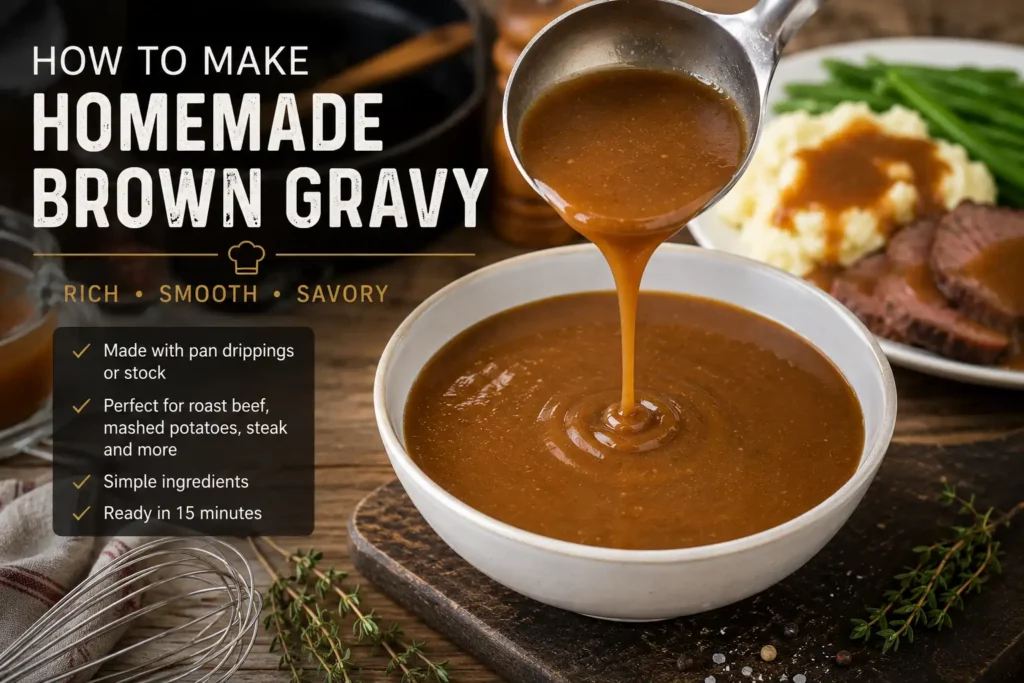
Homemade brown gravy is a savory sauce made from browned flavor, stock, pan drippings, and a thickener. It is the kind of sauce you use with roast beef, steak, mashed potatoes, meatloaf, Salisbury steak, poutine-style dishes, roasted chicken, and comfort food plates.
A good brown gravy should be smooth, glossy, savory, and balanced. I prefer to make it from browned flavor instead of relying only on powder or bottled concentrate because the sauce tastes deeper, more natural, and more connected to the food you are serving.
Why This Guide Matters
Brown gravy looks simple, but the small details matter. If the pan is not browned enough, the gravy tastes flat. If the flour is not cooked properly, it can taste pasty. If the stock is too salty, the sauce can become overpowering after reduction. If the heat is too high, the gravy can turn lumpy or too thick before the flavor develops.
For home cooking in Canada and the USA, brown gravy is useful because it fits many everyday meals. It works with beef, chicken, pork, potatoes, fries, roasts, meatballs, burgers, sandwiches, and casseroles. It can be made quickly for a weeknight dinner, or slowly with brown stock for a more classic French-style sauce.
This guide explains how to make brown gravy at home, how to thicken it properly, how to adjust the flavor, and how to fix common problems. It also connects to classic sauce brune, pan sauces, and comfort food dishes where a good brown sauce makes all the difference.
If you want the more classic French version, start with this classic sauce brune recipe. For deeper sauce work, this guide also connects naturally with brown stock, demi-glace, and meat glaze, since those are the foundations of richer brown sauces.
Quick Answer
To make homemade brown gravy, brown butter and flour together to create a roux, whisk in beef stock or pan drippings gradually, then simmer until the sauce thickens and tastes savory. For better flavor, build the gravy in the same pan used to cook meat, deglaze the browned bits, and season only after the sauce has reduced.
For the best result:
- Use real stock or pan drippings when possible
- Cook the flour long enough to remove the raw taste
- Add liquid gradually while whisking
- Simmer until the texture coats the back of a spoon
- Taste at the end before adding more salt
- Finish with a small knob of butter for gloss if desired

What Is Brown Gravy?
Brown gravy is a savory sauce usually made from stock, browned drippings, flour or another thickener, and seasonings. It can be very simple or more developed depending on the dish.
In North American home cooking, brown gravy is often served with roast beef, mashed potatoes, meatloaf, fries, turkey, chicken, and comfort food plates. In French-style cooking, a deeper brown sauce may be built from brown stock, reduced wine, aromatics, and demi-glace.
The difference is mostly depth and time. A quick brown gravy can be ready in 10 to 15 minutes. A classic sauce brune or demi-glace-style sauce takes longer because the stock and reduction do more of the work.
Both versions follow the same logic: browned flavor, liquid, thickening, reduction, and seasoning.
Brown Gravy vs Brown Sauce vs Sauce Brune
The names can overlap, but they are not always exactly the same.
| Name | Common Meaning | Best Use |
| Brown gravy | A thickened savory sauce made with stock, drippings, or roux | Mashed potatoes, roasts, Salisbury steak, meatloaf, poutine-style plates |
| Brown sauce | A broader term for savory brown sauces, often more refined | Steak, beef dishes, roasted meats, French-style plates |
| Sauce brune | French-style brown sauce usually based on brown stock and deeper reduction | Steak, veal, beef, classic sauces, comfort food with a French touch |
| Demi-glace | A highly reduced brown stock-based sauce | Elegant meat dishes, steak sauces, restaurant-style plates |
For everyday cooking, “brown gravy” is the most familiar term. For a French-inspired cooking guide, “sauce brune” adds more precision and culinary depth.
The Best Ingredients for Homemade Brown Gravy
Stock or broth
The stock is the backbone of the gravy. Beef stock gives the deepest brown gravy, but chicken stock can work if you are serving poultry or a lighter dish.
Use:
- Beef stock for roast beef, steak, meatloaf, Salisbury steak, and poutine-style dishes
- Chicken stock for roasted chicken, turkey-style dinners, and lighter brown gravy
- Vegetable stock for a meatless version
- Brown stock or demi-glace for a deeper French-style sauce
If using store-bought stock, choose low-sodium when possible. Brown gravy reduces as it cooks, and salty stock can become too salty quickly.
Pan drippings
Pan drippings add real cooked flavor. They come from the browned bits and juices left in the pan after cooking meat.
The browned bits at the bottom of the pan are important. They are called fond, and they give gravy a deeper taste. If the bits are golden brown, they are useful. If they are burned black, they can make the gravy bitter.
This is why pan sauces work so well with steak dishes like Sauce Diane or creamy Dijon sauce for steak. The sauce begins with the flavor already left behind in the pan.
Flour or thickener
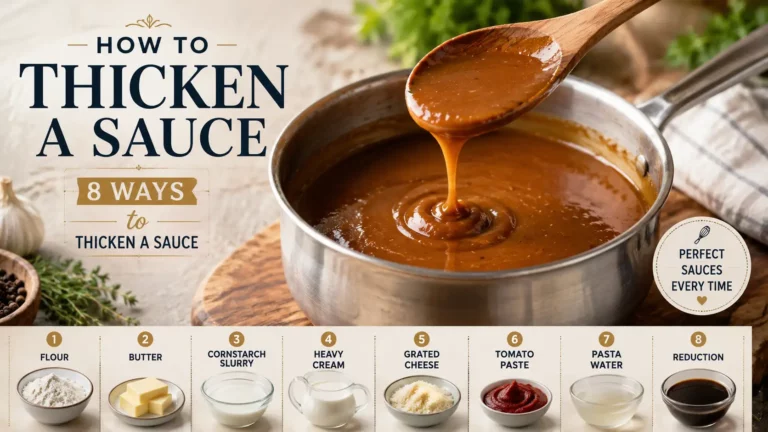
Flour is the classic thickener for brown gravy. It is usually cooked with fat to make a roux.
You can also use:
- Cornstarch slurry for a glossy, quick gravy
- Beurre manié for small last-minute adjustments
- Reduction for a thinner but more intense sauce
- Demi-glace for a richer, more classic finish
For home cooking, flour gives a comforting texture. Cornstarch gives a smoother, shinier gravy but less of that classic homemade body.
Fat
You need fat to cook the flour and build flavor.
Good options include:
- Butter
- Beef drippings
- Chicken drippings
- A mix of butter and pan fat
- Neutral oil if needed
Butter gives flavor and helps the roux cook evenly. Meat drippings bring a stronger roasted taste.
Aromatics
Aromatics are optional, but they improve the sauce.
Good options include:
- Shallots
- Onion
- Garlic
- Thyme
- Bay leaf
- Black pepper
- Mushrooms
- A small spoon of tomato paste
For a quick brown gravy, keep it simple. For a deeper brown sauce, aromatics matter more.
Basic Homemade Brown Gravy Method
Step 1: Start with browned flavor
If you cooked meat in a pan, keep the browned bits. Remove excess fat if there is too much, but keep enough to build the sauce.
If you are not using meat drippings, start with butter in a saucepan and let it melt gently. You can add finely chopped shallot or onion and cook it until softened.
Step 2: Add flour and cook the roux
Sprinkle flour into the fat and whisk. Cook the mixture for 2 to 4 minutes, depending on how dark you want the gravy.
For a lighter gravy, cook the roux until it smells slightly nutty. For a deeper brown gravy, cook it a little longer, stirring constantly so it does not burn.
The mistake to avoid is rushing this step. Raw flour can make the gravy taste pasty.
Step 3: Deglaze the pan
If using a pan with browned bits, add a splash of stock, water, wine, or broth and scrape the bottom of the pan.
This pulls up the browned flavor and brings it into the sauce.
For a beef dinner, a little red wine can add depth. For a more everyday gravy, stock or water is enough.
Step 4: Add the stock gradually
Add the stock slowly while whisking. Start with a small amount, whisk until smooth, then continue adding the rest.
This helps prevent lumps.
If you pour all the liquid in at once, the flour mixture can seize and clump.
Step 5: Simmer until smooth
Bring the gravy to a gentle simmer. Let it cook until it thickens and the flavor comes together.
The sauce should coat the back of a spoon. It should not be so thick that it sits heavily on the plate.
Step 6: Season at the end
Taste the gravy before adding more salt. If you used drippings or store-bought stock, it may already be salty.
Adjust with:
- Salt
- Black pepper
- A splash of Worcestershire sauce
- A small amount of mustard
- A few drops of vinegar or lemon juice
- A knob of butter
A little acidity can make the gravy taste more balanced, especially if it feels heavy.
Practical Brown Gravy Ratio Chart
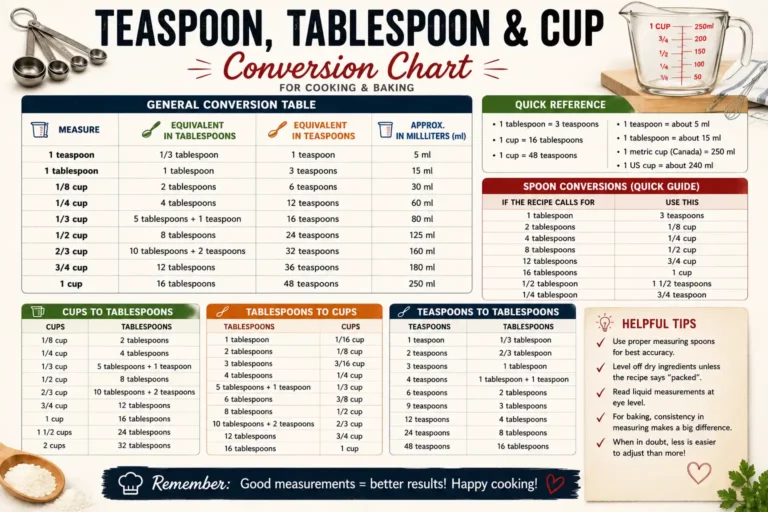
| Desired Amount | Fat | Flour | Stock or Broth | Result |
| Small batch | 2 tbsp | 2 tbsp | 1 cup | Thick gravy for 2 to 3 servings |
| Medium batch | 3 tbsp | 3 tbsp | 1 1/2 cups | Gravy for 4 servings |
| Family batch | 4 tbsp | 4 tbsp | 2 cups | Gravy for 6 servings |
| Thinner sauce | 2 tbsp | 1 1/2 tbsp | 1 cup | Lighter sauce for steak or chicken |
| Richer sauce | 3 tbsp | 3 tbsp | 1 cup stock plus 1/2 cup demi-glace-style reduction | Deeper French-style brown sauce |
Use the chart as a starting point. Different flour brands, stock types, and simmering times can change the final texture.
How to Make Brown Gravy Without Drippings
You can still make a good brown gravy without pan drippings. The key is to build flavor in the saucepan.
Use this method:
- Melt butter in a saucepan.
- Add finely chopped shallot or onion.
- Cook until softened and lightly golden.
- Add flour and cook into a brown roux.
- Whisk in beef stock gradually.
- Add black pepper, thyme, and a small splash of Worcestershire sauce if desired.
- Simmer until thickened.
- Finish with butter.
This version works well with mashed potatoes, meatloaf, burgers, sandwiches, and weeknight beef dishes.
For a comfort food example where gravy matters, see homemade Salisbury steak. It is the type of dish where a rich mushroom-onion gravy is not just a topping. It is part of the whole meal.
How to Make Brown Gravy with Pan Drippings
Pan dripping gravy is usually better because the flavor is already in the pan.
Use this method after cooking meat:
- Remove the cooked meat from the pan.
- Pour off excess fat, leaving about 2 to 4 tablespoons.
- Keep the browned bits in the pan.
- Add flour and whisk into the fat.
- Cook for 2 to 3 minutes.
- Add stock gradually while scraping the pan.
- Simmer until smooth.
- Taste and adjust.
This method is especially good with roasted beef, pan-seared steak, lamb, chicken, and pork.
For dishes with a more refined pan sauce approach, look at filet de boeuf with Périgourdine sauce or oven-roasted boneless leg of lamb with homemade pan jus. The same idea applies: use the cooked flavor from the meat to build the sauce.
How to Make Brown Gravy Darker
A pale brown gravy usually means the roux, stock, or pan flavor was not developed enough.
To make brown gravy darker:
- Cook the roux a little longer
- Use beef stock instead of chicken stock
- Add browned pan drippings
- Add a small amount of tomato paste and cook it well
- Add mushrooms or browned onion
- Use a little demi-glace if available
- Reduce the sauce longer
Do not rely only on artificial darkening. Color should come with flavor. A dark gravy that tastes flat is not better than a lighter gravy with real depth.
How to Fix Brown Gravy
| Problem | Likely Cause | Simple Fix |
| Gravy is too thick | Too much flour or too much reduction | Whisk in warm stock or water a little at a time |
| Gravy is too thin | Not enough thickener or not enough simmering | Simmer longer or add a small cornstarch slurry |
| Gravy is lumpy | Liquid added too quickly or not enough whisking | Whisk hard, strain if needed, then simmer gently |
| Gravy tastes like flour | Roux was not cooked long enough | Simmer longer, or next time cook the flour before adding liquid |
| Gravy is too salty | Stock or drippings were too salty | Add unsalted stock, water, potatoes, cream, or more unsalted base |
| Gravy tastes flat | Not enough browned flavor or seasoning | Add pepper, cooked onion, stock reduction, Worcestershire, mustard, or a little acid |
| Gravy is bitter | Fond or roux was burned | Start again if badly burned, because bitterness is hard to fix |
| Gravy is greasy | Too much fat left in the pan | Skim fat from the top or whisk in more stock and adjust texture |
Best Dishes to Serve with Brown Gravy
Brown gravy belongs with comfort food, but it can also feel bistro-style when made carefully.
It works especially well with:
- Roast beef
- Steak
- Salisbury steak
- Meatloaf
- Mashed potatoes
- Roasted potatoes
- Fries
- Poutine-style dishes
- Beef stew
- Chicken or turkey
- Lamb
- Hot sandwiches
- Burgers
- Meatballs
For potato sides, brown gravy pairs well with classic pommes boulangères, Lyonnaise potatoes, and traditional gratin dauphinois.
For beef dishes, it fits naturally with hearty beef stew with potatoes, Boeuf Carottes, and steak recipes like steak with creamy Camembert pan sauce. Even when the sauce is different, the same skills apply: browning, deglazing, reducing, and balancing.
Storage and Reheating
Brown gravy stores well, but the texture can thicken as it cools.
For general home cooking:
- Cool the gravy before refrigerating.
- Store it in an airtight container.
- Keep it refrigerated for up to 3 to 4 days.
- Reheat gently on the stove.
- Add a splash of stock or water if it becomes too thick.
- Whisk while reheating to bring back a smooth texture.
Brown gravy can also be frozen, but the texture may change slightly depending on the thickener. Flour-thickened gravy usually reheats better than cream-heavy sauces. If the gravy separates after thawing, reheat slowly and whisk well.
Common Mistakes to Avoid
Not building enough browned flavor
Brown gravy needs browned flavor. If you start with pale fat, pale flour, and weak stock, the sauce will taste bland.
Cook the roux enough, use good stock, and take advantage of pan drippings when possible.
Burning the roux
A darker roux can be delicious, but burned flour tastes bitter. Stir constantly and control the heat.
If the roux smells burnt, it is better to restart than to try to hide the flavor.
Adding cold liquid too quickly
Cold liquid added too fast can create lumps. Add the liquid gradually and whisk constantly.
Warm stock is easier to incorporate, especially for beginners.
Using salty stock and reducing too much
Store-bought stock can already contain a lot of salt. Once it reduces, the salt becomes stronger.
Use low-sodium stock if possible and season at the end.
Making the gravy too thick
A very thick gravy can feel heavy. The texture should coat food smoothly, not sit like paste.
If the sauce looks too thick, loosen it with warm stock or water.
Forgetting acidity
A little acidity can wake up a rich brown gravy. A few drops of vinegar, lemon juice, mustard, or Worcestershire sauce can make the flavor more balanced.
FAQ
What is the difference between brown gravy and brown sauce?
Brown gravy is usually a thickened sauce made with stock, drippings, and flour or cornstarch. Brown sauce is a broader term and can refer to more refined sauces made with brown stock, reduction, wine, aromatics, or demi-glace.
Can I make brown gravy without meat drippings?
Yes. Use butter, flour, beef stock, onion or shallot, and seasonings. It will not taste exactly like pan dripping gravy, but it can still be rich and savory if the roux is cooked properly and the stock has good flavor.
How do I make brown gravy thicker?
Simmer it longer, add a little more roux, or use a small cornstarch slurry. Add thickeners gradually because gravy can go from too thin to too thick quickly.
How do I thin brown gravy?
Whisk in warm stock, broth, or water a little at a time until the texture is right. Taste again after thinning because the seasoning may need a small adjustment.
Why does my brown gravy taste like flour?
The flour was probably not cooked long enough before adding the liquid. Cook the roux until it smells nutty and lightly toasted before whisking in the stock.
Can I make brown gravy ahead of time?
Yes. Brown gravy can be made ahead and reheated gently. It will thicken in the fridge, so add a splash of stock or water while reheating and whisk until smooth.
Can I freeze brown gravy?
Yes, but the texture can change slightly. Reheat it slowly and whisk well. If needed, add a little stock to bring it back to a smooth consistency.
What stock is best for brown gravy?
Beef stock gives the deepest flavor, especially for roast beef, steak, Salisbury steak, and poutine-style dishes. Chicken stock works for poultry or lighter gravies. Brown stock or demi-glace gives the richest result.
Final Thoughts
Homemade brown gravy is one of those basic sauces that makes home cooking feel more complete. Once you understand the method, you can adapt it for roast beef, chicken, steak, potatoes, fries, meatloaf, Salisbury steak, and French-style comfort food.
The most important steps are simple: build browned flavor, cook the roux, add liquid gradually, simmer gently, and season at the end. A good brown gravy does not need to be complicated, but it does need patience and balance.
For a more classic French-style version, explore classic sauce brune. For deeper sauce foundations, continue with brown stock, demi-glace, and meat glaze. For comfort food meals where gravy belongs naturally, try homemade Salisbury steak, Boeuf Carottes, or classic pommes boulangères.
Useful Links
🛒 Michel Dumas Shop : Explore our kitchen essentials, including aprons and knives.
🌐 Linktree : Access all our important links in one place.
📱 YouTube | Instagram | Facebook | TikTok : Follow us for the latest recipes and culinary tips.