Pork Cheeks and Ribs with Black Beans and Braised Cabbage
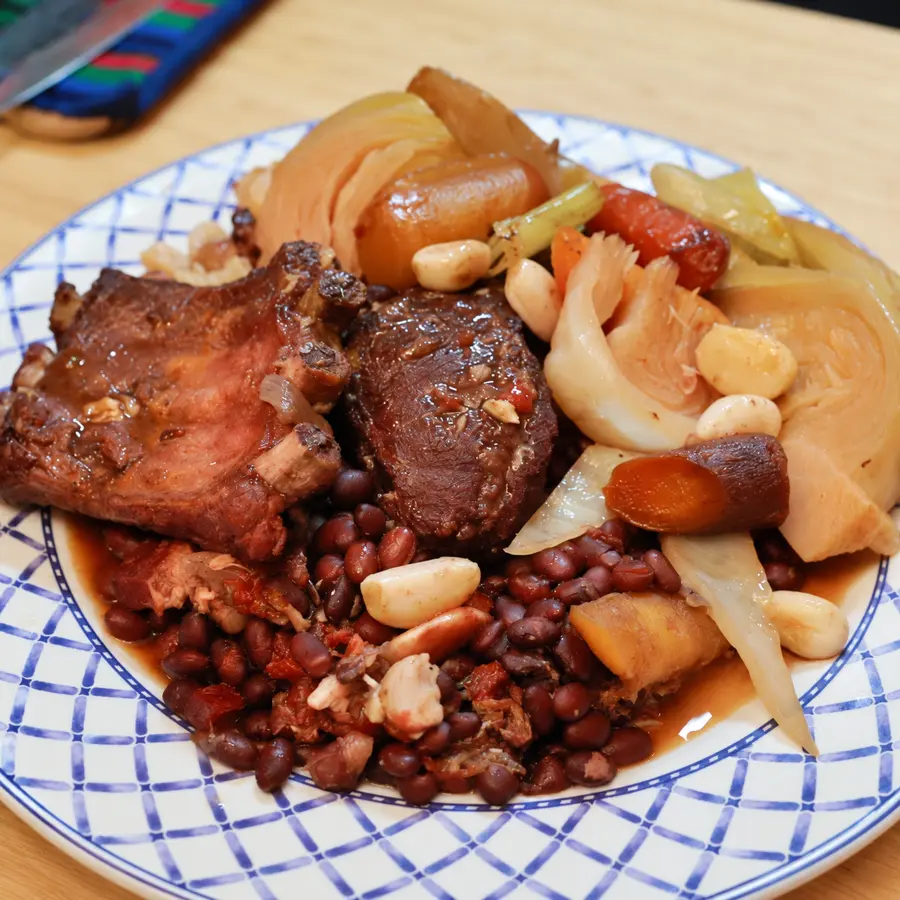
Pork cheeks and spare ribs simmer with black beans, smoked pork, tomatoes, carrots, and whole garlic cloves, with braised cabbage served alongside. The cheeks give the broth body while the beans turn creamy inside their skins. I cook the beans before adding them to the tomato sauce, so the meat can finish gently without waiting for a stubborn batch of beans to soften.
This is a substantial pork-and-black-bean stew with a separate cabbage braise. It has the smoke and richness of a long-cooked pork dish, but no barbecue glaze or hot chili seasoning. Make it for a family supper when there is time for the stove to do most of the work.
The recipe is based on my YouTube video, with a few adjustments since publication. The written version gives measured quantities, an overnight refrigerated bean soak, and separate doneness checks for cheeks, ribs, and vegetables. The ingredient combination stays faithful to the video.
{VIDEO}

Why use three kinds of pork?
Cheeks contain connective tissue that softens during a slow braise. Spare ribs add bone-in meat and a different texture. Smoked pork belly supplies the fat used for browning, plus a smoky background. They contribute different things; simply adding more bacon would not reproduce the cheeks.
This differs from a simpler pork-and-bean stew because it combines cheeks and ribs and keeps the cabbage in its own pot. It is also distinct from French pork-and-cabbage potée: black beans and tomatoes form the main braise here.
The beans provide fiber and the pork provides protein, but this remains a rich meal. Skimming excess rendered fat improves the sauce without turning the recipe into a low-fat dish.
Ingredients and useful choices
For six generous servings, use 1½ lb trimmed pork cheeks, about four cheeks, 2 lb pork spare ribs cut into short portions, and 6 oz thick smoked pork belly. Choose cheeks with the tough outer membrane removed. Leave the ribs in portions rather than trying to dice around the bones.
You also need 1½ cups dried black beans, 4 cups crushed tomatoes, four medium red onions, 1⅓ lb carrots, 20 peeled garlic cloves, and one small green cabbage, about 1¾ lb. Regular orange carrots work; rainbow carrots match the video.
Divide the onions equally between stew and cabbage. Reserve 1 lb carrots and 15 garlic cloves for the stew, with the remaining carrots and five cloves for the cabbage. Whole garlic becomes soft and mellow during cooking; minced garlic would disappear into the sauce sooner.
Measure 1½ cups dry white wine and 6 cups low-sodium beef broth. The stew gets 1 cup wine and about 4 cups broth; the cabbage gets the rest. Keep extra water or broth available. Make two herb bundles, each with two thyme sprigs and one bay leaf.
A homemade brown stock gives a fuller sauce, while homemade vegetable broth can replace part of the beef broth for a less meaty base. Season with black pepper and salt toward the end, after the smoked pork has flavored the liquid.

Prepare the beans and the two braises
1. Soak and cook the black beans
Sort and rinse the beans. Cover generously with cold water and soak in the refrigerator for 8–12 hours. Drain and rinse, then cover with fresh water in a saucepan. Bring to a full boil for 10 minutes, lower the heat, and simmer until tender, usually another 35–80 minutes. Keep them covered with water.
A bean should crush easily and have no chalky center. Drain when ready. This preliminary cooking is the main adjustment to the video: the beans go into the tomato braise already tender. Their final simmer still lets them absorb the pork sauce.
The video image shows the soaked beans before cooking. Hydrated beans still need to be cooked until tender.

2. Render the smoked pork
Cut the belly into thick lardons. Put half in each of two cold skillets and heat over medium heat for 6–8 minutes, stirring occasionally, until fat collects and the edges become golden. Transfer each portion of lardons to its respective cooking pot.
Leave roughly 2 tbsp fat in the skillet used for the stew and 1 tbsp in the cabbage skillet. Spoon off the excess. If a pan is too dry, add a little of the optional olive oil. The mistake here is confusing enough fat for browning with all the fat the belly can release.

3. Brown the cheeks and ribs
Pat the meat dry and brown in batches over medium-high heat, about 3–4 minutes on each broad side. Work with enough space around each piece. Brown surfaces are useful; a skillet full of meat juices is a sign to reduce the batch size.
Transfer the browned pork to a large heavy pot, ideally about 8 quarts. This is the same patient browning principle used for braised pork shank, although the cuts and final sauce are different.

4. Color the vegetables and deglaze
Add each pot’s onions, carrot chunks, and garlic to its skillet. Cook for 5–8 minutes, stirring, until the onions show brown edges. Keep the carrots in large pieces. Transfer the vegetables to their respective pots.
Take each skillet briefly off the heat to add its wine. Return to moderate heat, scrape up the brown residue, and simmer for 2–3 minutes. Pour into the matching pot. Add the herb bundles. The cabbage leaves are added to the cabbage pot next; tomatoes belong only in the pork pot.

5. Simmer the pork and finish with beans
Add crushed tomatoes and enough of the stew’s broth to nearly cover the pork. Bring to a simmer, skim foam, and lower the heat. Cover loosely and cook for about 1½–2½ hours, checking from 90 minutes. Add a splash of water or broth if the sauce becomes thick before the meat softens.
The ribs should release easily from the bone and the cheeks should yield to a fork. Check separately; remove a cut that is ready early and return it later. Lift out tender carrots too if the meat needs a longer cook.
Add the cooked beans for the last 20–30 minutes. Stir gently along the bottom so they do not catch. The sauce should surround the beans rather than stand in a thick paste.

6. Braise the cabbage alongside
Cut the cabbage into six wedges, leaving enough core to hold each together. Add to its prepared pot with broth reaching about halfway up the vegetables. Cover and simmer gently for 45–60 minutes, turning the wedges once if needed. Start this when the pork seems about an hour from being ready.
A knife should pass through the thickest part with little resistance, while the wedge still holds together. Keeping this pot separate protects the cabbage from a longer pork cooking time and preserves its lighter-colored broth.

Remove both herb bundles. Check the pork reaches at least 160°F internally, then use the tenderness cues to decide when the braise is finished. Skim excess fat, add 1 tsp pepper to the stew and ½ tsp to the cabbage, and adjust salt. Divide beans, meat, cabbage, carrots, and garlic among plates, with a little cooking jus.

Substitutions
Pork shoulder in large chunks can replace cheeks. It changes the texture and timing, so check the meat instead of relying on a fixed hour. For another shoulder preparation, see pork shoulder braised with onions and beer.
Use about 4½ cups cooked black beans, or three 15-oz cans drained and rinsed, in place of dried beans. Add them for the final 20–30 minutes. Thick-cut smoked bacon can replace belly, but may taste saltier. Replace wine with the same amount of broth for an alcohol-free variation.
Questions about this pork braise
Why are the beans still firm?
Older beans may need longer, and acidic ingredients can slow softening. Cook them until fully tender in water before adding to tomatoes. Soaking alone is not cooking.
Can everything cook for exactly 90 minutes?
That can work with particular cuts, but it is not dependable for every batch. The pork, beans, and cabbage have different endpoints. Check each and remove ready ingredients if necessary.
How do I store leftovers?
Refrigerate in shallow containers within two hours and use within 2–3 days. Freeze portions for up to three months. Reheat with a splash of broth to 165°F throughout, stirring the beans carefully.
Serving and related recipes
This plate already includes beans and cabbage. If you want bread for the jus, add soft homemade focaccia. A small portion of Québec-style cabbage salad offers a crunchy alternative to the braised cabbage.
For a different pork supper, try pork stew with potatoes and carrots or pork braised in a bourguignon sauce. For another rib method, see simmered barbecue pork ribs.

Pork Cheeks and Ribs with Black Beans and Braised Cabbage
Ingredients
- 1½ lb pork cheeks about 4, trimmed
- 2 lb pork spare ribs cut into short portions
- 6 oz smoked pork belly cut into thick lardons, divided equally
- 1½ cups dried black beans sorted and rinsed
- 4 cups crushed tomatoes
- 4 medium red onions sliced, divided equally between stew and cabbage
- 1⅓ lb carrots in large chunks: 1 lb for stew ⅓ lb for cabbage
- 20 peeled garlic cloves: 15 for stew 5 for cabbage
- 1½ cups dry white wine: 1 cup for stew ½ cup for cabbage
- 6 cups low-sodium beef broth: about 4 cups for stew 2 cups for cabbage, plus extra as needed
- 4 thyme sprigs divided equally
- 2 bay leaves 1 for each pot
- 1¾ lb green cabbage about 1 small head, cut into 6 wedges
- 1½ tsp ground black pepper: 1 tsp for stew ½ tsp for cabbage
- 1 tbsp olive oil optional, only if pans are dry
- Salt to taste at the end
- Water for soaking and cooking beans
Instructions
- Soak beans in plenty of cold water in the refrigerator for 8–12 hours. Drain, rinse, cover with fresh water, boil fully for 10 minutes, then simmer 35–80 minutes until completely tender. Drain.
- Make two herb bundles, each with 2 thyme sprigs and 1 bay leaf. Prepare separate vegetable portions for the stew and cabbage.
- Render half the lardons in each of two cold skillets over medium heat for 6–8 minutes. Transfer to their respective pots. Leave about 2 tbsp rendered fat for stew browning and 1 tbsp for cabbage; remove excess. Add optional oil only if needed.
- Pat cheeks and ribs dry; brown in batches, 3–4 minutes per broad side. Transfer to a large heavy stew pot.
- Brown each pot’s onions, carrots and whole garlic in its skillet for 5–8 minutes. Transfer. Remove skillets briefly from heat to add their wine; scrape up browned bits and simmer 2–3 minutes. Pour into matching pots and add herb bundles.
- Add tomatoes and enough broth to almost cover pork. Simmer gently, loosely covered, for 1½–2½ hours; check from 90 minutes and top up liquid as needed. Remove ready ribs, cheeks or carrots temporarily if the rest needs longer.
- Add cooked beans for the final 20–30 minutes, stirring gently along the bottom. Return any reserved cooked meat or carrots to heat through.
- About an hour before the pork is ready, add cabbage wedges to their prepared pot with broth halfway up the vegetables. Cover and simmer 45–60 minutes, turning once if needed, until tender but holding together.
- Remove herb bundles. Check pork reaches at least 160°F and is fork-tender; ribs should release easily from bone. Skim excess fat, add measured pepper, adjust salt and serve pork and beans beside cabbage with cooking jus.