Easy Soft and Crispy Rosemary Garlic Focaccia
This soft and crispy focaccia is baked in a well-oiled pan so the bottom and edges turn golden while the center stays tender and airy. I make it this way because the olive oil does two jobs at once: it keeps the dough supple and gives the crust that lightly fried texture around the edges. The mistake to avoid is forcing extra flour into a sticky dough; what I look for instead is a soft, elastic dough that rises visibly and spreads into the pan without tearing.
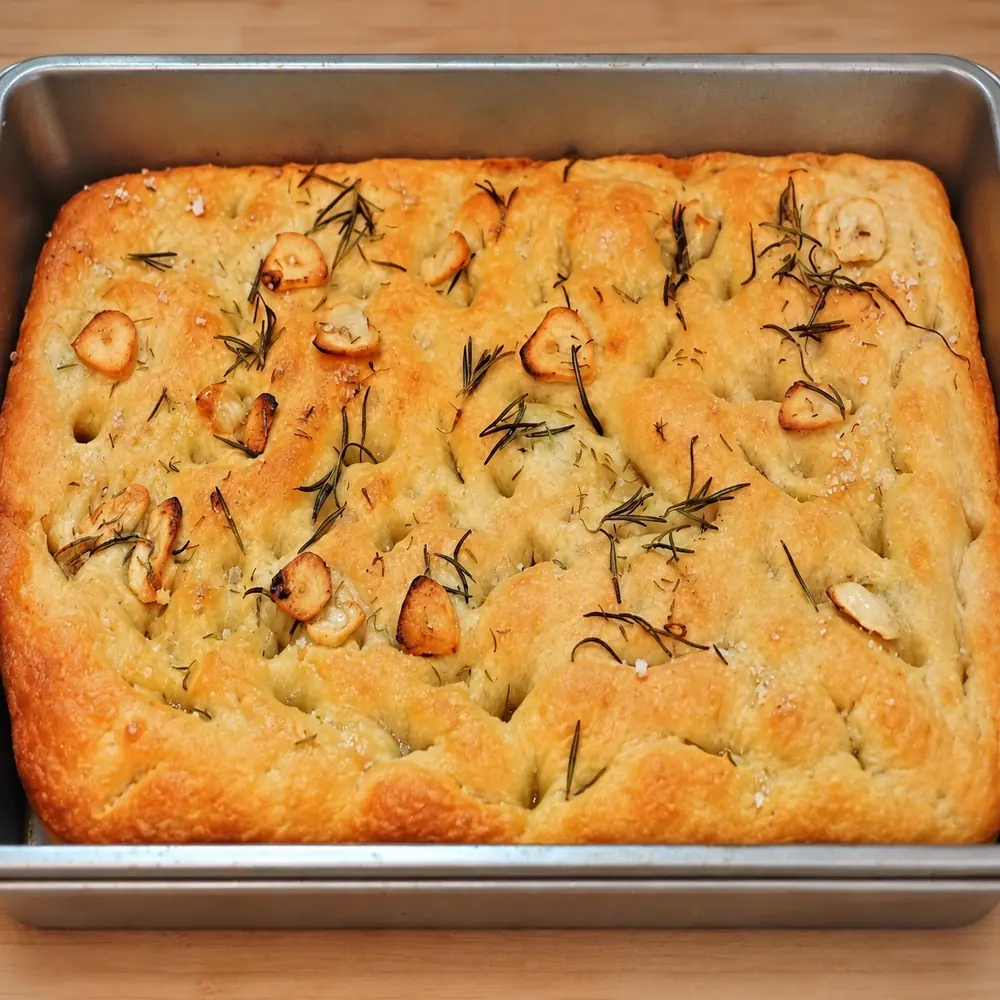
Focaccia is a yeast-raised Italian flatbread baked with olive oil and traditionally marked with deep fingertip dimples before it goes into the oven. This version stays very simple: rosemary, thin slices of garlic, olive oil, and salt. It is useful year-round as table bread, an appetizer cut into squares, or something substantial enough to serve beside soup or a big salad.
This recipe is based on my YouTube video, with a few adjustments since publication. For the written version, I standardize the hydration and oil amounts so the dough is easier to reproduce in a home kitchen while keeping the same method shown in the video: mix, rise, oil the pan, stretch the dough, dimple it, add the rosemary and garlic, then bake until deeply golden.
Why I Make Focaccia This Way
The dough is intentionally softer than a basic sandwich loaf. That extra moisture is what gives the crumb a lighter feel after baking. It should not behave like a firm ball of bread dough. If you are more familiar with my everyday homemade white bread, expect this one to feel looser and more delicate under your hands.
The pan also matters. A metal pan conducts heat quickly and, with enough olive oil underneath, browns the base efficiently. I prefer that to a dry sheet pan because focaccia should have some richness. It is not the same dough as my Neapolitan-style pizza dough, which is designed to stretch thin and cook very hot. Here I want thickness, softness, and a golden bottom.
The topping is kept restrained on purpose. Rosemary can become bitter when piled on too heavily, and thick pieces of garlic can burn on top before the bread is ready. Thin garlic slices, a few rosemary needles, and coarse salt are enough. If you enjoy the same garlic-herb direction, my homemade garlic butter is another useful base to keep in the refrigerator.
Ingredients You Need
For the dough
4 cups all-purpose flour
1 1/2 cups warm water
2 1/4 teaspoons instant yeast
1 1/2 teaspoons fine salt
1 teaspoon sugar
2 tablespoons olive oil
For the pan and topping
1/3 cup extra virgin olive oil, divided
2 garlic cloves, thinly sliced
1 tablespoon fresh rosemary leaves or small sprigs
1 teaspoon flaky or coarse salt

The water should feel pleasantly warm, not hot. If it is uncomfortable to keep a finger in it, let it cool before the yeast goes in. Instant yeast is forgiving, but excessively hot water can still damage it. The small amount of sugar is not there to make the bread sweet; it simply gives the yeast an easy start and helps the crust color.
All-purpose flour keeps this recipe practical for Canada and the United States. Bread flour can also work, but it usually absorbs a little more water and produces a slightly chewier crumb. For a richer, softer dough with eggs and butter, that is a different job entirely, closer to my soft homemade brioche.
Step-by-Step Instructions
1. Activate the yeast and start the dough
Pour the warm water into a measuring cup or bowl. Stir in the sugar, then add the instant yeast. Let it stand for about 5 minutes while you measure the flour. You should begin to see a few bubbles or a light foam on the surface. It does not need to become dramatically foamy, especially with instant yeast.
Place the flour and fine salt in the bowl of a stand mixer. Add the yeast mixture and 2 tablespoons of olive oil. Mix on low speed until no dry patches remain, then continue kneading for about 6 to 8 minutes. The dough should pull together but remain tacky.

The mistake to avoid here is correcting stickiness with handfuls of flour. Focaccia benefits from a moist dough. If it is genuinely soupy, add flour one tablespoon at a time, but if it simply sticks to your fingers, that is normal.
2. Let the dough rise until puffy
Form the dough into a rough ball in the mixing bowl, cover it, and let it rise in a warm area for about 60 to 90 minutes. It should look noticeably larger, soft, and slightly domed. When you touch it gently with an oiled finger, the indentation should relax slowly rather than spring back immediately.

Room temperature changes the timing more than the clock does. In a cool kitchen it may take longer. What matters is the visible increase in volume. Rushing this stage is one of the main reasons homemade focaccia comes out tight instead of tender.
3. Oil the pan generously and stretch the dough
Pour most of the olive oil for the pan into a 9 x 13-inch metal baking pan. Coat the bottom and corners. Transfer the risen dough into the pan and turn it once so both sides pick up some oil. With oiled fingers, gently stretch it toward the corners.

If the dough keeps shrinking back, stop. Let it relax for 10 to 15 minutes, then stretch it again. Fighting elastic dough only tears it and knocks out more gas. This rest-and-stretch approach is also useful when making homemade pizza because relaxed gluten is much easier to shape.
4. Dimple and add the garlic-rosemary oil
Let the dough sit in the pan for another 20 to 30 minutes. It should puff again and fill more of the pan. Oil your fingertips and press straight down across the surface to make deep dimples without ripping through the dough.
Scatter the sliced garlic and rosemary over the top. Drizzle with the remaining olive oil, making sure some of it pools in the dimples, then sprinkle with the flaky salt.

What I look for here is a surface that is glossy but not swimming. The rosemary should be scattered, not packed into a thick layer. The garlic slices should lie mostly flat against the dough so they roast evenly.
5. Bake until the edges are properly browned
Heat the oven to 425°F. Bake the focaccia for 20 to 25 minutes on the center rack. It is ready when the top is golden, the corners are a deeper brown, and the bread has pulled very slightly away from the sides of the pan. The garlic should be golden at the edges and fragrant.

Lift one corner carefully with a spatula. The underside should be browned, not pale and soft. If the top is ready but the bottom needs more color, give it another 2 to 4 minutes on a lower rack.
6. Rest briefly, then slice
Let the focaccia rest in the pan for about 5 minutes, then move it to a board or rack. Wait another 5 to 10 minutes before cutting. The crumb finishes setting during that short rest. A clean slice should show a tender interior with small to medium irregular air pockets, while the outside stays crisp at the edges.

Common Focaccia Problems
The bread is dense. The dough probably needed more rising time, or too much flour was added during mixing. A soft dough gives a softer finished crumb.
The bottom is pale. Use a metal pan, make sure there is oil underneath the dough, and allow enough baking time. Glass and heavy ceramic pans often brown more slowly.
The garlic burns. Slice it thin but not paper-thin, keep the slices touching the oily dough, and remove any very small fragments that would char quickly. If you want strong garlic flavor with less risk of scorching, serve the bread beside air-fryer garlic bread or brush slices lightly with garlic butter after reheating.
The center feels gummy. Give the bread enough time in the oven and let it rest before slicing. A pale top and a wet-looking crumb usually mean it simply needed more baking.
What to Serve With Focaccia
I often serve this bread where a baguette would normally go. With summer tomatoes, it works beside fresh tomato bruschetta or a bowl of tomato panzanella with crispy chickpeas. If you want to turn it into a simple lunch, add one of my easy salad recipes for lunch or light dinners.
In cooler weather, focaccia is excellent with a bowl from my collection of easy homemade soups. It is especially useful for wiping up tomato-based soups and braises. You can also split leftover squares for sandwiches.
For an Italian-style meal, serve it with quick basil pesto or spoon a little fresh homemade tomato sauce onto the side for dipping. Leftover pieces can even be cubed and toasted using the same idea as my homemade garlic croutons.
Substitutions and Variations
Bread flour can replace all-purpose flour, although the dough may take a splash more water. Dried rosemary works if fresh is unavailable; use about 1 teaspoon rather than a full tablespoon. You can leave out the garlic for a plain rosemary focaccia, or add a small amount of grated Parmesan near the end of baking. Olives and halved cherry tomatoes also work, but keep wet toppings modest so the center does not become heavy.
For a completely different soft bread texture, make buttery homemade brioche; for a thinner, chewier base, use homemade Neapolitan-style pizza dough. Those recipes should not be treated as direct substitutes for this dough because their hydration, fat, and baking methods are different.

FAQ
Can I make the dough the day before?
Yes. After mixing, cover the dough and refrigerate it overnight. The next day, let it warm slightly, transfer it to the oiled pan, and give it enough time to relax and puff before dimpling and baking.
Can I use active dry yeast instead of instant yeast?
Yes. Use the same amount and let it dissolve in the warm water with the sugar until visibly foamy before adding it to the flour.
Why does the dough keep springing back in the pan?
The gluten is tight. Stop stretching and let the dough rest for 10 to 15 minutes. It should spread much more easily afterward.
How do I keep focaccia crisp after baking?
Move it out of the pan once it has rested briefly so steam does not soften the bottom. Reheat leftovers directly on an oven rack or hot sheet pan.
Can I freeze it?
Yes. Cool it completely, cut into portions, wrap well, and freeze. Reheat from frozen in a 350°F oven until warm and lightly crisp again.
Suggested Posts
If you want to keep baking, try my simple homemade white bread, soft and fluffy brioche, or homemade pizza recipe. For garlic lovers, homemade garlic butter and quick garlic bread in the air fryer are natural next recipes.

Easy Soft and Crispy Rosemary Garlic Focaccia
Ingredients
- 4 cups all-purpose flour
- 1 1/2 cups warm water
- 2 1/4 teaspoons instant yeast
- 1 1/2 teaspoons fine salt
- 1 teaspoon sugar
- 2 tablespoons olive oil
- 1/3 cup extra virgin olive oil divided
- 2 garlic cloves thinly sliced
- 1 tablespoon fresh rosemary leaves or small sprigs
- 1 teaspoon flaky or coarse salt
Instructions
- Mix the warm water, sugar, and yeast and let stand 5 minutes.
- Combine flour and salt. Add the yeast mixture and 2 tablespoons olive oil, then knead 6 to 8 minutes until soft and elastic.
- Cover and let rise 60 to 90 minutes, until visibly puffy.
- Oil a 9 x 13-inch metal pan. Transfer the dough, turn to coat, and gently stretch toward the corners. Rest 10 to 15 minutes if it springs back.
- Let the dough puff 20 to 30 minutes, then dimple with oiled fingers. Top with sliced garlic, rosemary, remaining oil, and flaky salt.
- Bake at 425°F for 20 to 25 minutes, until golden with deeply browned edges and a browned underside.
- Rest 5 minutes in the pan, transfer to a board or rack, cool another 5 to 10 minutes, then slice.