Easy Pork Stew with Potatoes and Carrots
Pork stew with potatoes and carrots is a hearty one-pot meal made with browned pork, onions, garlic, broth, herbs, and simple vegetables simmered until tender. It is the kind of budget-friendly family dinner that works in winter, fall, or any time you want a comforting homemade meal without complicated ingredients.
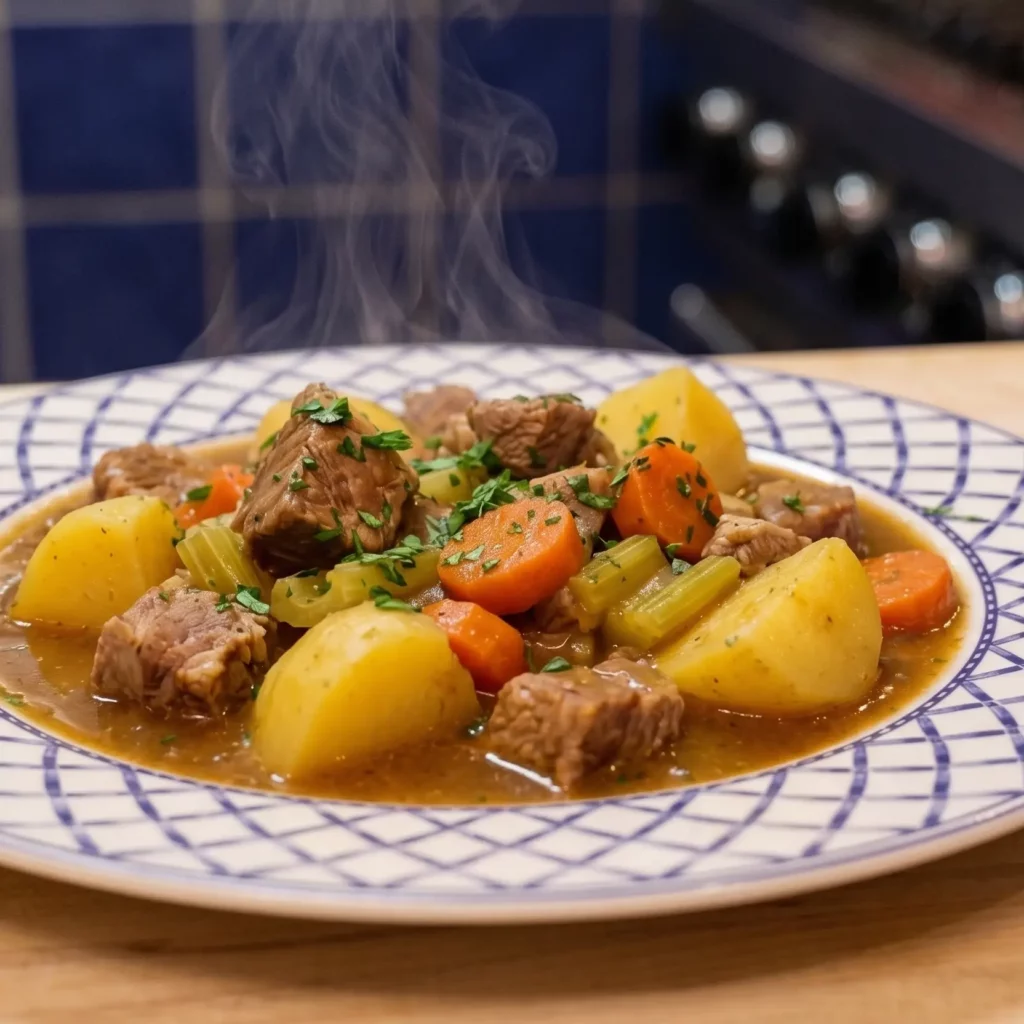
This version is different from a lentil pork stew because the focus is on a classic meat-and-potatoes texture. The sauce is rich but not creamy, the vegetables stay rustic, and the pork becomes tender as it slowly simmers in the broth.
Why This Pork Stew Works
This recipe is based on my YouTube-style way of cooking simple family meals, with a few adjustments since publication to make the stew easier to reproduce at home. I make it this way because pork shoulder or pork stew meat becomes much better when it is browned first, then simmered gently until tender. That first sear gives the stew more flavor before the broth even goes in.
I prefer to cook the potatoes and carrots directly in the stew because they absorb the flavor of the pork, onions, garlic, herbs, and broth. It also makes the recipe practical. Everything cooks in one pot, and the starch from the potatoes helps give the broth a naturally thicker texture without needing cream.
This is not the same kind of recipe as oven pork roast, where the pork is cooked as one large piece and sliced. It is also different from oven or slow cooker pulled pork, which is made for shredding and usually has a BBQ direction. This pork stew is more rustic, more family-style, and built around affordable ingredients that make a complete meal in one pot.
For a French-inspired comfort-food menu, this stew also fits well beside classics like classic beef bourguignon or a rich weeknight beef ragout, but the pork version is usually cheaper, lighter in flavor, and easier to adapt with what is already in the kitchen.
Ingredients
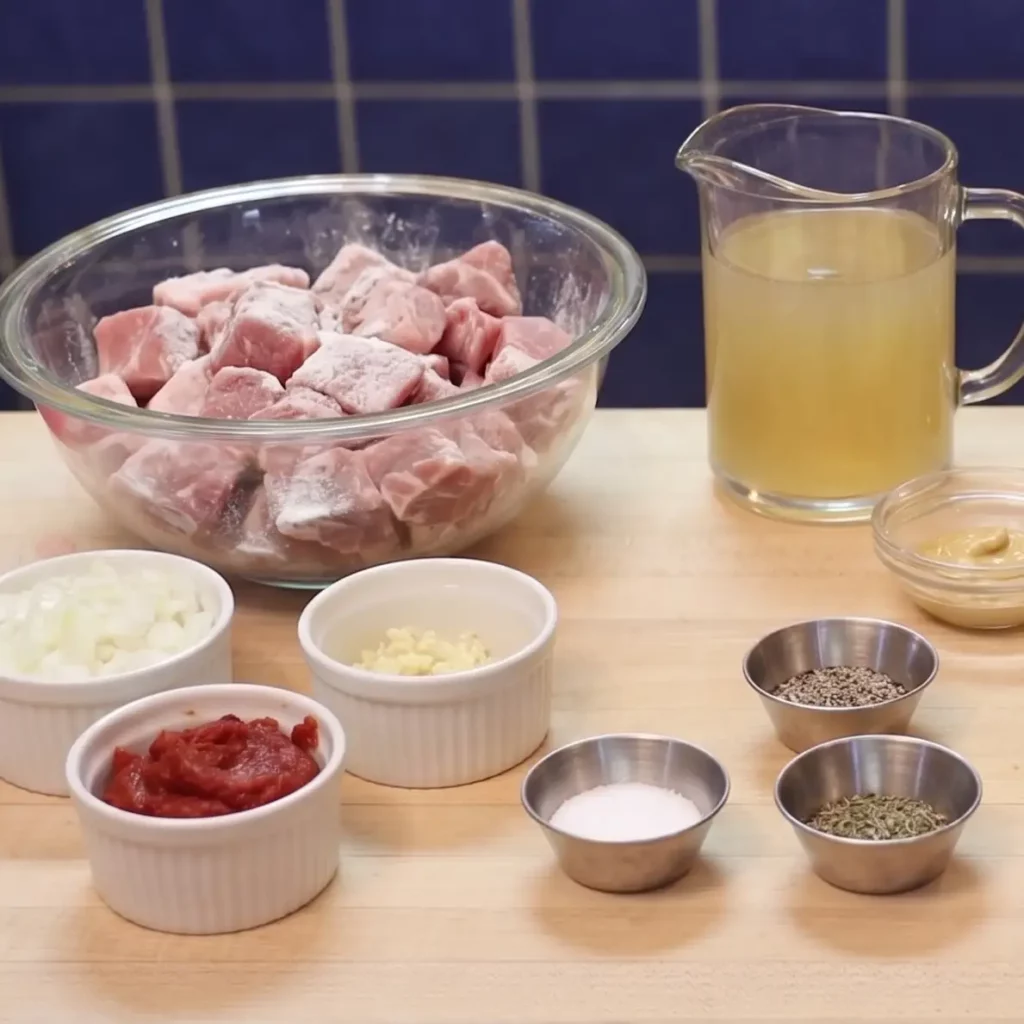
- 2 pounds pork shoulder or pork stew meat, cut into 1 1/2-inch cubes
- 1 1/2 teaspoons kosher salt
- 1 teaspoon black pepper
- 2 tablespoons all-purpose flour
- 2 tablespoons olive oil
- 1 large onion, diced
- 3 garlic cloves, minced
- 2 tablespoons tomato paste
- 1/2 cup dry white wine, optional
- 4 cups chicken broth or pork broth
- 1 teaspoon Dijon mustard
- 1 teaspoon dried thyme
- 1 bay leaf
- 1 1/2 pounds yellow potatoes, peeled or unpeeled, cut into large chunks
- 4 large carrots, peeled and cut into thick slices
- 2 celery ribs, sliced
- 1 tablespoon Worcestershire sauce, optional
- 2 tablespoons chopped parsley
- Salt and pepper, to adjust
How to Make Pork Stew with Potatoes and Carrots
Start by cutting the pork into large cubes. Pieces that are too small can dry out before the stew is finished, so keep them generous. Pat the pork dry with paper towel, then season with salt and pepper. Sprinkle the flour over the pork and toss until the pieces are lightly coated. The flour helps with browning and gives the stew a little body as it simmers.
Heat the olive oil in a large Dutch oven or heavy pot over medium-high heat. Add the pork in batches and brown it on several sides. Do not crowd the pot. If the meat is too packed together, it will steam instead of sear. Once browned, transfer the pork to a plate.
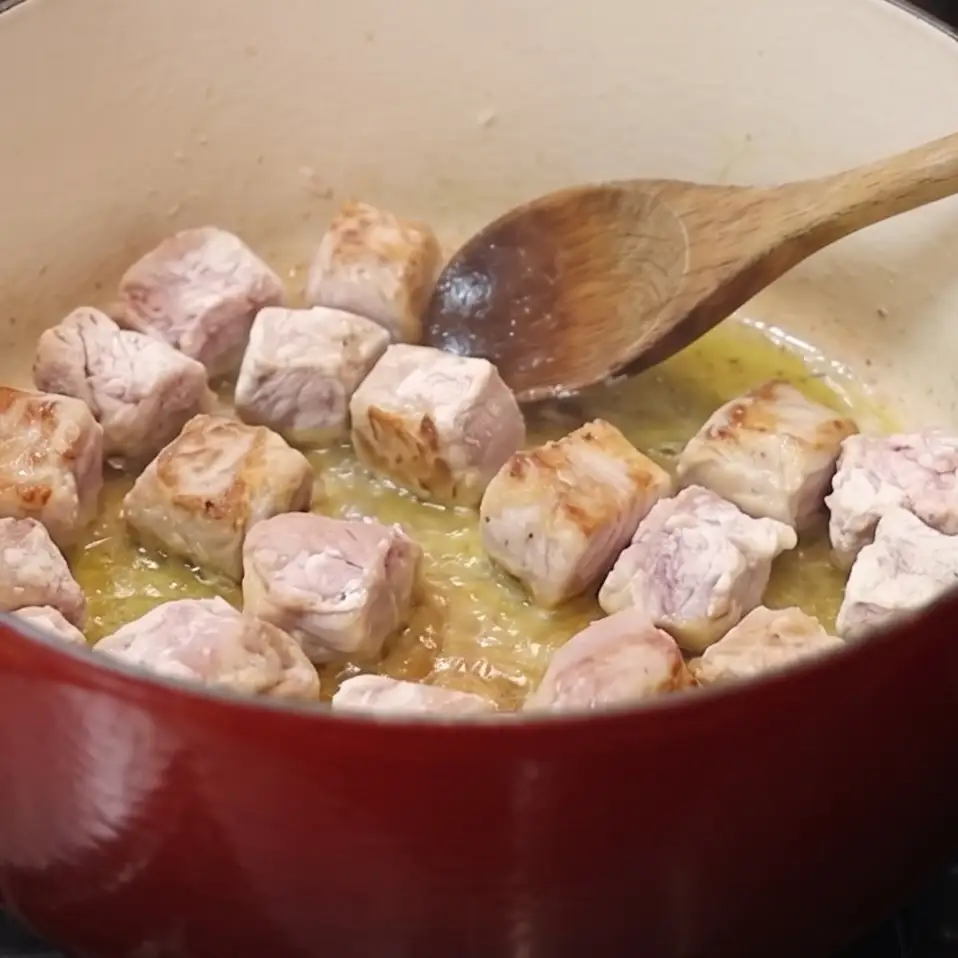
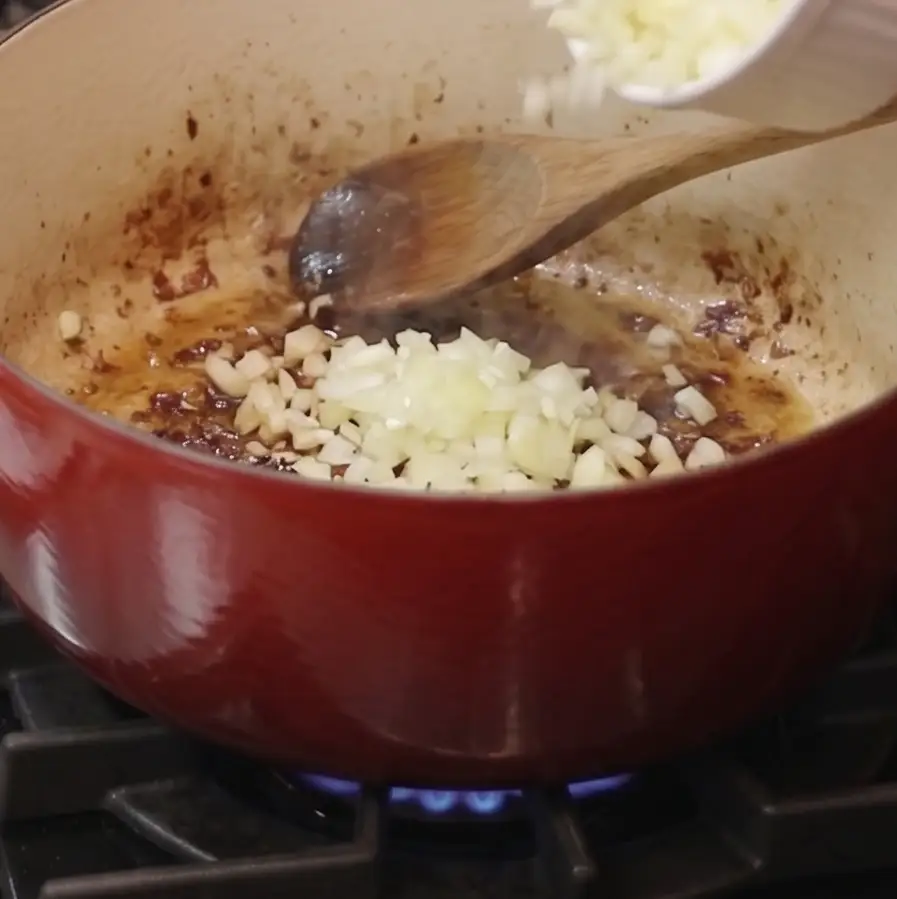
Lower the heat to medium. Add the diced onion to the same pot and cook for 4 to 5 minutes, scraping the bottom with a wooden spoon. The brown bits left from the pork are full of flavor. Add the garlic and cook for about 30 seconds, just until fragrant.
Stir in the tomato paste and cook it for 1 to 2 minutes. This step removes the raw tomato taste and makes the stew deeper and richer. If using white wine, pour it in now and scrape the bottom of the pot again. Let it reduce for a minute or two.

Return the pork to the pot. Add the broth, Dijon mustard, thyme, bay leaf, and Worcestershire sauce if using. Stir well, then bring the stew to a gentle simmer. Cover partially and cook for about 45 minutes, stirring once or twice.

Add the potatoes, carrots, and celery. Continue simmering for another 35 to 45 minutes, or until the pork is tender and the vegetables are cooked through. The stew should bubble gently, not boil aggressively. A slow simmer keeps the pork tender and prevents the potatoes from breaking apart too much.
When the pork is tender, taste the broth and adjust with salt and pepper. If you want a thicker stew, mash a few potato pieces against the side of the pot and stir them back into the broth. This thickens the sauce naturally without adding extra flour.
Finish with chopped parsley and let the stew rest for 5 to 10 minutes before serving. Like many stews, the flavor gets even better as it sits.

Best Pork Cuts for Stew
The best cut for pork stew is pork shoulder. It has enough fat and connective tissue to become tender during a longer simmer. Pork butt also works very well and is often affordable in Canada and the USA.
Pork loin can be used, but it is leaner and less forgiving. If using pork loin, cut the simmering time slightly and avoid boiling the stew. Pork tenderloin is not ideal for this recipe because it cooks quickly and can become dry in a stew.
Pre-cut pork stew meat is convenient, but the quality can vary. If possible, buy a piece of pork shoulder and cut it yourself. This gives more control over the size of the pieces and usually gives better texture.
Tips for a Better Pork Stew
Brown the pork in batches. This is one of the most important steps for flavor.
Use a heavy pot. A Dutch oven or thick-bottomed pot helps the stew simmer evenly.
Cut the potatoes into large pieces. Small potato cubes may fall apart before the pork is tender.
Do not rush the simmer. Pork shoulder needs time to soften.
Add the vegetables after the pork has simmered for a while. This keeps the carrots and potatoes tender but not mushy.
Let the stew rest before serving. A short rest helps the broth settle and taste richer.
What to Serve with Pork Stew
This pork stew is already a full meal because it includes meat, potatoes, carrots, and broth. Still, a few simple sides can make it even better.
For a rustic dinner, serve it with crusty bread, a green salad, or creamy coleslaw. The crunch of the coleslaw works well with the soft potatoes and tender pork.
If you want to lean into comfort food, serve the stew with traditional gratin Dauphinois for a richer meal, or keep it simple with Parisian potatoes on a separate platter when serving a larger family table.
For a sauce-focused meal, a spoonful of classic brown sauce can make the broth even deeper, especially if you are reheating leftovers the next day. If you like mustard with pork, a small amount of creamy Dijon sauce can also be served on the side, although the stew does not need it.
This recipe also belongs naturally in a pork dinner collection with rustic pork stew with carrots and lentils, maple BBQ pork ribs, and classic French cassoulet. Each one gives a different pork direction: rustic stew, BBQ ribs, and French bean stew.
Substitutions
Pork shoulder can be replaced with pork butt or pork stew meat.
Chicken broth can be replaced with beef broth for a darker, stronger flavor.
White wine can be replaced with extra broth.
Yellow potatoes can be replaced with red potatoes or russet potatoes. Russets will break down more and thicken the broth.
Carrots can be replaced with parsnips, turnips, or rutabaga.
Fresh thyme can replace dried thyme. Use about 1 tablespoon of fresh thyme leaves.
Tomato paste can be reduced or left out for a lighter broth, but it adds depth.
Dijon mustard can be replaced with whole grain mustard.
For a thicker stew, add 1 extra tablespoon of flour to the pork before browning.
For a lighter stew, trim excess fat from the pork and skim the surface before serving.
Health and Nutrition Context
This pork stew is a hearty comfort meal with protein from the pork and vegetables from the potatoes, carrots, onions, celery, and herbs. It is filling without needing cream or cheese. The richness comes mostly from the pork, the browning, and the slow simmer.
For a lighter bowl, use a leaner pork shoulder trim, add more carrots and celery, and serve the stew with a green salad. For a more generous family-style meal, serve it with bread, potatoes, or another classic side.
Frequently Asked Questions
What is the best pork for stew?
Pork shoulder is the best choice because it becomes tender when simmered. Pork butt also works very well. Lean cuts like pork loin can work, but they need gentler cooking.
Can I make this pork stew in a slow cooker?
Yes. Brown the pork, onions, garlic, and tomato paste first, then transfer everything to a slow cooker. Cook on low for 7 to 8 hours or on high for 4 to 5 hours, adding the potatoes and carrots at the beginning if they are cut large.
Can I make this stew ahead of time?
Yes. Pork stew tastes even better the next day. Cool it completely, refrigerate it, then reheat gently on the stovetop.
Can I freeze pork stew?
Yes, but the potatoes may soften after freezing and reheating. The flavor will still be good. For the best texture, freeze the stew without the potatoes or accept a more rustic texture after reheating.
How do I thicken pork stew?
Mash a few cooked potatoes into the broth or simmer the stew uncovered for 10 to 15 minutes. You can also mix 1 tablespoon of flour with a little cold water and stir it into the simmering stew.
Can I add peas?
Yes. Add frozen peas during the last 5 minutes of cooking so they stay bright and tender.
Can I make this without wine?
Yes. Replace the wine with extra broth. The stew will still be flavorful.
Is pork stew good year-round?
Yes. It is especially comforting in fall and winter, but it works year-round because the ingredients are simple, affordable, and easy to find in Canada and the USA.
Suggested Posts
- Rustic pork stew with carrots and lentils
- Oven pork roast
- Oven or slow cooker pulled pork
- Maple BBQ pork ribs
- Classic French cassoulet
- Weeknight beef ragout
- Classic brown sauce
- Traditional gratin Dauphinois
- Parisian potatoes
- Creamy coleslaw
- Creamy Dijon sauce
- Homemade garlic butter
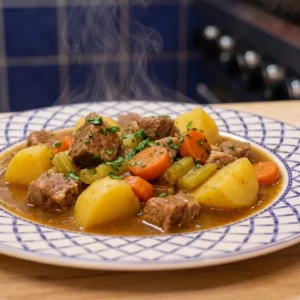
Easy Pork Stew with Potatoes and Carrots
Ingredients
- 2 pounds pork shoulder or pork stew meat cut into 1 1/2-inch cubes
- 1 1/2 teaspoons kosher salt
- 1 teaspoon black pepper
- 2 tablespoons all-purpose flour
- 2 tablespoons olive oil
- 1 large onion diced
- 3 garlic cloves minced
- 2 tablespoons tomato paste
- 1/2 cup dry white wine optional
- 4 cups chicken broth or pork broth
- 1 teaspoon Dijon mustard
- 1 teaspoon dried thyme
- 1 bay leaf
- 1 1/2 pounds yellow potatoes peeled or unpeeled, cut into large chunks
- 4 large carrots peeled and cut into thick slices
- 2 celery ribs sliced
- 1 tablespoon Worcestershire sauce optional
- 2 tablespoons chopped parsley
- Salt and pepper to adjust
Instructions
- Pat the pork dry and cut it into large cubes.
- Season the pork with salt and pepper, then toss with flour.
- Heat olive oil in a Dutch oven over medium-high heat.
- Brown the pork in batches, then transfer it to a plate.
- Lower the heat to medium. Add the onion and cook for 4 to 5 minutes.
- Add the garlic and cook for 30 seconds.
- Stir in the tomato paste and cook for 1 to 2 minutes.
- Add the white wine, if using, and scrape the bottom of the pot.
- Return the pork to the pot. Add broth, Dijon mustard, thyme, bay leaf, and Worcestershire sauce.
- Bring to a gentle simmer, cover partially, and cook for 45 minutes.
- Add the potatoes, carrots, and celery.
- Simmer for another 35 to 45 minutes, until the pork and vegetables are tender.
- Adjust salt and pepper. Mash a few potato pieces into the broth if a thicker stew is desired.
- Finish with chopped parsley and rest for 5 to 10 minutes before serving.
Notes
Frequently Asked Questions
What is the best pork for stew?
Pork shoulder is the best choice because it becomes tender when simmered. Pork butt also works very well. Lean cuts like pork loin can work, but they need gentler cooking.Can I make this pork stew in a slow cooker?
Yes. Brown the pork, onions, garlic, and tomato paste first, then transfer everything to a slow cooker. Cook on low for 7 to 8 hours or on high for 4 to 5 hours, adding the potatoes and carrots at the beginning if they are cut large.Can I make this stew ahead of time?
Yes. Pork stew tastes even better the next day. Cool it completely, refrigerate it, then reheat gently on the stovetop.Can I freeze pork stew?
Yes, but the potatoes may soften after freezing and reheating. The flavor will still be good. For the best texture, freeze the stew without the potatoes or accept a more rustic texture after reheating.How do I thicken pork stew?
Mash a few cooked potatoes into the broth or simmer the stew uncovered for 10 to 15 minutes. You can also mix 1 tablespoon of flour with a little cold water and stir it into the simmering stew.Can I add peas?
Yes. Add frozen peas during the last 5 minutes of cooking so they stay bright and tender.Can I make this without wine?
Yes. Replace the wine with extra broth. The stew will still be flavorful.Is pork stew good year-round?
Yes. It is especially comforting in fall and winter, but it works year-round because the ingredients are simple, affordable, and easy to find in Canada and the USA.🔗 Useful Links
🛒 Michel Dumas Shop : Explore our kitchen essentials, including aprons and knives.
🌐 Linktree : Access all our important links in one place.
📱 YouTube | Instagram | Facebook | TikTok : Follow us for the latest recipes and culinary tips.