Tender BBQ Pork Ribs Simmered with Herbs and Finished in the Oven
These BBQ pork ribs are cut into individual pieces, simmered with onion, garlic and herbs, then coated with barbecue sauce and finished in the oven. The first cooking stage makes the meat tender; the second turns the sauce into a glossy coating. They are a practical option for a weekend meal when you want saucy ribs without lighting a grill.
This recipe is based on my YouTube video, with a few adjustments since publication to clarify quantities, oven temperature and the signs of tenderness. The video uses a prepared barbecue sauce, so this version keeps that shortcut. The important thing is not the brand of sauce: it is giving the ribs enough time to soften before glazing them.
{VIDEO}
What the two cooking stages accomplish
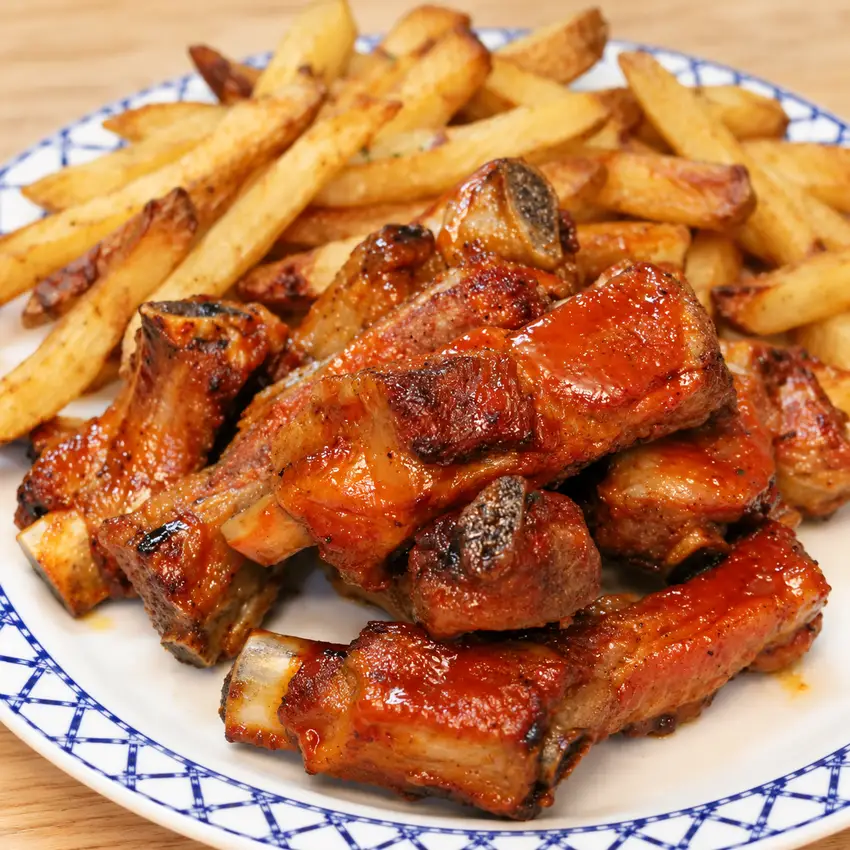
Cutting between the bones before cooking makes the portions easy to handle. The ribs simmer in seasoned water with a small herb bundle, then drain before the sauce goes on. I make them this way because the oven finish can concentrate on the glaze once the meat is already tender.
This is different from a covered, slow-roasted rack. My oven-baked pork ribs follow that other approach, while dry-rub ribs emphasize seasoning on the meat. Here, the moist first stage and the sauce are the defining features. Do not shorten the simmer just because the pork has reached its minimum safe temperature; safe and tender are two different checks.
The method does have a tradeoff. Some flavor and fat move into the cooking liquid, and you will not get the bark of smoked ribs. A quiet simmer, a well-seasoned broth and a thoroughly drained surface make more sense than a violent boil followed by a thick blanket of sauce.
Ingredients for four portions
Use about 4 pounds of meaty pork ribs, weighed with the bones. Baby back ribs are a convenient choice. Larger side ribs can work, but they may require longer in the first stage. Four pounds gives four generous portions; the edible yield depends on the rack, so do not compare its raw weight with boneless pork.
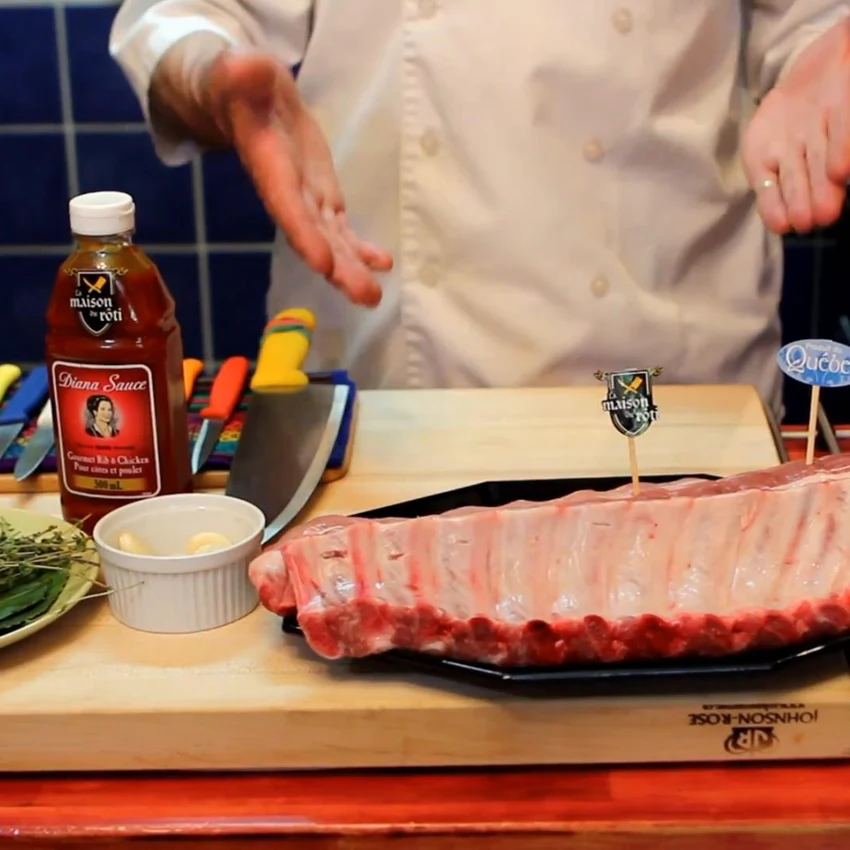
One onion and two garlic cloves provide a simple aromatic base. The video includes basil, thyme and bay leaf in a tied bundle. Keep the bundle small so it supports the meat rather than making the broth taste predominantly of herbs. Kitchen string or a piece of food-safe cheesecloth makes it easy to remove later.
Start with 1 cup barbecue sauce, adding another ½ cup only if the ribs need it. A very sweet, thick sauce can darken before the meat has reheated, so watch its surface closely. A homemade barbecue sauce gives you control over the sweetness and acidity. The maple-glazed ribs are a separate, sweeter variation, not the sauce recipe required here.
Water only needs to cover the ribs in the pot. Adding an unnecessarily large quantity dilutes the aromatics. Season that water moderately; a salty commercial sauce will add more salt later. Fries are the serving suggestion in the video and are optional, rather than included in the rib quantities or calorie figure.
Step-by-step cooking
Step 1: Prepare the herbs and ribs
Tie the herbs together. Remove the tough membrane from the bone side of the rack if present, then cut between the bones into individual ribs. Use a stable board and keep fingers clear of the blade. Peel and roughly chop the onion and garlic. Wash the board and utensils after handling the raw pork.

Step 2: Start the aromatic simmer
Put the ribs, onion, garlic, herb bundle, salt and peppercorns in a large pot. Add enough cold water to cover. Bring just to a boil, skim any foam, then lower the heat. The surface should move gently, with occasional bubbles, rather than churn hard enough to knock the ribs around.

Step 3: Cook until tender and drain
Simmer partly covered for about 75 minutes, as in the video, checking toward the end. A knife should enter the thick meat easily, and the meat should begin pulling away from the bone while remaining attached. Larger side ribs may need 15–30 minutes more. Check at least 160°F in the thickest meat without touching bone, then continue as necessary for tenderness.
Lift the ribs out carefully and discard the herb bundle. Drain well in a colander and allow surface steam to escape for a few minutes. Wet ribs dilute the sauce immediately. The mistake to avoid here is moving them straight from the water into a baking dish full of thin glaze.

Step 4: Coat and bake
Heat the oven to 350°F. Toss the drained ribs gently with 1 cup sauce. Arrange in a single layer in a baking dish. Add 2–4 tablespoons of the strained cooking liquid only if the sauce is exceptionally thick; do not fill the dish with broth. Bake uncovered for about 25–30 minutes, turning once and watching for darkening edges.
What I look for is sauce clinging to the ribs rather than running off them. If your sauce contains a lot of sugar, check earlier. Add a little more sauce near the end if needed, but avoid repeatedly opening the oven or letting the glaze turn black. The finished pieces should be hot, moist inside and easy to bite through.

Step 5: Rest briefly and serve
Rest the ribs for 5 minutes. Transfer them with tongs and serve while the coating is still glossy. Set out a bowl for bones and extra sauce in a separate dish. The video pairs them with thick fries; double-cooked Belgian fries explain that technique, and air-fryer fries offer another cooking method.


Timing and common mistakes
Allow 20 minutes of preparation and about 105 minutes of cooking. The simmer does most of the work, but the ribs still need your attention near the end. Treat the times as starting points: the size of the ribs and the strength of the simmer matter more than matching a timer exactly.
Do not overcrowd the baking dish. Pieces stacked on top of one another keep the sauce wet and make even glazing difficult. Two dishes are better than a deep heap. Likewise, do not try to rescue tough ribs with more sauce; return them to the simmering stage until the meat softens.
Pork ribs provide protein, but they also contain appreciable fat, and barbecue sauce contributes sugar and sodium. A vegetable side keeps the meal balanced without making diet claims. These ribs work indoors throughout the year, with a cold cabbage salad in summer or roasted vegetables in colder weather.
Substitutions
Baby back and side ribs can use the same general method, with the cooking time adjusted to tenderness. Boneless pork chops are not a direct substitution: their leaner meat does not benefit from this long simmer. For that cut, use the separate oven BBQ pork chops method.
Use your usual barbecue sauce, checking how sweet and salty it is before coating the meat. Leave the basil out if unavailable and retain thyme and bay. For a barbecue meal built around a different pork cut, slow-cooked pulled pork needs its own longer cooking schedule.

Questions about this method
Can I finish them on a grill?
Yes. Once the simmered ribs are tender and drained, glaze over moderate indirect heat, turning carefully. Avoid intense direct flames, which can burn the sauce before the pieces are hot throughout. This is an optional finish, not the method shown in the oven steps.
Why are the ribs still tough after 75 minutes?
The ribs may be thicker, the simmer may have been very weak, or the cut may need more time. Continue gently until a knife enters easily. A minimum safe temperature does not tell you that the connective tissue has softened.
Can I prepare the first stage ahead?
Yes. Cool the drained ribs promptly in shallow containers and refrigerate within 2 hours. Glaze and finish later, allowing extra time if starting cold. Reheat to 165°F throughout. Do not leave cooked ribs on the counter while waiting for dinner.
How should I store leftovers?
Refrigerate within 2 hours and use within 3 days. Reheat covered gently, then uncover briefly to restore the glaze. Add a spoonful of water if the sauce has dried onto the dish. Repeated reheating makes the meat less pleasant.
Sides and more pork ideas
A traditional Quebec cabbage salad gives a crisp contrast to the glaze. If you prefer a creamy side, creamy coleslaw is another option. Roasted mixed vegetables fit an indoor supper without adding another sauce.
For other meals using pork, browse the family pork dinner collection. Choose the method for the cut you actually have rather than applying this rib timing to every piece of pork.
Tender BBQ Pork Ribs Simmered with Herbs and Finished in the Oven
Ingredients
- 4 pounds meaty pork ribs bone-in
- 1 medium onion roughly chopped
- 2 garlic cloves roughly chopped
- 2 small sprigs fresh thyme
- 1 small sprig fresh basil
- 1 bay leaf
- 1 teaspoon fine salt plus more to taste
- ½ teaspoon black peppercorns
- Water enough to cover the ribs
- 1 cup barbecue sauce plus up to ½ cup as needed
- 2 –4 tablespoons strained cooking liquid only if needed
Instructions
- Tie the herbs into a small bundle. Remove the rib membrane if present and cut between the bones into individual ribs.
- Put ribs, onion, garlic, herb bundle, salt and peppercorns in a pot. Cover with water, bring to a boil, skim and reduce to a gentle simmer.
- Simmer partly covered about 75 minutes, longer if needed, until a knife enters easily and the meat begins pulling away from the bones. Check at least 160°F, then continue for tenderness as needed.
- Heat oven to 350°F. Drain ribs thoroughly and toss with barbecue sauce. Arrange in one layer; add a little strained broth only if needed to loosen very thick sauce.
- Bake uncovered 25–30 minutes, turning once, until hot and glossy. Watch sugary sauce closely to prevent burning. Rest 5 minutes and serve.