How to Make Brown Stock, Demi-Glace, and Meat Glaze at Home
A good brown stock is one of the quiet foundations of serious home cooking. It is not a quick pan sauce, a creamy dinner sauce, or a shortcut gravy. It is a deeply flavored base made from roasted bones, aromatics, water, and time, then reduced into something even more intense when you want demi-glace or meat glaze.
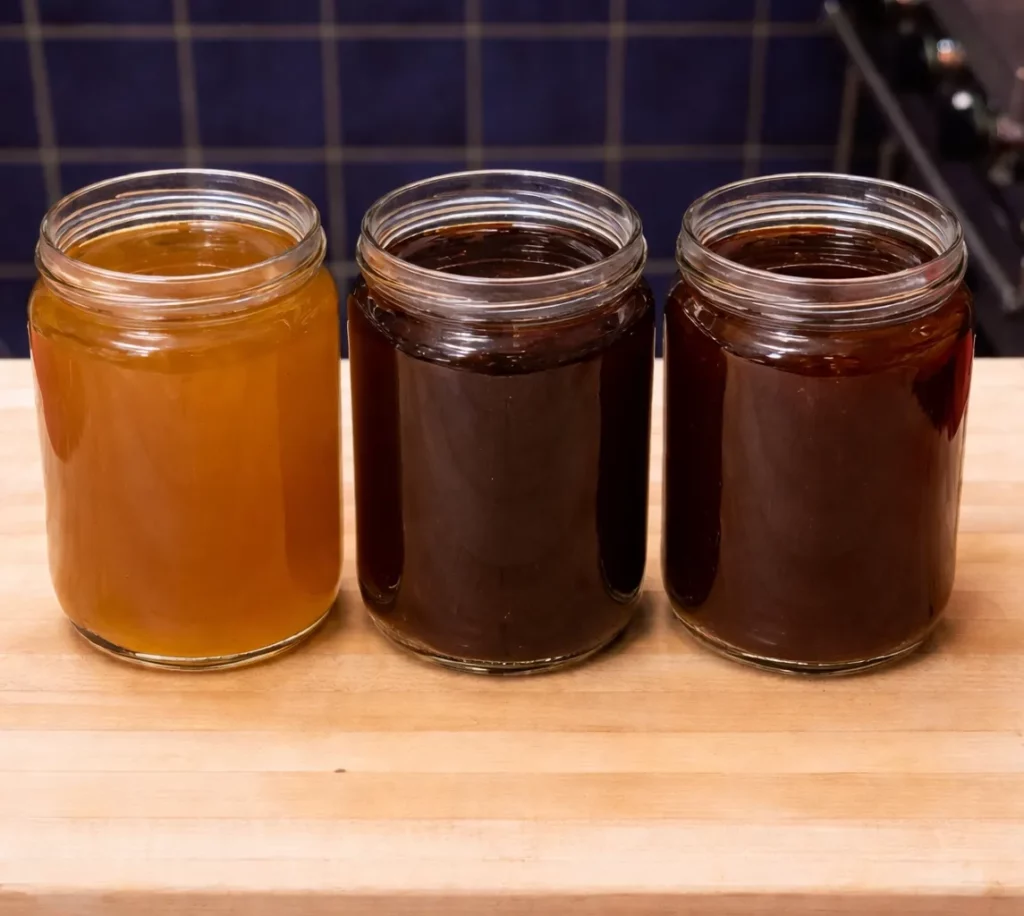
This version is based on my YouTube video, with a few adjustments since publication. I kept the spirit of the original lesson, where the same method is used for veal, lamb, and chicken bones, but I made the ingredient amounts and reduction targets clearer so the method is easier to repeat in a home kitchen.
What makes this recipe different is that it is built as a technique first. Once you understand the rhythm of roasting, simmering, straining, and reducing, you can use it year-round for braises, pan sauces, stews, and elegant meat dishes. It is just as useful in cold weather for comfort food as it is in warmer months when you want a spoonful of concentrated stock to sharpen a lighter sauce without adding cream.
If you already make a neutral brown veal stock, this recipe lives in that same family. It is simply more flexible because it also works with lamb or chicken bones, then takes you one step further into demi-glace and all the way to meat glaze.
Why I make it this way
I roast the bones hard to develop color and depth, then use onions charred in a dry pan for an extra amber tone without relying on caramel or tomato paste. I also do not salt the stock at the beginning because the liquid reduces a lot, and seasoning too early can leave you with something too salty and less versatile. This is the kind of recipe that gives you power later in the week. A few frozen portions can lift a stew, finish a roast, or enrich a spoonful of pan juices in seconds.
If you want a different kind of sauce work on the site, something quicker and designed for immediate serving, look at the warm herb butter steak sauce, a creamy Roquefort sauce, or even a classic homemade hollandaise. Brown stock is slower, but it gives you a broader foundation.
Ingredients
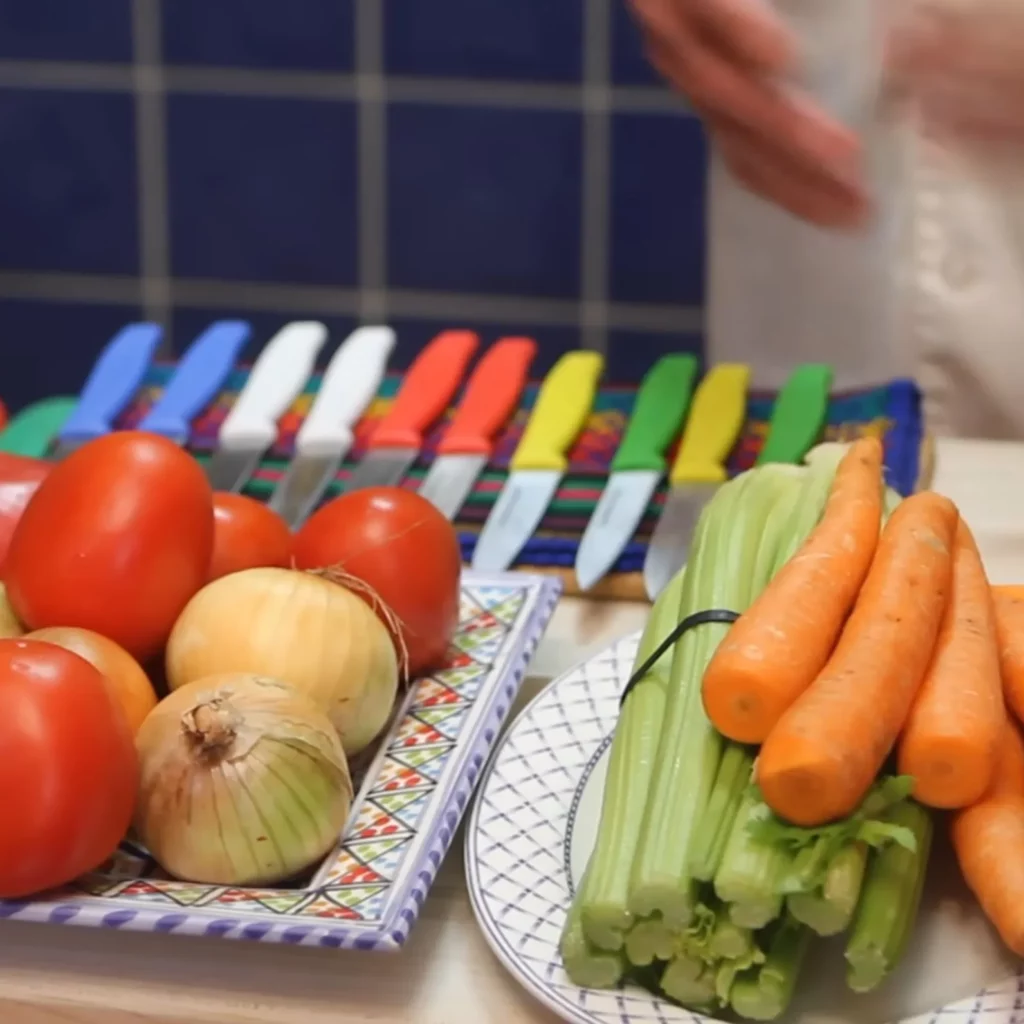
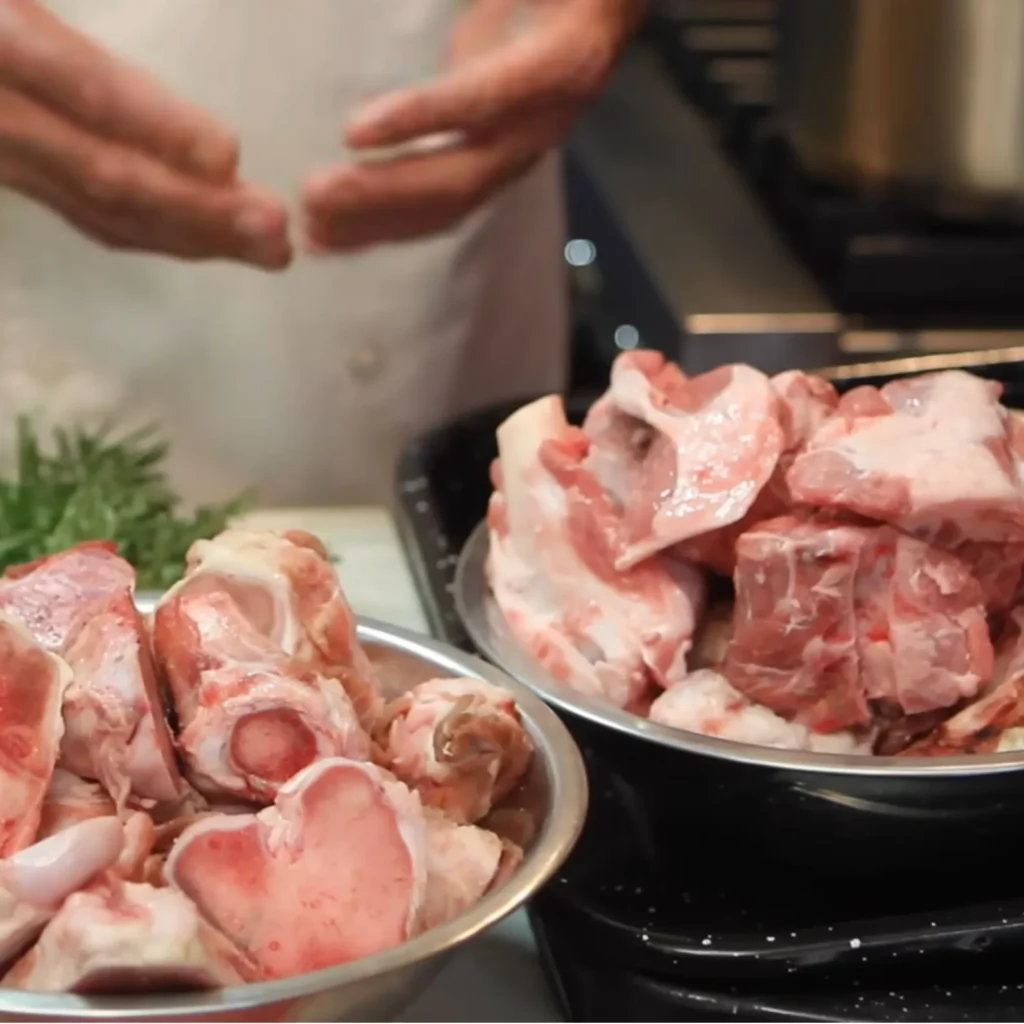
- 4 1/2 pounds veal bones, lamb bones, or chicken bones
- 2 medium onions, halved
- 2 medium carrots, roughly chopped
- 2 celery stalks, roughly chopped
- 2 medium tomatoes, roughly chopped
- 8 ounces mushrooms, halved
- 2 bay leaves
- 4 sprigs thyme
- 1 small sprig rosemary, only if using lamb bones
- 4 to 5 quarts cold water, or enough to cover
- No salt at this stage
What stock, demi-glace, and meat glaze actually are
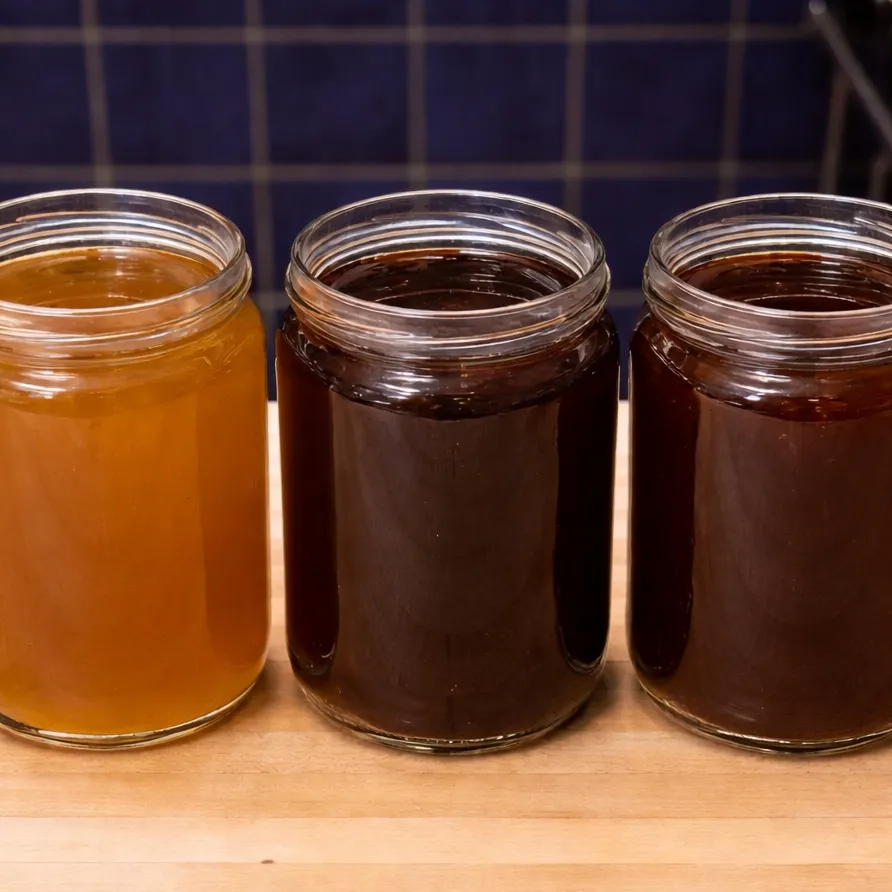
Brown stock is the first stage. It is the strained cooking liquid made from roasted bones and aromatics.
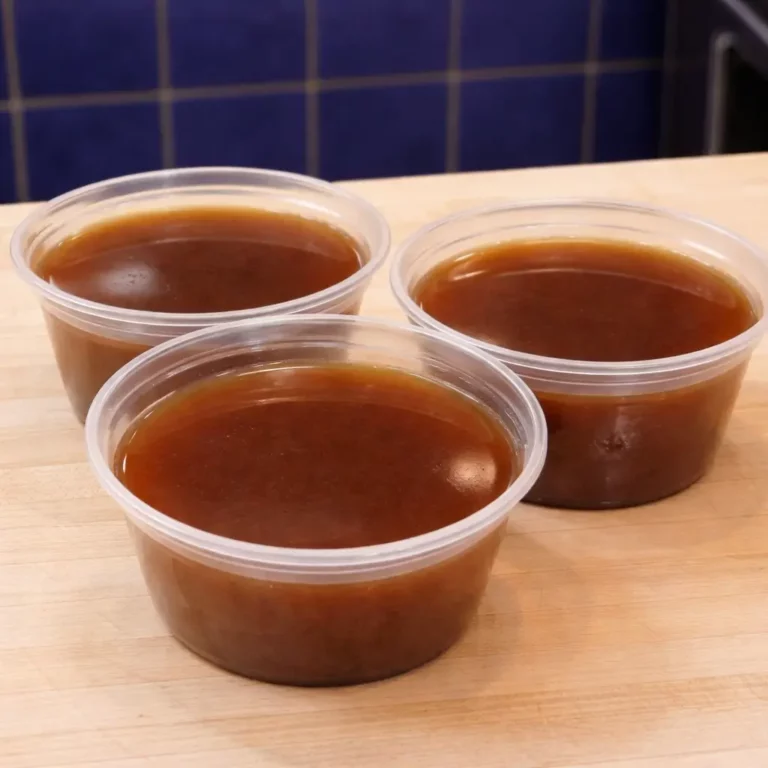
Demi-glace, in the practical home-cooking sense used here, is brown stock that has been reduced until more concentrated, lightly syrupy, and glossy.
Meat glaze is the next reduction. It is intensely concentrated, almost sticky when cold, and used in small amounts to enrich sauces, braises, and jus.
This is why the recipe works well for both everyday cooking and special occasions. A rich spoonful can transform a simple beef sauté, deepen a classic braise like pot-au-feu, or give refinement to dishes that need a stronger backbone than broth alone.
Step-by-step instructions
1. Roast the bones
Preheat the oven to 425°F.
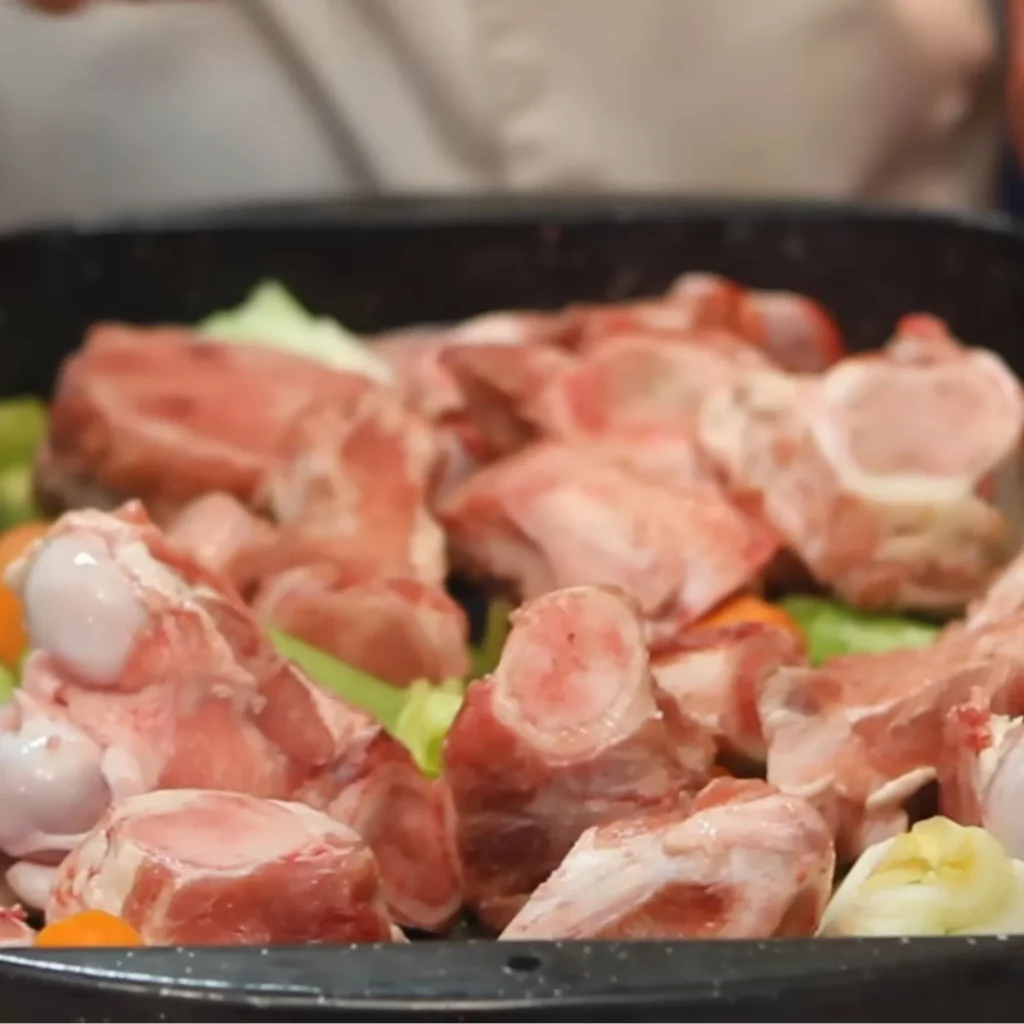
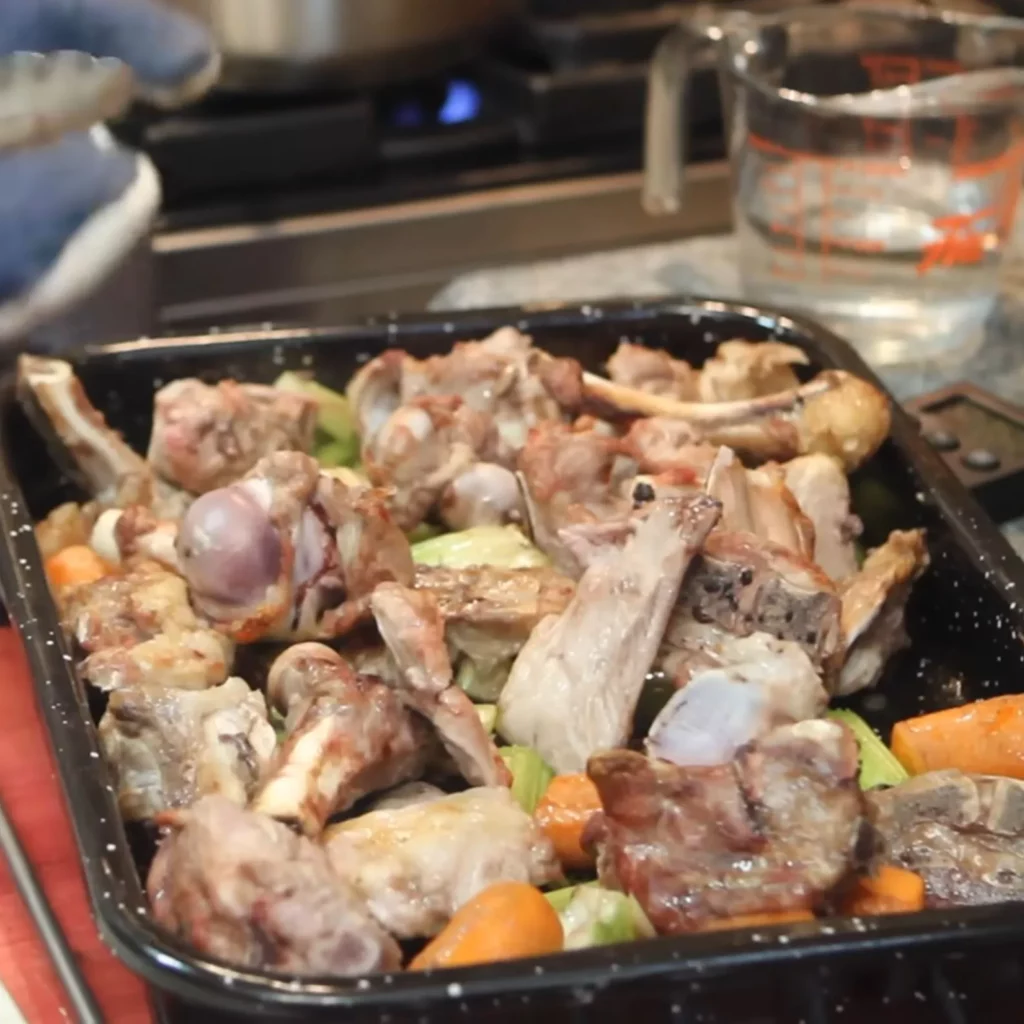
Spread the bones on one or two large sheet pans in a single layer. Roast for 45 minutes, turn them, then continue roasting for 30 to 45 minutes more, until the bones are deeply browned but not black. This first step matters more than anything else for flavor. Pale bones give you a pale result.
If you are working with chicken bones, backs, necks, wings, and carcasses are especially useful. If you are working with veal, bones with joints and connective tissue give a better body. Lamb bones also work beautifully, especially when paired with a little rosemary.
2. Char the onions
While the bones roast, place the halved onions cut side down in a dry skillet, ideally cast iron, over high heat. Let them color until very dark on the cut surface. This does not make the stock taste burnt. It helps give it a deeper, warmer tone.
3. Build the pot
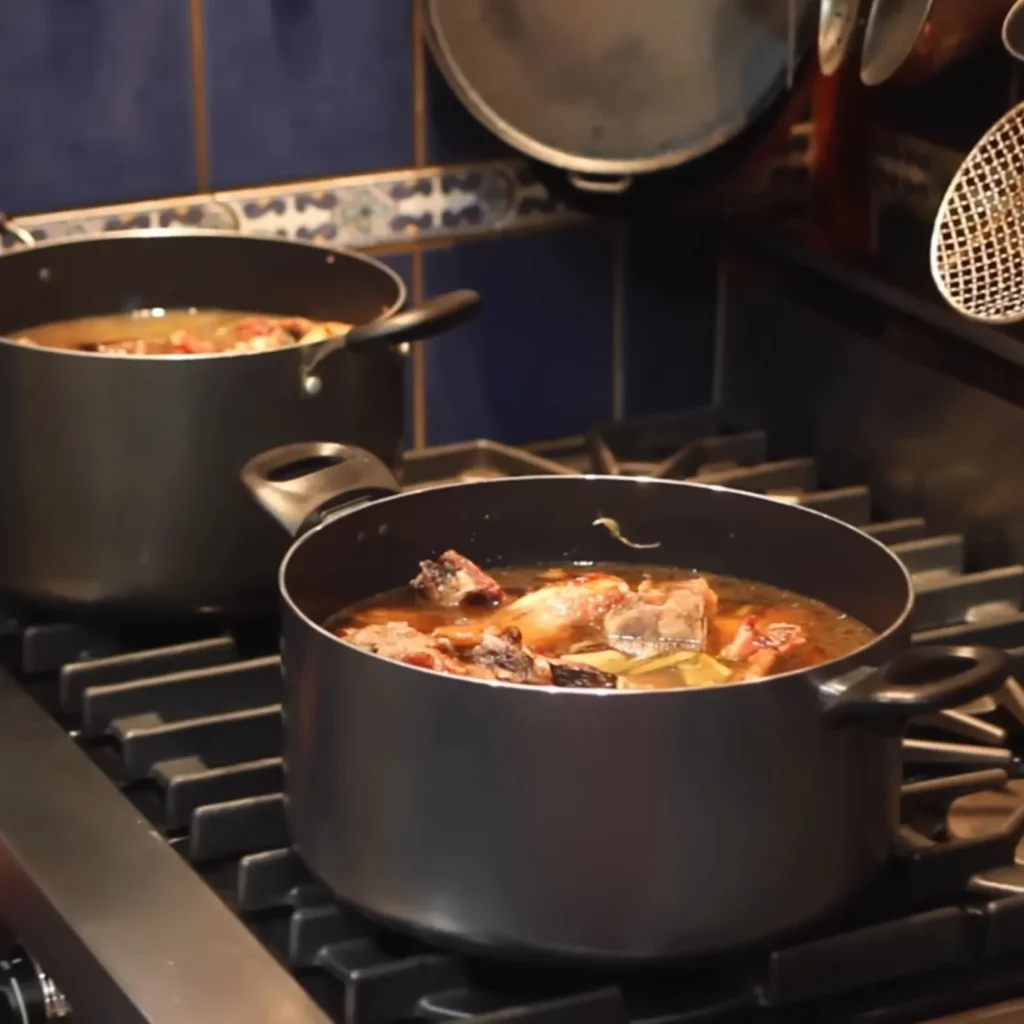
Transfer the roasted bones to a large stockpot. Add the carrots, celery, tomatoes, mushrooms, bay leaves, thyme, and the charred onions. Add the rosemary only if you are making lamb stock.
Pour in enough cold water to cover everything by about 1 inch. Depending on your pot and the shape of the bones, this will usually be around 4 to 5 quarts.
4. Deglaze the roasting pans
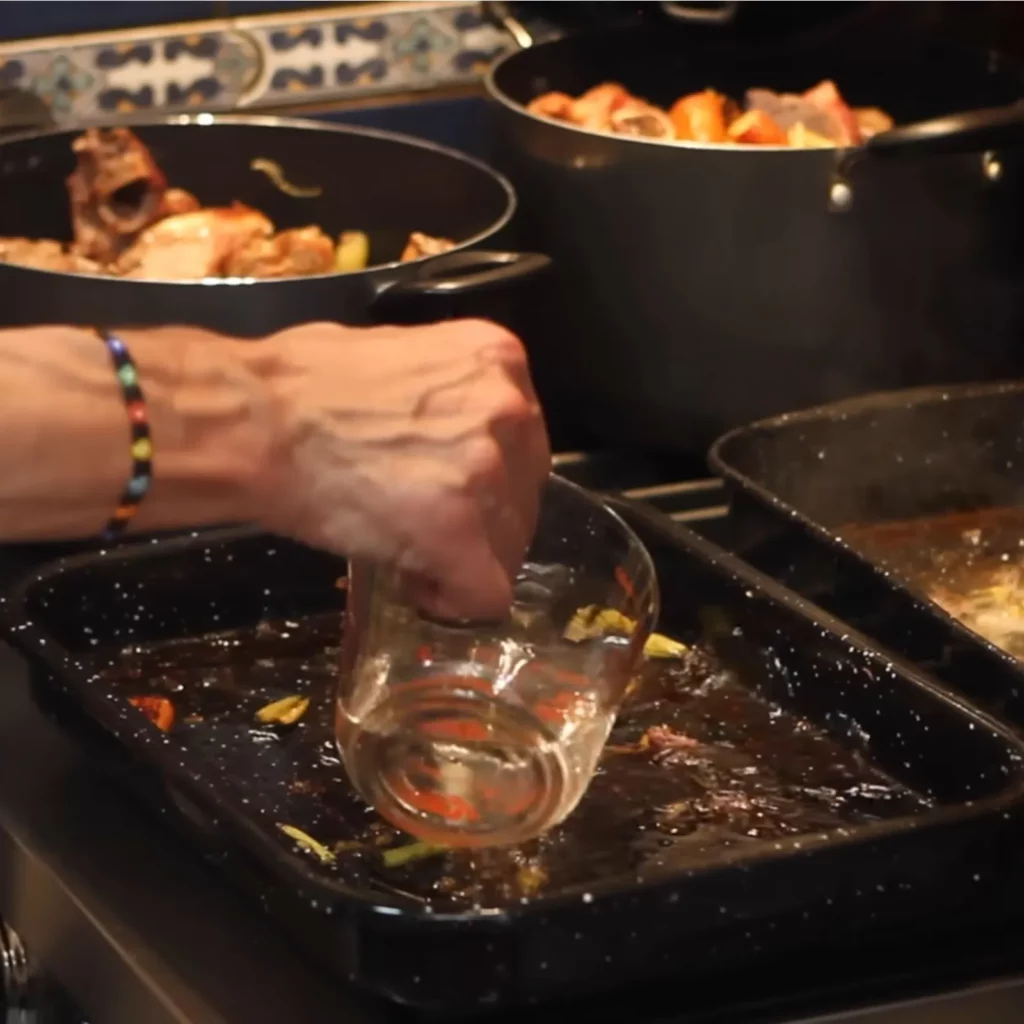
Set the hot sheet pans over low heat on the stovetop, or simply pour a little hot water into the pans while they are still warm. Scrape up all the browned bits with a spatula and add that liquid to the stockpot. Those caramelized juices are full of flavor and color.
5. Bring to a bare simmer
Set the pot over medium heat and bring it slowly to a bare simmer. Do not let it boil hard. As foam and impurities rise to the top, skim them off. Once it settles into a gentle simmer, keep it there.
Cook for about 5 hours. During that time, the liquid will reduce and the flavor will concentrate. The kitchen will smell like a real restaurant stockpot, and that is exactly the point.
This kind of long-cooked base is very different from a quick finished sauce or a weeknight pasta coating. For example, if you want a thickened sauce made in minutes, a small amount of beurre manié can help. If you want a creamy white mother sauce, look at my béchamel method. Brown stock is slower, but it gives more depth.
6. Strain twice
First, strain the stock through a coarse colander to remove the large bones, vegetables, and herbs.
Then strain it again through a fine sieve lined with cheesecloth or a clean towel. This second filtration is worth doing because it gives you a cleaner stock with a more elegant finish.
At this stage, you have brown stock.
7. Reduce for demi-glace
Return the strained stock to a clean pot and simmer gently until it reduces by about half, or until it lightly coats the back of a spoon. If you started with roughly 4 quarts, you may end up with around 2 quarts after reduction, depending on how much evaporation happened during the stock phase.
This is the stage where the texture becomes more luxurious. It is excellent for finishing beef, veal, duck, and lamb dishes. It also works well in a spoonful added to stews such as a beef ragout or a classic blanquette de veau, where a deeper base gives the dish more body.
8. Reduce further for meat glaze
For meat glaze, continue reducing the demi-glace until it becomes thick, glossy, and highly concentrated. When chilled, it should be firm and gelatinous.
You do not use meat glaze like broth. You use it by the spoonful, the same way you would use a flavor concentrate. It gives intensity without making a plate feel heavy. In that sense, it can actually help you cook with more depth and less dependence on cream or large amounts of salt.
Cooling and storage
This is the part people skip, and it matters.
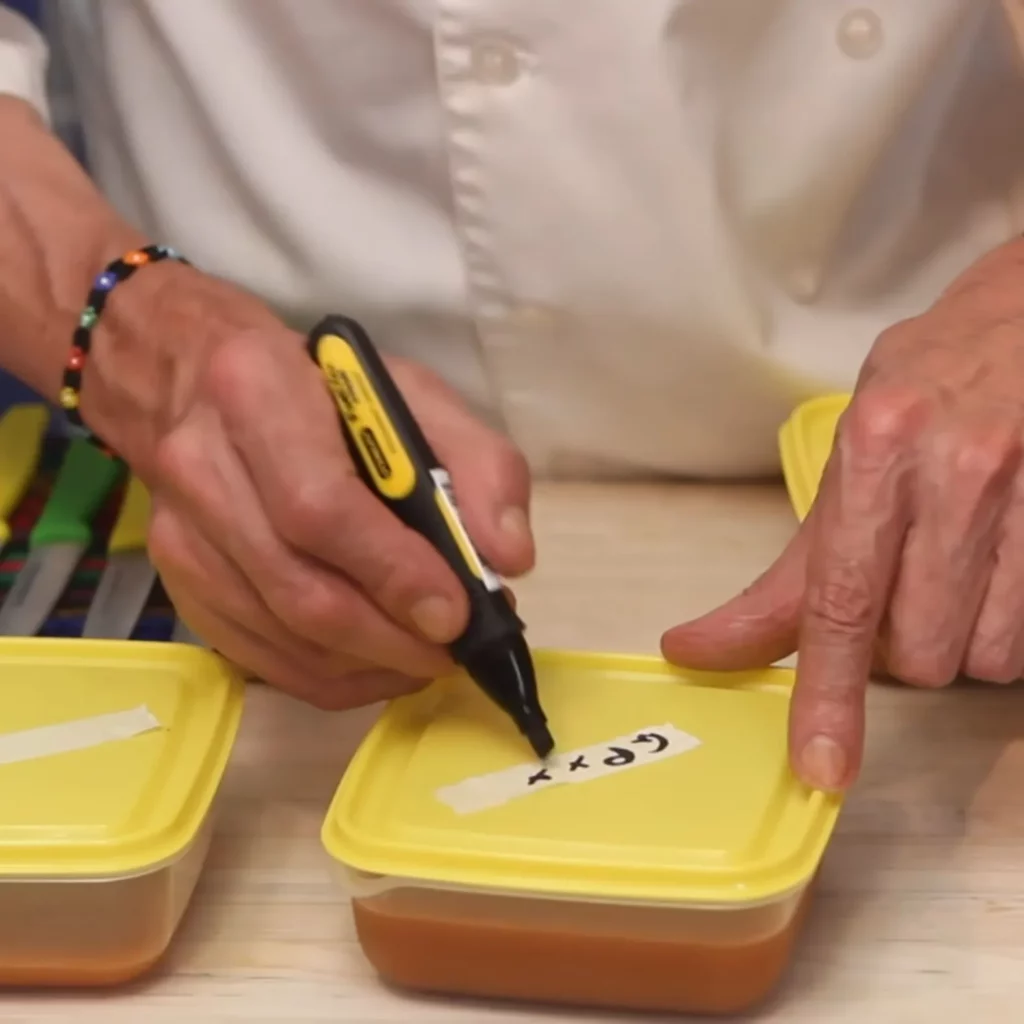
Cool the stock or demi-glace quickly. You can place the pot in an ice bath and stir from time to time until the temperature drops significantly. Then transfer it to containers and refrigerate until fully cold. Once chilled, freeze in small portions.
I like using small containers because you rarely need a huge block of concentrated stock at once. A few ounces go a long way in a pan sauce, a roast jus, or a braise. Label each container clearly with the type of stock and the date.
If you enjoy keeping foundational elements ready in the freezer, this pairs naturally with other kitchen basics like concentrated chicken stock or a jar of homemade pesto for faster meals built on better prep.
Substitutions
Veal bones
Best for a classic neutral brown stock with strong body and versatility.
Lamb bones
More distinctive and slightly wilder in flavor. The rosemary fits especially well here.
Chicken bones
Lighter, but still excellent. Good for sauces built around roasted chicken, pan juices, and lighter braises.
Tomatoes
You can reduce them slightly if you want a more neutral result, but they help color and round out the stock.
Mushrooms
Optional, but very useful for extra depth.
Rosemary
Skip it unless you are using lamb. For veal or chicken, thyme and bay are enough.
FAQ
Can I salt the stock while it cooks?
No. Wait until the final dish. Since the stock reduces a lot, early seasoning can make it too salty.
Can I make this with only chicken bones?
Yes. It will be lighter than veal or lamb, but still very useful and flavorful.
How do I know when it has become demi-glace?
It should be noticeably more concentrated, glossy, and lightly syrupy. It should coat the back of a spoon better than stock.
How do I know when it has become meat glaze?
After further reduction, it becomes very concentrated and gelatinous when cold. You will use it in very small amounts.
Can I freeze it?
Yes, and you should. Freeze in small portions so you can grab exactly what you need.
Is this the same as gravy?
No. Gravy is usually built more quickly from roasting juices and often thickened. This is a long-cooked stock base that can later become part of a gravy or sauce.
What to serve with it / Suggested posts
Brown stock, demi-glace, and meat glaze make the most sense with dishes that benefit from a deep savory backbone. They are especially useful with roast meats, braises, and classic potato sides.
Serve a reduced spoonful with Rossini-style beef tenderloin when you want something more formal, or alongside Parisian potatoes for a bistro-style plate. For colder months, it fits naturally with gratin dauphinois or even a tray of oven roasted mixed vegetables.
If you want more sauce-building ideas, browse my English recipe collection and then compare this foundational recipe with a fast finishing sauce, a thickened classic, or a cream-based option depending on the dish you are making.

How to Make Brown Stock, Demi-Glace, and Meat Glaze at Home
Ingredients
- 4 1/2 pounds veal bones lamb bones, or chicken bones
- 2 medium onions halved
- 2 medium carrots roughly chopped
- 2 celery stalks roughly chopped
- 2 medium tomatoes roughly chopped
- 8 ounces mushrooms halved
- 2 bay leaves
- 4 sprigs thyme
- 1 small sprig rosemary only for lamb stock
- 4 to 5 quarts cold water or enough to cover
Instructions
- Preheat the oven to 425°F.
- Roast the bones for 45 minutes. Turn them and roast 30 to 45 minutes more until deeply browned.
- Char the onions cut side down in a dry skillet until very dark.
- Transfer bones to a large stockpot. Add onions, carrots, celery, tomatoes, mushrooms, bay leaves, thyme, and rosemary if using lamb.
- Cover with 4 to 5 quarts cold water, or enough to cover by about 1 inch.
- Deglaze the roasting pans with a little water, scrape up the browned bits, and add that liquid to the pot.
- Bring slowly to a bare simmer. Skim the surface as needed. Do not boil hard.
- Simmer gently for about 5 hours.
- Strain once through a colander, then again through a fine sieve lined with cheesecloth.
- For brown stock, chill and store as is.
- For demi-glace, return to the pot and reduce gently until lightly syrupy.
- For meat glaze, reduce further until thick, glossy, and highly concentrated.
- Cool quickly, transfer to containers, label, and refrigerate or freeze.
Video
Notes
FAQ
Can I salt the stock while it cooks?
No. Wait until the final dish. Since the stock reduces a lot, early seasoning can make it too salty.Can I make this with only chicken bones?
Yes. It will be lighter than veal or lamb, but still very useful and flavorful.How do I know when it has become demi-glace?
It should be noticeably more concentrated, glossy, and lightly syrupy. It should coat the back of a spoon better than stock.How do I know when it has become meat glaze?
After further reduction, it becomes very concentrated and gelatinous when cold. You will use it in very small amounts.Can I freeze it?
Yes, and you should. Freeze in small portions so you can grab exactly what you need.Is this the same as gravy?
No. Gravy is usually built more quickly from roasting juices and often thickened. This is a long-cooked stock base that can later become part of a gravy or sauce.🔗 Useful Links
🛒 Michel Dumas Shop : Explore our kitchen essentials, including aprons and knives.
🌐 Linktree : Access all our important links in one place.
📱 YouTube | Instagram | Facebook | TikTok : Follow us for the latest recipes and culinary tips.