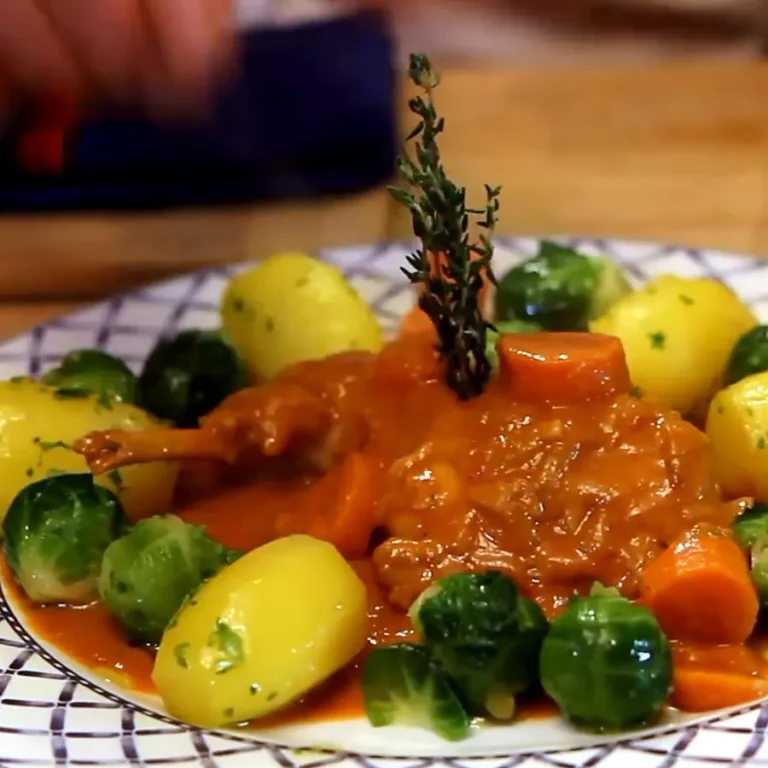
Spatchcock Roast Duck with Sweet Potatoes, Carrots and Peppers
Spatchcock Roast Duck with Sweet Potatoes, Carrots and Peppers
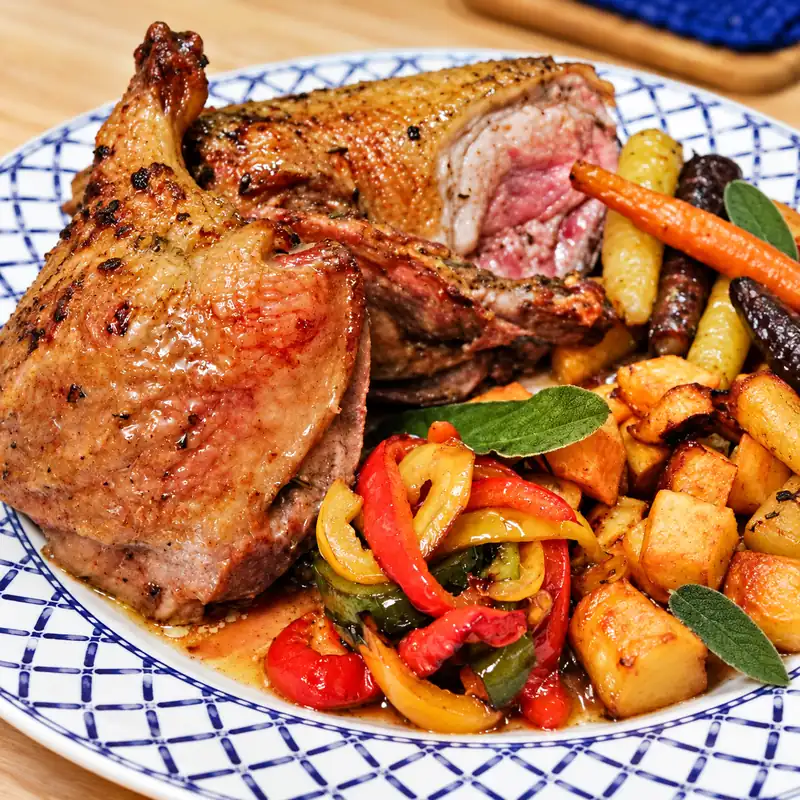
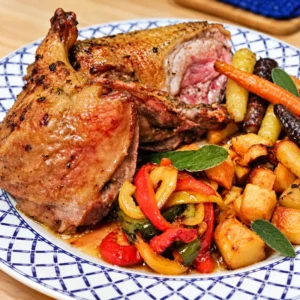
Spatchcock roast duck makes a generous meal with golden skin, fragrant herbs and a colorful garnish of sweet potatoes, carrots and peppers. I open the duck flat so it roasts more evenly, then cook the vegetables separately in a little duck fat. The roasting juices finish the plate, with enough fat removed to keep the sauce light.
{VIDEO}
Why roast a duck in spatchcock style?
Spatchcocking means removing the backbone and opening the bird flat. In French, this preparation is called crapaudine. It gives the legs and breasts a more even exposure to the oven and makes the finished duck easier to portion. A butcher can do this preparation if you prefer to begin with a bird already opened.
Duck brings its own generous supply of fat. The useful part is controlling where that fat goes: some renders into the roasting pan, a little coats the vegetables, and the remainder can be strained and reserved. The meat juices underneath the fat are what you want to spoon around the plate. They should taste savory rather than oily.
This is a straightforward herb roast, unlike my duck à l’orange, which has a citrus sauce. Thyme, rosemary, garlic and bay perfume the underside of the bird. Sweet potatoes provide sweetness, carrots bring an earthy contrast, and three colors of peppers make a lively finishing garnish.
Ingredients and proportions
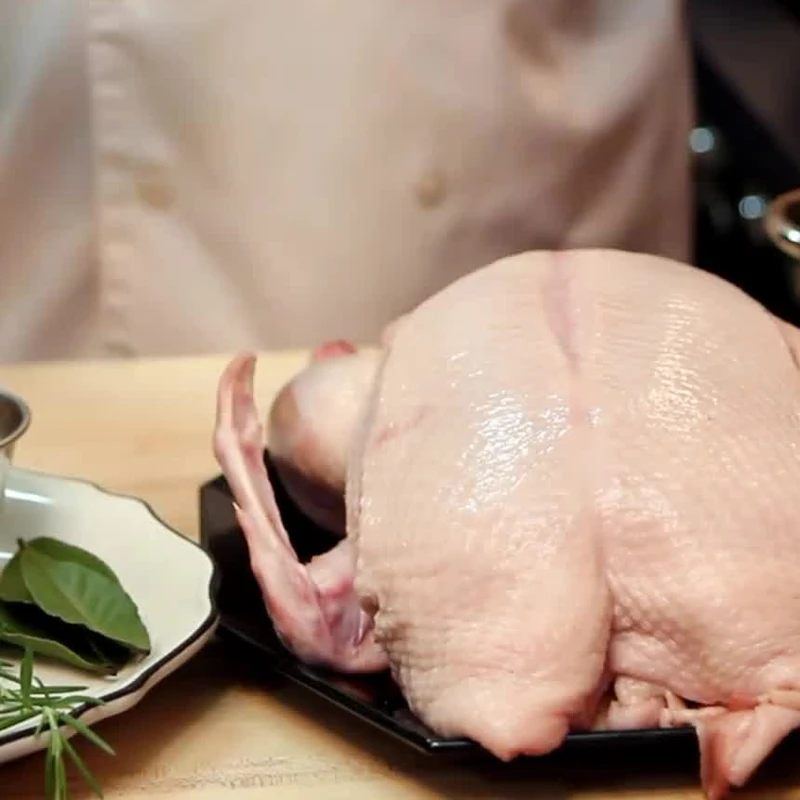
For six generous portions, choose a whole duck weighing about 7 pounds before trimming. Use two large sweet potatoes, about 1½ pounds peeled, one pound of carrots and one each of red, yellow and green bell pepper. The vegetables are cooked in separate batches so each reaches the right texture.
For the aromatic bed, use six garlic cloves, four thyme sprigs, two small rosemary sprigs and four bay leaves. Have six tablespoons of duck fat available, divided between the bird and vegetables. The duck will render additional fat during roasting, so use only what is needed to coat the pans and ingredients.
Season with about two teaspoons of fine salt and one teaspoon of black pepper in total, adjusting the vegetables separately after tasting. Add one cup of water to the carrot saucepan, with more as needed to cover them. Keep another half cup of hot water available for the roasting pan if the drippings begin to catch.
Choosing the bird and preparing your equipment
Use a fully thawed duck and remove any bag of giblets from the cavity. A deep roasting dish must hold the opened bird without crowding. You will also need strong poultry shears, a stable board, a saucepan, a large skillet, a vegetable baking dish and an instant-read thermometer. The thermometer matters more than a fixed roasting time.
How to make spatchcock roast duck
Step 1: Open and flatten the duck
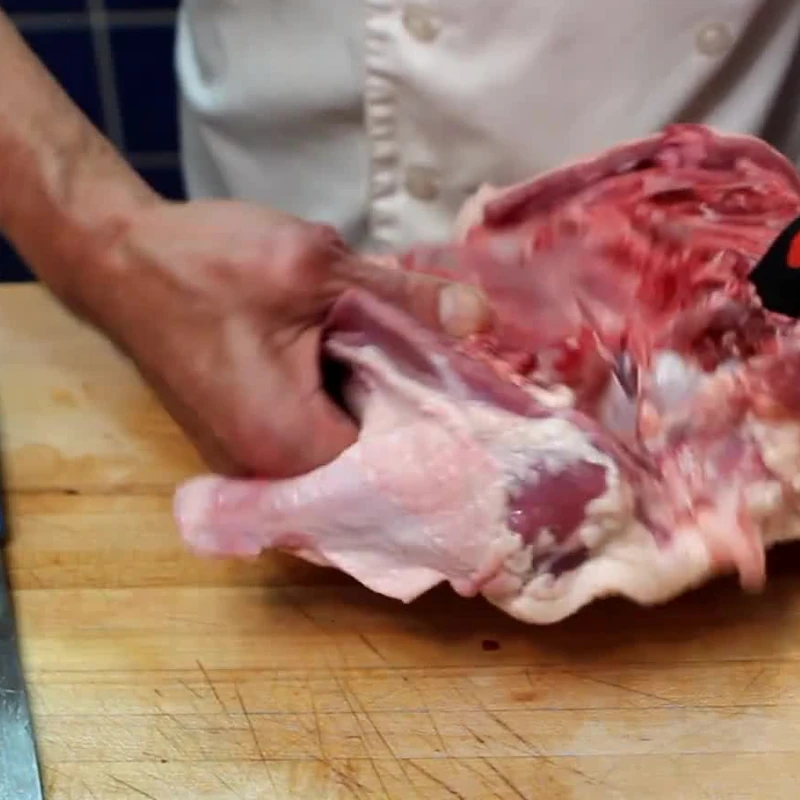
Heat the oven to 350°F. Pat the duck thoroughly dry. Remove the neck, wing tips and any large loose pieces of fat. Place the bird breast-side down and cut along each side of the backbone with poultry shears. Remove the backbone, open the duck and turn it breast-side up. Press firmly on the breastbone to flatten it.
Trim only what prevents the bird from lying comfortably flat. The video also removes the wishbone and tucks the legs through small cuts in loose skin; these are optional finishing details. Keep your hand out of the path of the shears. Refrigerate the bones promptly if you plan to make a stock using the approach in my homemade chicken stock.
Step 2: Set the duck on its aromatic bed
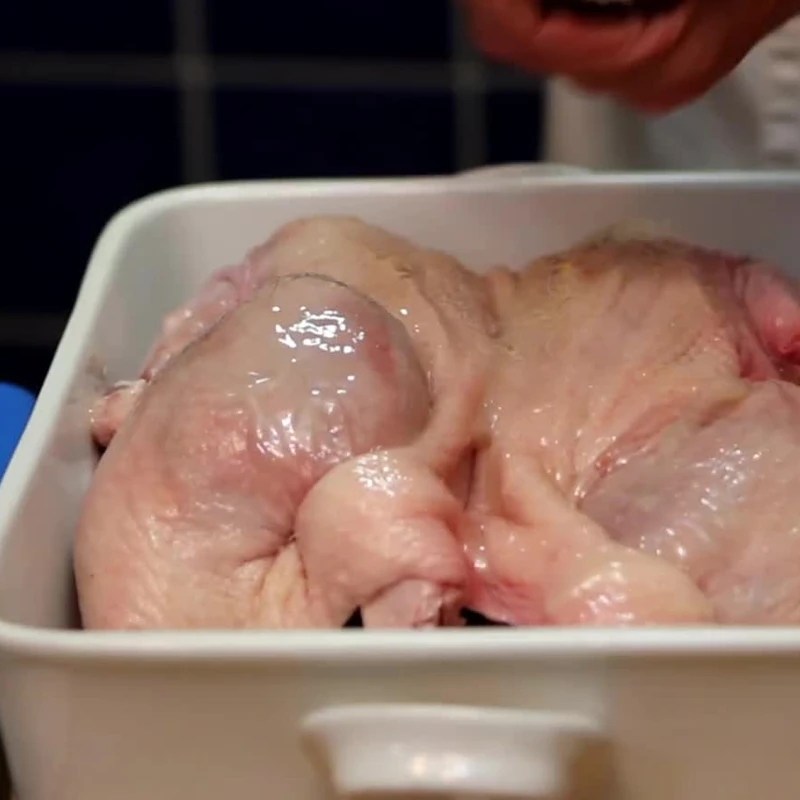
Spread the thyme, rosemary, bay leaves and lightly crushed garlic across the roasting dish. Set the duck on top, skin-side up. Brush it with one tablespoon of melted duck fat and season with about half the salt and pepper. Keep the herbs underneath the bird, where they are less likely to burn.
Roast uncovered. After about one hour, check the pan and baste lightly with the juices. If the bottom is drying out or the drippings are getting very dark, add a small splash of hot water around the duck. Avoid pouring water over the skin. Spoon off excessive pools of fat when needed, using a heatproof container.
Step 3: Prepare the vegetable garnish
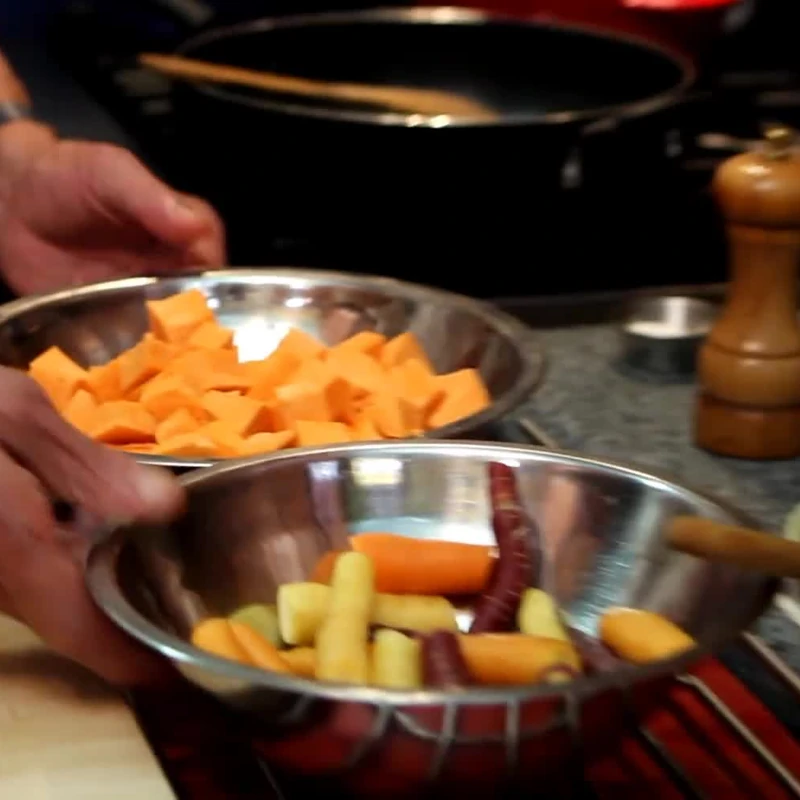
While the duck roasts, peel the sweet potatoes and cut them into roughly ¾-inch cubes. Peel the carrots and cut them into similar lengths, splitting thick pieces lengthwise. Remove the seeds and white ribs from the peppers, then cut the flesh into broad strips. Keep each vegetable in its own bowl.
Similar sizes within each batch make the cooking more predictable. Thin carrot tips can finish before thick sections, and very small sweet potato cubes can break apart during browning. Dry the sweet potatoes and peppers before frying them so they color instead of steaming. Reserve the remaining salt and pepper for seasoning each batch.
Step 4: Check the duck by temperature
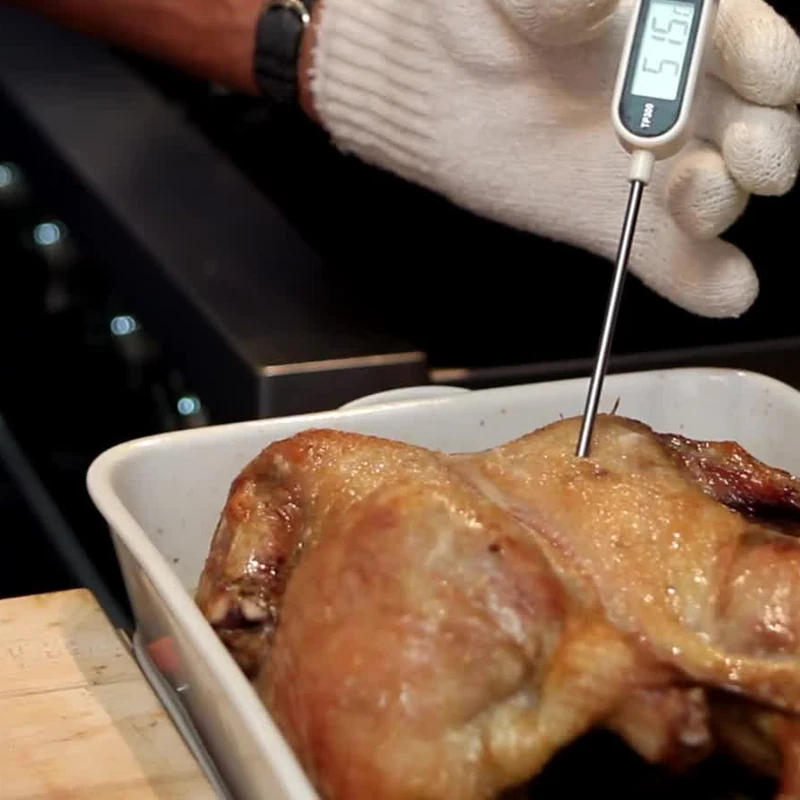
Begin checking the duck after about 1½ hours. For a bird of this size, allow roughly two to 2½ hours of roasting, sometimes longer. Probe the thickest part of each breast and the innermost part of each thigh, away from bone. Every checked area must reach at least 165°F before the duck is taken out for its resting period.
If the skin becomes dark before the center is ready, tent the browned areas loosely with foil and continue roasting. Do not use skin color or pink meat alone to judge doneness. A flattened bird still has thick muscles that need time. The video checks the bird more than once; keep that habit rather than relying on the clock.
Step 5: Brown the sweet potatoes and carrots
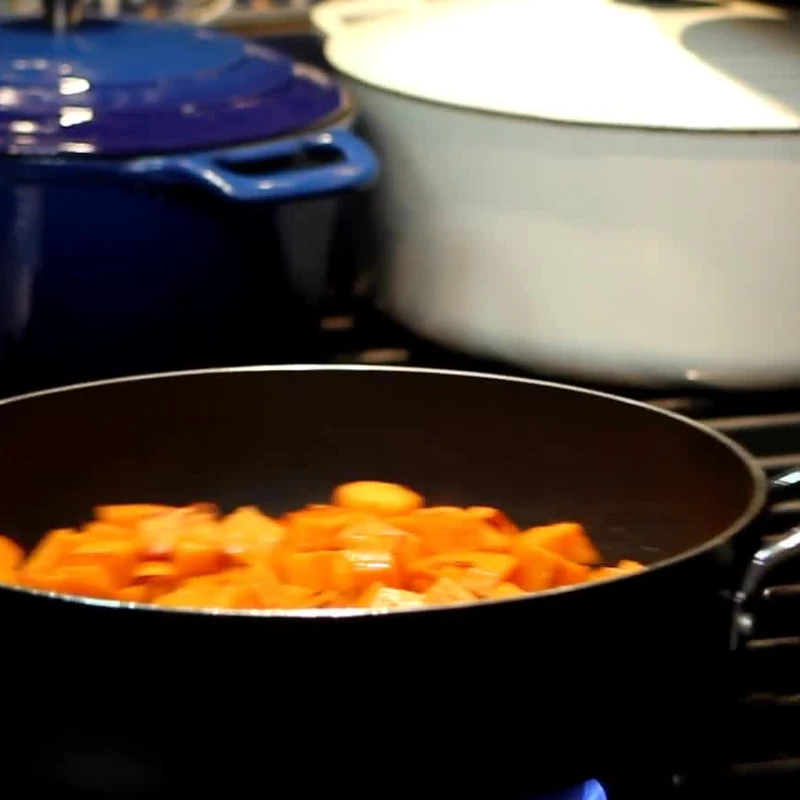
About 35 minutes before the duck is likely to finish, heat three tablespoons of duck fat in a large skillet over medium-high heat. Add the sweet potato cubes and brown them for eight to ten minutes, turning gently. Season, transfer to a baking dish and roast alongside the duck for about 20 to 30 minutes, until a knife enters easily.
Meanwhile, put the carrots in a saucepan with water to cover and a small pinch of salt. Bring to a boil and simmer for about five minutes, leaving them slightly firm. Drain thoroughly. Heat one tablespoon of duck fat in the skillet, toss the carrots for several minutes and finish in the oven for ten to fifteen minutes if needed. Remove either vegetable as soon as it is tender.
Step 6: Sauté the peppers
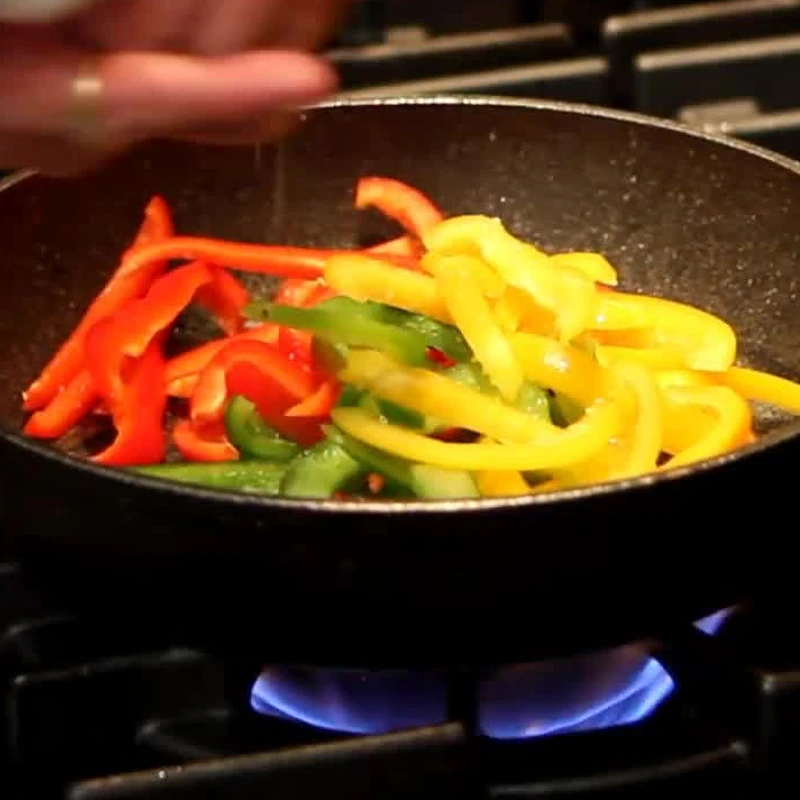
Heat the remaining tablespoon of duck fat in the skillet. Add the pepper strips and cook over medium-high heat for about eight to ten minutes, turning regularly. Season with the remaining salt and pepper to taste. Look for softened flesh and browned edges, while keeping the strips recognizable.
Cook in two batches if the skillet is crowded. A deep pile of peppers releases moisture and takes much longer to color. When ready, keep them warm briefly with the other vegetables. The separate cooking is useful here: peppers do not need the same time as carrots, and sweet potatoes benefit from a gentler oven finish.
Step 7: Rest, carve and finish the plate
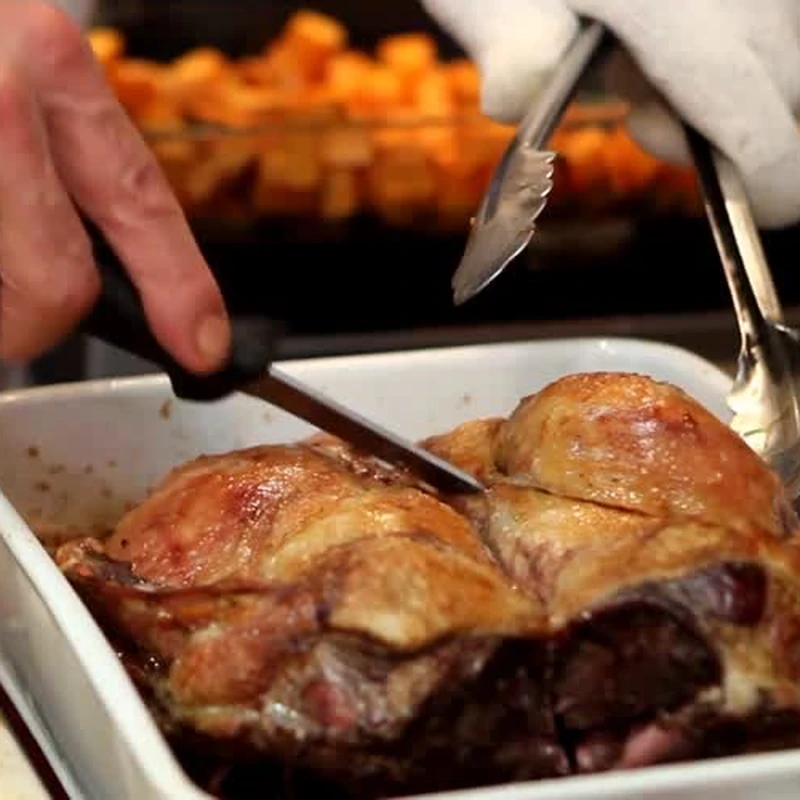
Rest the cooked duck for fifteen to twenty minutes on a clean board, loosely tented. Remove the bay leaves and woody herb stems from the pan. Let the roasting liquid settle, then skim or separate the fat. Taste the remaining juices and loosen them with a little hot water if they are too concentrated.
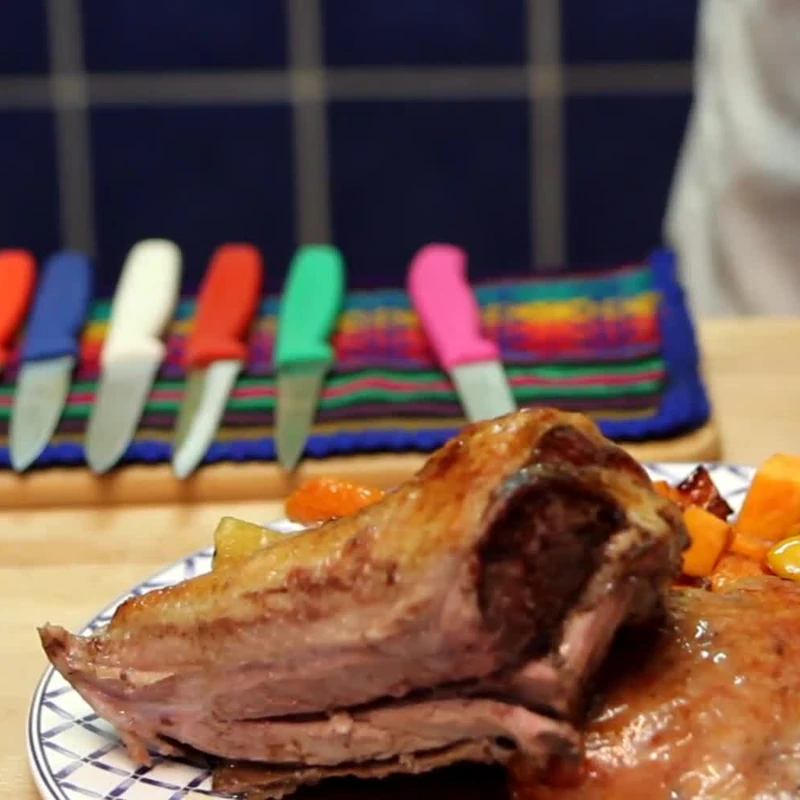
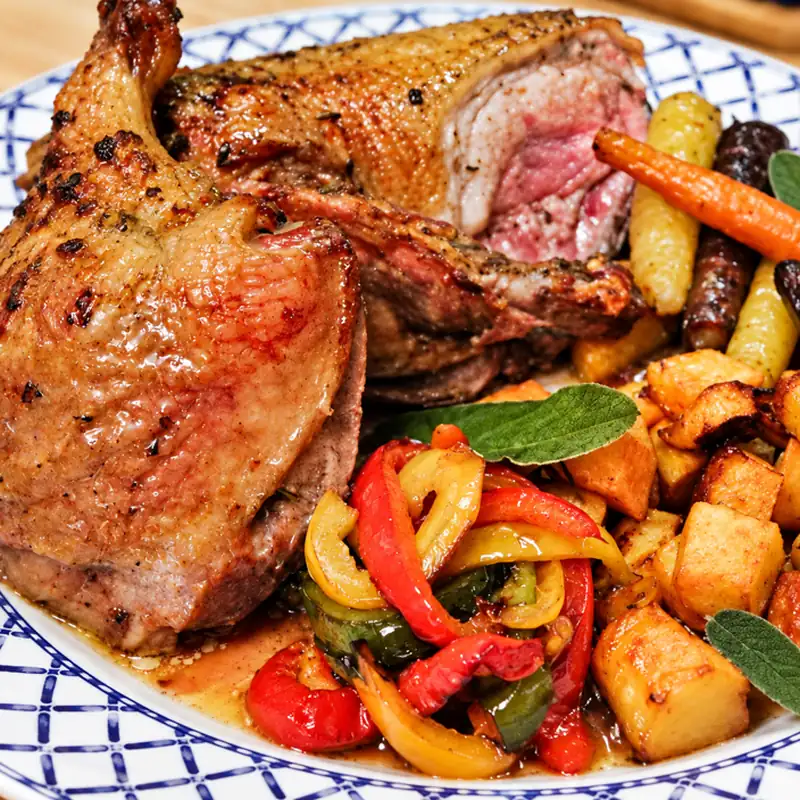
Separate the legs at the joints and slice the breasts across the grain. Divide the meat and vegetables among six plates, then spoon a little defatted juice around the food. Offer extra juice separately. Keep the skin exposed rather than soaking it in sauce, and serve while the vegetables are hot.
Substitutions and variations
Orange carrots work just as well as the multicolored carrots in the video. Use two colors of bell pepper if that is what you have. Replace sweet potatoes with an equally generous tray of ordinary potatoes, allowing more time as needed; my duck-fat potatoes are another good match for this meat.
Neutral oil can replace the added duck fat, although the bird will still render its own. Keep the quantity modest. For a different sauce, try my roast duck with blueberry sauce. If you prefer individual portions instead of preparing a whole bird, my roasted duck legs with maple and blue cheese sauce offer another approach.
Frequently asked questions
Can I prepare the duck ahead of time?
Yes. Ask the butcher to flatten it, or prepare it yourself the day before. Refrigerate promptly in a covered container on the lowest shelf. Dry and season it when ready to roast. Prepare the vegetables ahead, but keep raw poultry and ready-to-cook vegetables on separate boards and in separate containers.
Why are the roasting juices so greasy?
Duck releases a substantial amount of fat. Let the liquid settle and remove the upper fat layer before serving. A fat separator helps, but careful spooning also works. Save only clean, strained fat and refrigerate it promptly. Never pour the full layer of rendered fat over the plated vegetables.
Can I use a smaller duck?
Yes, but begin thermometer checks earlier and reduce the vegetable quantities if serving fewer people. Weight gives a planning guide, while thickness, oven accuracy and starting temperature determine the actual cooking time. Keep the same minimum internal temperature. The breasts and thighs should both be checked.
How should I store leftovers?
Refrigerate the carved meat, vegetables and juices in shallow covered containers within two hours. Use within three to four days and reheat the meat to 165°F. The skin softens in storage. Leftover duck can also be used in my duck hachis parmentier, with its mashed-potato topping.
What to serve with roast duck
The plate already contains three vegetables, so choose a fresh side in a modest portion. A green salad with my lemon vinaigrette balances the richness. My marinated red cabbage salad brings another crisp, tangy contrast. Serve the salad separately to keep its dressing away from the warm duck skin.
For another sweet potato preparation, see my air-fryer sweet potatoes. A small basket of homemade white bread is useful for the juices. If you want to explore another traditional duck technique for a future meal, my duck confit follows a slower method and produces a different texture.
Spatchcock Roast Duck with Sweet Potatoes, Carrots and Peppers
Ingredients
- 1 whole duck about 7 lb, fully thawed
- 2 large sweet potatoes about 1½ lb peeled, cut into ¾-inch cubes
- 1 lb carrots peeled and cut into even pieces
- 1 red bell pepper sliced
- 1 yellow bell pepper sliced
- 1 green bell pepper sliced
- 6 garlic cloves lightly crushed
- 4 thyme sprigs
- 2 small rosemary sprigs
- 4 bay leaves
- 6 tbsp duck fat divided
- 2 tsp fine salt divided, plus more to taste
- 1 tsp ground black pepper divided
- 1 cup water for the carrots plus enough to cover
- ½ cup hot water for the roasting pan as needed
Instructions
- Heat the oven to 350°F. Dry the duck, remove the neck and wing tips, then cut out the backbone with poultry shears. Open and flatten the bird, skin-side up.
- Put garlic, thyme, rosemary and bay in a deep roasting dish. Set the duck on top, brush with 1 tablespoon duck fat and season with half the salt and pepper. Roast uncovered, checking and lightly basting after 1 hour. Add a little hot water around the bird if the pan dries out.
- Prepare the sweet potato cubes, carrot pieces and pepper strips, keeping them separate. Dry the sweet potatoes and peppers well.
- Start checking the duck after 1½ hours. Allow roughly 2 to 2½ hours of roasting, sometimes longer. Every breast and thigh checked away from bone must reach at least 165°F. Protect dark skin loosely with foil if needed and continue until the meat is ready.
- About 35 minutes before the duck is likely to finish, brown sweet potatoes in 3 tablespoons fat for 8 to 10 minutes. Season and finish in a baking dish in the oven for 20 to 30 minutes, until tender. Simmer carrots in lightly salted water for about 5 minutes, drain, sauté in 1 tablespoon fat and finish in the oven for 10 to 15 minutes if needed.
- Sauté peppers in the remaining 1 tablespoon fat for 8 to 10 minutes, until softened and browned at the edges. Season the vegetables to taste and remove each batch when tender.
- Rest the duck 15 to 20 minutes on a clean board. Remove bay leaves and woody stems; separate the fat from the juices. Carve the legs and slice the breasts, serve with vegetables and spoon a little defatted juice around the food.