Pork and Bean Stew
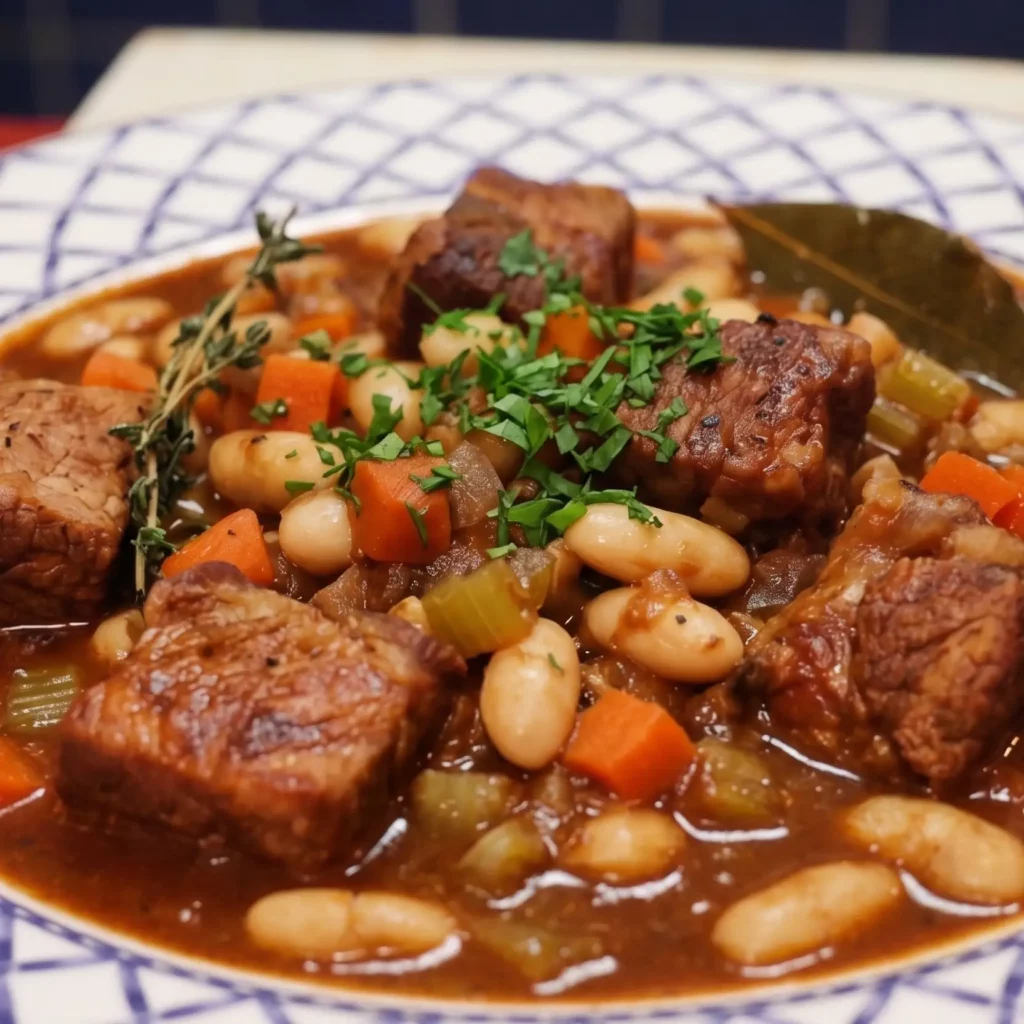
Pork and bean stew is a hearty comfort meal made with tender pieces of pork, beans, vegetables, broth, and simple aromatics simmered until rich and satisfying. It sits somewhere between a rustic North American pork and beans recipe and a French-style bean stew, making it perfect for cold weather, Sunday dinner, meal prep, or any night when you want a generous one-pot meal.
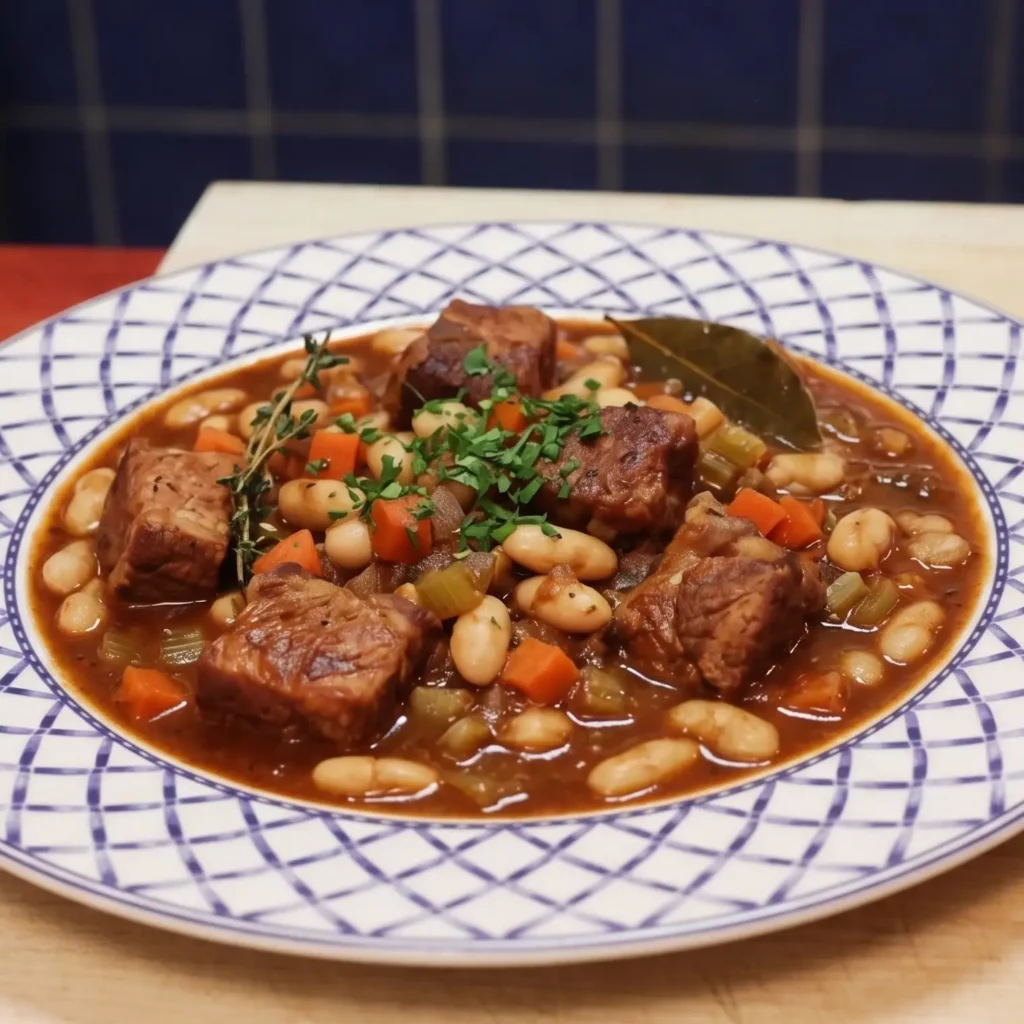
This recipe is based on my YouTube video, with a few adjustments since publication to make the pork more tender, the beans more flavorful, and the cooking method easier to follow in a home kitchen. I make it this way because pork has enough richness to season the beans naturally, while the beans absorb the broth, herbs, and vegetables as they simmer.
Why This Pork and Bean Stew Works
A good pork and bean stew should be hearty, but not heavy. The pork should be tender, the beans should be creamy, and the broth should have enough body to feel like a real meal. This version uses simple ingredients, but the flavor builds slowly from browning the pork, cooking the vegetables, adding herbs, and letting everything simmer together.
This recipe is different from pulled pork made in the oven or slow cooker because the pork stays in tender pieces instead of being shredded. It is also different from a classic oven pork roast because this is a simmered stew with beans, broth, and vegetables. The goal is not a sliced roast, but a spoonable, rustic dish that gets better as it rests.
It also has a different angle from classic French cassoulet. Cassoulet is richer, more traditional, and usually built around duck, sausage, pork, and white beans. This pork and bean stew is simpler and more weeknight-friendly, but it still has that same comforting bean stew spirit. If you want a faster cassoulet-adjacent dinner without making a full traditional cassoulet, this is the kind of recipe that makes sense.
The Best Pork for Pork and Bean Stew
For the best texture, use pork shoulder, pork butt, or boneless country-style pork ribs. These cuts have enough fat and connective tissue to become tender during simmering. Lean pork tenderloin is not the best choice here because it can dry out if cooked for a long time.
Pork loin can work, but it needs a gentler simmer and a shorter cooking time. If you already enjoy rustic pork recipes like pork stew with carrots and lentils, this recipe follows the same comfort-food idea, but the beans give it a thicker and more filling texture.
Bacon is optional, but it adds smoky depth. You do not need a lot. A few slices cooked at the beginning will season the pot and give the broth a richer flavor. If using sausage instead of bacon, a mild pork sausage works well, especially if you like recipes such as homemade French pork sausage.
The Best Beans to Use
White beans are the best choice for this stew. Navy beans, cannellini beans, great northern beans, or white kidney beans all work well. Canned beans make the recipe much easier and faster, while dried beans give a deeper texture if you have time to soak and cook them.
For a simple dinner, canned beans are perfect. Drain and rinse them before adding them to the pot so the stew tastes clean and balanced. If you want a thicker stew, mash a small amount of the beans against the side of the pot near the end of cooking. This naturally thickens the broth without flour or cream.
This is why pork and beans is such a practical comfort recipe. It is filling, protein-rich, budget-friendly, and easy to adapt with pantry ingredients.
How to Build Flavor
Start by browning the pork. This is one of the most important steps. If you add raw pork directly to the broth, the stew will still cook, but it will not have the same depth. Browning creates a savory base that makes the final dish taste richer.
After the pork is browned, cook the onion, carrot, celery, and garlic in the same pot. The vegetables pick up the browned bits left behind by the pork. Tomato paste adds color and a little sweetness, while broth gives the stew its body.
A little Dijon mustard, thyme, bay leaf, and paprika work very well with pork and beans. You can keep the seasoning mild, or add a small pinch of chili flakes for heat. For a sweeter Canadian-style touch, a spoonful of maple syrup can be added near the end. It should not make the stew sweet, just round out the saltiness and acidity.
If you like pork recipes with a barbecue direction, serve this with a small spoonful of sauce inspired by maple barbecue pork ribs on the side, but do not turn the stew itself into a barbecue dish. The main flavor should stay rustic and savory.
Step-by-Step Instructions
Cut the pork into large bite-size cubes and season with salt, pepper, and paprika. Heat oil in a Dutch oven or heavy pot, then brown the pork in batches. Do not overcrowd the pot, or the pork will steam instead of brown.
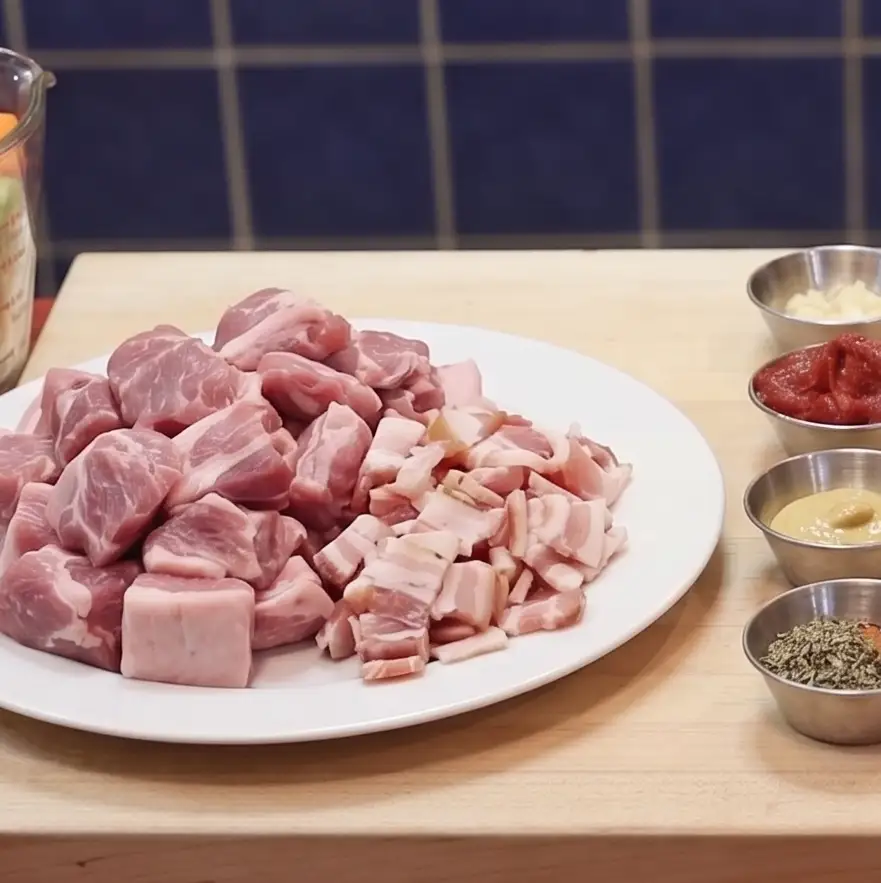
Remove the pork and cook the bacon if using. Add the onion, carrots, and celery, then cook until the vegetables start to soften. Stir in the garlic and tomato paste, and cook for a minute to remove the raw tomato flavor.
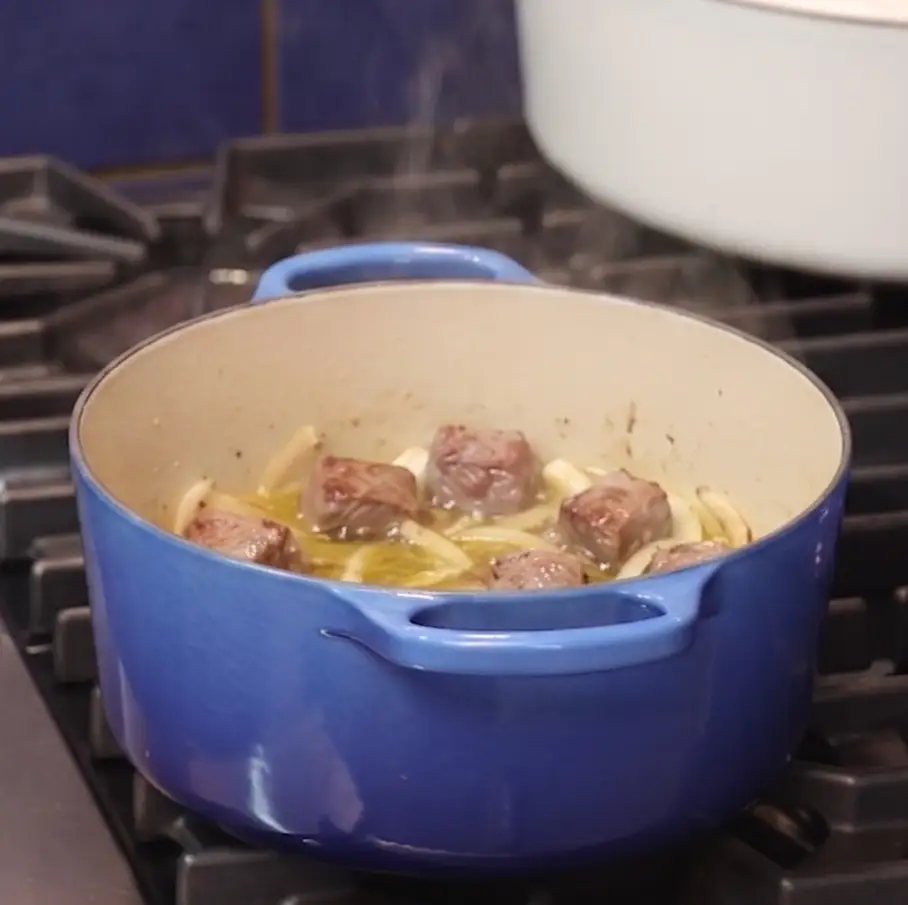
Return the pork to the pot. Add the broth, beans, bay leaf, thyme, Dijon mustard, and a little maple syrup if using. Bring to a gentle simmer, cover, and cook until the pork is tender.
Near the end, uncover the pot and let the stew reduce slightly. Mash a few beans if you want a thicker texture. Taste and adjust the salt, pepper, and acidity. A small splash of vinegar or lemon juice at the end can brighten the whole dish.
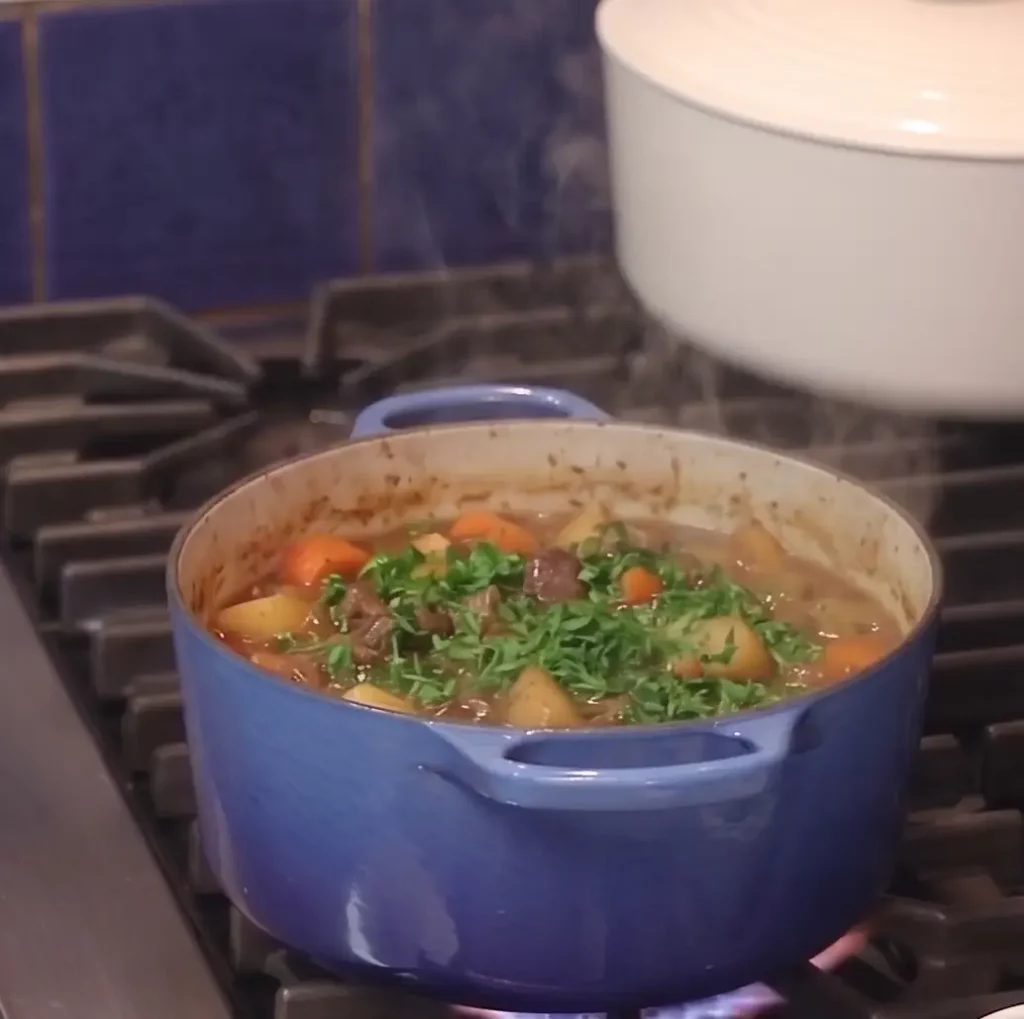
Let the stew rest for a few minutes before serving. Like many braised dishes, it tastes even better after the flavors settle.
What to Serve with Pork and Bean Stew
This stew can be served on its own, but bread, potatoes, or a fresh salad make it even better. A slice of crusty bread is perfect for the broth. For a richer plate, serve it with traditional gratin Dauphinois or crispy Parisian potatoes.
For a lighter contrast, a crisp side like creamy coleslaw works very well. The freshness balances the beans and pork.
This stew also fits nicely beside other comfort classics like French Canadian pâté chinois when building a cozy family meal, or beside homemade garlic butter spread on warm bread.
Substitutions
You can use pork shoulder, pork butt, country-style pork ribs, pork loin, or leftover pork roast. If using leftover cooked pork, add it later in the cooking so it does not dry out.
White beans are the most classic, but kidney beans, pinto beans, or mixed beans can also work.
Chicken broth, beef broth, pork broth, or vegetable broth can be used. Chicken broth gives a lighter flavor, while beef broth gives a deeper stew.
Tomato paste can be replaced with crushed tomatoes, but the stew will become more tomato-forward.
Dijon mustard can be replaced with grainy mustard or left out.
For a smoky version, add bacon, smoked paprika, or smoked sausage.
For a French-inspired version, add herbs de Provence, sausage, and a little extra garlic.
For a Quebec-style touch, add a small spoonful of maple syrup near the end.
FAQ
Can I make pork and bean stew ahead of time?
Yes. This stew is excellent made ahead because the beans absorb more flavor as it rests. Cool it completely, refrigerate it, and reheat gently on the stove.
Can I freeze pork and bean stew?
Yes. Let the stew cool completely, then freeze it in airtight containers. The beans may soften slightly after freezing, but the flavor stays very good.
Can I use dried beans?
Yes, but they need to be soaked and cooked until almost tender before adding them to the stew. If you add dry beans directly to the pot, the cooking time will be much longer.
How do I thicken pork and bean stew?
Mash some of the beans against the side of the pot and let the stew simmer uncovered for a few minutes. This thickens the broth naturally.
Can I make this in a slow cooker?
Yes. Brown the pork and vegetables first for best flavor, then transfer everything to the slow cooker. Cook on low until the pork is tender.
Is this recipe closer to pork and beans or cassoulet?
It is closer to a rustic pork and beans recipe, but with a cassoulet-style comfort angle. It is simpler than cassoulet, but still hearty, savory, and bean-focused.
Suggested Posts
For more pork comfort recipes, try pork stew with carrots and lentils, oven or slow cooker pulled pork, oven pork roast, maple barbecue pork ribs, classic French cassoulet, stovetop cassoulet, and homemade French pork sausage.
To complete the meal, serve the stew with traditional gratin Dauphinois, crispy Parisian potatoes, creamy coleslaw, or warm bread with homemade garlic butter.
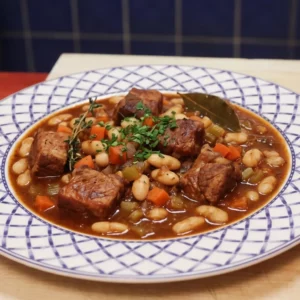
Pork and Bean Stew
Ingredients
- 2 lb pork shoulder cut into large bite-size cubes
- 2 tablespoons olive oil
- 4 slices bacon chopped, optional
- 1 large onion diced
- 2 carrots diced
- 2 celery stalks diced
- 4 garlic cloves minced
- 2 tablespoons tomato paste
- 4 cups chicken broth or beef broth
- 3 cans white beans 15 oz each, drained and rinsed
- 1 tablespoon Dijon mustard
- 1 tablespoon maple syrup optional
- 1 teaspoon dried thyme
- 1 teaspoon paprika
- 2 bay leaves
- 1 teaspoon salt plus more to taste
- 1/2 teaspoon black pepper
- 1 tablespoon apple cider vinegar or lemon juice optional
- 2 tablespoons chopped parsley for serving
Instructions
- Season the pork with salt, pepper, and paprika.
- Heat the olive oil in a Dutch oven or heavy pot over medium-high heat.
- Brown the pork in batches, then transfer to a plate.
- Add the bacon if using and cook until lightly browned.
- Add the onion, carrots, and celery. Cook for 5 to 7 minutes, until softened.
- Add the garlic and tomato paste. Cook for 1 minute.
- Return the pork to the pot.
- Add the broth, white beans, Dijon mustard, maple syrup if using, thyme, bay leaves, salt, and pepper.
- Bring to a simmer, then cover and cook over low heat for 1 hour 15 minutes to 1 hour 30 minutes, or until the pork is tender.
- Uncover and simmer for 10 to 15 minutes to reduce slightly.
- Mash a few beans into the broth if a thicker stew is desired.
- Stir in apple cider vinegar or lemon juice if using.
- Taste and adjust seasoning.
- Remove the bay leaves, garnish with parsley, and serve hot.
Notes
FAQ
Can I make pork and bean stew ahead of time?
Yes. This stew is excellent made ahead because the beans absorb more flavor as it rests. Cool it completely, refrigerate it, and reheat gently on the stove.Can I freeze pork and bean stew?
Yes. Let the stew cool completely, then freeze it in airtight containers. The beans may soften slightly after freezing, but the flavor stays very good.Can I use dried beans?
Yes, but they need to be soaked and cooked until almost tender before adding them to the stew. If you add dry beans directly to the pot, the cooking time will be much longer.How do I thicken pork and bean stew?
Mash some of the beans against the side of the pot and let the stew simmer uncovered for a few minutes. This thickens the broth naturally.Can I make this in a slow cooker?
Yes. Brown the pork and vegetables first for best flavor, then transfer everything to the slow cooker. Cook on low until the pork is tender.Is this recipe closer to pork and beans or cassoulet?
It is closer to a rustic pork and beans recipe, but with a cassoulet-style comfort angle. It is simpler than cassoulet, but still hearty, savory, and bean-focused.🔗 Useful Links
🛒 Michel Dumas Shop : Explore our kitchen essentials, including aprons and knives.
🌐 Linktree : Access all our important links in one place.
📱 YouTube | Instagram | Facebook | TikTok : Follow us for the latest recipes and culinary tips.