French Pork and Cabbage Potée Recipe
A good potée au chou should feel generous, rustic, and deeply comforting without turning into a greasy, salty pot of boiled pork. This version keeps the spirit of the YouTube video, with a few adjustments since publication to make the proportions more dependable for home cooks. The result is a rich French pork and cabbage stew with tender vegetables, flavorful broth, and enough variety in the meats to feel special without becoming overwhelming.
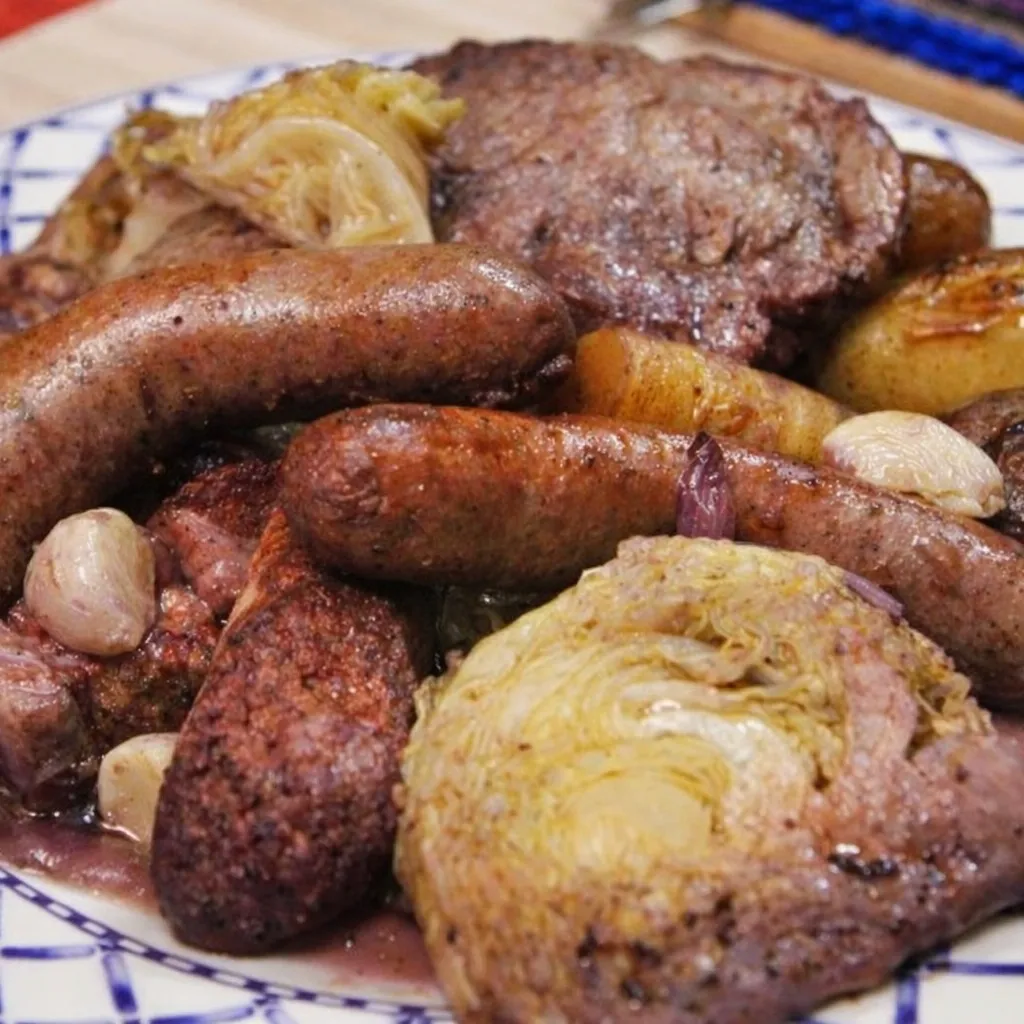
Potée au chou is a traditional French cabbage and pork dish made by slowly cooking different cuts of pork with cabbage, aromatics, and potatoes. What makes this version different is the mix of smoked and fresh pork, the separate potato cooking method, and a small amount of red cabbage to echo the video while keeping the final flavor and color balanced. It is the kind of meal that works beautifully in cold weather, but it is also a great Sunday family dinner any time of year.
This is based on my YouTube video, but I have adjusted the written version so it is easier to reproduce at home. In the video, the instinctive, old-school approach works well on camera, but for a website recipe, people need clearer structure and safer proportions. I make it this way because potée should taste hearty and layered, not just salty and heavy.
One important distinction: this is not choucroute, and it is not a light cabbage soup. It is also not meant to be as broth-heavy as a traditional homemade pot-au-feu. Think of it as a rustic French braise where cabbage, pork, and sausage slowly cook together until everything becomes soft, savory, and satisfying.
Why this version works
The biggest risk with a dish like this is excess. Too many smoked meats and the stew becomes harsh and salty. Too much broth and it becomes watery. Too much fat and the cabbage loses its appeal. This version keeps the richness, but gives the vegetables enough room to matter.
Using mostly green cabbage and a smaller quantity of red cabbage keeps the flavor classic while still nodding to the version from the video. The potatoes are cooked separately in pork fat so they stay intact and develop much better flavor. That same approach works in other hearty French-style potato dishes, whether you are making Parisian potatoes or a good batch of homemade mashed potatoes.
Ingredients
- 1 small green cabbage
- 1/2 small red cabbage
- 12 oz smoked pork belly or thick slab bacon
- 8 oz smoked pork jowl, smoked ham hock meat, or extra slab bacon
- 1 lb pork shoulder or pork neck, cut into large chunks
- 12 oz Toulouse sausages or mild fresh pork sausages
- 8 oz smoked sausage such as Morteau, kielbasa, or another firm smoked sausage
- 6 oz chorizo, preferably semi-dry or cooking chorizo
- 1 large red onion
- 3 medium carrots
- 6 garlic cloves
- 1 bay leaf
- 4 sprigs thyme
- 4 cups low-sodium beef broth or light brown stock
- 2 1/2 lb small potatoes
- Salt, only if needed
- Black pepper, to serve
- Dijon mustard, to serve, optional
Step-by-step instructions
1. Prepare the bouquet garni
Tie the thyme and bay leaf together in cheesecloth or kitchen twine. This is a simple detail, but it matters. Potée has a lot going on already, and you want the herbs to perfume the broth without leaving stems and leaves throughout the pot.
2. Prep the pork and sausages
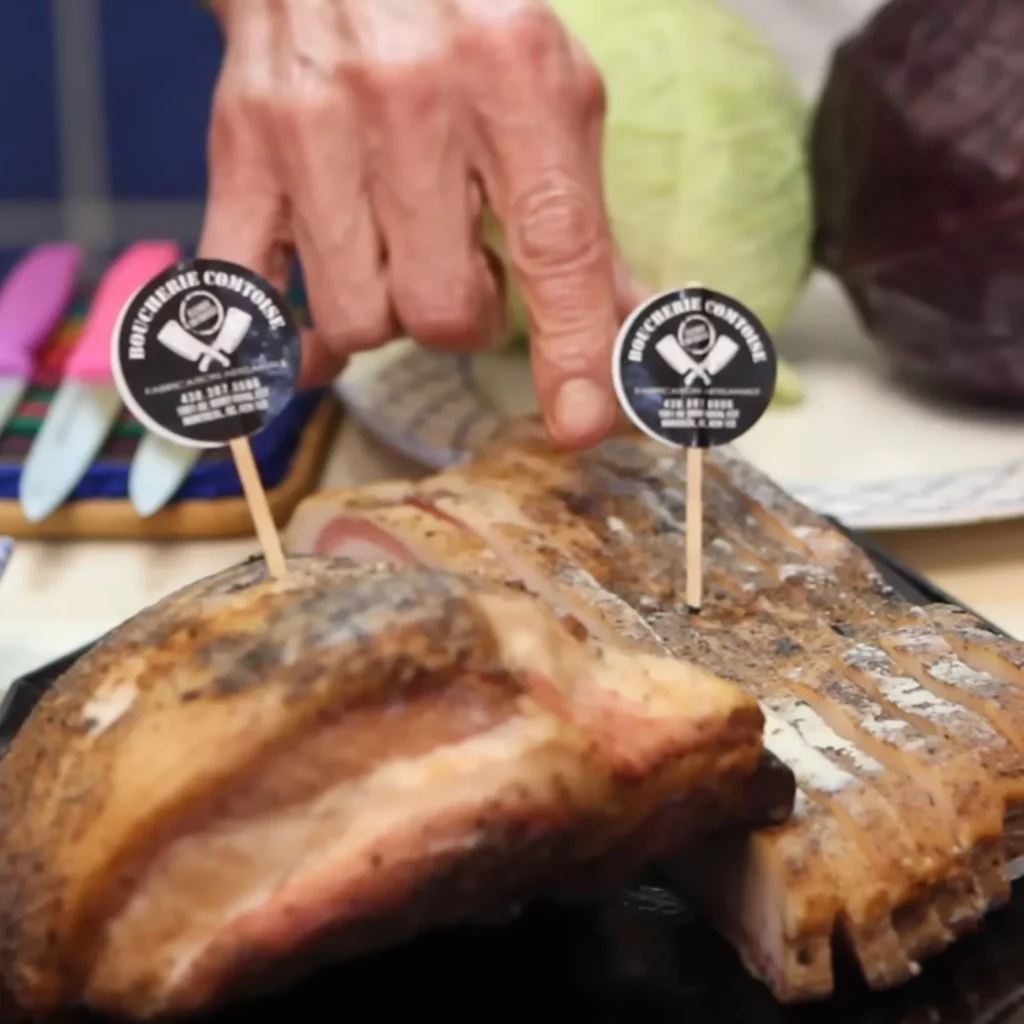
Cut the smoked pork belly into large lardons or thick cubes. Cut the smoked jowl or second smoked pork element into bite-size pieces. Cut the pork shoulder into large chunks, about 2 inches each. Slice the smoked sausage on a bias into thick pieces. Leave the Toulouse sausages whole if they are medium-sized. Cut large chorizo into thick sections.
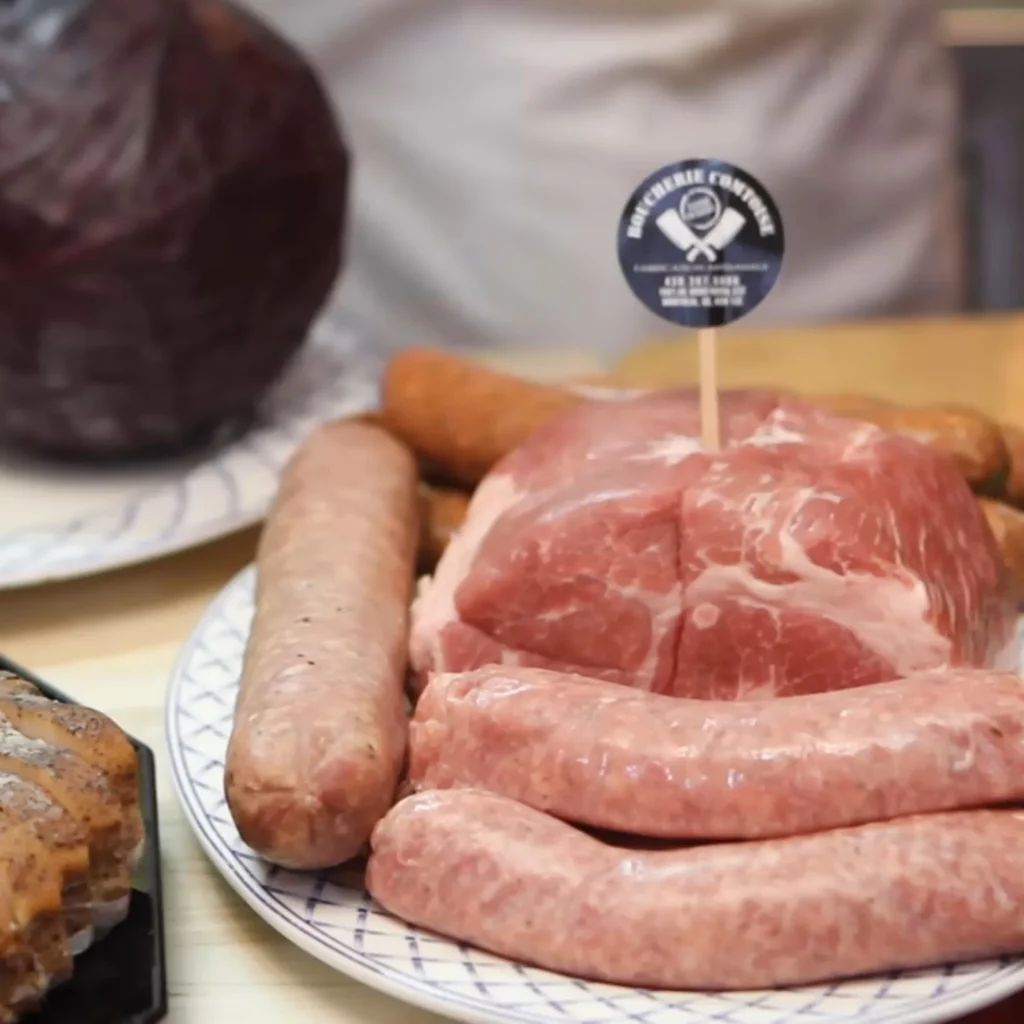
The mix of meats is what gives this dish its character. Smoked pork brings depth, pork shoulder gives tenderness, and the sausages round everything out. If you enjoy rustic French braises like classic boeuf bourguignon or even a shorter stovetop cassoulet with duck and sausage, the logic is similar: each component contributes something different.
3. Prep the vegetables
Peel and cut the onion into large chunks. Peel the carrots and cut them into thick pieces. Peel the garlic cloves and leave them whole or halve them if they are very large.
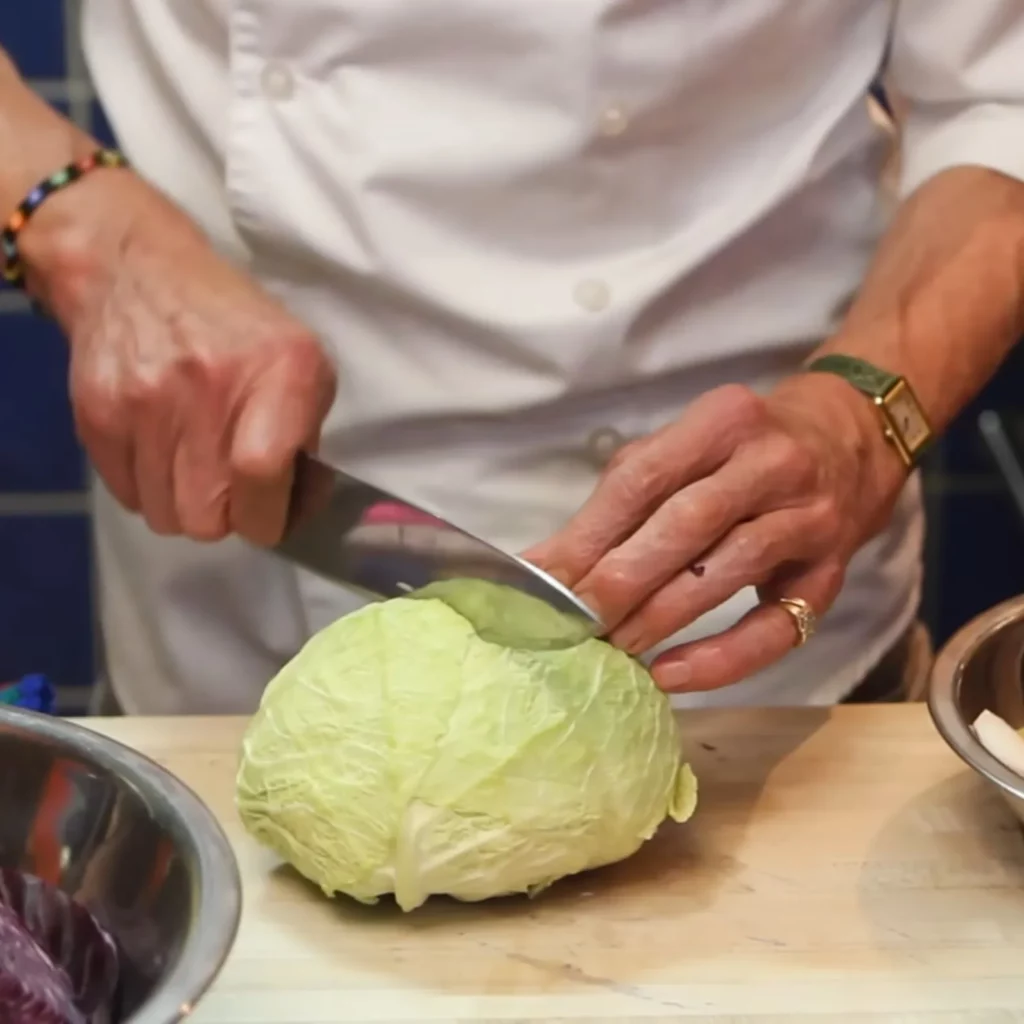
Core the green cabbage and cut it into thick wedges. Core the red cabbage and cut it into slightly smaller wedges. The red cabbage is used more sparingly here because too much can dominate the broth and make the final pot look muddy.
4. Render the pork fat
Place the smoked pork belly and smoked jowl in a large Dutch oven or heavy braising pot over medium heat. Start cold if possible. Let the fat slowly render and the meat lightly brown. Stir occasionally.
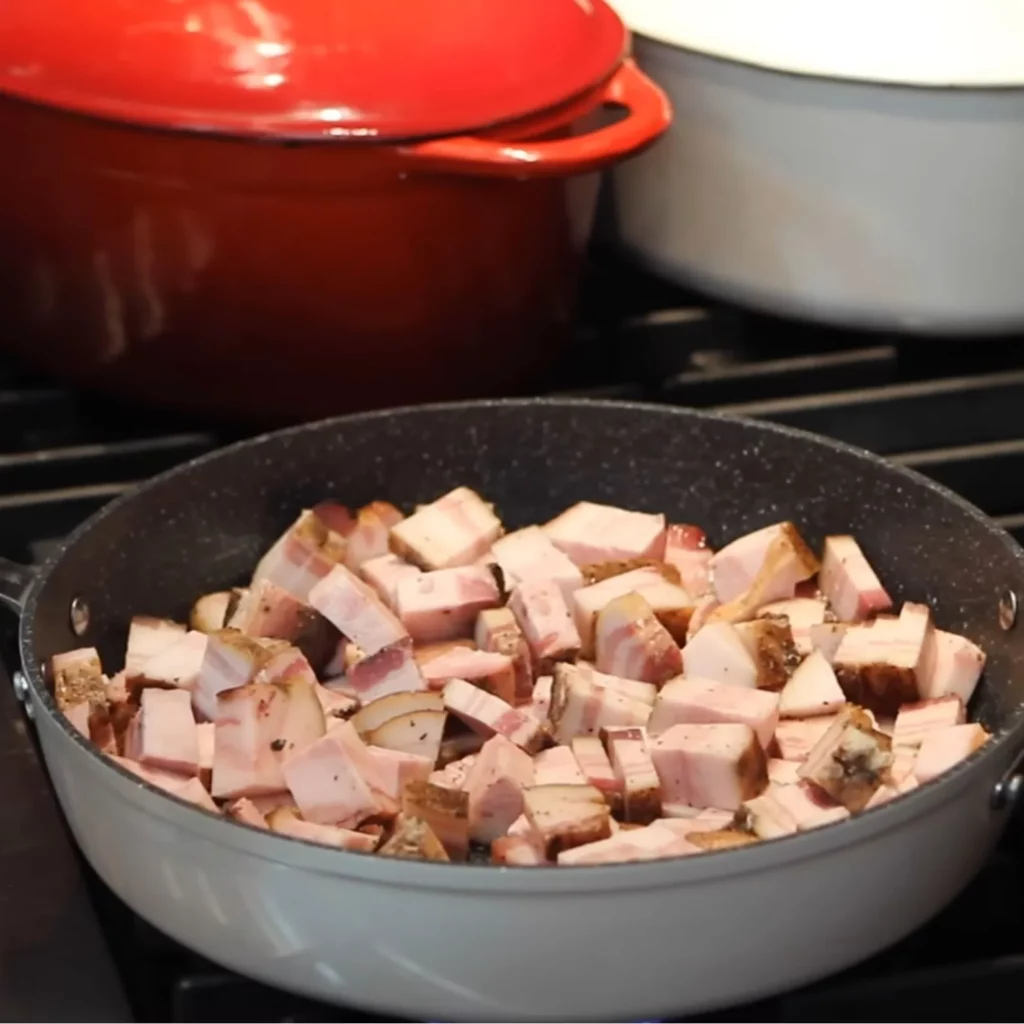
Do not add oil or butter. The pork gives you everything you need. Once you have a good layer of rendered fat and the pork is lightly colored, transfer about half of the rendered meat to a plate and leave the rest in the pot.
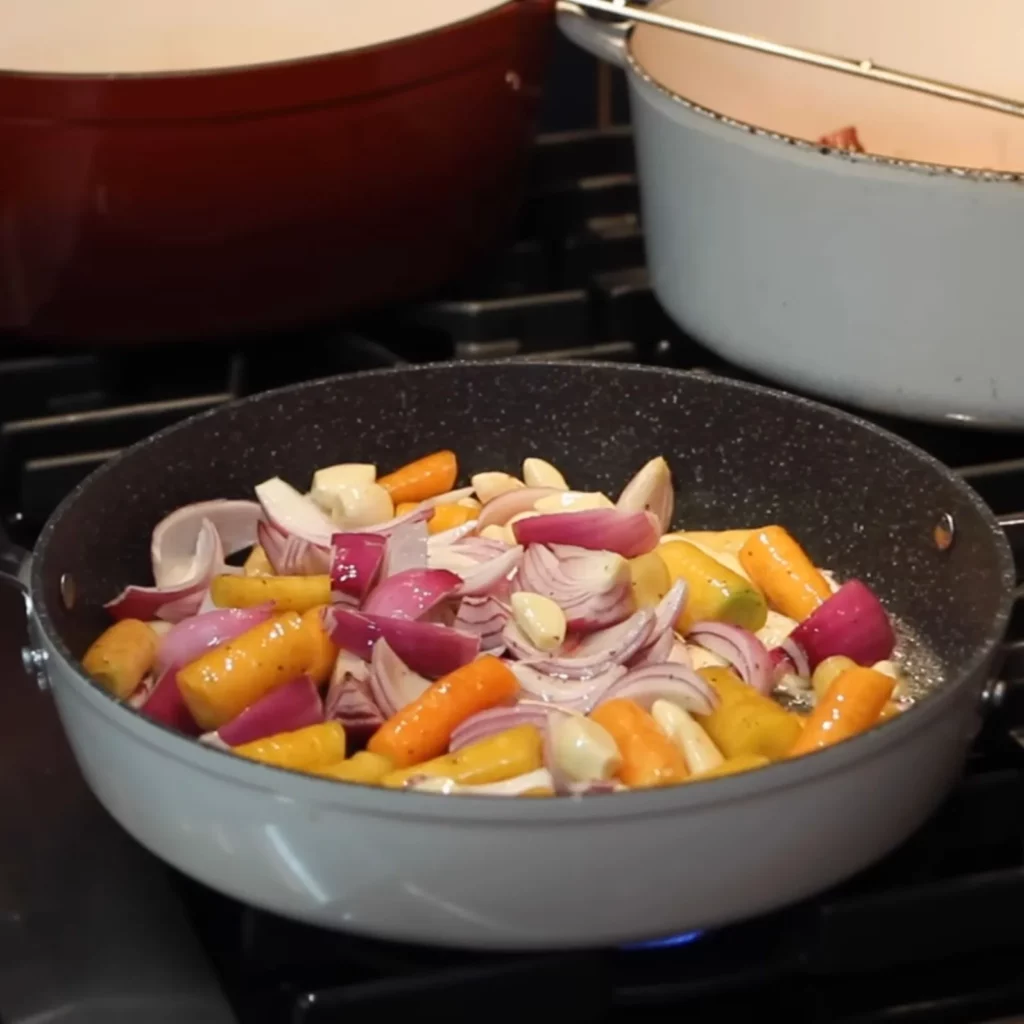
5. Sweat the aromatics
Add the onion, carrots, and garlic to the pot. Cook for 5 to 7 minutes, stirring now and then, until the vegetables soften slightly and pick up a little color.
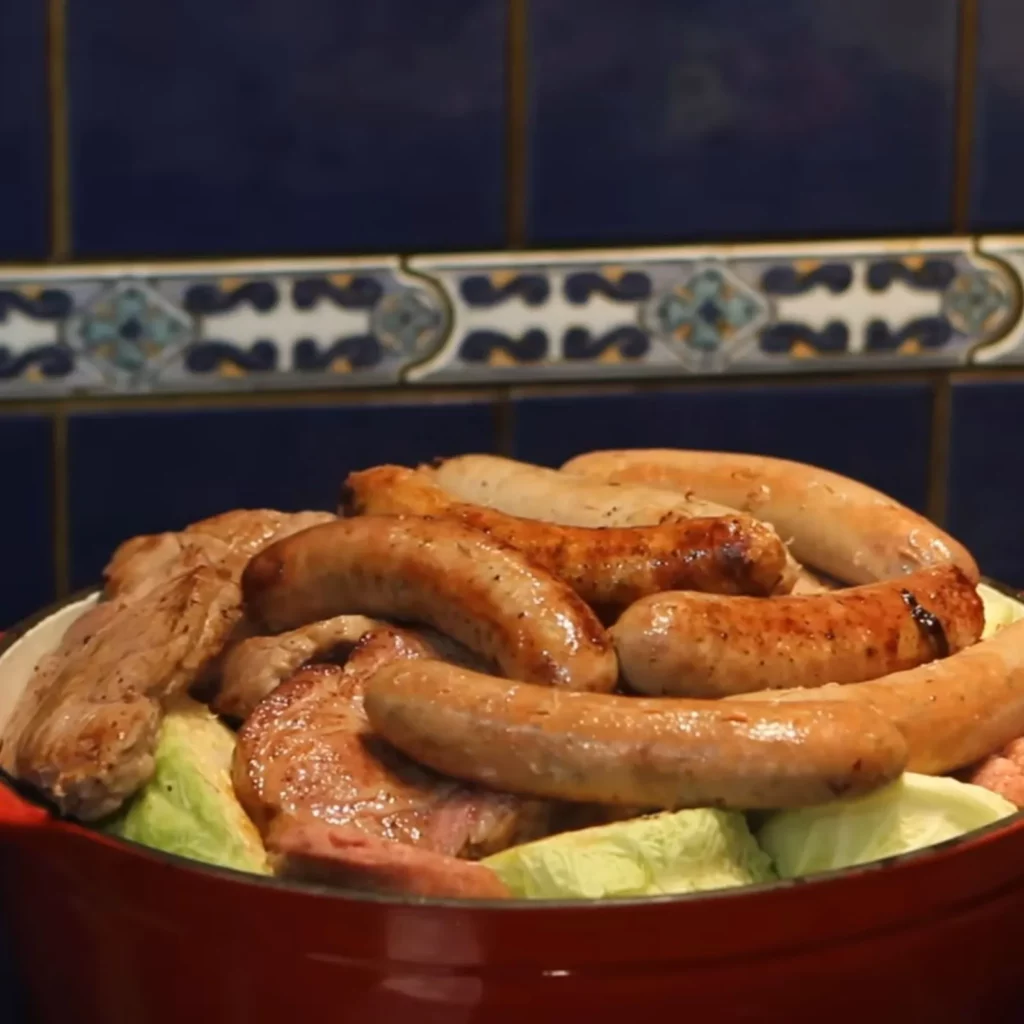
Do not season heavily at this point. Between the smoked meats, sausages, and broth, the pot will already gain a lot of salt as it cooks.
6. Build the potée
Place the bouquet garni in the pot. Add a layer of green cabbage, then some red cabbage. Scatter some of the reserved pork pieces over the cabbage. Add the pork shoulder chunks, Toulouse sausages, smoked sausage, and chorizo. Tuck the remaining cabbage around and over the meats.
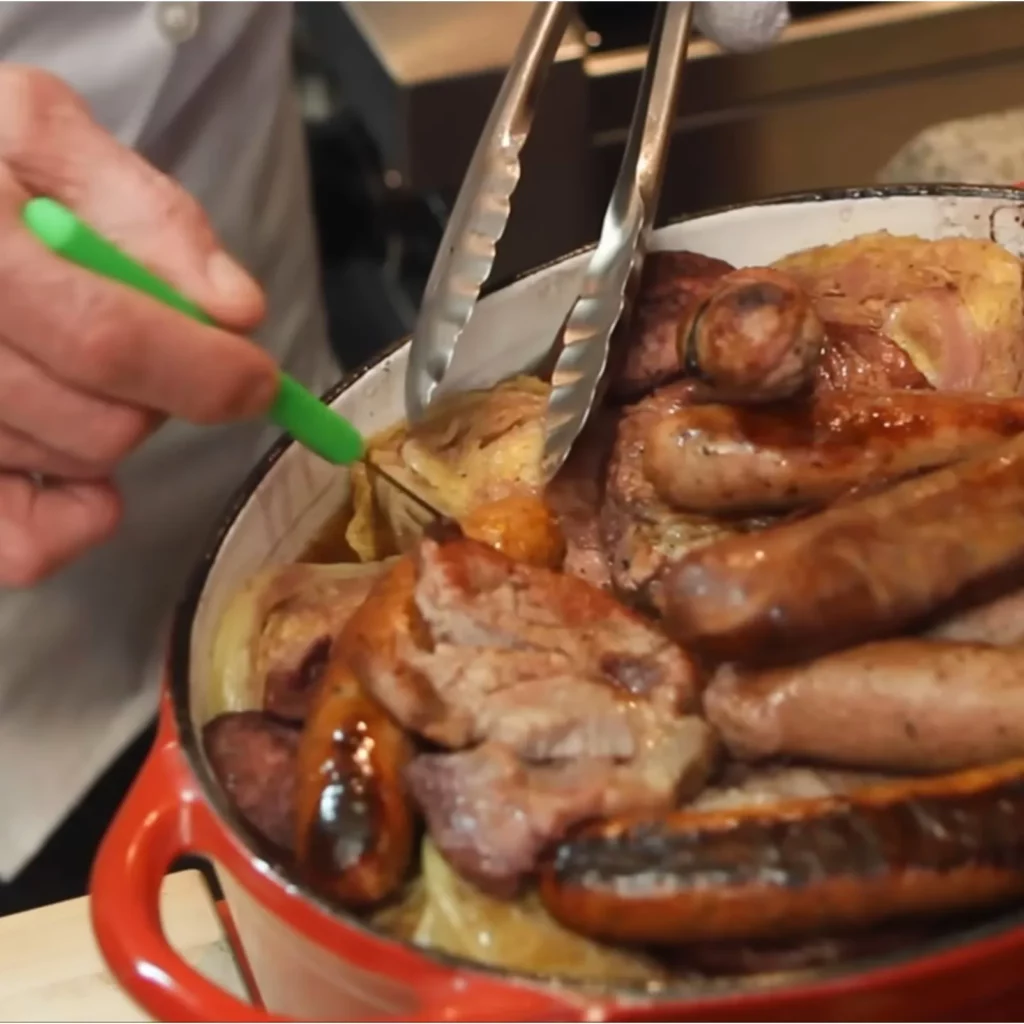
Pour in the broth. The liquid should come partway up the ingredients, not cover them completely. This is a braise, not a soup. Cover the pot.
7. Braise gently
Bake at 350°F for 30 minutes. Remove the lid, check the position of the pork shoulder, and gently push any pieces that are sitting too high back into the cabbage and broth. Cover again and bake for another 35 to 45 minutes.
By the end, the cabbage should be tender, the sausages heated through, and the pork shoulder easy to pierce with a knife. If the shoulder still feels firm, give it another 15 minutes.
This slower oven method is part of what makes the dish feel more old-fashioned and comforting, much like coq au vin or traditional blanquette de veau. The goal is tenderness and flavor, not speed.
8. Cook the potatoes separately
While the potée braises, halve any large potatoes and leave small ones whole. Toss them in a roasting pan with 2 to 3 tablespoons of the rendered pork fat from the pot. Roast at 400°F for 35 to 45 minutes, or until tender and golden.
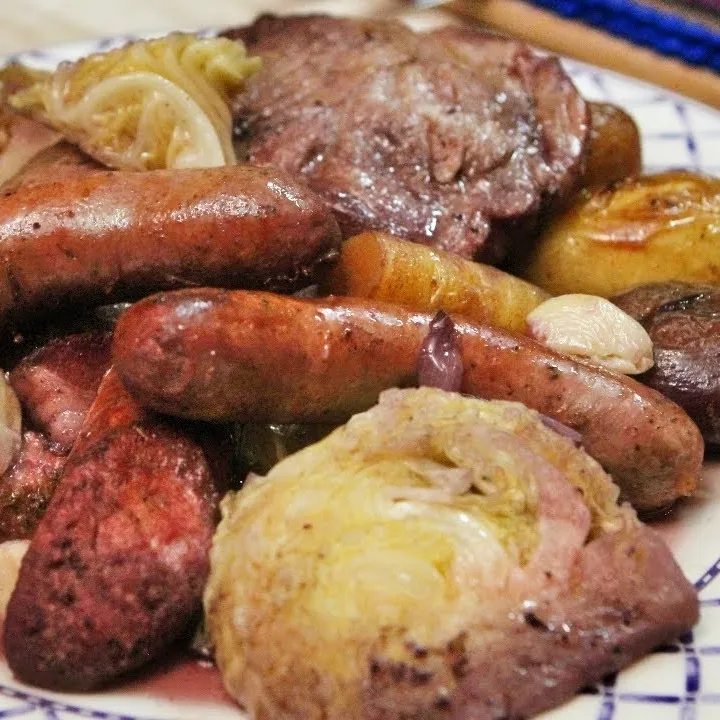
Cooking the potatoes separately keeps them from falling apart into the broth. It also gives you better texture. If you like potato sides that hold their shape, this is much better than dropping them directly into the stew.
9. Finish and serve
Remove the bouquet garni. Taste the broth before adding any salt. Most of the time, black pepper is all you will need.
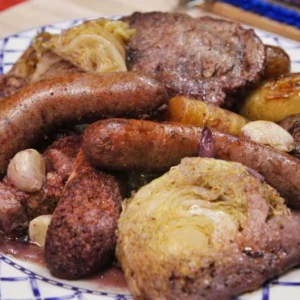
Transfer the cabbage to a large serving platter or shallow bowl. Arrange the pork and sausages over the top. Spoon over a little broth, along with some carrots and garlic. Serve the roasted potatoes on the side or tucked around the edge of the platter.
A spoonful of Dijon mustard at the table works very well here. It cuts through the richness and wakes everything up.
Substitutions
If you cannot find Toulouse sausage, use a mild fresh pork sausage.
If you cannot find Morteau sausage, use kielbasa or another good smoked sausage.
If smoked pork jowl is unavailable, extra slab bacon or smoked ham pieces are fine.
If you want a more classic flavor, skip the red cabbage and use all green cabbage.
If you prefer a lighter broth, use chicken stock instead of beef broth.
If you like pork dishes with a similar comforting feel but a different profile, oven pork roast,duck confit, or even a hearty homemade pork sausage recipe fit the same cold-weather mood.
FAQ
Is potée au chou supposed to be soupy?
No. It should have broth, but it is closer to a braised cabbage and pork dish than a soup. The liquid should support the ingredients, not drown them.
Can I make it ahead?
Yes. It reheats very well the next day. In fact, the flavor often improves after resting overnight.
Can I cook the potatoes in the pot?
You can, but they are more likely to overcook and break apart. Roasting them separately gives better texture and a cleaner final presentation.
Is red cabbage traditional in potée?
Not usually as the main cabbage. Green cabbage is more classic. A small amount of red cabbage can work, but too much changes the flavor and color too much.
What should I serve with it?
This dish is already a full meal, but a sharp salad can help balance the richness. A simple homemade vinaigrette on greens works well, and a crunchy cabbage side like traditional Quebec coleslaw can also make sense if you are serving a large table and want extra freshness.
What to serve with it
For a fuller French-style meal, you can start with something lighter like savoy cabbage soup or keep the table simple and finish with a classic dessert such as crème caramel or homemade tiramisu.
Other good ideas from the site:
- Parisian potatoes
- Homemade mashed potatoes
- Traditional homemade pot-au-feu
- Stovetop cassoulet with duck and sausage
- Classic boeuf bourguignon
- Coq au vin
- Traditional blanquette de veau
- Duck confit
- Savoy cabbage soup
- Crème caramel
French Pork and Cabbage Potée Recipe
Ingredients
- 1 small green cabbage cut into wedges
- 1/2 small red cabbage cut into wedges
- 12 oz smoked pork belly or thick slab bacon cut into large pieces
- 8 oz smoked pork jowl smoked ham pieces, or more slab bacon
- 1 lb pork shoulder cut into 2-inch chunks
- 12 oz Toulouse sausages or mild fresh pork sausages
- 8 oz smoked sausage sliced thick
- 6 oz chorizo cut into large pieces
- 1 large red onion cut into chunks
- 3 medium carrots cut into thick pieces
- 6 garlic cloves
- 1 bay leaf
- 4 sprigs thyme
- 4 cups low-sodium beef broth or light stock
- 2 1/2 lb potatoes
- Black pepper to taste
- Dijon mustard for serving, optional
Instructions
- Heat the smoked pork belly and smoked jowl in a large Dutch oven and let the fat render slowly.
- Remove half of the browned pork pieces and reserve.
- Add the onion, carrots, and garlic to the pot and cook until lightly softened.
- Tie the thyme and bay leaf together and add them to the pot.
- Layer in the green cabbage, red cabbage, reserved pork, pork shoulder, fresh sausages, smoked sausage, and chorizo.
- Pour in the broth so it comes partway up the ingredients.
- Cover and bake at 350°F for 30 minutes.
- Check the pot, press the pork down into the cabbage if needed, cover again, and bake 35 to 45 minutes more until tender.
- Meanwhile, toss the potatoes with a little rendered pork fat and roast at 400°F for 35 to 45 minutes until golden and tender.
- Remove the bouquet garni, taste, add black pepper if needed, and serve with the roasted potatoes and a little broth over the top.
Video
Notes
FAQ
Is potée au chou supposed to be soupy?
No. It should have broth, but it is closer to a braised cabbage and pork dish than a soup. The liquid should support the ingredients, not drown them.Can I make it ahead?
Yes. It reheats very well the next day. In fact, the flavor often improves after resting overnight.Can I cook the potatoes in the pot?
You can, but they are more likely to overcook and break apart. Roasting them separately gives better texture and a cleaner final presentation.Is red cabbage traditional in potée?
Not usually as the main cabbage. Green cabbage is more classic. A small amount of red cabbage can work, but too much changes the flavor and color too much.What should I serve with it?
This dish is already a full meal, but a sharp salad can help balance the richness. A simple homemade vinaigrette on greens works well, and a crunchy cabbage side like traditional Quebec coleslaw can also make sense if you are serving a large table and want extra freshness.🔗 Useful Links
🛒 Michel Dumas Shop : Explore our kitchen essentials, including aprons and knives.
🌐 Linktree : Access all our important links in one place.
📱 YouTube | Instagram | Facebook | TikTok : Follow us for the latest recipes and culinary tips.