The French Mother Sauces Explained Simply: A Practical Guide for Home Cooking
The French mother sauces are five classic base sauces that help organize many traditional sauces used in home cooking, bistro cooking, and restaurant-style dishes. They matter because once you understand the base, it becomes easier to build creamy sauces, tomato sauces, brown sauces, white sauces, and buttery sauces for chicken, beef, pasta, vegetables, potatoes, and fish.

French sauces can sound intimidating, but the idea is simple: start with a base technique, control the heat, adjust the texture, then season carefully. I prefer to explain them this way because home cooking becomes easier when you understand what the sauce is doing in the pan instead of just following a recipe blindly.
Why This Guide Matters
A good sauce can completely change a meal. A simple chicken breast becomes more comforting with a creamy mushroom sauce. A bowl of pasta tastes richer with a proper tomato sauce. Roasted meat feels more complete with a brown sauce or pan gravy. Even a basic vegetable or potato side dish can feel more generous when served with the right sauce.
The French mother sauces are useful because they give you a map. Instead of thinking of every sauce as a separate recipe, you start to see families of sauces.
A béchamel is the base for creamy white sauces, cheese sauces, gratins, lasagna-style dishes, and baked casseroles.
A velouté is a lighter stock-based sauce often used with chicken, fish, or vegetables.
An espagnole is a darker brown sauce used as a base for rich meat sauces.
A tomato sauce gives you a base for pasta, chicken, meatballs, baked dishes, and stews.
A hollandaise is a warm butter and egg yolk emulsion used for eggs, vegetables, fish, and brunch-style dishes.
Once you understand the five bases, you can cook with more confidence. You can also fix problems faster when a sauce gets too thick, too thin, too salty, or too bland.
Quick Answer
The five French mother sauces are:
- Béchamel: a white sauce made with milk and roux
- Velouté: a light stock-based sauce thickened with roux
- Espagnole: a brown sauce made with brown stock, aromatics, and tomato
- Tomato sauce: a tomato-based sauce cooked with aromatics and herbs
- Hollandaise: a warm butter and egg yolk sauce made by emulsion
For home cooking, béchamel, tomato sauce, and simple cream-style sauces are usually the easiest to use often. Velouté and espagnole are more traditional but very useful when you want to understand classic French-style sauces. Hollandaise is different because it depends on gentle heat and emulsification instead of a roux.

What Is a Mother Sauce?
A mother sauce is a base sauce that can be used to make many other sauces. Think of it like a foundation.
For example, if you know how to make béchamel, you can turn it into a cheese sauce, a mustard sauce, a creamier gratin sauce, or a base for a baked pasta dish. If you know how to make tomato sauce, you can adapt it for pasta, chicken parmigiana, meat cannelloni, pizza-style dishes, or baked casseroles.
The mother sauce system is often associated with French culinary tradition, but the real value for home cooking is practical. It helps you understand texture, thickening, seasoning, and balance.
The goal is not to make cooking complicated. The goal is to make sauces easier to understand.
The Five French Mother Sauces
1. Béchamel
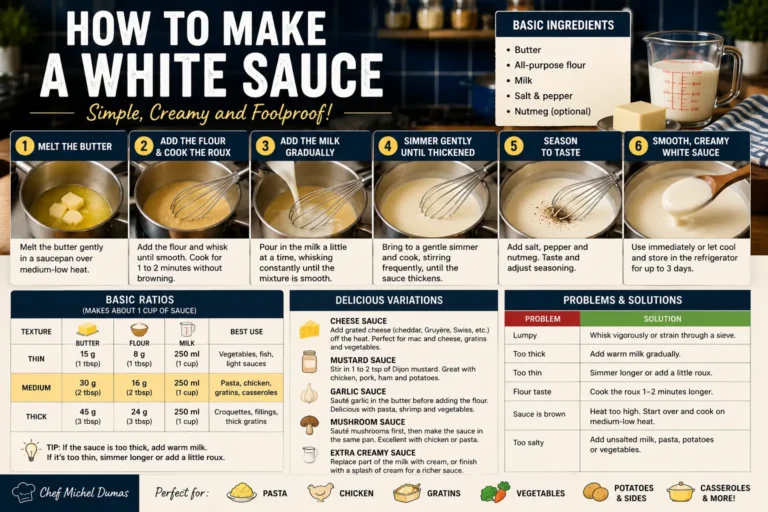
Béchamel is a white sauce made from butter, flour, and milk. The butter and flour are cooked together to make a roux, then milk is added gradually until the sauce becomes smooth and creamy.
Béchamel is mild, rich, and versatile. It is not usually meant to be bold on its own. It becomes more interesting when you add cheese, mustard, nutmeg, herbs, or pan drippings.
Béchamel is useful for:
- Gratins
- Lasagna-style dishes
- Creamy casseroles
- Croque monsieur
- Mac and cheese-style dishes
- Vegetable bakes
- Creamy white sauces
For home cooking, the mistake to avoid is adding the milk too quickly. If cold milk hits the roux all at once, the sauce can become lumpy. Add the milk gradually and whisk well after each addition.
If the sauce looks too thick, add a little more warm milk. If it tastes flat, add salt gradually and a small pinch of nutmeg if it fits the dish.
Béchamel-style thinking is useful in creamy pasta recipes too. For a practical example of how creamy textures work in a full meal, see this creamy chicken fettuccine Alfredo.
2. Velouté
Velouté is made with stock and roux. Instead of milk, you use chicken stock, fish stock, vegetable stock, or another light stock. The result is smoother and lighter than béchamel, but still thick enough to coat food.
Velouté is especially useful with chicken, fish, seafood, and vegetables. It is a good base when you want a sauce that is savory but not too heavy.
Velouté is useful for:
- Chicken sauces
- Fish sauces
- Turkey sauces
- Vegetable sauces
- Light gravy-style sauces
- Creamy sauces finished with a little cream
In practice, the result depends on the quality of the stock. If the stock is bland, the sauce will need more help from seasoning, herbs, aromatics, or a small splash of cream. If the stock is salty, season carefully at the end instead of at the beginning.
Velouté is also a good way to understand why stock matters in one-pot meals. Recipes like one-pot creamy beef and tomato pasta show how liquid, starch, and simmering work together to create a sauce directly in the pan.
3. Espagnole
Espagnole is a brown sauce made with brown stock, browned aromatics, tomato product, and a roux. It is deeper, darker, and more intense than béchamel or velouté.
Espagnole is not the sauce most people make every Tuesday night, but understanding it helps you understand brown sauces, pan sauces, gravies, and reductions. It is the base for demi-glace and many classic meat sauces.
Espagnole is useful for:
- Beef sauces
- Steak sauces
- Roasts
- Braised meat dishes
- Rich gravies
- Classic brown sauce preparations
The important idea is browning. The flavor comes from caramelization, roasted bones or stock, browned vegetables, and slow reduction. If the ingredients are pale, the sauce will taste weaker. If they are burned, the sauce can taste bitter.
For home cooking, you do not always need to make a full espagnole. A simpler pan sauce can use the same logic: brown the meat, keep the flavorful bits in the pan, add aromatics, deglaze, reduce, then finish the sauce. That same bistro-style thinking appears in dishes like creamy pepper chicken with cognac, shallots, and cream.
4. Tomato Sauce
Tomato sauce is one of the most familiar mother sauces for home cooks. It starts with tomatoes and often includes onion, garlic, herbs, olive oil, stock, or other aromatics depending on the style.
A good tomato sauce should taste balanced. It should not be watery, harsh, overly acidic, or too sweet. The best version depends on the tomatoes, cooking time, and seasoning.
Tomato sauce is useful for:
- Pasta
- Meatballs
- Chicken parmigiana
- Baked pasta
- Cannelloni
- Pizza-style dishes
- Vegetable stews
- Braised chicken dishes
For a simple, fresh version, start with ripe tomatoes, garlic, onion, herbs, and enough time for the sauce to soften and concentrate. This homemade tomato sauce with fresh tomatoes is a good example of a tomato base that can support many dishes.
Tomato sauce also adapts well to pasta. A light tomato sauce can stay bright and simple, like spaghetti al pomodoro, while a richer tomato sauce can become creamy, baked, or meaty, like meat cannelloni with homemade tomato sauce.
The mistake to avoid is rushing the sauce before the tomatoes have softened. If the sauce tastes sharp, simmer it longer and adjust carefully. A small amount of sugar can help if the tomatoes are very acidic, but it should not make the sauce taste sweet.
5. Hollandaise
Hollandaise is different from the other mother sauces because it is not thickened with roux. It is an emulsion made with egg yolks, butter, and acid, usually lemon juice or vinegar.
Hollandaise is rich, warm, and buttery. It works well with eggs, asparagus, fish, vegetables, and brunch-style dishes.
Hollandaise is useful for:
- Eggs Benedict
- Asparagus
- Fish
- Steamed vegetables
- Brunch plates
- Lightly poached or roasted ingredients
The key is gentle heat. If the sauce gets too hot, the eggs can scramble or the sauce can split. If the butter is added too fast, the emulsion can break. For home cooking, the easiest method is to work slowly and keep the heat controlled.
If the texture feels too thick, a few drops of warm water can loosen it. If it starts to separate, whisking in a small splash of warm water can sometimes bring it back together.
French Mother Sauces Comparison Chart
| Mother Sauce | Main Base | Thickener | Flavor Profile | Best Uses |
| Béchamel | Milk | Roux | Creamy, mild, rich | Gratins, cheese sauces, casseroles, baked dishes |
| Velouté | Light stock | Roux | Savory, smooth, lighter than béchamel | Chicken, fish, vegetables, light gravies |
| Espagnole | Brown stock | Roux and reduction | Deep, roasted, rich | Beef, roasts, brown sauces, demi-glace-style sauces |
| Tomato Sauce | Tomatoes | Reduction, sometimes roux | Bright, savory, slightly acidic | Pasta, chicken, baked dishes, meatballs |
| Hollandaise | Butter and egg yolks | Emulsion | Buttery, rich, tangy | Eggs, asparagus, fish, brunch dishes |
How to Choose the Right Sauce
The right sauce depends on the food you are serving and the texture you want.
For chicken
Chicken works with many sauce families. Creamy sauces, tomato sauces, velouté-style sauces, mustard sauces, and pan sauces all work well.
For a creamy direction, chicken supreme with mushroom cream sauce is a strong example of how a simple chicken dish becomes more elegant with a rich sauce. For a more everyday option, mustard chicken shows how mustard and cream can create a fast French-inspired sauce.
For more ideas, the creamy chicken recipes collection is a natural place to explore sauce-based chicken meals.
For pasta
Pasta needs a sauce that clings well. Tomato sauces, creamy sauces, cheese sauces, and butter-based sauces all work, but the shape of the pasta matters.
Long pasta works well with smooth sauces. Short pasta holds chunkier sauces, meat sauces, and creamy sauces. If you want a full collection of pasta ideas, start with pasta recipes for easy weeknight dinners or the ultimate guide to homemade pasta recipes.
For quick pasta nights, 30-minute pasta dinners is useful because many fast pasta recipes depend on sauce timing, pasta water, and finishing the sauce correctly.
For beef
Beef can handle stronger sauces. Brown sauces, pepper sauces, pan sauces, tomato-based meat sauces, and cream sauces all work depending on the cut and cooking method.
For ground beef and pasta, a sauce can be built directly in the pot, like in one-pot creamy beef and tomato pasta. For pan-seared beef or bistro-style dishes, the key is usually browning, deglazing, and reducing.
For potatoes and vegetables
Potatoes and vegetables often need seasoning, fat, and texture. A béchamel or cheese sauce works well for gratins. A butter sauce works well with steamed vegetables. A tomato sauce can support vegetable stews. A pan sauce can turn roasted potatoes into a more complete side.
When using a rich sauce, keep the side dish simple. If the sauce is already creamy, salty, or buttery, the potatoes or vegetables should not be overloaded.
Practical Sauce Fixing Chart
| Problem | Likely Cause | Simple Fix |
| Sauce is too thick | Too much reduction or too much roux | Whisk in warm milk, stock, water, or cream a little at a time |
| Sauce is too thin | Not enough reduction or thickener | Simmer longer or add a small amount of roux, beurre manié, or cornstarch slurry depending on the sauce |
| Sauce tastes flat | Not enough salt, acid, herbs, or aromatics | Add salt gradually, then adjust with lemon, vinegar, herbs, garlic, or pepper |
| Sauce tastes too salty | Too much salt or salty stock | Add unsalted liquid, cream, potatoes, pasta, or more unsalted base ingredients |
| Sauce tastes too acidic | Tomatoes, wine, or vinegar are too strong | Simmer longer, add a small amount of fat, or balance with a tiny pinch of sugar if needed |
| Sauce split | Heat too high or fat added too quickly | Lower the heat and whisk in a small splash of warm water |
| Sauce is lumpy | Liquid added too quickly to roux | Whisk vigorously, strain if needed, then add liquid more gradually next time |
Common Mistakes to Avoid
Adding liquid too quickly to a roux
When making béchamel or velouté, add the liquid gradually. Whisk after each addition until the mixture is smooth. This helps prevent lumps.
Boiling cream sauces too hard
Cream sauces can reduce and thicken, but aggressive boiling can make them heavy, greasy, or separated. Simmer gently and stir often.
Not tasting at the end
Sauces change as they reduce. A sauce that tasted balanced at the beginning may become too salty later. Season lightly early, then adjust at the end.
Forgetting acid
Many rich sauces need a little acidity to feel balanced. Lemon juice, vinegar, wine, tomato, or mustard can brighten a sauce without making it sour.
Using the wrong heat for hollandaise
Hollandaise needs gentle heat. Too much heat can scramble the yolks or break the emulsion.
Making every sauce too thick
A sauce should coat the food, not bury it. For pasta, the sauce should cling. For meat, it should spoon over naturally. For vegetables, it should complement the texture instead of hiding it.
FAQ
What are the five French mother sauces?
The five French mother sauces are béchamel, velouté, espagnole, tomato sauce, and hollandaise. They are base sauces that can be adapted into many other sauces.
Which French mother sauce is easiest for beginners?
Béchamel is usually the easiest because it uses simple ingredients: butter, flour, and milk. Tomato sauce is also very approachable for home cooks.
Is Alfredo sauce a mother sauce?
No. Alfredo is not one of the five French mother sauces. It is a creamy pasta sauce, but it can still be understood through the same principles of fat, liquid, cheese, heat, and texture.
Is tomato sauce really a French mother sauce?
Yes, tomato sauce is part of the classic mother sauce system. In home cooking, it is also one of the most useful because it works with pasta, chicken, meat, vegetables, and baked dishes.
What is the difference between béchamel and velouté?
Béchamel is made with milk and roux. Velouté is made with stock and roux. Béchamel is creamier and more neutral, while velouté is more savory and depends heavily on the flavor of the stock.
Why does my sauce get lumpy?
Lumps usually happen when liquid is added too quickly to a roux or when the sauce is not whisked enough. Add liquid gradually and whisk until smooth before adding more.
How do I make a sauce thicker?
You can simmer it longer, add a roux, use beurre manié, add a cornstarch slurry, or finish with cream depending on the sauce. The best method depends on the sauce base.
How do I make a sauce taste better?
Start by checking salt. Then look at balance: acid, fat, herbs, pepper, garlic, onion, stock quality, and cooking time. A sauce often improves when it is reduced gently and seasoned at the end.
Final Thoughts
The French mother sauces are not just old culinary theory. They are a useful way to understand how sauces work in real home cooking. Once you know the difference between a milk-based sauce, a stock-based sauce, a brown sauce, a tomato sauce, and a butter emulsion, it becomes much easier to cook without stress.
Start with the sauces you will use most often. For many home cooks, that means béchamel, tomato sauce, and creamy pan sauces. Then build from there with velouté-style sauces, brown sauces, and hollandaise when the meal calls for something more classic.
For more practical cooking inspiration, explore easy 30-minute chicken dinners, pasta recipes, and homemade tomato sauce with fresh tomatoes.
Useful Links
🛒 Michel Dumas Shop : Explore our kitchen essentials, including aprons and cooking tools.
🌐 Linktree : Access all our important links in one place.
📱 YouTube | Instagram | Facebook | TikTok : Follow us for the latest recipes and culinary tips.