Complete Guide to Chicken for Home Cooking: Cuts, Cooking Methods, Marinades and Tips
Chicken is one of the most useful ingredients for home cooking because it works in quick dinners, creamy sauces, oven-baked meals, air fryer recipes, BBQ dishes, pasta, soups, casseroles and classic comfort food. Understanding the main chicken cuts, cooking methods, safe temperatures and texture differences makes it much easier to choose the right chicken for the right recipe.
This guide explains how to cook chicken better at home, from boneless chicken breasts and thighs to drumsticks, wings, whole chicken and ground chicken. The goal is simple: juicy chicken, better flavor, safer cooking and fewer dry or bland results.
Why This Guide Matters
Chicken is popular because it is versatile, affordable and easy to adapt. It can be crispy, creamy, grilled, roasted, braised, marinated, shredded, breaded or simmered in sauce.
But chicken can also be easy to overcook. A dry chicken breast, rubbery thigh, bland drumstick or soggy breaded cutlet usually comes from the same problems: the wrong cut for the recipe, not enough seasoning, too much heat, not enough resting time, or no temperature check.
I prefer to think of chicken by cut and cooking method. A chicken breast is lean and cooks quickly, so it needs careful timing. Chicken thighs and drumsticks are more forgiving because they contain more fat and connective tissue. Wings need enough heat to crisp the skin. Whole chicken needs more planning because the breast and legs cook differently.
For a broad recipe starting point, explore the full chicken recipes hub, which organizes chicken dinners by style, including crispy chicken, creamy chicken, baked chicken, air fryer chicken and weeknight meals.

Quick Answer
For easy home cooking, choose the chicken cut based on the result you want:
- Chicken breast: best for quick skillet meals, cutlets, creamy sauces and pasta.
- Chicken thighs: best for juicy oven meals, marinades, grilling, braising and air fryer recipes.
- Drumsticks: best for budget-friendly baking, BBQ, air fryer and family dinners.
- Wings: best for crispy appetizers, game day food and high-heat cooking.
- Whole chicken: best for roasting, family meals and leftovers.
- Ground chicken: best for meatballs, burgers, dumplings, sauces and quick fillings.
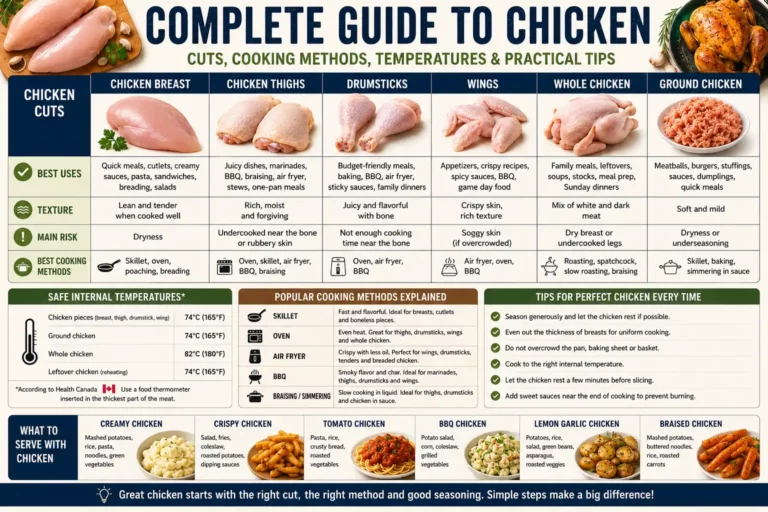
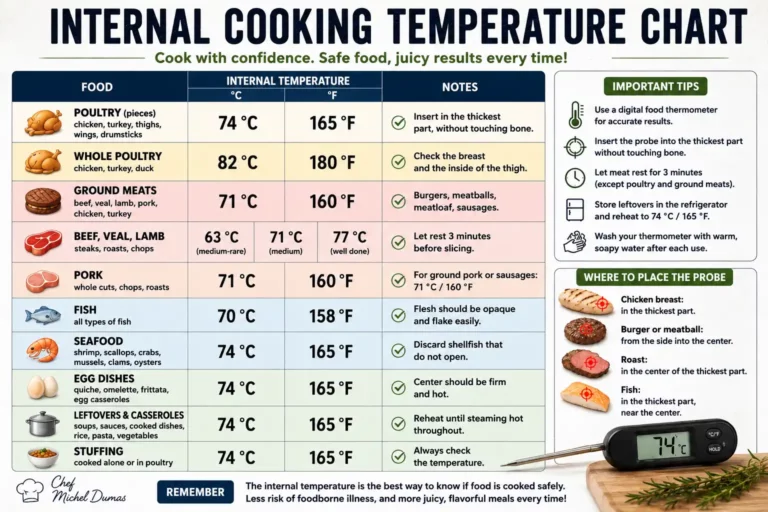
For food safety, chicken pieces should reach 165°F or 74°C internally, while Canadian guidance lists whole chicken at 180°F or 82°C. Use a clean food thermometer in the thickest part of the meat instead of relying only on color or juices. (Canada)
Chicken Cuts Explained
Chicken Breast
Chicken breast is lean, mild and quick to cook. It works well when you want a clean texture and a faster meal.
Best uses:
- Skillet chicken
- Chicken cutlets
- Creamy chicken sauces
- Chicken pasta
- Chicken sandwiches
- Breaded chicken
- Stuffed chicken breast
- Sliced chicken for salads or wraps
The challenge with chicken breast is dryness. Because it is lean, it can go from juicy to dry quickly. The best method is to even out the thickness, season well, cook over controlled heat, and rest briefly before slicing.
Chicken breast works especially well in sauce-based recipes because the sauce adds moisture and flavor. Good examples include chicken supreme with mushroom cream sauce, mustard chicken and creamy pepper chicken with cognac, shallots and cream.
Chicken Thighs
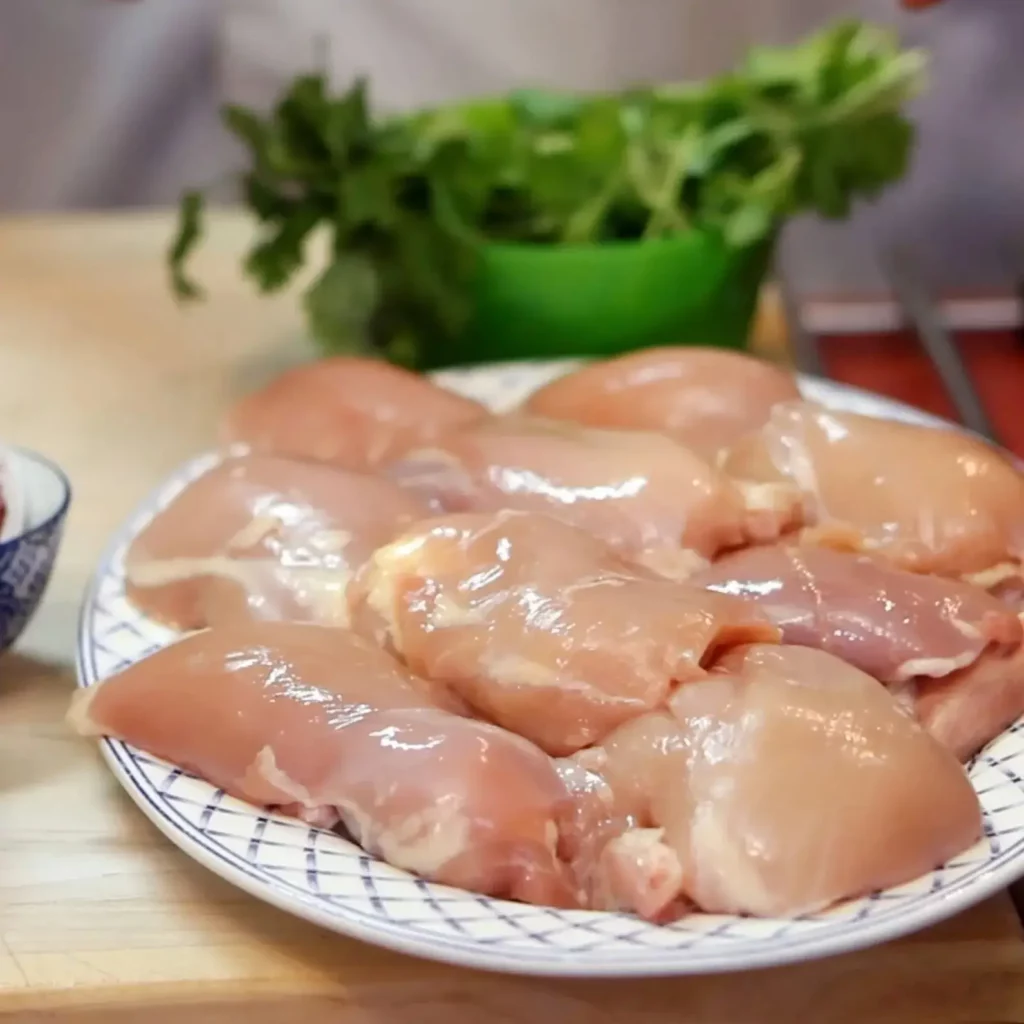
Chicken thighs are more forgiving than breasts. They have more fat and connective tissue, which makes them juicy and flavorful.
Best uses:
- Oven-baked chicken
- One-pan meals
- BBQ chicken
- Braised chicken
- Air fryer chicken
- Creamy chicken
- Chicken stews
- Marinades
Boneless thighs cook faster and are useful for weeknight meals. Bone-in thighs take longer but usually give deeper flavor and better texture. Skin-on thighs can become crisp when roasted or pan-seared properly.
Chicken thighs are a strong choice for recipes where the chicken cooks in sauce or marinade. They also hold up well in dishes like one-pan lemon garlic chicken and potatoes or sticky soy maple chicken.
Chicken Drumsticks
Drumsticks are affordable, flavorful and great for family meals. They are especially good for oven baking, air frying, BBQ and sticky sauces.
Best uses:
- Baked chicken drumsticks
- BBQ chicken
- Air fryer drumsticks
- Honey garlic chicken
- Maple mustard chicken
- Family-style platters
- Budget-friendly dinners
Drumsticks need enough time for the meat to become tender near the bone. They can handle stronger seasoning, marinades and glazes.
For best texture, do not rush them. A drumstick that reaches the safe minimum temperature is safe, but it may taste better when cooked a little longer until the meat feels tender and the skin has better color.

Chicken Wings
Chicken wings are small but rich in skin, bone and connective tissue. They are perfect for crisp textures and bold sauces.
Best uses:
- Crispy wings
- Air fryer wings
- Oven wings
- BBQ wings
- Spicy sauces
- Game day platters
- Appetizers
The mistake to avoid is crowding the pan or basket. Wings need airflow and space to crisp. If they are packed too tightly, they steam instead of browning.
Wings work best with high heat, dry surfaces and a sauce added near the end or after cooking.
Whole Chicken
A whole chicken is useful when you want a family meal and leftovers. It gives you breast meat, legs, thighs, wings and bones for stock.
Best uses:
- Roast chicken
- Sunday dinner
- Meal prep
- Chicken soup
- Leftover sandwiches
- Chicken salad
- Stock or broth
The challenge with whole chicken is that the breast and legs cook differently. The breast is lean and can dry out while the legs need more time. Resting matters because the juices settle and the texture improves.
Whole chicken is also useful for stretching one meal into several: roast chicken one night, shredded chicken the next day, then broth or soup from the bones.
Ground Chicken
Ground chicken is mild and cooks quickly. It absorbs seasoning well but can dry out if it is too lean or overcooked.
Best uses:
- Chicken meatballs
- Chicken burgers
- Lettuce wraps
- Dumpling filling
- Pasta sauces
- Stuffed vegetables
- Quick skillet meals
Because ground chicken is often lean, it benefits from moisture and seasoning. Add aromatics, sauce, grated vegetables, breadcrumbs, egg, or another binder depending on the recipe.
Ground chicken should be cooked thoroughly and checked carefully because ground poultry has more surface area mixed throughout the meat.
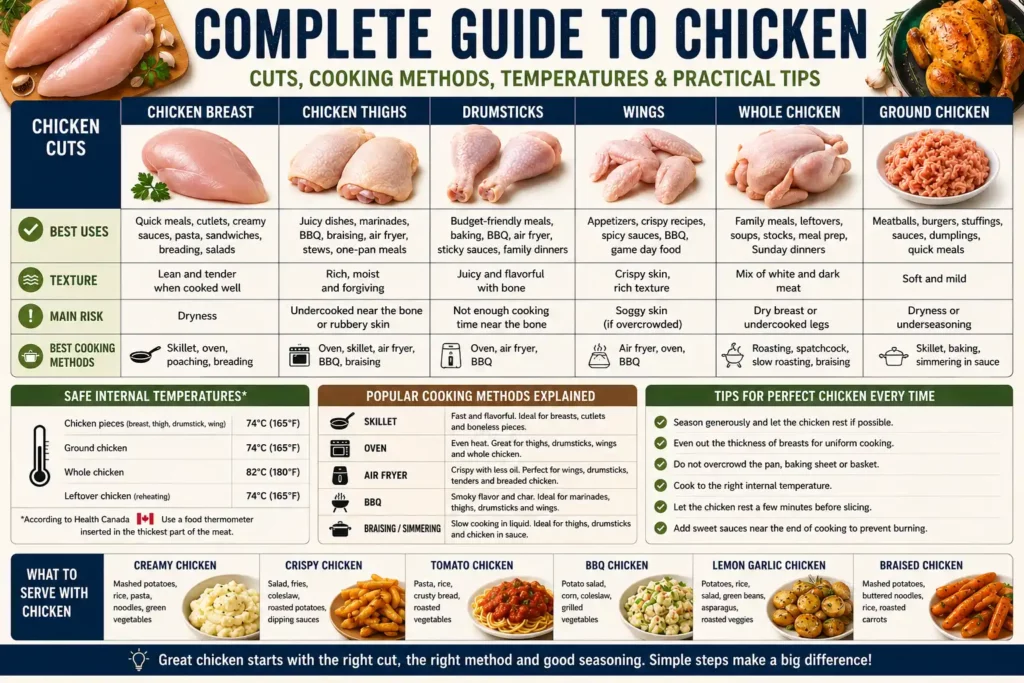
Chicken Cuts Comparison Chart
| Chicken Cut | Best For | Texture | Main Risk | Best Cooking Methods |
| Breast | Quick dinners, cutlets, creamy sauces, pasta | Lean and tender when cooked carefully | Dryness | Skillet, oven, poaching, breading |
| Thighs | Juicy dinners, marinades, braises, BBQ | Rich, moist, forgiving | Undercooking near bone or rubbery skin | Oven, skillet, air fryer, BBQ, braising |
| Drumsticks | Budget meals, family dinners, sticky sauces | Juicy, flavorful, bone-in | Not enough cooking time | Oven, air fryer, BBQ |
| Wings | Crispy appetizers and bold sauces | Crisp skin, rich texture | Soggy skin | Air fryer, oven, BBQ |
| Whole chicken | Roast dinners and leftovers | Mixed white and dark meat | Dry breast or underdone legs | Roasting, spatchcocking, slow roasting |
| Ground chicken | Meatballs, burgers, fillings | Soft and mild | Dryness or underseasoning | Skillet, baking, simmering in sauce |
Best Cooking Methods for Chicken
Skillet Cooking
Skillet cooking is one of the best methods for quick chicken dinners. It works well for chicken breasts, cutlets, boneless thighs and smaller pieces.
Tips for better skillet chicken:
- Pat the chicken dry before cooking.
- Use even thickness when possible.
- Season before cooking.
- Preheat the pan.
- Avoid moving the chicken too much at first.
- Add sauce after browning.
- Rest briefly before slicing.
Skillet chicken works especially well when the browned bits in the pan become part of the sauce. That is why recipes like honey garlic chicken skillet and creamy mustard chicken with mushrooms have so much flavor without needing a long cooking time.
Oven Baking
Oven baking is reliable for chicken thighs, drumsticks, wings, whole chicken and one-pan meals. It gives steady heat and works well when you want a hands-off dinner.
Tips for baked chicken:
- Use a pan large enough to avoid crowding.
- Keep skin-on pieces uncovered for better browning.
- Cut vegetables into sizes that match the cooking time.
- Use a thermometer for accuracy.
- Rest the chicken before serving.
Oven chicken is especially useful for complete meals like one-pan lemon garlic chicken and potatoes, where the chicken and potatoes cook together and share flavor.
Air Fryer Cooking
The air fryer is useful for crispy chicken with less mess than deep frying. It works well for tenders, wings, thighs, drumsticks and breaded chicken.
Tips for air fryer chicken:
- Do not overcrowd the basket.
- Pat the chicken dry.
- Use a light coating of oil if needed.
- Flip or shake halfway through when useful.
- Check the internal temperature.
- Let breaded chicken rest briefly before serving.
Air fryer chicken is best when airflow reaches the surface. For crisp ideas, see air fryer chicken tenders and crispy air fryer chicken parmesan.
Grilling and BBQ
Grilling gives chicken strong flavor, color and smoky edges. It works best with thighs, drumsticks, wings, skewers and marinated chicken pieces.
Tips for BBQ chicken:
- Use medium heat for thicker pieces.
- Avoid sugary sauces too early because they can burn.
- Move pieces between direct and indirect heat as needed.
- Check doneness near the bone.
- Rest before serving.
Chicken marinades work especially well for grilling because they bring seasoning to the surface and help build flavor. For ideas, use 5 easy chicken marinades.
Braising and Simmering
Braising is best for thighs, drumsticks, whole legs and classic comfort dishes. The chicken cooks gently in liquid or sauce until tender.
Best uses:
- Coq au vin
- Chicken stew
- Tomato braised chicken
- Creamy chicken
- Chicken with wine sauce
- Chicken with vegetables
This is where dark meat shines. Thighs and drumsticks stay juicy and absorb flavor from the sauce. A classic example is coq au vin with red wine braised chicken.
Chicken Internal Temperature Guide
Chicken should be cooked to a safe internal temperature. Use a thermometer placed in the thickest part of the meat, away from bone when possible. Health Canada lists poultry pieces at 165°F or 74°C and whole poultry at 180°F or 82°C. (Canada)
| Chicken Type | Safe Internal Temperature | Practical Texture Note |
| Chicken breast | 165°F / 74°C | Best when not overcooked |
| Chicken thighs | 165°F / 74°C minimum | Often more tender when cooked a little longer |
| Drumsticks | 165°F / 74°C minimum | Usually better when tender near the bone |
| Wings | 165°F / 74°C minimum | Need enough heat for crisp skin |
| Ground chicken | 165°F / 74°C | Cook thoroughly |
| Whole chicken | 180°F / 82°C according to Health Canada guidance | Rest before carving |
How to Keep Chicken Juicy
Juicy chicken comes from a few simple habits.
Choose the Right Cut
If you want the most forgiving option, choose thighs or drumsticks. They handle heat better and stay moist longer.
If you use chicken breast, cook it carefully and avoid high heat for too long.
Season Early Enough
Salt needs a little time to work. Even 15 to 30 minutes can help the chicken taste better. For a stronger flavor, use a marinade.
Even Out the Thickness
Chicken breasts often have one thick end and one thin end. If the thickness is uneven, the thin side dries out before the thick side is cooked.
Use thinner cutlets when you want fast cooking. This is useful for quick skillet meals and creamy sauces.
Do Not Skip Resting
Resting lets juices settle. You do not need a long rest for small pieces, but even a few minutes helps.
Use Sauce Wisely
Sauce does not fix badly overcooked chicken completely, but it helps the dish feel more balanced. Cream sauces, tomato sauces, pan sauces, mustard sauces and glazes all add moisture and flavor.
For more sauce-based ideas, explore creamy chicken recipes and easy 30-minute chicken dinners.
Chicken Marinades and Seasoning
A good chicken marinade usually includes:
- Salt or a salty ingredient
- Fat, such as oil
- Acid, such as lemon juice or vinegar
- Aromatics, such as garlic, onion, shallot or herbs
- Optional sweetness, such as honey or maple syrup
- Optional spice, such as chili flakes, paprika or pepper
The goal is not to drown the chicken. The goal is to season the surface and create better browning, aroma and flavor.
For Canadian-style flavor, maple works very well with mustard, soy sauce, garlic, lemon and black pepper. For a stronger savory direction, use mustard, herbs, shallots, garlic, wine, broth or cream.
If using sugary marinades, avoid very high direct heat for too long because sugar can burn. That matters with honey, maple syrup, brown sugar and sweet sauces.
For practical ideas, start with 5 easy chicken marinades or a sweet-savory recipe like sticky soy maple chicken.
What to Serve With Chicken
Chicken works with almost everything, but the best side depends on the cooking style.
| Chicken Style | Best Sides |
| Creamy chicken | Mashed potatoes, rice, pasta, egg noodles, green vegetables |
| Crispy chicken | Salad, fries, coleslaw, roasted potatoes, dipping sauces |
| Tomato chicken | Pasta, rice, crusty bread, roasted vegetables |
| BBQ chicken | Potato salad, corn, coleslaw, grilled vegetables |
| Braised chicken | Mashed potatoes, buttered noodles, rice, roasted carrots |
| Air fryer chicken | Fries, salad, roasted vegetables, simple dips |
| Lemon garlic chicken | Potatoes, rice, salad, asparagus, green beans |
For a comforting plate, chicken with potatoes is one of the easiest combinations. A recipe like one-pan lemon garlic chicken and potatoes shows how the side dish can cook with the chicken and absorb flavor.
Storage, Reheating and Leftovers
Cooked chicken can be useful for meal prep, sandwiches, wraps, soups, rice bowls, pasta and salads. Store it properly and reheat it gently.
| Chicken Form | Storage Tip | Best Reheating Method |
| Cooked chicken breast | Airtight container in refrigerator | Low oven, covered skillet, or gentle microwave |
| Cooked thighs or drumsticks | Keep covered to prevent drying | Oven or air fryer for skin-on pieces |
| Shredded chicken | Store with a little sauce or broth if possible | Skillet with sauce or covered microwave |
| Crispy chicken | Store uncovered briefly before sealing once cool | Air fryer or oven for better texture |
| Chicken in sauce | Store chicken and sauce together | Gentle stovetop reheating |
| Leftover roast chicken | Remove meat from bones if meal prepping | Soup, sandwiches, pasta, rice dishes |
For safety, refrigerate leftovers promptly and reheat thoroughly. Health Canada lists leftovers at 165°F or 74°C for reheating. (Canada)
Common Mistakes to Avoid
Cooking Every Cut the Same Way
Chicken breast and chicken thigh do not behave the same way. Breast is lean and quick. Thigh is richer and more forgiving. Choose the method according to the cut.
Using Heat That Is Too High
High heat can brown chicken quickly, but it can also dry out the outside before the inside is cooked. Use controlled heat, especially with thick chicken breasts and bone-in pieces.
Not Drying the Surface
Moisture on the surface makes browning harder. Pat chicken dry before searing, roasting, air frying or breading.
Crowding the Pan
If the pan is overcrowded, chicken steams instead of browning. Cook in batches if needed.
Adding Sugary Sauce Too Early
Honey, maple syrup, brown sugar and sweet sauces can burn. Add sweet glazes near the end or cook over more moderate heat.
Skipping the Thermometer
Color and juices are not always reliable. A thermometer gives a better answer, especially for thick pieces, bone-in chicken and whole chicken.
Slicing Immediately
If you slice chicken breast right away, juices can run out. Rest it briefly before cutting.
FAQ
What is the best chicken cut for easy weeknight dinners?
Boneless chicken breasts and boneless thighs are the easiest for quick weeknight dinners. Breasts cook fast, while thighs are more forgiving and stay juicy.
What is the best chicken cut for creamy sauces?
Chicken breast works well for elegant creamy sauces, while thighs are better when you want a richer and more forgiving texture. Both can work if cooked properly.
What is the safest internal temperature for chicken?
Chicken pieces and ground chicken should reach 165°F or 74°C. Health Canada lists whole chicken at 180°F or 82°C. Use a thermometer in the thickest part of the meat. (Canada)
Why is my chicken dry?
Chicken usually becomes dry because it is overcooked, cooked over heat that is too high, sliced too soon, or prepared without enough seasoning or sauce. Chicken breast is the most likely cut to dry out.
Are chicken thighs better than chicken breasts?
It depends on the recipe. Chicken thighs are juicier and more forgiving. Chicken breasts are leaner and better for quick cutlets, creamy sauces, sandwiches and pasta.
Should I marinate chicken before cooking?
Marinating is helpful when you want stronger flavor, better browning or a specific style like BBQ, lemon garlic, mustard, soy maple or herb chicken. Even a short marinade can improve flavor.
Can I cook chicken from frozen?
Some methods allow frozen chicken, but cooking time changes and temperature checks become more important. For best texture and even cooking, thaw chicken safely before cooking when possible.
What is the best way to reheat chicken without drying it out?
Use gentle heat and add moisture when possible. Reheat sauced chicken in the sauce. For plain chicken breast, cover it and add a small splash of broth or water. For crispy chicken, use the oven or air fryer.
Final Thoughts
Chicken becomes easier to cook when you match the cut to the method. Breast is best for quick, careful cooking. Thighs and drumsticks are better for juicy, forgiving meals. Wings need airflow and heat for crispness. Whole chicken is best when you want a full meal with leftovers. Ground chicken needs seasoning and moisture.
The most important habits are simple: season well, choose the right method, avoid overcrowding, cook to a safe internal temperature, and rest the chicken before serving.
For more recipe ideas, start with the full chicken recipes hub, easy 30-minute chicken dinners, creamy chicken recipes and 5 easy chicken marinades.
Useful Links
🛒 Michel Dumas Shop : Explore our kitchen essentials, including aprons and cooking tools.
🌐 Linktree : Access all our important links in one place.
📱 YouTube | Instagram | Facebook | TikTok : Follow us for the latest recipes and culinary tips.