Chicken Internal Temperature Guide: Safe Cooking Temps for Juicy Chicken
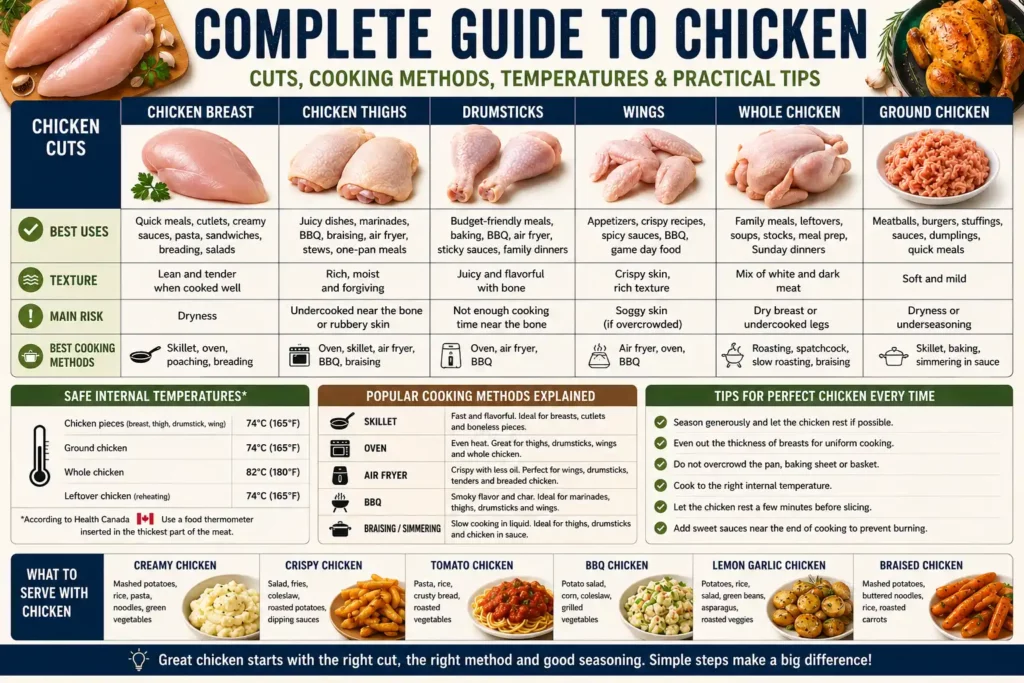
Chicken internal temperature is the most reliable way to know when chicken is fully cooked and safe to eat. For home cooking in Canada and the United States, the key number to remember is 165°F / 74°C for chicken and other poultry, checked with a food thermometer in the thickest part of the meat. Official food safety guidance from the USDA and FoodSafety.gov lists poultry at 165°F / 74°C, and USDA FSIS notes that a thermometer is the accurate way to confirm chicken has reached a safe minimum internal temperature. (Food Safety and Inspection Service)
This guide explains how to check chicken temperature properly, where to insert the thermometer, why white meat and dark meat feel different, and how to avoid dry chicken while still cooking safely.
Why This Guide Matters
Chicken is one of the most common proteins for weeknight dinners, meal prep, air fryer recipes, roasted dinners, creamy sauces, grilled meals, and family-style casseroles. It is also one of the ingredients where guessing can lead to problems.
The outside can look golden while the center is still undercooked. A chicken breast can look white inside but still need a proper temperature check. A chicken thigh can be safe at 165°F / 74°C, but taste better when cooked a little higher because dark meat has more connective tissue and fat.
I prefer to use a thermometer because it removes the guessing. Instead of cutting into the chicken and losing juices, you can check the thickest part, confirm the temperature, rest the meat, and serve it with confidence.
This matters in recipes like juicy air fryer chicken breast, air fryer chicken thighs, oven roasted chicken with vegetables and pan sauce, and one-pan lemon garlic chicken and potatoes.
Quick Answer
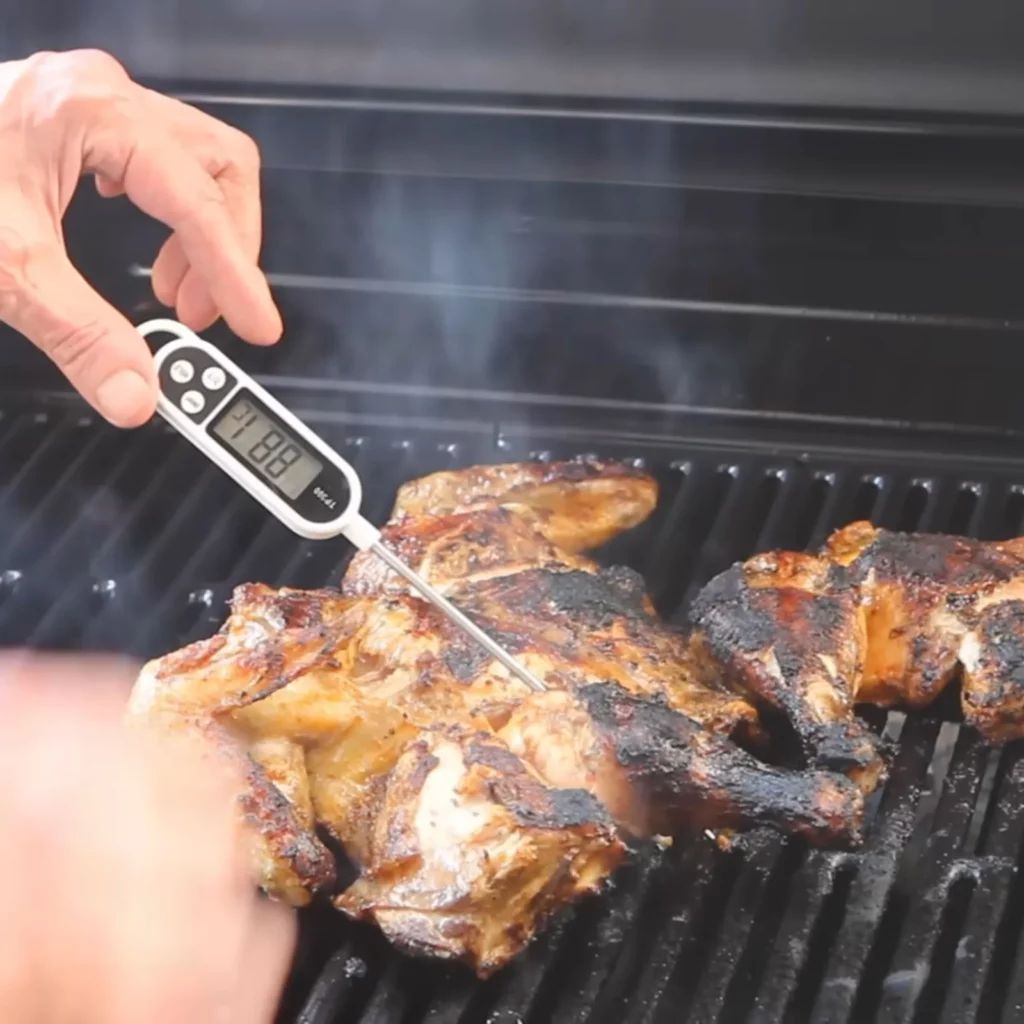
Chicken is safely cooked when it reaches 165°F / 74°C in the thickest part. Use an instant-read thermometer and avoid touching bone, the pan, or stuffing when checking.
For best texture:
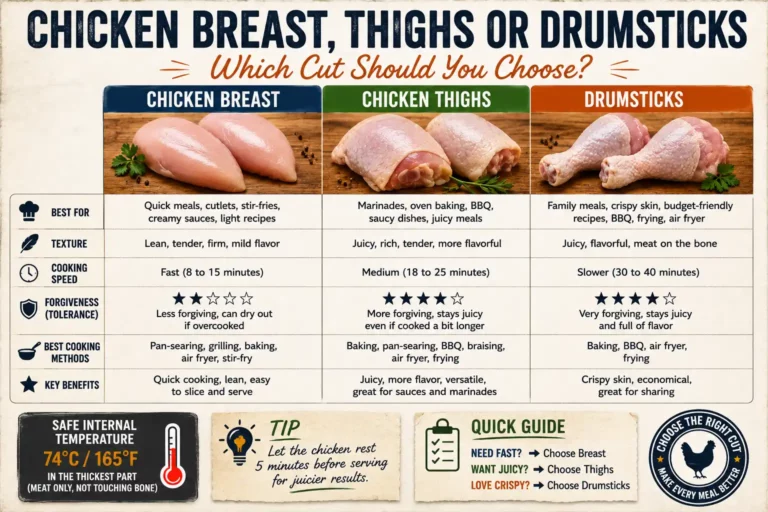
- Chicken breast: cook to 165°F / 74°C
- Chicken thighs: safe at 165°F / 74°C, often better around 175°F to 185°F / 79°C to 85°C
- Chicken drumsticks: safe at 165°F / 74°C, often better around 175°F to 185°F / 79°C to 85°C
- Whole chicken: check the thickest part of the breast and thigh
- Ground chicken: cook to 165°F / 74°C
- Chicken casseroles: cook to 165°F / 74°C
The most important rule is simple: check the temperature with a thermometer, not just by color or time.

Chicken Internal Temperature Chart
| Chicken Cut or Dish | Safe Internal Temperature | Best Place to Check | Texture Tip |
| Chicken breast | 165°F / 74°C | Thickest part of the breast | Rest before slicing to keep it juicy |
| Chicken thighs | 165°F / 74°C minimum | Thickest part, away from bone | Often more tender at 175°F to 185°F |
| Chicken drumsticks | 165°F / 74°C minimum | Thickest part near the bone, without touching bone | Higher temps help dark meat become tender |
| Chicken wings | 165°F / 74°C minimum | Thickest meaty section | Crisp skin needs heat, not just time |
| Whole chicken | 165°F / 74°C | Breast and thigh | Rest before carving |
| Ground chicken | 165°F / 74°C | Center of patty, meatball, or filling | No pink center should remain |
| Stuffed chicken | 165°F / 74°C | Center of the stuffing and thickest meat | Stuffing must also reach safe temperature |
| Chicken casserole | 165°F / 74°C | Center of the dish | Let it rest before serving |
Why 165°F / 74°C Matters
The safe cooking temperature for chicken is not just about texture. It is about food safety. Chicken can carry harmful bacteria, and cooking to the recommended internal temperature helps reduce that risk.
For home cooks, the easiest and safest standard is to cook chicken to 165°F / 74°C and confirm it with a food thermometer. This applies to chicken breast, thighs, drumsticks, wings, ground chicken, and casseroles containing chicken. FoodSafety.gov also lists leftovers and casseroles at 165°F / 74°C, which is useful when reheating chicken dishes. (FoodSafety.gov)
Some advanced cooking discussions talk about time and temperature combinations, but for everyday home cooking, especially when cooking for family, guests, children, older adults, pregnant people, or anyone with a weaker immune system, 165°F / 74°C is the practical standard to follow.
How to Check Chicken Temperature Properly
A thermometer only helps if it is placed correctly. The goal is to measure the center of the thickest part of the chicken.
For chicken breast
Insert the thermometer into the thickest part of the breast. If the breast is uneven, check the thickest section, not the thin tapered end. The thin end may be fully cooked before the center is ready.
This is especially important for boneless skinless breasts because they can go from juicy to dry quickly. In juicy air fryer chicken breast, the key is controlled heat, enough seasoning, and not overcooking the center.
For chicken thighs
Insert the thermometer into the thickest part of the thigh without touching the bone. Bone conducts heat differently and can give a misleading reading.
Chicken thighs are safe at 165°F / 74°C, but they often taste better when cooked higher, usually around 175°F to 185°F / 79°C to 85°C. That extra heat helps dark meat become more tender and less rubbery. Recipes like air fryer chicken thighs benefit from that balance between crisp skin and juicy dark meat.
For drumsticks
Check the thickest part of the drumstick near the bone, but do not touch the bone with the probe. Drumsticks are dark meat, so they can handle a higher finished temperature than chicken breast.
If the chicken is safe but the meat still feels tight near the bone, a few extra minutes can improve the texture.
For whole chicken
Check at least two spots:
- The thickest part of the breast
- The thickest part of the thigh
Avoid touching bone. If the breast is ready but the thigh needs more time, continue cooking until both areas reach a safe temperature. After cooking, let the whole chicken rest before carving so the juices settle.
This is important for recipes like oven roasted chicken with vegetables and pan sauce, where the chicken, vegetables, and sauce all depend on proper timing.
For ground chicken
Ground chicken should reach 165°F / 74°C in the center. This applies to burgers, meatballs, patties, fillings, and casseroles. Ground meat needs careful cooking because the meat has been mixed throughout.
For dishes like homemade chicken nuggets, the outside can brown quickly, so checking the center is more reliable than judging by color alone.
White Meat vs Dark Meat
Chicken breast and chicken thighs behave differently because they are different muscles.
Chicken breast
Chicken breast is lean. It does not have much fat or connective tissue to protect it, which is why it can dry out if overcooked.
Best approach:
- Cook to 165°F / 74°C
- Avoid blasting it with too much heat for too long
- Rest before slicing
- Slice against the grain when possible
- Use sauces, marinades, or careful seasoning to keep it flavorful
Chicken breast works well in recipes like crispy air fryer chicken Parmesan because the breading, sauce, and cheese help protect the texture while still needing a proper internal temperature check.
Chicken thighs and drumsticks
Dark meat has more fat and connective tissue. It is safe at 165°F / 74°C, but the texture is often better when cooked higher.
Best approach:
- Cook to at least 165°F / 74°C
- Aim higher for tenderness, especially bone-in thighs and drumsticks
- Let the skin crisp if using the oven, grill, or air fryer
- Rest briefly before serving
This is why recipes like easy creamy Cajun chicken thighs and creamy garlic mushroom chicken thighs with roasted potatoes can stay juicy even with a little extra cooking time.
Does Resting Chicken Matter?
Yes. Resting helps the juices settle before slicing. It can also allow the temperature to even out slightly after cooking.
For chicken breasts, even a short rest of 5 minutes can help. For a whole chicken, 10 to 15 minutes is usually more useful. Keep the rest time reasonable and serve the chicken while it is still hot.
The mistake to avoid is cutting the chicken immediately after cooking. If you slice it right away, more juice runs out onto the board, especially with lean chicken breast.
Can Chicken Be Pink and Still Be Cooked?
Sometimes chicken can have a slight pink color near the bone or in certain parts, especially with younger chickens, smoked chicken, or bone-in cuts. Color alone is not the safest test.
The better question is: did the thickest part reach 165°F / 74°C?
If the temperature is correct, the thermometer gives a more reliable answer than color. If the temperature is not correct, keep cooking.
The same idea applies to juices. Clear juices can be a helpful sign, but they should not replace a thermometer.
Cooking Method Guide
Different cooking methods affect how quickly the outside browns compared with how fast the center cooks.
| Cooking Method | What to Watch For | Best Temperature Habit |
| Air fryer | Outside browns quickly because of strong convection | Check early to avoid drying breast meat |
| Oven roasting | Even heat, but bone-in pieces need time | Check thickest part before resting |
| Skillet cooking | Surface browns before center finishes | Use moderate heat and finish gently if needed |
| Grilling | Hot spots can cook unevenly | Check more than one piece |
| Braising | Gentle cooking, but pieces still need safe temperature | Check thickest pieces before serving |
| Casserole | Center heats slower than edges | Check the center of the dish |
| Fried or breaded chicken | Crust browns before center is done | Use a thermometer, not crust color |
For a practical air fryer example, air fryer chicken thighs shows how strong circulating heat can crisp the skin while the inside still needs a temperature check.
For sheet pan and oven cooking, one-pan lemon garlic chicken and potatoes is a good example because the chicken and potatoes finish together only when the chicken reaches the proper internal temperature.
How to Avoid Dry Chicken
Dry chicken usually comes from one of three problems: too much heat, too much time, or no rest.
Use a thermometer
The thermometer lets you stop cooking when the chicken is ready instead of guessing. This is the easiest way to avoid overcooking.
Match the method to the cut
Chicken breast needs more precision. Thighs and drumsticks are more forgiving. Bone-in cuts need more time than boneless cuts.
Do not rely only on recipe time
Recipe times are useful, but ovens, air fryers, pan thickness, chicken size, and starting temperature all change the result. A large chicken breast may take longer than a small one. A crowded air fryer basket may cook more slowly.
Rest before slicing
Resting helps the juices stay in the meat. This matters most for chicken breast.
Use sauces and marinades
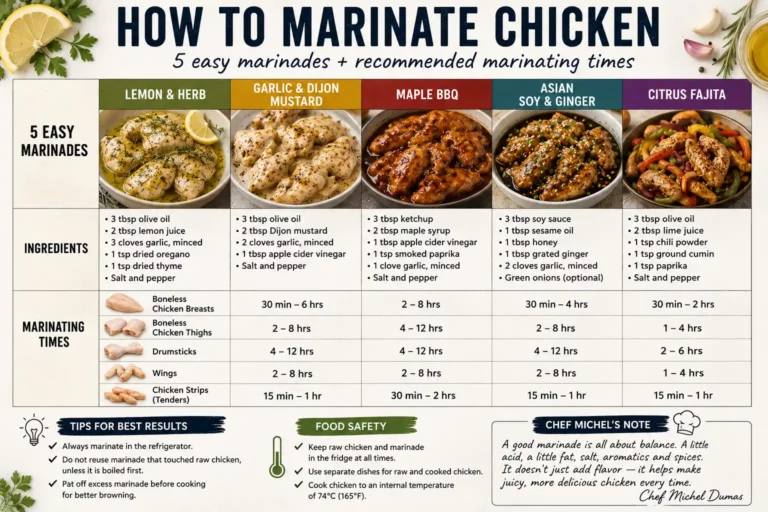
Marinades, sauces, and pan juices help with flavor and moisture. For ideas, explore 5 easy chicken marinades, creamy chicken recipes, and chicken recipes for easy weeknight dinners.
Common Chicken Temperature Mistakes
Checking too close to the bone
Bone can affect the reading. Insert the thermometer into the thickest part of the meat without touching bone.
Checking only one piece
If you cook several pieces, check the largest piece or more than one piece. Small pieces cook faster than large pieces.
Trusting color instead of temperature
White meat can still be undercooked, and dark meat can stay slightly pink near the bone. A thermometer is more reliable.
Cutting into the chicken too early
Cutting right away releases juices. Rest the chicken briefly before slicing.
Using the same time for every cut
Chicken breast, thighs, wings, drumsticks, and whole chicken do not cook the same way. The internal temperature is the common check, but the best texture can vary.
Letting the outside fool you
Air fryer, grill, and fried chicken recipes can brown quickly. The crust or skin may look ready before the center is done.
Chicken Temperature and Food Safety
Use a clean thermometer and wash it after checking chicken. If the chicken is not done, continue cooking, then check again with a clean probe.
Do not leave cooked chicken sitting out for too long. Refrigerate leftovers promptly and reheat leftovers to 165°F / 74°C. FoodSafety.gov lists leftovers at 165°F / 74°C, which is useful for meal prep, casseroles, and next-day chicken dishes. (FoodSafety.gov)
If you are cooking stuffed chicken or a whole stuffed bird, the center of the stuffing must also reach 165°F / 74°C. USDA FSIS gives this same temperature for stuffing inside poultry. (Food Safety and Inspection Service)
Best Chicken Temperature Reference
| Question | Best Answer |
| What temperature is chicken safe? | 165°F / 74°C |
| Where do I check chicken breast? | Thickest part of the breast |
| Where do I check chicken thighs? | Thickest part, away from bone |
| Can chicken thighs go higher? | Yes, they are often better at 175°F to 185°F |
| Can I judge by color? | No, use a thermometer |
| Should chicken rest? | Yes, especially breast and whole chicken |
| What about ground chicken? | 165°F / 74°C in the center |
| What about leftovers? | Reheat to 165°F / 74°C |
Related Chicken Recipes and Guides
A temperature guide is most useful when connected to real cooking. For a broad starting point, explore chicken recipes and the chicken category.
For air fryer cooking, start with juicy air fryer chicken breast, air fryer chicken thighs, and crispy air fryer chicken Parmesan.
For oven and one-pan dinners, try oven roasted chicken with vegetables and pan sauce or one-pan lemon garlic chicken and potatoes.
For saucy chicken recipes, explore creamy chicken recipes, creamy pepper chicken, and chicken with vinegar.
FAQ
What internal temperature should chicken be?
Chicken should reach 165°F / 74°C in the thickest part. Use a food thermometer to check accurately.
Is 165°F safe for all chicken?
Yes. 165°F / 74°C is the safe minimum internal temperature for chicken and other poultry. This includes chicken breast, thighs, drumsticks, wings, ground chicken, and casseroles containing chicken.
Why do chicken thighs taste better at a higher temperature?
Chicken thighs are dark meat with more connective tissue and fat. They are safe at 165°F / 74°C, but often become more tender around 175°F to 185°F / 79°C to 85°C.
Where do I put the thermometer in chicken?
Insert the thermometer into the thickest part of the meat. Avoid touching bone, the pan, or stuffing unless you are intentionally checking the stuffing temperature.
Can chicken be a little pink if it reaches 165°F?
Color is not the most reliable test. If the thickest part reaches 165°F / 74°C, the temperature is a better safety indicator than color alone.
How long should chicken rest after cooking?
Chicken breasts can rest about 5 minutes. A whole chicken benefits from 10 to 15 minutes. Resting helps the juices settle before slicing.
Why is my chicken dry even when cooked correctly?
It may have been cooked too long after reaching temperature, sliced too soon, or cooked with too much heat. Chicken breast is especially lean and needs careful timing.
Do I need a thermometer for small chicken pieces?
Yes, especially for nuggets, cutlets, kebabs, ground chicken, or breaded pieces. Small pieces can brown quickly on the outside before the center is done.
Final Thoughts
The easiest way to cook better chicken is to stop guessing and start checking the internal temperature. For safe home cooking, remember 165°F / 74°C as the key number for chicken.
After that, think about texture. Chicken breast needs precision so it stays juicy. Chicken thighs and drumsticks can handle a little more heat and often taste better when cooked higher. Whole chicken needs more than one temperature check, and ground chicken should always be checked in the center.
With a thermometer, good seasoning, and a short rest before slicing, chicken becomes easier to cook well in the oven, air fryer, skillet, grill, casserole dish, or one-pan dinner.
Useful Links
🛒 Michel Dumas Shop : Explore our kitchen essentials, including aprons and cooking tools.
🌐 Linktree : Access all our important links in one place.
📱 YouTube | Instagram | Facebook | TikTok : Follow us for the latest recipes and culinary tips.