Boeuf Carottes (French Beef and Carrot Stew) – Classic Red Wine Braise
Boeuf Carottes is a traditional French-style beef stew where tougher cuts of beef slowly braise until fork-tender in a savory gravy with carrots and herbs. It’s simpler and more carrot-forward than many beef stews, making it ideal for a cozy Sunday dinner, meal prep, or any time you want a hearty, classic comfort-food plate.
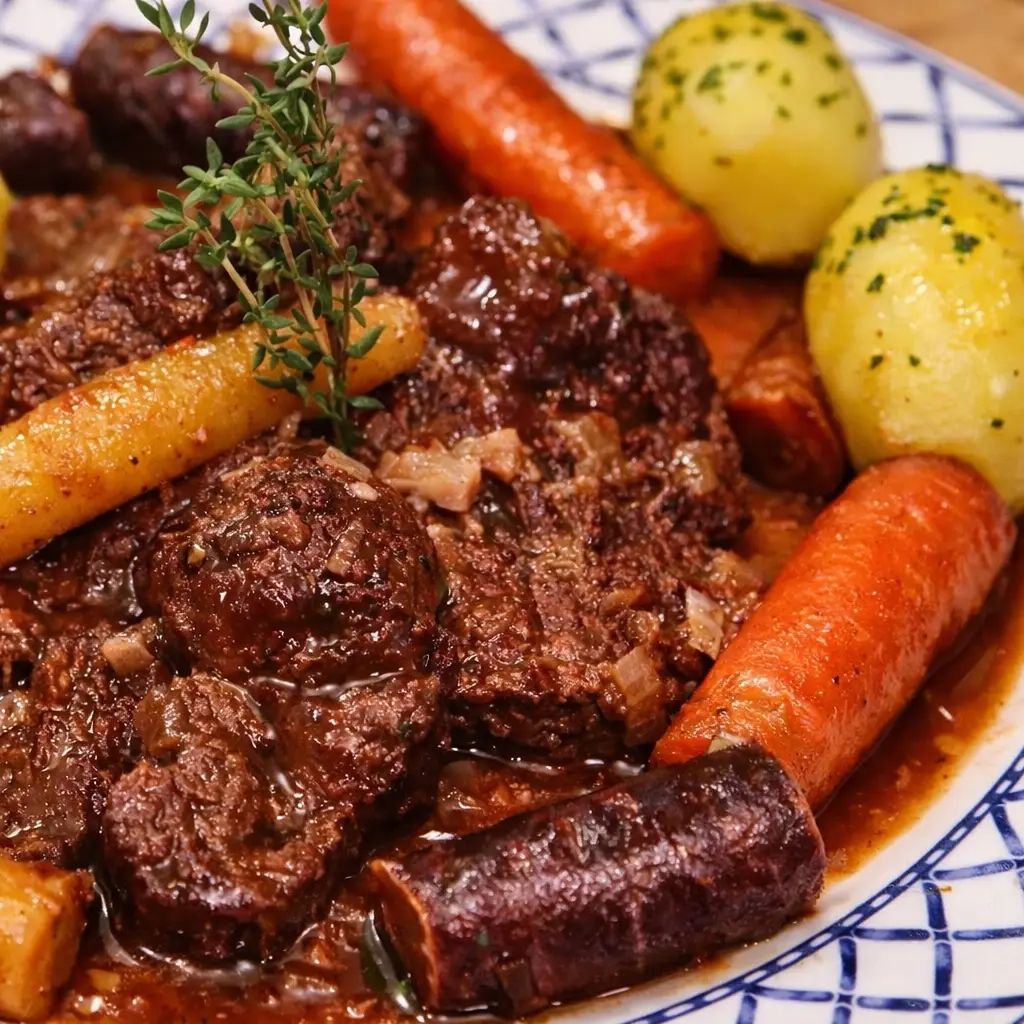
This recipe is based on my YouTube video for Boeuf Carottes, with a few practical adjustments since publication to improve tenderness, sauce texture, and consistency.
Why this Boeuf Carottes is different from similar beef recipes on the site
If you’ve cooked my oven braised beef bourguignon or my weeknight beef ragout beef stew, you already know the family of flavors: slow braise, rich gravy, and that “bistro-at-home” feeling.
This Boeuf Carottes is its own lane:
- More straightforward and carrot-driven than beef bourguignon (less “wine-and-mushroom” complexity, more clean beef + carrots + herbs).
- More traditional and slow-cooked than a quicker skillet-style beef dinner.
- A lighter-feeling braise than ultra-rich stews because the aromatics stay simple and the carrots bring natural sweetness (still hearty—just not heavy in cream or cheese).
It’s also a great year-round recipe: comforting in winter, practical in spring/fall, and still totally doable in summer because it’s mostly hands-off once it simmers.

Ingredients and proportions that actually work
The original video approach is classic: sear beef, sauté onion/garlic, thicken with flour, deglaze with red wine, then braise in brown stock with herbs. The small changes here are about proportions and technique so the beef turns buttery and the sauce finishes glossy—not thin, not pasty.
Key ratio (easy to remember)
For about 2 lb beef, you want:
- 2–2½ lb carrots (yes, generous)
- 1 cup dry red wine
- 3 to 4 cups beef stock, added gradually
- 2 to 3 tbsp flour (depending on how thick you want the gravy)
That’s the sweet spot for a sauce that coats the spoon and still feels like a stew—not a soup.
Choosing the best beef cut
Look for a cut that’s made for braising:
- Chuck roast (best all-around in North America)
- Blade roast / cross rib roast
- Shoulder clod
- Boneless short ribs (richer, more expensive, very good)
These cuts have collagen that melts with time, giving you that “spoon-tender” texture you want in Boeuf Carottes.
Step-by-step: How to make Boeuf Carottes

1) Build the bouquet garni (quick but worth it)
Tie together thyme, bay leaf, and a few basil leaves (or parsley stems). This gives the stew a clean herbal backbone without leaving chopped herbs floating in the sauce.
Tip: If you don’t have basil, don’t force it—thyme + bay leaf is already classic.

2) Cut, dry, and season the beef
Cut the beef into 1½-inch chunks. (This is one of the main adjustments versus thinner slices—chunks braise better and stay juicy.) Pat the beef dry with paper towels, then season with salt and black pepper.
Dry beef browns better, and browning matters because it builds deep flavor from the very beginning.
3) Sear in batches (don’t rush this)
Heat a heavy pot or Dutch oven over medium-high heat with a thin layer of neutral oil. Sear the beef in batches until nicely browned on at least two sides.
What you’re aiming for: real color—not pale “gray cooking.” Brown equals flavor.
Transfer the beef to a bowl and keep going until it’s all browned.
4) Sauté onion and garlic in the same pot
Lower heat to medium. Add the onion and cook, scraping the browned bits (fond) as it releases moisture. When the onion softens and starts to take on a little color, add the garlic and cook briefly (just until fragrant).
5) Add flour (the sauce foundation)
Sprinkle in the flour and stir well so it coats the onions and absorbs the fat. Cook for 1–2 minutes to remove any raw flour taste.
This gives you a gravy that feels classic and cozy—perfect with potatoes.
6) Deglaze with red wine

Pour in the red wine and scrape the bottom of the pot thoroughly. Let it simmer for 2–3 minutes so it reduces slightly and the alcohol edge softens.
Wine choice: a dry red you’d actually drink—Cabernet, Merlot, Shiraz, or a Canadian dry red. Avoid sweet reds.
7) Add stock gradually, then return the beef
Add beef stock until the beef will be mostly submerged when it goes back in. Return the browned beef and any juices to the pot. Add the bouquet garni.
Bring to a gentle boil, then immediately reduce to a low simmer.
8) Skim and simmer low and slow
During the first 10 minutes, skim off foam or excess fat if needed. Cover slightly ajar and simmer gently.
Timing: plan for about 1 hour before adding carrots, then another 45–60 minutes after carrots (depending on your beef cut and chunk size).

9) Add carrots at the right moment
Peel or scrub the carrots (scrubbing is great with fresh carrots), then cut into thick rounds or batons so they hold their shape.
Add carrots after the beef has had a head start. This keeps the carrots tender but not mushy, and the stew stays visually appealing—especially with rainbow carrots.
10) Finish the sauce texture
Near the end, you want the gravy to coat a spoon. If it’s too thin, simmer uncovered for 10–15 minutes to reduce. If it’s thicker than you like, loosen with a splash of stock.
Optional classic finish: if you want an extra glossy gravy, whisk in a small knob of butter off heat.

11) Serve with potatoes (or your favorite starch)
Boeuf Carottes loves potatoes because they catch the sauce. A few strong options:
For a fresh, crunchy contrast on the side, this classic homemade grated carrot salad with mustard vinaigrette fits the theme perfectly.
Nutrition context
This is a high-protein, hearty comfort food thanks to the braised beef, and it’s naturally balanced by a generous amount of carrots. Portioning it with potatoes or bread makes it very filling, and it stores well for leftovers—often even better the next day.

Substitutions
Beef
- Chuck roast → blade roast, cross rib roast, boneless short ribs
- If you only have lean beef: it will work, but it won’t get as buttery and gelatinous.
Wine
- Dry red wine → alcohol-free red wine alternative
- Or use extra stock + 1–2 tbsp vinegar (added at the end, not at the start) for brightness.
Stock
- Beef stock → neutral brown veal stock for a deeper, silkier sauce
- In a pinch: a good-quality boxed beef broth (just go easy on salt until the end).
Herbs
- Thyme + bay leaf is the core. Basil is optional.
- If you want more herb character, finish with chopped parsley.
Thickening
- Flour is classic. If you want a different method, beurre manié gives a smooth finish without extra reduction time.
FAQ
Why is my beef still tough after 90 minutes?
It usually needs more time. Tough cuts soften when collagen breaks down, and that’s a timing game. Keep simmering gently and check again in 20–30 minutes. The stew should barely bubble—hard boiling can tighten meat fibers.
Can I make Boeuf Carottes in advance?
Yes. It’s one of those dishes that often tastes better the next day. Cool, refrigerate, then reheat gently. If the sauce thickens too much, add a splash of stock while reheating.
Do I need to brown the beef?
For the best result, yes. Browning builds the deep roasted flavors that make the gravy taste “restaurant.” If you skip it, the stew will still be edible, just flatter.
What’s the best wine to use?
Any dry red you’d drink: Cabernet Sauvignon, Merlot, Shiraz, Bordeaux-style blends, or a dry Canadian red. Avoid sweet reds.
Can I freeze it?
Yes. Freeze in portions. Thaw overnight in the fridge and reheat gently. Potatoes can be cooked fresh on serving day for the best texture.
How do I stop the carrots from getting mushy?
Add them after the beef has a head start, cut them thick, and keep the simmer gentle. Rainbow carrots especially can soften quickly if they’re thinly sliced.
What to serve with Boeuf Carottes (Suggested posts)
Potatoes and comforting sides
More beef dinners (same “comfort food” cluster)
- Oven braised beef bourguignon
- Weeknight beef ragout beef stew
- One pot creamy beef and tomato pasta
- Beef burritos (flavor-packed)
- Homemade meatloaf (easy, quick, budget-friendly)
A simple sauce/condiment to keep around
Dessert pairing (especially good with red wine notes)

Boeuf Carottes (French Beef and Carrot Stew) – Classic Red Wine Braise
Ingredients
- 2 lb chuck roast cut into 1½-inch chunks
- 2 to 2½ lb carrots scrubbed/peeled and cut into thick rounds
- 1 large white onion thinly sliced
- 2 garlic cloves crushed
- 1 cup dry red wine
- 3 to 4 cups beef stock plus more as needed
- 2 to 3 tbsp all-purpose flour
- 2 tbsp neutral oil vegetable/canola, plus more if needed
- 2 tsp kosher salt start with less if stock is salty
- 1 tsp black pepper
Bouquet garni
- 3 sprigs fresh thyme
- 1 bay leaf
- A few basil leaves optional
- Kitchen twine
Instructions
- Tie thyme, bay leaf, and optional basil into a bouquet garni; set aside.
- Pat beef dry and season with salt and pepper. Heat oil in a Dutch oven over medium-high heat. Sear beef in batches until browned; transfer to a bowl.
- Reduce heat to medium. Add onion to the pot and cook until softened with light color, scraping browned bits. Add garlic and cook 30 seconds.
- Sprinkle flour over onions and stir 1–2 minutes. Pour in red wine and scrape the pot well; simmer 2–3 minutes.
- Add beef back to the pot. Add 3 cups stock (or enough to nearly cover). Add bouquet garni. Bring to a gentle boil, then reduce to a low simmer, partially covered, 60 minutes. Skim foam/fat if needed.
- Add carrots and a splash more stock if the level is low. Simmer partially covered 45–60 minutes, until beef is fork-tender and carrots are tender.
- Adjust sauce: simmer uncovered to thicken, or add stock to loosen. Remove bouquet garni. Taste and adjust salt and pepper. Serve hot, ideally with mashed potatoes or sautéed potatoes.
Video
Notes
Substitutions
Beef
- Chuck roast → blade roast, cross rib roast, boneless short ribs
- If you only have lean beef: it will work, but it won’t get as buttery and gelatinous.
Wine
- Dry red wine → alcohol-free red wine alternative
- Or use extra stock + 1–2 tbsp vinegar (added at the end, not at the start) for brightness.
Stock
- Beef stock → neutral brown veal stock for a deeper, silkier sauce
- In a pinch: a good-quality boxed beef broth (just go easy on salt until the end).
Herbs
- Thyme + bay leaf is the core. Basil is optional.
- If you want more herb character, finish with chopped parsley.
Thickening
- Flour is classic. If you want a different method, beurre manié gives a smooth finish without extra reduction time.
FAQ
Why is my beef still tough after 90 minutes?
It usually needs more time. Tough cuts soften when collagen breaks down, and that’s a timing game. Keep simmering gently and check again in 20–30 minutes. The stew should barely bubble—hard boiling can tighten meat fibers.Can I make Boeuf Carottes in advance?
Yes. It’s one of those dishes that often tastes better the next day. Cool, refrigerate, then reheat gently. If the sauce thickens too much, add a splash of stock while reheating.Do I need to brown the beef?
For the best result, yes. Browning builds the deep roasted flavors that make the gravy taste “restaurant.” If you skip it, the stew will still be edible, just flatter.What’s the best wine to use?
Any dry red you’d drink: Cabernet Sauvignon, Merlot, Shiraz, Bordeaux-style blends, or a dry Canadian red. Avoid sweet reds.Can I freeze it?
Yes. Freeze in portions. Thaw overnight in the fridge and reheat gently. Potatoes can be cooked fresh on serving day for the best texture.How do I stop the carrots from getting mushy?
Add them after the beef has a head start, cut them thick, and keep the simmer gentle. Rainbow carrots especially can soften quickly if they’re thinly sliced.🔗 Useful Links
🛒 Michel Dumas Shop : Explore our kitchen essentials, including aprons and knives.
🌐 Linktree : Access all our important links in one place.
📱 YouTube | Instagram | Facebook | TikTok : Follow us for the latest recipes and culinary tips.