Québec Veal Spread for Toast (Cretonnade de Veau)
Québec veal spread, or cretonnade de veau, is ground veal simmered gently with milk, onion and a small pinch of warm spices, then chilled until it spreads on toast. I break up the meat while the liquid is still cold to get a fine texture with a little grain. Make it the day before breakfast so the breadcrumbs and butter have time to set. Allow 10 minutes of prep, about 55 minutes of cooking and at least 4 hours in the fridge.
What goes into the saucepan
Take a moment to look at the grind. Ground veal pressed tightly into a package can hold together in long strands. Loosen it with your fingertips over a heavy saucepan, leaving room for the fork to move around. A saucepan about as wide as a dinner plate is more useful here than a broad sauté pan. The meat needs a little depth of liquid around it at the beginning, yet you still want enough surface open for slow evaporation. Have a lid that can sit slightly ajar.
Grate a small onion into the pan and include the juice. Grating is useful because a large diced onion can stay noticeably crunchy in a cold spread even when it tasted tender while hot. Add the milk, water and pieces of butter. Lean veal gets much of its finished suppleness from those pieces of butter. For a version based on a different balance of meat and fat, see Québec pork cretons. The cretons made with duck fat give a richer alternative for the same breakfast table.
Start cold and keep the simmer low
Add salt, ground cloves and allspice. Pinch the spices between two fingers. Cloves in particular can overpower the mild veal if you shake the jar straight over the pan. With a fork, work through the meat while the mixture is cold, pulling it apart until the strands are short and evenly distributed. Once meat heats, it firms, and large clumps take much more effort to break down. Put the saucepan over moderate heat, stirring as it warms, then lower the burner when little bubbles appear near the sides.

Leave the lid a little open and simmer for about forty minutes. Come back frequently with a flat-edged spoon, sweeping the bottom and the curved seam around the sides. Milk catches most readily where the spoon misses. The mixture should make a quiet bubbling sound. If it is spitting hard enough to leave spots high on the pan, turn down the heat. If the liquid nearly disappears while the onion is still firm, add a spoonful or two of water and close the lid a little more.
The result at this point should look like fine cooked meat suspended in a shallow pool of its own juices. It will have a different mouthfeel from pork neck rillettes, where softened meat is pulled into strands. There is also no firm meat loaf to turn out as in a country pâté. Keep that serving method in mind as you reduce the liquid. A spread that looks firm enough to slice straight from the saucepan will usually be too stiff once the butter chills.
Add the crumbs and judge the texture
Sprinkle the fine dry crumbs over the surface as you stir. Dumping them in one heap can leave a doughy pocket with dry crumbs in the centre. Cook for another five to ten minutes over low heat, scraping more often now that the mixture has thickened. Draw the spoon across the bottom of the pan. You want a short track that stays open for an instant, then starts to close as you tilt the pan. There should be no puddle of milk around the edges and the meat should still yield easily under the spoon.

Take the pan off the heat and press the largest pieces against the side with the back of a spoon. Stop when you have the texture you like. I leave enough grain to see that the spread is made with meat, but no lump so large that it pulls the crust off a piece of toast. Spoon into shallow ramekins, level the tops and cool promptly in the refrigerator. Chill at least four hours. A small ramekin is particularly handy at breakfast because you can bring out one portion while the rest stays cold.
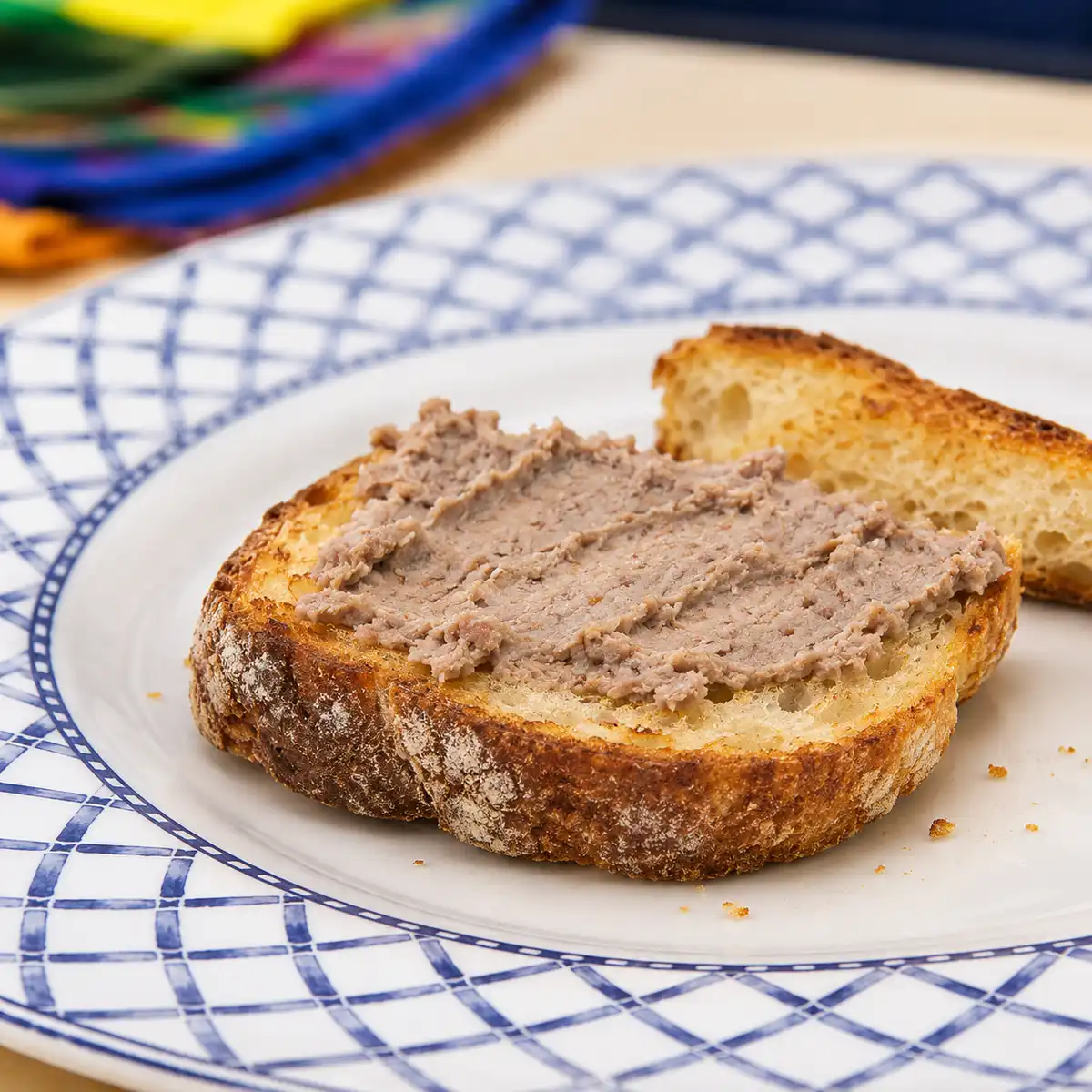
Toast bread on both faces, wait a moment for the steam to escape, then spread a thin layer to the corners with a table knife. Begin with about the thickness of a coin and add a little more where you like. A small pile of pickled beets alongside adds acidity without wetting the toast. For a cold starter platter, salmon rillettes give guests a fish option. Put out separate knives so the smoke and lemon from the fish stay out of the veal.
Make ahead and substitutions
Making the spread the night before gives you a chance to judge its true cold consistency. Cover once cooled and keep refrigerated until needed. If the spread is firmer than you like, transfer the portion you plan to serve to a small bowl and work in a spoonful of warm milk with a fork. Add only enough to loosen it. For a larger brunch, set out the first ramekin with fresh toast while you finish one of these brunch recipes. Refill with a fresh chilled ramekin if needed.
Crush plain crackers finely if you are out of breadcrumbs. Check their saltiness and reduce the added salt accordingly. Coarse crumbs take longer to soften and can leave little gritty flecks, so pass them through a sieve or crush again. If your aim is a cold veal preparation that can be sliced, veal terrine in aspic uses a different cut and a different means of setting. For another soft poultry spread, chicken rillettes are a useful choice when you have cooked chicken to use up.

Questions about spreadability
Why has liquid collected on top?
A few drops of condensation from the cover are easily blotted away. A deeper layer of broth suggests the mixture was still too loose when it went into the ramekins. Stir a small serving together and check its texture on a piece of toast. If the toast immediately gets wet, reduce the next batch a little longer after the crumbs go in. In a wide pan that can take only a minute or two, so use the spoon track as your guide.
What else goes with a small serving?
At lunch, one open-faced toast can accompany a bowl of French onion soup if you leave off the soup’s usual cheese toast. For a breakfast plate, keep it simple with mustard on the side and a freshly cooked egg. Spread only the bread you expect to eat immediately. A chilled ramekin and a second round of hot toast are much nicer than a platter of slices prepared long before people reach the table.
Serving suggestions and related recipes
For a cold lunch, set out toast, a pot of veal spread and some drained pickled beets. For a hot-and-cold supper, follow the toast with a small bowl of French onion soup.
Québec Veal Spread for Toast (Cretonnade de Veau)
Ingredients
- 1 lb 2 oz ground veal
- 1 small onion grated with its juice
- ¾ cup milk
- ⅓ cup plus 1 tbsp water
- 2½ tbsp unsalted butter
- 1¼ oz fine dry breadcrumbs
- ⅔ tsp fine salt
- 1 small pinch ground cloves
- 1 small pinch ground allspice
Instructions
- Put all ingredients except the crumbs in a heavy saucepan. Break up the cold meat in the liquid with a fork.
- Bring to a low simmer. Cook partially covered for 40 minutes, stirring and scraping often.

- Sprinkle in crumbs and stir 5 to 10 minutes until the spoon leaves a brief track. Mash larger pieces to the desired texture.
- Divide among shallow ramekins, cool promptly in the refrigerator and chill at least 4 hours. Serve on toast.


 Last chance for our paring knives.