Roasted Duck Legs with Maple Blue Cheese Sauce
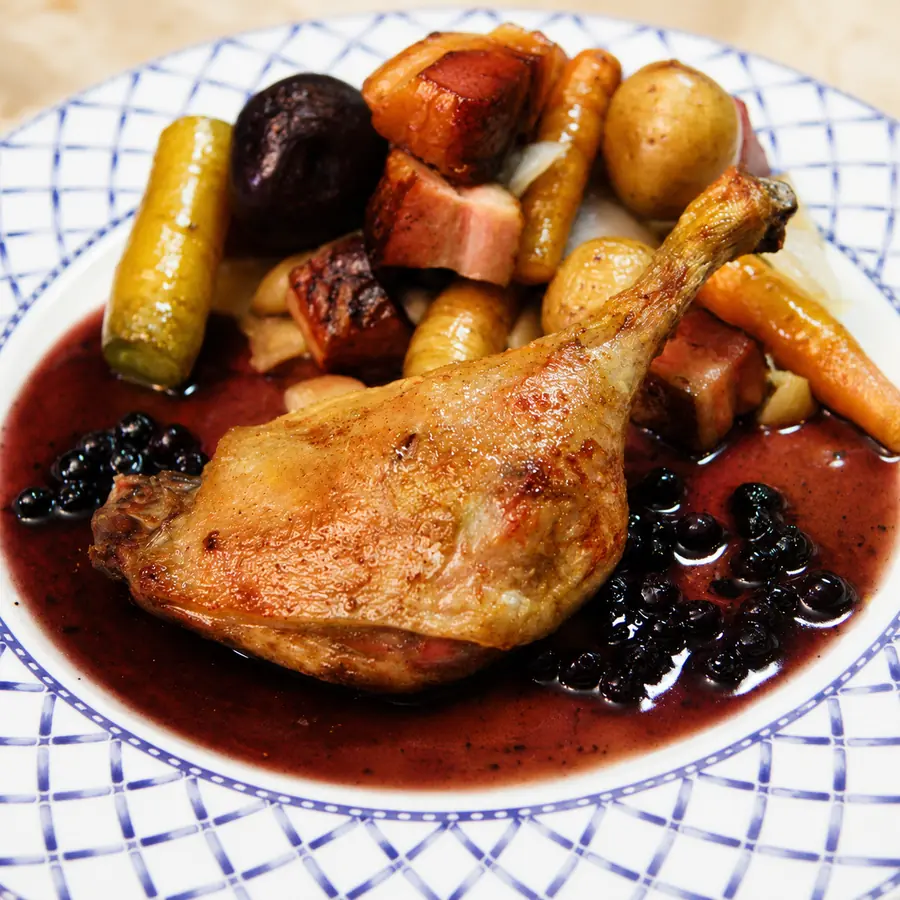
These oven-roasted duck legs are served with maple-smoked bacon, rainbow carrots, baby potatoes, and a savory maple blue cheese sauce. The dish works because the duck fat seasons the vegetables as they roast, while the sharp cheese keeps the maple from tasting overly sweet. The mistake to avoid is leaving too much rendered fat in the pan; the vegetables should look glossy and browned, not submerged.
This is a hearty French-Canadian-style duck dinner that fits naturally into a cold-weather menu, although the ingredients are available throughout the year. Unlike duck confit, the legs do not need to be cured or completely submerged in fat, and the vegetables cook in the same roasting pan.
This recipe is based on my YouTube video, with a few adjustments since publication. I reduced the bacon and maple syrup slightly, added a more flexible cooking time, and clarified how much duck fat to remove. These changes make the finished dish easier to reproduce without losing the rich character of the original.
{VIDEO}
What Makes This Recipe Different
This is not simply a tray of roasted duck and potatoes. The bacon, maple, blue cheese, duck stock, and roasting juices build several layers of flavour, but each one needs to be controlled. Too much of any single ingredient can make the dish excessively salty, sweet, or oily.
I make it this way because rendering the legs before roasting gives the skin a head start and provides enough fat to coat the vegetables. It is a different technique from my whole roast duck method, where the size of the bird and the cavity affect the cooking time. It is also more approachable than making traditional duck confit, which requires curing and a much larger quantity of fat.
Duck legs also need different treatment than duck breasts. A breast is usually cooked quickly and kept pink, as in my duck breast with Dijon cream. Legs contain more connective tissue and become better when cooked until fully tender.
Ingredients You Need
Duck legs: Use three raw, skin-on duck legs weighing approximately 10 to 11 ounces each. Pat them dry before cooking so they brown instead of steaming.
Maple-smoked bacon: Four ounces are enough to season the vegetables without overwhelming the duck. Regular smoked bacon also works.
Baby potatoes: Choose small waxy potatoes that hold their shape. Mixed red, yellow, and blue potatoes add colour. Halve any potatoes larger than a walnut.
Rainbow carrots: Cut them into substantial pieces so they do not become mushy before the duck is tender.
Onions: Thick wedges roast more successfully than finely chopped onions, which could burn in the rendered fat.
Duck stock: Unsalted or low-sodium stock is important because the bacon and blue cheese already contain plenty of salt. Chicken stock can be used if duck stock is unavailable.
Pure maple syrup: Two tablespoons provide a recognizable maple note without turning the sauce into a sweet glaze.
Blue cheese: A balanced, creamy blue cheese melts more smoothly than a very dry one. Roquefort provides a stronger flavour, while Danish blue or a mild Canadian blue produces a softer sauce.
Seasoning: Black pepper is essential. Salt should be used cautiously and adjusted only after the bacon, reduced stock, and cheese have been tasted together.

Step-by-Step Instructions
1. Prepare the vegetables
Preheat the oven to 350°F. Place the diced bacon, baby potatoes, carrots, and onion wedges in a large roasting pan. Season with black pepper and only a small pinch of salt.
The pieces should sit in a fairly even layer. If they are packed tightly into a small casserole, they will release steam and remain pale. A metal roasting pan with enough open space around the vegetables gives better browning.

2. Render and brown the duck legs
Pat the duck legs thoroughly dry. Place them skin side down in a large skillet, then bring the skillet gradually to medium heat. Cook for 8 to 10 minutes, moving the legs occasionally once they release naturally from the pan.
What I look for here is a steady, quiet sizzle. The skin should become golden and some of its fat should collect in the skillet. If the pan is smoking aggressively, lower the heat.
Turn the legs and brown the meat side for 2 to 3 minutes. Transfer them to the roasting pan, arranging them skin side up over the vegetables.

3. Roast until tender
Roast for 45 minutes. Lift the duck legs onto a plate briefly, stir the vegetables, and check the amount of fat in the pan. If the vegetables are sitting in a deep layer of liquid fat, carefully spoon most of it out, leaving enough to keep everything lightly coated.
Return the legs to the pan skin side up. Continue roasting for another 45 to 60 minutes. If the vegetables become tender before the duck, remove them to a covered dish and keep them warm while the legs finish cooking.
The duck is safe to eat once it reaches at least 165°F, but legs are usually more tender closer to 185 to 195°F. Temperature is only one cue. You know they are ready when a thin knife enters the thickest portion easily and the leg joint moves without much resistance.

4. Reduce the stock
While the duck cooks, pour the duck stock into a small saucepan. Bring it to a gentle simmer and reduce it from 1 1/4 cups to approximately 3/4 cup. This concentrates the flavour and gives the finished sauce more body.
A reduction should taste stronger, not aggressively salty. If the stock becomes too salty as it reduces, stop reducing and use a little water to correct it.
5. Make the maple blue cheese sauce
Once the duck is ready, remove it from the skillet or roasting pan and let it rest for about 5 minutes. Pour away the excess fat from the original skillet, leaving approximately one tablespoon along with the browned cooking residue.
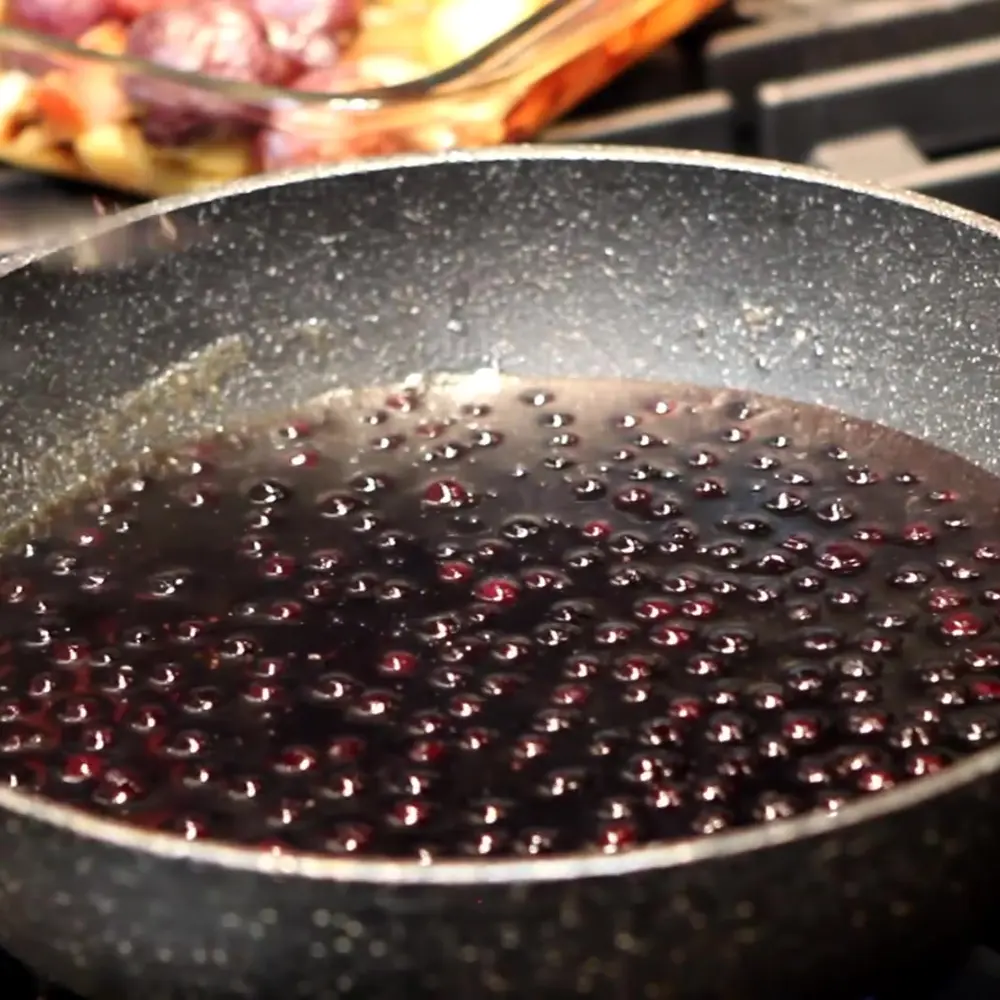
Place the skillet over medium-low heat and add the maple syrup. Let it bubble for 20 to 30 seconds, then immediately add the reduced stock. Scrape the bottom of the pan with a wooden spoon and simmer until the liquid lightly coats the back of a spoon.
If you want more detail about judging sauce consistency, my guide to thickening sauces correctly explains what to look for without relying on excessive flour or starch.
Remove the skillet from the heat. Add the crumbled blue cheese gradually, whisking until melted and smooth. Do not boil the sauce after adding the cheese, since high heat can make it separate and turn oily. The technique is similar to the gentle finish used in my creamy Roquefort sauce.
Taste before adding salt. Usually, black pepper is all that is needed.
6. Plate the dish
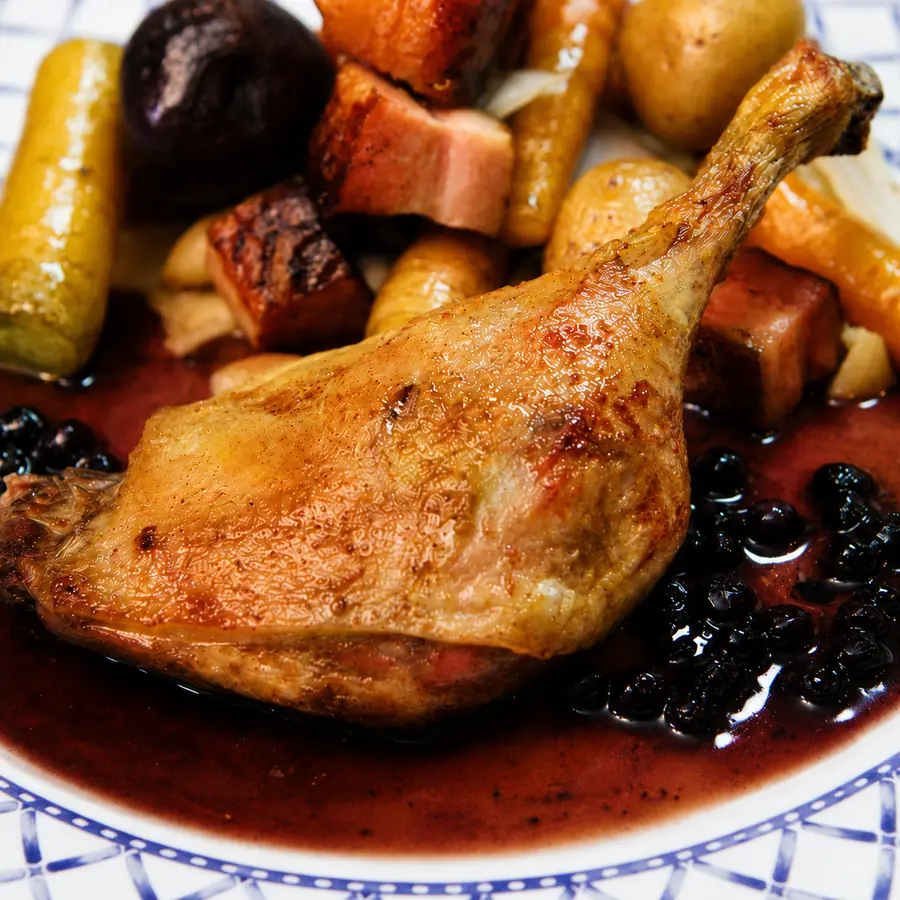
Divide the potatoes, carrots, onions, and bacon among three warm plates. Place one duck leg on each portion with the browned skin facing up. Spoon the sauce around the duck rather than completely covering the skin.
At this point, the vegetables should be tender and glossy, the skin well browned, and the sauce smooth enough to flow slowly from a spoon. Serve the remaining sauce separately.

Troubleshooting the Recipe
If the duck is cooked but still chewy, it needs more time. Cover the vegetables to keep them warm and return the legs to the oven in 15-minute intervals.
If the skin is not browned enough, place the legs under the broiler for 1 to 3 minutes. Watch continuously because rendered duck skin can darken very quickly.
A greasy sauce usually means too much fat was left in the skillet. Let the sauce settle briefly and spoon the excess from the surface. If it is too thick, whisk in a small amount of warm stock or water. If it tastes too sweet, add more blue cheese or a few drops of lemon juice rather than additional salt.
Substitutions
Chicken legs can replace the duck, but they will cook more quickly and will not release as much fat. Begin checking them after approximately 45 minutes and cook to at least 165°F.
Regular smoked bacon is a straightforward substitute for maple bacon. If using particularly salty bacon, blanch it briefly or reduce the quantity to three ounces. Sweet potatoes can replace part of the baby potatoes, although they should be cut into large pieces because they soften quickly.
Chicken stock works in place of duck stock. For the cheese, use Danish blue, Roquefort, Stilton, or another blue that melts well. Readers who prefer a milder sauce can begin with three ounces of cheese and add more after tasting.
The vegetables are flexible. Parsnips, rutabaga, turnips, or chunks of winter squash can be added, provided they are cut to cook at roughly the same rate. For more ideas, see my collection of easy vegetable side dishes.
FAQ
Do duck legs have to be seared before roasting?
No, but searing begins rendering the thick layer of fat beneath the skin and improves browning. Skipping this step may leave the skin softer and considerably more fat in the roasting pan.
Why are my duck legs tough?
They probably need additional cooking. Duck legs can reach a safe internal temperature before their connective tissue has softened. Continue roasting them in 15-minute intervals until the joint moves easily.
Can I make the sauce ahead of time?
The stock can be reduced in advance, but the cheese is best added shortly before serving. Reheat the sauce gently and never let it boil hard.
Can I prepare this without bacon?
Yes. The duck provides enough richness on its own. Omit the bacon, season the vegetables lightly, and leave a few tablespoons of rendered duck fat in the roasting pan.
How should leftovers be stored?
Refrigerate the duck, vegetables, and sauce in separate airtight containers for up to three days. Reheat the legs in a 350°F oven until hot, then warm the sauce gently over low heat. Separating the components helps preserve the skin and prevents the sauce from splitting.
Is this the same as duck confit?
No. Confit is traditionally cured and slowly cooked in fat. These legs are browned and oven-roasted over vegetables, making this a more practical one-pan dinner.
What to Serve With Duck Legs
The recipe already includes potatoes and carrots, so it can be served as a complete meal. For a larger dinner, add something fresh and slightly bitter. A romaine and red endive salad cuts through the richness, while a crunchy red endive salad gives the plate more texture.
If serving the duck without the vegetables from the roasting pan, duck-fat Sarladaise potatoes are a natural French pairing. For a more formal meal, use traditional gratin Dauphinois, but serve smaller portions because both the gratin and sauce are rich.
A tray of oven-roasted mixed vegetables is a useful alternative when you need to serve more people.
Suggested Posts
For another combination of duck and maple, try my stuffed roast duck with maple pan sauce. The roast duck with blueberry sauce takes the same sweet and savory idea in a fruitier direction.
More traditional meal ideas can be found in my collection of French bistro recipes and my guide to Québécois comfort food and maple recipes.
Roasted Duck Legs with Maple Blue Cheese Sauce
Ingredients
- 3 skin-on duck legs about 10 to 11 ounces each
- 4 ounces maple-smoked bacon diced
- 1 1/4 pounds baby potatoes halved if large
- 14 ounces rainbow carrots cut into 2-inch pieces
- 2 medium onions cut into thick wedges
- 1 1/4 cups unsalted or low-sodium duck stock
- 2 tablespoons pure maple syrup
- 4 ounces blue cheese crumbled
- 1/4 teaspoon kosher salt plus more only if needed
- 1/2 teaspoon freshly ground black pepper
Instructions
- Preheat the oven to 350°F and arrange the bacon, potatoes, carrots, and onions in a large roasting pan. Season lightly with salt and pepper.
- Pat the duck legs dry. Place them skin side down in a skillet and bring it gradually to medium heat.
- Render and brown the skin for 8 to 10 minutes, then brown the other side for 2 to 3 minutes.
- Place the legs skin side up over the vegetables and roast for 45 minutes.
- Stir the vegetables, spoon out excessive fat, and return the legs skin side up. Roast for another 45 to 60 minutes, until tender.
- Meanwhile, simmer the duck stock until reduced to approximately 3/4 cup.
- Pour most of the fat from the skillet, leaving about 1 tablespoon. Add the maple syrup and cook for 20 to 30 seconds.
- Add the reduced stock, scrape up the browned residue, and simmer until the sauce lightly coats a spoon.
- Remove the skillet from the heat and whisk in the blue cheese. Taste before adding more salt.
- Rest the duck for 5 minutes, then serve it over the roasted vegetables with the sauce spooned around it.