Classic Cauliflower Gratin (Chou-Fleur au Gratin) with Foolproof Béchamel
Cauliflower gratin is a French-style baked dish made with tender cauliflower, a creamy béchamel sauce, and a golden layer of melted cheese. It’s the kind of cozy, reliable comfort food you make for an easy weeknight dinner, a Sunday family meal, or anytime you want a warm vegetable side that feels special.
This recipe is based on my YouTube video for chou-fleur au gratin, with a few adjustments since publication to make the proportions more consistent, the baking method more reliable, and the seasoning more balanced in a written recipe.

Why this cauliflower gratin is different from other gratins on the site
If you’re looking for a gratin that’s quick, classic, and cauliflower-forward, this is the one. It’s meant to be a simple cauliflower-only gratin—no potatoes, no heavy cream base, no complicated add-ins—just a smooth béchamel and cheese for a clean, traditional result.
If you want a heartier, more filling baked dish with two vegetables, make Cauliflower Potato Gratin instead. And if you’re specifically craving the iconic potato classic, go for Traditional Gratin Dauphinois.

Ingredients you’ll need (and why they matter)
Cauliflower: Choose a firm head with tight florets. Fresh cauliflower gives the best texture, but frozen can work with a few adjustments (see substitutions).
Béchamel: A classic béchamel is the backbone here. If you want a deeper technique dive, see Béchamel Sauce (Foolproof Methods)—it’s the same idea, just tuned to the right volume for this gratin.
Cheese: Emmental is traditional, but you can mix in sharper cheeses for more punch. The cheese layer is what gives you that broiled, golden finish.
Seasoning: Cauliflower is mild. Salt, pepper, and a touch of nutmeg (classic in béchamel) make the difference between “fine” and “wow.”

Short nutrition context (no hype, just reality)
This is a hearty comfort food that still leans lighter than many baked casseroles because cauliflower is the main ingredient. It’s not a high-protein dish on its own, but it pairs easily with protein mains and simple salads, and it works year-round—great in winter, but just as welcome alongside grilled or roasted meals in summer.

Step-by-step: how to make cauliflower gratin (the reliable way)
1) Prep the cauliflower
Remove the leaves and trim the stem. Cut the cauliflower into medium florets—aim for pieces that are similar in size so they cook evenly.
2) Blanch (don’t fully boil)
Bring a large pot of salted water to a strong boil. Add the florets and blanch until just barely tender—a knife should go in with slight resistance.
- Fresh cauliflower: usually 6–8 minutes
- Drain very well.
Why blanching matters: It sets the texture and prevents a watery gratin. Cauliflower releases steam as it bakes; starting with well-drained florets keeps the sauce creamy instead of thin.

3) Make the béchamel (smooth, no lumps)
In a saucepan over medium heat, melt the butter. Add the flour and whisk constantly for about 1 minute—this cooks the raw flour taste.
Slowly pour in the milk while whisking. Keep whisking until the sauce thickens enough to coat the back of a spoon. Season with salt, black pepper, and a small pinch of nutmeg. If you like the warm golden tone from the video, add a tiny pinch of turmeric—optional.
Texture goal: creamy and spoonable, not stiff. If it thickens too much, whisk in a splash of milk.

4) Assemble the gratin
Heat oven to 400°F.
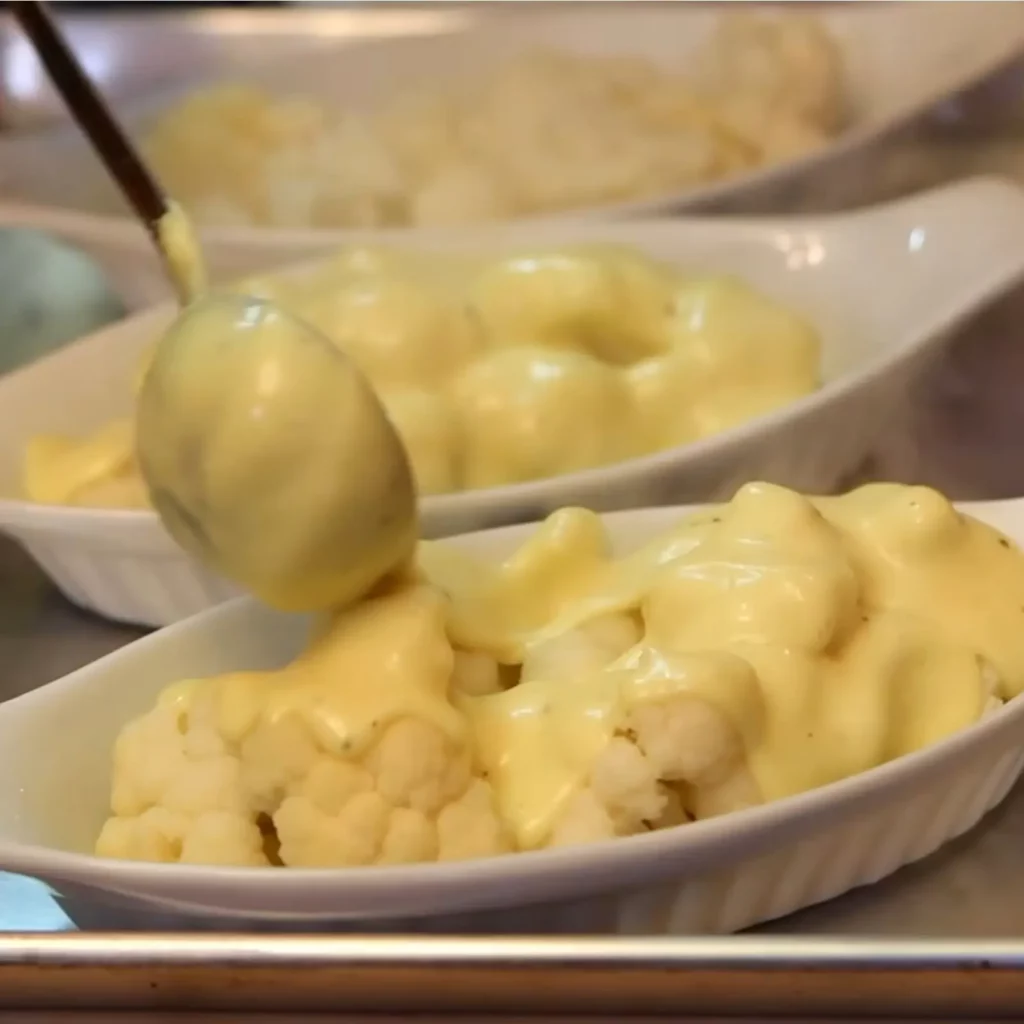
Arrange the cauliflower in a baking dish in an even layer. Pour the béchamel over the top and gently nudge it around so it settles between florets. Sprinkle with shredded cheese.
5) Bake, then broil for the best top
Bake at 400°F for 12–15 minutes, until bubbling around the edges.
Switch to broil and broil 2–4 minutes until the top is deeply golden. Watch closely—broilers can go from perfect to burned fast.
6) Rest briefly and serve
Let it rest 5 minutes before serving. The sauce sets slightly and portions cleanly.

Substitutions and variations
Cauliflower options
- Frozen cauliflower: Thaw completely and pat dry. Skip blanching or do a quick 2–3 minute dip in boiling water, then drain extremely well.
- Broccoli swap: You can do a broccoli gratin using the same method and timing.
Milk and béchamel tweaks
- Richer version: Use half milk and half light cream for a silkier sauce.
- Lighter version: Use 2% milk; the sauce will be slightly less rich but still works.
- Gluten-free: Use a 1:1 gluten-free flour blend for the roux (texture can be slightly different but still good).
Cheese swaps (great results)
- Emmental + Gruyère
- Cheddar for a sharper, more North American style
- Parmesan added on top for extra browning
Flavor add-ins (keep it “classic,” not overloaded)
- A small clove of garlic rubbed inside the baking dish
- Dijon mustard (1–2 teaspoons) whisked into béchamel for gentle tang
- Crispy breadcrumbs tossed with melted butter for a crunchy top layer
FAQ
Why is my gratin watery?
Usually one of these:
- Cauliflower wasn’t drained well after blanching
- Frozen cauliflower wasn’t dried enough
- The béchamel was too thin before baking
Fix: drain longer, let steam escape, and make sure béchamel coats a spoon before assembling.
Can I make it ahead?
Yes. Assemble up to a day ahead, cover, and refrigerate. Bake at 400°F until hot and bubbling (you may need 5–10 extra minutes), then broil to finish.
Can I freeze cauliflower gratin?
You can, but béchamel can separate slightly after freezing and thawing. For best texture, refrigerate leftovers and reheat within a few days.
How do I reheat leftovers without drying it out?
Cover with foil and reheat in a 350°F oven until hot. Uncover for the last few minutes to refresh the top.
What size baking dish should I use?
A medium dish (roughly 8×10-inch or similar) works well for a 2–2.5 lb cauliflower head. A wider dish gives more browned surface area.
Can I turn this into a full meal?
Yes—pair it with a simple protein and a salad. Ideas below.

What to serve with cauliflower gratin (Suggested posts)
For a full dinner, pair this gratin with a main protein and one fresh side:
- Creamy Tuscan Chicken for a rich, restaurant-style chicken main
- Marry Me Chicken (Creamy Recipe) for another creamy comfort pairing
- One-Pan Dijon Mustard Chicken for a tangy, quick weeknight option
- Oven Roasted Chicken for a classic roast-and-serve dinner
- Oven Roasted Mixed Vegetables if you want a bigger vegetable spread
- Homemade Mashed Potatoes when you want an extra-comforty plate
- Homemade Caesar Salad (Authentic Recipe) for a crisp, fresh contrast
- Classic Homemade Grated Carrot Salad with Mustard Vinaigrette for a bright, simple side
- 30-Minute Dinner Ideas (Quick and Easy Dishes) for more fast weeknight inspiration
- Vegetable Main Dish Recipes to browse more vegetable-focused meals

Classic Cauliflower Gratin (Chou-Fleur au Gratin) with Foolproof Béchamel
Ingrédients
- 1 large cauliflower about 2–2.5 lb, cut into florets
- Salt for blanching water
- 4 tbsp unsalted butter
- 1/4 tasse all-purpose flour
- 3 tasses milk
- 1/2 tsp kosher salt plus more to taste
- 1/4 tsp black pepper plus more to taste
- 1 pinch nutmeg optional but classic
- 1 pinch turmeric optional, for color
- 1 –1 1/2 tasses shredded Emmental or Gruyère/cheddar blend
Instructions
- Heat oven to 400°F. Bring a large pot of salted water to a boil.
- Blanch cauliflower florets 6–8 minutes until barely tender. Drain very well.
- Make béchamel: melt butter in a saucepan over medium heat. Whisk in flour 1 minute. Slowly whisk in milk. Cook, whisking, until thick enough to coat a spoon. Season with salt, pepper, nutmeg, and optional turmeric.
- Assemble: place cauliflower in a baking dish, pour béchamel over, and sprinkle with shredded cheese.
- Bake 12–15 minutes until bubbling. Broil 2–4 minutes until deeply golden.
- Rest 5 minutes, then serve hot.
Vidéo
Notes
Substitutions and variations
Cauliflower options
- Frozen cauliflower: Thaw completely and pat dry. Skip blanching or do a quick 2–3 minute dip in boiling water, then drain extremely well.
- Broccoli swap: You can do a broccoli gratin using the same method and timing.
Milk and béchamel tweaks
- Richer version: Use half milk and half light cream for a silkier sauce.
- Lighter version: Use 2% milk; the sauce will be slightly less rich but still works.
- Gluten-free: Use a 1:1 gluten-free flour blend for the roux (texture can be slightly different but still good).
Cheese swaps (great results)
- Emmental + Gruyère
- Cheddar for a sharper, more North American style
- Parmesan added on top for extra browning
Flavor add-ins (keep it “classic,” not overloaded)
- A small clove of garlic rubbed inside the baking dish
- Dijon mustard (1–2 teaspoons) whisked into béchamel for gentle tang
- Crispy breadcrumbs tossed with melted butter for a crunchy top layer
FAQ
Why is my gratin watery?
Usually one of these:- Cauliflower wasn’t drained well after blanching
- Frozen cauliflower wasn’t dried enough
- The béchamel was too thin before baking
Fix: drain longer, let steam escape, and make sure béchamel coats a spoon before assembling.
Can I make it ahead?
Yes. Assemble up to a day ahead, cover, and refrigerate. Bake at 400°F until hot and bubbling (you may need 5–10 extra minutes), then broil to finish.Can I freeze cauliflower gratin?
You can, but béchamel can separate slightly after freezing and thawing. For best texture, refrigerate leftovers and reheat within a few days.How do I reheat leftovers without drying it out?
Cover with foil and reheat in a 350°F oven until hot. Uncover for the last few minutes to refresh the top.What size baking dish should I use?
A medium dish (roughly 8×10-inch or similar) works well for a 2–2.5 lb cauliflower head. A wider dish gives more browned surface area.Can I turn this into a full meal?
Yes—pair it with a simple protein and a salad. Ideas below.Useful Links
🛒 Michel Dumas Shop : Explore our kitchen essentials, including aprons and knives.
🌐 Linktree : Access all our important links in one place.
📱 YouTube | Instagram | Facebook | TikTok : Follow us for the latest recipes and culinary tips.