Homemade White Bread Recipe in the Oven
There is something deeply satisfying about pulling warm loaves of bread out of your own oven. This homemade white bread recipe is simple, practical, and designed for everyday cooking, whether you want bread for toast, soup night, sandwiches, or a family dinner.
This version is based on my YouTube video, with a few adjustments since publication to give a more reliable rise, a better crumb, and easier handling. It is still a straightforward homemade loaf, but the proportions have been refined so the dough is more balanced and consistent.
Homemade white bread sits in a different lane than enriched breads like foolproof homemade brioche bread or doughs meant for best homemade pizza and Neapolitan-style pizza dough. This is a lean, everyday loaf: soft enough for sandwiches, sturdy enough for butter and jam, and hearty enough to serve alongside soups, ragouts, and saucy meals all year long.
What makes this bread different
This is a simple yeast bread made with flour, water, salt, sugar, and dry yeast. What makes it different from many quick or highly enriched loaves is that it uses a clean, classic dough with no eggs and no butter in the base, so the texture stays versatile and the flavor remains neutral enough for both sweet and savory uses.
It is the kind of bread you make when you want something reliable for the table: with breakfast eggs, alongside creamy tomato soup, next to weeknight beef ragout beef stew, or toasted with a little homemade garlic butter.
Why these adjustments matter
In the original video, the dough was made with a very high amount of dry yeast and a very high level of hydration. That can produce a dough that rises too quickly, becomes difficult to shape, and gives inconsistent results from one kitchen to another. For a website recipe, consistency matters more than speed.
The adjusted version below keeps the spirit of the original but brings the dough into a more dependable range. The crumb stays soft and airy, the dough is much easier to handle, and the loaves hold their shape better. The result is still homemade bread with a rustic feel, but it is more accessible for everyday baking in a Canadian or American home kitchen.

Ingredients
- 6 2/3 cups all-purpose flour
- 1 tablespoon dry yeast
- 1 tablespoon fine sea salt
- 2 tablespoons sugar
- 2 1/4 cups warm water
- Extra flour, for shaping
Ingredient notes
Use warm water, not hot water. You are aiming for pleasantly warm water that helps wake up the yeast without damaging it. If the water feels hot on your finger, let it cool slightly before mixing.
All-purpose flour works very well here. Bread flour can also be used if you want a slightly chewier structure, but this loaf does not need anything fancy.
The small amount of sugar is not there to make the bread sweet. It helps the yeast get started and supports browning in the oven.
How to make homemade white bread
1. Activate the yeast
Pour the warm water into a bowl. Add the yeast and a pinch of the sugar. Stir and let it sit for 5 to 10 minutes, until the mixture looks foamy on top.
If the yeast does not foam, start over with fresh yeast. This first step tells you the dough is alive before you add the flour.

2. Mix the dry ingredients
In a large bowl or the bowl of a stand mixer, combine the flour, salt, and remaining sugar. Mix briefly so the salt and sugar are evenly distributed.

3. Form the dough
Pour the yeast mixture into the flour. Mix until a rough dough forms. If you are using a stand mixer, knead with the dough hook for about 8 minutes on low speed. If you are kneading by hand, work the dough for about 10 minutes until it becomes smoother and elastic.
The dough should feel soft, slightly tacky, and supple, but not so wet that it spreads like batter. If it is extremely sticky, dust in a little more flour, one tablespoon at a time.

4. First rise
Shape the dough into a ball and place it in a lightly floured or lightly oiled bowl. Cover with a towel or plastic wrap and let it rise in a warm place for about 1 hour, or until doubled in size.
This slower, gentler rise gives the dough time to develop flavor and structure. You do not need a hot proofing chamber. A calm room-temperature rise works very well.

5. Divide and shape
Turn the dough out onto a lightly floured surface. Press gently to release some of the gas, then divide it into 4 equal portions if you want smaller loaves, or into 2 portions for larger sandwich-style loaves.
Shape each portion into a tight loaf by folding the dough inward and rolling it gently. Place the shaped loaves into floured loaf pans or onto a parchment-lined baking sheet if you prefer freer-form loaves.
If you enjoy this kind of practical kitchen baking, it also pairs nicely with other homemade staples like easy homemade crêpes or a simple sauce spread such as 2-minute garlic aioli.

6. Second rise
Cover the loaves and let them rise again for 35 to 45 minutes, until puffy and visibly larger. They do not need to triple in size. A good second rise should give you loaves that look lively and airy but still hold their shape well.
Just before baking, score the tops with a sharp knife if you want a classic bakery-style finish.

7. Bake
Preheat the oven to 400°F. Bake the loaves for about 25 to 30 minutes, or until deeply golden and hollow-sounding when tapped underneath.
If you want a slightly more developed crust, place a small oven-safe dish of hot water on the bottom rack during the first part of baking. That little bit of steam helps the bread expand and gives the crust a nicer finish.

8. Cool before slicing
Transfer the bread to a rack and let it cool for at least 15 minutes before slicing. Cutting too early can compress the crumb and release too much steam.

Texture and flavor
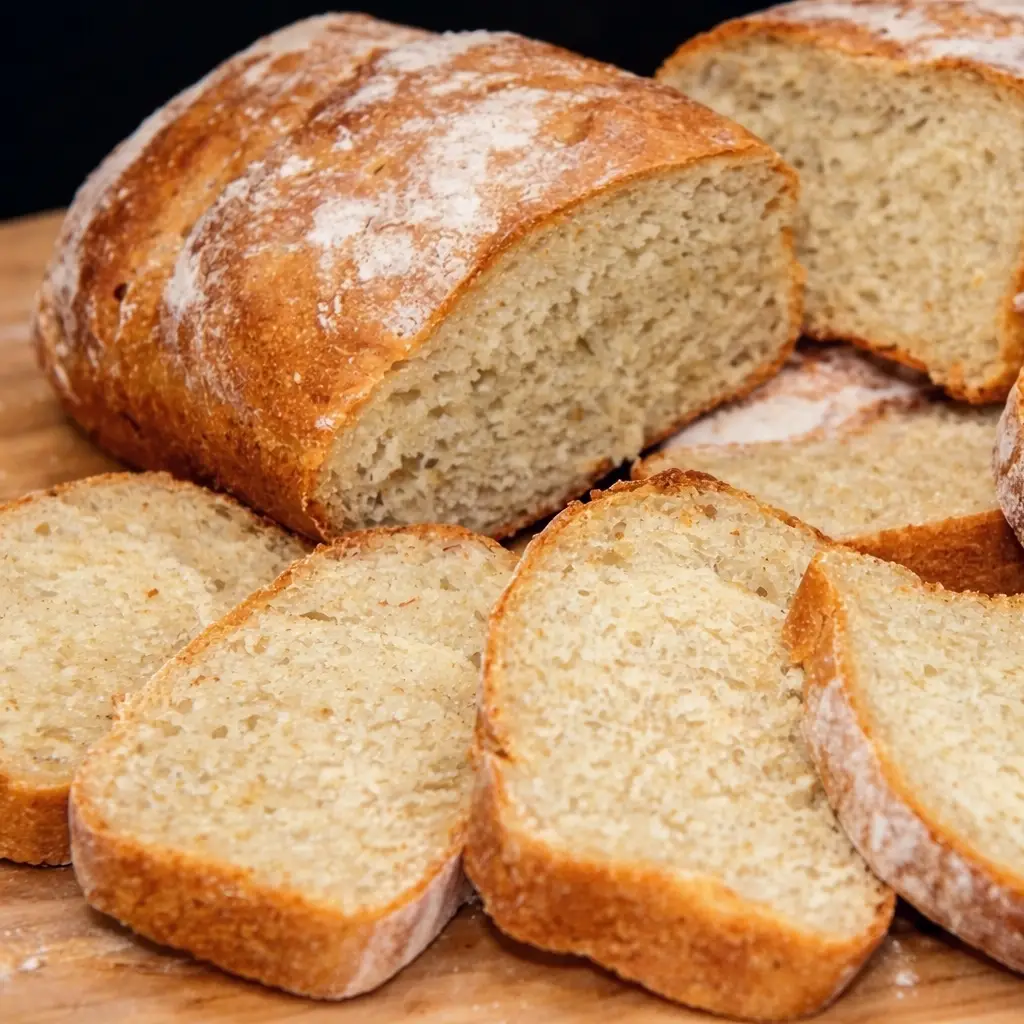
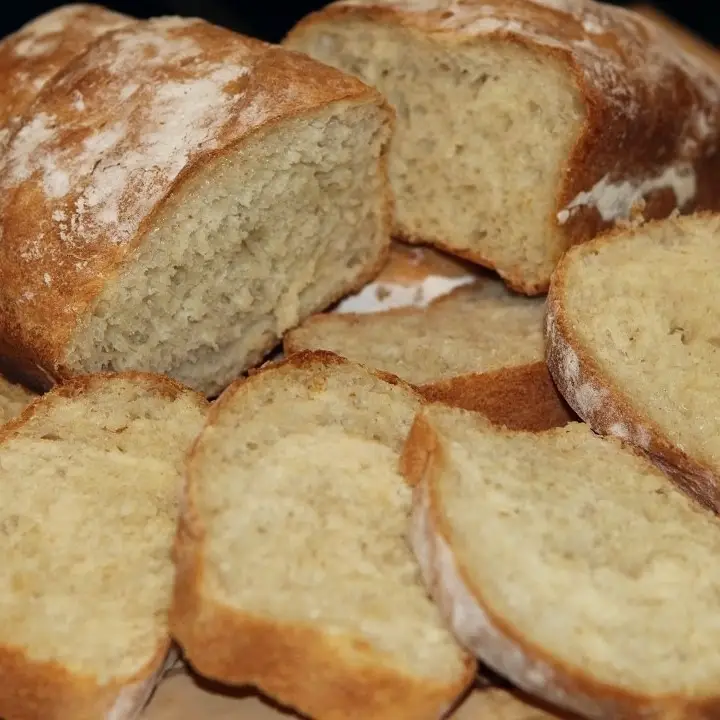
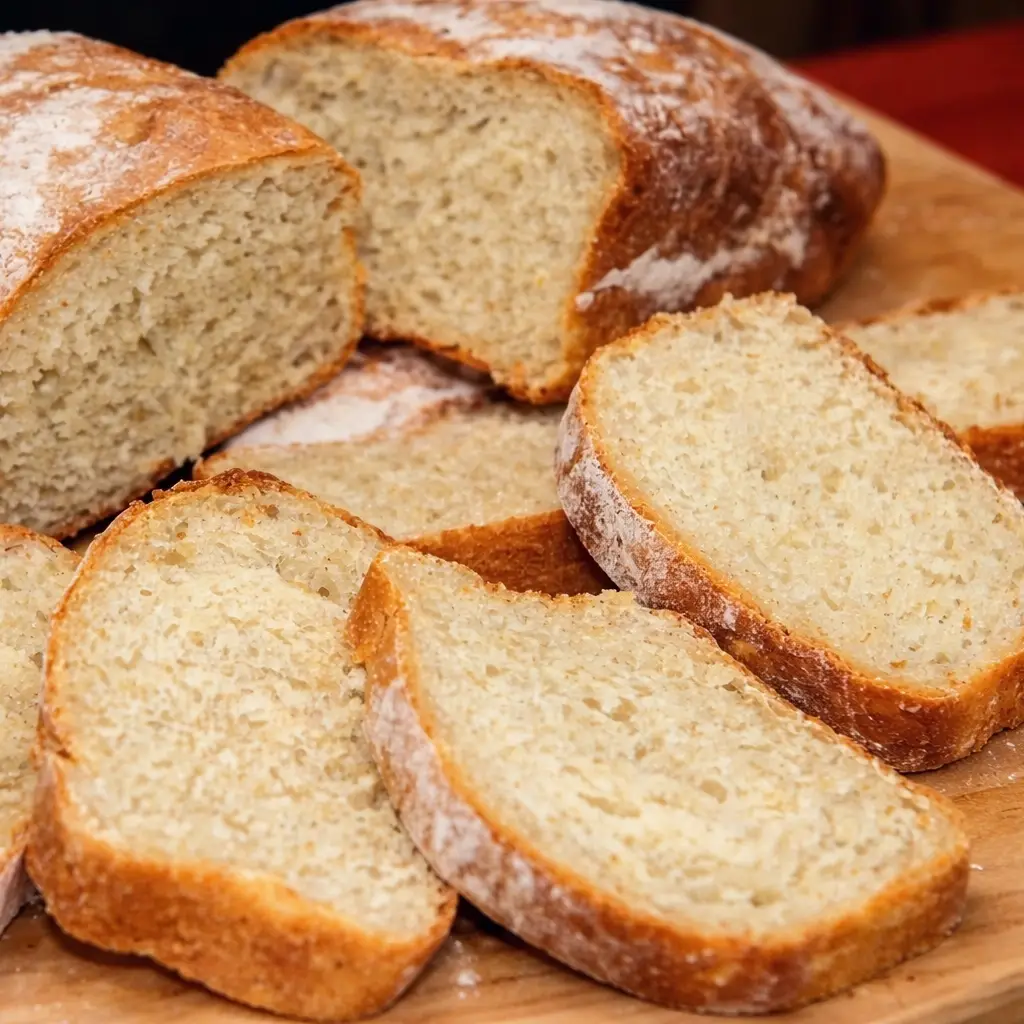
This loaf gives you a soft interior with a light chew and a thin golden crust. It is not as rich as brioche, not as open-textured as ciabatta, and not as crusty as a bakery country loaf. It lands right in the sweet spot for everyday homemade bread.
That makes it especially useful in a busy household. You can toast it for breakfast, use it for grilled sandwiches, serve it with stew, or turn leftovers into croutons for homemade Caesar salad or a side for classic homemade chicken pie.
Health and nutrition context
This is a hearty, practical bread recipe meant for everyday meals. It is filling, pantry-friendly, and easy to portion. Because it is a lean dough without butter or eggs in the base, it stays lighter than richer breads while still giving you enough structure for toast, soup dipping, and sandwiches.
Substitutions
Can you use whole wheat flour?
Yes, but do not swap all of the flour one-for-one unless you want a denser loaf. A better approach is to replace 25 to 40 percent of the all-purpose flour with whole wheat flour.
Can you reduce the sugar?
Yes. You can reduce it to 1 tablespoon without harming the dough too much.
Can you add fat?
Yes. For a softer loaf, add 1 to 2 tablespoons of neutral oil or melted butter to the dough.
Can you make two larger loaves instead of four smaller ones?
Absolutely. Just divide the dough in half and increase the baking time slightly if needed.
Can you bake it free-form?
Yes. The dough is balanced enough to hold shape on a sheet pan, though loaf pans will give you a neater slice.
FAQ
Why did my bread turn out dense?
Usually because the dough did not rise enough, the yeast was inactive, or too much extra flour was added during shaping.
Why was my dough too sticky?
Bread dough should feel soft and slightly tacky. If it feels unmanageable, add a little flour while kneading, but do it gradually. Too much flour makes bread heavy.
Why did the bread rise fast and then flatten?
That often happens when a dough uses too much yeast or proofs in a place that is too hot. A moderate rise at room temperature gives better structure.
Can I make this dough ahead?
Yes. After the first rise, you can refrigerate the dough overnight. Let it come closer to room temperature before shaping and proofing.
How should I store homemade bread?
Keep it wrapped at room temperature for up to 2 days, or refrigerate for a longer shelf life. You can also freeze it in slices.
What is the best way to serve it?
Warm with butter is hard to beat, but it is also excellent with soups, ragouts, sandwiches, and simple meals like chicken with vinegar or coq au vin French red wine chicken.
What to serve with homemade bread
This bread goes naturally with cozy, savory dishes. For a comforting dinner, serve it with weeknight beef ragout beef stew or classic boeuf bourguignon. For a lighter meal, add a bowl of creamy tomato soup or traditional Quebec cabbage salad. If you want something simple for lunch, use slices for sandwiches alongside air fryer chicken tenders or spread it with homemade garlic butter.
For more homemade dough inspiration, it also makes sense to explore foolproof homemade brioche bread, best homemade pizza, and Neapolitan-style pizza dough.

Homemade White Bread Recipe in the Oven
Ingredients
- 6 2/3 cups all-purpose flour
- 1 tablespoon dry yeast
- 1 tablespoon fine sea salt
- 2 tablespoons sugar
- 2 1/4 cups warm water
- Extra flour as needed for shaping
Instructions
- In a bowl, combine the warm water, yeast, and a pinch of the sugar. Let sit 5 to 10 minutes until foamy.
- In a large bowl, mix the flour, salt, and remaining sugar.
- Pour the yeast mixture into the flour and mix until a rough dough forms.
- Knead 8 minutes in a stand mixer or about 10 minutes by hand, until smooth and elastic.
- Cover and let rise for about 1 hour, until doubled.
- Turn onto a lightly floured surface, gently deflate, and divide into 4 small loaves or 2 larger loaves.
- Shape and place in floured loaf pans or on a parchment-lined baking sheet. Score the tops if desired.
- Cover and let rise again for 35 to 45 minutes, until puffy.
- Preheat the oven to 400°F.
- Bake 25 to 30 minutes, until golden brown and hollow-sounding when tapped.
- Cool on a rack for at least 15 minutes before slicing.
Video
Notes
FAQ
Why did my bread turn out dense?
Usually because the dough did not rise enough, the yeast was inactive, or too much extra flour was added during shaping.Why was my dough too sticky?
Bread dough should feel soft and slightly tacky. If it feels unmanageable, add a little flour while kneading, but do it gradually. Too much flour makes bread heavy.Why did the bread rise fast and then flatten?
That often happens when a dough uses too much yeast or proofs in a place that is too hot. A moderate rise at room temperature gives better structure.Can I make this dough ahead?
Yes. After the first rise, you can refrigerate the dough overnight. Let it come closer to room temperature before shaping and proofing.How should I store homemade bread?
Keep it wrapped at room temperature for up to 2 days, or refrigerate for a longer shelf life. You can also freeze it in slices.What is the best way to serve it?
Warm with butter is hard to beat, but it is also excellent with soups, ragouts, sandwiches, and simple meals like chicken with vinegar or coq au vin French red wine chicken.🔗 Useful Links
🛒 Michel Dumas Shop : Explore our kitchen essentials, including aprons and knives.
🌐 Linktree : Access all our important links in one place.
📱 YouTube | Instagram | Facebook | TikTok : Follow us for the latest recipes and culinary tips.