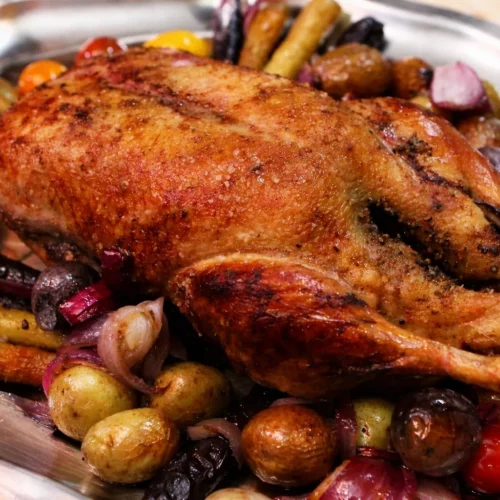
Roast Duck with Blueberry Maple Sauce
A whole roast duck is a classic oven dish with rich meat, rendered skin, and deep pan flavor. This version stands out because it pairs the bird with a glossy blueberry maple sauce and a colorful vegetable garnish, making it a strong choice for a weekend dinner, a holiday table, or any cold-weather meal that calls for something a little more special.
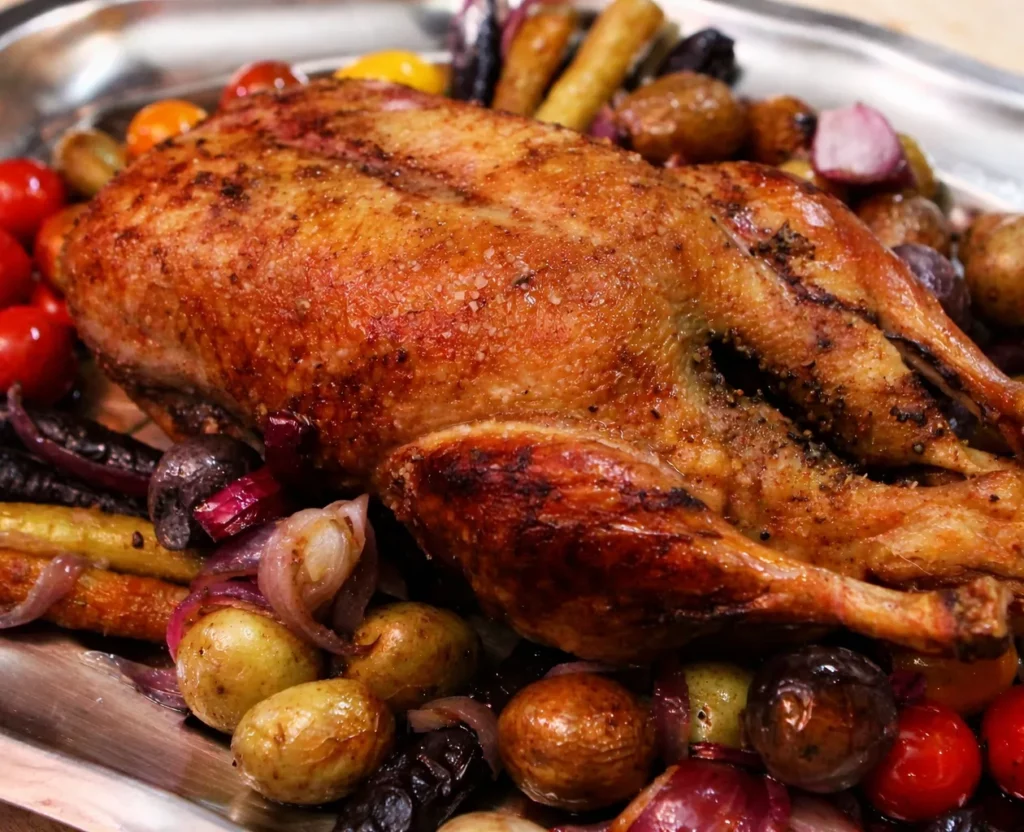
This recipe is based on my YouTube video, with a few adjustments since publication to make the proportions clearer and the method more reliable for home cooks. I make it this way because duck is naturally rich, so it benefits from a sauce that brings sweetness, fruit, and just enough balance without covering the flavor of the meat.
Roast duck is not a quick weeknight recipe, and that is exactly what makes it different from faster poultry dishes like one-pan marinated chicken or mustard chicken. This is a slower, more traditional centerpiece with real roasting time, rendered fat, and a proper rest before carving. The result is hearty and satisfying, with plenty of protein and a richer profile than chicken, so a little goes a long way.
Why this roast duck method works
A whole duck needs enough time for the fat to render and for the legs to become tender. The biggest mistake is treating it exactly like roast chicken. Duck carries more fat, and that means you want a moderate oven, a few turns during roasting, and enough time for the skin to color while the interior cooks through.
The other important point is balance. Duck loves fruit, but fruit sauces can become too sweet very quickly. Here, the blueberry maple sauce is reduced just enough to glaze the meat rather than drown it. If you enjoy classic French-style roasts like coq au vin or a proper cassoulet with duck and sausage, this recipe fits into that same family of generous, slower-cooked comfort food.
To support the duck, I use onions, carrots, and tomatoes. They pick up flavor from the roasting juices and give the platter more color. If you want to build your confidence with roasting vegetables first, it helps to look at a simple tray of oven roasted mixed vegetables. And if you are interested in making a proper stock-based sauce from scratch, a neutral brown veal stock is a useful base technique to understand, even if this duck sauce stays simpler.
Ingredients
For the duck
- 1 whole duck, about 6 to 6 1/2 pounds
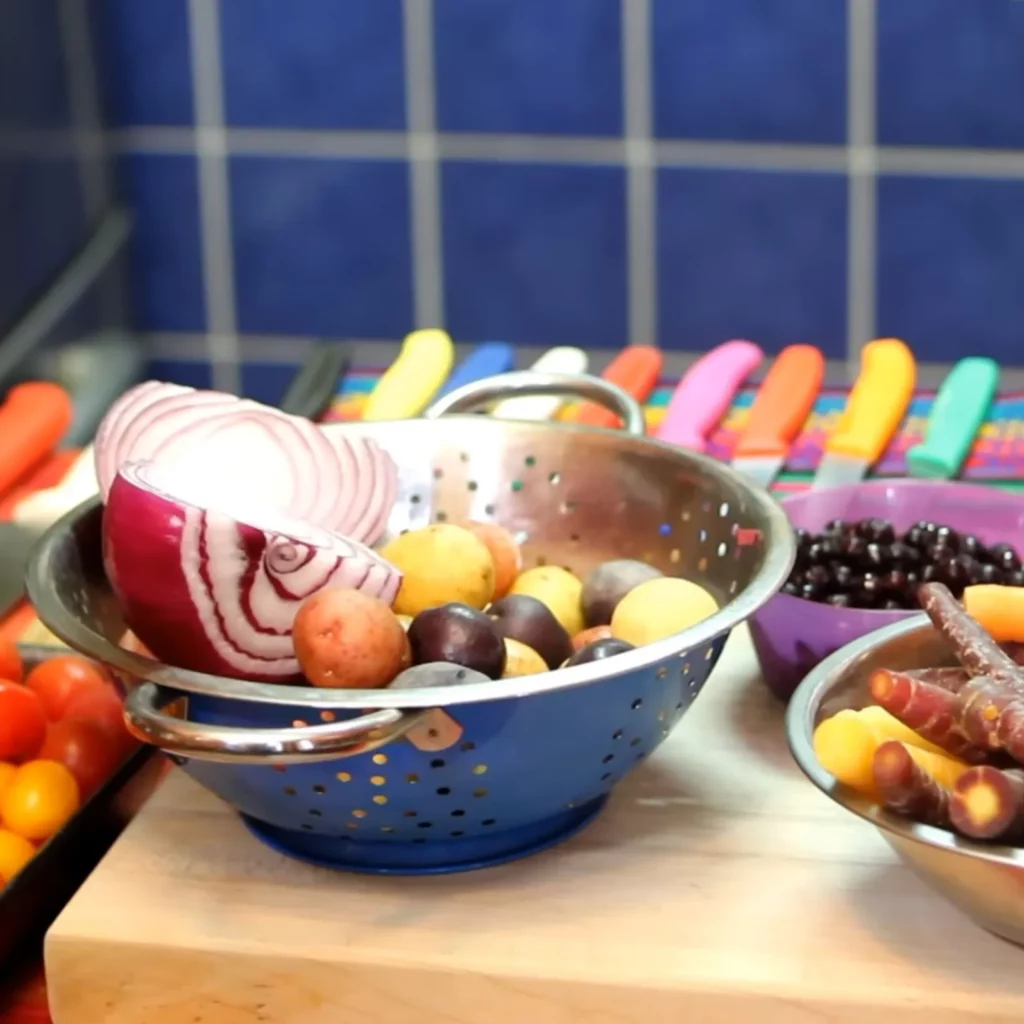
- 2 medium red onions, cut into quarters
- 6 to 8 medium carrots, peeled and cut into large pieces
- 8 to 10 pearl onions
- 8 to 10 small tomatoes or cherry-on-the-vine tomatoes
- 1 tablespoon duck fat or neutral oil
- Kosher salt
- Black pepper
For the blueberry maple sauce
- 1/2 cup strong duck stock, duck demi-glace, or reduced brown stock
- 3/4 cup wild blueberries, fresh or frozen
- 2 to 3 tablespoons maple syrup
- 1 teaspoon red wine vinegar or a small squeeze of lemon juice
- Salt, to taste
- Black pepper, to taste
Step-by-step instructions
1. Prepare the duck
Remove the duck from the refrigerator 30 to 45 minutes before roasting. Pat it very dry with paper towels, including the cavity. Trim any loose excess fat near the opening. If needed, prick only the fatty areas under the skin with the tip of a knife, especially around the lower breast and thighs, without piercing deeply into the meat.

Season the cavity and the outside generously with salt and black pepper. Tie the legs with kitchen twine so the duck keeps a nice shape in the oven.
2. Build the roasting base
Preheat the oven to 350°F.
Scatter the red onions, carrots, and pearl onions in a large roasting dish. Coat them lightly with the duck fat or oil and season with a little salt. Set the duck on top of the vegetables, breast side up.

This base does two things at once. It lifts the duck slightly so heat can circulate, and it catches the drippings that will season the vegetables and enrich the pan.
3. Start roasting
Roast the duck for 25 minutes. Remove the pan from the oven and carefully spoon off excess fat if there is a lot in the dish. Turn the duck over and roast for another 25 minutes.
Turn it once more so the breast faces up again. Spoon off excess fat if needed, season lightly once more, and continue roasting for 45 to 60 minutes, depending on the size of the bird. A duck around 6 to 6 1/2 pounds usually lands close to 1 hour 35 minutes to 1 hour 50 minutes total.

The skin should be well colored and the legs should feel tender when moved. For a fully cooked roast duck, aim for about 170 to 175°F in the thigh area without touching the bone. The breast meat may read lower, which is fine. That gives you a better result than pushing the entire bird too far.
4. Handle the vegetables properly
Check the vegetables during roasting. If some carrots or onions are becoming very soft before the duck is ready, remove them to a warm plate and return them later when serving. Add the tomatoes during the last 15 to 20 minutes if roasting them in the pan, or glaze them separately for a cleaner finish.
This part matters because duck releases a lot of fat. You want the vegetables flavored, not drowned.
5. Make the sauce
While the duck finishes roasting, place the stock, blueberries, and maple syrup in a small saucepan over medium heat. Bring to a gentle simmer and cook for about 3 to 5 minutes, just until the berries begin to soften and release their juice.
Add the vinegar or lemon juice, then season with salt and pepper. Reduce the sauce until lightly syrupy. It should coat a spoon but still pour easily. If it becomes too thick, loosen it with a spoonful of hot water or stock.
The goal is not a jam. The goal is a glossy, savory-fruity sauce that brightens the duck.
6. Rest before carving
Transfer the duck to a board and let it rest for 15 minutes. Resting keeps the juices in the meat and makes carving much easier.
If you want an even cleaner presentation, warm the reserved vegetables in the oven for a few minutes while the duck rests.

7. Carve and serve
Arrange the carrots, onions, pearl onions, and tomatoes on a large serving platter. Carve the duck by removing the legs first, then slicing the breast. Lay the pieces over the vegetables and spoon a little blueberry maple sauce over the top. Serve the rest on the side.
If you like rich meat with a sharp, buttery finish, a spoonful of garlic butter sauce on potatoes served alongside can work beautifully. And for a more classic French bistro feel, duck also pairs well with golden Parisian potatoes or even duck-fat potatoes in the Sarladaise style.

Substitutions
Wild blueberries are ideal because they are smaller and more intense, but regular blueberries will still work. Frozen berries are perfectly fine.
If you do not have duck stock or demi-glace, use a well-reduced brown stock. A lighter chicken stock can work in a pinch, but the sauce will be less deep.
Maple syrup suits the Canadian side of this recipe naturally, but honey can be used if needed. Use less at first, then adjust.
For the vegetable garnish, carrots and onions are the most important. Tomatoes are optional, though they add freshness and color at the end.

If you want a slightly different duck recipe with a creamier, sharper finish, duck breast with Dijon cream sauce is a different style altogether. And if you prefer preserved duck preparations ,duck confit or duck rillettes are better choices than roasting a whole bird.
FAQ
Is roast duck hard to make?
Not really, but it is less forgiving than roast chicken if you ignore the fat. The method itself is simple. The main thing is to manage the rendered fat and give the bird enough time.
How do I know when the duck is done?
The thighs should be tender, the juices should run clear, and the internal temperature in the thigh should be around 170 to 175°F. Resting after roasting is important.
Can I make the sauce ahead?
Yes. Make it a few hours ahead and reheat gently before serving. If it thickens too much, loosen it with a little stock or water.
Can I use duck breasts instead of a whole duck?
Not for this exact method. A whole duck roasts differently and provides the drippings that flavor the vegetables. If you want something faster, use a dedicated breast recipe instead.
What can I serve with roast duck?
Potatoes are the easiest match. A crisp green salad also helps cut the richness. For lighter sides, something fresh like a homemade Greek salad or a grated carrot salad with mustard vinaigrette works well.
Is this only for the holidays?
No. It is festive enough for Christmas or New Year’s, but it also works year-round for Sunday dinner, birthdays, or when you want a more traditional roast.
What to serve with / Suggested posts
For sides, serve this duck with Parisian potatoes,duck-fat Sarladaise potatoes, or oven roasted mixed vegetables. A fresh plate like homemade Greek salad or grated carrot salad with mustard vinaigrette keeps the meal balanced.
For similar slow-cooked or traditional dishes, try coq au vin,classic cassoulet with duck and sausage,oven braised boeuf bourguignon, or braised beef cheeks.
For more duck inspiration, continue with duck confit,duck rillettes, or duck breast with Dijon cream sauce.
For dessert, finish with creme caramel,homemade pouding chômeur, or a classic fruit tart with pastry cream.
Roast Duck with Blueberry Maple Sauce
Ingredients
- 1 whole duck about 6 to 6 1/2 pounds
- 2 medium red onions quartered
- 6 to 8 medium carrots peeled and cut into large pieces
- 8 to 10 pearl onions
- 8 to 10 small tomatoes
- 1 tablespoon duck fat or neutral oil
- Kosher salt to taste
- Black pepper to taste
- 1/2 cup duck stock duck demi-glace, or reduced brown stock
- 3/4 cup wild blueberries
- 2 to 3 tablespoons maple syrup
- 1 teaspoon red wine vinegar or lemon juice
Instructions
- Preheat the oven to 350°F.
- Pat the duck dry, trim loose excess fat, season inside and out with salt and pepper, and tie the legs.
- Place the onions, carrots, and pearl onions in a roasting dish. Toss with the duck fat or oil and a little salt.
- Set the duck on top, breast side up, and roast for 25 minutes.
- Remove excess fat if needed, turn the duck over, and roast 25 minutes more.
- Turn the duck breast side up again, remove excess fat if needed, and roast 45 to 60 minutes more, until the thigh reaches about 170 to 175°F.
- Add the tomatoes during the last 15 to 20 minutes, or glaze them separately at the end.
- For the sauce, simmer the stock, blueberries, and maple syrup for 3 to 5 minutes. Add the vinegar or lemon juice, then season with salt and pepper. Reduce until lightly syrupy.
- Rest the duck for 15 minutes before carving.
- Serve the carved duck with the vegetables and blueberry maple sauce.
Video
Notes
FAQ
Is roast duck hard to make?
Not really, but it is less forgiving than roast chicken if you ignore the fat. The method itself is simple. The main thing is to manage the rendered fat and give the bird enough time.How do I know when the duck is done?
The thighs should be tender, the juices should run clear, and the internal temperature in the thigh should be around 170 to 175°F. Resting after roasting is important.Can I make the sauce ahead?
Yes. Make it a few hours ahead and reheat gently before serving. If it thickens too much, loosen it with a little stock or water.Can I use duck breasts instead of a whole duck?
Not for this exact method. A whole duck roasts differently and provides the drippings that flavor the vegetables. If you want something faster, use a dedicated breast recipe instead.What can I serve with roast duck?
Potatoes are the easiest match. A crisp green salad also helps cut the richness. For lighter sides, something fresh like a homemade Greek salad or a grated carrot salad with mustard vinaigrette works well.Is this only for the holidays?
No. It is festive enough for Christmas or New Year’s, but it also works year-round for Sunday dinner, birthdays, or when you want a more traditional roast.🔗 Useful Links
🛒 Michel Dumas Shop : Explore our kitchen essentials, including aprons and knives.
🌐 Linktree : Access all our important links in one place.
📱 YouTube | Instagram | Facebook | TikTok : Follow us for the latest recipes and culinary tips.