Easy Homemade Tomato Sauce with Fresh Tomatoes
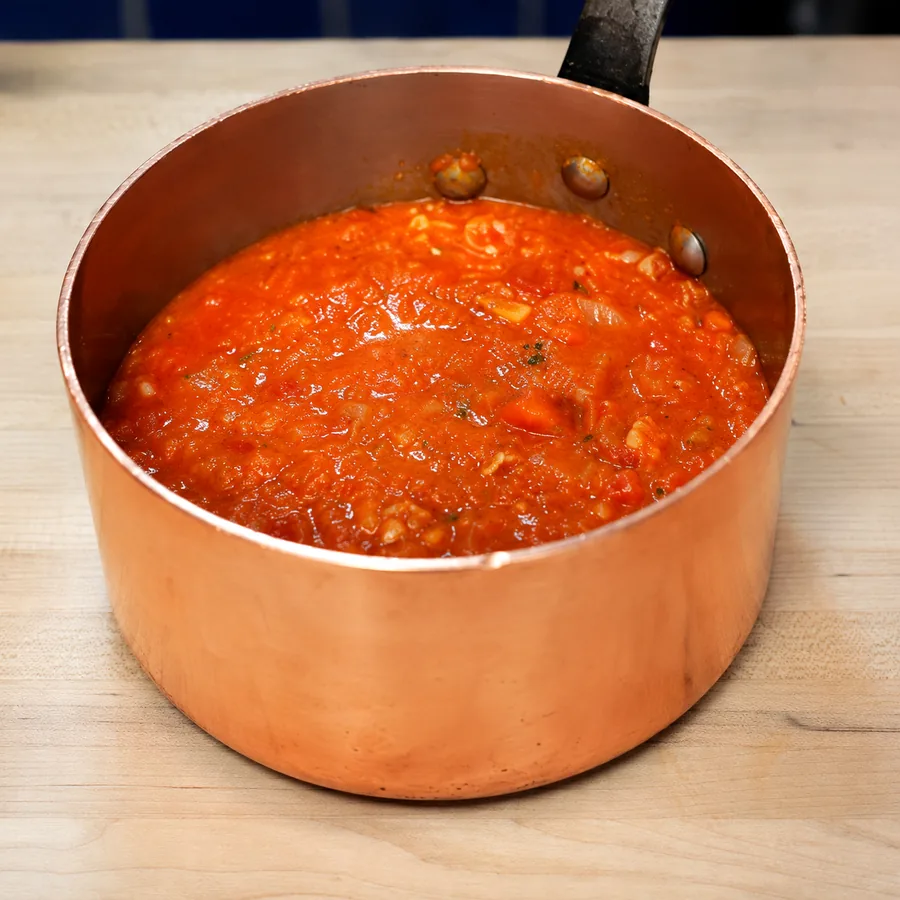
This fresh tomato sauce is a simple, all-purpose sauce made with ripe tomatoes, onion, garlic, thyme, bay leaf, and basil. I make it this way because peeling and slowly reducing the tomatoes gives the sauce a clean, concentrated flavour without relying on tomato paste. The mistake to avoid is cooking the garlic until dark; it should smell fragrant and stay pale before the tomatoes go in.
This recipe is based on my YouTube video, where I prepared three different tomato sauces at the same time. I have made a few adjustments since the video was published, mainly to give the ingredients precise quantities, shorten the tomato blanching time, and make the final consistency easier to reproduce. When the sauce is ready, it should coat a spoon while still flowing slowly back into the pot.
{VIDEO}
What Makes This Recipe Different
This is a basic fresh tomato sauce, not a creamy tomato sauce, a meat sauce, or a heavily seasoned marinara. There is no cream, ground meat, stock, or compulsory sugar. The flavour comes from ripe tomatoes, properly softened onion, fresh herbs, and enough uncovered cooking time to remove excess water.
I prefer to remove most of the tomato skins and seeds because the finished sauce becomes smoother and less bitter. It takes a little more preparation than opening a can of tomatoes, but the flavour is brighter, especially when field tomatoes are at their best in late summer.
The recipe still works year-round if you can find good-quality Roma, plum, or vine-ripened tomatoes. Avoid pale, firm tomatoes with very little aroma. They contain more water and less flavour, so the sauce will take longer to reduce and may taste flat.
This is also a useful base recipe. You can serve it with fresh pasta made without a machine, spread it over pizza dough, spoon it into a casserole, or freeze it in small portions for future meals.
Ingredients You Need
Use tomatoes that feel heavy for their size and smell distinctly tomato-like near the stem. Roma or plum tomatoes are especially convenient because they contain more flesh and less water, but any truly ripe tomato will work.
Ripe tomatoes: You need about 2 1/2 pounds. Depending on their size, this will usually be 6 to 10 tomatoes.
Onion: One medium yellow or white onion gives the sauce sweetness and body without overpowering the tomatoes.
Olive oil: Two tablespoons are enough for the onion, garlic, and basil. Adding more can make a small batch feel oily.
Garlic: Two fresh cloves provide a noticeable garlic flavour without turning the sauce sharp.
Bay leaf and thyme: These slowly perfume the tomatoes as they reduce.
Fresh basil: Add it near the end so its fresh aroma does not disappear during the long simmer.
Salt: Start with one teaspoon, then adjust after the sauce has reduced.
Cane syrup or sugar: This is optional. Use only a very small amount if the finished sauce tastes unusually acidic.

A small food mill is useful for producing a smooth sauce. A blender or immersion blender also works, although it will blend the seeds more thoroughly and create a slightly different texture.
Step-by-Step Instructions
Step 1: Blanch and peel the tomatoes
Bring a large pot of water to a strong boil. Prepare a bowl of ice water beside the stove.
Remove the stem end from each tomato and cut a shallow X through the skin on the bottom. Do not cut deeply into the flesh. Place the tomatoes in the boiling water for 30 to 60 seconds.
What I look for here is a small split forming around the X. As soon as the skin begins to loosen, move the tomato into the ice water. The three-minute blanch shown in the original video works, but it begins cooking the tomatoes and can make them unnecessarily soft.
Once cool enough to handle, lift the skin from the cut edges and peel it away.

Step 2: Remove most of the seeds
Cut each peeled tomato in half across its middle. Hold it over a fine-mesh strainer set above a bowl, then gently squeeze or scoop out the loose seeds and watery pulp.
Do not press so aggressively that all the tomato flesh is lost. A few seeds left behind will not ruin the sauce. Keep the strained tomato juice because it still contains plenty of flavour.
Pass the tomato flesh and collected juice through a food mill. For a more rustic consistency, simply chop the peeled tomatoes with a knife. You can also blend them briefly, but avoid running the blender for too long or the mixture may become foamy.

Step 3: Soften the onion
Finely chop the onion. Heat one tablespoon of olive oil in a wide saucepan or Dutch oven over medium heat.
Add the onion with a small pinch of the measured salt. Cook for 6 to 8 minutes, stirring regularly. It should become soft and translucent with perhaps a little golden colour around the edges.
The onion should not become deeply caramelized. Heavy browning will give the sauce a sweeter, darker taste that can cover the freshness of the tomatoes.
Add the minced garlic and cook for only 30 to 60 seconds. You know it is ready when the garlic smells fragrant. If it becomes brown, it can turn bitter.

Step 4: Simmer the sauce uncovered
Pour the processed tomatoes and reserved juice into the saucepan. Add the bay leaf, thyme, and remaining salt.
Bring the mixture to a gentle boil, then lower the heat and leave it partially bubbling without a lid. A wide pot is helpful because it allows water to evaporate more quickly.
Simmer for 35 to 55 minutes, stirring occasionally and scraping the bottom of the pot. The exact time depends on how watery the tomatoes are. Roma tomatoes may reduce relatively quickly, while large field tomatoes can take closer to an hour.
At this point, the sauce should no longer look watery around the edges. When you drag a spoon across the bottom, the path should remain visible for a moment before the sauce slowly closes over it. For more ways to correct the texture, see my guide on how to thicken a sauce without creating lumps.

Step 5: Finish with basil
Finely chop the basil or crush it with the remaining tablespoon of olive oil to make a loose basil paste.
Remove the bay leaf and thyme stem from the pot. Stir in the basil mixture, then taste the sauce. Add more salt if necessary.
Only add cane syrup or sugar if the reduced sauce still tastes noticeably acidic. Start with 1/2 teaspoon, stir well, and taste again. Ripe tomatoes usually need no added sweetness.
Let the sauce rest off the heat for about five minutes. It will thicken slightly as it cools.


Use it immediately with homemade fresh pasta and tomato sauce, or allow it to cool before refrigerating or freezing.
How to Use Fresh Tomato Sauce
For pasta, plan on roughly 1/2 to 3/4 cup of sauce for every two servings, depending on the shape of the pasta and whether other ingredients are being added.
It also makes a good starting point for homemade Neapolitan-style pizza dough. For pizza, simmer the sauce a little longer so it does not release too much moisture over the dough.
The sauce is light enough to use in homemade spaghetti and meatballs, but it also has enough body for baked dishes such as eggplant Parmigiana or homemade chicken Parmigiana.
Because the recipe contains vegetables, herbs, and a moderate quantity of olive oil, it is a lighter base than a cream or meat sauce. The finished nutrition will depend mainly on what you serve with it.
Storage and Freezing
Cool the sauce before transferring it to a covered container. Refrigerate it for up to four days.
For longer storage, divide it into freezer-safe containers, leaving a little room for expansion. Freeze for up to three months. Thaw overnight in the refrigerator or reheat gently from frozen in a small covered saucepan.
Fresh garlic or basil blended with oil should not be stored at room temperature. Prepare only what is needed for the recipe, refrigerate any extra immediately, and use it within four days. Freezing it in small portions is the safer choice for longer storage.
This recipe is not formulated or tested for shelf-stable home canning. Use a tested canning recipe when preserving tomato sauce at room temperature.
Substitutions
Canned whole tomatoes can replace fresh tomatoes when good fresh ones are unavailable. Use one 28-ounce can plus one 14-ounce can, drain only the excess watery liquid, and reduce the sauce until thickened.
Fresh oregano can replace thyme, although it gives the sauce a more assertive Italian-style flavour. Flat-leaf parsley can replace some of the basil, but the finished sauce will taste less sweet and aromatic.
A shallot can replace the onion for a smaller, milder batch. Maple syrup or ordinary granulated sugar can replace the cane syrup, but any sweetener should remain optional.
For a chunky sauce, skip the food mill and chop the peeled tomatoes. For a thinner sauce suited to soup, add a little homemade vegetable stock after the tomatoes have reduced.

FAQ
Do I really need to peel the tomatoes?
No, but leaving the skins in creates a more rustic texture. Tomato skins can separate into small curled pieces during cooking. A food mill will remove most of them, so manual peeling is optional when using one.
Can I leave the seeds in the sauce?
Yes. The sauce will still work, but removing most of the seeds produces a smoother texture and can reduce slight bitterness. There is no need to remove every single seed.
Why is my tomato sauce watery?
The tomatoes may contain more water than expected, or the cooking vessel may be too narrow. Continue simmering uncovered in a wide pot. The sauce is ready based on consistency, not solely on time.
Can I add tomato paste?
You can add one tablespoon if the tomatoes are pale or lack flavour. Cook the paste with the onion and garlic for about one minute before adding the tomatoes. With properly ripe tomatoes, it should not be necessary.
Can this sauce be used for pizza?
Yes. Reduce it until slightly thicker than pasta sauce. A wet sauce can make the centre of a pizza soggy, especially when making Neapolitan pizza without a pizza oven.
Why did my garlic taste bitter?
It was probably cooked too long or over excessively high heat. Add garlic only after the onion has softened, then cook it briefly before introducing the tomatoes.
Can I double the recipe?
Yes, but use a wide pot and expect a longer reduction time. A deep, narrow pot traps more steam and can make a double batch take much longer to thicken.
What to Serve With and Suggested Posts
Use the sauce in a pan of homemade lasagna without béchamel or as a dipping sauce beside a ricotta, mozzarella, and ham calzone.
A small quantity can be stirred into homemade minestrone with pasta to strengthen the tomato base. It also pairs naturally with air-fryer garlic bread.
During tomato season, serve it alongside fresh tomato bruschetta or use the same market vegetables to prepare a rustic French ratatouille.
For more foundational recipes, browse my collection of homemade sauces and condiments.

Easy Homemade Tomato Sauce with Fresh Tomatoes
Ingredients
- 2 1/2 pounds ripe Roma plum, or field tomatoes
- 1 medium yellow or white onion finely chopped
- 2 tablespoons olive oil divided
- 2 garlic cloves minced
- 1 bay leaf
- 1 fresh thyme sprig
- 1/2 cup loosely packed fresh basil leaves
- 1 teaspoon fine salt plus more to taste
- 1/2 to 1 teaspoon cane syrup or sugar optional
Instructions
- Bring a large pot of water to a boil and prepare a bowl of ice water.
- Remove the tomato stems, cut a shallow X into each tomato, and blanch for 30 to 60 seconds.
- Transfer the tomatoes to the ice water, then peel off the loosened skins.
- Halve the tomatoes, remove most of the seeds over a strainer, and reserve the strained juice.
- Process the tomato flesh and reserved juice through a food mill, or chop for a rustic sauce.
- Heat 1 tablespoon olive oil over medium heat and cook the onion for 6 to 8 minutes.
- Add the garlic and cook for 30 to 60 seconds without allowing it to brown.
- Add the tomatoes, bay leaf, thyme, and salt, then bring to a gentle boil.
- Simmer uncovered for 35 to 55 minutes, stirring occasionally, until the sauce coats a spoon.
- Chop the basil with the remaining olive oil.
- Remove the bay leaf and thyme, then stir in the basil mixture.
- Taste and add a small amount of cane syrup or sugar only if the sauce remains too acidic.