Pork Osso Buco Bourguignon with Red Wine, Bacon and Mushrooms
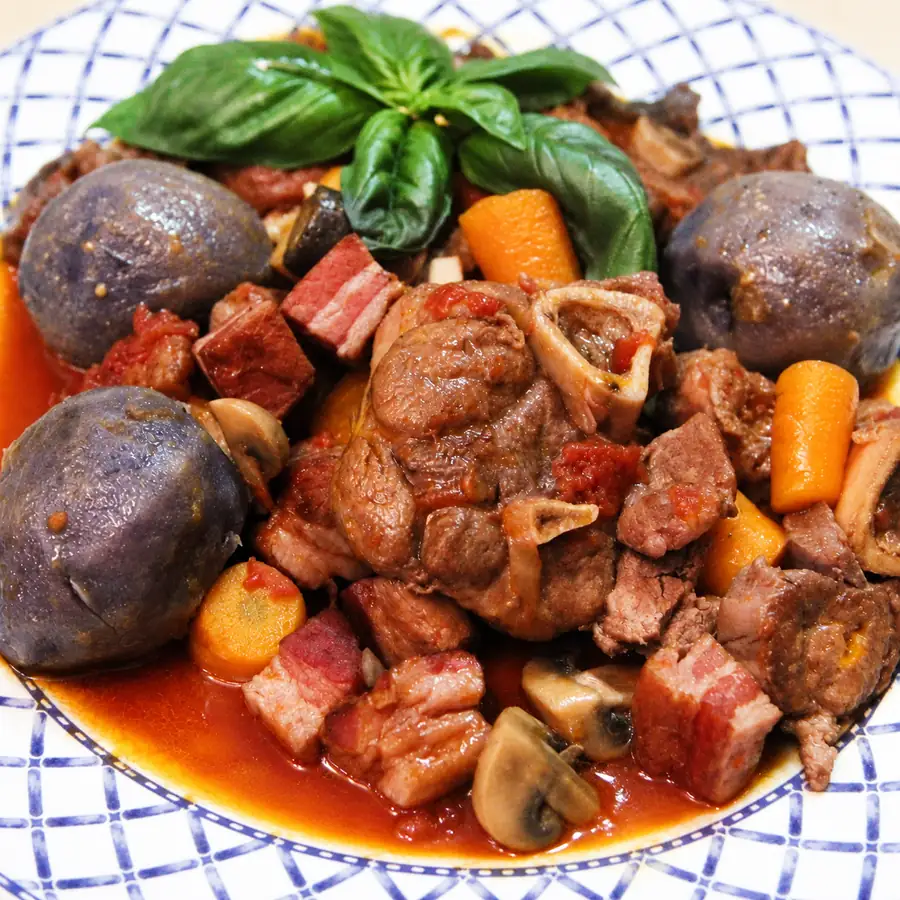
This pork osso buco Bourguignon is a slow-braised family meal made with cross-cut pork shanks, bacon, red wine, mushrooms, carrots, tomatoes and whole garlic cloves. I make it this way because rendering the bacon first and browning the shanks in that fat gives the sauce a deeper base; the mistake to avoid is rushing the sear, and the cue I look for is a dark golden crust on the pork before any liquid goes into the pot.
It is an osso buco cut cooked with the logic of a French Bourguignon: bone-in pork shanks are browned, then braised slowly with bacon, red wine, mushrooms, onion, tomatoes, carrots and brown stock. The marrow and connective tissue give the sauce body as the pork softens, while the bacon and mushrooms push the dish toward the familiar Bourguignon profile.
This recipe is based on my YouTube video, with a few adjustments since publication. I keep the same order of cooking shown in the video, including the bacon first, the shanks browned separately, the red-wine mushroom mixture, and the purple potatoes served on the side, but I standardize the liquid amounts so the braise stays saucy without turning thin.
Why This Pork Osso Buco Is Different
This is not the same dish as my classic pork Bourguignon. That recipe is built as a stew with boneless pork shoulder cut into cubes. Here the pork stays on the bone in thick osso buco slices, so you get marrow, gelatin and a much more substantial piece of meat on the plate.
It is also different from my rustic braised pork shank with white wine and tomatoes. That version leans toward the lighter tomato-and-white-wine side of osso buco. This one uses red wine, bacon and mushrooms to pull the sauce toward Bourguignon. If you know my traditional beef Bourguignon, the flavor logic will feel familiar even though the cut of meat is completely different.
The dish is hearty and protein-rich, with bacon, marrow and a full red-wine sauce, so I serve it as a true main course rather than trying to make it light. The carrots, mushrooms and potatoes turn it into a complete family plate that works especially well in cool weather, but there is nothing seasonal about the technique itself.
Ingredients You Need
The ingredients are simple, but the cut of pork matters. Ask for cross-cut pork shanks with the bone in the middle, roughly 1 to 1 1/2 inches thick. The video uses a generous family-size batch, so this written version is sized for about six servings.
4 lb pork osso buco slices, about 8 cross-cut pork shanks
8 oz thick-cut bacon, cut into 1-inch lardons
1 large red onion, diced
10 garlic cloves, peeled and left whole
8 oz white button mushrooms, halved or quartered
1 lb rainbow baby carrots, trimmed and cut into large pieces if needed
1 can (28 oz) diced tomatoes with juices
1 1/2 cups dry red wine
2 cups brown veal stock or rich brown stock
1 1/2 teaspoons kosher salt, divided
1 teaspoon freshly ground black pepper
1 1/2 lb small purple potatoes, for serving

For the stock, a homemade brown stock gives the sauce the cleanest roasted flavor. A neutral brown veal stock is especially useful here because it adds gelatin and depth without competing with the pork or red wine.
Step-by-Step Instructions
1. Prep the bacon and vegetables
Cut the bacon into substantial lardons rather than tiny dice. Dice the red onion, leave the garlic cloves whole, halve or quarter the mushrooms, and keep the carrots fairly large. I prefer large pieces here because they have to survive a long braise without disappearing into the sauce.

2. Render the bacon and brown the pork shanks
Set a wide skillet over medium heat and cook the bacon until the fat has rendered and the edges are beginning to color, about 6 to 8 minutes. Lift the bacon out and reserve it. Season the pork shanks with part of the salt and the black pepper, then brown them in the bacon fat over medium-high heat. Work in batches if the pan is crowded.
What I look for here is real color, not just grey cooked meat. Give each side 3 to 4 minutes without moving it too much. When the pork releases easily from the pan and has a deep golden surface, transfer the pieces to a heavy Dutch oven or braising pot.

3. Cook the aromatics, mushrooms and red wine
Lower the heat to medium. Add the red onion to the same skillet and cook until it starts to soften. Add the whole garlic cloves, then the mushrooms. Let the mushrooms take on a little color before pouring in the red wine.
As soon as the wine hits the pan, scrape up the browned bacon and pork residue. That is the flavor you do not want to leave behind. If you want the technique in more detail, my guide to deglazing a pan explains why those browned bits matter. Let the wine bubble for 2 to 3 minutes so the raw alcohol smell softens and the liquid reduces slightly.

4. Build the braise
Pour the onion, mushroom, garlic and red-wine mixture over the pork. Add the reserved bacon, diced tomatoes with their juices, brown stock and carrots. The meat should sit partly in the liquid rather than being completely submerged. Bring everything to a gentle simmer.

5. Braise slowly until the shanks are fork-tender
Partially cover the pot and keep it at a very gentle simmer for about 2 hours. Turn the shanks once or twice so the exposed surfaces cook evenly. A hard boil is the mistake to avoid: it can tighten the meat and break the vegetables apart before the collagen has had time to soften.
You know the pork is ready when a fork slides into the thick meat with very little resistance and the meat is beginning to loosen around the center bone, but the slices can still be lifted without collapsing. The sauce should look glossy and lightly thickened from the gelatin in the shanks.

6. Cook the purple potatoes and finish the sauce
While the pork finishes, cook the purple potatoes in salted water until a knife enters the center easily. Drain them well, then warm them briefly in a hot pan so the outside dries and takes on a little sheen. Keep them whole if they are small, just as in the video.
Remove the finished shanks carefully. If the sauce is thinner than you want, simmer it uncovered for a few minutes before serving. Do not reduce it aggressively because the bacon, stock and tomatoes become saltier as the liquid concentrates. For other braises, the same sauce-control principle appears in my guide to thickening a sauce.

Plate one or two pork slices with plenty of the bacon, mushrooms, carrots, garlic and sauce, then add the purple potatoes around the side. Spoon a little extra sauce around the plate rather than drowning the potatoes.

Chef Notes for a Better Braise
The bone is an advantage here. Pork shank contains connective tissue that needs time to convert into gelatin, which is why this cut works so well for a slow family meal. If you stop the cooking too early, the meat can be fully cooked but still firm. Tenderness, not just temperature, is the real doneness cue for this particular dish.
The bacon should season the pot, not dominate it. I use thick pieces because they stay distinct after two hours instead of disappearing. The mushrooms are also better halved or quartered than thinly sliced for the same reason.
Finally, keep the red wine dry. A sweet wine makes the combination of carrots, tomatoes and pork feel heavy. The method is close to my braised pork shoulder with beer and onions in the sense that both depend on low heat and time, but the red wine and mushroom base gives this dish a much more Burgundian character.
What to Serve With It
The purple potatoes shown in the video make the plate complete, but a smooth homemade mashed potato is the easiest way to catch every bit of the sauce. For a more traditional French potato side, Pommes Boulangeres also work well because their softer texture sits nicely beside the shank.
If you want more vegetables on the table, add a tray of oven-roasted mixed vegetables and keep the portion of potatoes smaller. For more ideas in the same style, my collection of easy pork dinners for families has faster options, while the braised and stew recipe collection stays closer to the slow-cooked character of this meal.
Substitutions
The cut is what defines the recipe, so cross-cut pork shank is the best choice. If your butcher only has larger shanks, ask for them cut into thick rounds. For a boneless stew using the same red-wine family of flavors, make my pork Bourguignon with pork shoulder instead of trying to force a lean cut into this long braise.
White button mushrooms are what you see in the video, and they hold up well. Cremini mushrooms can fill the same role if that is what you have. Standard orange carrots are fine if rainbow baby carrots are unavailable; keep the pieces large so they stay intact.
If purple potatoes are hard to find, use another small waxy potato for the side. The potato does not cook in the braise, so changing the variety will not alter the sauce or the pork. If you want a completely different pork-and-potato meal, my pork and carrot stew with potatoes is built around potatoes cooked directly with the meat.

FAQ
Can I make this pork osso buco a day ahead?
Yes. Cool the pork in its sauce, refrigerate it, then reheat gently the next day. The sauce will usually set quite firmly when cold because of the gelatin from the shanks, then loosen again as it warms.
Why is my pork shank still tough after two hours?
It needs more time at a gentle simmer. Pork shank can be fully cooked long before the connective tissue has softened. Keep cooking until a fork enters easily and the meat begins to relax around the bone.
Can I use pork shoulder instead of osso buco slices?
For the same presentation, no. Shoulder does not give you the center bone or marrow that makes this dish distinctive. If shoulder is what you have, use my linked pork Bourguignon recipe instead.
Should the sauce completely cover the meat?
No. This is a braise, not a soup. The liquid should come partway up the pork. Turn the shanks during cooking so the exposed surfaces spend some time in the sauce.
What kind of red wine works best?
Use a dry red wine with moderate tannin, something you would be comfortable drinking with dinner. The sauce already has sweetness from carrots and tomatoes, so avoid sweet wine.
Can I freeze the finished osso buco?
Yes. Freeze the pork with enough sauce to keep it protected. Thaw overnight in the refrigerator and reheat slowly. I prefer to make the potatoes fresh rather than freeze them with the braise.
Suggested Posts
For another deep red-wine braise, start with my classic beef Bourguignon. For a lighter pork shank treatment, the white-wine pork osso buco gives you a useful contrast in both sauce and final flavor.
You can also browse my cozy family comfort-food recipes when you want another generous weekend meal, or use the family pork recipe collection when you need something faster than a two-hour braise.

Pork Osso Buco Bourguignon with Red Wine, Bacon and Mushrooms
Ingredients
- 4 lb pork osso buco slices about 8 cross-cut pork shanks
- 8 oz thick-cut bacon cut into 1-inch lardons
- 1 large red onion diced
- 10 garlic cloves peeled and left whole
- 8 oz white button mushrooms halved or quartered
- 1 lb rainbow baby carrots trimmed
- 1 can 28 oz diced tomatoes with juices
- 1 1/2 cups dry red wine
- 2 cups brown veal stock or rich brown stock
- 1 1/2 teaspoons kosher salt divided
- 1 teaspoon freshly ground black pepper
- 1 1/2 lb small purple potatoes for serving
Instructions
- Cut the bacon into lardons. Dice the onion, leave the garlic whole, halve the mushrooms and trim the carrots.
- Render the bacon over medium heat for 6 to 8 minutes. Remove it and reserve the fat in the pan.
- Season the pork shanks and brown them in the bacon fat for 3 to 4 minutes per side. Transfer to a heavy braising pot.
- Cook the onion, whole garlic and mushrooms in the same skillet. Add the red wine, scrape the pan and simmer 2 to 3 minutes.
- Pour the skillet mixture over the pork. Add bacon, tomatoes, brown stock and carrots. Bring to a gentle simmer.
- Partially cover and braise on low heat for about 2 hours, turning the shanks occasionally, until fork-tender.
- Boil the purple potatoes in salted water until tender, drain, then warm briefly in a hot pan.
- Remove the pork, reduce the sauce briefly if needed, adjust seasoning and serve with the vegetables, bacon, sauce and purple potatoes.