Kangaroo Medallions with Red Wine Shallot Sauce
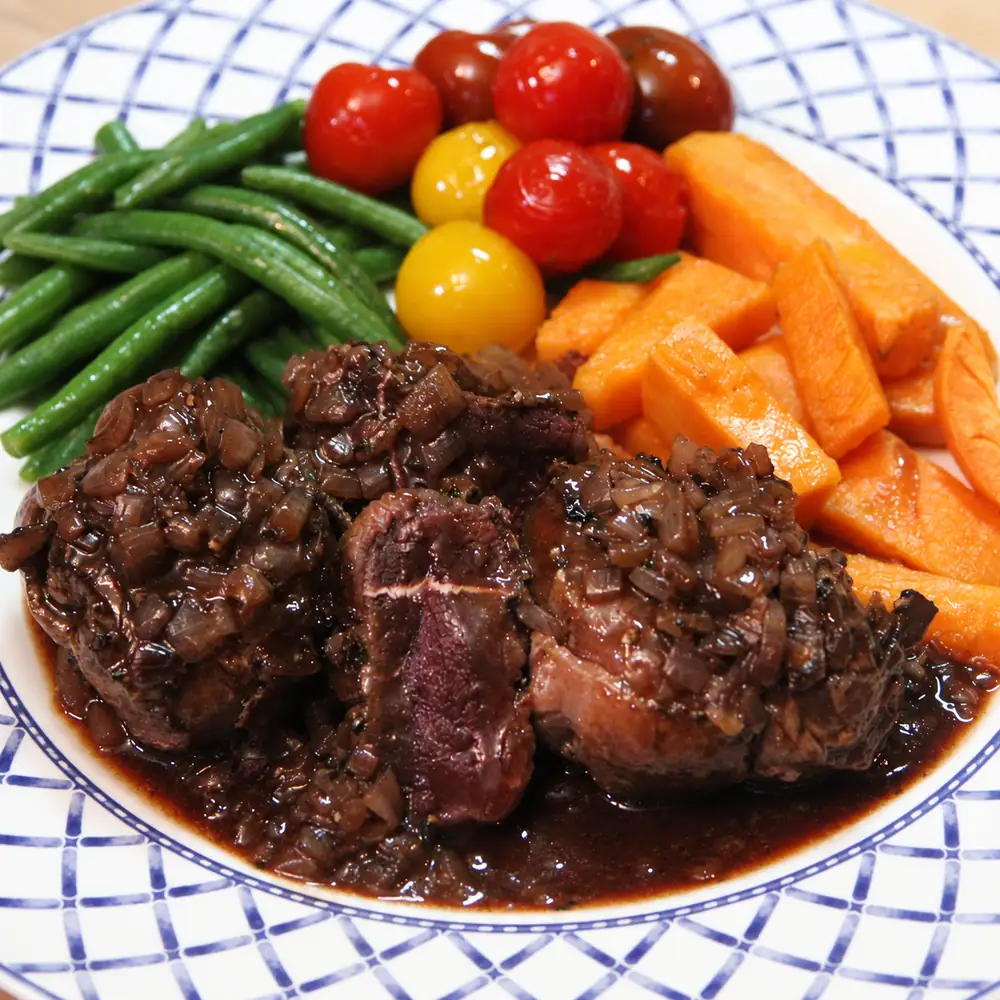
The shallots and red wine make the sauce here, while sweet potatoes, green beans and cherry tomatoes each keep their own texture. I cook the vegetables separately so the potatoes can brown without turning the beans soft. The mistake to avoid is leaving the kangaroo in a fiercely boiling sauce; reduce the sauce first, then finish the medallions gently and check the center with a thermometer.
Kangaroo medallions are small portions of kangaroo meat cut or formed into rounds. In this recipe they are wrapped and tied, seared in a pan and served with a shallot-red-wine sauce rather than a cream sauce or a long braise. It is a composed dinner for two, suitable for a weekend meal or a small celebration at any time of year.
This recipe is based on my YouTube video, with a few adjustments since publication. The written version uses prepared brown veal stock for the sauce and skips the deliberate flambé. It also gives a thermometer-based finish for wrapped or formed medallions instead of using the very red center shown in the video as a cooking target.
{VIDEO}
A pan sauce, not a stew
The meat only returns to the sauce after the wine has reduced and the shallots have softened. That keeps the sauce-making time separate from the final cooking of the medallions. A thin, watery sauce would need a longer boil, which is exactly what I want to avoid with the meat sitting in it.
The flavor direction is close to bison flank steak with red-wine sauce and steak with shallot sauce. The difference here is the wrapped medallion format and the three separately cooked vegetables. There is no cream, mushroom garnish or cheese in the main recipe.
Ingredients for two plates
Medallions and sauce
4 bacon-wrapped kangaroo medallions, about 4 oz each, roughly 1 to 1 1/4 inches thick
1/2 cup finely chopped shallots
1/2 cup dry red wine
3/4 cup prepared brown veal stock with a light sauce consistency, not undiluted concentrate
2 teaspoons neutral oil
1/4 teaspoon fine salt, plus more after tasting the sauce
1/4 teaspoon freshly ground black pepper
Vegetables
1 lb sweet potatoes, peeled and cut into 1/2-inch-thick short wedges
8 oz green beans, trimmed
8 oz cherry tomatoes
2 tablespoons butter or cooking margarine, divided
1 teaspoon neutral oil
1/4 teaspoon fine salt, plus salt for the blanching water
1/4 teaspoon freshly ground black pepper

Buy medallions intended for human consumption from a reputable supplier, and read their cooking instructions before starting. A tied portion may contain several pieces of meat rather than a single intact muscle. Do not assume it should be treated like a plain beef steak.
Use stock that already has some body. My brown veal stock is a useful base; a prepared demi-glace can also be used when diluted according to its label. A spoonful of concentrated paste is not interchangeable with a measured cup of prepared stock. Taste before adding more salt, especially with bacon around the meat.
Cook the vegetables first, then the medallions
1. Sauté and roast the sweet potatoes
Heat the oven to 400°F. Cut the peeled sweet potatoes into short wedges about 1/2 inch thick. Melt 1 tablespoon of the butter with the teaspoon of vegetable oil in an ovenproof skillet over medium-high heat. Add the potatoes, half the vegetable salt and half the vegetable pepper. Sauté for 4 to 5 minutes, turning to coat and lightly color the edges.
Transfer the skillet to the oven for 15 to 20 minutes, tossing once. A knife should enter the center easily, but the pieces should still hold their shape. Use a baking tray if the skillet handle is not oven-safe. For a separate alternative method, see air-fryer sweet potatoes.

2. Blanch and drain the green beans
Bring a saucepan of salted water to a boil. Add the trimmed beans and cook for 4 to 6 minutes, until bright green and tender with a little resistance. Drain thoroughly. If preparing them well ahead of the other components, cool them quickly in cold water and drain again.
Water clinging to the beans will dilute the tomato pan later. Shake the colander and let the beans stand briefly while you prepare the next component.

3. Warm the cherry tomatoes
Melt the remaining tablespoon of butter in a second skillet over medium heat. Add the tomatoes and the remaining vegetable salt and pepper. Cook for 4 to 6 minutes, rolling the tomatoes gently rather than crushing them. Their skins should become shiny and begin to wrinkle, with most tomatoes remaining whole. Set aside off the heat.

4. Brown the wrapped medallions
Pat the medallions dry with paper towels. Keep food-safe butcher’s twine in place for cooking, but remove any plastic or packaging. Season with the meat salt and pepper. Heat the remaining 2 teaspoons of oil in a heavy skillet over medium-high heat.
Sear the flat faces for about 2 minutes each, then use tongs to brown the bacon-covered edges for another 1 to 2 minutes. Work without crowding the pan. Transfer to a clean plate while you make the sauce; the medallions are not necessarily cooked through at this stage. Keep this pause brief and proceed directly with the sauce.

5. Soften the shallots in the same pan
Lower the heat to medium and retain a thin coating of pan fat. Add the chopped shallots and stir for 2 to 3 minutes, until translucent with a few golden edges. Reduce the heat if they darken quickly. Browned pan deposits are useful; black, burnt deposits should not go into the sauce.

6. Reduce the wine and add the stock
Measure the red wine into a cup. Take the skillet off the burner, pour in the wine and return it to medium heat. Scrape up the browned deposits and simmer until the wine has reduced to roughly 2 tablespoons. This is a controlled deglaze, not a flambé: there is no need to ignite the pan.
Add the prepared brown stock and the juices collected on the meat plate. Bring to a simmer for 3 to 5 minutes, until the sauce lightly coats the back of a spoon. The shallots should remain visible. My guide to deglazing a pan explains this technique, which also appears in ribeye with Bordelaise sauce.

7. Finish gently and check the temperature
Return the medallions to the sauce over low to medium-low heat. Turn and spoon sauce over them, allowing only gentle bubbling. Start checking after 4 minutes; thicker or colder medallions may need 8 to 12 minutes or longer. Add a splash of water if the sauce becomes too thick before the meat is ready.
For the wrapped or formed medallions used in this written version, check the thickest center of every piece and reach 167°F, or a higher temperature specified on the packaging. Rest for 3 to 5 minutes after cooking. Australian food-safety guidance distinguishes intact kangaroo cuts from rolled or otherwise higher-risk preparations. Color alone is not a substitute for the temperature check.

8. Reheat the vegetables and plate
While the meat rests, add the drained beans to the tomatoes and toss over medium heat for 1 to 2 minutes. Check the potatoes and warm them briefly if needed. Remove all twine or other cooking ties from the medallions.
Divide the potatoes, beans and tomatoes between two warm plates. Add two medallions to each plate and spoon over the shallot sauce. Taste the sauce before its final salt adjustment. Keep the vegetables alongside the meat instead of burying everything under gravy.


Three details that improve the plate
Keep the sweet potatoes fairly even. Thin scraps burn while larger chunks remain firm. Short wedges also sit more neatly beside the medallions than a pile of very long fries.
Reduce before returning the meat. The sauce should already be close to its finished consistency. If it becomes sticky, loosen it with a tablespoon of water instead of continuing to boil it down.
Drain the beans and protect the tomatoes. This is a plate with separate textures. Waterlogged beans and broken tomatoes turn the garnish into a wet mixture.
The meal includes meat, a starchy vegetable and green vegetables, with additional richness from the bacon, cooking fat and sauce. Adjust the portion size to your appetite rather than treating it as a particularly light steak dinner.
Substitutions
Plain, intact kangaroo steaks can replace the wrapped medallions, but their shape and cooking requirements differ; follow the supplier’s directions rather than copying the medallion timing. Beef tenderloin is a separate alternative, not the same recipe. steak Diane and steak with cognac-mushroom sauce offer beef-based pan-sauce meals.
For a wine-free version, replace the wine with the same volume of low-sodium stock and add 1 teaspoon of red-wine vinegar near the end. This changes the flavor and will not recreate a red-wine reduction. Butter and cooking margarine are interchangeable here. A dairy-free version also needs a dairy-free prepared stock or demi-glace.

FAQ
Are the orange vegetables carrots?
No. They are sweet potatoes, cut into short pieces, sautéed and finished in the oven. The tomatoes and green beans are cooked separately.
Do I need to flambé the meat?
No. The video includes a flambé, but the written method uses a measured red-wine deglaze without a deliberately lit flame. Never pour alcohol from a bottle into a pan over a burner.
Why are my medallions tough?
Hard boiling, a long hot hold and using a cut intended for slow cooking can all give a disappointing result. Buy the correct product, check its cooking instructions and stop heating once the required temperature is reached. Do not reduce the safety target to compensate for a tough cut.
Can I prepare the vegetables in advance?
Yes. Blanch and cool the beans, cut the sweet potatoes and chop the shallots. Refrigerate prepared ingredients until needed. Cook the meat near serving time rather than partly cooking it and holding it for later.
Side dishes and other sauce ideas
The vegetables in the card make a complete plate. For a different menu, oven-roasted mixed vegetables can replace the three-pan garnish. A small portion of gratin dauphinois gives a richer alternative to the sweet potatoes.
Keep sauce changes for another version: Roquefort sauce for steak is creamy and salty, while steak with Béarnaise takes the plate toward butter and herbs. Neither should be stirred into the red-wine sauce in this recipe.
Kangaroo Medallions with Red Wine Shallot Sauce
Ingredients
- 4 bacon-wrapped kangaroo medallions about 4 oz each, roughly 1 to 1 1/4 inches thick
- 1/2 cup finely chopped shallots
- 1/2 cup dry red wine
- 3/4 cup prepared brown veal stock with a light sauce consistency not undiluted concentrate
- 2 teaspoons neutral oil
- 1/4 teaspoon fine salt plus more after tasting the sauce
- 1/4 teaspoon freshly ground black pepper
- 1 lb sweet potatoes peeled and cut into 1/2-inch-thick short wedges
- 8 oz green beans trimmed
- 8 oz cherry tomatoes
- 2 tablespoons butter or cooking margarine divided
- 1 teaspoon neutral oil
- 1/4 teaspoon fine salt plus salt for the blanching water
- 1/4 teaspoon freshly ground black pepper
Instructions
- Heat the oven to 400°F. Sauté the sweet potato wedges in 1 tablespoon butter and 1 teaspoon oil for 4 to 5 minutes. Season with half the vegetable salt and pepper. Roast 15 to 20 minutes, until tender.
- Boil the green beans in salted water for 4 to 6 minutes, then drain well. Cook the tomatoes in the remaining butter with the remaining vegetable salt and pepper for 4 to 6 minutes; reserve.
- Pat the medallions dry, keep food-safe twine in place and season with the meat salt and pepper. Sear in 2 teaspoons oil about 2 minutes per flat face, then brown the bacon edges for 1 to 2 minutes. Transfer to a clean plate and immediately make the sauce.
- Lower the heat. Cook the shallots in a thin layer of the pan fat for 2 to 3 minutes. Off the burner, add the measured wine. Return to medium heat, scrape the pan and reduce to about 2 tablespoons. Do not deliberately ignite.
- Add prepared brown veal stock and collected meat juices. Simmer for 3 to 5 minutes, until lightly coating a spoon.
- Return the medallions to the sauce over low to medium-low heat. Turn and baste gently until every center reaches 167°F or a higher label temperature. Start checking after 4 minutes; allow longer as needed. Add water if the sauce thickens too much.
- Rest the meat 3 to 5 minutes. Meanwhile, warm the beans with the tomatoes and check the potatoes. Remove all twine and ties.
- Serve two medallions per plate with the three vegetables. Taste the sauce, adjust seasoning and spoon over the meat.