Steak with Marchand de Vin Sauce (French Red Wine Pan Sauce)
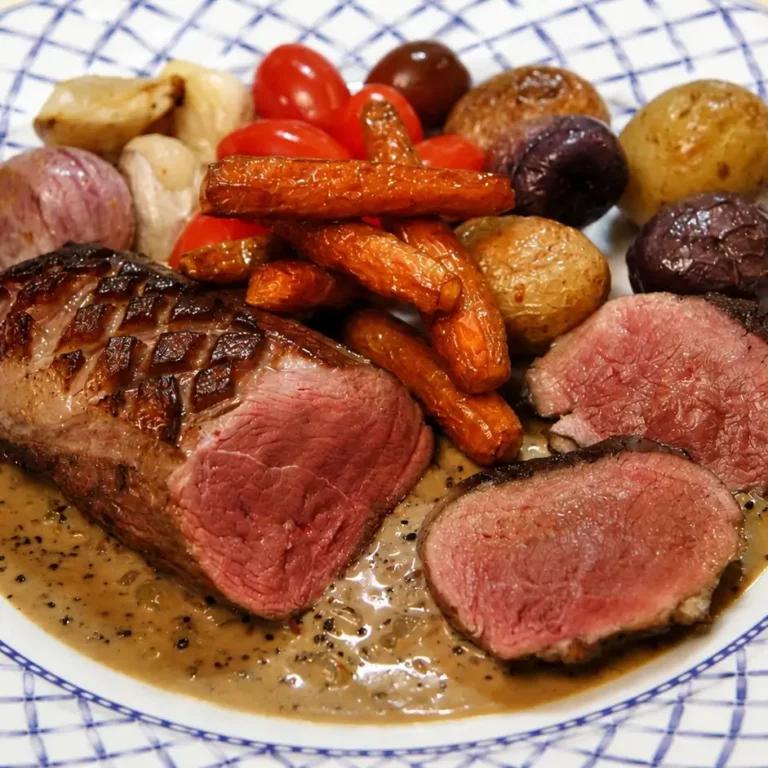
This classic steak with marchand de vin sauce pairs a deeply seared beef steak with shallots, Cognac, red wine and rich brown stock reduced directly in the steak pan. I make it this way because the fond left from searing becomes part of the sauce; the main mistake to avoid is reducing an already salty stock too aggressively, and the result I look for is a glossy sauce that coats the steak without becoming thick or sticky.
Marchand de vin means “wine merchant” in French, and the name fits the sauce perfectly: red wine is the backbone, but it becomes much more than wine once it is reduced with shallots, Cognac and beef or veal stock. In this older bistro-style preparation, the steak and sauce are built from the same pan, so the browned bits from the beef become part of the finished flavor rather than being washed away.
This recipe is based on my YouTube video, with a few adjustments since publication. I keep the spirit of the original preparation, including the Cognac, red wine, brown stock and final glazing of the steaks, but I give more precise quantities and a safer home-kitchen method for adding alcohol. I also reduce the amount of finishing time in the sauce so a properly cooked steak does not become overdone while it is being glazed.
{{VIDEO}}
What Is Marchand de Vin Sauce?
Marchand de vin is a French red wine sauce usually built with shallots, wine and a meat stock or demi-glace. It belongs to the same family of pan sauces as Bordelaise, although versions differ in how they are finished and whether marrow, herbs or other garnishes are included. If you enjoy this style of sauce, my easy red wine reduction sauce for steak uses the same basic principle in a simpler format.
The most important thing is reduction. Red wine needs enough time to lose its raw alcoholic edge and concentrate before the stock is added. The stock then reduces until the sauce coats the back of a spoon. This is not a cream sauce and it should not become heavy. The best version tastes concentrated, beefy and wine-forward while still flowing naturally across the plate.
My bison flank steak with red wine sauce is another marchand de vin-style preparation, while the bone-in ribeye steak Bordelaise shows a closely related French steak-and-red-wine combination.
Ingredients You Need
For the steak and sauce:
4 thick striploin or New York strip steaks, about 10 to 12 oz each
2 teaspoons kosher salt, plus more as needed
1 teaspoon freshly ground black pepper
2 tablespoons neutral high-heat oil
2 large shallots, very finely minced, about 1/2 cup
1/4 cup Cognac or brandy
1 cup dry red wine
2 cups low-sodium brown beef or veal stock, prepared brown sauce, or diluted demi-glace
2 tablespoons cold unsalted butter, cut into pieces
For the vegetables:
1 1/2 lb baby potatoes
1 lb baby or rainbow carrots
2 bunches asparagus, trimmed
4 tablespoons prepared herb or garlic butter, divided
Salt for the cooking water

The quality of the stock matters here because it is reduced substantially. If you start with a very salty commercial broth and reduce it by half or more, the final sauce can become too salty before it reaches the right consistency. Low-sodium stock gives you control.
The red wine does not need to be expensive. Use a dry wine that tastes pleasant enough to drink. A Cabernet Sauvignon, Merlot or similar dry red works well. Avoid very sweet wine because the sweetness concentrates as the liquid reduces.
For the steak itself, a thick striploin gives enough time to develop a strong crust before the center overcooks. If you want to compare other cuts and methods, see my collection of best steak recipes for pan, oven, BBQ and bistro dinners.
Step-by-Step Instructions
1. Par-cook the potatoes and carrots
Bring a pot of well-salted water to a boil. Add the baby potatoes and cook for about 8 to 10 minutes, until they are beginning to become tender but still resist slightly when pierced. Remove them with a slotted spoon.
Cook the baby carrots in the same water for about 5 to 7 minutes, depending on their size. Drain well.

The goal is not to fully cook the vegetables in water. Par-cooking shortens their time in the skillet so you can brown them without burning the outside before the center is tender.
2. Brown the potatoes and carrots in herb butter
Heat a large skillet over medium-high heat. Add about 2 tablespoons of herb butter and the drained potatoes. Let them sit against the hot pan long enough to develop golden patches, then turn them.
Add the carrots and another tablespoon of herb butter. Toss for 2 to 3 minutes until everything is hot, glossy and lightly browned. Season only as needed because the herb butter may already contain salt. Transfer the vegetables to a warm plate.

For another potato side that works well with steak, try my air fryer roasted potatoes.
3. Cook the asparagus
Blanch the asparagus in boiling salted water for about 2 minutes, then drain well. Melt the remaining tablespoon of herb butter in a skillet and sauté the asparagus for another 1 to 2 minutes.

I want the asparagus bright green and tender-crisp. It will continue to soften slightly while it waits for the steak, so do not cook it until limp.
4. Sear the steaks
Pat the steaks very dry. Season generously with salt and black pepper. Heat a heavy skillet over high heat until very hot, then add the neutral oil.
Lay in the steaks without crowding the pan. Sear the first side for about 3 to 4 minutes without moving it unnecessarily. Turn and cook the second side for about 2 to 3 minutes. Adjust the heat if the fond begins to burn.

For medium-rare, I remove thick steaks at approximately 125 to 130°F because the temperature continues to rise while they rest. Rest them on a warm plate for 7 to 10 minutes. The exact timing depends on thickness, pan temperature and starting temperature, so use an instant-read thermometer rather than the clock alone.
For another classic French pan-steak method, see my classic Steak au Poivre.
5. Sweat the shallots in the steak pan
Lower the heat to medium. If there is a large amount of fat in the skillet, pour off the excess, leaving roughly 1 tablespoon along with the browned fond.
Add the finely minced shallots and cook for about 2 minutes, stirring frequently. They should soften and become fragrant without taking on dark color.

This is where the sauce starts to pick up the flavor of the steak. Do not scrub the pan clean. The browned bits are exactly what you want to dissolve into the sauce.
6. Deglaze with Cognac and red wine
For home cooking, remove the pan from direct flame before adding the measured Cognac. Return it to the heat and let the alcohol reduce for about 30 to 60 seconds. Flambéing is optional and unnecessary for a good sauce.
Add the red wine and scrape the bottom of the skillet with a wooden spoon. Bring to a strong simmer and reduce by about two-thirds, approximately 4 to 6 minutes.

The wine should no longer smell sharply alcoholic. It should look concentrated and slightly syrupy around the shallots. This reduction step is what prevents the finished sauce from tasting like warm wine poured over steak.
7. Add the brown stock and reduce the sauce
Pour in the brown beef or veal stock. Bring the sauce back to a simmer and reduce for 6 to 10 minutes, or until it has enough body to coat the back of a spoon.

If you are using a strong demi-glace rather than ordinary stock, dilute it first and watch the seasoning carefully. Taste only near the end because salt becomes more concentrated during reduction.
Remove the pan from the heat and whisk in the cold butter one piece at a time. This gives the sauce shine and a smoother texture. Adjust salt and pepper only after the butter is incorporated.
8. Glaze the steaks briefly
Return the rested steaks and any juices from the plate to the sauce. Turn them for only 20 to 30 seconds, just long enough to coat and rewarm the exterior.

Do not simmer the steaks in the sauce for several minutes. That is one of the easiest ways to take a properly cooked medium-rare steak and turn it medium-well. The sauce should glaze the meat, not recook it.
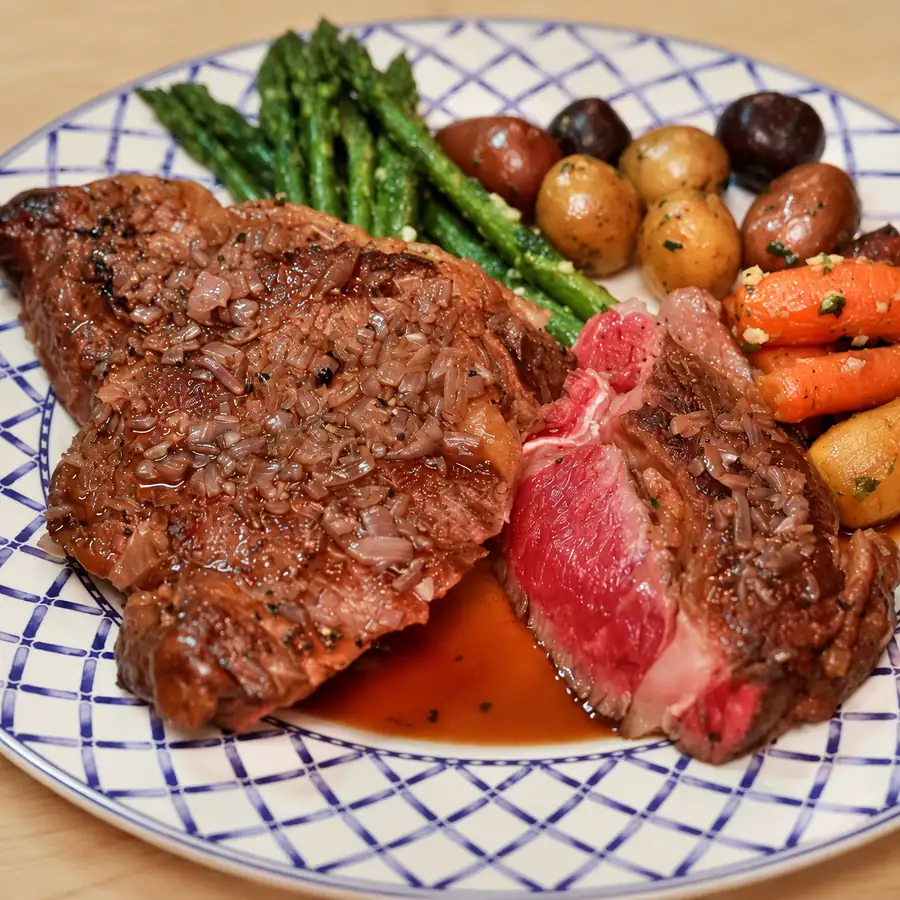
Arrange the potatoes, carrots and asparagus on warm plates. Add the steaks and spoon the marchand de vin sauce over the meat. Serve immediately.

Chef Notes for Better Results
The technique in the video works, but there are three points I would tighten for a home recipe. First, measure the Cognac rather than pouring directly from the bottle near a hot burner. You get the same flavor with much better control.
Second, use low-sodium stock. A marchand de vin sauce can reduce dramatically, and a salty broth can become unpleasantly concentrated. If your stock is already intense, begin with less and add more only if needed.
Third, protect the steak temperature. The meat has already been cooked before the sauce is finished. Returning it to the pan should be a quick glaze, not a second cooking stage.
If your sauce becomes too thick, loosen it with a tablespoon or two of stock. If it is too thin, remove the steaks and continue reducing the sauce by itself. The correct consistency is glossy and spoonable.
What to Serve With Steak Marchand de Vin
The video uses a classic steakhouse combination of baby potatoes, carrots and asparagus. It works because the vegetables are simple enough to let the red wine sauce remain the focus.
You can also serve the steak with potatoes prepared another way. My beef tenderloin medallions with red wine sauce are useful if you want another elegant red-wine steak dinner, while my dry-aged steak focuses more heavily on the beef itself.
If you prefer a creamy pan sauce for comparison, try my creamy mushroom sauce for steak or Sauce Diane.
Substitutions
Ribeye, filet mignon or sirloin can replace the striploin. Adjust the cooking time to the thickness and fat content of the cut rather than following the same minutes exactly.
Brandy can replace Cognac. If you prefer not to cook with spirits, omit the Cognac and add a little more wine. The sauce will still work, although it will lose some aromatic depth.
Beef stock, veal stock, brown sauce or diluted demi-glace can all work. The more concentrated your base is, the less you should use and the more carefully you need to season.
If you do not have herb butter for the vegetables, use unsalted butter with chopped parsley, a small amount of garlic and a pinch of salt.

FAQ
What does marchand de vin mean?
It literally means “wine merchant.” In cooking, it refers to a French sauce centered on reduced red wine, usually with shallots and a meat-based stock or sauce.
Which red wine is best for marchand de vin sauce?
Use a dry red wine with moderate tannin and no obvious sweetness. Merlot, Cabernet Sauvignon and similar dry reds all work. The wine becomes more concentrated during reduction, so avoid anything you dislike drinking.
Do I have to flambé the Cognac?
No. Flambéing is optional. For a home kitchen, simply add a measured amount with the pan away from direct flame and let it simmer briefly before adding the wine.
Why is my sauce too salty?
The stock was probably too salty before reduction or the sauce was reduced too far. Use low-sodium stock and wait until the end to make the final salt adjustment.
Can I make the sauce ahead?
You can reduce the shallots, Cognac, wine and stock ahead, then refrigerate the base. Reheat it gently and whisk in the cold butter shortly before serving. The steaks themselves are best cooked fresh.
How do I keep the steak from overcooking in the sauce?
Rest the steak while the sauce reduces, then return it to the pan for only a few seconds to coat it. Do not leave it simmering in the sauce.
Suggested Posts
For more classic French beef cooking, browse my French beef recipes and bistro classics.
If red wine sauces are what you are looking for, try the easy red wine reduction sauce, bison flank steak with red wine sauce or bone-in ribeye Bordelaise.
Steak with Marchand de Vin Sauce (French Red Wine Pan Sauce)
Ingredients
- 4 thick striploin or New York strip steaks about 10 to 12 oz each
- 2 teaspoons kosher salt plus more as needed
- 1 teaspoon freshly ground black pepper
- 2 tablespoons neutral high-heat oil
- 2 large shallots very finely minced, about 1/2 cup
- 1/4 cup Cognac or brandy
- 1 cup dry red wine
- 2 cups low-sodium brown beef or veal stock prepared brown sauce, or diluted demi-glace
- 2 tablespoons cold unsalted butter cut into pieces
- 1 1/2 lb baby potatoes
- 1 lb baby or rainbow carrots
- 2 bunches asparagus trimmed
- 4 tablespoons prepared herb or garlic butter divided
- Salt for the cooking water
Instructions
- Par-cook the baby potatoes in salted boiling water for 8 to 10 minutes and the carrots for 5 to 7 minutes. Drain well.
- Brown the potatoes in 2 tablespoons herb butter. Add the carrots and 1 tablespoon herb butter and cook another 2 to 3 minutes. Keep warm.
- Blanch the asparagus for about 2 minutes, drain and sauté in the remaining herb butter for 1 to 2 minutes.
- Pat the steaks dry and season with salt and pepper. Sear in hot oil for about 3 to 4 minutes on the first side and 2 to 3 minutes on the second side, adjusting for thickness. Rest 7 to 10 minutes.
- Leave about 1 tablespoon fat in the pan. Add the minced shallots and cook for about 2 minutes.
- Remove the pan from direct flame, add the Cognac and simmer 30 to 60 seconds. Add the red wine, scrape the fond and reduce by about two-thirds.
- Add the brown stock and simmer 6 to 10 minutes until the sauce coats a spoon. Remove from the heat and whisk in the cold butter. Season to taste.
- Return the rested steaks and their juices to the sauce for 20 to 30 seconds to glaze. Plate with the potatoes, carrots and asparagus and spoon over the sauce.