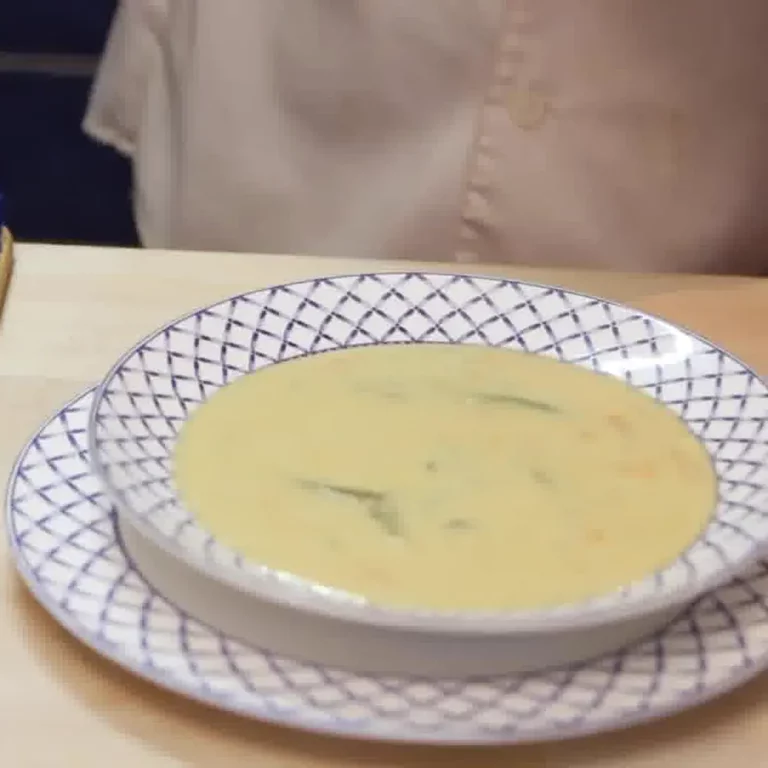
Caribou Stew with Smoked Pork and Potatoes
This caribou stew combines lean shoulder meat, smoked pork belly, carrots, and small potatoes in a reduced cooking jus. I start with the pork so its rendered fat can brown the vegetables and meat, then simmer gently until the shoulder gives way to a fork. The mistake to avoid is reducing the liquid faster than the meat becomes tender.
Caribou ragoût is a slow-cooked game stew with a short ingredient list and a distinctly savory, smoky finish. Here, a small amount of Caribou, the Québec alcoholic drink, goes into the cooking liquid. It is a hearty supper for cold weather, but the same stovetop method works whenever you have shoulder meat to cook.
This recipe is based on my YouTube video, with a few adjustments since publication: measured proportions for four servings, a gentler simmer, and vegetables added according to the meat’s tenderness.
{VIDEO}

What makes this stew different
The meat and the drink share a name, but they play different roles. Caribou meat is lean; smoked pork supplies richness and a little salt. The drink adds sweetness and a wine-like note to the broth. Keep the quantity modest so the sauce still tastes of meat.
Unlike beef bourguignon with red wine, this version has no mushrooms or flour. It also differs from beer-braised carbonnade. The aim is a spoonable, concentrated jus rather than a thick gravy. The meat contributes protein, while pork belly makes this a rich meal rather than a particularly light one.
Shoulder needs patient cooking, much like slow-braised beef cheeks. Pork fat enriches the sauce, but it cannot make a tough shoulder tender by itself. Time and a gentle simmer do that work.
Ingredients you need
For four servings, use 1½ lb trimmed caribou shoulder in roughly 1-inch cubes, 6 oz smoked pork belly in thick lardons, 1 lb carrots in large chunks, two medium onions sliced, and 1½ lb peeled small fingerling or ratte potatoes.
The cooking liquid is ½ cup Caribou drink and 3 cups low-sodium beef broth, with up to 1 extra cup available if needed. Have ½ tsp black pepper, salt for the potato water, and a little salt for the finished stew. A teaspoon of sugar is optional when browning the vegetables; omit it if the drink is already noticeably sweet.
Choose shoulder rather than tenderloin. Trim tough silverskin, but do not mistake every bit of connective tissue for waste. Small waxy potatoes hold their shape better than large baking potatoes. A good homemade brown stock gives the sauce body without flour; neutral brown veal stock is another option. Use either unsalted or lightly salted.

Step-by-step instructions
1. Render the smoked pork slowly
Put the lardons in a cold, wide skillet. Set it over medium heat and cook for 6–8 minutes, stirring occasionally, until fat collects in the bottom and the edges turn golden. You want browned pork with some softness left, not dry bacon crumbs.
If the belly releases a lot of fat, spoon off the excess, leaving about 2 tbsp in the pan. Keep a little of the removed fat nearby in case the meat needs it later. Starting cold lets the fat melt before the outside burns.

2. Brown the onions and carrots
Add the onions and carrots to the lardons. Cook over medium-high heat for 5–7 minutes, stirring, until the onions soften and a few edges show color. Add the optional sugar only if needed, watching carefully because it can darken quickly.
Lift out the carrot pieces and reserve them. Transfer the onions and pork to a heavy Dutch oven. I hold the carrots back because shoulder can need longer than expected; the vegetables should remain recognizable when the meat is ready.

3. Sear the caribou and deglaze
Pat the meat dry. Brown it in two or three batches in the skillet over medium-high heat, roughly 4–6 minutes per batch. Leave space between pieces. A crowded pan fills with moisture and the meat turns gray before it browns.
Transfer each batch to the Dutch oven. Take the skillet off the heat, turn off any gas flame, and add the measured Caribou drink. Return to moderate heat and scrape up the brown residue. Let it bubble for 1–2 minutes, without deliberately igniting it. Add some broth to rinse the skillet and pour everything into the pot.

4. Simmer, then finish with the vegetables
Add the pepper and enough remaining broth to reach approximately the top of the meat. Bring just to a simmer, then lower the heat. Cook with the lid partly open for 1½–2½ hours, checking every 20–30 minutes. Begin checking tenderness after one hour. Add broth in small amounts if the meat becomes exposed and the bottom looks dry.
When a fork enters the meat but it still offers some resistance, add the reserved carrots. Allow roughly 30–45 minutes for them to finish. If the meat needs much longer, lift out tender carrots and return them at the end.
Meanwhile, cover the potatoes with cold water in a separate saucepan. Salt the water lightly, bring to a boil, and simmer for 10–15 minutes, until nearly tender. Drain and add to the stew for its last 10–15 minutes. A knife should slide through the largest potato easily.
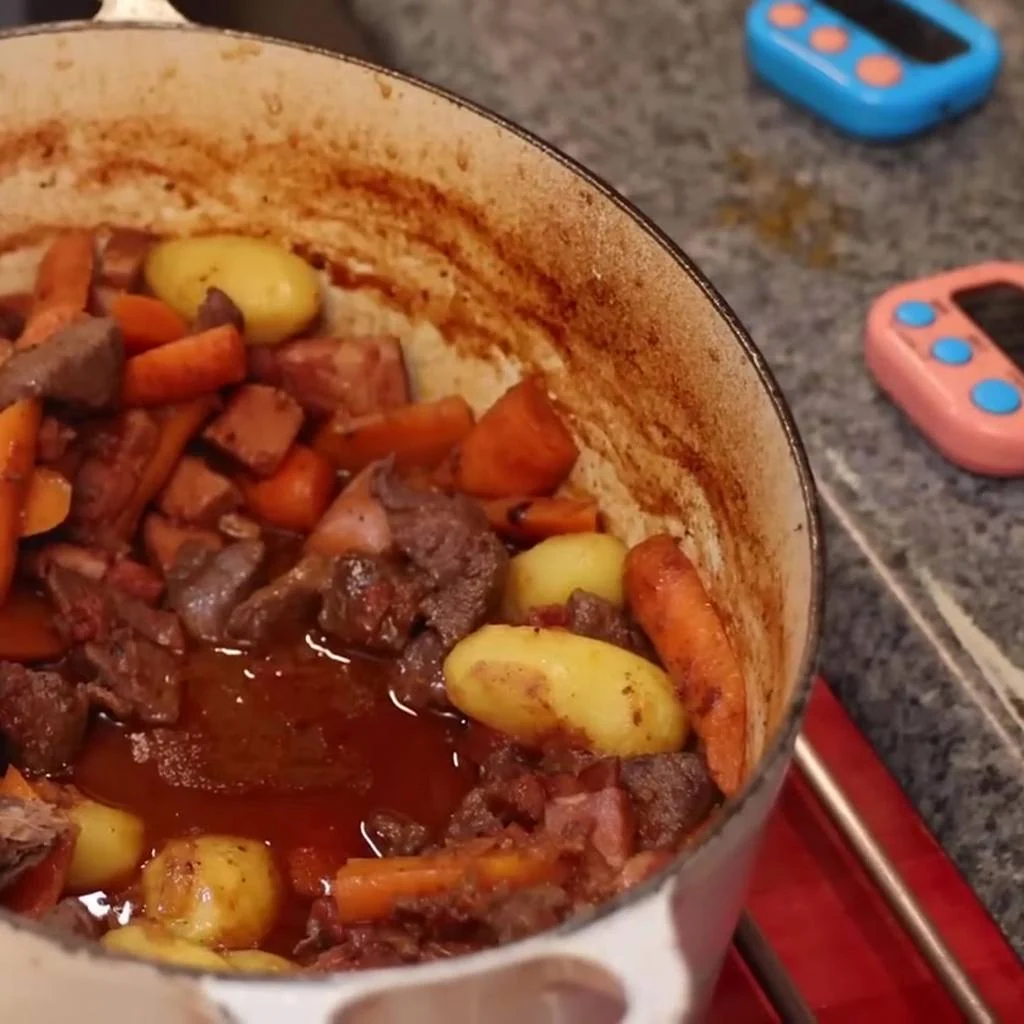
Finish uncovered if the sauce needs reducing. The caribou should yield to a fork, and the jus should lightly coat the ingredients without becoming sticky. If the meat is ready before the sauce, remove the solids, reduce the liquid briefly, then return everything. Skim visible excess fat and adjust salt only now.

Substitutions and adjustments
Venison shoulder, moose shoulder, or beef chuck can replace caribou, but the cooking time will change. Use the fork test. For a beef-specific method, see braised chuck roast with vegetables.
Thick-cut smoked bacon can replace the pork belly. It may render faster and taste saltier, so watch the pan and season late. Small yellow potatoes work if fingerlings are unavailable; cut larger ones into similar-sized pieces.
Replace the Caribou drink with the same amount of dry red wine for a less sweet variation, or extra broth for an alcohol-free version. These change the flavor. Simmering an alcoholic drink does not guarantee that all its alcohol disappears.

FAQ
Is one hour enough for caribou shoulder?
Sometimes small pieces soften quickly, but one hour is not a dependable promise. The animal, the cut, and cube size all matter. If the fork still meets firm resistance, continue gently and maintain enough liquid.
Why is my stew greasy or too salty?
Smoked belly varies greatly in fat and salt. Leave only enough rendered fat for browning, use low-sodium broth, and skim the finished sauce. Reducing the broth concentrates salt, so taste before adding more.
Do I need flour to thicken it?
No. This is a reduced-jus stew. Gelatin from the meat and stock, softened onions, and modest reduction give it body. Do not keep boiling tender meat simply to make a thick sauce.
Can I make it ahead?
Yes. Divide leftovers into shallow containers and refrigerate within two hours. Use within 2–3 days, or freeze for up to three months. Reheat a portion with a splash of broth to 165°F throughout. Potatoes may become softer after freezing.
What to serve with it
The potatoes make this a complete main dish. Add soft homemade focaccia for the jus, or a small portion of Greek salad with cucumber and tomato for freshness.
If you leave out the potatoes, serve the stew over homemade mashed potatoes. For another slow-cooked supper, try braised short ribs with white beans or tender braised lamb shanks.
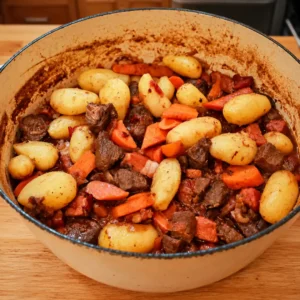
Caribou Stew with Smoked Pork and Potatoes
Ingredients
- 1½ lb caribou shoulder trimmed and cut into 1-inch cubes
- 6 oz smoked pork belly cut into thick lardons
- 1 lb carrots peeled and cut into large chunks
- 2 medium onions sliced
- 1½ lb small fingerling or ratte potatoes peeled
- ½ cup Caribou alcoholic drink
- 3 cups low-sodium beef broth plus up to 1 cup as needed
- ½ tsp ground black pepper
- 1 tsp granulated sugar optional
- Salt for potato water and final seasoning
Instructions
- Render pork lardons from a cold skillet over medium heat for 6–8 minutes. Remove excess fat, leaving about 2 tbsp.
- Add onions and carrots; sauté 5–7 minutes until lightly browned. Add optional sugar if needed. Reserve carrots separately; transfer pork and onions to a Dutch oven.
- Pat caribou dry and brown in batches over medium-high heat, 4–6 minutes per batch. Transfer to the Dutch oven.
- Remove skillet from heat and turn off any gas flame before adding Caribou drink. Return to moderate heat; scrape up brown bits and simmer 1–2 minutes without deliberately igniting. Rinse with some broth and pour into the pot.
- Add pepper and remaining broth to reach approximately the top of the meat. Simmer gently with lid partly open for 1½–2½ hours, checking from one hour and topping up broth as needed.
- When meat is approaching tenderness, add reserved carrots for about 30–45 minutes. Remove them temporarily if tender before the meat.
- Cover potatoes with cold, lightly salted water. Bring to a boil and simmer 10–15 minutes until nearly tender. Drain; add to stew for the final 10–15 minutes.
- Check that meat yields to a fork and potatoes and carrots are tender. Reduce uncovered to a light coating jus; remove solids first if already tender. Skim excess fat and adjust salt.