Braised Beef Cheeks in Red Wine (French Bistro-Style) — Deep, Glossy Sauce, Fall-Apart Tender
Braised beef cheeks are a classic slow-cooked French comfort dish: a collagen-rich cut simmered gently in red wine until it turns spoon-tender and the sauce becomes dark, glossy, and intensely savory. This version leans bistro-style—rich but balanced—making it ideal for a cozy Sunday dinner, a dinner party, or meal prep that tastes even better the next day.

This recipe is based on my YouTube video for Joue de Bœuf, with a few adjustments since publication to tighten the liquid ratios, keep the sauce silky (not watery), and make the final seasoning more consistent from kitchen to kitchen.
Why beef cheeks are worth it
Beef cheeks (also called beef cheek meat) are one of the best cuts for braising because they’re loaded with connective tissue that melts into gelatin over low heat. That gelatin is the secret behind the “restaurant sauce” texture—thick, shiny, and naturally rich without needing cream. If you’ve ever had a braise that tasted great but felt thin, cheeks are a cheat code: they bring body all on their own.
This isn’t a quick weeknight stew, and it’s not a creamy sauce recipe either. It’s a true slow-braise built for depth, the same category of comfort as a good bourguignon—just more melt-in-your-mouth and more “sauce-forward.” If you’re looking for a traditional French beef classic with a different vibe, compare it to Classic Boeuf Bourguignon, or for a lighter broth-based comfort plate, Traditional Homemade Pot-au-Feu is a totally different intent.
Ingredients overview (what matters most)
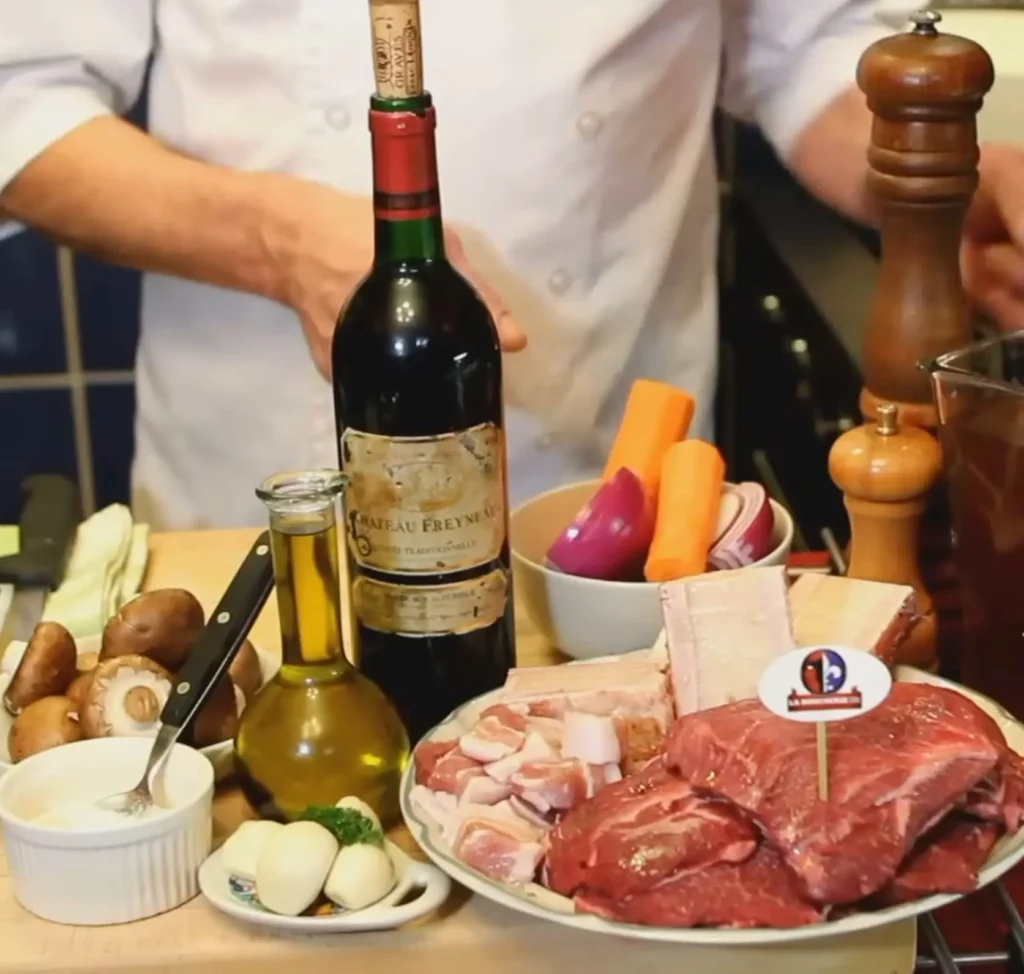
A great braise is simple, but every choice matters:
- Red wine: choose something dry and fairly robust. It doesn’t have to be expensive, but avoid sweet wines.
- Veal stock / brown stock: it’s the backbone of the sauce. If you have time, Neutral Brown Veal Stock makes this dish taste like a bistro.
- Tomato: used here as a background note for color and balance, not as a tomato stew.
- Aromatics + lardons: they build the base and give the sauce a savory “roundness.”
If you love beef dinners with big flavor but different styles, you’ll also like Weeknight Beef Ragout (Beef Stew) for a more everyday approach, or Slow-Cooked Carbonnade Flamande for a darker, beer-based braise with a totally different profile.

Step-by-step: Braised beef cheeks (stovetop, bistro-style)
1) Prep and season
Pat the beef cheeks very dry with paper towel (this helps browning). Season generously with salt and black pepper on all sides. If your cheeks have tough membranes, trim only what’s very thick—don’t over-trim.
2) Sear the cheeks (build the foundation)
Heat a heavy pot or Dutch oven over medium-high heat. Add olive oil. Sear the beef cheeks in batches so the pot isn’t crowded. Brown each side until deep and dark (not pale). This step is where the braise gets its “restaurant” flavor.
Transfer the cheeks to a plate.

3) Render lardons + sweat the aromatics
Lower heat to medium. Add the lardons and cook until they start to brown and release fat. Add the diced onion and carrot and cook 5–7 minutes until softened and lightly golden. Add garlic and cook 30 seconds.
4) Lightly thicken once (no double flour)
Sprinkle flour over the aromatics and stir constantly for 60–90 seconds. You’re not making a heavy roux—just cooking off the raw flour taste and giving the sauce a little structure.
If you ever want a cleaner thickening option, finishing with a small amount of Beurre Manié at the end is a classic move for glossy sauces.
5) Deglaze with red wine (scrape the good stuff)
Pour in the red wine and scrape every browned bit from the bottom. Bring to a simmer and reduce for about 8–10 minutes. This reduction makes the sauce taste deeper and less acidic.

6) Add tomato + stock, then braise gently
Add the crushed tomatoes. Return the beef cheeks to the pot and add veal stock until the meat is about ¾ submerged (you don’t need to fully cover). Add thyme and bay leaf.
Bring to a gentle simmer, cover with the lid slightly cracked, and cook low and slow for 1 hour 30 minutes, turning the cheeks once halfway.

7) Add the garnish vegetables (second phase)
While the cheeks braise, prep your vegetables:
- Peel and cut carrots and turnips into bite-size pieces.
- Peel pearl onions (or use frozen).
- Clean mushrooms.
- Parboil green beans 2–3 minutes in salted boiling water, then chill in cold water to keep them bright.
After the first 1h30, add carrots, turnips, pearl onions, and mushrooms to the pot. Keep the green beans for the end so they stay vibrant.
Cover again and braise another 60–90 minutes, until the cheeks are fork-tender and the vegetables are cooked.

8) Finish the sauce (glossy, balanced, not watery)
Carefully remove the cheeks and vegetables to a warm plate. Skim excess fat from the surface of the pot if needed.
Simmer the sauce uncovered for 10–20 minutes to concentrate it. Taste and adjust:
- Salt and pepper
- If the sauce tastes sharp, add a small pinch of sugar (optional) or an extra splash of stock
- If it tastes flat, a tiny splash of wine vinegar can lift it (optional)
For a bistro finish, whisk in a small knob of butter right before serving.
9) Serve
Return cheeks and vegetables to the pot to warm through, or plate directly and spoon sauce over everything.
For steak-night fans who love rich sauces, this style of glossy finishing is the same kind of satisfaction as Steak Sauce Entrecote (Warm Herb Butter Emulsion)—different dish, same “sauce energy.”
What to serve with braised beef cheeks
This is a hearty comfort food—high in protein, deeply satisfying, and naturally rich thanks to the gelatin in the cheeks. It works in winter, but it’s also great year-round because you can lighten the plate with greener sides.
- Creamy mash is perfect: Homemade Mashed Potatoes Recipe
- For a crisp side: Authentic Belgian Fries (Frites)
- For a French bistro potato: Lyonnaise Potatoes
- For a lighter side: Oven Roasted Mixed Vegetables
- For a fresh contrast: Homemade Greek Salad (Easy Recipe)

Substitutions
- No veal stock: Use a quality beef stock, or concentrate flavor with reduced stock. If you’re building your base from scratch, Neutral Brown Veal Stock is the gold standard for braises.
- No lardons: Substitute diced bacon. Reduce added salt until the end.
- No pearl onions: Use a sliced yellow onion added with the carrots and mushrooms.
- No crushed tomatoes: Use 2 tablespoons tomato paste + an extra splash of stock (the goal is background depth, not tomato stew).
- No beef cheeks: Beef shank or short ribs work, but cooking time may vary and the texture will differ.
- Want a thicker sauce: Finish with Beurre Manié (small amounts, whisked in while simmering).
- Want a different sauce vibe: For steak lovers, Steak Sauce Entrecote (Warm Herb Butter Emulsion) scratches a similar itch, but in minutes instead of hours.

FAQ
How do I know beef cheeks are done?
They’re ready when a fork slides in with almost no resistance and the meat feels soft all the way through. If they still feel tight, keep going—collagen needs time.
Can I make this in advance?
Yes—this is one of those dishes that improves overnight. Cool, refrigerate, then reheat gently. Skim any solidified fat before reheating.
Can I freeze braised beef cheeks?
Yes. Freeze cheeks and sauce together in an airtight container. Thaw overnight in the fridge and reheat gently.
Why is my sauce thin?
Usually: not enough reduction, too much liquid, or the simmer was too gentle/covered too tightly. Reduce uncovered at the end until it coats a spoon.
Why is my sauce bitter?
Wine can turn bitter if it’s very tannic and not reduced/rounded properly. Reduce the wine earlier, and balance at the end with stock and a tiny pinch of sugar if needed.
Can I use a slow cooker?
You can, but you’ll get better flavor if you sear and reduce the wine first on the stove. Slow cooker braises can taste flatter without that reduction step.
Suggested posts
- Classic Boeuf Bourguignon
- Weeknight Beef Ragout (Beef Stew)
- Traditional Homemade Pot-au-Feu
- Slow-Cooked Carbonnade Flamande
- Homemade Mashed Potatoes Recipe
- Lyonnaise Potatoes
- Oven Roasted Mixed Vegetables
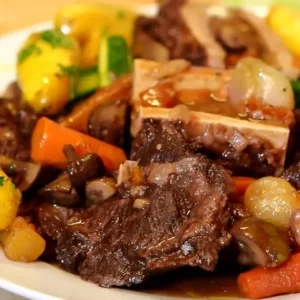
Braised Beef Cheeks in Red Wine (French Bistro-Style) — Deep, Glossy Sauce, Fall-Apart Tender
Ingredients
- 2½ –3 lb beef cheeks about 3 cheeks
- 4 oz lardons or diced bacon
- 2 tbsp olive oil
- 1 large onion diced
- 2 medium carrots diced (for the base)
- 4 garlic cloves smashed
- 2 tbsp all-purpose flour
- 2 cups dry red wine
- 1½ cups crushed tomatoes
- 3 –4 cups veal stock add to ¾-submerge the meat
- 2 bay leaves
- 4 –6 sprigs thyme
- Salt and black pepper
Vegetable garnish (optional but recommended)
- 2 –3 carrots cut into chunks
- 2 turnips cut into chunks
- 10 –12 pearl onions
- 8 oz mushrooms halved
- 8 oz green beans trimmed (added at the end)
Instructions
- Pat beef cheeks dry; season generously with salt and pepper.
- Heat oil in a Dutch oven over medium-high. Sear cheeks deeply on all sides; remove to a plate.
- Reduce heat to medium. Cook lardons until lightly browned. Add onion and diced carrots; cook 5–7 minutes. Add garlic 30 seconds.
- Stir in flour for 60–90 seconds.
- Add red wine, scrape the pot, simmer 8–10 minutes to reduce slightly.
- Add crushed tomatoes. Return cheeks. Add stock until cheeks are about ¾ submerged. Add bay leaves and thyme.
- Simmer very gently, lid slightly cracked, for 1 hour 30 minutes (turn cheeks once).
- Add carrots, turnips, pearl onions, and mushrooms. Simmer 60–90 minutes more, until cheeks are fork-tender and vegetables are cooked.
- Remove cheeks/veg. Skim fat if needed. Reduce sauce uncovered 10–20 minutes until glossy; adjust salt/pepper.
- Add green beans to warm through (or blanch separately and serve on the side). Serve cheeks with vegetables and plenty of sauce.
Video
Notes
Substitutions
- No veal stock: Use a quality beef stock, or concentrate flavor with reduced stock. If you’re building your base from scratch, Neutral Brown Veal Stock is the gold standard for braises.
- No lardons: Substitute diced bacon. Reduce added salt until the end.
- No pearl onions: Use a sliced yellow onion added with the carrots and mushrooms.
- No crushed tomatoes: Use 2 tablespoons tomato paste + an extra splash of stock (the goal is background depth, not tomato stew).
- No beef cheeks: Beef shank or short ribs work, but cooking time may vary and the texture will differ.
- Want a thicker sauce: Finish with Beurre Manié (small amounts, whisked in while simmering).
- Want a different sauce vibe: For steak lovers, Steak Sauce Entrecote (Warm Herb Butter Emulsion) scratches a similar itch, but in minutes instead of hours.
FAQ
How do I know beef cheeks are done?
They’re ready when a fork slides in with almost no resistance and the meat feels soft all the way through. If they still feel tight, keep going—collagen needs time.Can I make this in advance?
Yes—this is one of those dishes that improves overnight. Cool, refrigerate, then reheat gently. Skim any solidified fat before reheating.Can I freeze braised beef cheeks?
Yes. Freeze cheeks and sauce together in an airtight container. Thaw overnight in the fridge and reheat gently.Why is my sauce thin?
Usually: not enough reduction, too much liquid, or the simmer was too gentle/covered too tightly. Reduce uncovered at the end until it coats a spoon.Why is my sauce bitter?
Wine can turn bitter if it’s very tannic and not reduced/rounded properly. Reduce the wine earlier, and balance at the end with stock and a tiny pinch of sugar if needed.Can I use a slow cooker?
You can, but you’ll get better flavor if you sear and reduce the wine first on the stove. Slow cooker braises can taste flatter without that reduction step.Useful Links
🛒 Michel Dumas Shop : Explore our kitchen essentials, including aprons and knives.
🌐 Linktree : Access all our important links in one place.
📱 YouTube | Instagram | Facebook | TikTok : Follow us for the latest recipes and culinary tips.