Taramosalata with Potatoes: Creamy Fish Roe Dip
This homemade taramosalata combines salted carp roe, fluffy potatoes, olive oil and fresh lemon juice into a creamy Greek-style dip. Serve it in small bowls with crisp potato chips, bread or vegetables for a bright, savoury appetizer that you can prepare ahead.
Taramosalata is a fish roe dip whose body can come from potatoes or bread. This potato version is based on my video, with clearer measurements and lemon added gradually for a more repeatable balance since publication. It contains no mayonnaise, cream or bread; the finished texture comes from the potatoes and oil.
{VIDEO}
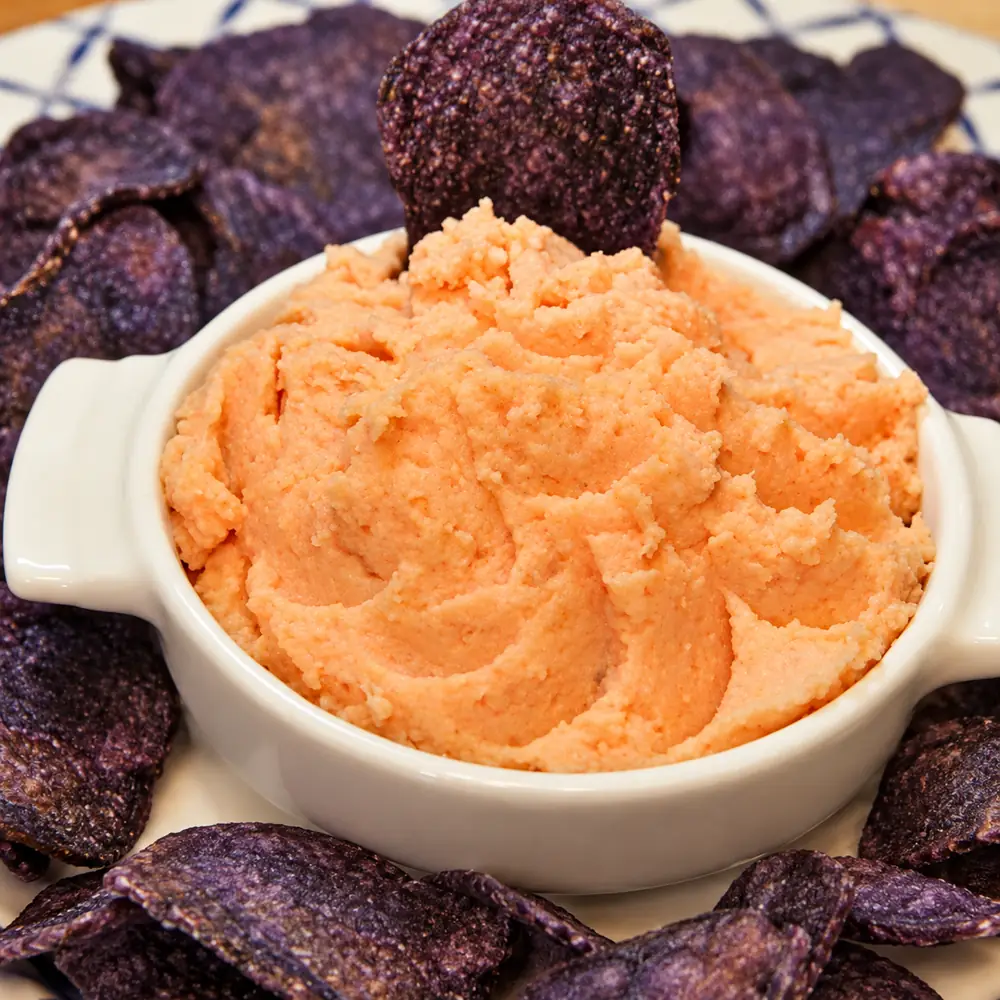
A potato-based taramosalata with a lively lemon flavour
The attraction here is the contrast: soft, rich dip against something crisp, with enough acidity to cut through the oil. The roe brings both the marine flavour and most of the salt. Potatoes soften that intensity without hiding it. I want a spread that holds a soft mound on a spoon, rather than a thin sauce or a stiff ball of mashed potatoes.
For an appetizer spread, put it beside creamy homemade hummus and tzatziki sauce. Each has its own flavour and base, so the table feels varied even when all three are served with the same bread and vegetables.
Does the original recipe work?
The method works in principle: cook the potatoes, pass them through a food mill, blend the roe with lemon, then combine everything with oil. The video specifies about 2¼ pounds of potatoes, 8¾ ounces of carp roe and a scant ⅞ cup of lemon juice. That is a generous amount of lemon. With very sour fruit, adding all of it immediately can overwhelm the potatoes and leave a sharply acidic dip.
The written version starts with ½ cup of lemon juice, then allows more up to the video’s amount. This is a deliberate flavour adjustment, not a missing ingredient. The video shows olive oil but does not give a clear spoken quantity. I have standardized it at a scant ⅞ cup so readers have a usable starting point. Roe salinity still varies by product, so tasting remains essential; extra salt is usually unnecessary.
The other risk is texture. A food mill breaks down tender potatoes without the aggressive cutting action of a blender. Prolonged high-speed mixing can turn them gluey. Use the blender for the roe and lemon only, and combine the potato mixture briefly. This is a recipe analysis and a clarified method, rather than a claim that this written batch has been kitchen-tested.
Ingredients and what each one does
2¼ lb peeled floury potatoes, cut into even large chunks
8¾ oz ready-to-eat salted carp roe, suitable for tarama
Scant ⅞ cup mild olive oil
½ cup fresh lemon juice, plus more to taste up to a scant ⅞ cup total
Unsalted potato chips, bread or vegetables, for serving
Choose a floury potato such as Russet for a fluffy base. A waxy potato can be harder to turn into a light, smooth purée. Weigh the potatoes after peeling for this written recipe. Use prepared, salted roe sold for this kind of dip, rather than a raw fish roe product requiring cooking. The roe’s colour determines the dip’s colour; there is no need to add colouring.
A mild olive oil lets the roe remain the main flavour. Very bitter oil may become more noticeable after mixing with lemon. “Kalamata” in the video refers to the olive oil, not an instruction to add whole olives. For the garnish shown, use homemade crispy potato chips or waffle-cut vegetable chips. Chips are a serving accompaniment and are not included in the dip’s nutrition calculation.

How to make taramosalata
1. Cook the potatoes without added salt
Put the evenly cut potatoes in a saucepan and cover with cold water. Bring to a boil, then cook at a steady simmer for about 20 to 30 minutes, depending on the size of the pieces. The video allows roughly half an hour. A knife should slide through the largest piece without resistance. Do not salt the water: the roe will season the finished dip.

2. Blend the roe and lemon
While the potatoes cook, strain the lemon juice to remove seeds. Blend the roe with the initial ½ cup of juice until evenly dispersed. Stop when the mixture is uniform; this is not where the potatoes belong. Keep the remaining lemon separate so you can adjust the finished dip rather than commit to all the acidity at once.

3. Drain and mill the potatoes
Drain thoroughly and let visible steam escape for a minute or two. Pass the potatoes through a food mill or ricer while they are still warm. Scrape the underside of the mill to collect the purée. This technique is also useful for homemade mashed potatoes and IKEA-style mashed potatoes, though those dishes have their own dairy additions.

4. Incorporate the olive oil briefly
Place the purée in a mixing bowl. Stir in the oil gradually with a sturdy spoon or use a stand mixer on its lowest speed for a short time. Scrape the bowl as needed. The goal is an even mixture, not several minutes of whipping. Stop before the potatoes become elastic. A spoon is a perfectly good choice if you do not have a stand mixer.

5. Finish, taste and chill
Add the blended roe mixture in portions and mix just until the colour is even. Taste a small amount with the food you plan to serve beside it. Add reserved lemon by the tablespoon if you want more brightness, up to a scant ⅞ cup total. If it already tastes balanced, stop. Cover and refrigerate until cool; the dip will become firmer as the potatoes cool. Spoon into a small bowl shortly before serving.

Texture checks and common mistakes
If the dip is lumpy, the potatoes may have been undercooked or not passed cleanly through the mill. Complete that step before adding the roe. If the dip feels sticky and stretchy, excess mixing is the likely cause. More oil or lemon will not reverse damaged potato texture, so prevention is more effective than trying to repair it afterward.
If it is loose while warm, let it cool before changing the proportions. If a cooled dip is too thick, a tablespoon of cold water can loosen it without adding extra acidity. Add very little at a time. If it is too salty, add more unsalted milled potato, understanding that this increases the yield and softens the roe flavour. Lemon brightens saltiness but does not remove salt.
Serving ideas and related recipes
Serve small portions with cucumber sticks and lightly salted or unsalted chips. soft and crispy focaccia is another good carrier. Keep the dip separate from the bread so both retain their intended textures. For a more complete Mediterranean meal, follow the appetizer with grilled chicken souvlaki wraps and homemade Greek salad.
If you are choosing between dips, quick garlic aioli has an assertive garlic flavour and a different base. homemade mayonnaise explains another way to build a creamy sauce, but neither belongs in this taramosalata. Keeping the recipes separate preserves the fish roe character of this dish.
Substitutions
Another ready-to-eat salted roe sold for tarama can replace the carp roe, but flavour, salt and colour will change. Check the label and adjust seasoning to the actual product. Bread-based taramosalata is a different formulation; do not replace these potatoes with an equal weight of bread and expect the same liquid balance.
A potato masher can replace the food mill if needed, although the finish will be coarser. Use a light hand. A mild neutral oil is possible if olive oil tastes too strong, but it changes the Mediterranean flavour. There is no vegetarian substitution that preserves a fish roe dip; offer hummus or tzatziki as a separate alternative instead.

Frequently asked questions
Why is my taramosalata not bright pink?
Different roe products produce different colours, from pale beige to salmon orange. Colour alone is not a quality test. The video’s warm orange tone comes from its roe; the recipe does not require dye.
Can I prepare it ahead?
Yes. Keep it covered and refrigerated, and use clean utensils when portioning. Follow the roe package’s storage directions and use the dip promptly. The video mentions a week, but that is not a universal shelf-life promise for every roe product and home kitchen.
Can I make half a batch?
Yes. Halve the potatoes, roe and oil. Start with half the initial lemon quantity, then taste. Smaller batches are convenient because the full recipe makes about 16 appetizer portions, rather than four small bowls.
Do I need a stand mixer?
No. A food mill or ricer and a sturdy spoon are enough. The blender helps disperse the roe, while brief hand mixing keeps the potato texture easier to control.


Taramosalata with Potatoes: Creamy Fish Roe Dip
Ingredients
- 2¼ lb peeled floury potatoes cut into even large chunks
- 8¾ oz ready-to-eat salted carp roe suitable for tarama
- Scant ⅞ cup mild olive oil
- ½ cup fresh lemon juice plus more to taste up to a scant ⅞ cup total
- Unsalted potato chips bread or vegetables, for serving
Instructions
- Cover potatoes with cold unsalted water. Bring to a boil, then simmer 20–30 minutes until fully tender.
- Blend roe with ½ cup strained lemon juice. Reserve extra juice separately.
- Drain potatoes well, allow steam to escape briefly and pass through a food mill or ricer.
- Gradually stir olive oil into the warm purée, or mix briefly on the lowest mixer speed.
- Add the roe mixture in portions and mix only until uniform. Taste; add more lemon by the tablespoon if needed, up to a scant ⅞ cup total.
- Cover, refrigerate until cool and serve in small portions with chips, bread or vegetables.