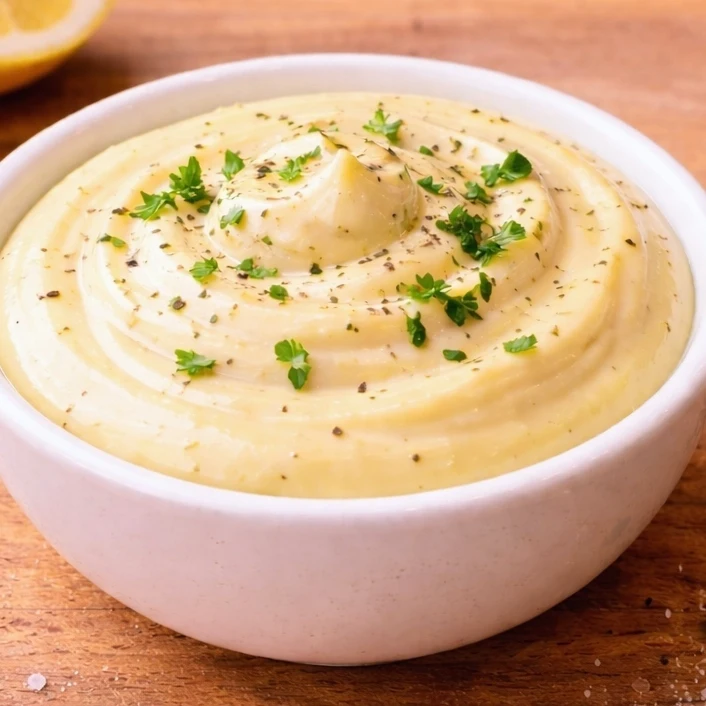
2-Minute Garlic Aioli (No Blender): Thick, Creamy, Better Than Restaurant
Garlic aioli is one of the fastest ways to make home food taste “restaurant-level” without changing your whole meal. A spoonful next to fries turns them into a serious snack, it makes grilled chicken feel like a bistro plate, and it’s the kind of sauce that quietly upgrades everything from burgers to fish sandwiches. In North America, “aioli” usually means a garlic-forward mayo-based sauce—smooth, creamy, and strong enough to stand up to crispy food.
The issue is that a lot of quick aioli recipes end up with a harsh garlic bite that lingers, or they come out oddly thin and acidic. That’s almost always caused by one of two things: too much raw garlic all at once, or not giving the sauce even a short resting time so the garlic can mellow and the flavors can come together.

If you want to make the base mayonnaise from scratch first, start with my homemade mayonnaise recipe and come back here for the aioli finish. If you’re serving anything crispy, this aioli is one of the best dips you can keep in your fridge—especially with crispy homemade chicken tenders, spicy fried chicken tenders, or even a full batch of ultra-crispy beer battered fish and chips.

What “Aioli” Means Here (And Why It Works)
Traditional aioli can be an emulsion of garlic and oil, but in most home kitchens in Canada and the USA, an “aioli” is a garlic mayonnaise: mayo + garlic + acid + seasoning. That’s what this is—simple, fast, and consistent.
This version works because:
- Garlic is added in a controlled dose (so it’s flavorful, not brutal)
- Acid is bounded (so it stays creamy, not sour)
- A short rest time smooths the garlic bite
- Optional sweetness (tiny) can balance sharpness if needed

Garlic Aioli Ingredients (Imperial Only)
- 1/2 cup mayonnaise (homemade or store-bought)
- 1 teaspoon Dijon mustard (optional but recommended for structure)
- 1 1/2 teaspoons fresh lemon juice (start here; adjust after resting)
- 1–2 garlic cloves, finely grated or pressed (start with 1 for a mild aioli)
- 1 teaspoon neutral oil (canola or vegetable), optional for extra silkiness
- 1/8 teaspoon salt (only if needed; mayo + Dijon may already be salty)
- Black pepper, to taste
Optional add-ins (choose one):
- 1/2 teaspoon honey or maple syrup (if the garlic feels too sharp)
- 1/2 teaspoon smoked paprika (great for fries and chicken)
- 1–2 teaspoons hot sauce (for spicy aioli)
How to Make Garlic Aioli (2 Minutes)
- Start smooth. In a bowl, stir the mayonnaise (and Dijon if using) until silky.
- Add garlic properly. Grate or press the garlic directly into the mayo. Stir very well for 20–30 seconds.
- Add lemon in a measured way. Mix in 1 1/2 teaspoons lemon juice.
- Optional smoothing step. Add 1 teaspoon neutral oil and stir again.
- Season carefully. Add black pepper. Only add salt if needed after tasting.
- Rest. Let the aioli sit for 10–15 minutes in the fridge.
- Taste and adjust.
- Want it brighter? Add 1/2 teaspoon lemon juice.
- Want it stronger? Add another 1/2 clove of garlic (grated).
- Too sharp? Add 1/2 teaspoon honey/maple and stir.

Garlic Strength Guide (So It’s Not Overpowering)
Garlic intensity varies by size and freshness. For 1/2 cup mayo:
- Mild: 1 small clove
- Medium: 1 large clove or 1 1/2 small cloves
- Strong: 2 cloves (only if you love garlic)
If your garlic is very fresh and aggressive, start mild—you can always add more after resting.
Substitutions
Mayonnaise:
- Use store-bought for speed, or make it from scratch with my failproof mayonnaise.
Lemon juice:
- Substitute white vinegar or apple cider vinegar (use slightly less at first).
Dijon mustard:
- Optional. It adds body and helps keep the sauce stable and “tight.”
Garlic:
- For a softer, sweeter aioli: use roasted garlic instead of raw (see variation below).
Variations (Same Base, Different Vibes)
Roasted Garlic Aioli
Replace raw garlic with 1–2 teaspoons mashed roasted garlic. Much gentler, almost buttery.
Spicy Aioli
Stir in 1–2 teaspoons hot sauce or a pinch of cayenne. Great with fried food.
Lemon Garlic Aioli
Increase lemon juice slightly and add lemon zest for a brighter aioli.
Storage and Food Safety
Keep aioli in an airtight container in the refrigerator.
- Store-bought mayo base: best within 5–7 days
- Homemade mayo base: best within 3–4 days
Always use a clean spoon to keep it fresh longer.

FAQ
Why is my aioli bitter?
Garlic can turn bitter if it’s old, sprouting, or aggressively blended. Use fresh garlic and grate/press it instead of over-blending.
Can I make aioli without Dijon?
Yes. Dijon adds structure, but it’s optional. If you skip it, keep lemon on the lower end first.
How do I make aioli less sharp?
Let it rest 10–15 minutes, then add a tiny touch of honey/maple, or switch to roasted garlic.
Can I use garlic powder instead?
Yes, but it tastes different. Start with 1/4 teaspoon garlic powder and adjust.
What’s the best food to serve with aioli?
Fries, chicken tenders, burgers, fish sandwiches, roasted potatoes, and grilled vegetables.
What to Serve With Garlic Aioli (Suggested Posts)
- Ultra-crispy beer battered fish and chips
- Crispy homemade chicken tenders
- Spicy fried chicken tenders
- Homemade tartare sauce
- Homemade ranch dressing
- Homemade hollandaise sauce
- Homemade Big Mac sauce
- Creamy chicken and zucchini gratin
- Creamy mozzarella parmesan pasta
- Eggplant Parmigiana

2-Minute Garlic Aioli (No Blender): Thick, Creamy, Better Than Restaurant
Ingredients
- 1/2 cup mayonnaise
- 1 teaspoon Dijon mustard optional
- 1 1/2 teaspoons fresh lemon juice
- 1 –2 garlic cloves finely grated or pressed
- 1 teaspoon neutral oil optional
- Black pepper to taste
- Salt only if needed
Instructions
- Mix mayonnaise (and Dijon if using) until smooth.
- Add grated/pressed garlic and stir well.
- Stir in lemon juice.
- Optional: add neutral oil for extra silkiness.
- Season with pepper; add salt only if needed.
- Rest 10 minutes in the fridge, then taste and adjust.
Video
Notes
Storage and Food Safety
Keep aioli in an airtight container in the refrigerator.- Store-bought mayo base: best within 5–7 days
- Homemade mayo base: best within 3–4 days
FAQ
Why is my aioli bitter?
Garlic can turn bitter if it’s old, sprouting, or aggressively blended. Use fresh garlic and grate/press it instead of over-blending.Can I make aioli without Dijon?
Yes. Dijon adds structure, but it’s optional. If you skip it, keep lemon on the lower end first.How do I make aioli less sharp?
Let it rest 10–15 minutes, then add a tiny touch of honey/maple, or switch to roasted garlic.Can I use garlic powder instead?
Yes, but it tastes different. Start with 1/4 teaspoon garlic powder and adjust.What’s the best food to serve with aioli?
Fries, chicken tenders, burgers, fish sandwiches, roasted potatoes, and grilled vegetables.Useful Links
🛒 Michel Dumas Shop : Explore our kitchen essentials, including aprons and knives.
🌐 Linktree : Access all our important links in one place.
📱 YouTube | Instagram | Facebook | TikTok : Follow us for the latest recipes and culinary tips.