Waffle-Cut Vegetable Chips with Basil Dijon Dip
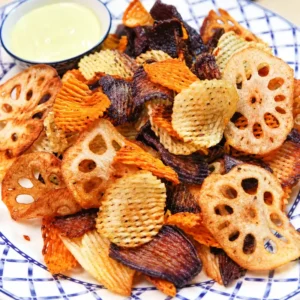
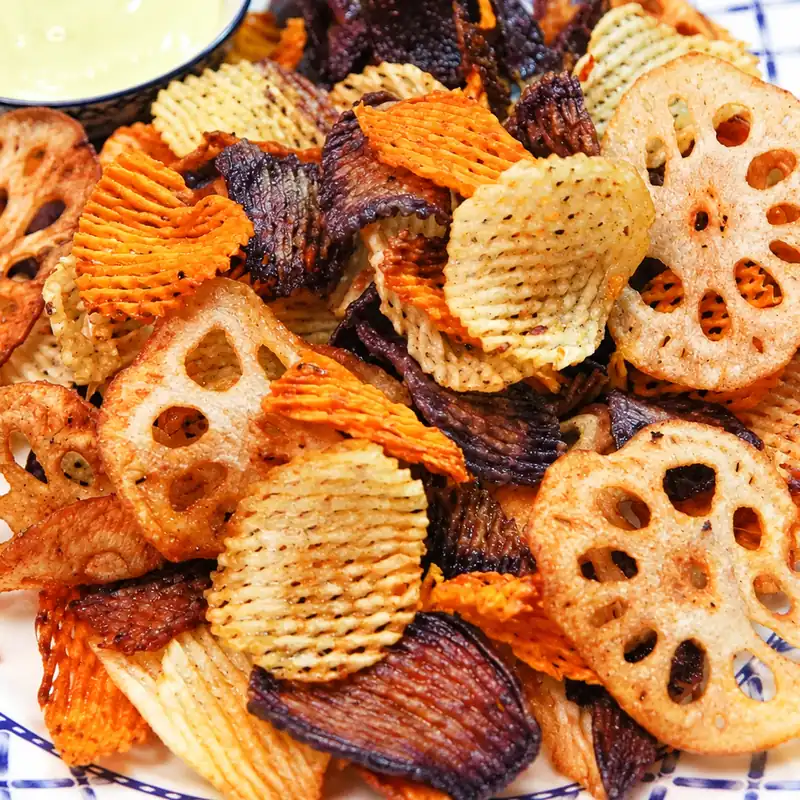
These waffle-cut vegetable chips combine golden potatoes, colourful sweet potatoes and delicate lotus-root slices with a creamy basil Dijon dip. Thin slices, small batches and careful draining give this homemade aperitif platter its crisp texture and striking appearance.
In my video, I work through the vegetables individually, turning them on the mandoline and frying each batch before moving to the next. The lattice shapes come from the blade and the turn between cuts; the holes in lotus root are natural. Together, they make a platter with several textures rather than a bowl of identical potato chips.
This written version supplies working quantities and more detailed temperature guidance because the video largely cooks by sight. These are proposed home-kitchen proportions, not measured quantities recovered from the footage or a claim that this adaptation has been kitchen-tested. The basil dip stays faithful to the oil, Dijon, egg and basil combination shown, with an optional touch of lemon for balance.
{VIDEO}
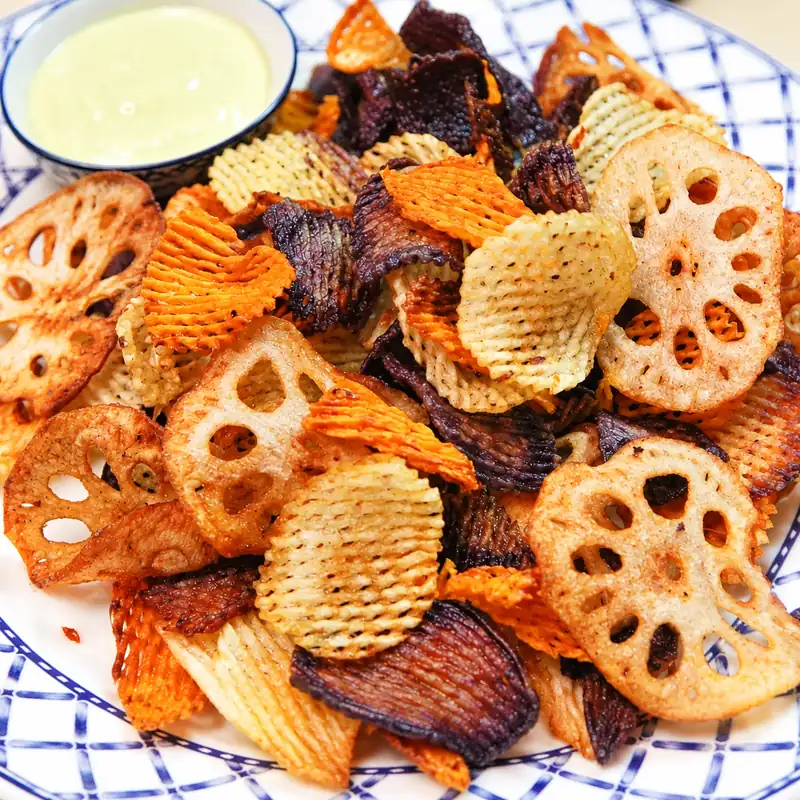
What makes chips gaufrette different?
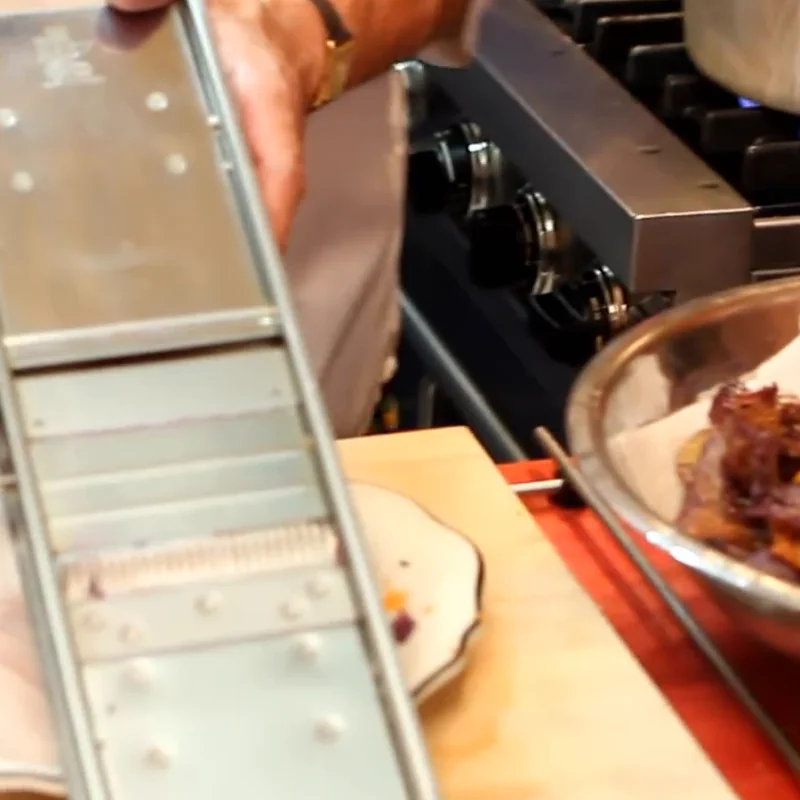
A corrugated mandoline cuts ridges into the first slice. Turning the vegetable roughly a quarter turn before the next pass crosses those ridges, creating the characteristic waffle pattern. The exact angle and thickness depend on the attachment. Start with a test slice; holes should open through the vegetable without making it fall apart.
This is a single-fry chip method. It differs from the thicker sticks in my Belgian fries and the more substantial potatoes served with steak frites and béarnaise. Here, thinness does much of the work. A smooth slicing blade will still make good chips, but it will not create the waffle pattern.
Ingredients and equipment
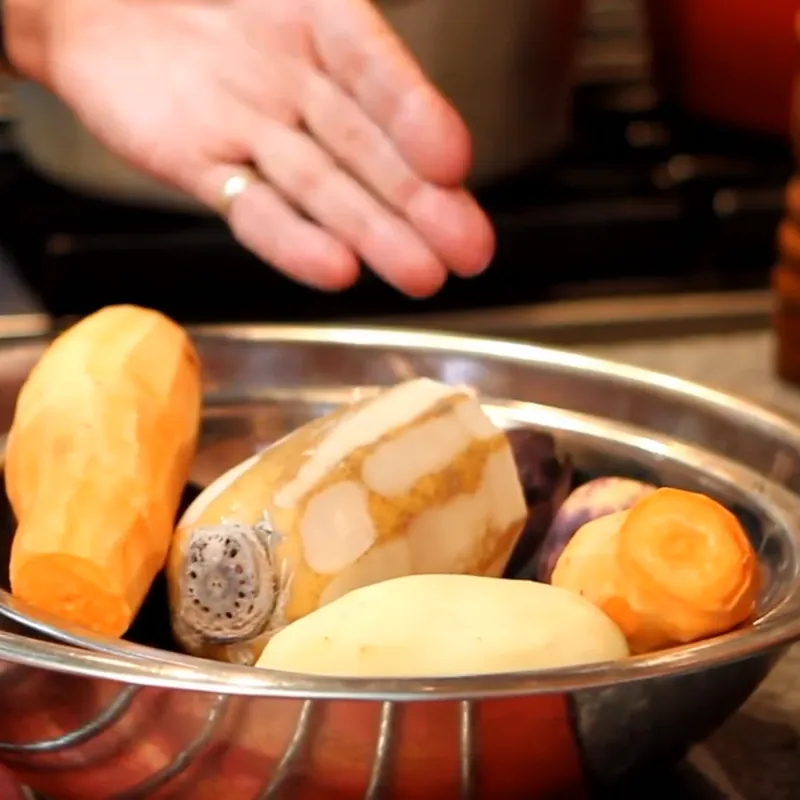
The ingredient photograph shows the vegetables gathered near the beginning of the video; the dip ingredients appear separately in the footage. Use a mixture of ordinary potatoes, purple potatoes, orange or purple sweet potatoes, and lotus root. The dark chips in this video should not automatically be described as beetroot: the spoken demonstration refers to blue or purple varieties.
Choose firm vegetables without soft spots. Wash and peel as needed, then prepare similar thicknesses within each batch. Lotus root needs particular attention to the channels: rinse away any soil, trim the ends, peel the exterior and slice thinly. Its round cross-section gives it a different appearance from the gaufrette vegetables.
Use neutral oil suitable for deep frying, a thermometer, a spider or slotted spoon, and a mandoline with its hand guard. A cut-resistant glove adds protection. Set out a wide draining tray before heating the oil. In a saucepan, leave generous headroom and fill no more than halfway; the required oil volume depends on the pot. Follow a dedicated fryer’s fill markings instead of forcing the recipe’s approximate oil amount into your equipment.
How to make the chips
Step 1: Blend the basil Dijon dip
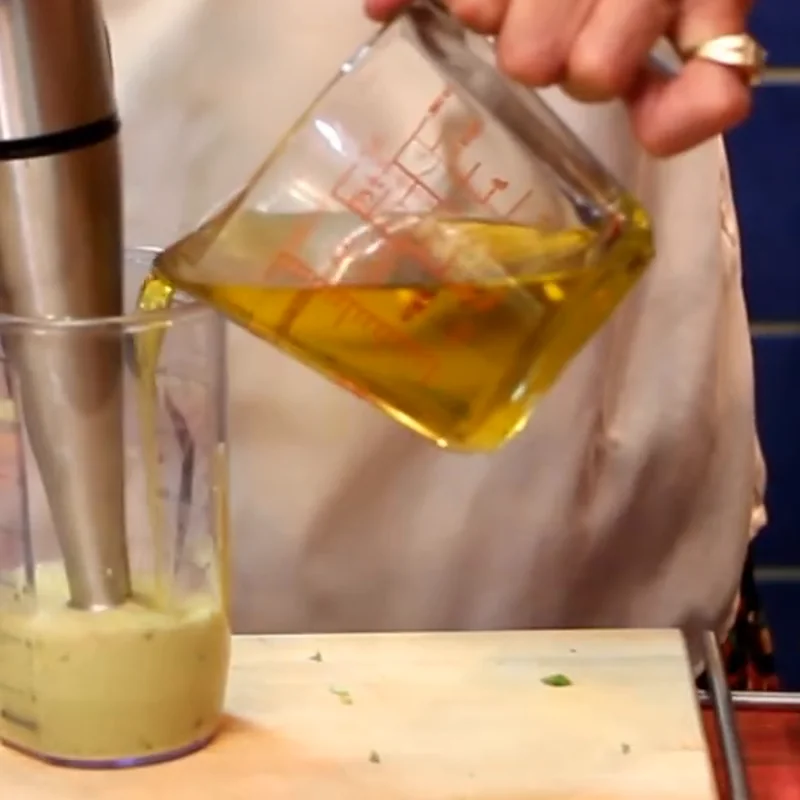
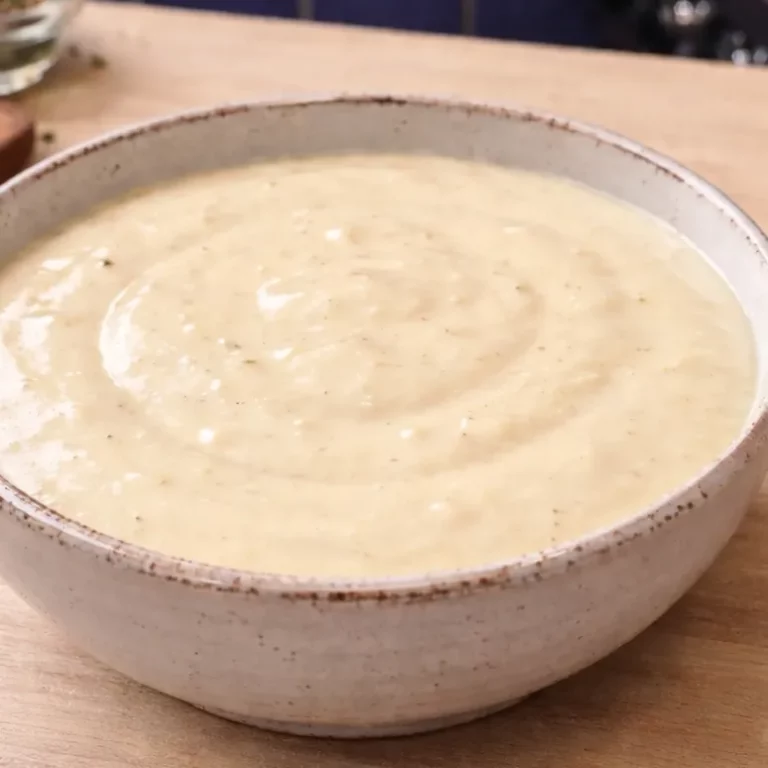
Place the pasteurized egg, Dijon, basil, salt and pepper in a tall, narrow beaker. Blend with an immersion blender and add the oil gradually until thick and creamy. A narrow beaker helps the blender engage the mixture. Stop when the dip holds a soft shape; do not pour in extra oil merely because some remains in the measuring cup. Stir in optional lemon juice, taste and refrigerate immediately.
The emulsifying principle is similar to my homemade mayonnaise. If a mayonnaise splits, adding more oil quickly makes recovery harder. Start a fresh spoonful of Dijon in a clean beaker and blend the broken mixture into it a little at a time. For another dip profile, my sweet mayonnaise dipping sauce is a separate option.
Step 2: Slice and dry the vegetables
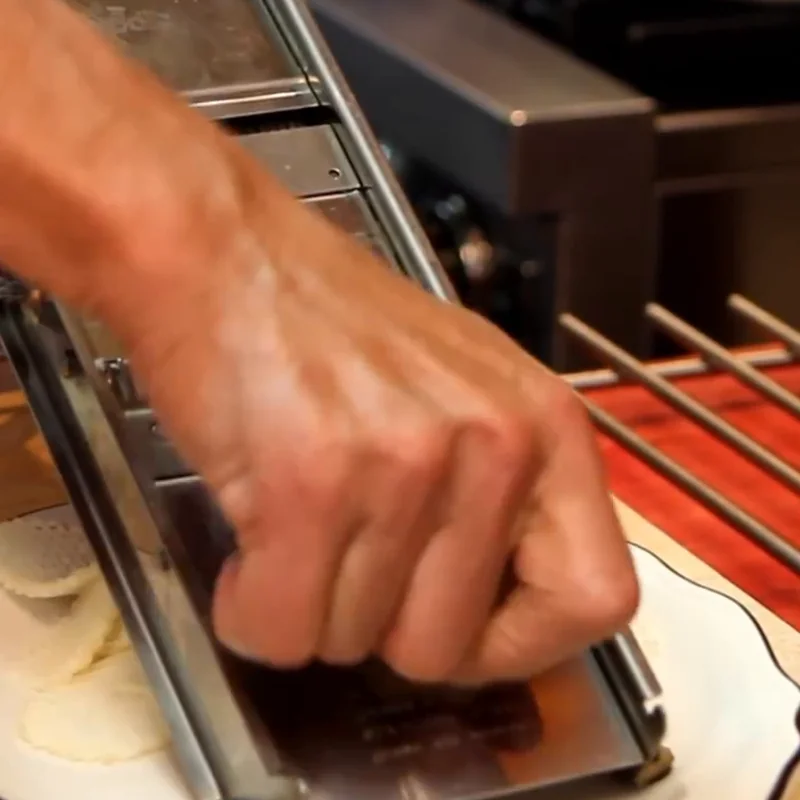
Fit the corrugated blade and test a potato slice, aiming for a thin lattice, generally around 1/16 inch where your mandoline permits it. Turn about 90 degrees between passes, adjusting to the attachment’s instructions. Always use the guard, including on small ends. Slice each variety separately; keep sweet potatoes and potatoes in different piles.
If you rinse potato slices to remove loose starch, drain and dry them thoroughly between clean towels. Also dry lotus root and any freshly washed vegetables. Water clinging to a slice causes splattering and works against crisp frying. Do not drop wet slices into the oil.
Step 3: Fry the potato batches
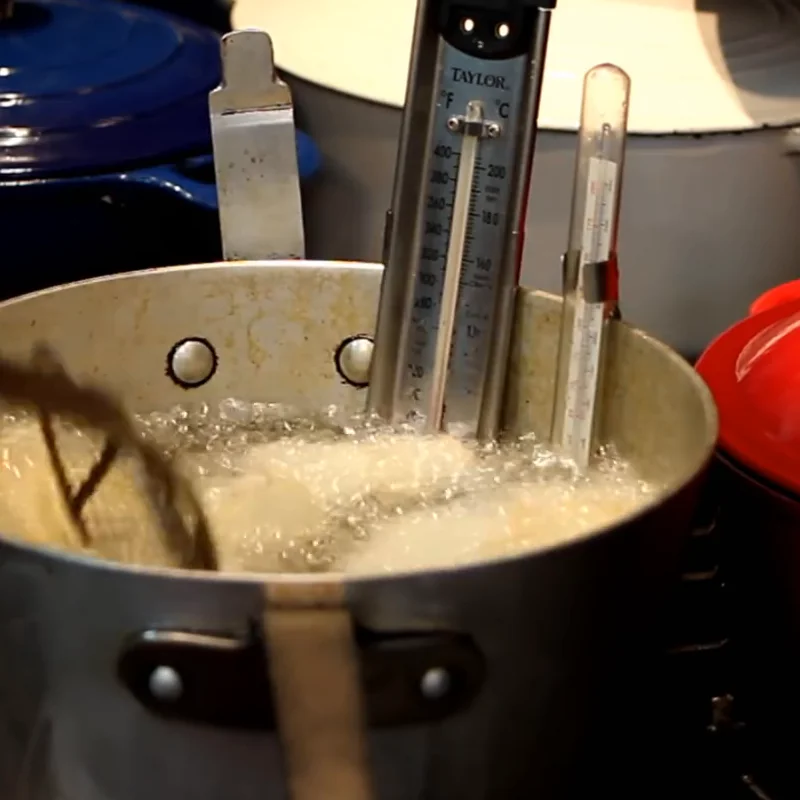
Heat oil to 350–355°F. Add a small handful of dry potato slices individually, keeping them loose. Gently separate overlapping pieces with the spider and watch the thermometer. Let the oil recover between batches instead of adding more slices to compensate for slower frying.
Expect roughly 1–3 minutes for very thin slices, but use appearance and bubbling as the main guide. Remove them when lightly golden and the bubbling has noticeably subsided. Purple potatoes need closer observation because their colour hides browning. Let a sample cool briefly before assessing its crispness; scorching the edges will not rescue a thick, damp centre.
Step 4: Fry the sweet potatoes separately
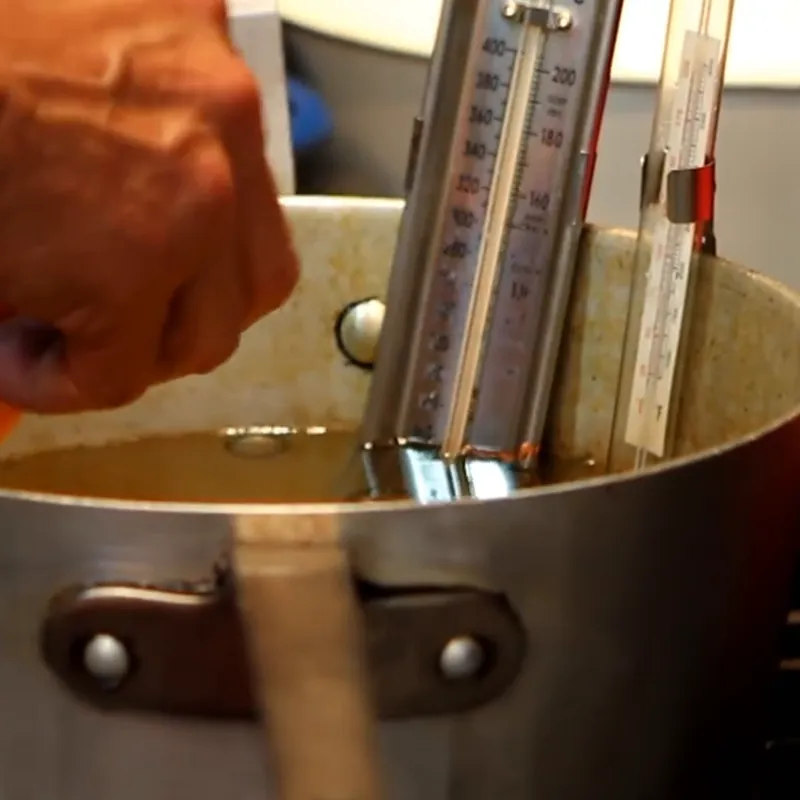
Reduce the oil to 320–340°F for orange and purple sweet potatoes. Their sugars brown quickly, so the video’s single 374°F setting leaves less room for error at home. Fry small batches, usually about 2–4 minutes, and remove them before the edges become dark. Thickness and the variety’s moisture content can change the timing substantially.
If the outside darkens while the middle stays leathery, cut the next batch thinner and lower the temperature slightly. Keep the batches separate while learning the behaviour of each vegetable. This matters more than achieving one exact frying time for the entire platter.
Step 5: Fry the lotus root
Bring the oil back to 350–355°F. Add thin, thoroughly dried lotus-root rounds individually. Fry until lightly golden, usually about 2–3 minutes, turning or separating as needed. Their natural holes make the slices attractive without the quarter-turn cutting technique. Drain them before adding them to the other chips.
Step 6: Drain, season and serve
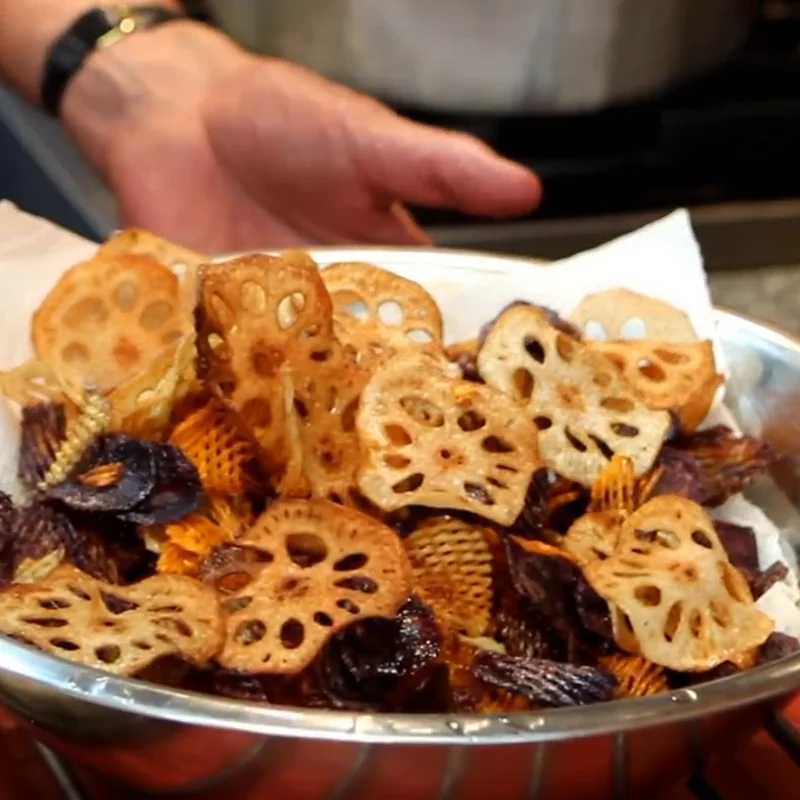
Drain each batch briefly on absorbent paper, then spread the chips on a rack or a fresh dry tray. Season lightly while warm. Avoid piling everything into a deep bowl while it is steaming: trapped moisture softens the finished chips. Taste before adding more salt, especially because the Dijon dip is already seasoned.
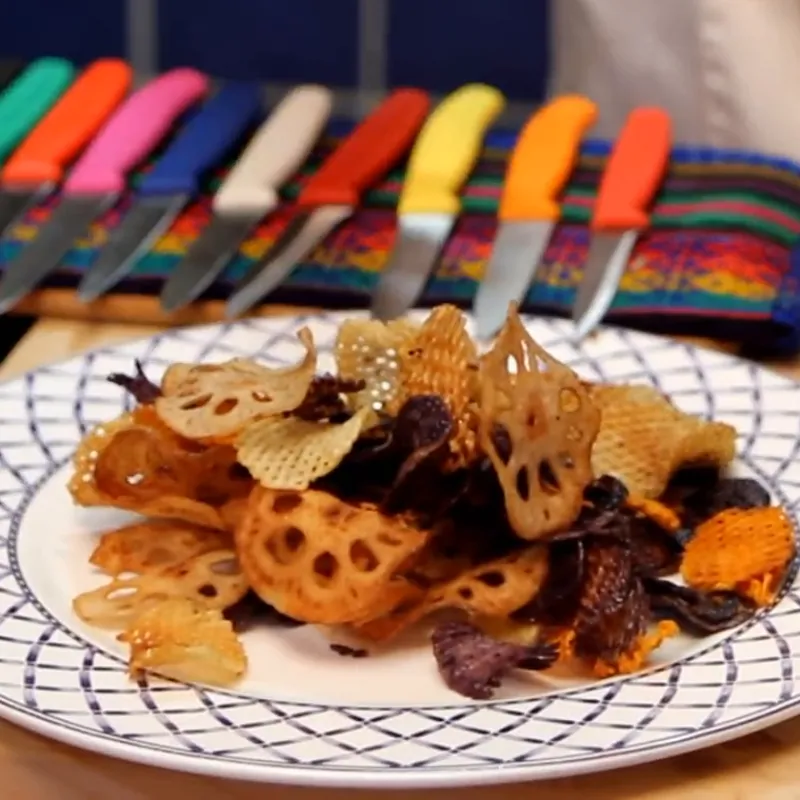
Serve promptly with the chilled dip alongside. The chips are an aperitif snack, or a small crunchy side with a spicy smash burger or an Oklahoma smash burger. Keep the dip away from the warm chips until serving so neither the dip nor the chips lose their best texture.
Substitutions and serving ideas
An all-potato version is the simplest introduction to the technique. Replace unavailable purple vegetables with extra ordinary potato or orange sweet potato, keeping the total prepared weight similar. Lotus root is optional; leaving it out changes the presentation but does not prevent the other chips from working.
For a dip without handling uncooked egg, mix prepared mayonnaise with Dijon and chopped basil to taste. The flavour will vary with the mayonnaise. For a different platter, offer guacamole or tartare sauce in a separate bowl. These are substitutions, not ingredients shown in this video.
For a fuller starter spread, add shrimp cocktail with Dijon mayonnaise or salmon tartare with lemon, Dijon and capers. Make the other dishes separately and fry the chips close to serving time.
Frequently asked questions
Does the original video recipe work?
The technique is sound: thin cuts, separate batches, oil recovery and immediate draining can produce crisp chips. However, the video does not provide complete vegetable weights, dip oil quantity or a thickness setting. A universal 374°F temperature is unforgiving for sweet potatoes. This version fills those gaps, but results still depend on the mandoline and vegetable moisture.
Can I make them ahead?
Freshly fried chips are best. Cool any leftovers completely before storing them dry and airtight. Do not enclose warm chips. A brief warm-oven refresh may improve plain chips, but it cannot fully restore burned or undercooked slices. Keep the dip refrigerated and make it close to serving.
Why use a pasteurized egg?
The dip is not cooked. FDA guidance recommends pasteurized eggs or egg products for recipes containing raw or undercooked egg, including mayonnaise. Lemon juice added for flavour does not make an ordinary raw egg safe. See the FDA egg-safety guidance.
Can this be baked or air-fried?
That would need a different method and timing. This recipe is written for deep frying; simply moving these very thin slices to an air fryer does not guarantee the same result. Do not apply the oil-frying temperatures as a tested oven conversion.
RECIPE CARD
Summary: These waffle-cut vegetable chips combine golden potatoes, colourful sweet potatoes and delicate lotus-root slices with a creamy basil Dijon dip. Thin slices, small batches and careful draining give this homemade aperitif platter its crisp texture and striking appearance.
Ingredients:
7 oz prepared ordinary potatoes
5 oz prepared purple potatoes, or additional ordinary potatoes
7 oz prepared orange and/or purple sweet potatoes
5 oz prepared lotus root, optional
About 6–8 cups neutral frying oil, adjusted to equipment and safe fill level
1 large pasteurized egg
1 tablespoon Dijon mustard
3/4 cup neutral oil for the dip, added gradually as needed
1/4 cup loosely packed fresh basil leaves, chopped
1 teaspoon lemon juice, optional
1/4 teaspoon fine salt for the dip, plus more to season chips
1/8 teaspoon freshly ground black pepper
Instructions:
1. Blend the egg, Dijon, basil, salt and pepper in a narrow beaker. Gradually blend in the dip oil until thick; add optional lemon, taste and refrigerate.
2. Wash and peel vegetables as needed. Cut thin potato and sweet-potato lattices with a guarded corrugated mandoline, turning about 90 degrees between passes. Slice lotus root into thin rounds. Dry all slices thoroughly.
3. Heat frying oil to 350–355°F, keeping the pot no more than half full or following fryer markings. Fry potatoes in small batches about 1–3 minutes until lightly golden and bubbling subsides. Drain; let oil recover between batches.
4. Lower oil to 320–340°F. Fry sweet potatoes in small batches about 2–4 minutes, watching closely and removing before dark browning. Drain.
5. Return oil to 350–355°F. Fry lotus-root rounds about 2–3 minutes until lightly golden. Drain.
6. Spread chips to release steam, season lightly while warm and serve promptly with chilled dip.
Prep Time: 25
Cook Time: 25
Servings: 6
Calories: 420
Cuisine: French
Tags: chips gaufrette, waffle-cut chips, vegetable chips, basil dip, appetizer
Notes: Working quantities are supplied for reproducibility; the video does not measure them. This adaptation has not been kitchen-tested. Times vary by thickness and batch size. Use a pasteurized egg. Approximate calories assume the full dip is divided among six servings and modest oil absorption; actual values vary. Frying oil is equipment-dependent and is not all consumed.