Easy Creamy Hummus From Dried Chickpeas
This hummus recipe is based on my YouTube video, with a few adjustments since publication. In the video, I used dried chickpeas, lemon juice, tahini, garlic, olive oil, paprika, and my Issou spice. After looking back at the proportions, I prefer to make one important adjustment: more tahini and a little cold water or cooking liquid during blending. That is what gives the hummus a smoother texture instead of a heavy chickpea paste.
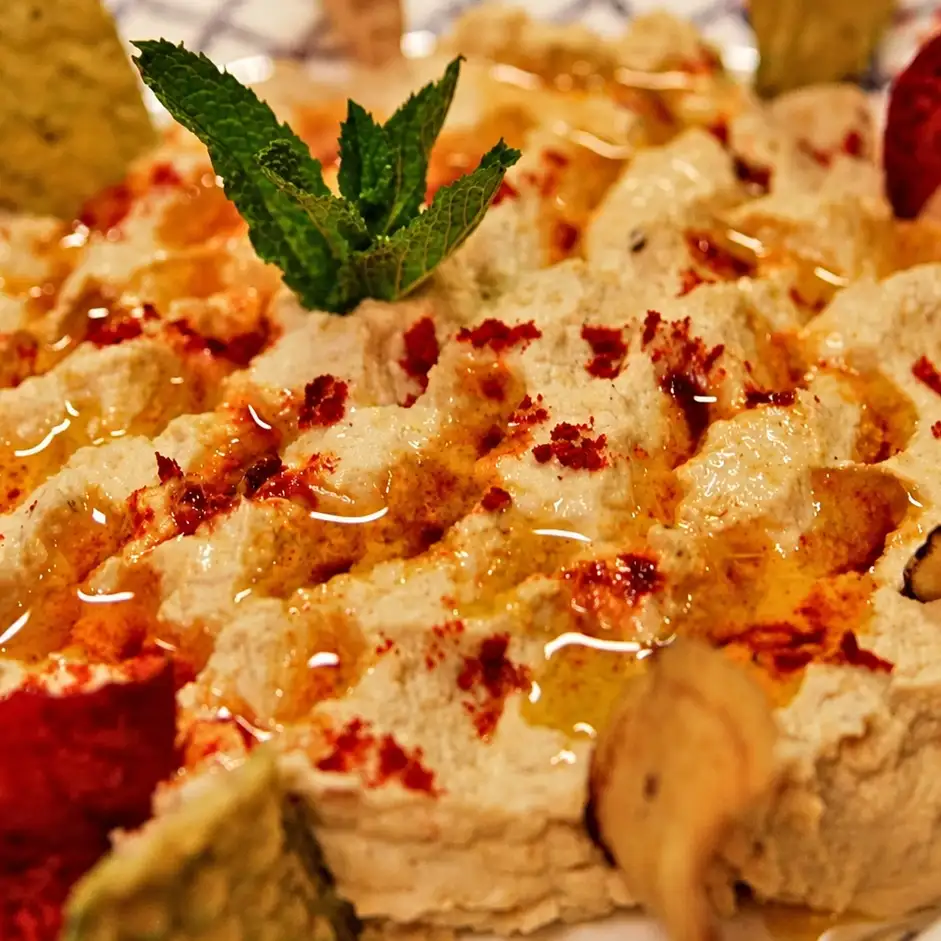
The mistake to avoid is thinking lemon juice and olive oil are enough liquid. They give flavor and richness, but they do not loosen the chickpeas the same way water does. What I look for here is a hummus that spreads easily with the back of a spoon, with a soft, creamy texture that holds its shape but does not feel stiff.
Hummus is a Middle Eastern-style chickpea and tahini spread made with cooked chickpeas, sesame paste, lemon, garlic, and olive oil. This version starts with dried chickpeas instead of canned, which gives a fuller chickpea flavor and a better texture when they are cooked until very tender. I make it for snack boards, lunches, summer meals, game-day tables, and simple make-ahead appetizers all year.
Why I Make It This Way
I make it this way because dried chickpeas give a better base. They need more time, yes, but most of that time is soaking and simmering. Once they are cooked properly, the hummus tastes less flat and the texture is easier to control.
The cooking is important. Chickpeas for hummus should not be just “done.” They should be very tender. When you press one between your fingers, it should crush without fighting back. If the chickpeas are still firm in the middle, the food processor will work harder and the finished dip can taste grainy.
I also prefer to blend the tahini, lemon, garlic, and salt before adjusting the final texture. Tahini thickens as it mixes with lemon, then relaxes when water is added. At that point, the mixture starts to turn pale, creamy, and almost fluffy. That small step makes a big difference.
This is not the same recipe as a quick canned chickpea dip, and it is not meant to compete with a mayo-based spread or a lighter cheese dip. For something chunkier and more salad-like, I would go in the direction of a creamy chickpea salad. For a lighter dairy-based appetizer, a garlic herb cottage cheese dip or a creamy ranch-style cottage cheese dip sits in a different lane. This one is the creamy tahini version, rich, lemony, and made for scooping.
Ingredients Notes
Dried chickpeas are the main ingredient. Soak them overnight in plenty of cold water because they expand more than people expect. If the bowl is too small, you will find chickpeas pushing against the top in the morning.
Tahini is the ingredient that needed correction from the original video proportions. A few tablespoons will work, but for a truly creamy batch made from a full pound of soaked chickpeas, more tahini gives better balance. It should taste nutty and smooth, not dusty or bitter.

Lemon juice gives the hummus its lift. Add most of it at the beginning, then adjust near the end. Some lemons are sharp, some are mild, so the final spoon taste matters more than the number.
Garlic stays raw, so I keep it controlled. Two cloves are enough for a large bowl. I remove the germ when it is green or strong because raw garlic can take over quickly. For a cleaner flavor, finely chopping the garlic first helps the blender distribute it evenly. The same idea applies when mincing garlic for sauces and dips.
Olive oil goes partly inside and partly on top. I do not use oil as the main liquid because that makes the hummus heavy. Water or cooking liquid gives the smooth texture, olive oil gives the round finish.
Paprika and a pinch of Issou spice are for the final touch. The paprika gives color, while the Issou brings a little warmth. A small pinch is enough. Hummus should taste bright and creamy before it tastes spicy.
Step-by-Step Instructions
Start by soaking the chickpeas overnight. Put them in a large bowl and cover with a lot of cold water. They will swell, so do not be shy with the water. The next day, drain and rinse them well.


Put the chickpeas in a large pot and cover them generously with fresh cold water. I like to add a small pinch of baking soda here because it helps the chickpeas soften. Bring everything to a boil, then lower the heat so the water simmers steadily. Foam will rise to the surface at the beginning. Skim it off with a spoon.


Cook until the chickpeas are very tender, usually about 1 hour to 1 hour 30 minutes depending on their age. You know they are ready when one crushes easily between your fingers and the center is soft. Drain them, but keep some of the cooking liquid. Let the chickpeas cool for about 20 to 30 minutes.


In a food processor, add the lemon juice, garlic, tahini, salt, and a little cold water or reserved cooking liquid. Blend until the mixture turns pale and smooth. It may look thick at first, then it loosens as the water works into the tahini.


Add the cooked chickpeas and blend again. Stop once or twice to scrape the sides. At this point, it should look thick but creamy. If the blade is struggling or the hummus moves like cement, add more cold water a few spoonfuls at a time.

Blend longer than you think. A good hummus needs time in the machine. The texture should become smoother, lighter in color, and glossy around the edges. Taste, then adjust with more salt, lemon juice, or a small pinch of spice. For seasoning balance, the same logic applies as in properly salting a recipe: add a little, taste, then correct.

Spoon the hummus into a shallow dish. Use the back of the spoon to make a few waves on top. Add olive oil, paprika, and a little mint if you want the same spirit as the video. Serve with chips, vegetables, bread, or warm flatbread.

Texture Tips
If the hummus is too thick, add cold water or chickpea cooking liquid. Add it gradually. Too much at once can make the texture loose before the flavor is balanced.
If the hummus tastes flat, it usually needs salt or lemon. Chickpeas absorb a lot of seasoning, especially in a large batch.
If the hummus tastes bitter, the tahini may be the cause. Some tahini brands are stronger than others. A little more lemon, salt, and olive oil can help, but very bitter tahini will still show.
If the hummus is grainy, the chickpeas were probably not cooked long enough or the blending time was too short. For the next batch, cook them until almost falling apart.
Substitutions
Canned chickpeas can be used when time is short. Rinse them well, then simmer them in water for 15 to 20 minutes before blending. That extra simmer softens them and makes the hummus less gritty.
No Issou spice? Use a pinch of chili flakes, cayenne, smoked paprika, or piment d’Espelette. Keep it light. The spice should sit in the background.

No fresh lemon? Bottled lemon juice works in a pinch, but fresh lemon gives a cleaner taste.
No tahini? You can make a chickpea spread without it, but it will not have the same flavor or creamy sesame body. If you want a different dip entirely, go with something like garlic yogurt sauce or a dairy-based spread instead.
For a lighter garnish, use less olive oil on top and add chopped parsley, mint, cucumber, or pickled vegetables. For a richer appetizer plate, add more olive oil and serve it with warm bread.
What to Serve With Hummus
Warm flatbread is one of the best pairings. I like serving this with soft pieces of cheese naan because the bread has enough chew to scoop without breaking.
For a snack board, add toasted slices of homemade white bread or small pieces of air fryer garlic bread. The garlic bread is stronger, so I use it when the hummus is served as part of a bigger appetizer table.
Fresh vegetables are always good here, but I also like something crisp beside the creamy dip. A bowl of homemade potato chips or panko onion rings gives the plate that crunchy contrast.
For a fresher meal, serve it beside a Greek-style tomato and cucumber salad, a marinated red cabbage salad, or a creamy cabbage and carrot salad. A few pickled red onions on the side also work very well with the lemon and tahini.
For another appetizer in the same fresh, casual style, serve it with tomato bruschetta. The tomatoes bring acidity and juice, while the hummus brings body.
FAQ
Can I make this hummus ahead of time?
Yes. It actually improves after a few hours in the fridge because the garlic, lemon, tahini, and salt settle together. Keep it covered and stir before serving. If it thickens too much, add a spoonful of cold water and mix again.
How long does homemade hummus last?
It keeps for about 4 days in the fridge in a covered container. Add the decorative olive oil and paprika just before serving if you want it to look fresh.
Can I freeze hummus?
Yes, but the texture can change a little. Freeze it in a small container, thaw it in the fridge, then blend or stir it with a little cold water and olive oil.
Why is my hummus too thick?
The most common reason is not enough liquid during blending. Add cold water or reserved chickpea cooking liquid gradually until the hummus turns smooth and spreadable.
Why is my hummus grainy?
The chickpeas were likely undercooked, or the mixture was not blended long enough. For the best texture, cook the chickpeas until very soft and blend for several minutes.
Can I use canned chickpeas?
Yes. Use about 6 cups of drained chickpeas for this large batch. For a smoother result, simmer the canned chickpeas in water for 15 to 20 minutes before blending.
Is hummus healthy?
Hummus is made mostly from chickpeas, tahini, lemon, garlic, and olive oil. It brings plant-based protein, fiber, and richness from sesame and olive oil. It is still a substantial dip, so I serve it with vegetables, bread, chips, or salads depending on the meal.

Easy Creamy Hummus From Dried Chickpeas
Ingredients
- 2 cups dried chickpeas
- Cold water for soaking and cooking
- 1/2 teaspoon baking soda optional
- 1 cup tahini
- 1/2 cup fresh lemon juice plus more to taste
- 2 garlic cloves germ removed if needed
- 1/4 cup olive oil plus more for serving
- 1 1/2 to 2 teaspoons fine salt to taste
- 1/2 to 1 cup cold water or reserved chickpea cooking liquid as needed
- 1 pinch Issou spice chili flakes, or cayenne
- Freshly ground black pepper to taste
- Paprika for serving
- Fresh mint or parsley for serving
Instructions
- Place the dried chickpeas in a large bowl and cover generously with cold water. Soak overnight.
- Drain and rinse the chickpeas. Transfer them to a large pot, cover with fresh cold water, and add the baking soda if using.
- Bring to a boil, skim the foam, then simmer for 1 hour to 1 hour 30 minutes, until the chickpeas crush very easily between your fingers.
- Drain the chickpeas, reserving some cooking liquid. Let them cool for 20 to 30 minutes.
- In a food processor, blend the tahini, lemon juice, garlic, salt, and 1/4 cup cold water or cooking liquid until pale and creamy.
- Add the cooked chickpeas, olive oil, Issou spice, and black pepper. Blend until smooth, scraping the sides as needed.
- Add more cold water or cooking liquid a few spoonfuls at a time until the hummus is creamy and spreadable.
- Taste and adjust with more salt, lemon juice, or spice.
- Spoon into a serving dish. Finish with olive oil, paprika, and fresh mint or parsley.
- Serve with bread, chips, vegetables, or salads.
Video
Notes
FAQ
Can I make this hummus ahead of time?
Yes. It actually improves after a few hours in the fridge because the garlic, lemon, tahini, and salt settle together. Keep it covered and stir before serving. If it thickens too much, add a spoonful of cold water and mix again.How long does homemade hummus last?
It keeps for about 4 days in the fridge in a covered container. Add the decorative olive oil and paprika just before serving if you want it to look fresh.Can I freeze hummus?
Yes, but the texture can change a little. Freeze it in a small container, thaw it in the fridge, then blend or stir it with a little cold water and olive oil.Why is my hummus too thick?
The most common reason is not enough liquid during blending. Add cold water or reserved chickpea cooking liquid gradually until the hummus turns smooth and spreadable.Why is my hummus grainy?
The chickpeas were likely undercooked, or the mixture was not blended long enough. For the best texture, cook the chickpeas until very soft and blend for several minutes.Can I use canned chickpeas?
Yes. Use about 6 cups of drained chickpeas for this large batch. For a smoother result, simmer the canned chickpeas in water for 15 to 20 minutes before blending.Is hummus healthy?
Hummus is made mostly from chickpeas, tahini, lemon, garlic, and olive oil. It brings plant-based protein, fiber, and richness from sesame and olive oil. It is still a substantial dip, so I serve it with vegetables, bread, chips, or salads depending on the meal.🔗 Useful Links
🛒 Michel Dumas Shop : Explore our kitchen essentials, including aprons and knives.
🌐 Linktree : Access all our important links in one place.
📱 YouTube | Instagram | Facebook | TikTok : Follow us for the latest recipes and culinary tips.