Homemade Duck Sausages with Garlic and Black Pepper
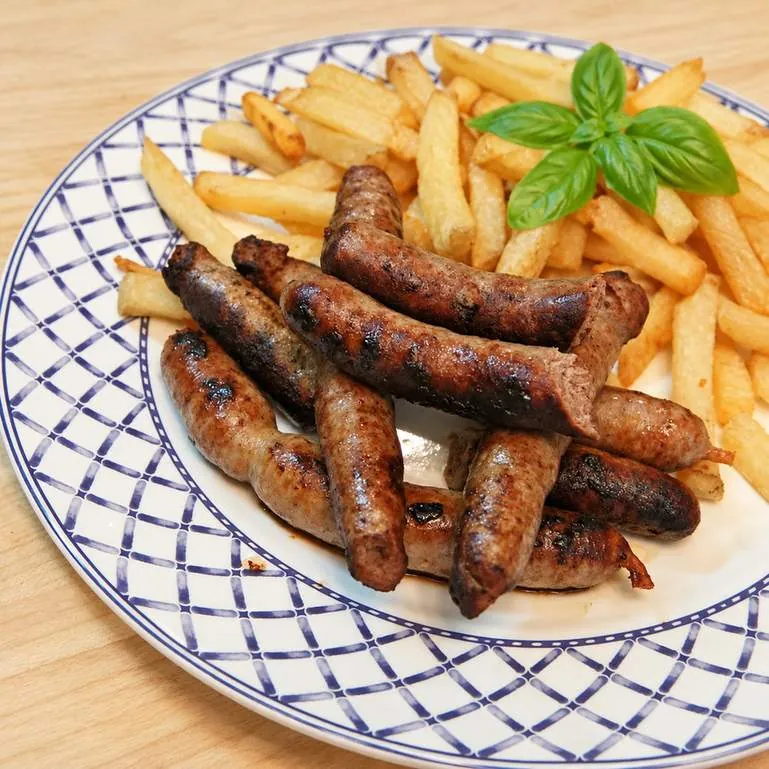
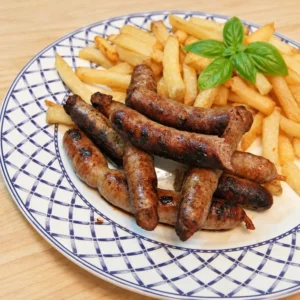
These homemade duck sausages are fresh links seasoned with garlic, black pepper and salt, then browned gently in a little duck fat. Sheep casings give them the slender shape shown in the video, with fries served alongside. Keep the filling cold, leave the casings slightly flexible and cook the centre to 165°F so the sausages are cooked through without scorching the outside.
This recipe is based on my YouTube video, with a few adjustments since publication to clarify casing preparation, batch handling and the cooking check. The flavour stays simple: duck, garlic and pepper. It is a useful project for a weekend meal and for preparing extra fresh links to freeze.
{VIDEO}
Fresh duck sausage with a short ingredient list
These are fresh sausages, not cured or smoked charcuterie. There is no curing salt, wine, breadcrumb or cream in the filling. The mixture binds because the cold ground meat is worked with salt until it becomes cohesive, then supported by the casing.
This is a different preparation from duck confit, which uses whole legs cooked slowly in fat, or a duck terrine with Cognac, which sets in a mould. It also differs from a cassoulet with duck and sausages: here, the sausage itself is made from duck.
I keep the seasoning restrained because the duck should remain recognizable. The garlic needs to be minced very finely; large pieces can catch on a narrow stuffing tube and create uneven pockets in the links.
Choosing the meat and preparing the equipment
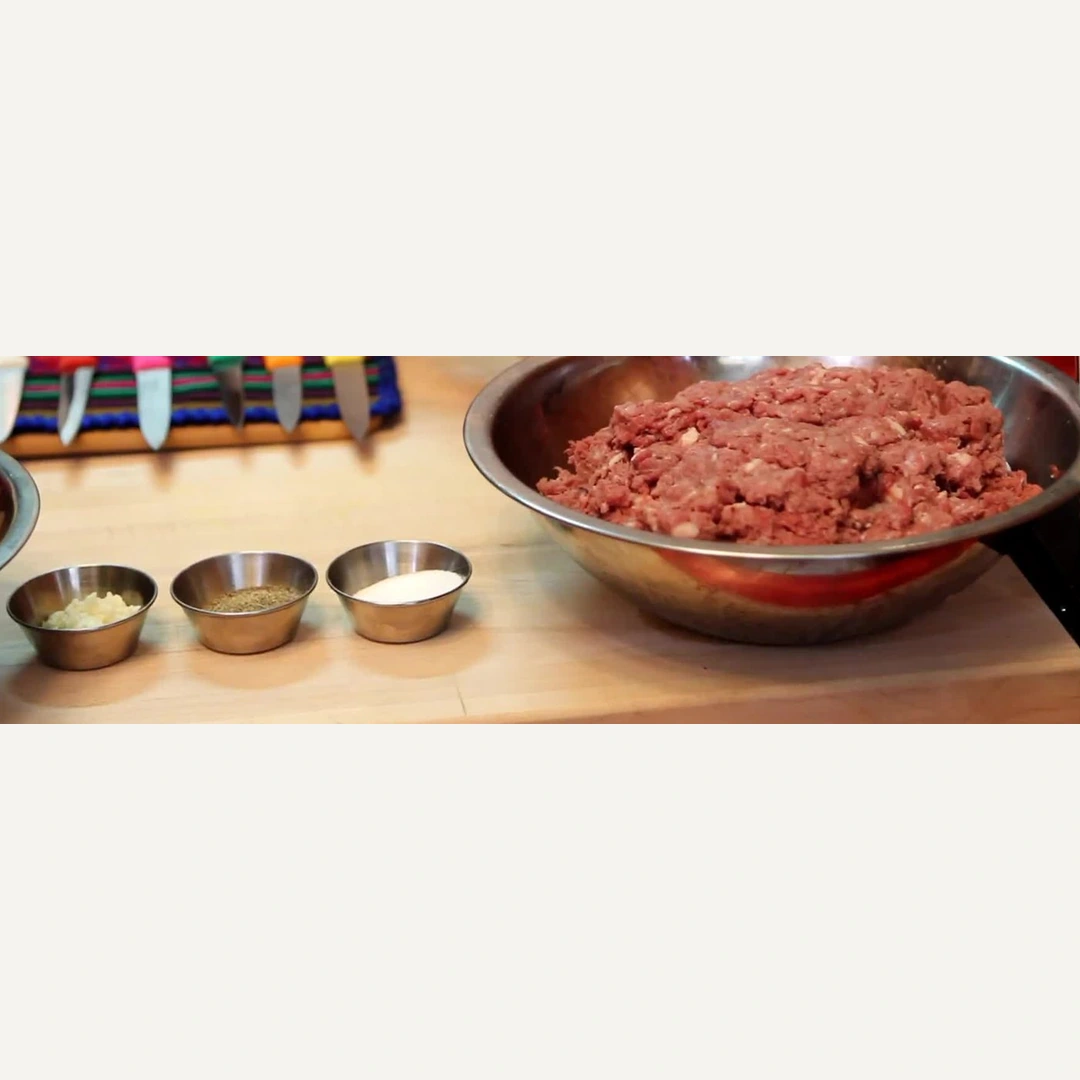
The source batch uses just over 4 pounds of ground duck. Ask for ground duck suitable for fresh sausages, with some of its own fat, rather than an entirely fat-free breast mince. The video describes fairly lean meat but gives no fat percentage. A very lean mixture can work, but it will have a firmer, less juicy texture; the fat in the frying pan cannot replace fat within the filling.
Keep the meat cold while you work. Chill the bowl and return the mixture to the refrigerator whenever you stop to assemble or clean equipment. A temperature of 40°F or below is the practical storage target between stages. If the meat becomes warm and greasy, pause and chill it before continuing.
Natural sheep casings suit slender sausages. Their length requirements vary with diameter, so buy enough casing for the full weight of meat and prepare it according to the supplier’s directions. Salt-packed casings generally need rinsing and soaking, including flushing water through the inside. Keep them wet so they slide onto the tube without tearing.
You need a sausage stuffer with a narrow tube, a large bowl, a clean tray and a thin-tip food thermometer. The stuffer shown in the video is a manual model. Have the equipment assembled before bringing the filling out of the refrigerator.
Mixing and stuffing the sausages
1. Season and bind the cold filling
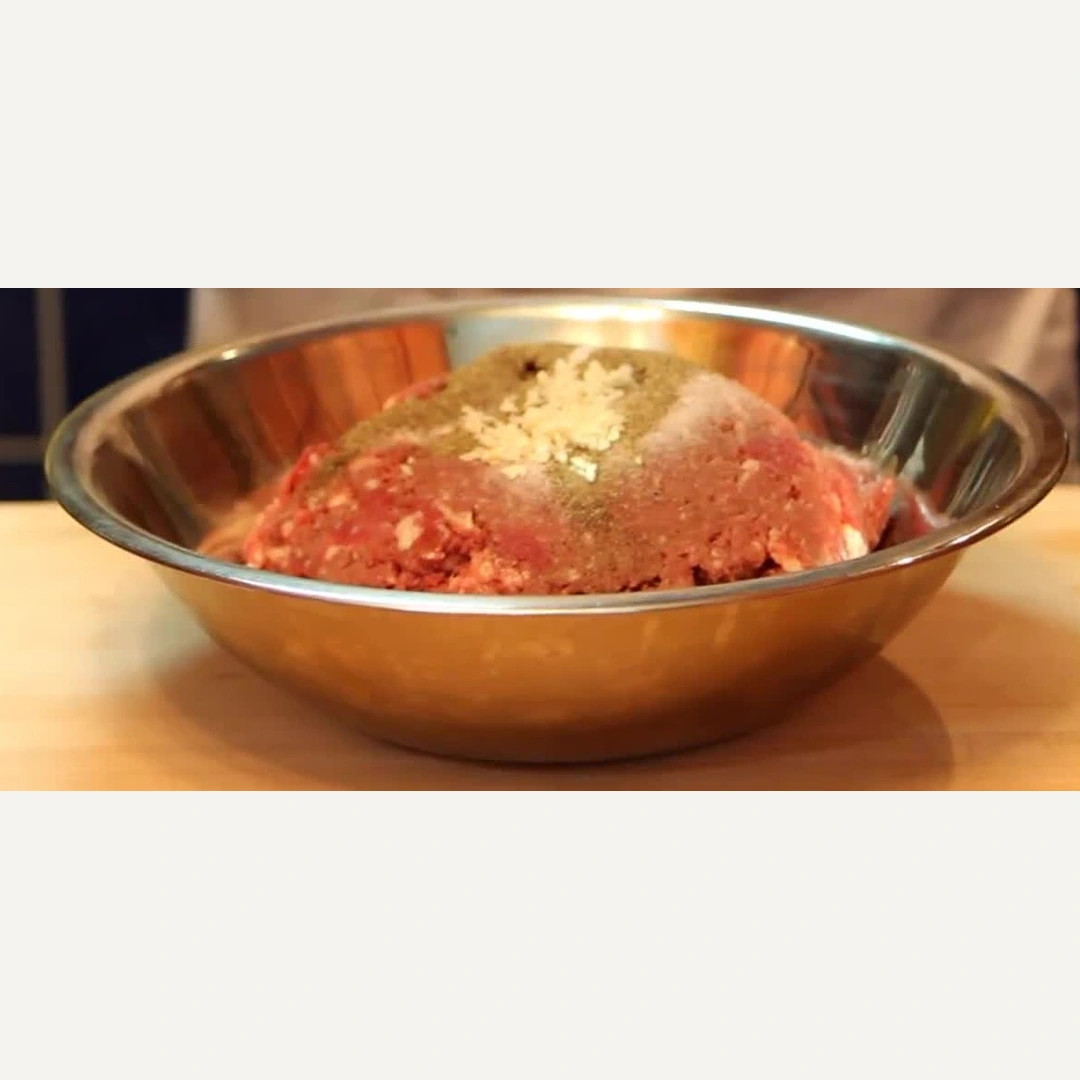
Add the fine salt, ground pepper and finely minced garlic to the cold ground duck. Mix firmly for about 2 to 3 minutes, folding and pressing until the seasoning is evenly distributed and the meat feels slightly sticky. It should gather into a cohesive mass rather than crumble apart.
There is no need to turn it into a smooth purée. If you want to check seasoning, cook a small patty completely and taste that, keeping the main mixture chilled. Do not taste the raw filling.
2. Load the stuffer and casing
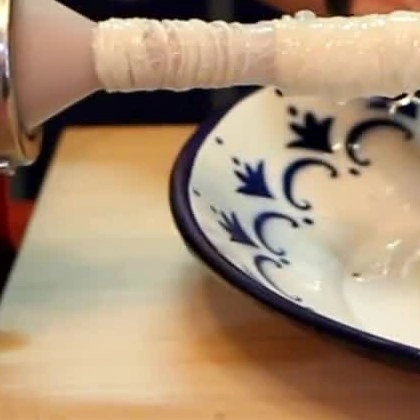
Pack the mixture into the stuffer cylinder in portions, pressing out large air pockets. Fit the narrow tube and slide the rinsed, soaked casing onto it, leaving a short tail. Turn the handle until meat reaches the end of the tube and the initial air has escaped, then tie the casing end.
I fill steadily rather than trying to finish quickly. Guide the casing as it leaves the tube, letting it remain slightly yielding. A casing stretched tight as a balloon has little room left for twisting or expansion during cooking.
3. Form links without overfilling
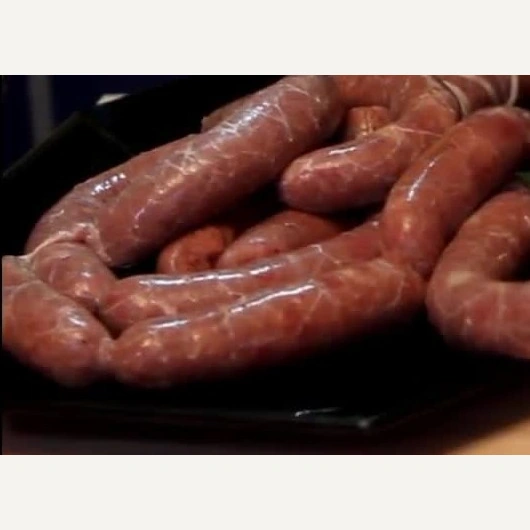
Let the sausage coil onto a clean tray as you fill. Stop before the casing runs out, leave a little unfilled length and tie the end. Pinch the filled casing into portions and twist neighbouring links in opposite directions so the twists do not undo each other.
The video gives about 18 sausages from the full batch. Your number will depend on casing diameter and link length, so consistent portions matter more than an exact count. Do not force meat into an already firm section. If a casing breaks, tie off the sound end and start a fresh length.
4. Separate and chill
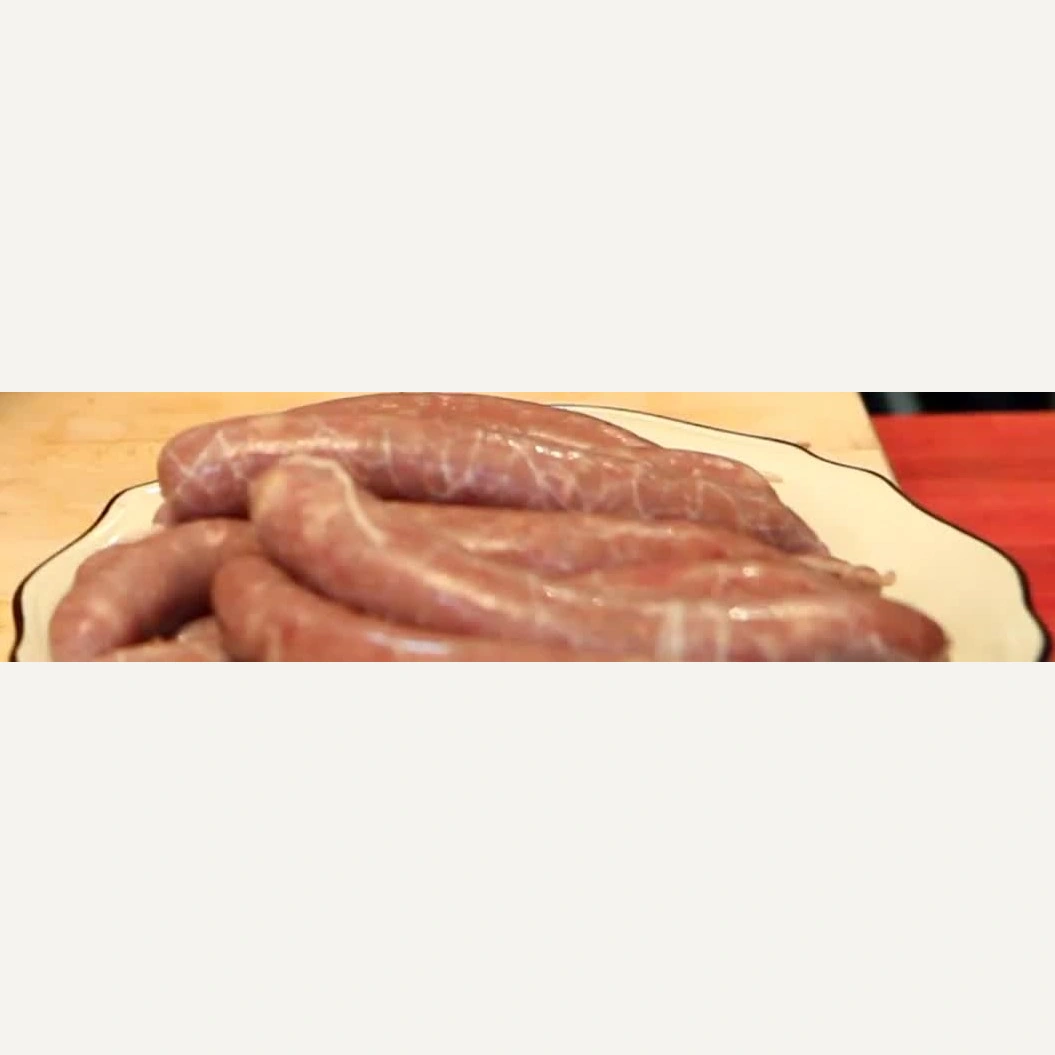
Cut between secured links, leaving the ends closed. Arrange in a single layer on a clean tray and refrigerate while preparing the pan. Cook the amount needed for the meal and keep the remaining raw sausages cold.
For this batch, two sausages per person gives about nine portions. It is a production quantity, not one overcrowded frying-pan load. Freeze the links you will not cook promptly rather than leaving the whole batch on the worktop while the first pan cooks.
5. Brown gently and check the centre
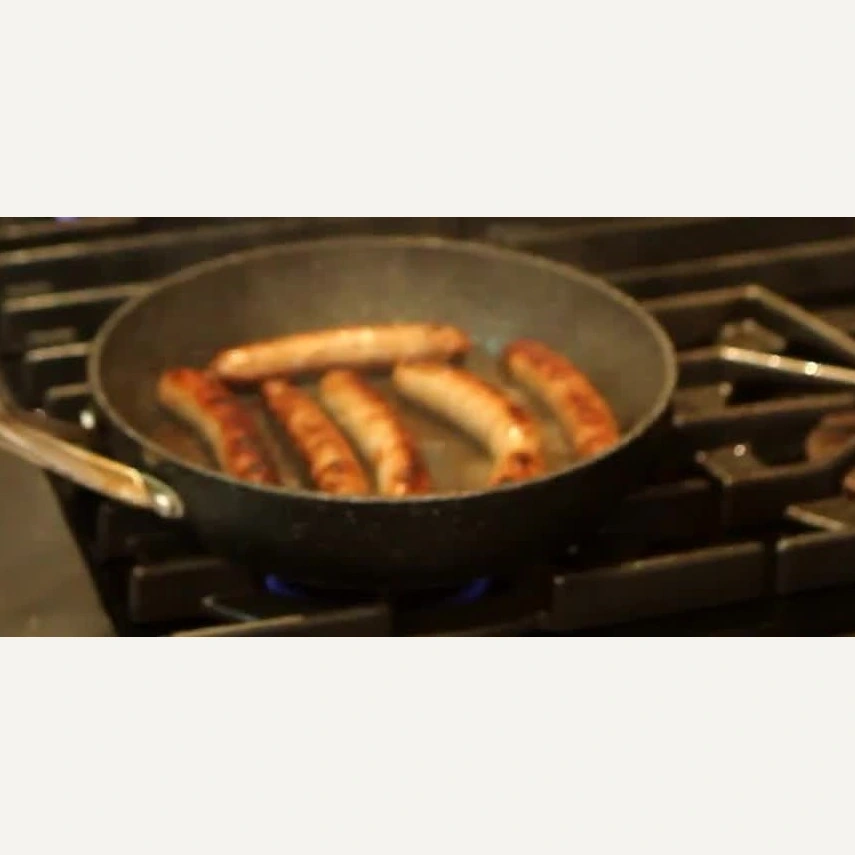
Heat about 1 teaspoon duck fat in a wide frying pan over medium-low to medium heat. Add a single layer of sausages, around six if they fit comfortably. Cook gently, turning regularly, for roughly 12 to 15 minutes; the diameter and starting temperature will change the timing.
The casing should become evenly browned without splitting. Reduce the heat if dark patches develop before the centres are ready. Check with a thin-tip thermometer inserted from an end into the centre of the thickest part: ground duck needs 165°F. Colour and clear juices alone are not a reliable check.
Remove cooked links to a clean plate. Repeat with the remaining sausages and fat, or refrigerate the uncooked remainder. Avoid repeatedly pricking the casings to release fat, which also lets the meat juices escape.
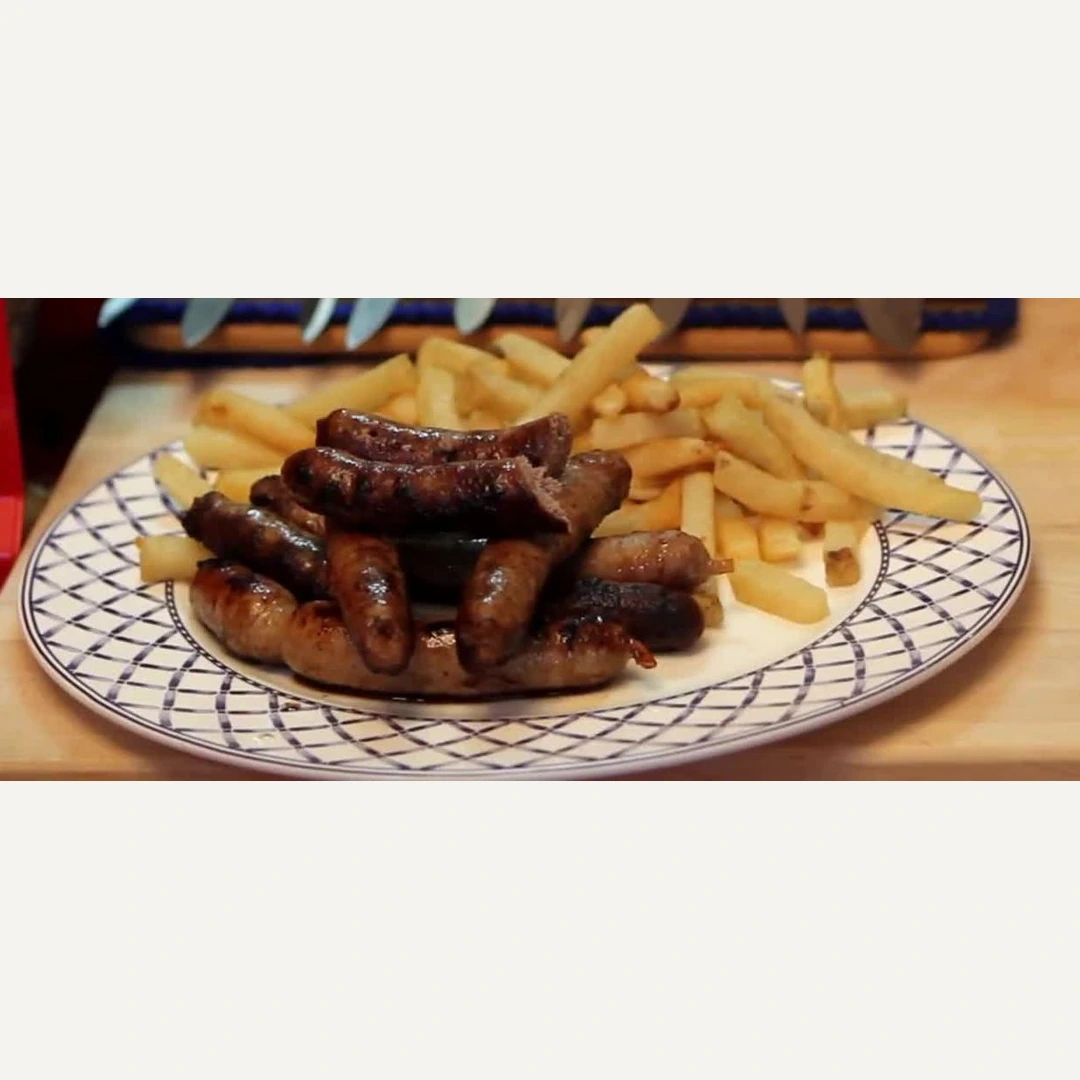
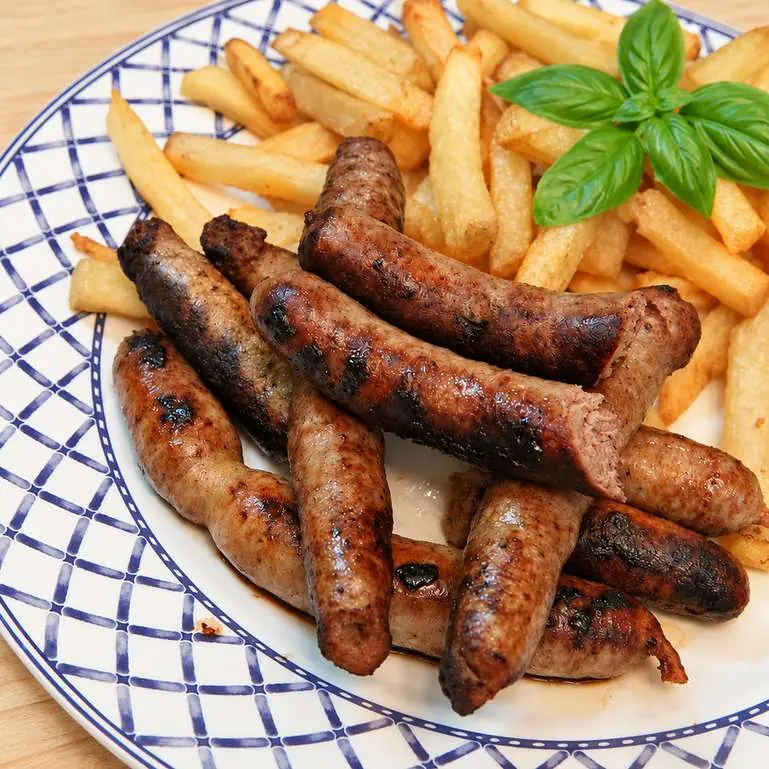
Serve with separately prepared fries and, if desired, a small basil garnish as in the video. There is no sauce required. The finished sausage should hold its shape when cut, with a cohesive interior rather than loose, dry granules.
Substitutions and useful alternatives
If sheep casings are unavailable, a different food-grade casing can be used according to its supplier’s instructions, but a larger diameter changes cooking time. Without a stuffer, shape the mixture into small patties and pan-cook to the same internal temperature. That gives duck sausage patties rather than the linked presentation.
Neutral oil can replace the small amount of duck fat in the pan. It will not fix a filling that is too lean. Keep the original garlic, salt and pepper quantities for the first batch before introducing extra herbs or strong spices that mask the duck.
The fries can be replaced by Lyonnaise potatoes or a crisp salad. If you prefer a different duck preparation without stuffing equipment, pan-seared duck breast with pepper sauce uses a separate whole-cut method.
Questions about homemade duck sausage
Why is the sausage dry?
Very lean meat, an unbound filling and overcooking can all contribute. Keep the meat cold, mix until cohesive and use a thermometer so you stop once cooked. Adding more fat to the frying pan does not make the interior of a fat-free filling juicy.
Do I need curing salt?
No. This is a fresh sausage intended for refrigeration, freezing and thorough cooking. Do not treat it as a dry-cured sausage or leave it at room temperature to mature.
Can I freeze the raw links?
Yes. Freeze them separated on a tray, then package tightly and label. Thaw in the refrigerator before cooking. For this recipe, cook refrigerated raw links within 1 to 2 days, or freeze them promptly.
How do I scale the seasoning?
Weigh the meat and keep the same proportions. The source has about 1.4% salt by meat weight, with just over 0.3% each pepper and garlic. Because fine and coarse salts occupy different volumes, weighing is preferable. For half the batch, halve every filling ingredient rather than leaving the salt unchanged.
Fries, sauces and other sides
For the original plate, prepare Belgian-style fries separately and follow that method’s temperatures. Air-fryer fries give another option without a separate pot of frying oil.
A little homemade mayonnaise or garlic aioli can be served on the side, rather than mixed into the sausage filling. A romaine and endive salad adds crunch alongside the browned meat. The nutrition in the card covers the sausages, not the fries or optional sauces, and depends on the fat content of the duck.
Homemade Duck Sausages with Garlic and Black Pepper
Ingredients
- 4 lb 3 oz ground duck very cold, suitable for fresh sausages with some of its own fat
- 4 1/4 teaspoons fine salt
- 2 1/2 teaspoons ground black pepper
- 2 teaspoons very finely minced garlic about 2 small cloves
- Natural sheep casings enough for the full meat quantity, prepared according to the supplier
- 1 tablespoon duck fat divided, for cooking the full batch
- Prepared French fries optional, for serving
- A few fresh basil leaves optional, for serving
Instructions
- Chill the meat, bowl and equipment. Rinse, soak and flush the sheep casings as directed by the supplier, and keep them wet.
- Mix cold ground duck with salt, pepper and garlic for 2 to 3 minutes until evenly seasoned, cohesive and slightly sticky. Keep at 40°F or below between stages.
- Pack the stuffer, removing large air pockets. Fit the narrow tube and slide on casing. Push meat to the tube tip to expel initial air, then tie the casing end.
- Fill steadily without stretching the casing tight. Tie off, pinch into portions and twist adjacent links in opposite directions. The source gives about 18 links; size changes yield.
- Separate secured links and refrigerate. Freeze any raw links not being used within 1 to 2 days.
- Heat 1 teaspoon duck fat per batch in a wide pan over medium-low to medium heat. Add around 6 links in one layer. Turn regularly and cook about 12 to 15 minutes, until the centre reaches 165°F. Reduce heat if browning too quickly.
- Transfer to a clean plate. Repeat with remaining links and fat, or keep unused raw sausages refrigerated. Serve with separately prepared fries and optional basil.