IKEA-Style Mashed Potatoes: Creamy Copycat Side
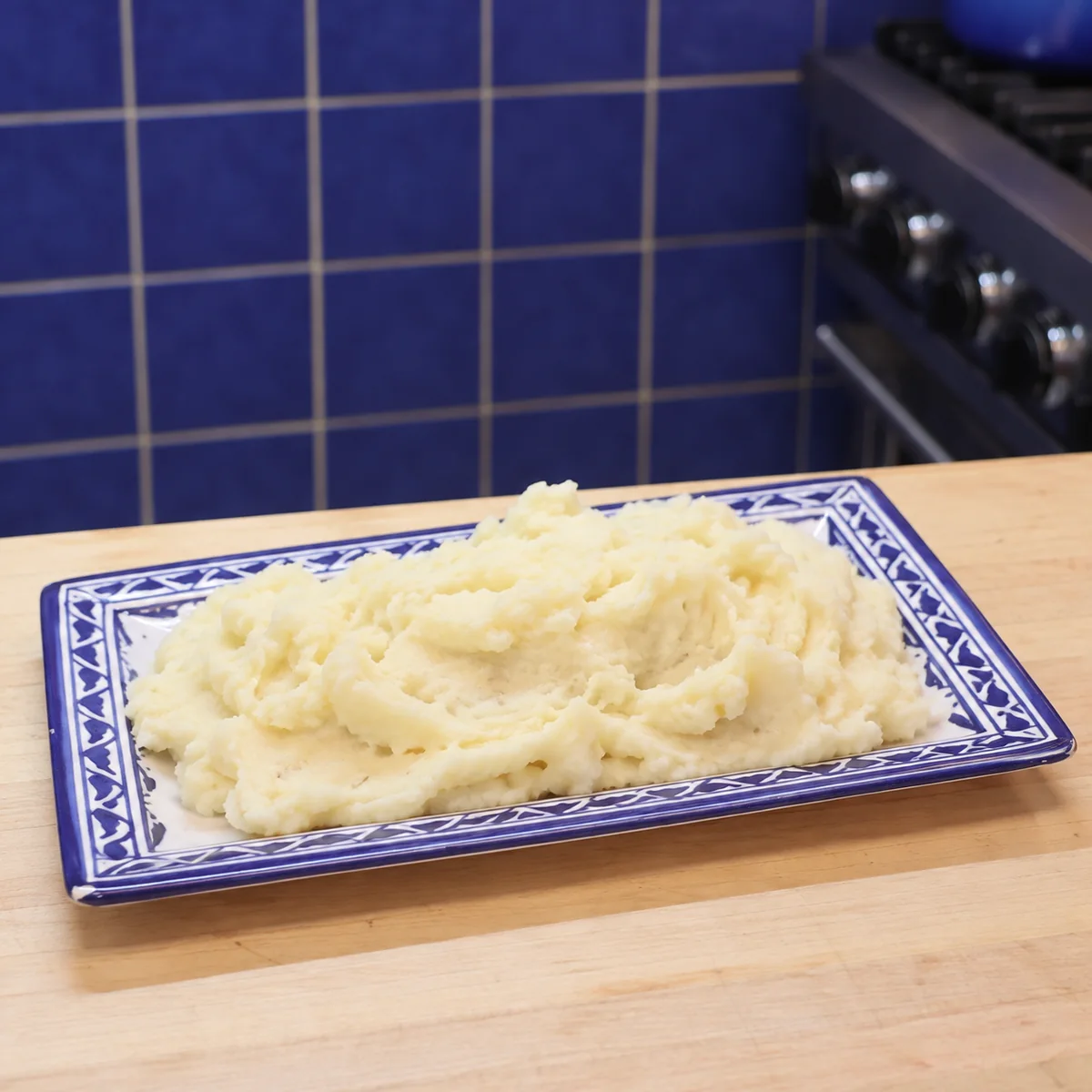
These IKEA-style mashed potatoes are smooth, buttery and soft enough to scoop beside Swedish meatballs without turning loose or gluey. The reliable part is the ratio: two pounds of potatoes get six tablespoons of butter and up to three-quarters of a cup of warm dairy, added gradually so you can stop as soon as the mash is creamy.
This is a restaurant-style mashed potato side, not a completely different potato technique. It is deliberately silkier than my homemade mashed potatoes, with a mild buttery flavour that works especially well beside Swedish meatballs and a spoonful of homemade brown gravy.
Why this version stays creamy instead of gluey
The biggest risk with mashed potatoes is not a lack of cream. It is overworking the starch. A blender or food processor breaks the potato cells aggressively and can turn a good batch elastic in seconds. I prefer a potato ricer or a hand masher, and I stop as soon as the texture is even.
Yukon Gold potatoes are my first choice here because they have enough starch to stay fluffy but enough natural waxiness to taste creamy. Russets also work, especially if you want a lighter, fluffier result. If you use very waxy red potatoes, expect a denser mash. For more potato ideas, the potato recipe guide shows how different potato textures suit different cooking methods.
The dairy is warmed before it goes into the potatoes. Cold milk cools the mash and makes the butter firm up while you are still trying to mix it. Warm milk and cream absorb more easily, so fewer strokes are needed.
Ingredients You Need
Use two pounds of peeled Yukon Gold potatoes, six tablespoons of unsalted butter, one-half cup whole milk, one-quarter cup heavy cream, fine salt and white or black pepper. The cream is not there to make the potatoes heavy. It replaces part of the milk so the finished mash stays rich without needing an excessive amount of butter.
Salt the cooking water as well as seasoning at the end. Potatoes need seasoning from the inside. If all the salt is added after mashing, you often end up stirring more than necessary trying to distribute it.
Step-by-Step Instructions
Cook the potatoes from cold water
Cut the peeled potatoes into pieces about one and a half inches across. Keep them close to the same size. Put them in a pot, cover with cold water by about an inch and season the water with salt. Bring to a gentle boil, then reduce to a steady simmer.
Cook for about fifteen to twenty minutes. A knife should slide into the centre without resistance, but the potatoes should not be dissolving around the edges. Starting in cold water matters because it lets the centres and exteriors heat more evenly.
Drain and dry them before mashing
Drain thoroughly, then return the potatoes to the hot empty pot for one to two minutes over low heat. Shake the pan gently. You are not trying to brown them. You are letting surface steam escape so that the potatoes can absorb butter and dairy instead of carrying extra cooking water into the mash.
Pass the hot potatoes through a ricer, or mash them by hand until there are no large lumps. If you like French-style potato sides, this drying step is also useful before recipes such as pommes duchesse and other preparations where excess moisture weakens the final texture.
Add butter first, then the warm dairy
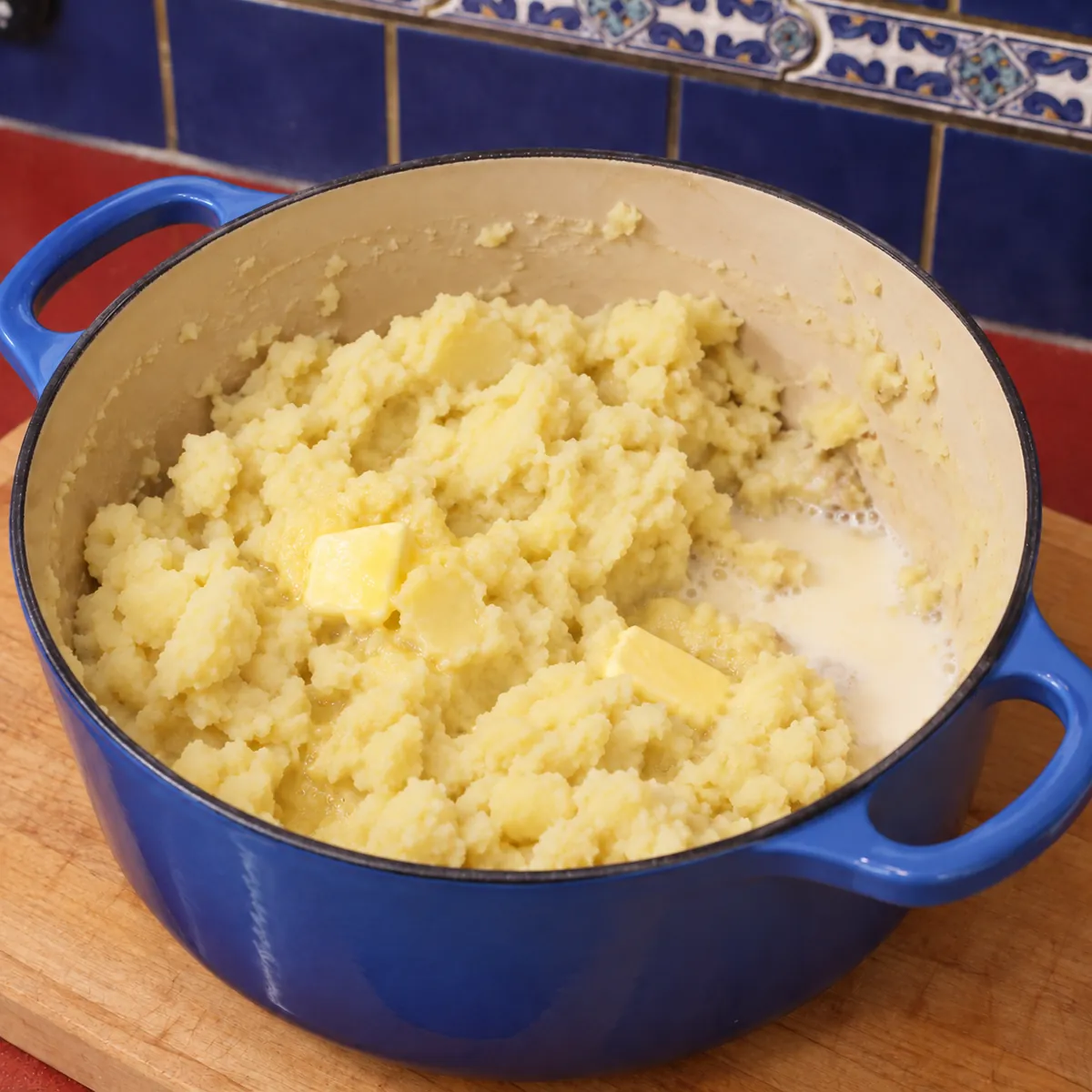
Warm the milk and cream together until steaming but not boiling. Fold the butter into the hot potatoes first. This coats some of the starch with fat and gives a clean buttery flavour before the extra liquid goes in.
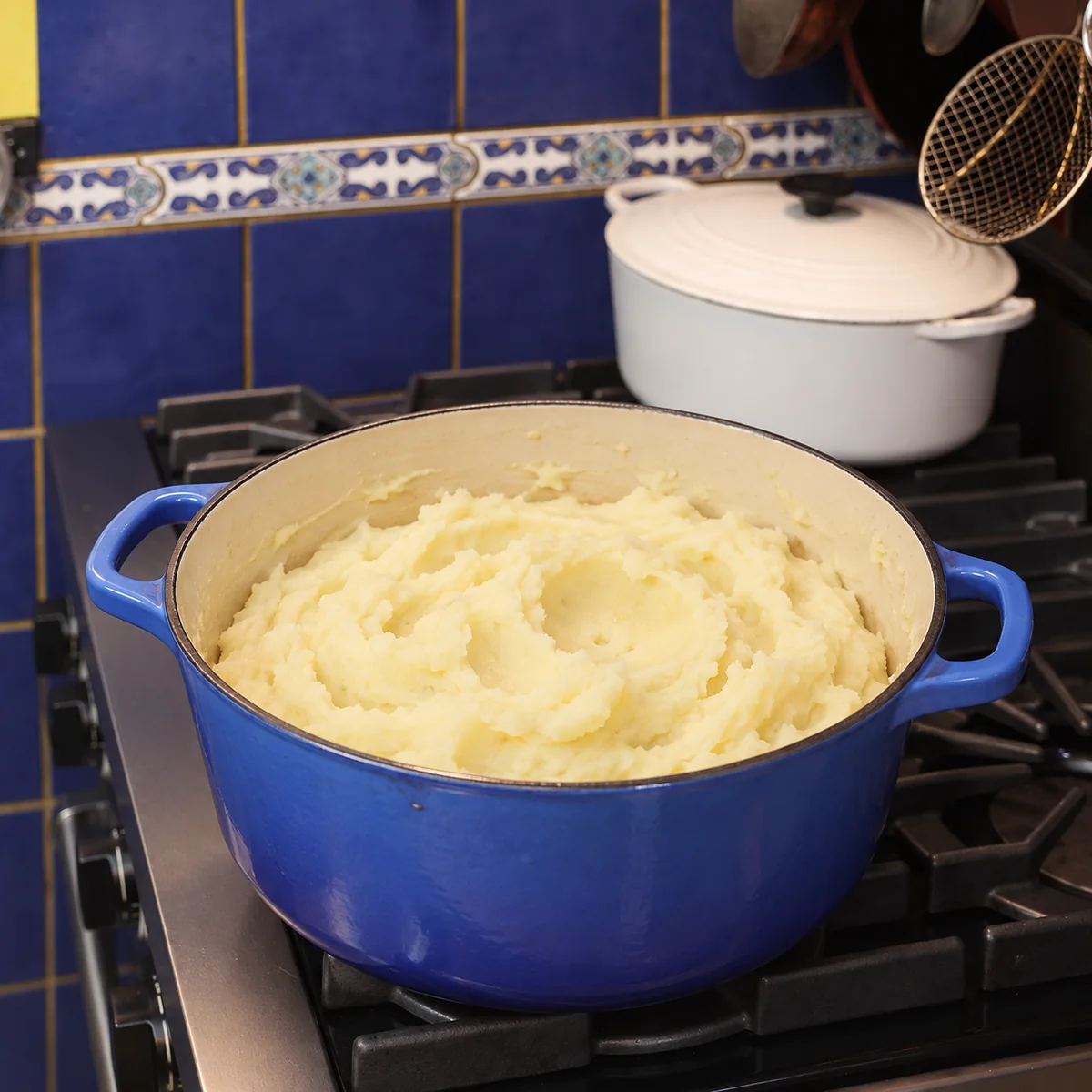
Add about half of the warm milk mixture and fold gently. Add the rest a little at a time. You may need all of it, especially with russets, but do not force the full amount into potatoes that already look right. The finished mash should fall from a spoon in a soft mound and slowly relax. It should not pour.
Season and hold them properly
Taste for salt and pepper. If the potatoes need loosening just before serving, add one or two tablespoons of hot milk, not cold milk. Hold them covered over barely simmering water for up to thirty minutes rather than directly over a burner.
What I look for before serving
A good batch has no dry pockets, no watery ring in the bowl and no elastic pull when you lift the spoon. The mash should look glossy from butter but not greasy. If melted butter separates around the edges, the potatoes may be too cool or the fat was added too quickly.
The formula also scales well. For four pounds of potatoes, double everything, but still hold back some of the dairy until you see the texture. Potato variety, age and how well they were dried can change how much liquid they accept.
For a crisper potato side, I would not try to force this recipe into that role. Use Lyonnaise potatoes, duck-fat pommes Sarladaises or pommes boulangères when you want browned edges rather than a soft mash.
Substitutions
Russets can replace Yukon Golds one for one. They usually take a little more dairy and produce a fluffier mash. Half-and-half can replace the milk and cream mixture. If you only have whole milk, use it, but add it gradually because the potatoes may taste slightly lighter.
Salted butter works, but reduce the final salt until you taste the potatoes. I would not replace the butter with the same amount of olive oil if the goal is IKEA-style flavour. That becomes a different, more Mediterranean mash. For a stronger butter-and-herb side, garlic butter can be folded into a portion at the table.
Do not use a blender as a shortcut. That substitution changes the structure of the starch, not just the appearance.

FAQ
Can I make these ahead?
Yes. Cool the potatoes promptly, refrigerate in a covered container and reheat gently with a splash of milk and a small knob of butter. Stir only enough to bring the texture back together. They are best within three days.
Why did my mashed potatoes become sticky?
The usual cause is overmixing. Food processors, blenders and aggressive electric mixing release too much starch. Very wet potatoes can also require extra stirring, which is why the short drying step matters.
Can I serve these without meatballs?
Absolutely. They work beside Dutch oven pot roast, beef tips and gravy or a simple roast chicken. They are mild enough to take on whatever sauce is on the plate.
Suggested Posts
If you are building a potato side-dish rotation, try air fryer roasted potatoes for crisp edges, classic pommes dauphine for a special-occasion side, or the mashed potato and potato side-dish collection when you want more options.

IKEA-Style Mashed Potatoes: Creamy Copycat Side
Ingredients
- 2 pounds Yukon Gold potatoes peeled and cut into 1 1/2-inch pieces
- 6 tablespoons unsalted butter softened
- 1/2 cup whole milk
- 1/4 cup heavy cream
- 1 1/2 teaspoons fine salt divided, plus more for cooking water
- 1/4 teaspoon white or black pepper
Instructions
- Put potatoes in a pot, cover with cold water by 1 inch and salt the water. Bring to a boil, reduce to a simmer and cook 15–20 minutes until completely tender.
- Drain well. Return potatoes to the hot empty pot over low heat for 1–2 minutes, shaking gently, to evaporate surface moisture.
- Rice or hand-mash the potatoes. Warm milk and cream until steaming but not boiling.
- Fold butter into the potatoes first. Add the warm dairy gradually, stopping when the mash is smooth, soft and able to hold a loose mound.
- Season with remaining salt and pepper. Serve immediately or hold covered over barely simmering water for up to 30 minutes.