Duck Gizzard Terrine with Garlic and Herbs
This terrine keeps the duck gizzards in generous pieces, slowly cooked with garlic and herbs, then packed into a mould with duck fat. The cold fat holds the loaf together and gives each serving its rich, firm texture. Cook the gizzards until a knife enters easily, pack them without large gaps and keep the terrine cold: thin slices can break apart because there is no ground-meat mixture binding the pieces.
This is a cold French charcuterie starter made from confit gizzards, not a smooth pâté or a terrine set in jelly. Prepare it across three calendar days: season on the first, cook and press on the second, then unmould on the third. It suits a small starter with bread and cornichons, whether you serve it for a holiday meal or a weekend lunch.
This recipe is based on my YouTube video, with a few adjustments since publication to clarify temperature control, cooling and slicing. The original herbs, garlic and whole-piece construction remain.
{VIDEO}

A terrine held together by cold duck fat
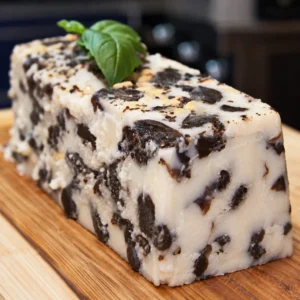
I make it this way because slow cooking softens the muscular gizzards while keeping their shape. The dark pieces remain visible against the pale fat. This is a different result from duck pâté with cognac, where a meat mixture creates the structure.
It is also different from duck terrine in port-wine jelly. Here, the white material between the gizzards is duck fat, not gelatin. That distinction matters when serving: the loaf becomes more fragile as the fat warms.
The cooking stage uses the same broad principle as duck legs cooked slowly in fat. The final treatment is different. There is no skin to crisp, and the gizzards are pressed into a cold starter.
Start with raw, cleaned gizzards
Use 4 pounds 14 ounces of raw duck gizzards, already cleaned and trimmed of tough membranes. Check each one before seasoning. Ready-cooked salted confit gizzards cannot follow the same overnight cure without changing the salt balance.
The measured seasoning is 1.06 ounces sea salt, 0.35 ounce coarsely cracked black pepper, and 0.07 ounce each dried basil, thyme and bay leaf. Use a scale for these quantities. For bay, choose finely ground leaf; remove any larger leaf fragments after cooking rather than leaving them in the terrine.
Add 1¾ ounces garlic, finely chopped or crushed. Have about 8½ cups rendered duck fat available for cooking, plus more only if the pot requires it. This is the cooking bath, not an instruction to pour all of it into the finished loaf. A snug heavy pot uses less fat than an unnecessarily wide one.
Pine nuts are optional in the video. One ounce gives a restrained amount in this batch. Leave them out if you prefer the gizzards without nuts. Keep bread and cornichons separate for serving.
Choose a straight-sided terrine mould large enough for the cooked batch, roughly 2½ quarts, and keep a smaller mould ready if needed. Exact capacity depends on packing. A fine sieve, thermometer, flat pressing board and tray for overflow make the assembly easier.

Season, confit and press
1. Refrigerate the seasoned gizzards overnight
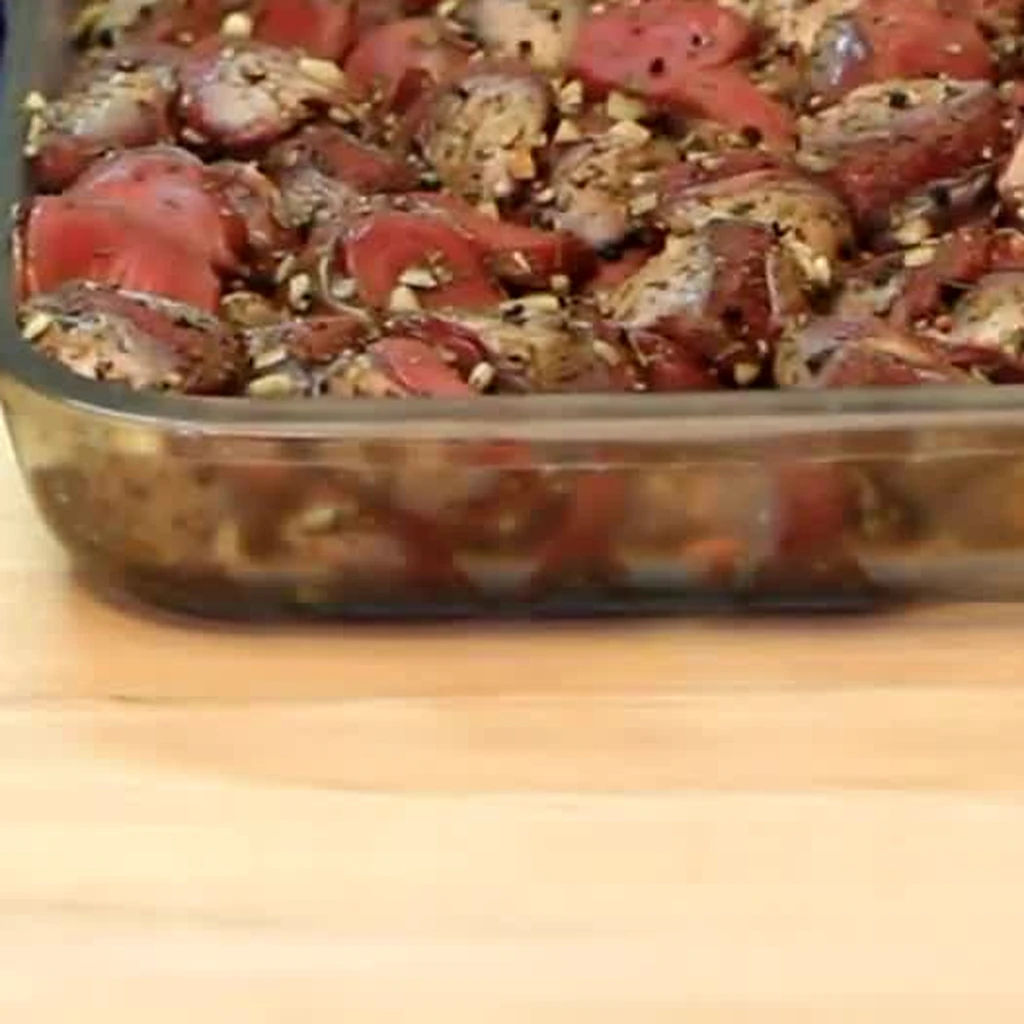
Mix the gizzards thoroughly with the salt, pepper, herbs and garlic. Turn the pieces from the bottom of the bowl so the seasoning does not sit in one patch. Transfer to a covered dish and refrigerate for 12 to 24 hours.
The video keeps this measured cure on the meat before cooking. Follow that method; do not add another layer of salt the next day. This is seasoning under refrigeration, not a preservation treatment.
2. Cook gently in the duck fat
Melt the duck fat gently, then let it cool until liquid but not hot before adding the gizzards. Put the meat in the fat carefully and check that the pieces are submerged. Bring the bath slowly to about 230°F, stirring gently during the warm-up.
Maintain that temperature for about 2 hours, counted after the bath reaches temperature. Keep the thermometer tip off the bottom of the pot. The aim is controlled confit cooking, not a roaring deep-fry. Lower the burner early if the temperature starts climbing.
Check a large piece with a clean digital probe: its centre should reach at least 165°F. Then check tenderness separately. A small knife should enter the thickest part with little resistance. If it remains rubbery, continue cooking and check again; a safe temperature alone does not make a gizzard tender.

3. Drain, strain and cool before assembly
Lift the cooked gizzards out with a spider or slotted spoon and drain well. Remove coarse bay fragments. Strain the cooking fat through a fine sieve into a heatproof container, without pouring hot fat into cold glass.
Spread the meat in shallow containers and refrigerate promptly, loosely covered until cold. Keep the strained fat separately. This cooling step is a clarification of the original video method: a deep, tightly covered hot loaf is slower to cool than separate shallow portions.
Once the gizzards are chilled, mix in the optional pine nuts. Melt only the strained fat needed for assembly, then let it cool until just liquid. Keep the remaining fat refrigerated or freeze it promptly for later use.

4. Pack tightly and fill the spaces
Set the mould in a tray. Add the cold gizzards in layers, arranging them snugly, and spoon just-liquid duck fat between the layers. Tap the mould gently to release air pockets. Continue until filled, then level the top and add enough fat to fill the remaining gaps.
I prefer careful packing to simply adding more fat. Large spaces create thick white sections without improving the bond between the meat pieces. The fat needs to reach the gaps, but the gizzards should still form the substance of the loaf.

5. Press and refrigerate for 24 hours
Cover the surface and fit a clean flat board that sits inside the mould. Use food-safe wrap suitable for contact with fatty food. Add a stable weight the mould can support and refrigerate immediately for about 24 hours, with the tray underneath.
The video uses an 8.8-pound weight. That is a description of the filmed setup, not a reason to load every household ceramic mould the same way. The pressure should compact the filling without forcing or cracking the dish. Good packing matters more than an oversized weight.

6. Unmould cold and cut generous portions
Remove the weight, board and covering. Run a thin knife around the sides, invert onto a board and lift the mould away. The fat should be opaque and firm throughout. If the centre is still soft, keep chilling.
Use a sharp knife for thicker portions, around ¾ inch rather than paper-thin slices. Support each portion with a wide spatula. The serving in the video separates into pieces, so expect a rustic result rather than flawless pâté slices. If a portion breaks, serve the pieces together without warming the whole loaf.

Add cornichons and bread at the table. Slice only what you need and return the rest to the refrigerator.

Substitutions that respect the structure
Omitting the optional pine nuts is the simplest variation. Keep duck fat as the binder: liquid oil will not set into the same cold loaf. Butter would change both flavour and texture, so it is not an equivalent swap.
Do not replace raw gizzards with cooked confit pieces and repeat the full salt cure. If you want a softer charcuterie preparation, shredded duck rillettes are designed to spread. For a smooth alternative, choose chicken liver mousse rather than blending this finished terrine.

Questions before serving
Why does my slice fall apart?
Whole gizzards are held by fat rather than a meat farce. Warm fat, thin slices and large gaps make separation more likely. Chill thoroughly, pack closely and support thick portions; pressing cannot guarantee a clean slice.
Is this a light starter?
The gizzards provide protein, but the retained duck fat makes this a rich preparation. Serve a small portion with something crisp and acidic. Nutrition varies substantially with the amount of fat left in the mould.
How long does it keep?
Keep refrigerated and use within 2 to 3 days of cooking, including the pressing day. Freeze portions promptly for up to 2 months as a quality target. Thaw in the refrigerator. The fat coating does not make this shelf-stable.
Bread, pickles and a crisp side
Plain slices of homemade white bread work well alongside the terrine. Add a romaine and endive salad dressed with a classic vinaigrette, or serve a small grated carrot salad with mustard dressing.
For a mixed charcuterie table, pork neck rillettes add a spreadable texture beside the gizzard pieces. If you prefer duck offal as a hot dish, duck hearts in red wine and morel sauce are a different option for another meal.
Duck Gizzard Terrine with Garlic and Herbs
Ingredients
- 4 lb 14 oz raw duck gizzards cleaned and trimmed
- 1.06 oz sea salt
- 0.35 oz coarsely cracked black pepper
- 0.07 oz dried basil
- 0.07 oz dried thyme
- 0.07 oz finely ground dried bay leaf
- 1¾ oz garlic finely chopped or crushed
- 8½ cups rendered duck fat approximately, enough to cover; only part is retained in the terrine
- 1 oz pine nuts optional
Instructions
- Mix cleaned raw gizzards with salt, pepper, herbs and garlic. Cover and refrigerate for 12 to 24 hours. Do not add more salt before cooking.
- Melt duck fat gently, then cool until liquid but not hot. Add gizzards carefully, ensuring they are submerged. Heat gradually to about 230°F.
- Maintain the fat near 230°F for about 2 hours after reaching temperature. Check a large gizzard reaches at least 165°F internally and a small knife enters easily. Continue cooking if still tough.
- Drain gizzards and remove coarse bay fragments. Strain the fat. Cool meat promptly in shallow containers under refrigeration, keeping strained fat separately; do not leave it out beyond 2 hours.
- Mix cold gizzards with optional pine nuts. Melt only the fat needed for assembly and cool until just liquid. Pack meat snugly in layers in a mould set on a tray, adding fat to fill the gaps and gently releasing air pockets.
- Cover with suitable food-safe wrap, fit a flat pressing board and add a stable weight the mould can support. Refrigerate immediately for about 24 hours.
- Remove the press, loosen the edges with a knife and unmould cold. Cut thick portions around ¾ inch, supporting them with a spatula. Serve with bread and cornichons; return the remaining terrine to the refrigerator.