Easy Crispy Orange Chicken with Fresh Orange Sauce
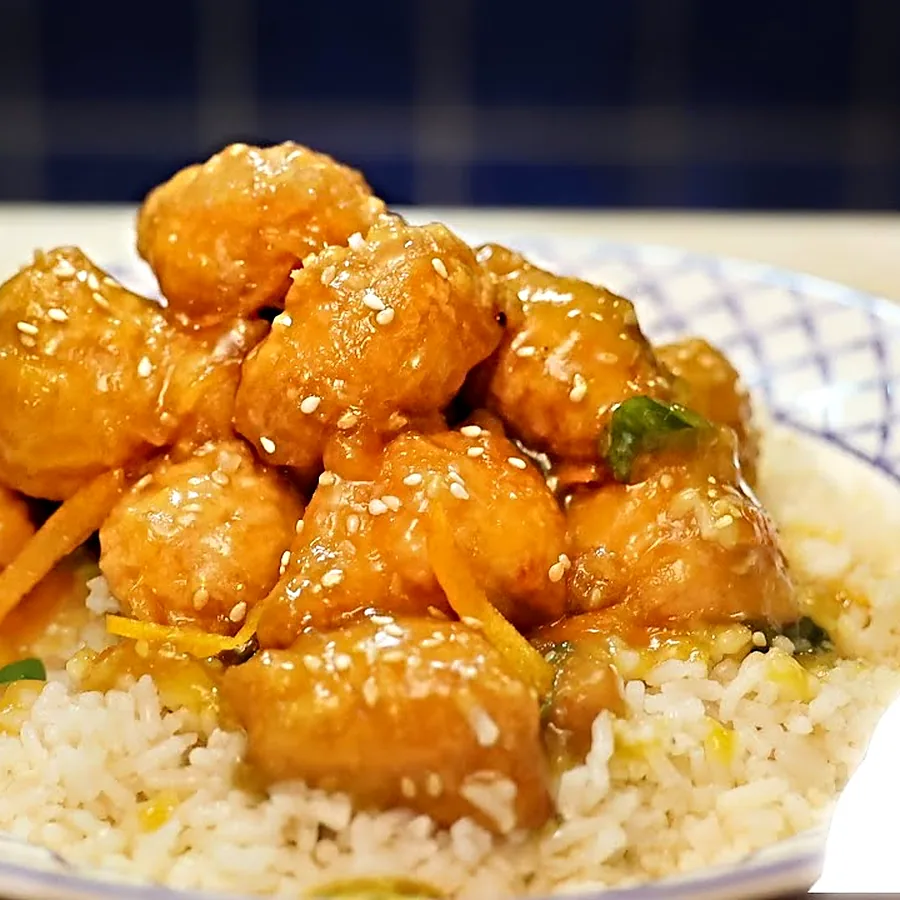
This homemade orange chicken combines twice-fried pieces of chicken breast with a glossy sauce made from fresh orange juice, zest, ginger, garlic, soy sauce and rice vinegar. This recipe is based on my YouTube video, with a few adjustments since publication to make the batter lighter, clarify the sauce measurements and provide a dependable rice method. I make it this way because the second fry gives the coating enough structure to remain crisp after it meets the sauce. The mistake to avoid is adding too much cornstarch to the glaze. What I look for is a sauce that coats the back of a spoon but still flows easily around the chicken.
Orange chicken is a sweet-and-tangy fried chicken dish commonly served with steamed rice. This version uses freshly squeezed citrus instead of bottled orange sauce, giving it a brighter flavour and a noticeable orange aroma. It works as a weekend dinner, a homemade takeout meal or a year-round family supper.
{VIDEO}
What Makes This Recipe Different
The original video uses an egg-based batter with equal amounts of flour and cornstarch. That combination is sound, but the quantities originally estimated from the video produced a batter that was much too thick. I reduced both dry ingredients so the mixture clings to the chicken in a thin, even layer instead of forming a heavy shell.
The chicken also gets two separate fries. The first cooks the meat and sets the coating. After a brief rest, the second fry colours and dehydrates the outside. You know it is ready when the pieces are deep golden, make a dry crackling sound in the oil and feel firm when lifted with a spider or slotted spoon.
Unlike my crispy honey garlic fried chicken, this dish is driven by fresh citrus rather than honey. It is also different from homemade Korean fried chicken, which has a spicier, fermented-style glaze. Here, orange zest, juice and rice vinegar create a cleaner sweet-and-sour finish.
This is still fried comfort food, but chicken breast gives each serving a substantial amount of protein. Serve it with rice and a fresh vegetable side to balance the rich coating and sauce.
Ingredients You Need
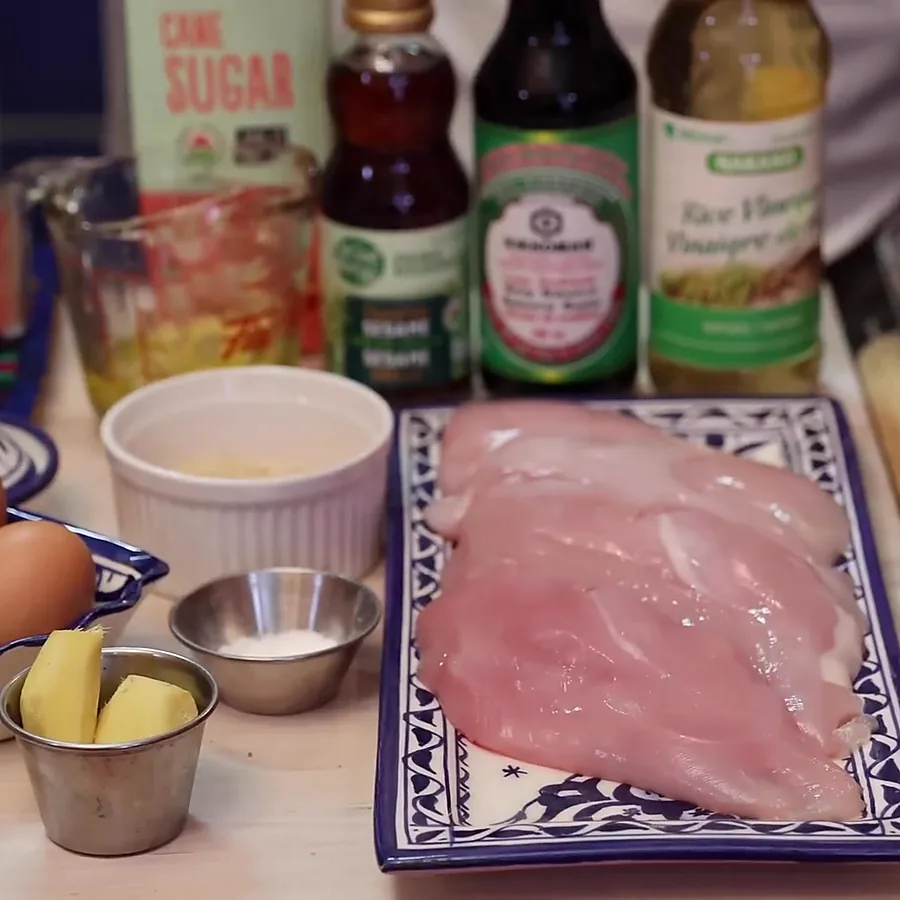
For the chicken, use about 1 3/4 pounds of boneless, skinless chicken breast. Giving the weight is more reliable than asking for four breasts, since their sizes vary considerably. Cut the meat into pieces about 1 to 1 1/4 inches wide so they cook at approximately the same rate.
The batter contains three eggs, all-purpose flour, cornstarch, baking powder and salt. Flour gives the coating structure, while cornstarch makes it more brittle and crisp. A small amount of cold water can be added if the batter is too stiff. It should fall slowly from a spoon and coat the chicken without forming large clumps.
Fresh oranges are important here. You need enough fruit to obtain 1 1/4 cups of juice, plus the zest of two oranges. Depending on their size and juiciness, four oranges may be sufficient, but having an extra one nearby is useful.
The glaze also contains rice vinegar, low-sodium soy sauce, brown or cane sugar, butter, fresh ginger, garlic and a measured cornstarch slurry. Low-sodium soy sauce is preferable because the sauce reduces as it cooks. Regular soy sauce can become overly salty.
For frying, choose a neutral oil with a high smoke point, such as canola, vegetable, sunflower or peanut oil. Avoid olive oil, which has a stronger flavour and is not ideal for this quantity of high-temperature frying.
The rice is gently scented with cardamom, but that addition is optional. I prefer whole cardamom pods because they are easy to remove before serving and give the rice a subtle aroma without competing with the orange sauce.
Step-by-Step Instructions
1. Prepare the chicken and batter
Pat the chicken dry before cutting it. Excess surface moisture loosens the batter and can cause more splattering when the pieces enter the oil.
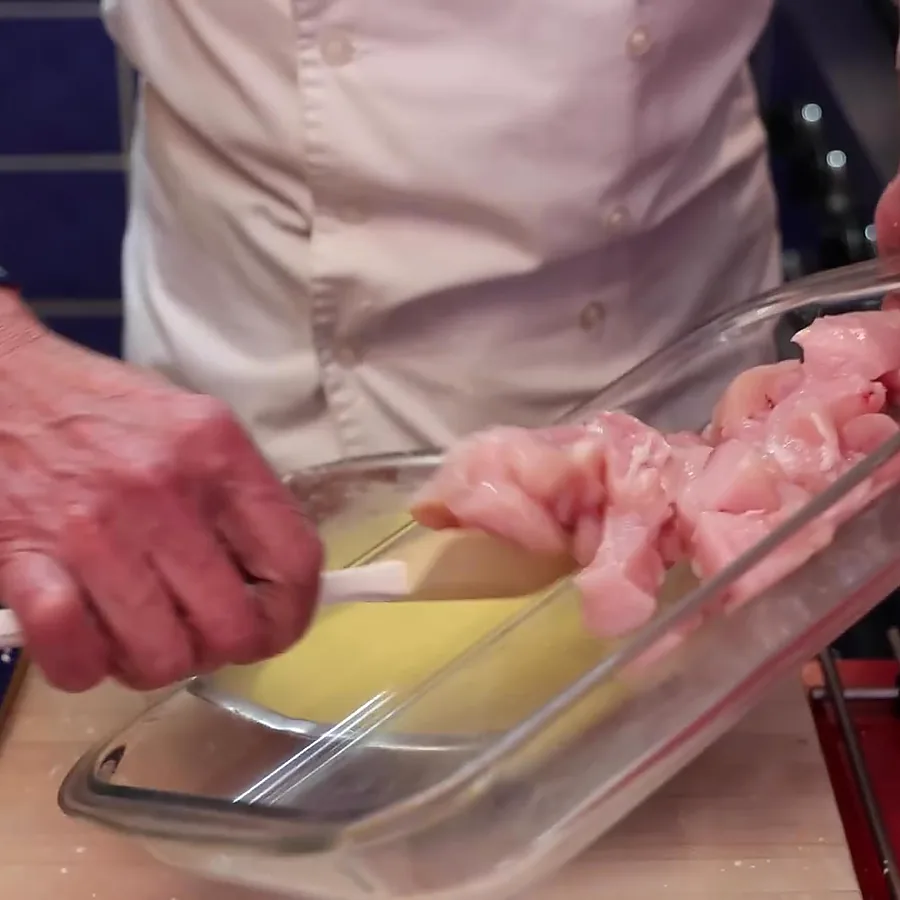
Cut the breasts into uniform cubes. In a large bowl, whisk the eggs until the whites and yolks are fully combined. Add the flour, cornstarch, baking powder and salt. Whisk until no dry pockets remain.
At this point, the batter should be thick but spoonable. Add one tablespoon of cold water if it looks like dough. Add the second tablespoon only if needed. Fold in the chicken and turn the pieces until every surface has a light coating.
2. Zest and juice the oranges
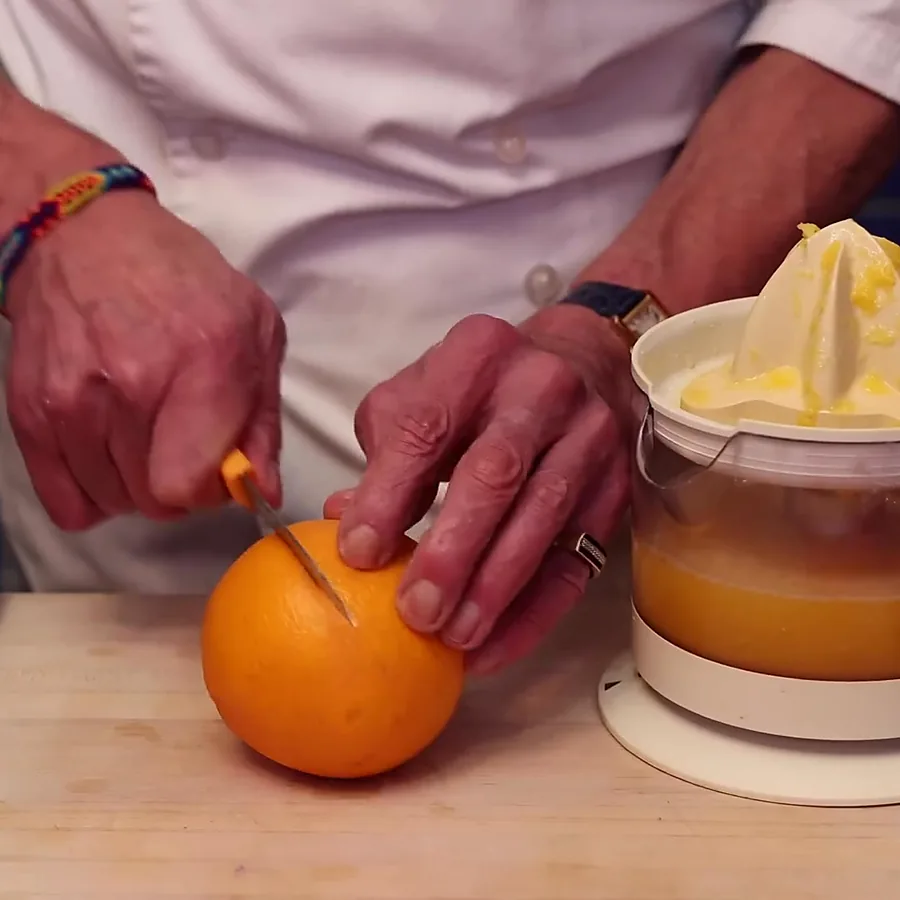
Remove the zest from two oranges, taking only the bright outer layer. The white pith underneath is bitter. The zest can be finely grated or removed in thin strips and sliced very finely, as shown in the video.
Squeeze enough oranges to obtain 1 1/4 cups of juice. Reserve two tablespoons for the cornstarch slurry.
Combine the garlic, ginger, soy sauce and two tablespoons of the rice vinegar in a small bowl. Keeping this mixture ready makes the sauce easier to control once the sugar begins cooking.
3. Cook the rice
Rinse the rice under cold water until the water becomes mostly clear. This removes surface starch and helps prevent a sticky or gummy result.
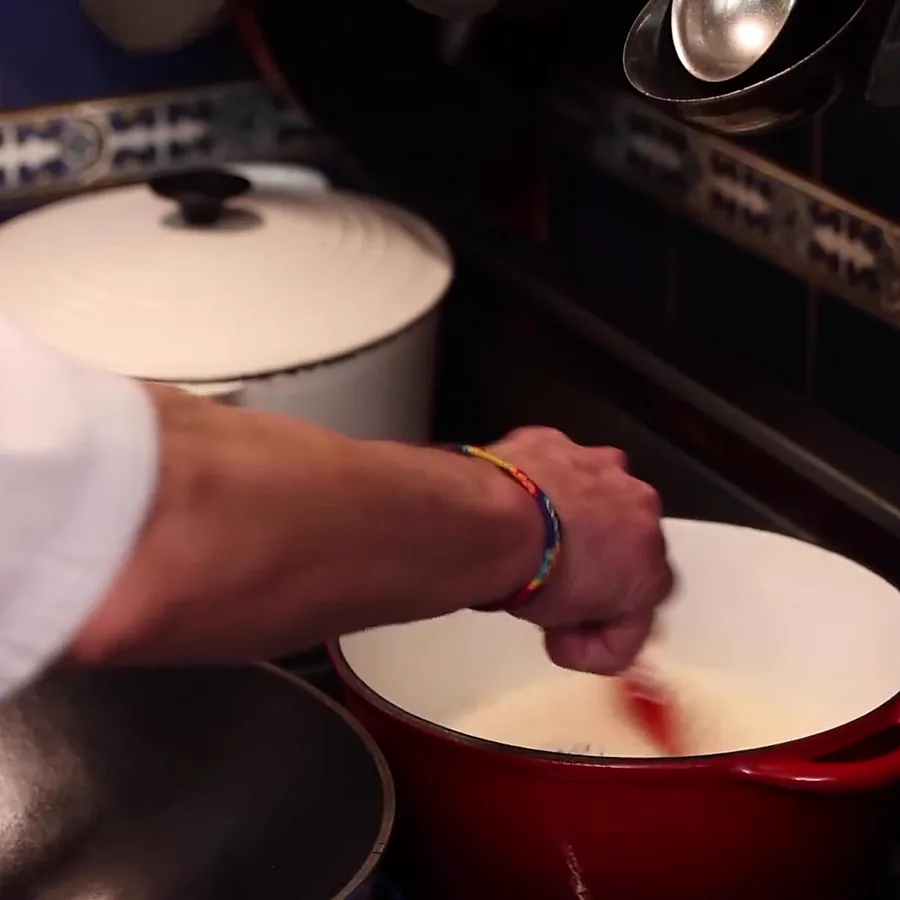
Place the rice, water, cardamom pods and salt in a saucepan. Bring it to a boil, reduce the heat to low and cover tightly. Cook for about 15 minutes, or according to the directions for your particular rice.
Remove the pan from the heat and let it rest, still covered, for 5 to 10 minutes. Remove the cardamom pods and fluff the grains with a fork. For another dependable side, this fluffy stovetop rice pilaf also works well with the orange glaze.
4. Complete the first fry
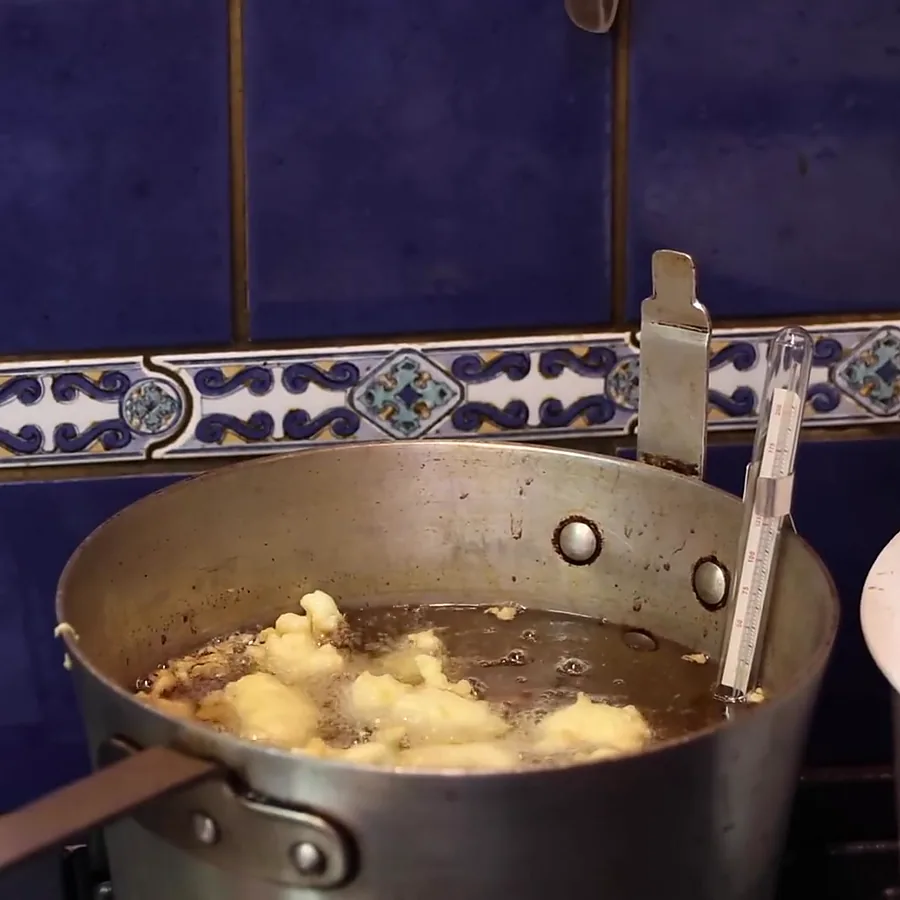
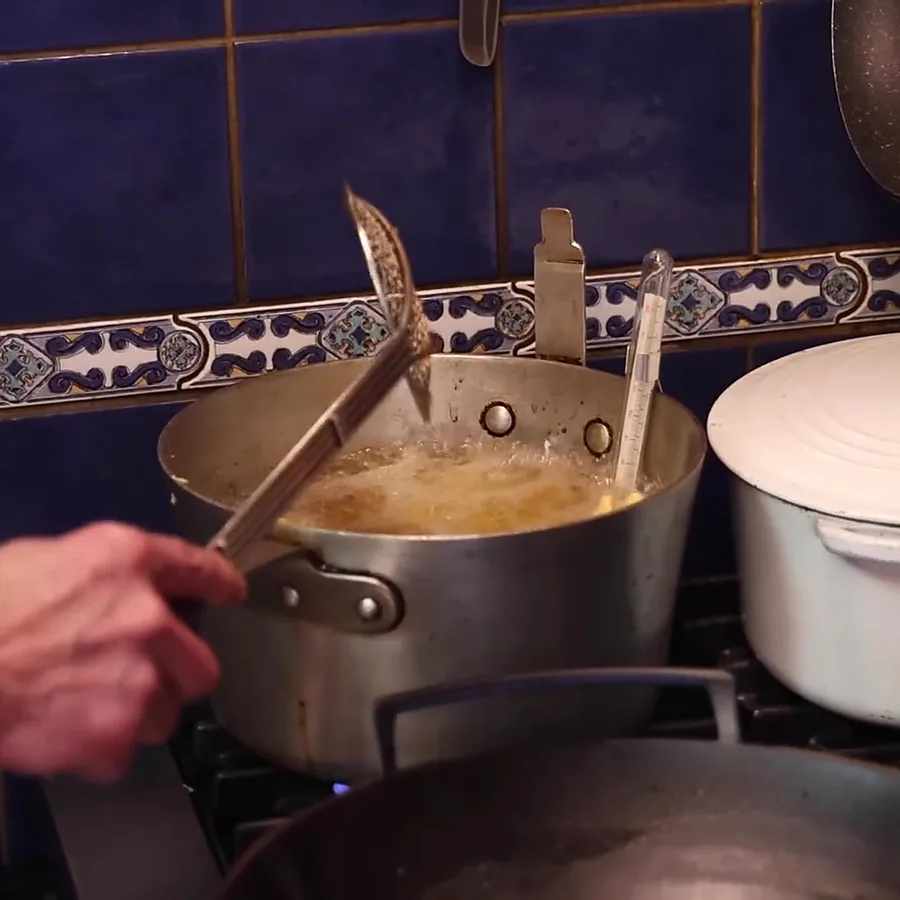
Pour the oil into a deep fryer or heavy pot, leaving plenty of empty space above it. Heat the oil to 350°F. Use a thermometer rather than estimating by eye.
Lower the chicken into the oil one piece at a time, working in several batches. Do not drop the entire bowlful in at once. Crowding causes the temperature to fall and encourages the pieces to stick together.
Fry each batch for 3 to 4 minutes, turning as needed. The coating should be set and pale golden, but it does not need to be deeply browned yet. Transfer the chicken to a wire rack and let it rest for about 5 minutes.
This first fry is similar to the foundation used for crispy homemade fried chicken, but the smaller pieces cook much faster. Confirm that the chicken reaches 165°F internally by the end of the second fry.
5. Make the fresh orange sauce
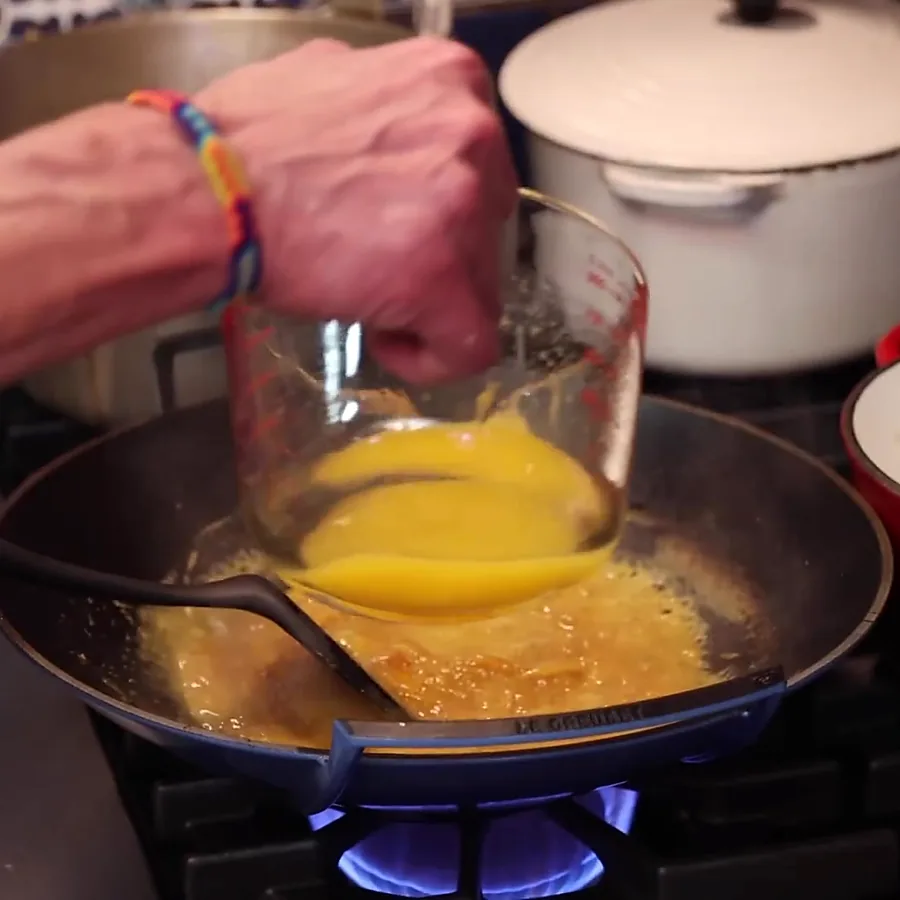
Melt the butter in a large skillet or wok over medium heat. Add the brown sugar and the remaining two tablespoons of rice vinegar. Stir until the sugar has dissolved and the mixture begins bubbling around the edges.
Add the orange zest and cook for about 2 minutes. The pan should smell strongly of orange, but the zest should not turn dark brown.
Pour in the prepared garlic, ginger, soy sauce and vinegar mixture. Let it bubble for 30 to 60 seconds, then add the remaining orange juice. Bring the sauce to a steady simmer and cook for 3 to 5 minutes.
Mix the reserved two tablespoons of cold orange juice with two tablespoons of cornstarch. Stir it again immediately before using, since cornstarch settles quickly.
Add the slurry gradually while whisking. Stop once the sauce looks glossy and lightly coats a spoon. You may not need every drop if the orange juice has already reduced substantially. For more detail on correcting consistency, see my guide to thickening a sauce without making it gummy.
6. Fry the chicken a second time
Raise the oil temperature to 375°F. Return the chicken in batches and fry for another 60 to 90 seconds.
The pieces should become noticeably darker and crispier during this short second fry. Listen to the oil. The bubbling will become slightly quieter as surface moisture leaves the coating.
Transfer the finished chicken to a clean wire rack. Do not pile it into a deep bowl, where trapped steam can soften the crust.
7. Coat and serve immediately
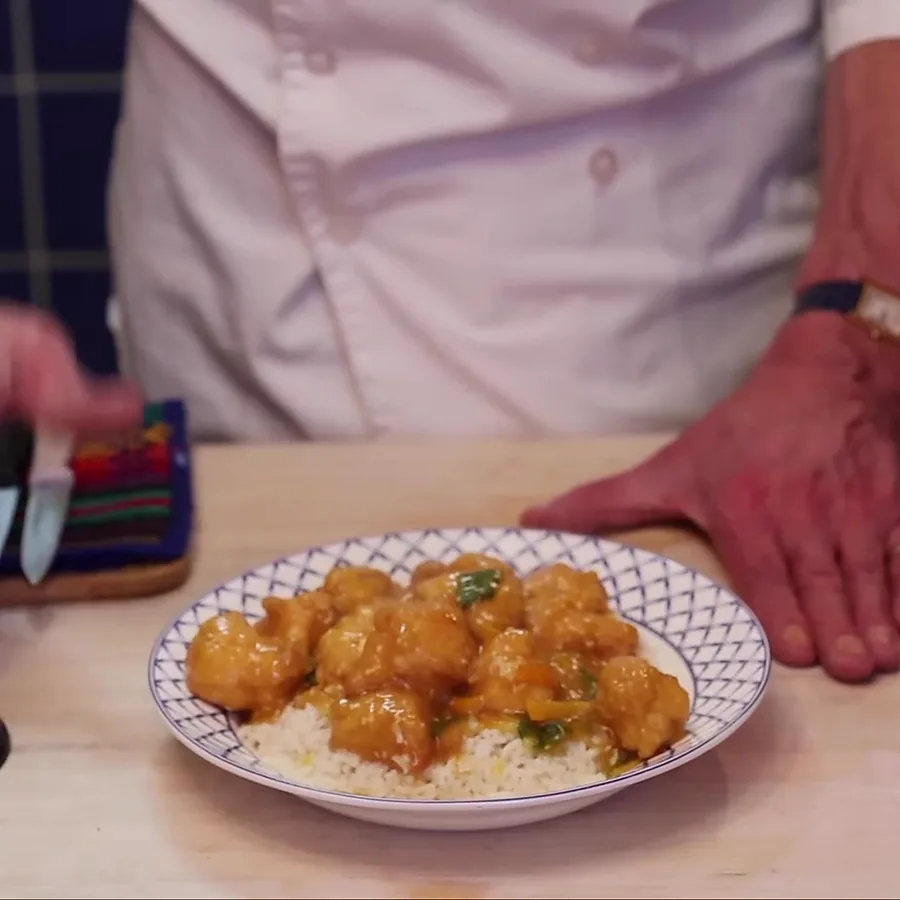
Place the amount of sauce you need in a large warm skillet or bowl. Add the fried chicken and toss quickly, just until every piece is glazed. Do not leave it sitting in the sauce over heat, or the coating will soften.
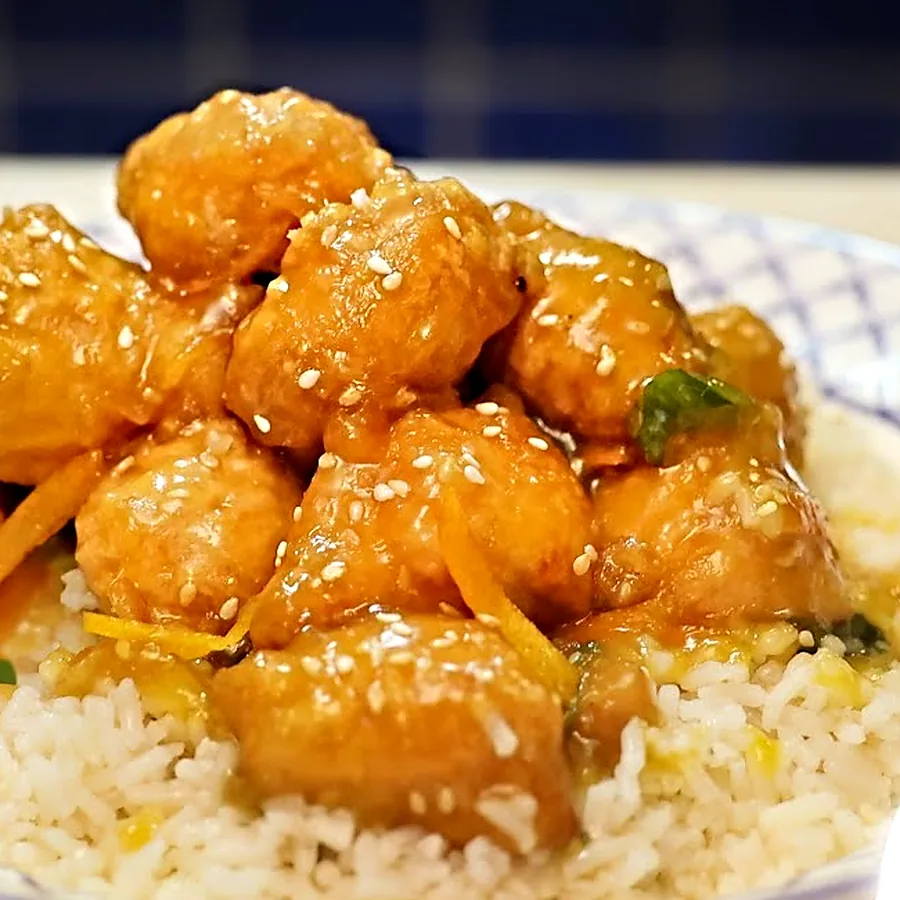
Spoon the cardamom rice onto the plates and arrange the chicken over it. Finish with sliced green onions, toasted sesame seeds and no more than a light drizzle of toasted sesame oil.
The final coating should remain crisp at the edges while carrying a thin, shiny layer of sauce. Cut open one of the larger pieces before serving. The chicken should be opaque and juicy, with no pink centre.
Keeping the Chicken Crisp
The sauce and chicken can be prepared in stages, but they should not be combined until the table is ready. Once fried food is coated in a liquid glaze, it naturally begins losing its crunch.
For the best texture, keep the cooked chicken on a wire rack rather than paper towel. Paper towel absorbs grease, but it also traps steam directly beneath the coating. A rack allows air to circulate.
The sauce can be made several minutes ahead and held over very low heat. If it thickens while waiting, stir in one or two tablespoons of orange juice or water. Do not continue adding cornstarch.
Leftovers will still taste good, but they will not be as crisp. Reheat them on a lined baking sheet at 400°F until hot, or use an air fryer at 375°F. A microwave will warm the chicken but soften the coating.
For a similar meal that avoids deep-frying, try these crispy oven-baked chicken tenders or my air-fryer honey garlic chicken.
What to Serve With and Suggested Posts
Steamed rice is the classic base because it absorbs the extra orange glaze without adding another strong flavour. For a more savoury side, serve the chicken with homemade chicken fried rice or Cantonese-style fried rice.
A fresh salad helps cut through the fried coating. A simple romaine and endive green salad has enough bitterness and crunch to balance the sweet sauce. You can also add oven-roasted mixed vegetables or choose another option from these easy vegetable side dishes for chicken.
For another saucy chicken dinner with rice, try chicken Basquaise with peppers. For a stronger soy-forward flavour without frying, maple soy chicken thighs make a useful alternative.
Substitutions
Boneless chicken thighs can replace chicken breast. They remain juicy and are slightly more forgiving during frying, although they may require an additional minute during the first fry. Cut them into the same 1 to 1 1/4-inch pieces.
Gluten-free all-purpose flour can replace regular flour, provided the blend is designed for one-to-one use. Check that the soy sauce is also certified gluten-free, or use tamari.
White sugar can replace brown or cane sugar. Brown sugar gives the sauce a slightly deeper caramel flavour, while white sugar keeps the orange taste cleaner. Maple syrup is possible, but it makes the sauce thinner and changes the flavour considerably, so reduce the orange juice slightly if using it.
Bottled orange juice can be used when fresh oranges are unavailable, but fresh zest is still strongly recommended. The aromatic oils in the zest are responsible for much of the recognizable orange flavour.
Ground ginger can replace fresh ginger in an emergency. Use about 1 teaspoon, but expect a softer, less fragrant result. When using fresh garlic, chop it finely and avoid scorching it. My guide to mincing garlic without burning it explains the technique in more detail.
FAQ
Can I make orange chicken without a deep fryer?
Yes. Use a deep, heavy-bottomed pot and attach a frying thermometer to the side. Fill the pot no more than halfway with oil and leave enough room for bubbling. A deep fryer is more convenient because it regulates the temperature, but it is not essential.
Why is my batter too thick?
Egg sizes and flour absorption vary. The batter should coat the chicken, not sit around it like dough. Add cold water one tablespoon at a time until it becomes thick but spoonable. Avoid making it runny, since a thin batter will slide off in the oil.
Why did the orange sauce become gummy?
Too much cornstarch was probably added, or the sauce continued boiling after it had already thickened. Add the slurry gradually and stop as soon as the sauce lightly coats a spoon. A thick glaze becomes even firmer as it cools.
Can the chicken be fried ahead of time?
The first fry can be completed about an hour ahead. Leave the chicken uncovered on a wire rack, then perform the second fry just before serving. Do not refrigerate it between fries unless it will sit out for longer than food-safety guidelines allow.
Can I freeze orange chicken?
The fried chicken can be frozen without the sauce. Cool it completely, freeze it in a single layer and transfer it to a freezer container. Reheat it in a hot oven or air fryer, then coat it with freshly warmed sauce. Freezing the chicken already coated will produce a much softer texture.
Is this recipe spicy?
No. The sauce is sweet, tangy and aromatic rather than hot. Add crushed red pepper flakes, sliced fresh chili or a small spoonful of chili sauce if you want some heat.
How do I know the frying oil is ready?
Use a thermometer. The first fry begins at 350°F and the second at 375°F. If the oil is too cool, the coating absorbs grease. If it is too hot, the exterior darkens before the chicken is safely cooked.
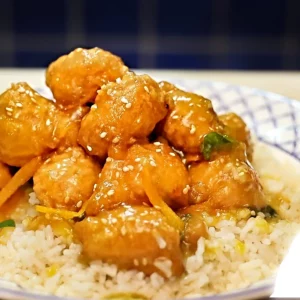
Easy Crispy Orange Chicken with Fresh Orange Sauce
Ingredients
- For the chicken:
- 1 3/4 lb boneless skinless chicken breasts
- 3 large eggs
- 1/2 cup plus 2 tbsp all-purpose flour
- 1/2 cup plus 1 tbsp cornstarch
- 1 tsp baking powder
- 1/2 tsp salt
- 1 to 2 tbsp cold water only if needed
- 6 to 8 cups neutral frying oil
- For the orange sauce:
- 1 1/4 cups fresh orange juice divided
- Zest of 2 oranges
- 2 garlic cloves finely chopped
- 1 tbsp finely chopped fresh ginger
- 1/4 cup rice vinegar divided
- 1/4 cup low-sodium soy sauce
- 1/4 cup packed brown or cane sugar
- 2 tbsp butter
- 2 tbsp cornstarch
- For the rice and garnish:
- 1 1/2 cups long-grain rice
- 2 1/4 cups water
- 3 cardamom pods lightly crushed, optional
- 1/2 tsp salt
- 2 green onions thinly sliced
- 2 tbsp toasted sesame seeds
- 1 tsp toasted sesame oil optional
Instructions
- Pat the chicken dry and cut it into uniform 1 to 1 1/4-inch pieces.
- Whisk the eggs, flour, cornstarch, baking powder and salt into a thick batter. Add cold water one tablespoon at a time only if needed.
- Add the chicken to the batter and turn until each piece is evenly coated.
- Zest two oranges and squeeze enough fruit to obtain 1 1/4 cups of juice. Reserve 2 tablespoons of juice for the slurry.
- Combine the garlic, ginger, soy sauce and 2 tablespoons of rice vinegar in a small bowl.
- Rinse the rice. Cook it with the water, cardamom and salt over low heat for about 15 minutes, then rest it covered for 5 to 10 minutes.
- Heat the frying oil to 350°F. Fry the chicken in batches for 3 to 4 minutes, then drain it on a wire rack and rest for 5 minutes.
- Melt the butter in a large skillet. Add the sugar and remaining 2 tablespoons rice vinegar and cook until the sugar dissolves.
- Add the orange zest and cook for 2 minutes. Stir in the garlic mixture, then add the remaining orange juice and simmer for 3 to 5 minutes.
- Mix the reserved orange juice with 2 tablespoons cornstarch. Whisk it gradually into the sauce until glossy and lightly thickened.
- Raise the frying oil to 375°F. Fry the chicken again for 60 to 90 seconds, until deep golden and cooked to 165°F internally.
- Toss the chicken with the warm orange sauce immediately before serving.
- Serve over the cardamom rice with green onions, toasted sesame seeds and a light drizzle of sesame oil.