Creamy Chorizo Gnocchi with Red Pepper and Cream Cheese
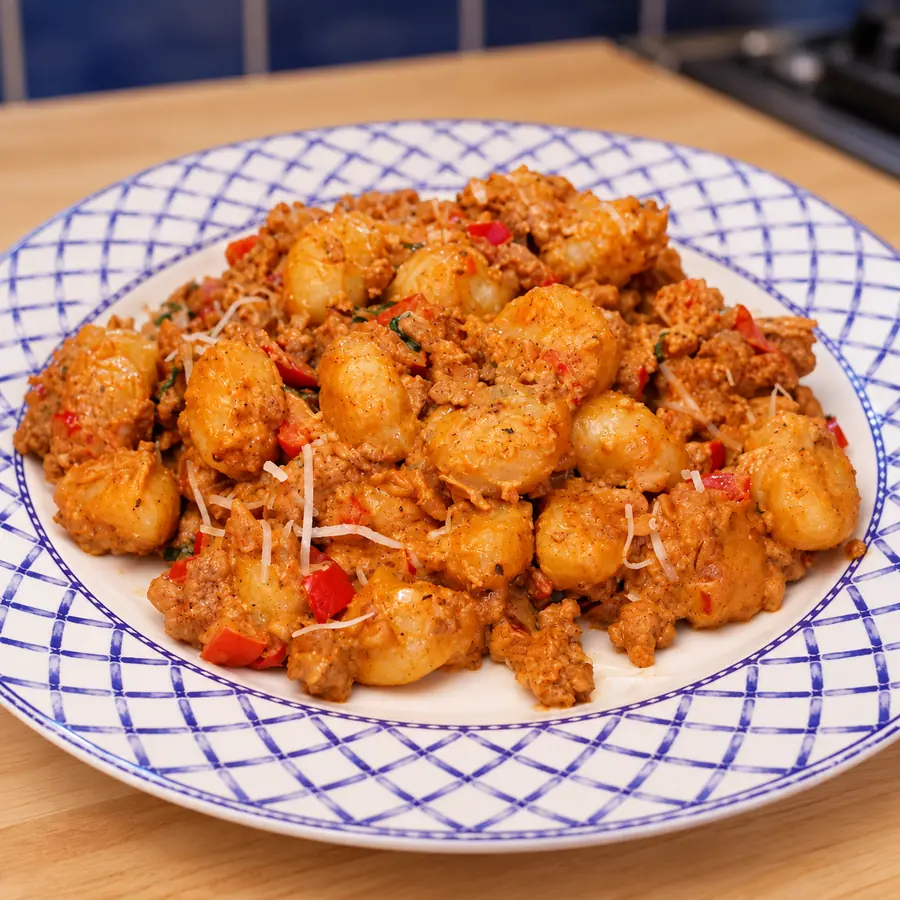
Creamy chorizo gnocchi combines tender potato gnocchi, quick homemade spiced pork, red pepper, onion, tomato paste, and a smooth cream cheese sauce finished with Parmesan and basil.
This recipe follows our Gnocchi au chorizo maison express video. The homemade chorizo is a quick seasoned pork mixture cooked loose in the skillet, so there are no casings to fill and no curing step. Prepared potato gnocchi keep the meal practical for a weeknight, while cream cheese gives the sauce body without heavy cream.
{VIDEO}
Why this gnocchi recipe works
The sauce starts with browned pork and finely diced vegetables, then uses tomato paste and chicken broth to pick up the flavor in the skillet. Cream cheese turns that base into a coating that clings to the gnocchi. It should stay slightly fluid while hot, because the gnocchi and Parmesan continue thickening it after the pan leaves the stove.
The video prepares a larger amount of seasoned pork than the gnocchi dish needs. Here the chorizo mixture is scaled directly to the amount used for three servings, which avoids an unexplained leftover half batch. The strongest spices are also restrained so smoked paprika leads the flavor and cinnamon and clove remain in the background.
For a meatless sauce, try creamy tomato gnocchi. If you want to make the dumplings themselves, cottage cheese gnocchi is a separate recipe with a different texture. The creamy garlic butter chicken gnocchi uses another skillet sauce and a chicken base.
Ingredients and proportions
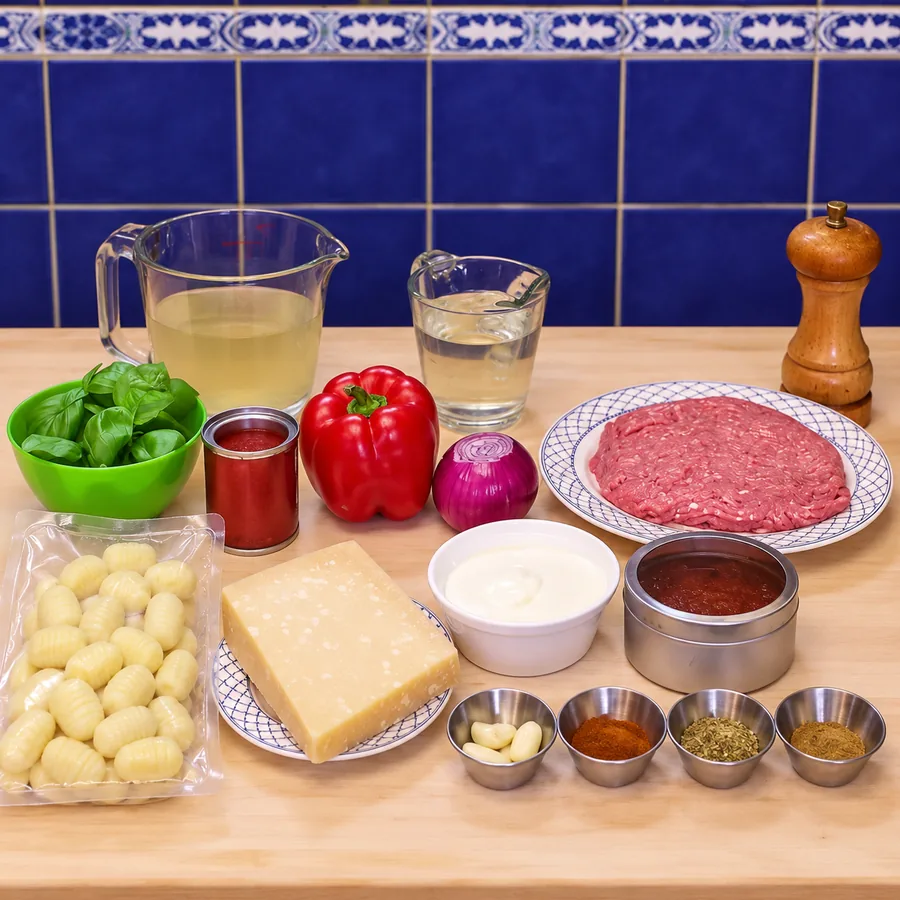
For the quick chorizo, use 9 oz ground pork with some fat; 2 tablespoons dry white wine; 2 teaspoons smoked paprika; ½ teaspoon ground cumin; 1 teaspoon dried oregano; ⅛ teaspoon ground cloves; ¼ teaspoon ground cinnamon; 1 small garlic clove, finely minced; ¼ teaspoon fine salt; and ½–1 teaspoon Issou spice, to taste. If Issou is unavailable, use ¼ teaspoon cayenne instead, starting with less for a mild dish. These spices provide a chorizo-style flavor without claiming to reproduce a cured sausage.
For the dish, use 1 lb to 1 lb 2 oz prepared potato gnocchi, one medium red bell pepper, one small red onion, two minced garlic cloves, 1 tablespoon plus 1 teaspoon tomato paste, ¾ cup low-sodium chicken broth, and 3½ oz full-fat cream cheese. Finish with about 1.4 oz finely grated Parmesan, roughly ½ cup, and a small handful of basil. Have black pepper, extra salt, and 1 cup reserved gnocchi cooking water available.
The gnocchi range accommodates common package sizes. The cream cheese and broth are measured so the sauce is creamy rather than a heavy cheese paste. Use plain full-fat cream cheese, not a sweetened or flavored spread. Let it soften while you prepare the vegetables so it melts evenly into the warm sauce.
Ground pork usually supplies enough fat for the skillet. If it is very lean or the pan is dry, add 1 teaspoon olive oil. Do not pour in extra oil automatically: the finished dish should look glossy rather than greasy. A lighter liquid base can be made with homemade vegetable stock in place of chicken broth.
Before you start
Put the gnocchi water on while you prepare the other ingredients. Keep the pork refrigerated until you are ready to season it. Dice the pepper and onion small enough to cook quickly, grate the Parmesan, tear the basil, and portion the cream cheese. Once the skillet is hot, the recipe moves quickly and there is little time to finish chopping.
A wide skillet is helpful because it lets the pork brown without piling up in a deep layer. Use a slotted spoon or spider to transfer the cooked gnocchi directly from the pot to the sauce. This brings a little cooking water along with them, which is useful, but you still need to reserve extra water for the final adjustment.
Step by step preparation
Step 1 Make the quick chorizo mixture
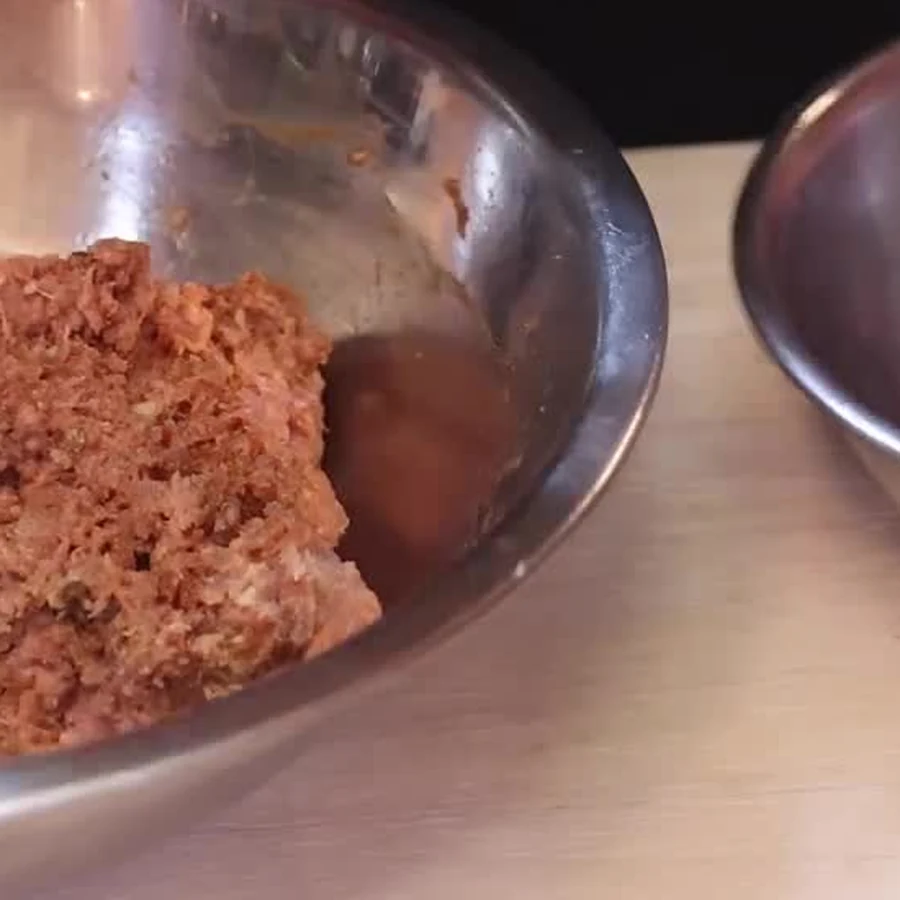
Combine the pork with the wine, smoked paprika, cumin, oregano, cloves, cinnamon, one minced garlic clove, salt, and Issou or cayenne. Mix until the seasoning is evenly distributed. Keep the mixture cold while you finish preparing the vegetables.
There is no need for an overnight marinade. For a first attempt with an unfamiliar hot spice, cook a small test piece completely to 160°F and taste before seasoning the whole dish more heavily. Clove and cinnamon should add warmth, not a sweet dessert flavor. This written version uses less of those concentrated spices than a direct scaling of the video’s large seasoning batch.
Step 2 Prepare the vegetables and cheese
Remove the pepper seeds and white ribs, then cut the flesh into small dice. Finely dice the red onion and mince the remaining two garlic cloves. Grate the Parmesan finely and tear the basil leaves just before using them.
Bring a pot of lightly salted water to a boil. Keep the cream cheese in small pieces nearby. Fine preparation is what makes the short cooking time realistic: large chunks of onion or pepper take longer to soften and leave the sauce uneven.
Step 3 Brown the pork and soften the vegetables
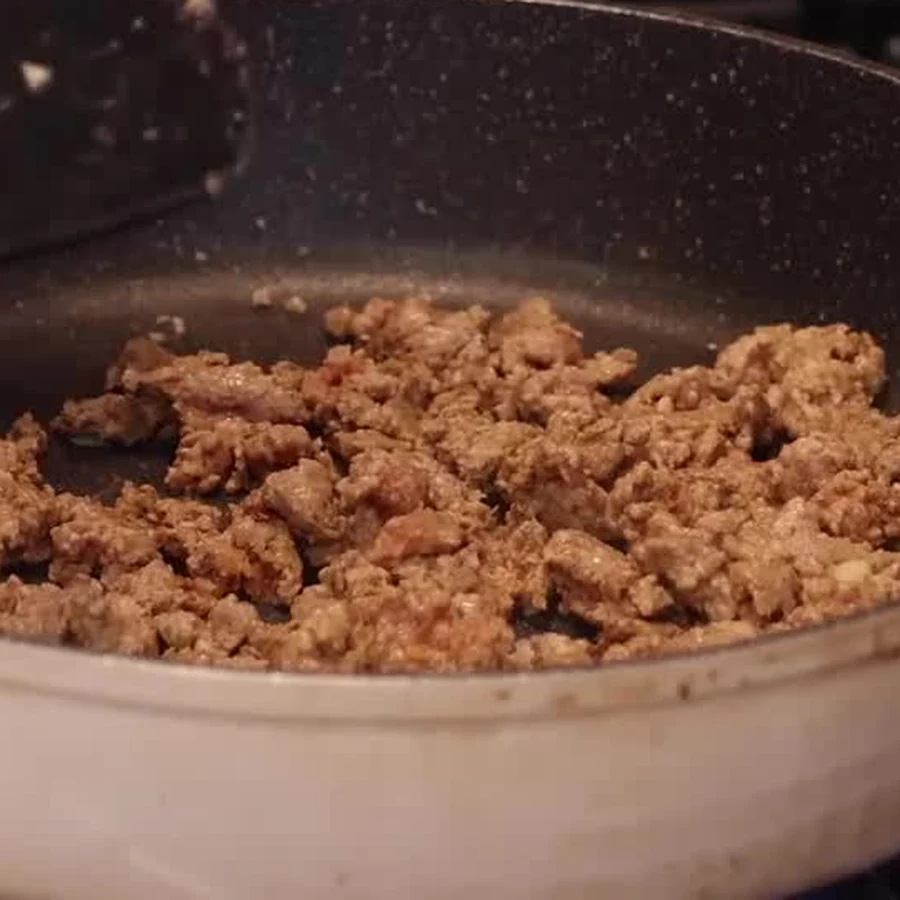
Heat the skillet over medium-high heat and add the seasoned pork. Add the optional oil only if needed. Break the meat into small crumbles with a spatula and cook for about 4–5 minutes, allowing its moisture to evaporate so some pieces begin to brown.
Add the onion and pepper. Cook for another 3–4 minutes, stirring, until they start to soften. Reduce the heat if the spices catch on the pan. The ground pork must be fully cooked to 160°F; check a gathered mound of the meat with a thermometer and continue cooking if necessary. If there is an obvious pool of rendered fat, spoon off the excess while keeping the browned bits.
Step 4 Build the creamy tomato sauce
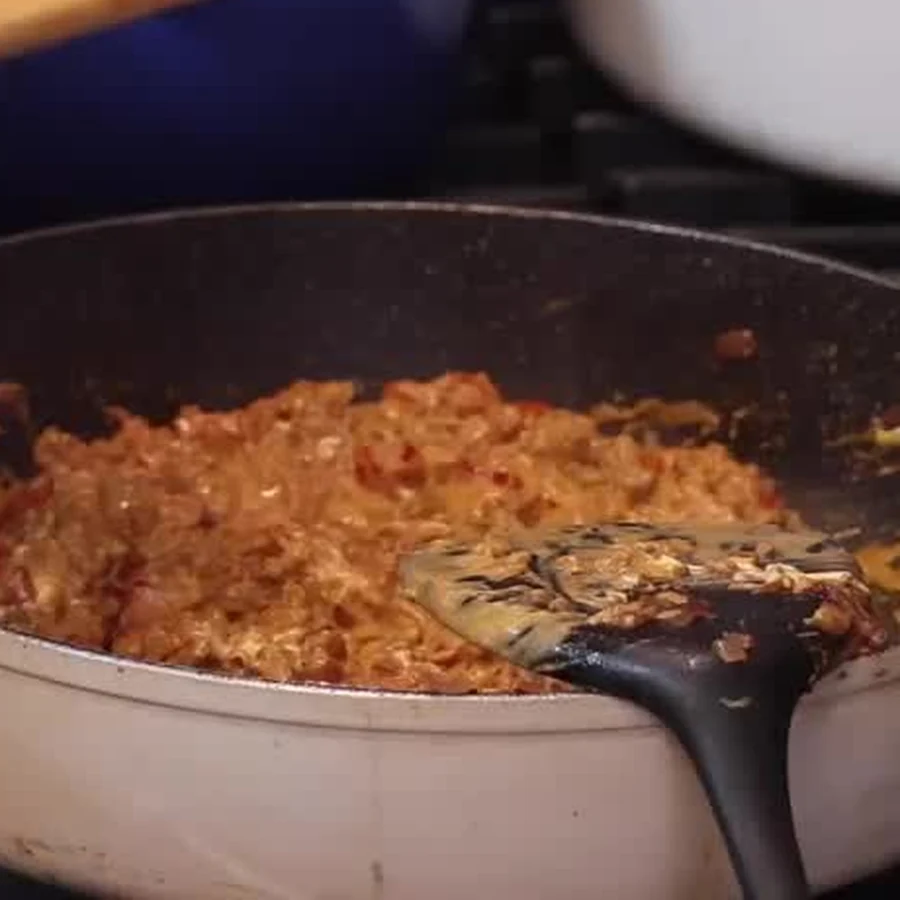
Stir in the remaining garlic and tomato paste and cook for about 30–60 seconds, just until fragrant. Add the chicken broth and scrape up the browned bits. Let the liquid simmer for 1–2 minutes, then reduce the heat to low.
Add the cream cheese in pieces and stir until smooth. Keep the sauce below a hard boil once the cheese is in. The goal is a loose, orange-red sauce surrounding the pork and vegetables. If it already looks stiff, add a few tablespoons of broth or hot water rather than waiting until the gnocchi absorb even more liquid.
Step 5 Cook and transfer the gnocchi
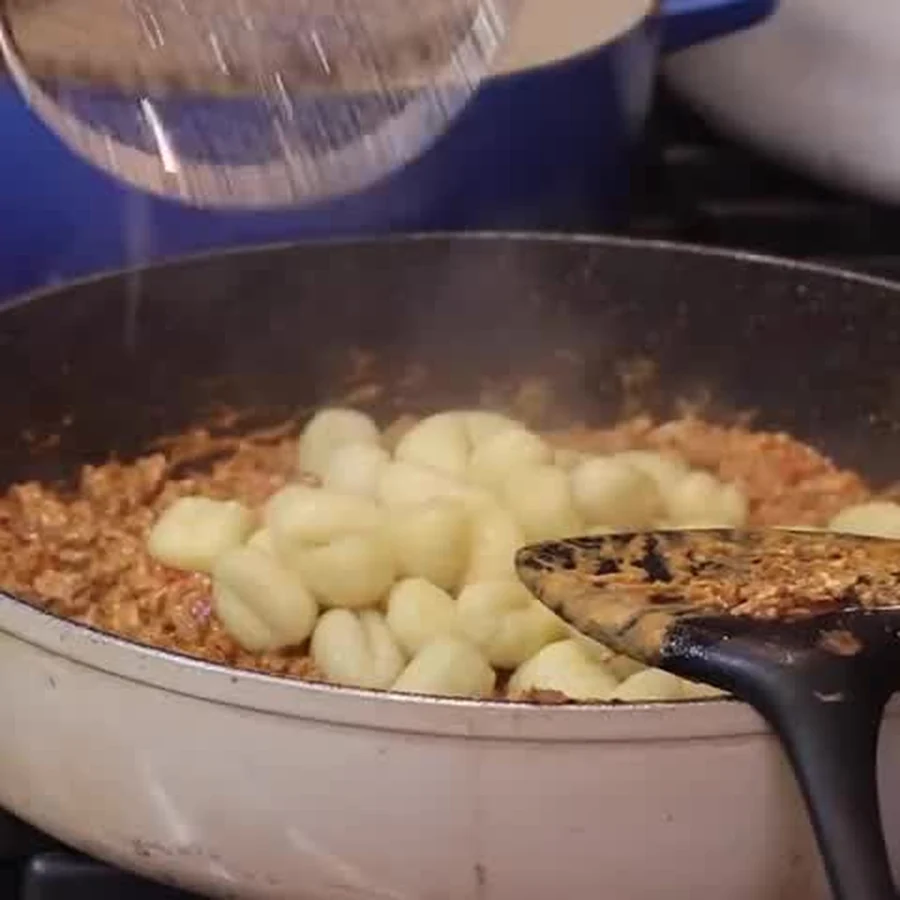
Cook the gnocchi in the boiling water according to their package, often about 2–3 minutes. Floating can be a useful sign for some gnocchi, but follow the product’s cooking instructions and taste one to check that the center is tender. Gluten-free, refrigerated, and shelf-stable products do not all behave the same way.
Reserve 1 cup of cooking water. Lift the gnocchi out with a slotted spoon and add them to the skillet. Avoid leaving them in the pot after they are ready; overcooked gnocchi can become fragile and break when tossed with the meat.
Step 6 Toss and finish gently
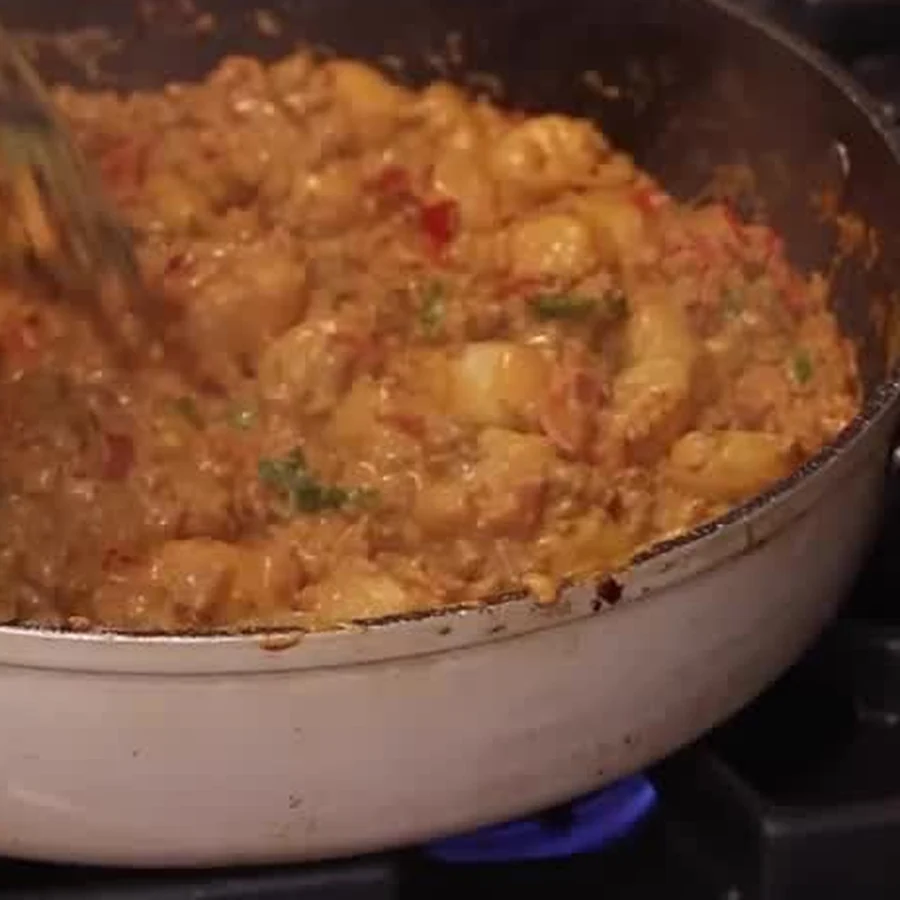
Fold the gnocchi into the sauce over low heat for about 1 minute. Add half the Parmesan and a splash of the reserved cooking water, then stir gently. Turn off the heat and fold in the basil. Add more cooking water a tablespoon or two at a time until the sauce coats the gnocchi smoothly.
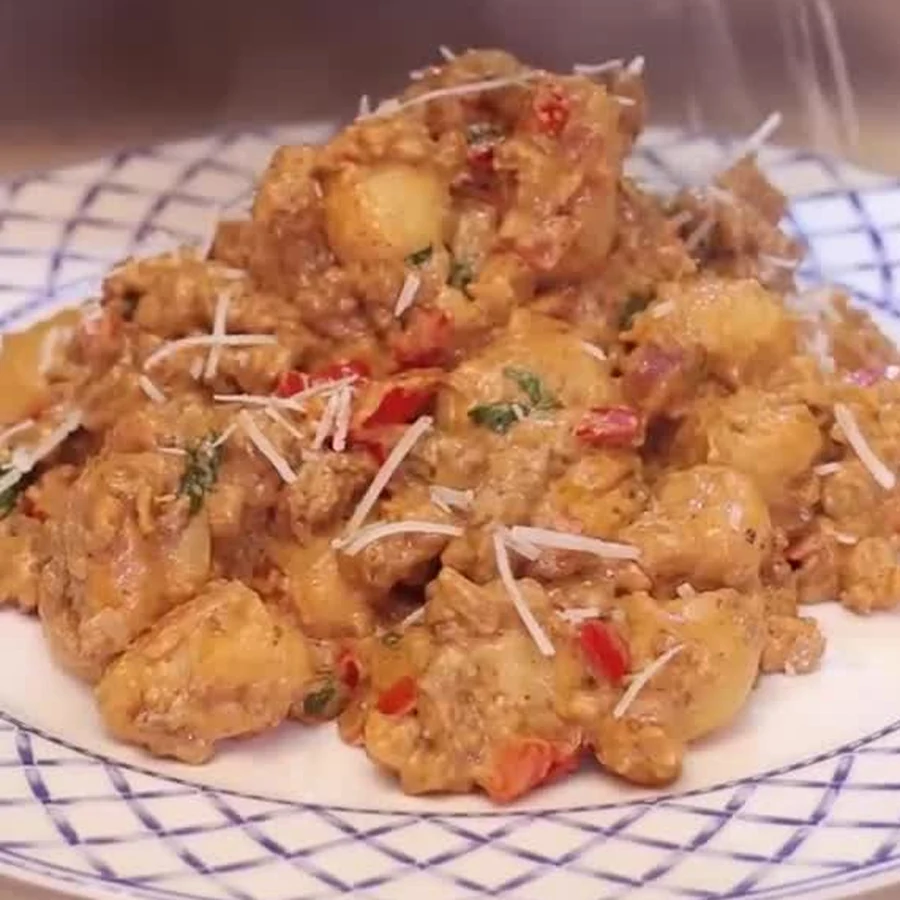
Taste before adding extra salt because the broth, cream cheese, and Parmesan already contribute seasoning. Add black pepper if desired. Serve promptly with the remaining Parmesan. The sauce should move when the pan is tilted, rather than sit as a solid mound. It will thicken further on the plate.
Substitutions and serving ideas
Fresh uncured chorizo can replace the homemade seasoned pork. Use about 9 oz, remove the casing, and omit the pork seasoning mixture and wine. Brown it and proceed with the vegetables. Choose fresh raw sausage rather than firm cured chorizo if you want the same crumbled texture. Cured chorizo works only as a different variation: use less, dice it finely, and expect a saltier, firmer result.
Ground chicken or turkey can replace pork, but the mixture will be leaner. Add the optional oil and cook poultry to 165°F. To make the meal alcohol-free, replace the wine with 2 tablespoons cold water. Do not replace full-fat cream cheese with a large amount of thin cream without changing the liquid balance; the sauce would need a different reduction.
For a milder meal, omit the hot spice and keep the smoked paprika. For gluten-free cooking, use certified gluten-free gnocchi and check the broth and all seasoning labels; the video’s product choice does not mean every packet is suitable. A green salad with classic vinaigrette adds a fresh contrast.
If you enjoy this combination of sausage and sauce, try orecchiette with Italian sausage and vegetables, pasta alla Norcina without heavy cream, or one-pan smoked sausage pasta. For a tomato and chili direction, merguez pasta with olives is another useful option. You can explore sausage-making separately with homemade pork sausages or serve prepared links in a sausage and potato sheet pan dinner.
Frequently asked questions
Why did the sauce become too thick
Gnocchi absorb liquid, and both cream cheese and Parmesan add body. Use the reserved cooking water to loosen the sauce over low heat. Add liquid gradually; pouring in the whole cup at once can turn a creamy coating into a thin soup.
Can I cook the gnocchi directly in this sauce
This recipe is written for separately boiled gnocchi. The measured broth is for the sauce and is not enough to guarantee that every gnocchi product cooks evenly in the skillet. Follow the separate boiling method for consistent results.
Can I prepare it ahead of time
You can dice the vegetables and season the pork in advance, keeping the pork refrigerated and cooking it within 1–2 days. The assembled dish is best fresh. If making ahead, prepare the pork and sauce first and cook the gnocchi just before serving.
How should I reheat leftovers
Refrigerate within 2 hours and use within 3–4 days. Warm covered with a splash of broth or water, stirring gently, until the leftovers reach 165°F. Add a little more liquid if necessary. Avoid prolonged simmering, which can soften the gnocchi too much.


Creamy Chorizo Gnocchi with Red Pepper and Cream Cheese
Ingredients
- 9 oz ground pork
- 2 tablespoons dry white wine or cold water
- 2 teaspoons smoked paprika
- ½ teaspoon ground cumin
- 1 teaspoon dried oregano
- ⅛ teaspoon ground cloves
- ¼ teaspoon ground cinnamon
- 1 small garlic clove finely minced, for the pork
- ¼ teaspoon fine salt plus extra to taste
- ½ –1 teaspoon Issou spice or ¼ teaspoon cayenne, to taste
- 1 lb to 1 lb 2 oz prepared potato gnocchi
- 1 medium red bell pepper finely diced
- 1 small red onion finely diced
- 2 garlic cloves minced, for the sauce
- 1 tablespoon plus 1 teaspoon tomato paste
- ¾ cup low-sodium chicken broth
- 3½ oz plain full-fat cream cheese softened
- 1.4 oz finely grated Parmesan about ½ cup, divided
- 1 small handful fresh basil torn
- Black pepper to taste
- 1 teaspoon olive oil only if needed for lean pork
- 1 cup reserved gnocchi cooking water added as needed
Instructions
- Mix pork with wine, paprika, cumin, oregano, cloves, cinnamon, one garlic clove, salt, and Issou or cayenne. Keep chilled while preparing the other ingredients.
- Dice the pepper and onion, mince the remaining garlic, grate the Parmesan, and bring lightly salted water to a boil.
- Brown the pork in a wide skillet for about 4–5 minutes, breaking it into crumbles. Add onion and pepper and cook 3–4 minutes. Verify the pork reaches 160°F. Remove excess pooled fat if necessary.
- Add garlic and tomato paste for 30–60 seconds. Add broth, scrape the skillet, and simmer briefly. Reduce heat and stir in cream cheese until smooth.
- Boil gnocchi according to package directions, reserve 1 cup cooking water, and transfer the cooked gnocchi to the sauce.
- Fold together over low heat with half the Parmesan and a little cooking water. Turn off heat, add basil, adjust consistency and seasoning, and serve with the remaining Parmesan.