Saucisse de Toulouse (Traditional French Pork Sausage) — Butcher-Style Method, Juicy & Properly Seasoned
Saucisse de Toulouse is a classic French fresh pork sausage—coarsely ground, simply seasoned, and stuffed into natural pork casings. What makes it different from many “breakfast sausages” is its clean, pepper-forward flavor and rustic texture, making it ideal for skillet dinners, cassoulet-style meals, or quick weeknight plates.

This version is based on my YouTube video recipe, with a few adjustments since publication to improve juiciness, consistency, and real-world results (especially if your pork is leaner than expected).
Why this Toulouse sausage is worth making at home
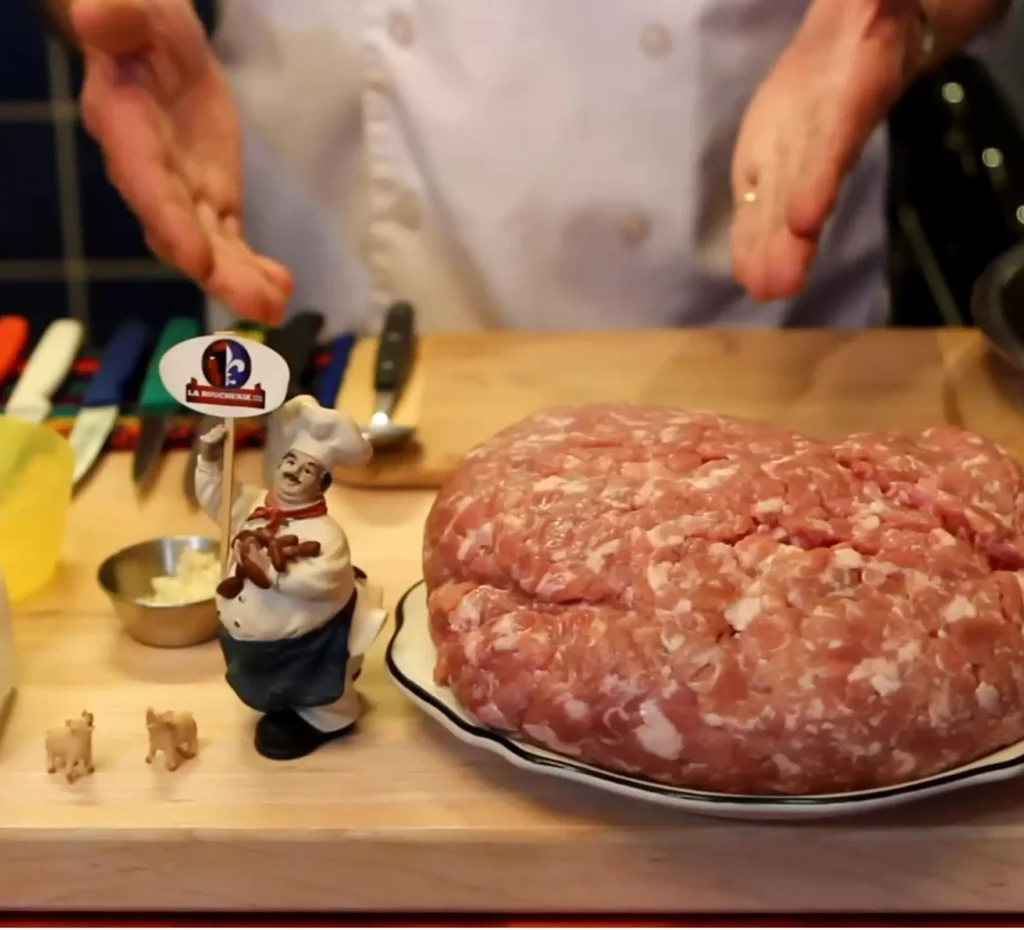
Homemade fresh sausage feels intimidating until you do it once. Toulouse is the best place to start because the flavor profile is straightforward—pork, salt, black pepper, and garlic—and the “win” is all in the technique: keeping everything cold, mixing until tacky, and stuffing without air pockets.
The goal here is a sausage that:
- Browns deeply in a pan without bursting
- Stays juicy and bouncy instead of dry or crumbly
- Tastes traditional and pork-forward, not overly spiced
- Works year-round: grilling season, cozy winter plates, or a quick skillet dinner any weeknight
What makes this recipe different from similar recipes on the site
This is a traditional, minimalist fresh sausage—no sugar, no heavy herbs, no creamy sauce, no breading, and no “30-minute skillet sauce” angle. If you’re looking for a bold, saucy sausage dish instead of the base sausage itself, go for Reunion-style sausage rougail (tomato-forward and spicy), or a comfort-food stew vibe like stovetop cassoulet with duck and sausage (no oven). If you want sausage used inside a pasta dinner, pasta alla zozzona (pasta with sausage) is a totally different lane.
This post is about building the foundation: a proper Toulouse sausage you can cook in a pan, grill, freeze, and reuse in multiple meals.
Ingredients and proportions (quick overview)
Traditional Toulouse is all about proportions. The original seasoning ratios from the video are solid, and the improvements are about texture and fat balance.
- Salt: 1.5% of meat weight (classic fresh-sausage level)
- Pepper: 0.3% of meat weight (pepper-forward, traditional)
- Garlic: light touch (keeps it “Toulouse,” not “garlic sausage”)
The two adjustments that matter most
- Ice-cold water (helps bind and keeps sausages juicy)
- Fat control (Toulouse is best around 25–30% fat)
If your shoulder is well-marbled, you may not need extra fat. If it’s trimmed lean, you’ll notice the difference.

Equipment you’ll need (and what you can skip)
- Meat grinder (or butcher-ground pork shoulder)
- Sausage stuffer (manual or electric)
- Large mixing bowl
- Digital scale (highly recommended for accurate seasoning)
- Natural pork casings (Toulouse size)
- Small pin or sausage pricker (optional but helpful)
If you don’t have a grinder, you can still make great sausage: ask your butcher for coarse/medium ground pork shoulder, kept cold.
Step-by-step: How to make Saucisse de Toulouse
Step 1: Keep everything cold
Cold meat equals better texture. Warm fat smears, and smeared fat makes sausage dense and greasy instead of springy.
- Chill the meat thoroughly (fridge-cold, near 34–38°F if possible).
- If grinding at home, chill grinder parts as well.
- Keep a sheet pan in the freezer so you can spread the mixture quickly if it warms up.
Step 2: Prepare the casings the right way
Natural casings handle best when they’re rinsed and soaked.
- Rinse casings under cool running water.
- Soak in clean cool water (30 minutes minimum; overnight is fine).
- Flush the inside with water to remove excess salt.
- Keep them submerged until stuffing.

Step 3: Mix the farce (meat mixture) until tacky
In the video, the seasoning is simple—salt, pepper, garlic—and the mix is done by hand. The key improvement is mixing to the right endpoint.
- Put the ground pork in a large bowl.
- Sprinkle salt and pepper evenly over the meat.
- Add finely minced garlic.
- Add ice-cold water gradually.
- Mix with a firm folding motion until the mixture becomes sticky and cohesive—it should cling to your hand slightly.
How to tell it’s ready: grab a small handful, press it into a patty, and flip it in your palm. If it holds together cleanly and looks uniform, the bind is good.
Step 4: Rest the mixture (small step, big payoff)
Resting improves texture and seasoning distribution.
- Cover and refrigerate at least 1 hour, ideally overnight.
- This helps the salt work through the meat and improves that “butcher-shop” bite.

Step 5: Load the stuffer without trapping air
Air pockets are the enemy—air leads to uneven links and bursting.
- Pack the meat firmly into the stuffer cylinder.
- Press down to eliminate gaps.
- Start cranking until meat reaches the tip, then stop.
- Slide casing onto the horn, leaving a few inches at the end to tie.

Step 6: Stuff gently—don’t overfill
Overstuffed links burst in the pan. Understuffed links wrinkle and don’t slice cleanly.
- Keep light tension on the casing with one hand while feeding with the other.
- Aim for a firm tube that still has a little give.
Tie off the end when finished.

Step 7: Form Toulouse links (the classic 6-inch method)
In the video, links are calibrated around 6 inches.
- Measure about 6 inches per link (roughly).
- Pinch at the mark.
- Twist several turns.
- For the next link, twist in the opposite direction to keep them tight.
Once the whole rope is linked, cut into pairs if you like.

Step 8: Dry and set in the fridge
Fresh sausages improve after a short chill.
- Place links on a tray, uncovered, in the fridge 8–24 hours if possible.
- This firms them up and helps them brown better.
How to cook Toulouse sausage (pan method from the video, refined)
Toulouse sausage is best cooked gently so it stays juicy.
- Heat a skillet over medium heat.
- Add a spoonful of fat (duck fat is classic; neutral oil works).
- Add sausages and brown slowly, turning regularly.
- Lower heat to medium-low and continue until cooked through.
If you want a safer, foolproof approach: add a splash of water to the pan, cover briefly to steam through, then uncover to brown. This reduces bursting and keeps the inside juicy.
For a complete plate idea, pair the sausage with homemade mashed potatoes and something crisp on the side.

Nutrition context (brief and practical)
This is a protein-rich, hearty pork recipe. The tradeoff is that traditional Toulouse relies on fat for texture and flavor, so it’s best treated as a comfort-food staple you rotate in—especially great when balanced with vegetables or a lighter side.
Substitutions (what works and what doesn’t)
Meat
- Best: pork shoulder (Boston butt), coarse/medium grind
- If your shoulder is lean or trimmed: add pork fatback for a more traditional result.
Garlic
- Fresh garlic gives the cleanest flavor.
- Garlic powder works in a pinch, but keep it light so the sausage stays “Toulouse.”
Casings
- Natural pork casings are ideal.
- Collagen casings work, but the snap and appearance won’t be the same.
Cooking fat
- Duck fat is classic, but neutral oil or pork fat works well too.

FAQ
Can I make Toulouse sausage without a grinder?
Yes. Ask your butcher for medium/coarse ground pork shoulder, kept cold. You can still season, mix, rest, and stuff as written.
Why add ice-cold water?
It improves the bind and juiciness. Without it, sausages can turn out dense and drier—especially after refrigeration.
How do I prevent bursting?
Don’t overstuff. Cook over moderate heat and turn regularly. If needed, briefly steam with a splash of water and a lid, then brown.
How long do fresh sausages keep?
Best quality is within 2–3 days refrigerated. For longer storage, freeze promptly.
Can I freeze them?
Yes—freeze in portions. Thaw overnight in the fridge for best texture.
What if I don’t have duck fat?
Use neutral oil. You can also brown sausages in a dry pan and add a small splash of water if sticking becomes an issue.
What to serve with Toulouse sausage (and suggested posts)
A few easy directions depending on the meal you want:
- Bistro comfort: homemade mashed potatoes + sautéed onions
- Fries night: authentic Belgian fries (frites) + a sharp mustard
- Vegetable-forward: oven roasted mixed vegetables for an easy year-round side
- Rustic stew vibes: stovetop cassoulet with duck and sausage (no oven) when you want something hearty
- Tomato-and-spice dinner: Reunion-style sausage rougail for a saucy alternative
- Pasta night using sausage: pasta alla zozzona (pasta with sausage)
- Quick ideas library: 30-minute dinner ideas (quick and easy dishes)
- Browse more mains: Main dishes
- Pork recipes hub: pork main dishes
- Full browse: Recipe Index

Saucisse de Toulouse (Traditional French Pork Sausage) — Butcher-Style Method, Juicy & Properly Seasoned
Ingredients
- 6.6 lb pork shoulder medium/coarse ground (see note)
- 1.6 oz kosher salt by weight
- 0.32 oz ground black pepper by weight
- 0.10 oz fresh garlic finely minced (about 1 tsp, or 2 small cloves)
- 3/4 to 1 tasse ice-cold water
- Natural pork casings Toulouse size (rinsed and soaked)
Optional (for best traditional texture if your pork is lean):
- 1 lb pork fatback diced and ground with the meat
Instructions
- Chill: Keep pork and equipment cold. Soak and rinse casings; flush the inside with water.
- Mix: In a bowl, combine pork, salt, pepper, and garlic. Add ice-cold water gradually and mix firmly until tacky and cohesive (mixture should cling slightly to your hand).
- Rest: Cover and refrigerate at least 1 hour, ideally overnight.
- Stuff: Pack mixture into stuffer tightly to avoid air pockets. Slide casing onto the horn, tie the end, and stuff gently without overfilling.
- Link: Twist into ~6-inch links, alternating twist direction. Chill links 8–24 hours uncovered for best browning (optional but recommended).
- Cook: Brown in a skillet over medium heat with a spoonful of fat, turning regularly. Lower to medium-low and finish cooking gently until cooked through.
- Store: Refrigerate up to 2–3 days, or freeze in portions.
Video
Notes
Substitutions (what works and what doesn’t)
Meat
- Best: pork shoulder (Boston butt), coarse/medium grind
- If your shoulder is lean or trimmed: add pork fatback for a more traditional result.
Garlic
- Fresh garlic gives the cleanest flavor.
- Garlic powder works in a pinch, but keep it light so the sausage stays “Toulouse.”
Casings
- Natural pork casings are ideal.
- Collagen casings work, but the snap and appearance won’t be the same.
Cooking fat
- Duck fat is classic, but neutral oil or pork fat works well too.
FAQ
Can I make Toulouse sausage without a grinder?
Yes. Ask your butcher for medium/coarse ground pork shoulder, kept cold. You can still season, mix, rest, and stuff as written.Why add ice-cold water?
It improves the bind and juiciness. Without it, sausages can turn out dense and drier—especially after refrigeration.How do I prevent bursting?
Don’t overstuff. Cook over moderate heat and turn regularly. If needed, briefly steam with a splash of water and a lid, then brown.How long do fresh sausages keep?
Best quality is within 2–3 days refrigerated. For longer storage, freeze promptly.Can I freeze them?
Yes—freeze in portions. Thaw overnight in the fridge for best texture.What if I don’t have duck fat?
Use neutral oil. You can also brown sausages in a dry pan and add a small splash of water if sticking becomes an issue.Useful Links
🛒 Michel Dumas Shop : Explore our kitchen essentials, including aprons and knives.
🌐 Linktree : Access all our important links in one place.
📱 YouTube | Instagram | Facebook | TikTok : Follow us for the latest recipes and culinary tips.