The Only Classic Vinaigrette You Need (Plus 7 Easy Variations That Taste Like a Restaurant)
Most salads don’t fail because of the vegetables — they fail because of the dressing. A bad vinaigrette can make even the freshest ingredients taste flat, while a great one can turn a simple bowl into something that tastes restaurant-level. The good news? You don’t need dozens of recipes. Once you master one classic vinaigrette ratio, you can turn it into seven easy variations — from bright lemon-herb to honey balsamic and bold Dijon — all using ingredients you already have.
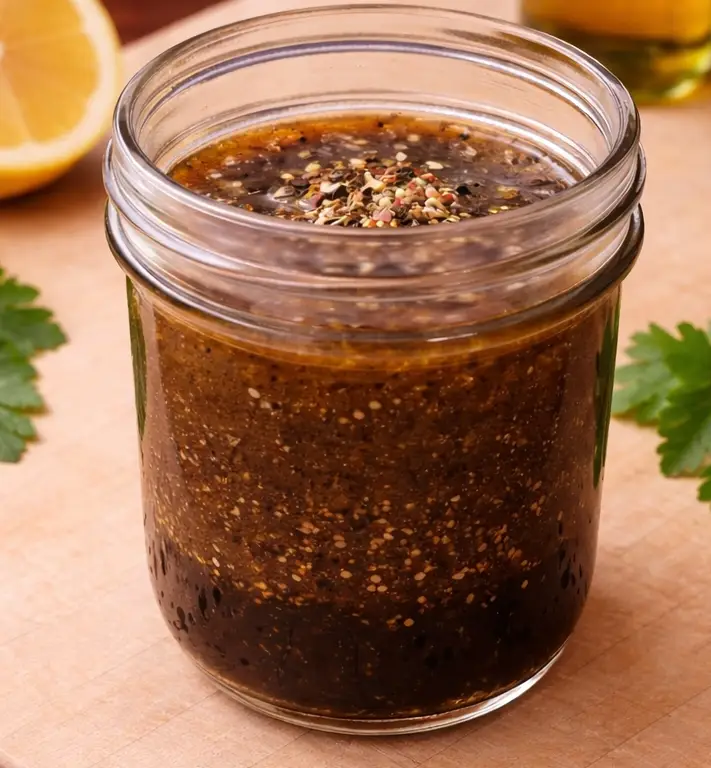
If you’re serving this with pasta salads, it’s perfect alongside fusilli pasta salad with sun-dried tomatoes or farfalle pasta salad. If you want a creamy alternative for other salads, check homemade ranch dressing, and if you’re in a Caesar mood, this pairs nicely with the idea behind homemade Caesar salad too.
The Classic Ratio (So You Can Stop Guessing)
A classic vinaigrette follows a simple structure:
- 3 parts oil : 1 part vinegar (or citrus)
- Dijon mustard acts as an emulsifier
- A touch of sweetness can balance acidity (especially for North American palates)
For mixed greens, the 3:1 ratio is a great starting point. For sturdier salads (kale, cabbage, grain bowls), you can go closer to 2.5:1 or add a little more mustard for cling.
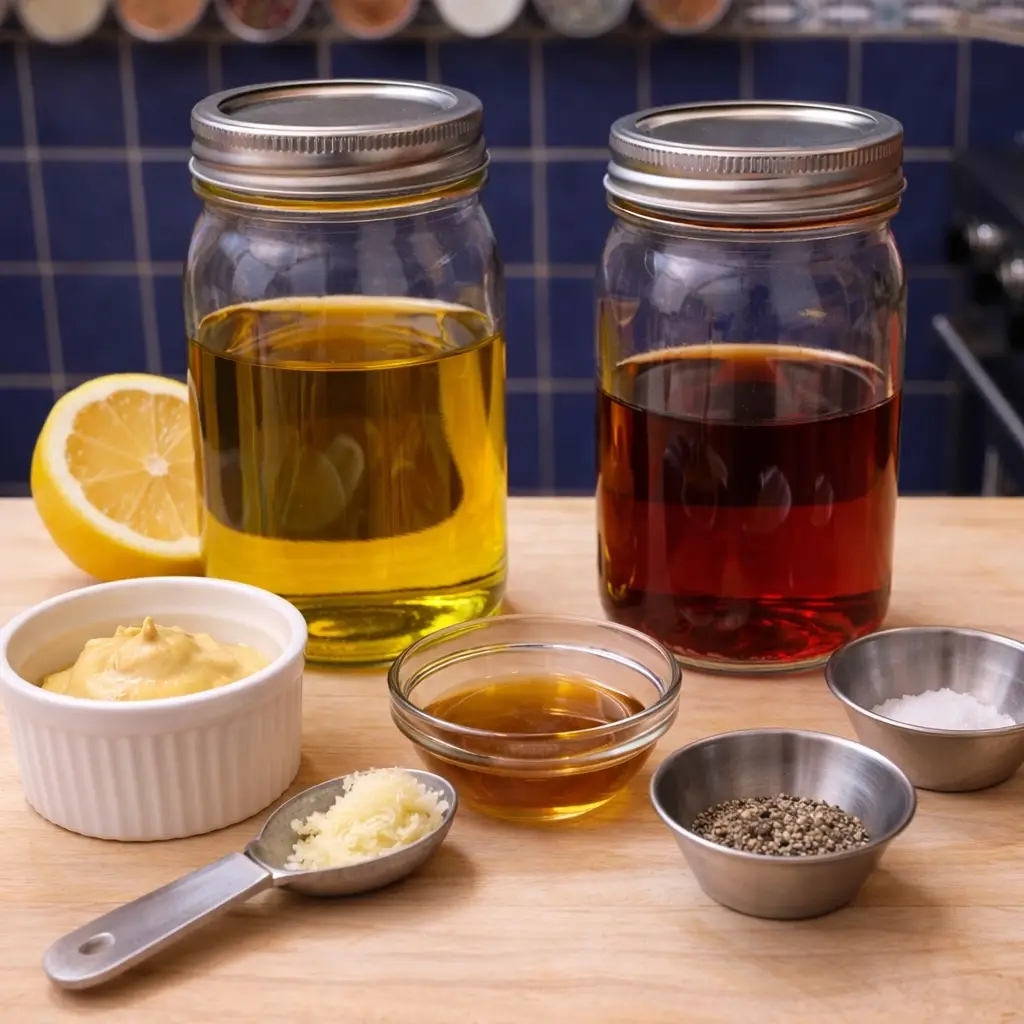
Classic Vinaigrette Ingredients (Imperial Only)
This makes about 1/2 cup, enough for 4–6 salads.
- 6 tablespoons extra-virgin olive oil
- 2 tablespoons vinegar (red wine vinegar recommended)
- 1 teaspoon Dijon mustard
- 1 teaspoon maple syrup or honey (optional but recommended)
- 1 small garlic clove, finely grated (optional)
- 1/2 teaspoon kosher salt (start smaller if using salty add-ins)
- 1/4 teaspoon black pepper
Optional for extra body:
- 1 tablespoon water (makes it lighter and helps it coat greens evenly)
How to Make Classic Vinaigrette (Fast + Stable)
- Start with the “base.” In a bowl or jar, combine vinegar, Dijon, salt, pepper, and (if using) maple/honey and garlic. Whisk or shake until the salt dissolves.
- Emulsify. Slowly drizzle in olive oil while whisking, or add everything to a jar and shake hard for 15 seconds.
- Adjust. Taste on a leaf of lettuce (not on a spoon). If it tastes too sharp, add a little more oil or a tiny bit more sweetener. If it’s flat, add a pinch more salt or a few drops more vinegar.
- Rest (optional but good). Let it sit 5 minutes. Garlic mellows, and the dressing becomes more cohesive.
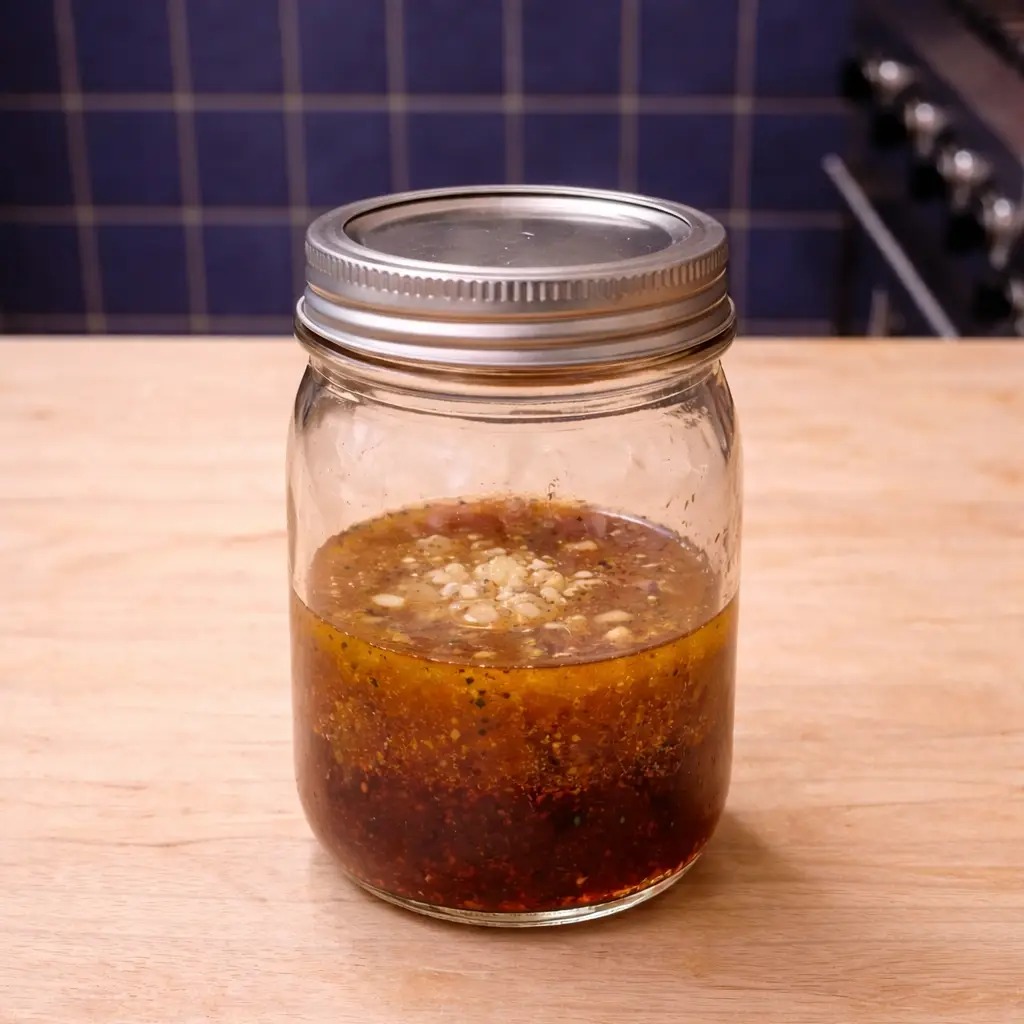
How to Use It Beyond Salad
- Toss with warm roasted vegetables, especially squash (great next to creamy butternut squash soup on the table).
- Dress pasta salads like fusilli pasta salad with sun-dried tomatoes.
- Use as a quick marinade for chicken before grilling (if you want more marinade ideas, see 5 easy chicken marinades).
- Spoon over crispy food as a bright contrast (fish night? pair with ultra-crispy beer battered fish and chips).
7 Variations (Long-Tail, Easy, High-Intent)
Each variation starts from the classic base above. Mix the add-ins first, then emulsify with the oil.
1) Maple Dijon Vinaigrette (Canada-friendly)
- Add 1 extra teaspoon maple syrup
- Add 1 extra teaspoon Dijon
Best on cabbage salads, grain bowls, and fall salads. Serve with comfort mains like weeknight beef ragout when you want something fresh on the side.
2) Lemon Herb Vinaigrette (Bright + Fresh)
- Replace vinegar with 2 tablespoons lemon juice
- Add 1 tablespoon chopped parsley (or mixed herbs)
Great with chicken dinners like easy hunters chicken.
3) Balsamic Honey Vinaigrette (Sweeter, Restaurant-Style)
- Use balsamic vinegar
- Keep honey/maple (don’t skip)
Perfect for a simple side salad next to rich dishes like pork wellington.
4) Greek Oregano Vinaigrette (No Mayo, Big Flavor)
- Add 1/2 teaspoon dried oregano
- Add 1 tablespoon lemon juice (keep 1 tablespoon vinegar)
If you love Mediterranean pasta salads, pair with Greek pasta salad with oregano vinaigrette.
5) Creamy Mustard Vinaigrette (Without Yogurt)
- Add 1 tablespoon mayonnaise
- Add 1 extra teaspoon Dijon
This is a bridge between vinaigrette and creamy dressings. If you want the mayo base from scratch, use homemade mayonnaise.
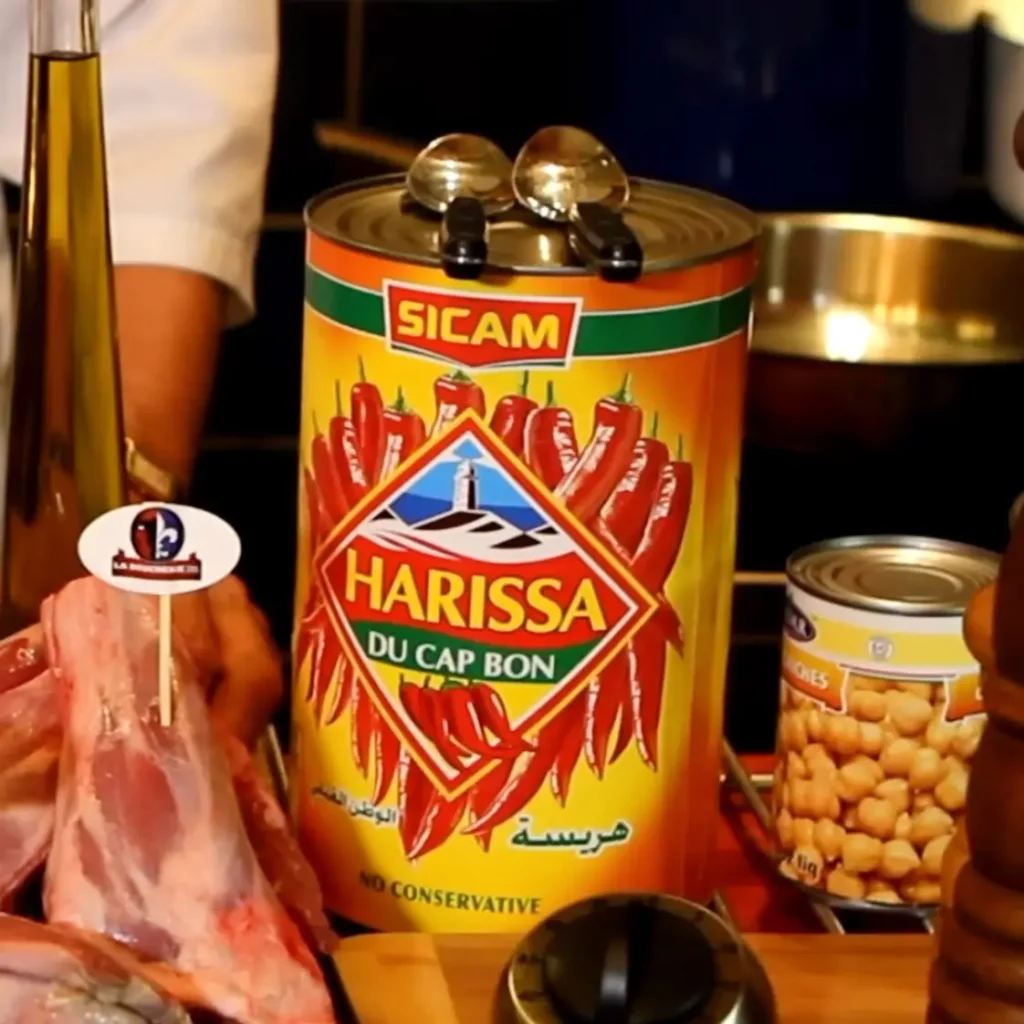
6) Spicy Vinaigrette (Harissa Twist)
- Add 1 teaspoon harissa (or hot sauce)
- Add an extra teaspoon honey/maple if needed
If you enjoy heat, you might also like spicy tuna rigatoni as a main.
7) Garlic-Lemon Pepper Vinaigrette (Bold, Savory)
- Use lemon juice + a bit more black pepper
- Add grated garlic
Great with crispy chicken like crispy homemade chicken tenders.
Substitutions
- Olive oil: Use avocado oil for a more neutral taste.
- Vinegar: Apple cider vinegar is a great all-purpose swap.
- Dijon: Mustard helps emulsify; if you skip it, shake harder and expect quicker separation.
- Sweetener: Maple syrup (Canada) or honey (USA) both work.
- Garlic: Use 1/4 teaspoon garlic powder instead of fresh.
FAQ
Why does my vinaigrette separate?
That’s normal. Dijon helps it stay emulsified longer. Shake again right before serving.
Is 3:1 always the best ratio?
It’s the best starting point for greens. For heartier salads, you can use slightly more acid or mustard.
How long does homemade vinaigrette last?
3–5 days in the fridge is ideal. If it contains fresh garlic, keep it colder and use within 3 days.
How do I make it less sharp?
Add a bit more oil, a small pinch of salt, or a touch more maple/honey.
Can I use it as a marinade?
Yes. It works well for quick marinades (especially chicken). For more ideas: 5 easy chicken marinades.
What to Serve With (Suggested Posts)
- Fusilli pasta salad with sun-dried tomatoes
- Farfalle pasta salad
- Homemade ranch dressing
- Homemade Caesar salad
- Homemade mayonnaise
- Ultra-crispy fish and chips
- Crispy homemade chicken tenders
- Easy hunters chicken
- Creamy mozzarella parmesan pasta
- Eggplant Parmigiana
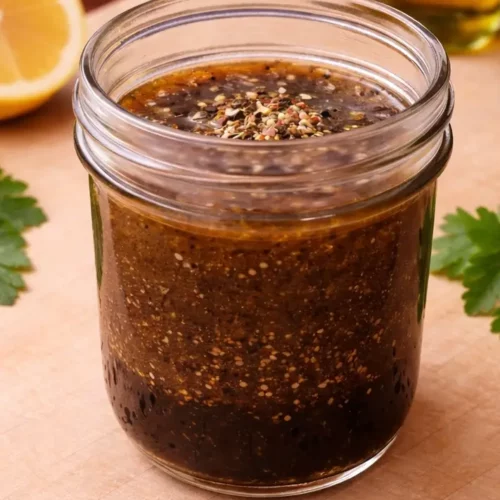
The Only Classic Vinaigrette You Need (Plus 7 Easy Variations That Taste Like a Restaurant)
Ingredients
- 6 tablespoons extra-virgin olive oil
- 2 tablespoons red wine vinegar
- 1 teaspoon Dijon mustard
- 1 teaspoon maple syrup or honey optional
- 1 small garlic clove finely grated (optional)
- 1/2 teaspoon kosher salt
- 1/4 teaspoon black pepper
- 1 tablespoon water optional
Instructions
- In a bowl or jar, mix vinegar, Dijon, salt, pepper, and optional sweetener/garlic until the salt dissolves.
- Whisk while slowly drizzling in oil (or shake vigorously in a sealed jar).
- Optional: whisk in water for a lighter dressing.
- Rest 5 minutes, taste on lettuce, then adjust oil/salt/acid as needed.
Notes
Substitutions
- Olive oil: Use avocado oil for a more neutral taste.
- Vinegar: Apple cider vinegar is a great all-purpose swap.
- Dijon: Mustard helps emulsify; if you skip it, shake harder and expect quicker separation.
- Sweetener: Maple syrup (Canada) or honey (USA) both work.
- Garlic: Use 1/4 teaspoon garlic powder instead of fresh.
FAQ
Why does my vinaigrette separate?That’s normal. Dijon helps it stay emulsified longer. Shake again right before serving. Is 3:1 always the best ratio?
It’s the best starting point for greens. For heartier salads, you can use slightly more acid or mustard. How long does homemade vinaigrette last?
3–5 days in the fridge is ideal. If it contains fresh garlic, keep it colder and use within 3 days. How do I make it less sharp?
Add a bit more oil, a small pinch of salt, or a touch more maple/honey. Can I use it as a marinade?
Yes. It works well for quick marinades (especially chicken). For more ideas: 5 easy chicken marinades.
Useful Links
🛒 Michel Dumas Shop : Explore our kitchen essentials, including aprons and knives.
🌐 Linktree : Access all our important links in one place.
📱 YouTube | Instagram | Facebook | TikTok : Follow us for the latest recipes and culinary tips.