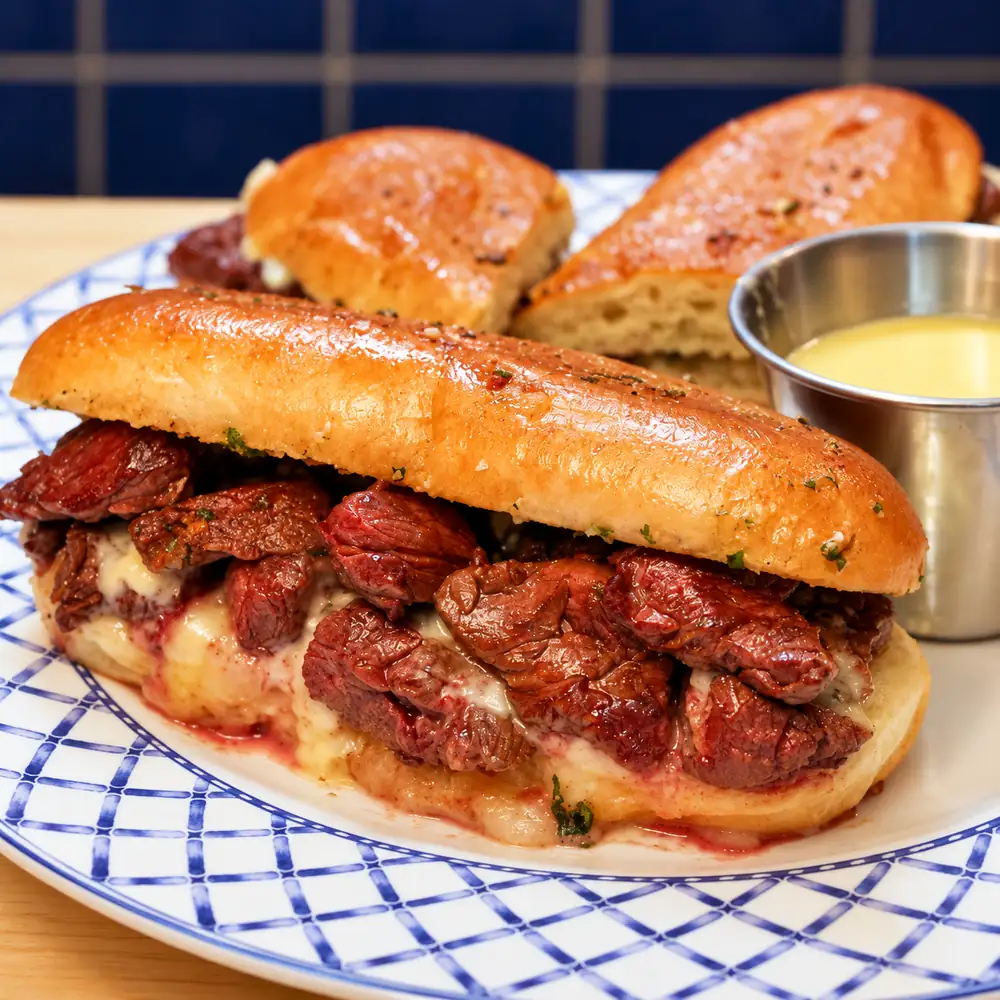
Philly Cheesesteak with Three Cheese Sauce and Garlic Butter
This steak sandwich combines quickly seared hanger steak, garlic butter toasted rolls, and a creamy sauce made with cheddar, Gouda, and blue cheese. Trim the tough membrane from the beef before cooking, and keep the cheese sauce below a boil once the cheese goes in. The finished sauce should coat the meat rather than soak through the bread.
A cheesesteak is a hot sandwich of cooked beef and melted cheese. This version uses small pieces of onglet and a separate three cheese sauce, with no onions or peppers. Make it for a substantial weekend lunch, a game day meal, or a supper when the sandwich itself is the main event.
This recipe is based on my YouTube video, with a few adjustments since publication to clarify the portions and make the cheese sauce easier to manage in a home kitchen.
{VIDEO}
Three Cheeses and Garlic Butter
I make the sauce separately because the beef needs a hot pan while the cheese needs gentle heat. Combining those jobs in one pan makes it harder to brown the steak without overheating the cheese. The rolls get their own garlic butter treatment before the filling is added.
The blue cheese is a seasoning as well as a cheese. Keep its share modest so it adds a savory edge without taking over the sandwich. Cheddar gives the sauce its main flavor, and mild Gouda rounds it out.
My cheesesteak with hanger steak and onions has a different filling and cheddar-focused sauce. The Philly cheesesteak with onions and peppers uses melted cheese slices. Here, the garlic bread and three cheese cream sauce define the recipe.
Ingredients for Four Sandwiches
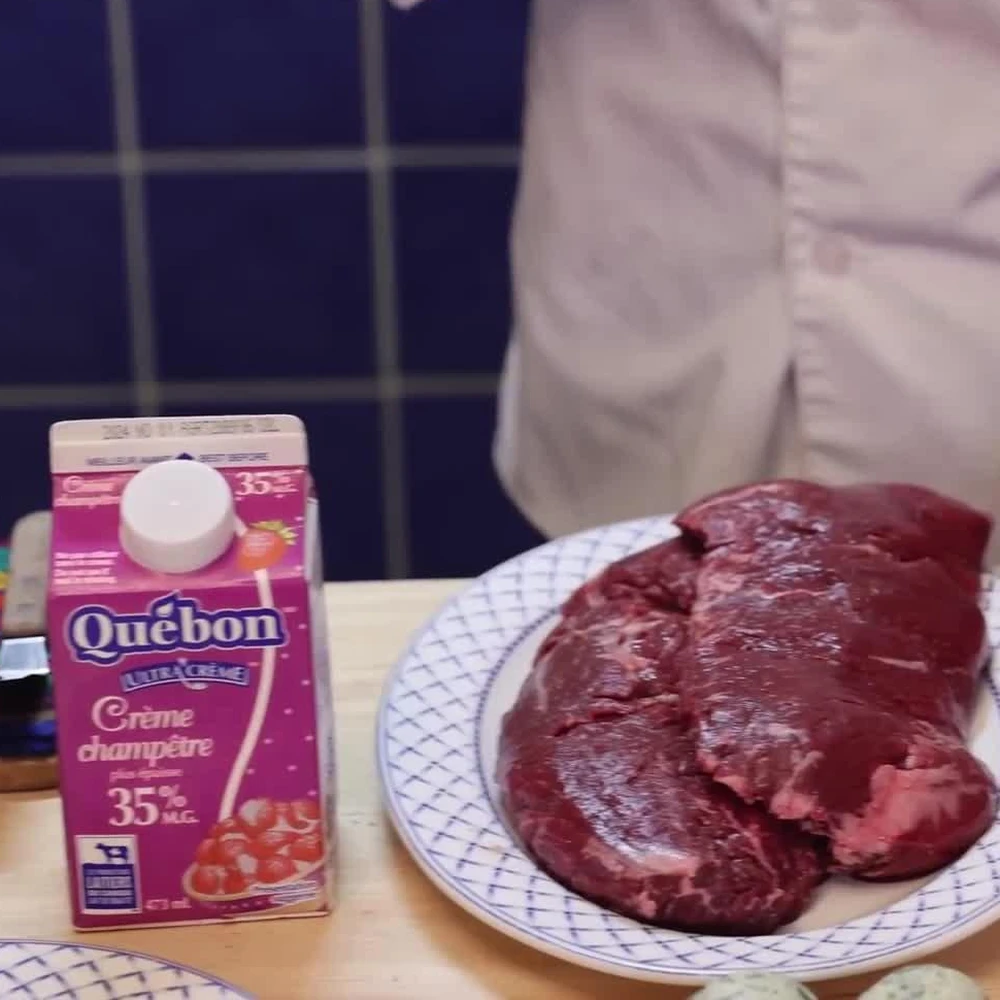
Buy trimmed hanger steak, also called onglet, or allow extra weight if your butcher leaves the central membrane attached. The recipe uses 1 1/2 pounds after trimming. A pile of raw beef that includes connective tissue will not give the same usable amount.
Use mild or medium cheddar and a young Gouda, rather than very dry aged cheeses. Bleu d’Auvergne suits the sauce; another creamy blue cheese can fill the same role. Remove wax and nonedible rinds before grating. The video uses cheddar, a Quebec Bergeron cheese, and blue cheese; a mild Gouda is the accessible choice for the Bergeron component.
Heavy whipping cream gives the sauce body. A little cornstarch, mixed into cold cream first, helps stabilize it. This is a cream sauce rather than a flour-based béchamel sauce.
Choose four soft submarine rolls about 6 to 7 inches long. A thin crust is easier to bite through than a hard baguette. Softened butter, garlic, and parsley make the bread coating; homemade garlic butter is useful if you already have some prepared.
Prepare the Sandwiches
1. Grate the Cheeses
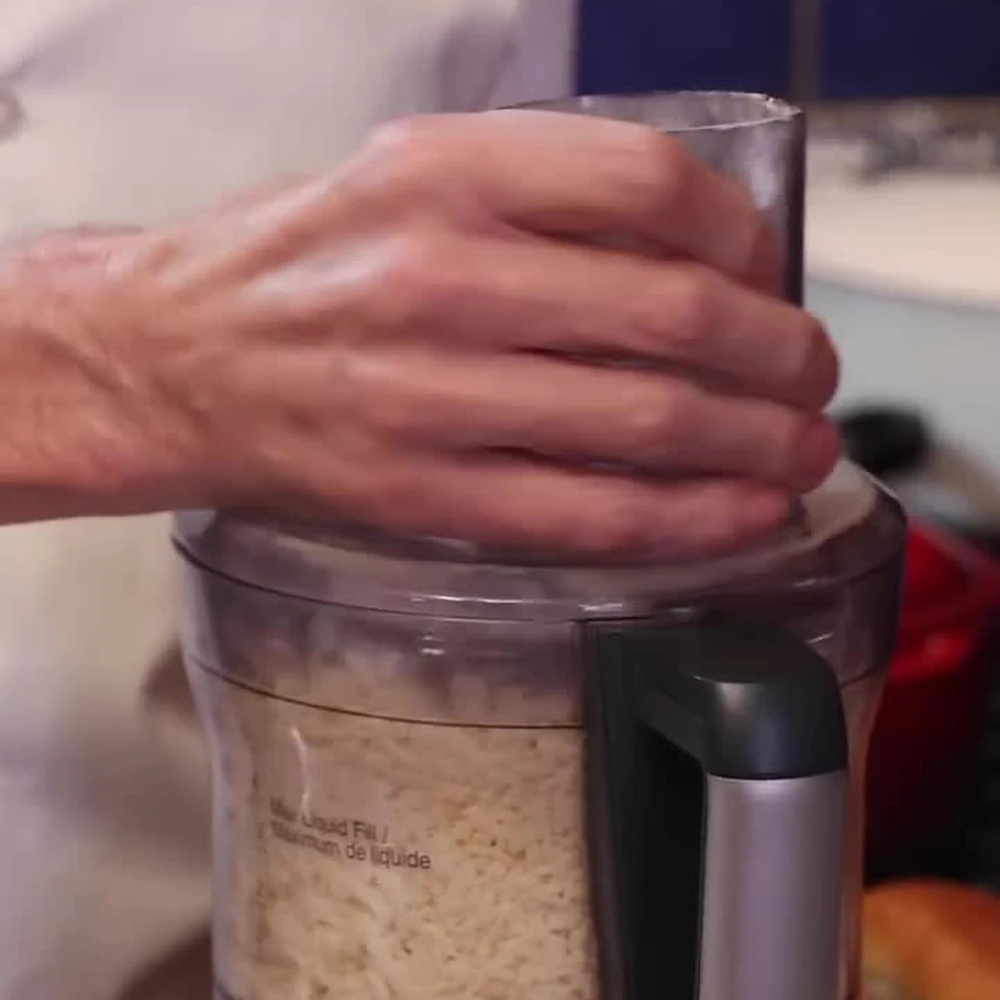
Grate the cheddar and Gouda finely, then crumble the blue cheese. Keep the cheeses ready beside the stove. Small pieces melt faster, so the cream does not need prolonged heating. A food processor is convenient, but a box grater works too.
2. Trim the Hanger Steak
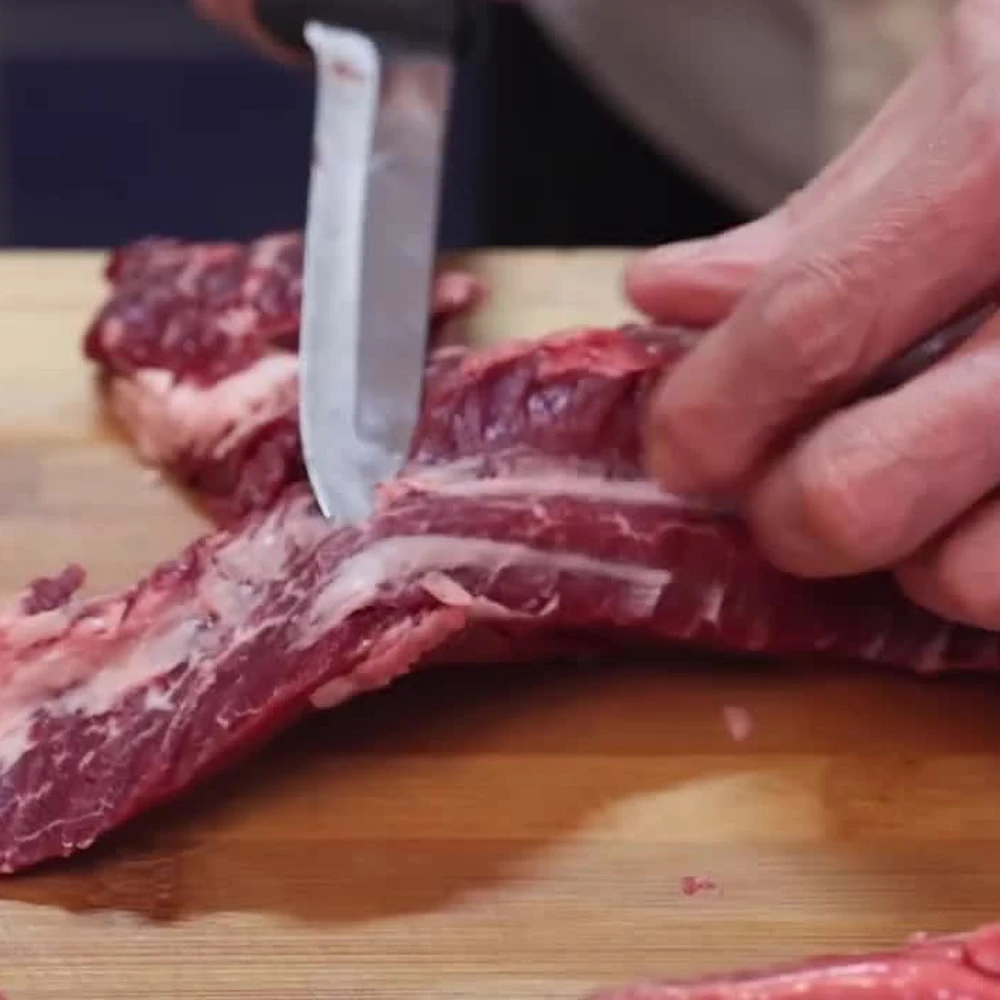
Separate the two long muscles along the thick central membrane. Slide a sharp knife between the membrane and the meat, keeping the blade angled toward the tough tissue. Remove silverskin and weigh the trimmed meat. Ask the butcher to do this if you prefer.
3. Cut Across the Grain
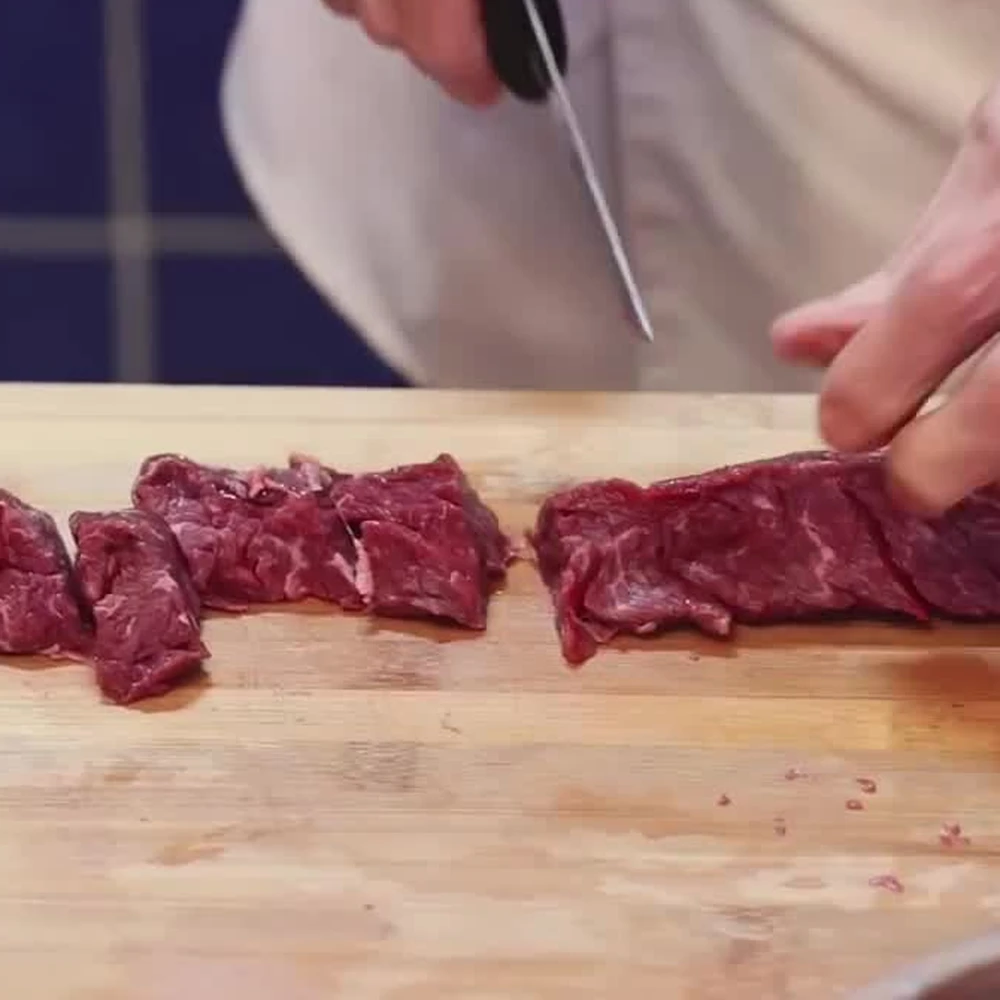
Pat the beef dry. Cut across its visible fibers into strips about 1/4 inch thick, then shorten any long strips into bite-size pieces. Avoid large cubes: they pull out of the roll when you bite. Keep the prepared beef refrigerated while making the sauce.
4. Butter the Rolls
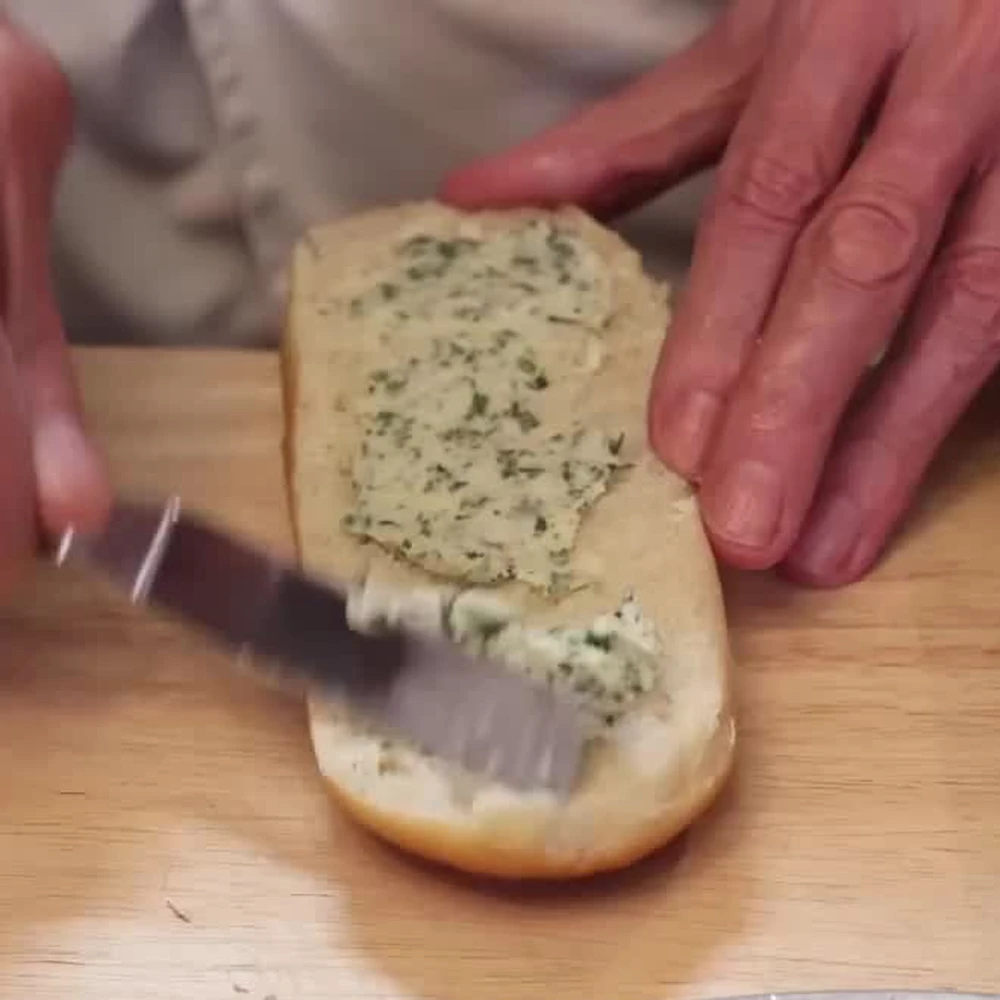
Mix the softened butter with finely minced garlic and parsley. Split the rolls and spread the cut faces thinly and evenly. Thick lumps of butter leave greasy patches and can make the bread brown unevenly. My garlic butter steak sandwich uses a related flavor combination with a different finish.
5. Make the Cheese Sauce
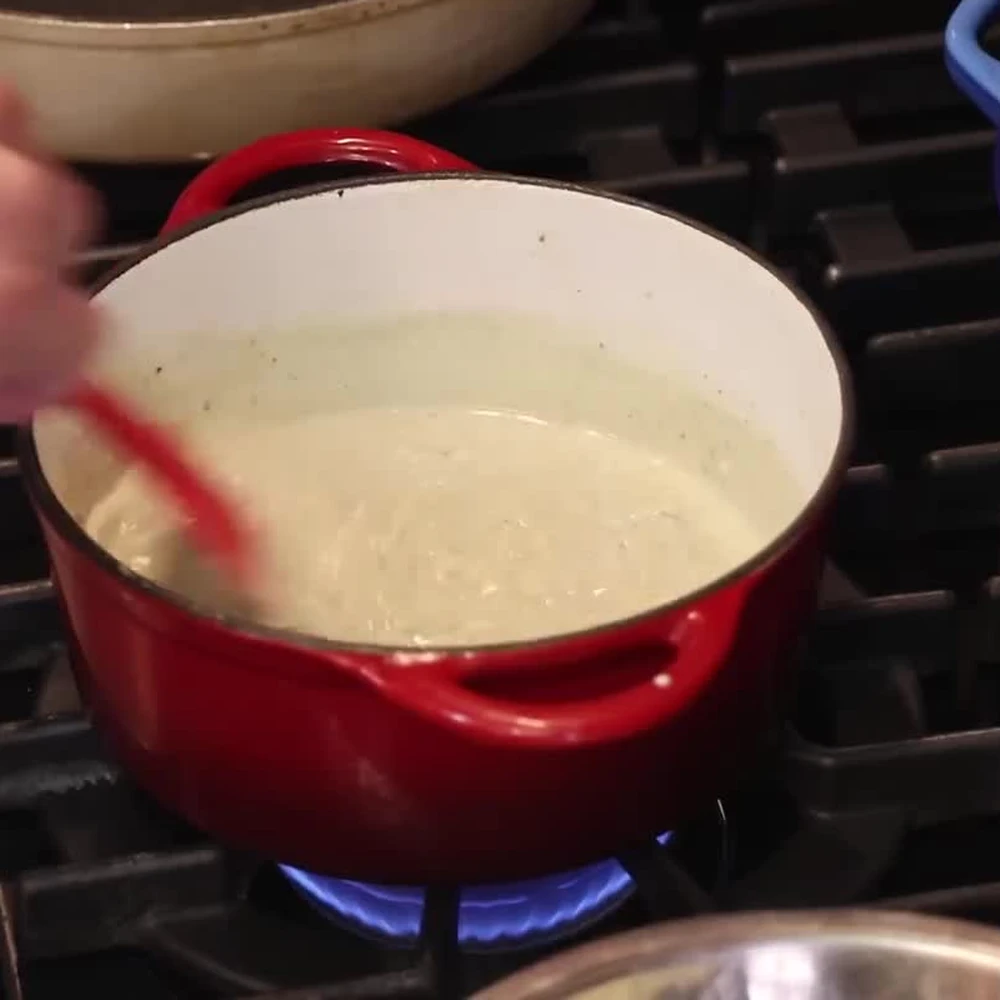
Whisk the cornstarch with 2 tablespoons of the cold cream until smooth. Heat the remaining cream in a small saucepan until steaming. Whisk in the slurry and bring to a gentle simmer for about 1 minute, stirring, until slightly thickened.
Remove from the heat. Add the cheddar and Gouda in small handfuls, stirring each addition smooth, then add the blue cheese. Use brief low heat only if needed to finish melting. Do not boil after adding cheese. The sauce should fall from the spoon in a thick ribbon. If too stiff, stir in a tablespoon of warm milk at a time. Taste before adding salt.
6. Toast the Garlic Bread
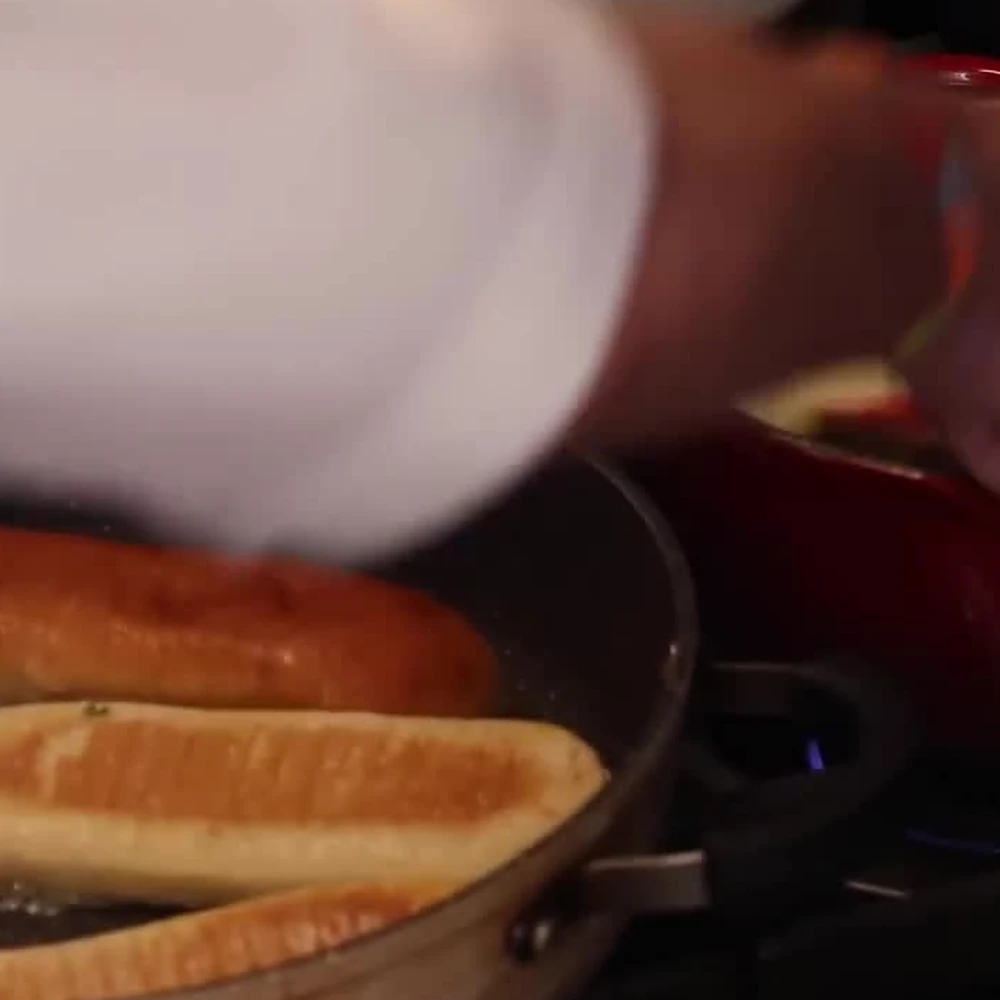
Heat a skillet over medium heat. Toast the rolls buttered side down for 1 to 2 minutes, until the cut faces are golden. Work in batches and watch the garlic: dark brown garlic tastes bitter. Set the rolls cut side up and place one slice of provolone on each bottom half while the bread is hot. Keep the sauce warm over the lowest heat, stirring occasionally.
7. Sear the Beef in Batches
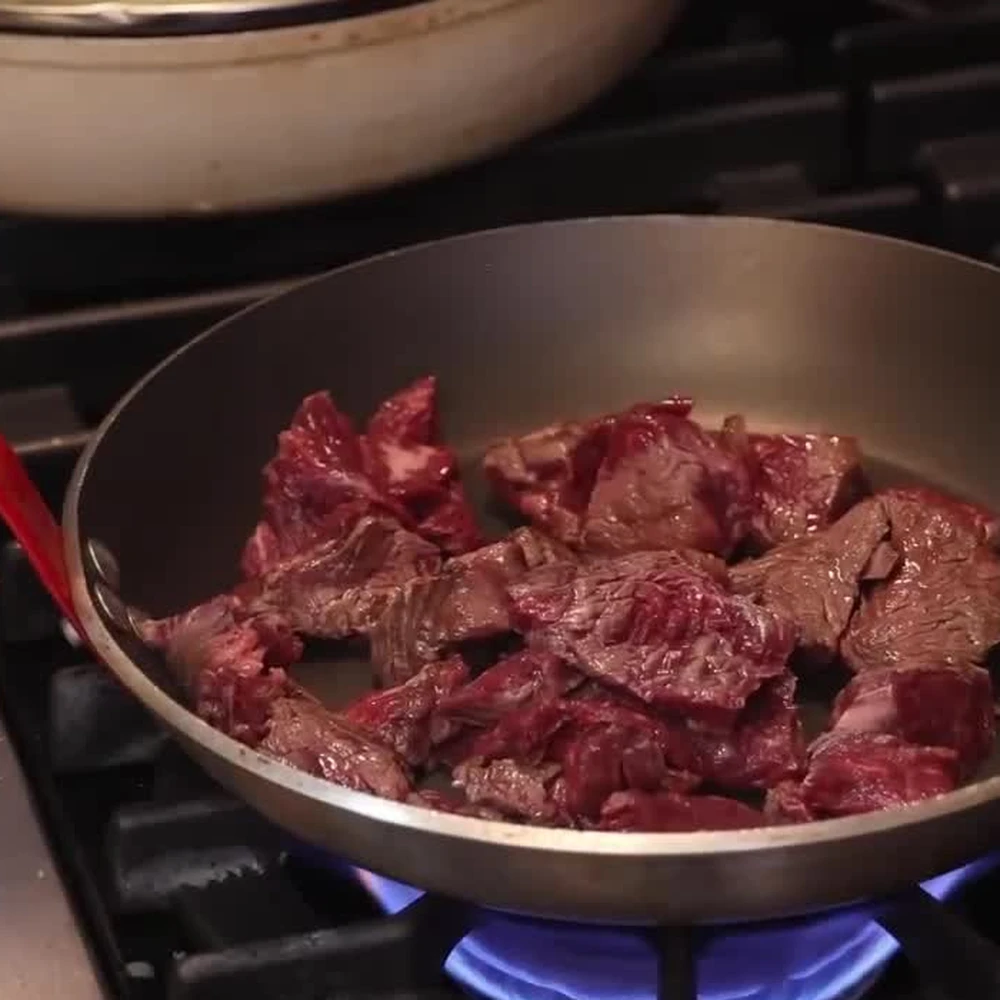
Heat a large heavy skillet over medium-high heat. Season the beef with salt and pepper just before cooking. Divide the oil between two batches and spread each batch in one layer, leaving some space between pieces.
Let the meat brown for about 1 minute before turning. Cook for another 1 to 2 minutes as needed, using temperature rather than the clock alone. For food safety, the thickest pieces should reach 145°F, followed by a 3-minute rest. Transfer to a clean plate. Do not leave cooked beef in the hot pan while waiting for the bread.
For the optional brandy finish shown in the video, measure 2 tablespoons into a small cup. After transferring the beef to its resting plate, take the skillet off the heat and add the brandy. Return to low heat and simmer for 30 to 60 seconds, scraping up the browned juices. Spoon a little over the rested beef. There is no need to ignite it.
8. Fill and Serve
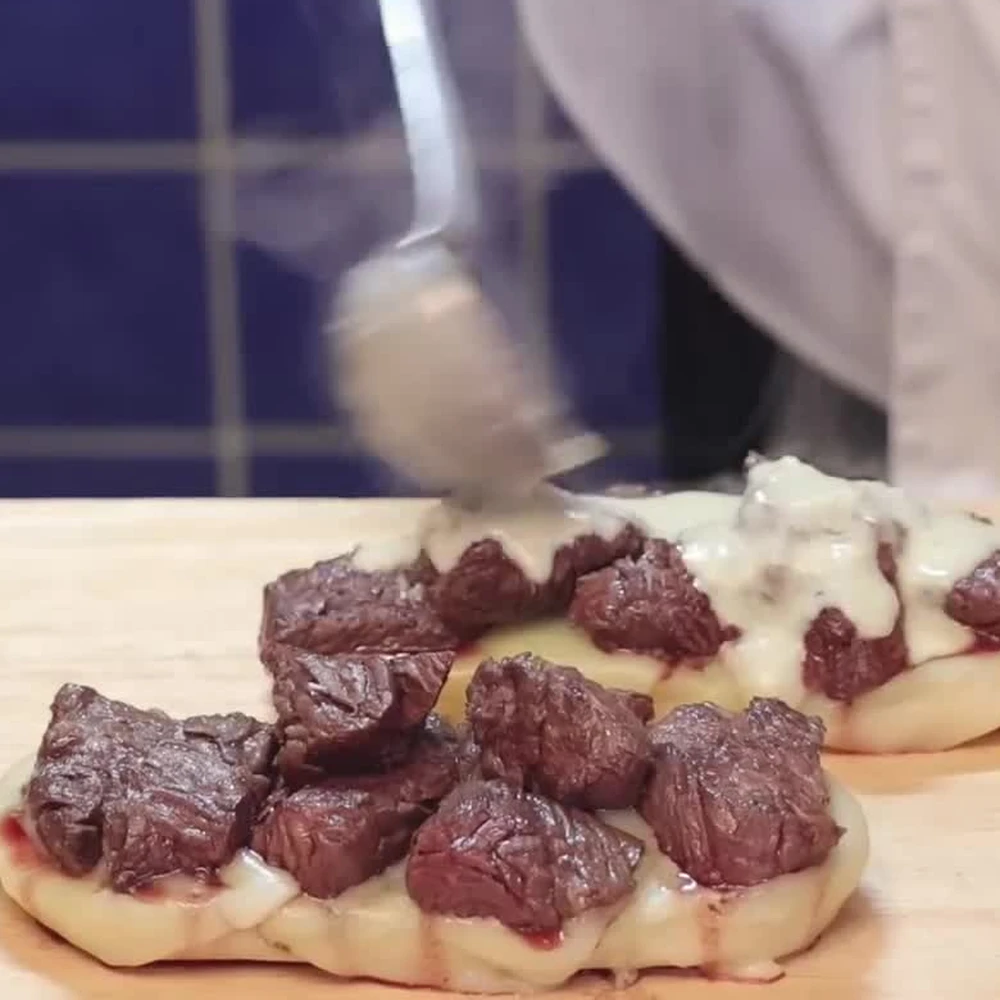
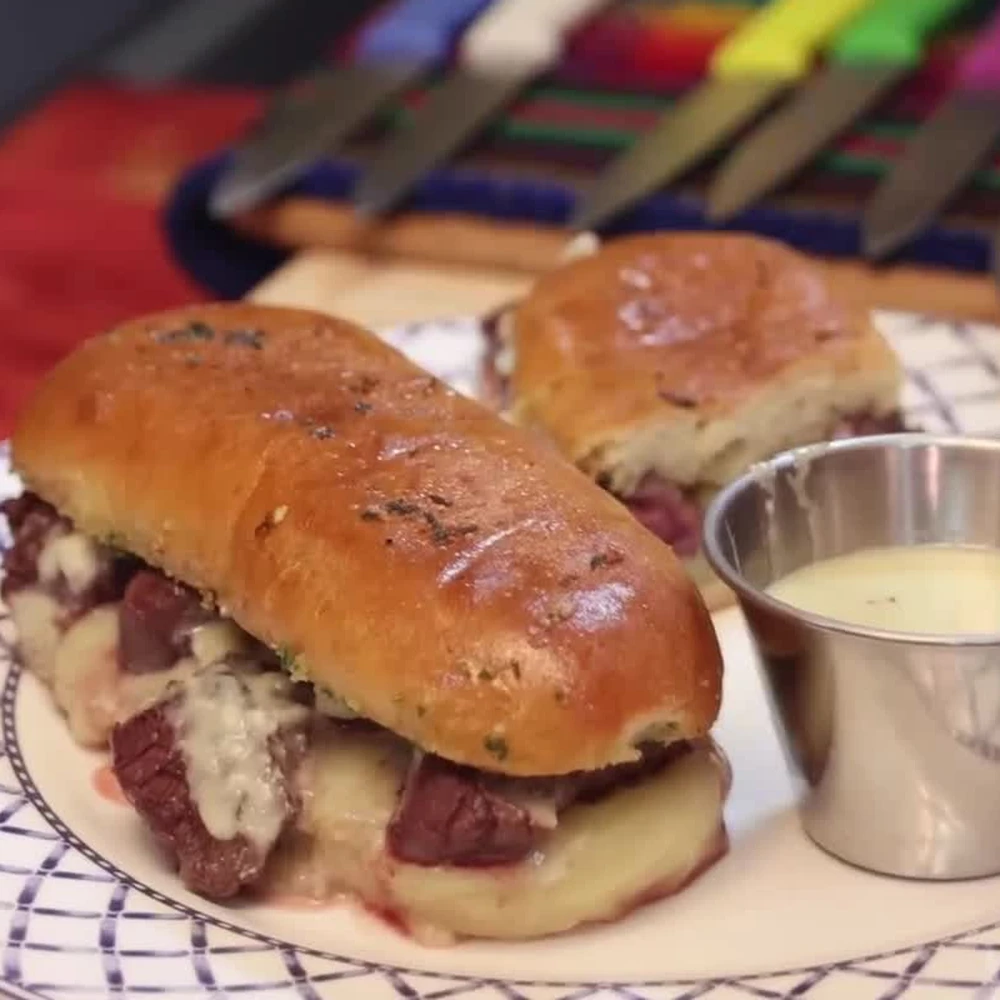
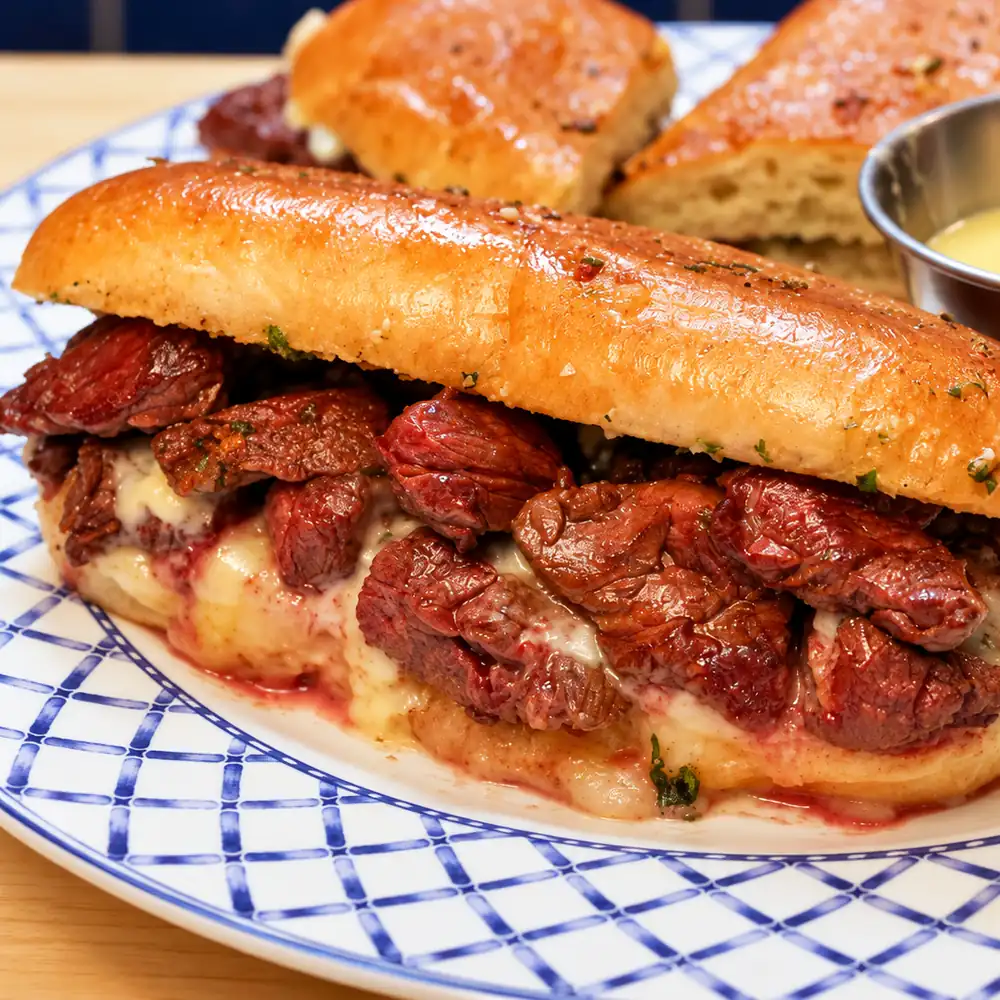
Divide the rested steak between the toasted rolls, leaving excess liquid on the plate. Spoon sauce over the beef, starting with a few tablespoons per sandwich and serving the remainder alongside. Close the rolls gently and serve immediately. The meat should remain visible beneath the sauce, and the toasted surface should still have a little bite.
Substitutions
Ribeye or sirloin can replace hanger steak. Keep the same trimmed weight and slice across the grain. For a simpler meal with small pieces of beef, garlic butter steak bites use a different serving style.
Replace the blue cheese with another ounce of mild Gouda for a gentler sauce. Young Monterey Jack can replace the Gouda. These changes alter the flavor, so season after melting. Avoid cheese curds that hold their shape rather than melting into a smooth sauce.
Heavy cream is the preferred liquid here. Milk alone is not a direct substitute at the same quantity. If you want sliced cheese instead of sauce, use the method in my steak sandwich with aged cheddar.
Questions About Texture and Preparation
Why Is the Beef Chewy
Check the trimming and cutting direction first. Hanger steak has a tough central membrane that quick frying will not soften. Thick pieces cut along the grain also make the sandwich difficult to eat. Overcooking adds another problem, especially with leaner substitute cuts.
Why Did the Sauce Separate
The cheese may have been added to bubbling cream or heated too long. Remove the saucepan from the heat and stir in a little warm milk. This can improve the texture, but a badly split sauce may not become completely smooth again. Gentle heating and gradual additions are the better prevention.
Can I Prepare Anything Ahead
Trim the beef, grate the cheeses, and mix the garlic butter earlier in the day. Refrigerate them separately. Make the sauce and cook the beef close to serving. The assembled sandwiches lose texture as the bread absorbs sauce.
How Do I Store Leftovers
Refrigerate the beef and sauce in separate shallow containers within 2 hours. Use within 3 to 4 days. Reheat leftovers to 165°F, stirring the sauce and loosening it as needed. The steak will cook further during reheating, so freshly cooked beef gives the best sandwich texture.
Sides and Other Sandwiches
This is a rich meal with protein from the beef and cheese, plus substantial fat from the cream and butter. Serve a small portion of creamy coleslaw or a crisp Greek salad for freshness. For a larger comfort-food plate, add Belgian fries.
If you want the bread pressed and toasted around the filling, try a steak panini. For a sandwich built around melted slices rather than a poured sauce, the steak sandwich with raclette and pickled onions brings a different balance.
Philly Cheesesteak with Three Cheese Sauce and Garlic Butter
Ingredients
- 1 1/2 lb hanger steak weighed after trimming
- 4 soft submarine rolls about 6 to 7 inches long
- 4 thin slices provolone about 3 oz total
- 3 tablespoons unsalted butter softened
- 2 garlic cloves finely minced
- 2 tablespoons finely chopped parsley
- 1 cup heavy whipping cream divided
- 1 teaspoon cornstarch
- 4 oz mild or medium cheddar finely grated
- 3 oz mild Gouda finely grated
- 1 oz Bleu d’Auvergne or another creamy blue cheese crumbled
- 1 tablespoon neutral oil
- 2 tablespoons brandy optional
- 1/2 teaspoon fine salt plus more to taste
- 1/4 teaspoon freshly ground pepper
- 1 to 3 tablespoons milk only if needed to loosen the sauce
Instructions
- Remove wax and nonedible cheese rinds. Grate the cheddar and Gouda; crumble the blue cheese.
- Remove the hanger steak’s central membrane and silverskin. Weigh 1 1/2 pounds of trimmed meat, pat dry, and cut across the grain into 1/4-inch strips. Shorten long strips into bite-size pieces. Refrigerate.
- Mix butter, garlic, and parsley. Split the rolls and spread the cut faces thinly with the garlic butter.
- Mix cornstarch with 2 tablespoons cold cream. Heat the remaining cream until steaming. Whisk in the slurry and gently simmer, stirring, for 1 minute.
- Remove from heat. Stir in cheddar and Gouda in small handfuls, then the blue cheese, until smooth. Use brief low heat if needed; do not boil. Loosen with warm milk only if necessary and season to taste.
- Toast the rolls buttered side down in a skillet over medium heat for 1 to 2 minutes, until golden. Put one slice of provolone on each hot bottom half. Keep the sauce warm over very low heat, stirring occasionally.
- Season the beef with salt and pepper. Heat a heavy skillet over medium-high heat. Divide the oil and beef between two batches. Sear in one layer for about 1 minute, turn, and cook another 1 to 2 minutes as needed until the thickest pieces reach 145°F. Rest on a clean plate for 3 minutes. If using brandy, take the empty skillet off the heat, add the measured brandy, then simmer over low heat for 30 to 60 seconds. Spoon a little of the reduced juices over the rested beef; do not deliberately ignite it.
- Divide the beef between the rolls, leaving excess juices behind. Add a few tablespoons of cheese sauce to each sandwich, close, and serve immediately with remaining sauce alongside.