Classic Pommes Dauphine Recipe: French Potato Puffs That Fry Up Light, Golden and Reliable
Pommes dauphine are French potato puffs made by mixing dry mashed potatoes with pâte à choux, then frying the mixture until golden. They are different from mashed potatoes, fries, or gratin because the choux paste gives the potatoes lift, structure, and a softer center. I make them when I want a classic French side dish for roast meats, steak dinners, holiday meals, or a Sunday lunch that feels a little more old-school.
This recipe is based on my YouTube video, with a few adjustments since publication to make the proportions easier to reproduce at home. The important change is the ratio: I use equal weight dry mashed potatoes and pâte à choux. That one detail matters more than people think. Too much potato and the puffs become heavy. Too much egg or too much moisture and they can spread in the oil.
I make it this way because pommes dauphine are not just fried mashed potatoes. The potato needs to be dry, almost fluffy and sandy after passing through the ricer, while the choux paste should be thick enough to hold its shape on a spoon. What I look for here is a mixture that scoops cleanly, drops into the oil without falling apart, and slowly turns golden while puffing a little around the edges.
The mistake to avoid is boiling the potatoes, draining them, and mixing them while they are still wet. That gives a loose mixture and greasy puffs. After draining, I prefer to dry the potatoes in the pot for a minute or two over low heat. You should see steam leaving the potatoes, and the bottom of the pot should look dry, not watery.
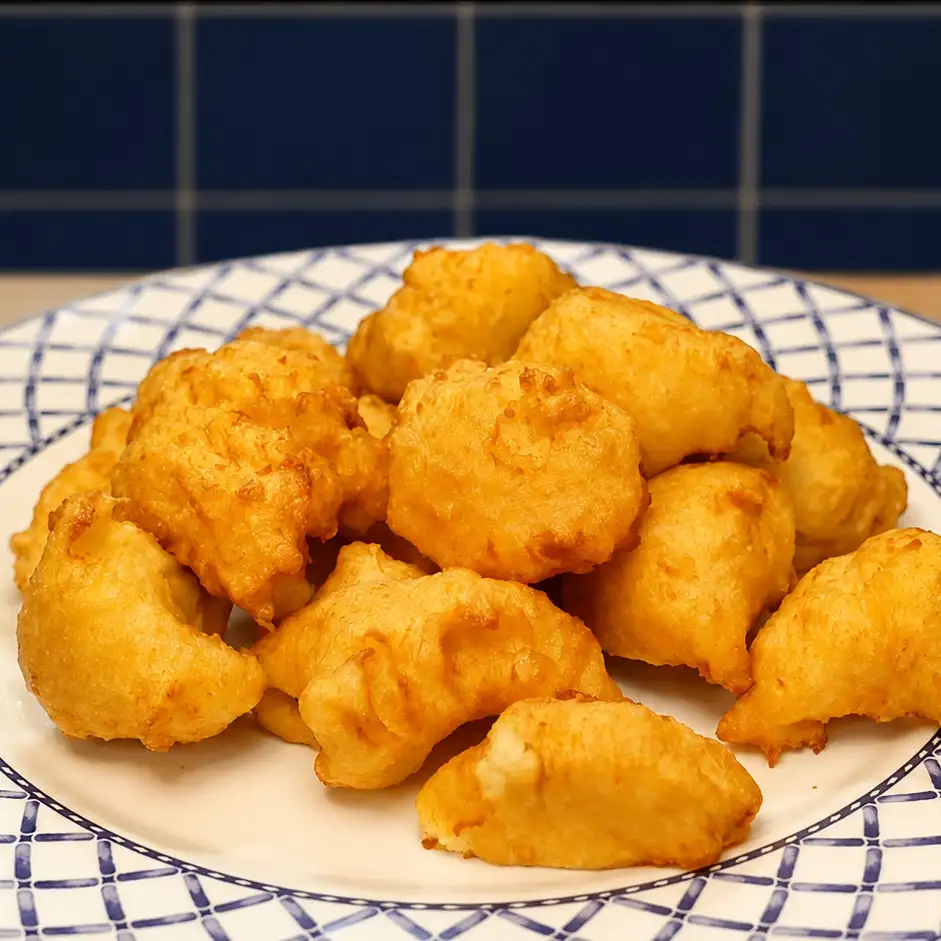
What Makes This Recipe Different From Other Potato Recipes
This is a traditional fried French potato side, closer to a bistro or banquet dish than a quick weeknight potato. It is not the same style as a creamy French potato gratin, where the potatoes cook slowly in cream. It is also not as rustic as classic pommes boulangères, which are sliced potatoes baked with onions and stock.
Pommes dauphine sit in their own category. They are lighter than croquettes, more delicate than fries, and more technical than a simple mash. If you are building a French dinner, they work beside saucy mains like a traditional blanquette de veau, a steak with sauce, roast duck, or even a rich stew.
They are not a “healthy potato recipe” in the modern sense because they are fried, but they are satisfying in small portions. The good thing is that you do not need a huge serving. A few pieces beside a protein and a salad make a full plate.
The Key Ratio
The working ratio is simple:
Use equal weight dry mashed potato and pâte à choux.
For home cooking, I recommend starting with about 2 pounds of yellow potatoes. Once cooked, peeled, dried, and mashed, use about 1 pound 5 ounces of finished dry potato purée. That should be close to the amount of choux paste made with the quantities below.
If you have extra mashed potato, do not force it into the mixture. Keep it for another meal. I would rather have a balanced batch than stretch the recipe and end up with dense potato balls.
For the choux paste, the texture matters more than the exact number of eggs. Start with 3 eggs. Add the fourth only if the paste is still too stiff. At this point, it should look thick, smooth, and glossy, but not runny. If you drag the spoon through it, it should move slowly and hold a soft ridge.
For measurement help, especially if you are converting from metric recipes, keep a practical guide like this cup, gram and milliliter conversion chart nearby.
Ingredients You Need
You only need potatoes, water, butter, flour, eggs, salt, and frying oil. Nutmeg is optional. In the video, I leave it out because not everyone likes it, but a small pinch is very classic.
Use yellow potatoes or Yukon Gold-style potatoes. They mash smoothly and have enough body to hold with the choux paste. Russets can work too, but they can become drier and more fragile if overworked. Waxy potatoes are not my first choice because they can turn gluey.

For the butter, salted butter is fine. If using unsalted butter, season the final mixture more carefully. The potatoes need salt, but the seasoning should not taste aggressive. If you want a good reminder of how seasoning changes a recipe, this guide on how to season a recipe properly is useful.
Step-by-Step Instructions
Start with the potatoes. Scrub them, cut them into large even pieces, and cook them in salted water until tender. I like starting them in cold water because the heat moves more evenly through the potato. Once the water is boiling, they usually need about 20 minutes, depending on size.


You know they are ready when a knife slides through without resistance. Do not let them fall apart in the water. If the edges are breaking and the water is cloudy, they are already taking on too much moisture.


Drain them well. Peel them while warm if you cooked them with the skin on, then pass them through a ricer or food mill. Return the mashed potato to the dry pot over low heat for 1 to 2 minutes. Stir gently. The goal is not to brown anything. You just want steam to escape. The purée should look matte, not shiny and wet.
Now make the choux paste. Bring water and butter to a boil in a saucepan. When the butter is melted and the liquid is bubbling, remove from the heat and add the flour all at once. Stir hard with a wooden spoon or spatula until the mixture forms a ball. Put it back over low heat for a short moment if needed, just to dry it slightly. The dough should pull away from the sides of the pan.


Let the dough cool for a few minutes before adding eggs. If it is too hot, the eggs can cook on contact. Add the eggs one at a time, mixing well after each addition. The first egg always looks strange. The dough breaks, then comes back together. Keep stirring. By the third egg, it should become smoother and more flexible. Add only enough egg to make a thick paste that still holds shape.
Weigh the dry mashed potato and the choux paste, then combine equal amounts. If working without a scale, aim for a mixture that feels firm enough to scoop. It should not pour. It should not feel like mashed potato soup. When you lift a spoonful, it should sit there with rounded edges.


Chill the mixture if you can. One hour in the fridge helps a lot. Overnight is also fine. The cold mixture is easier to scoop, and it holds better when it hits the oil.
Heat neutral oil to 325°F. This is important. Too low and the puffs absorb oil. Too high and the outside colors before the middle has time to cook. I prefer 325°F because it gives the inside time to set while the outside turns a deep golden color.


Scoop the mixture with two spoons and drop small portions into the oil. Do not crowd the pot. They need space to move. You should hear steady bubbling, not violent splashing. Turn them gently as they cook.

After about 3 to 4 minutes, they should be golden and cooked through. Drain on a rack or paper towel, then season lightly while hot.

What to Serve With Pommes Dauphine
These are excellent beside classic French mains. For a steak night, they make a strong alternative to fries, especially with a sauce like French peppercorn steak or steak with Roquefort sauce.
For a slower weekend meal, serve them with dry-aged steak with a meat glaze or roast duck. They also work with creamy classics like chicken supreme because the light potato puff balances a rich sauce.

If you want a full comfort food plate, pair them with weeknight beef ragout or braised beef cheeks with red wine.
Substitutions
Yellow potatoes: Use Yukon Gold-style potatoes if possible. Russets can work, but dry them carefully and do not overmix.
Salted butter: Unsalted butter works. Add a little more salt to the final mixture.
All-purpose flour: This is the best choice for the choux paste. I would not use cake flour or whole wheat flour here.
Nutmeg: Optional. A tiny pinch gives a classic French flavor, but it is not necessary.
Oil: Use a neutral frying oil with a high smoke point, such as canola, vegetable, sunflower, or peanut oil.
Eggs: Large eggs are best. Add them one at a time and stop when the dough is thick and glossy.
FAQ
Can I make pommes dauphine ahead of time?
Yes. The uncooked mixture can be made the day before and kept covered in the refrigerator. In fact, I prefer it slightly chilled because it scoops better and holds its shape more easily in the oil.
Can I freeze them?
Yes, but I prefer freezing them after frying. Let them cool completely, freeze on a tray, then store in a freezer bag. Reheat in a hot oven until the outside becomes crisp again.
Why did my pommes dauphine fall apart in the oil?
The mixture was probably too wet, the choux paste had too much egg, or the oil was too cool. The potato purée needs to be dry, and the final mixture should hold on a spoon before frying.
Why are they greasy?
Usually the oil temperature is too low or the pot is overcrowded. Keep the oil around 325°F and fry in small batches.
Can I bake pommes dauphine instead of frying?
You can bake the mixture, but the result will not be the same. Frying gives the classic texture and color. For a baked potato side, I would rather make a gratin, boulangère potatoes, or another oven-style recipe.
What is the difference between pommes dauphine and gratin dauphinois?
Pommes dauphine are fried potato puffs made with mashed potatoes and choux paste. Gratin dauphinois is sliced potatoes baked slowly with cream. The names sound related, but the recipes are completely different.
Suggested Posts
Pommes Sarladaises with duck fat potatoes
Traditional blanquette de veau
How to season a recipe properly

Classic Pommes Dauphine Recipe: French Potato Puffs That Fry Up Light, Golden and Reliable
Ingredients
- 2 pounds yellow potatoes scrubbed
- 1 tablespoon salt for the potato cooking water
- 3/4 cup plus 1 tablespoon water
- 7 tablespoons salted butter
- 1 1/4 cups all-purpose flour
- 3 large eggs plus 1 more only if needed
- 1/2 teaspoon salt or to taste
- 1/4 teaspoon black pepper or white pepper
- 1 pinch nutmeg optional
- Neutral oil for frying
Instructions
- Cut the potatoes into large even pieces. Place them in a pot, cover with cold water, add the salt, and bring to a boil.
- Cook for about 20 minutes, or until tender when pierced with a knife. Drain well.
- Peel the potatoes if needed, then pass them through a ricer or food mill. Return the mashed potato to the dry pot over low heat for 1 to 2 minutes, stirring gently, until steam escapes and the purée looks dry. Measure about 1 pound 5 ounces of finished dry mashed potato and reserve.
- In a saucepan, bring the water and butter to a boil. Remove from the heat, add the flour all at once, and stir strongly until the dough forms a ball.
- Let the dough cool for a few minutes. Add the eggs one at a time, mixing well after each addition. Use the fourth egg only if the paste is too stiff. The choux paste should be smooth, thick, and able to hold its shape.
- Mix equal weight dry mashed potato and choux paste. Season with salt, pepper, and nutmeg if using. The mixture should be thick enough to scoop with two spoons.
- Chill the mixture for 1 hour if possible, or overnight.
- Heat the oil to 325°F in a deep pot or fryer.
- Shape small portions with two spoons and carefully drop them into the oil. Fry in small batches for 3 to 4 minutes, turning gently, until golden and cooked through.
- Drain on a rack or paper towel. Season lightly while hot and serve immediately.
Video
Notes
FAQ
Can I make pommes dauphine ahead of time?
Yes. The uncooked mixture can be made the day before and kept covered in the refrigerator. In fact, I prefer it slightly chilled because it scoops better and holds its shape more easily in the oil.Can I freeze them?
Yes, but I prefer freezing them after frying. Let them cool completely, freeze on a tray, then store in a freezer bag. Reheat in a hot oven until the outside becomes crisp again.Why did my pommes dauphine fall apart in the oil?
The mixture was probably too wet, the choux paste had too much egg, or the oil was too cool. The potato purée needs to be dry, and the final mixture should hold on a spoon before frying.Why are they greasy?
Usually the oil temperature is too low or the pot is overcrowded. Keep the oil around 325°F and fry in small batches.Can I bake pommes dauphine instead of frying?
You can bake the mixture, but the result will not be the same. Frying gives the classic texture and color. For a baked potato side, I would rather make a gratin, boulangère potatoes, or another oven-style recipe.What is the difference between pommes dauphine and gratin dauphinois?
Pommes dauphine are fried potato puffs made with mashed potatoes and choux paste. Gratin dauphinois is sliced potatoes baked slowly with cream. The names sound related, but the recipes are completely different.🔗 Useful Links
🛒 Michel Dumas Shop : Explore our kitchen essentials, including aprons and knives.
🌐 Linktree : Access all our important links in one place.
📱 YouTube | Instagram | Facebook | TikTok : Follow us for the latest recipes and culinary tips.