Creamy French Omelette Recipe — Soft, Custardy Made in a Skillet
A proper French omelette baveuse is barely set, velvety, and glossy inside. The goal is a thin, tender exterior that wraps a custardy center — no browning, no rubber. In this step-by-step guide I’ll show you how to nail heat control, stirring, and the fold so you get that restaurant texture in 90 seconds flat. I’m also sharing pro tips (pan size, butter temperature, carryover heat) and easy variations (herbs, cheese) that keep the technique authentic while fitting a weeknight breakfast, brunch, or a quick “eggs for dinner” in North America.
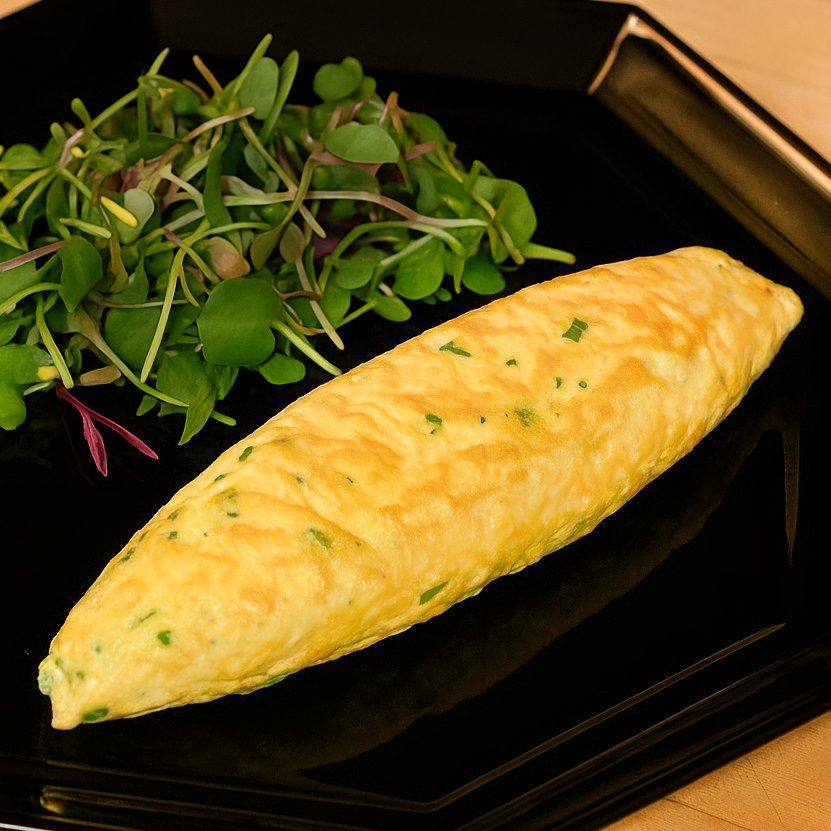
Along the way, you can round out the plate with simple bistro sides: Parisian potatoes, authentic Belgian fries, a crisp Greek salad with vinaigrette, or toasted baguette with homemade garlic butter. If you’re cooking for brunch, try it alongside eggs Benedict (15 minutes) (and yes, you can practice emulsions with my homemade hollandaise).
Why This Works
- Butter at the right temp: foamy, not brown — the sweet dairy notes complement the eggs and prevent sticking.
- Stir, then stop: gentle circles build tiny curds for a creamy center; halting at the right moment keeps it baveuse.
- Carryover heat: sliding the omelet out immediately stops overcooking so it stays glossy instead of dry.
- Correct pan: an 8–9 inch (20–22 cm) nonstick or well-seasoned pan gives thickness without overcooking.

Ingredients (serves 1)
Weights are placed first, with both metric and imperial for reliability.
- 150 g eggs (3 large)
- 10–15 g unsalted butter (¾–1 tbsp)
- 1 g fine sea salt (⅛ tsp)
- Pinch freshly ground black pepper
- Optional, finishing & fillings (choose 1–2)
- 5 g chopped chives or parsley (1 tbsp)
- 20–30 g finely grated cheese (2–3 tbsp) — Gruyère, Emmental, or cheddar
- 30–40 g sautéed mushrooms or ham, finely chopped (2–3 tbsp)
- 5 ml olive oil (1 tsp) or a knob of butter to brush the surface
- 5 g chopped chives or parsley (1 tbsp)
For serving (optional): mesclun with vinaigrette (pair with classic Caesar dressing without mayo or make croutons with homemade garlic croutons).
Step-by-Step (Technique You Can Trust)
- Beat & season
Crack 150 g (3 large) eggs into a bowl. Beat with a fork just until uniform (don’t whip in air). Add 1 g (⅛ tsp) fine salt and a pinch of pepper.

- Heat the pan
Place an 8–9 in / 20–22 cm nonstick pan over medium-low heat. Add 10–15 g butter; it should melt and foam quietly without browning.

- Cook fast but gently (60–90 s)
Pour in the eggs. Using a spatula, make small circles, drawing edges toward the center to form tiny curds. When the base is just set but the top is still shiny and slightly runny, stop stirring.

- Fill & fold
If using herbs or cheese, scatter them now. Tilt the pan; fold the near edge over the center, then roll to the far edge for a neat oval. Avoid color.

- Plate immediately
Slide seam-side down onto a warm plate. Brush with a touch of butter or oil for sheen. Serve at once to keep it baveuse.

Substitutions & Variations
- Butter → ghee or olive oil: 10–12 g ghee for a nutty note; 10–12 g olive oil for a lighter profile.
- Dairy-free: use olive oil and skip cheese; finish with chives.
- Fine herbs: chives, parsley, tarragon — classic “fines herbes” vibe.
- Cheesy omelet: add 20–30 g Gruyère or Emmental; melt during the fold.
- Protein add-ins: finely diced ham, smoked salmon, or leftover chicken (keep to 30–40 g so the center stays creamy).
- Sauce pairings: spoon a ribbon of creamy mushroom sauce for steak or a swipe of homemade mayonnaise on the plate for a bistro flourish.
Pro Tips (Consistency for Home Cooks)
- Pan size matters: too large and the omelet overcooks before folding; too small and it’s too thick to keep baveuse.
- Foam, not brown: if the butter browns, the pan is too hot — remove briefly and cool.
- Stop early: the omelet will continue to set off-heat; plate immediately.
- Smoother look: strain beaten eggs through a fine sieve for a silkier surface.
- Practice with two eggs before graduating to three; the timing window widens.

FAQ
How do I avoid browning?
Use medium-low heat and start when butter is foamy but pale. If you see color, lift the pan off the burner for a few seconds.
Can I add milk or cream?
For baveuse, no. Dairy loosens the proteins and extends cooking time, risking overcooking.
What if I only have a 10-inch pan?
Use 2 eggs (100 g) or increase butter to 15 g and stir more actively to keep it from spreading too thin.
Which cheese melts best?
Gruyère or Emmental for classic French flavor; cheddar for North American comfort.
What sides go best?
Try Parisian potatoes, Belgian fries, Greek salad, or toasted baguette with garlic butter. For a soup-and-omelet lunch, make potage Parmentier or creamy tomato soup.
What to Serve With (Suggested Posts)
- Homemade hollandaise sauce
- Homemade garlic butter
- Parisian potatoes
- Greek salad (easy)
- Caesar dressing without mayo
- Homemade garlic croutons
- Authentic Belgian fries
- Eggs Benedict (15 minutes)
- Homemade mayonnaise
- Classic French onion soup

Creamy French Omelette Recipe — Soft, Custardy Made in a Skillet
Ingredients
- 150 g eggs 3 large
- 10 –15 g unsalted butter ¾–1 tbsp
- 1 g fine sea salt ⅛ tsp
- Pinch freshly ground black pepper
Optional, finishing & fillings (choose 1–2)
- 5 g chopped chives or parsley 1 tbsp
- 20 –30 g finely grated cheese 2–3 tbsp — Gruyère, Emmental, or cheddar
- 30 –40 g sautéed mushrooms or ham finely chopped (2–3 tbsp)
- 5 ml olive oil 1 tsp or a knob of butter to brush the surface
Instructions
- Crack 150 g (3 large) eggs into a bowl. Beat with a fork just until uniform (don’t whip in air). Add 1 g (⅛ tsp) fine salt and a pinch of pepper.
- Place an 8–9 in / 20–22 cm nonstick pan over medium-low heat. Add 10–15 g butter; it should melt and foam quietly without browning.
- Pour in the eggs. Using a spatula, make small circles, drawing edges toward the center to form tiny curds. When the base is just set but the top is still shiny and slightly runny, stop stirring.
- If using herbs or cheese, scatter them now. Tilt the pan; fold the near edge over the center, then roll to the far edge for a neat oval. Avoid color.
- Slide seam-side down onto a warm plate. Brush with a touch of butter or oil for sheen. Serve at once to keep it baveuse.
Video
Notes
Substitutions & Variations
- Butter → ghee or olive oil: 10–12 g ghee for a nutty note; 10–12 g olive oil for a lighter profile.
- Dairy-free: use olive oil and skip cheese; finish with chives.
- Fine herbs: chives, parsley, tarragon — classic “fines herbes” vibe.
- Cheesy omelet: add 20–30 g Gruyère or Emmental; melt during the fold.
- Protein add-ins: finely diced ham, smoked salmon, or leftover chicken (keep to 30–40 g so the center stays creamy).
- Sauce pairings: spoon a ribbon of creamy mushroom sauce for steak or a swipe of homemade mayonnaise on the plate for a bistro flourish.
Pro Tips (Consistency for Home Cooks)
- Pan size matters: too large and the omelet overcooks before folding; too small and it’s too thick to keep baveuse.
- Foam, not brown: if the butter browns, the pan is too hot — remove briefly and cool.
- Stop early: the omelet will continue to set off-heat; plate immediately.
- Smoother look: strain beaten eggs through a fine sieve for a silkier surface.
- Practice with two eggs before graduating to three; the timing window widens.
Useful Links
🛒 Michel Dumas Shop : Explore our kitchen essentials, including aprons and knives.
🌐 Linktree : Access all our important links in one place.
📱 YouTube | Instagram | Facebook | TikTok : Follow us for the latest recipes and culinary tips.