Cup, Gram and Milliliter Conversion Chart for Home Cooking
A cup, gram and milliliter conversion chart helps you move between volume measurements and weight measurements when cooking or baking. This matters because cups measure volume, grams measure weight, and milliliters measure liquid volume, so the same cup of flour, sugar, butter, cream or chopped vegetables will not always weigh the same.
This guide is designed for home cooks in Canada and the United States who need practical conversions for everyday recipes. I prefer to treat these numbers as reliable kitchen references, not as a replacement for good judgment, because ingredients pack differently depending on how they are scooped, chopped, melted or measured.
Why This Guide Matters
Recipe measurements can be confusing because North American recipes often use cups and spoons, while many French, Canadian and European recipes use grams and milliliters. That can make a simple recipe feel harder than it needs to be.
A cup is a measure of volume. A gram is a measure of weight. A milliliter is a measure of liquid volume. For water and many thin liquids, milliliters and grams are very close, but dry ingredients behave differently. One cup of flour does not weigh the same as one cup of sugar, and one cup of grated cheese does not weigh the same as one cup of chopped onion.
Health Canada notes that accurate measuring matters more for recipes like sauces and baked goods than it does for simple salads or flexible cooking. That is exactly how I use conversions in the kitchen: be precise when the structure of the recipe depends on it, and stay practical when the recipe is flexible. (Canada)
This is especially useful for recipes like red velvet cake, foolproof one-bowl vanilla cake, moist dark chocolate cake and chocolate chip cookies, where flour, sugar, cocoa, butter and liquid ratios matter.

Quick Answer
For most Canadian and American home cooking:
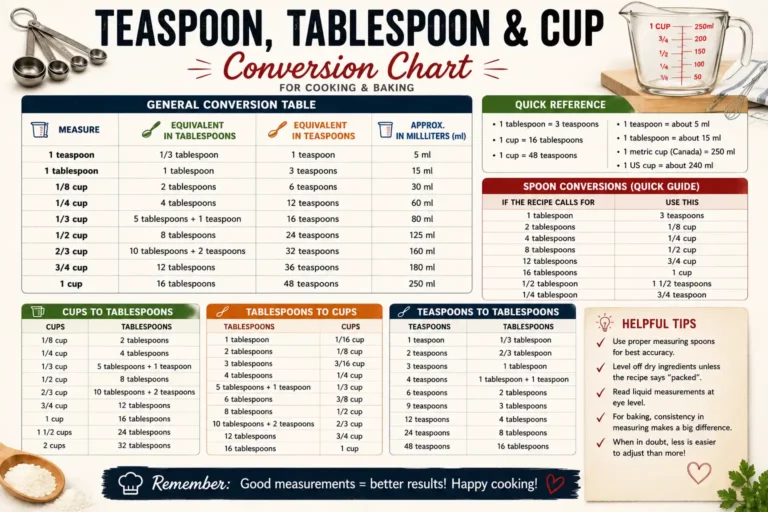
- 1 teaspoon = 5 mL
- 1 tablespoon = 15 mL
- 1/4 cup = 60 mL
- 1/3 cup = 80 mL in many US references, or 75 mL in many Canadian metric charts
- 1/2 cup = 125 mL in Canadian metric charts, or 120 mL in many US references
- 1 cup = 250 mL in Canadian metric cooking, or 240 mL in many US references
In practice, use the measurement system written in the recipe whenever possible. If a recipe gives grams, use a scale. If it gives cups, use proper measuring cups. Do not use a coffee mug or drinking glass as a measuring cup.
NIST lists common US kitchen equivalents such as 1 teaspoon as 5 mL, 1 tablespoon as 15 mL and 1 cup as 240 mL, while Canadian metric kitchen references commonly use 1 cup as 250 mL. (NIST)
Cups, Grams and Milliliters: What Is the Difference?
Cups Measure Volume
A cup measures how much space an ingredient takes up. This works well for liquids and flexible recipes, but it can be less precise for dry ingredients.
For example, 1 cup of loosely spooned flour can weigh less than 1 cup of packed flour. A cup of chopped parsley will weigh much less than a cup of cream. A cup of grated Parmesan can vary depending on how finely it is grated.
Grams Measure Weight
Grams measure the actual weight of an ingredient. This is more precise, especially for baking.
If you weigh 120 g of flour, you have 120 g of flour no matter how fluffy or packed it is. This is why grams are helpful for cakes, cookies, breads, pastry, custards and recipes where texture depends on ratios.
Milliliters Measure Liquid Volume
Milliliters are usually used for liquids such as water, milk, cream, oil, broth, wine or maple syrup.
For many thin liquids, milliliters are practical and easy to measure with a liquid measuring cup. For thicker ingredients like honey, peanut butter, sour cream or yogurt, weight can be more consistent.
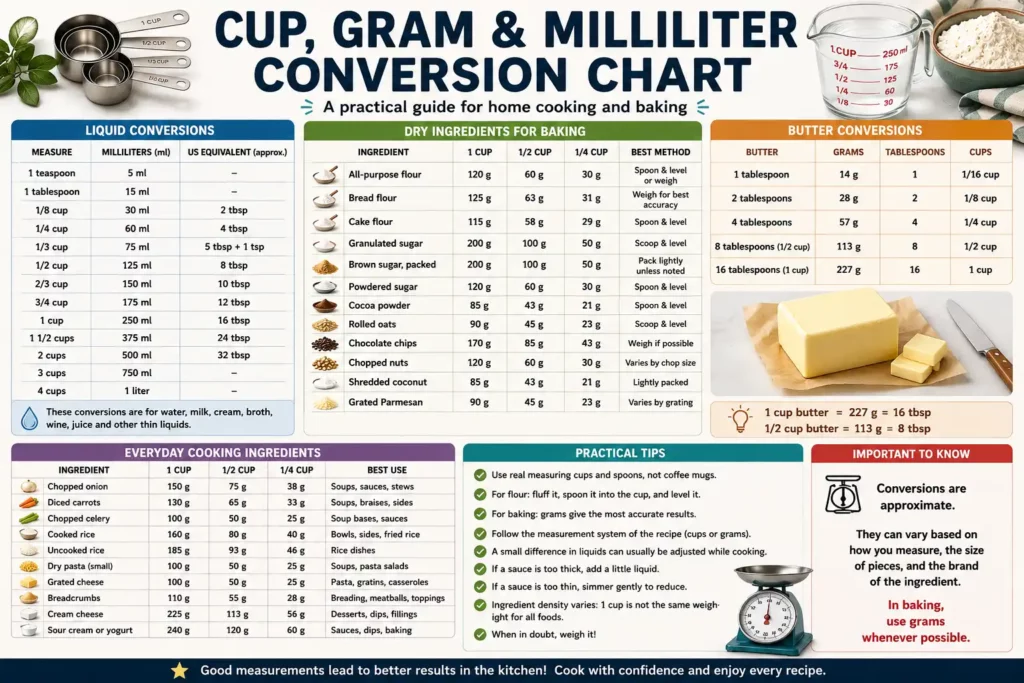
Basic Liquid Conversion Chart
This chart is useful for water, milk, cream, broth, wine and other pourable liquids.
| Cup Measurement | Canadian Metric Approximation | Common US Approximation |
| 1 teaspoon | 5 mL | 5 mL |
| 1 tablespoon | 15 mL | 15 mL |
| 1/8 cup | 30 mL | 30 mL |
| 1/4 cup | 60 mL | 60 mL |
| 1/3 cup | 75 mL | 80 mL |
| 1/2 cup | 125 mL | 120 mL |
| 2/3 cup | 150 mL | 160 mL |
| 3/4 cup | 175 mL | 180 mL |
| 1 cup | 250 mL | 240 mL |
| 1 1/2 cups | 375 mL | 360 mL |
| 2 cups | 500 mL | 480 mL |
| 4 cups | 1 L | 960 mL |
This difference is usually small in soups, sauces and stews, but it matters more in baking. Canadian recipe references commonly use 250 mL for 1 cup, while NIST lists 240 mL for 1 cup in its metric kitchen equivalencies. (NIST)
Common Baking Ingredient Conversion Chart
Dry ingredients do not convert from cups to grams the same way. The weight depends on density.
| Ingredient | 1 Cup Approximate Weight | 1/2 Cup | 1/4 Cup | Best Measuring Method |
| All-purpose flour | 120 g | 60 g | 30 g | Spoon into cup, level, or weigh |
| Bread flour | 125 g | 63 g | 31 g | Weigh for best consistency |
| Cake flour | 115 g | 58 g | 29 g | Weigh or spoon and level |
| Granulated sugar | 200 g | 100 g | 50 g | Scoop and level |
| Brown sugar, packed | 200 g | 100 g | 50 g | Pack lightly unless recipe says otherwise |
| Powdered sugar | 120 g | 60 g | 30 g | Spoon and level |
| Cocoa powder | 85 g | 43 g | 21 g | Spoon and level |
| Rolled oats | 90 g | 45 g | 23 g | Scoop and level |
| Chocolate chips | 170 g | 85 g | 43 g | Weigh if possible |
| Shredded coconut | 85 g | 43 g | 21 g | Lightly packed |
| Chopped nuts | 120 g | 60 g | 30 g | Depends on chop size |
| Grated Parmesan | 90 g | 45 g | 23 g | Depends on grating style |
These are practical kitchen approximations. For the most reliable baking results, use grams when the recipe provides them.
This matters in recipes like brown butter snickerdoodle cookies, cookie croissant crookies, moist spice bread and date squares with oat crumble, where flour, sugar, oats and butter affect the final texture.
Butter Conversion Chart
Butter is one of the most common ingredients that needs conversion between cups, grams and tablespoons.
| Butter Measurement | Grams | Tablespoons | Cups |
| 1 tablespoon | 14 g | 1 tbsp | 1/16 cup |
| 2 tablespoons | 28 g | 2 tbsp | 1/8 cup |
| 4 tablespoons | 57 g | 4 tbsp | 1/4 cup |
| 8 tablespoons | 113 g | 8 tbsp | 1/2 cup |
| 16 tablespoons | 227 g | 16 tbsp | 1 cup |
If a recipe gives butter in grams, weighing it is easiest. If using stick butter in the United States, 1 stick is usually 1/2 cup or about 113 g. In Canadian home kitchens, butter is often sold in blocks, so using a scale or the marks on the wrapper can be useful.
Butter conversions are especially useful for foolproof one-bowl vanilla cake, chocolate chip cookies and classic French yule log.
Flour Conversion Tips
Flour is one of the easiest ingredients to mis-measure. A packed cup can contain much more flour than a spooned and leveled cup.
For better results:
- Fluff the flour before measuring.
- Spoon flour into the measuring cup.
- Level it with a straight edge.
- Do not shake the cup.
- Do not scoop directly from the bag if precision matters.
- Use a scale for baking whenever possible.
Too much flour can make cakes dry, cookies heavy, muffins dense and pastry tough. If the dough feels much drier than expected, the flour may have been packed too tightly.
Sugar Conversion Tips
Sugar is easier to measure than flour, but different sugars behave differently.
Granulated sugar flows evenly and is easy to level. Brown sugar is usually packed because it contains moisture and clumps. Powdered sugar can compact easily, so it is best spooned and leveled unless the recipe gives grams.
In cookies and cakes, sugar does more than sweeten. It affects spreading, browning, moisture and texture. This is why changing sugar amounts too much can change the recipe.
Liquid Ingredient Conversion Tips
For liquids, use a clear liquid measuring cup when possible. Set it on a flat surface and read the measurement at eye level.
Common liquid conversions:
| Liquid | 1 Cup Approximate Metric | Notes |
| Water | 240 to 250 mL | Depends on US or Canadian standard |
| Milk | 240 to 250 mL | Use recipe system when possible |
| Cream | 240 to 250 mL | Slight variation usually fine in sauces |
| Broth | 240 to 250 mL | Flexible in soups and stews |
| Oil | 220 to 225 g by weight | Better measured by volume unless recipe gives grams |
| Honey | About 340 g by weight | Sticky and dense, weigh if possible |
| Maple syrup | About 320 g by weight | Useful for Canadian baking and glazes |
For sauces and pasta dishes, a small difference between 240 mL and 250 mL usually will not ruin the recipe. In cakes, custards and batters, the difference can matter more.
This is helpful when cooking creamy recipes like creamy chicken fettuccine Alfredo, spicy creamy chicken pasta and Marry Me Chicken, where cream, pasta water, stock and sauce thickness all affect the final texture.
Everyday Cooking Conversion Chart
For flexible cooking, exact grams are not always necessary, but these conversions are helpful.
| Ingredient | 1 Cup Approximate | 1/2 Cup | 1/4 Cup | Best Use |
| Chopped onion | 150 g | 75 g | 38 g | Sauces, soups, stews |
| Diced carrots | 130 g | 65 g | 33 g | Soups, braises, sides |
| Chopped celery | 100 g | 50 g | 25 g | Soup bases, sauces |
| Cooked rice | 160 g | 80 g | 40 g | Bowls, sides, fried rice |
| Uncooked rice | 185 g | 93 g | 46 g | Rice dishes |
| Dry pasta, small shapes | 100 g | 50 g | 25 g | Pasta salads, soups |
| Grated cheese | 100 g | 50 g | 25 g | Pasta, gratins, casseroles |
| Breadcrumbs | 110 g | 55 g | 28 g | Breading, meatballs, toppings |
| Cream cheese | 225 g | 113 g | 56 g | Desserts, dips, fillings |
| Sour cream or yogurt | 240 g | 120 g | 60 g | Sauces, dips, baking |
For everyday cooking, texture matters. One cup of chopped onion can vary depending on how finely it is cut. One cup of grated cheese can vary depending on whether it is finely grated or loosely shredded. That is why grams are useful when the recipe needs precision.
When to Use Cups, Grams or Milliliters
Use Cups When the Recipe Is Flexible
Cups work well for soups, stews, casseroles, chopped vegetables, salads, rice dishes, sauces and quick family meals.
For example, if a pasta sauce needs 1/2 cup of cream and you add a little more or less, the sauce can usually be adjusted by simmering, adding pasta water or adding more cheese.
Use Grams When Baking
Grams are best for flour, sugar, butter, cocoa, oats, chocolate and other baking ingredients.
In baking, too much flour or too little liquid can change the crumb. Too much butter can make cookies spread. Too much sugar can change browning and texture.
Use Milliliters for Liquids
Milliliters are best for water, milk, cream, oil, broth, wine and other pourable liquids.
For liquid-heavy recipes like soups and sauces, milliliters are practical. For dense sticky liquids like honey or maple syrup, grams can be easier if you have a scale.
Canadian vs US Cup Measurements
This is one of the most common points of confusion.
In many Canadian metric recipes, 1 cup is treated as 250 mL. In many US references, 1 cup is treated as 240 mL. The practical difference is 10 mL per cup.
For a soup, sauce or stew, that small difference is usually easy to adjust. For baking, it can add up if the recipe uses several cups of liquid or flour.
Best habit:
- Follow the recipe’s original measurement system.
- If the recipe gives grams, use grams.
- If the recipe gives cups, use proper cups.
- Do not mix Canadian metric cup values and US cup values within the same recipe unless the difference is not important.
- For baking, weigh ingredients when possible.
Common Mistakes to Avoid
Using a Coffee Mug as a Cup
A mug is not a measuring cup. Mugs can vary widely in size. Use proper measuring cups for recipes.
Scooping Flour Directly From the Bag
This packs flour into the cup and can add too much. Spoon and level flour instead.
Measuring Liquids in Dry Measuring Cups
Dry measuring cups are filled to the top and leveled. Liquid measuring cups are designed so you can read the line without spilling. Use the correct tool when possible.
Treating Every Cup as the Same Weight
A cup of flour, sugar, butter, cream, chopped onion and grated cheese all weigh different amounts. Cups measure volume, not weight.
Switching Measurement Systems Mid-Recipe
If a recipe is written in grams, follow grams. If it is written in cups, follow cups. Mixing systems can create small errors that add up.
Packing Ingredients Unless Told To
Brown sugar is often packed. Flour, cocoa powder and powdered sugar usually should not be packed unless a recipe specifically says so.
Not Adjusting Sauce Texture
In sauces, conversions are a guide. If the sauce looks too thick, loosen it with a small amount of milk, cream, broth, pasta water or water. If it looks too thin, simmer it gently.
FAQ
How many milliliters are in one cup?
In many Canadian metric recipes, 1 cup is 250 mL. In many US kitchen references, 1 cup is 240 mL. Use the recipe’s original measurement system when possible.
How many grams are in one cup?
It depends on the ingredient. One cup of all-purpose flour is about 120 g, while one cup of granulated sugar is about 200 g and one cup of butter is about 227 g. Cups measure volume, grams measure weight.
Is 1 cup the same as 250 mL?
In Canadian metric cooking, 1 cup is commonly treated as 250 mL. In many US references, 1 cup is 240 mL. The difference is small for many cooked dishes but more important in baking.
Is 1 tablespoon 15 mL?
Yes. Standard kitchen conversion charts commonly use 1 tablespoon as 15 mL and 1 teaspoon as 5 mL. (NIST)
Should I use cups or grams for baking?
Use grams when possible. Baking depends on ratios, and grams are more precise than cups for flour, sugar, butter, cocoa and other dry ingredients.
Why does my flour measurement change every time?
Flour can be packed, scooped, sifted or spooned into a cup. Each method changes the weight. For better results, weigh flour or spoon it into the cup and level it.
Can I convert any recipe from cups to grams?
Yes, but you need ingredient-specific conversions. You cannot use one universal cup-to-gram number because every ingredient has a different density.
Are milliliters and grams the same?
For water, 1 mL is very close to 1 g. For other ingredients, they are not the same. Oil, honey, flour, sugar and cream all have different densities.
Final Thoughts
A good cup, gram and milliliter conversion chart makes home cooking easier because it removes guesswork. Cups are useful for everyday cooking. Milliliters are practical for liquids. Grams are best when precision matters, especially in baking.
For sauces, soups and flexible dinners, small measurement differences can usually be corrected while cooking. For cakes, cookies, breads, pastries and custards, use grams whenever possible.
Keep this guide nearby when working through baking recipes like red velvet cake, moist spice bread and date squares, or when adjusting savory recipes like creamy chicken fettuccine Alfredo and pasta recipes for easy weeknight dinners.
Useful Links
🛒 Michel Dumas Shop : Explore our kitchen essentials, including aprons and cooking tools.
🌐 Linktree : Access all our important links in one place.
📱 YouTube | Instagram | Facebook | TikTok : Follow us for the latest recipes and culinary tips.